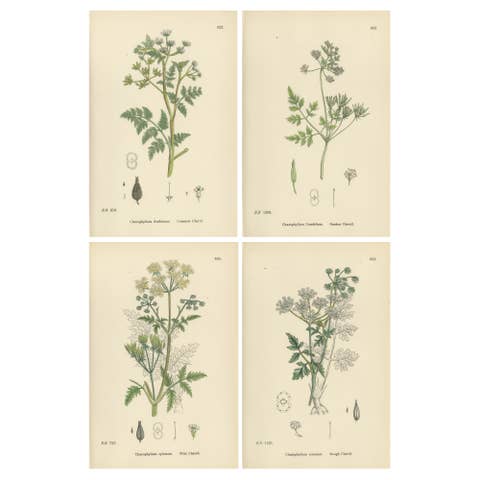
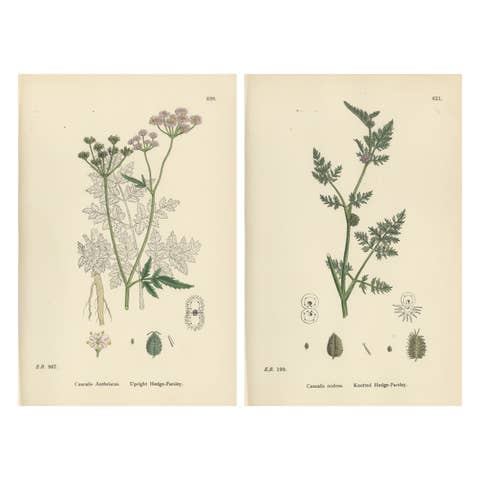
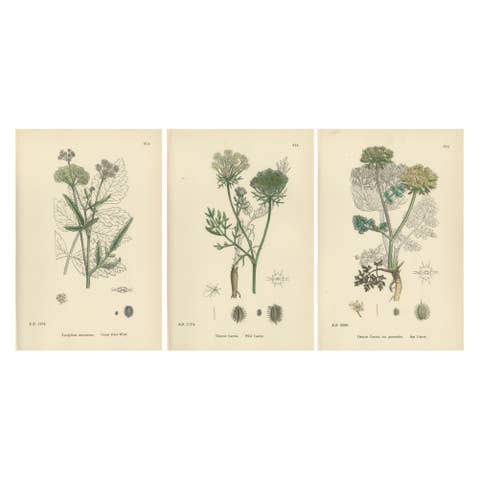
Botanical Engravings of Rock and Forster’s Stone-Crop with House-Leek, 1902
€ 340
One of a kind: this is the sheet in the photographs. Ships from Langweer, the Netherlands.
Date
1902
Sheet size
26 × 17 cm (10.2 × 6.7 in)
Condition
Good
Reference
BG-13347-46, -46A, -47
Condition
Condition report: Excellent condition for age. Slight age toning confined to margins; strong plate impressions and wide borders retained. Hand coloring remains fresh and well-preserved.
About this sheet
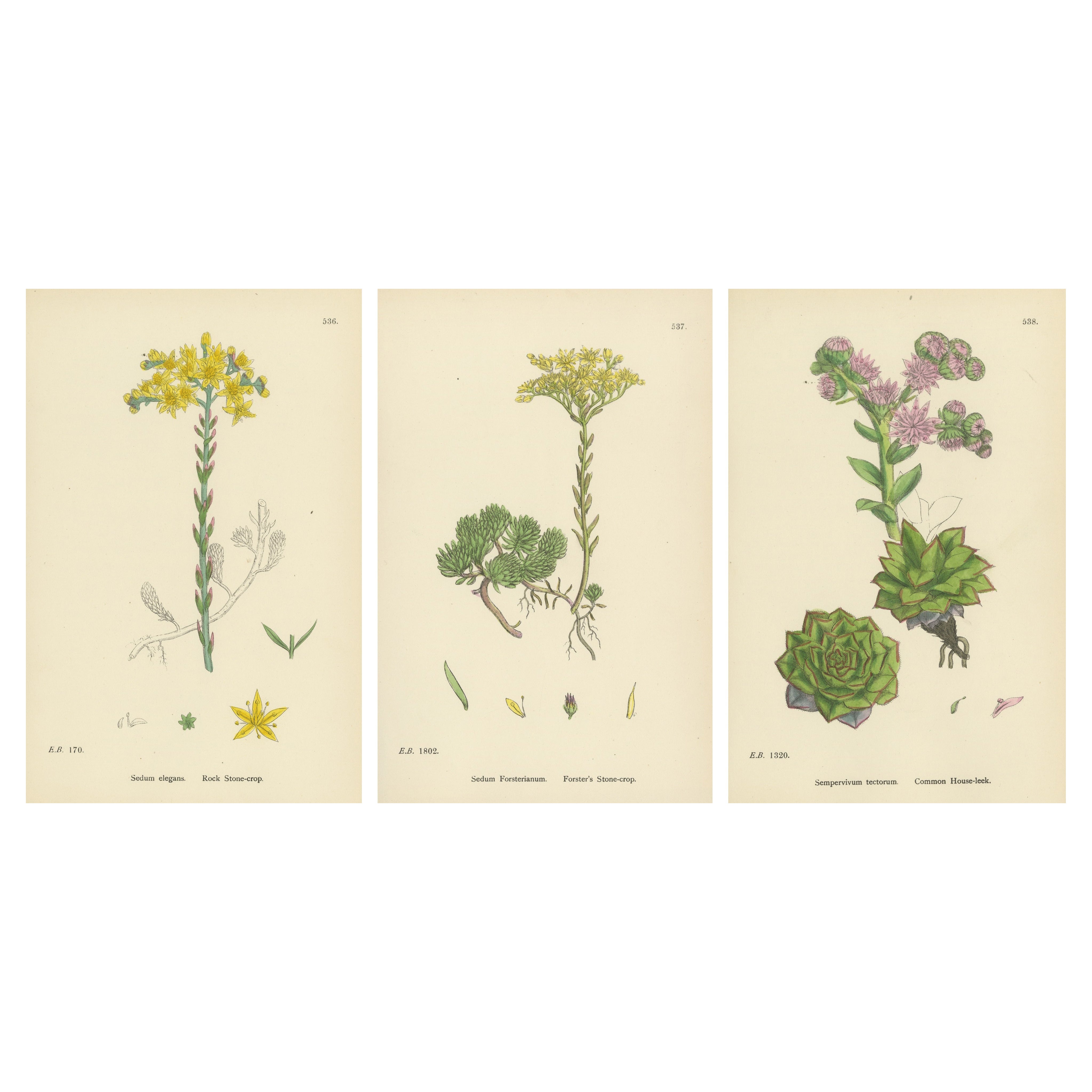
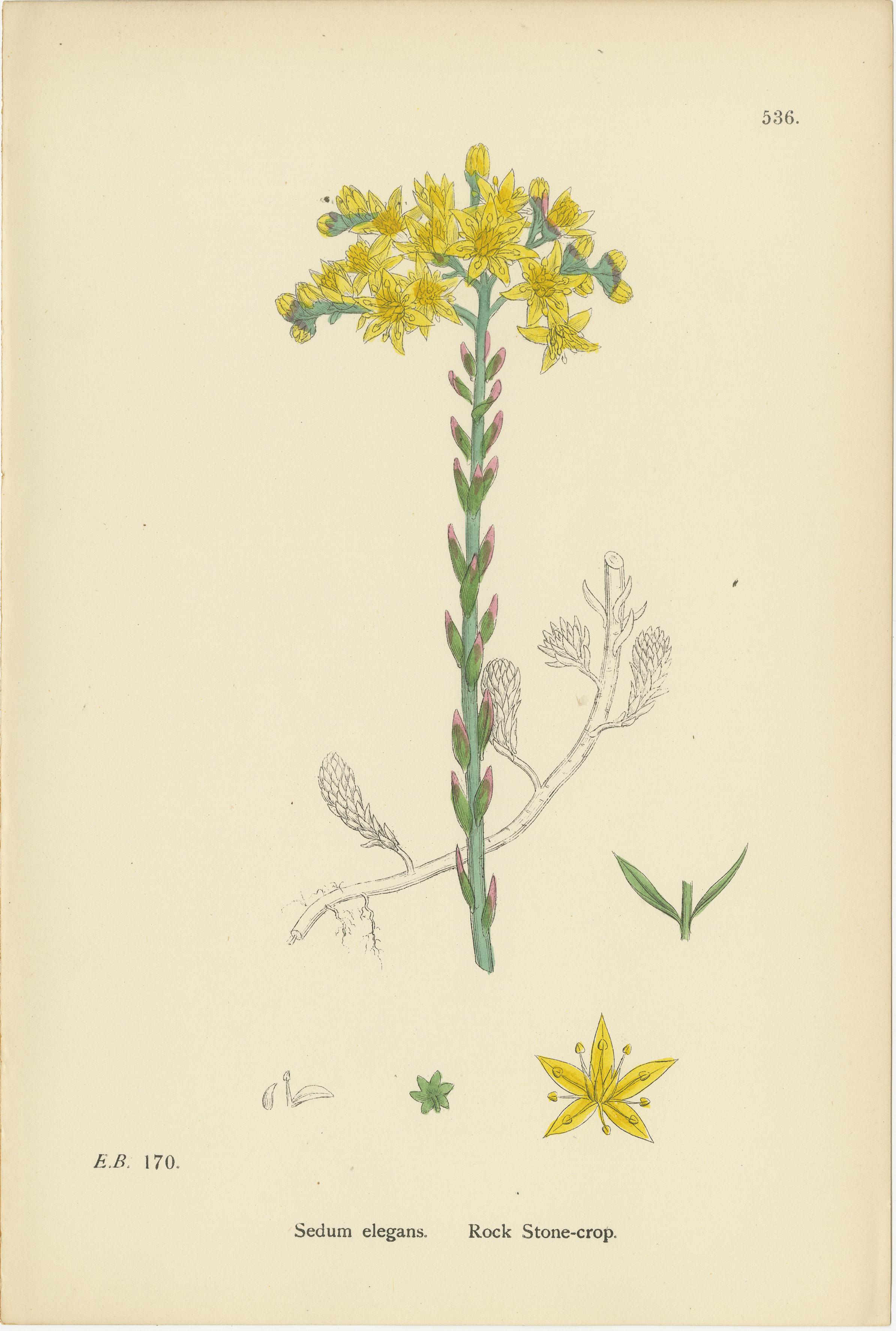
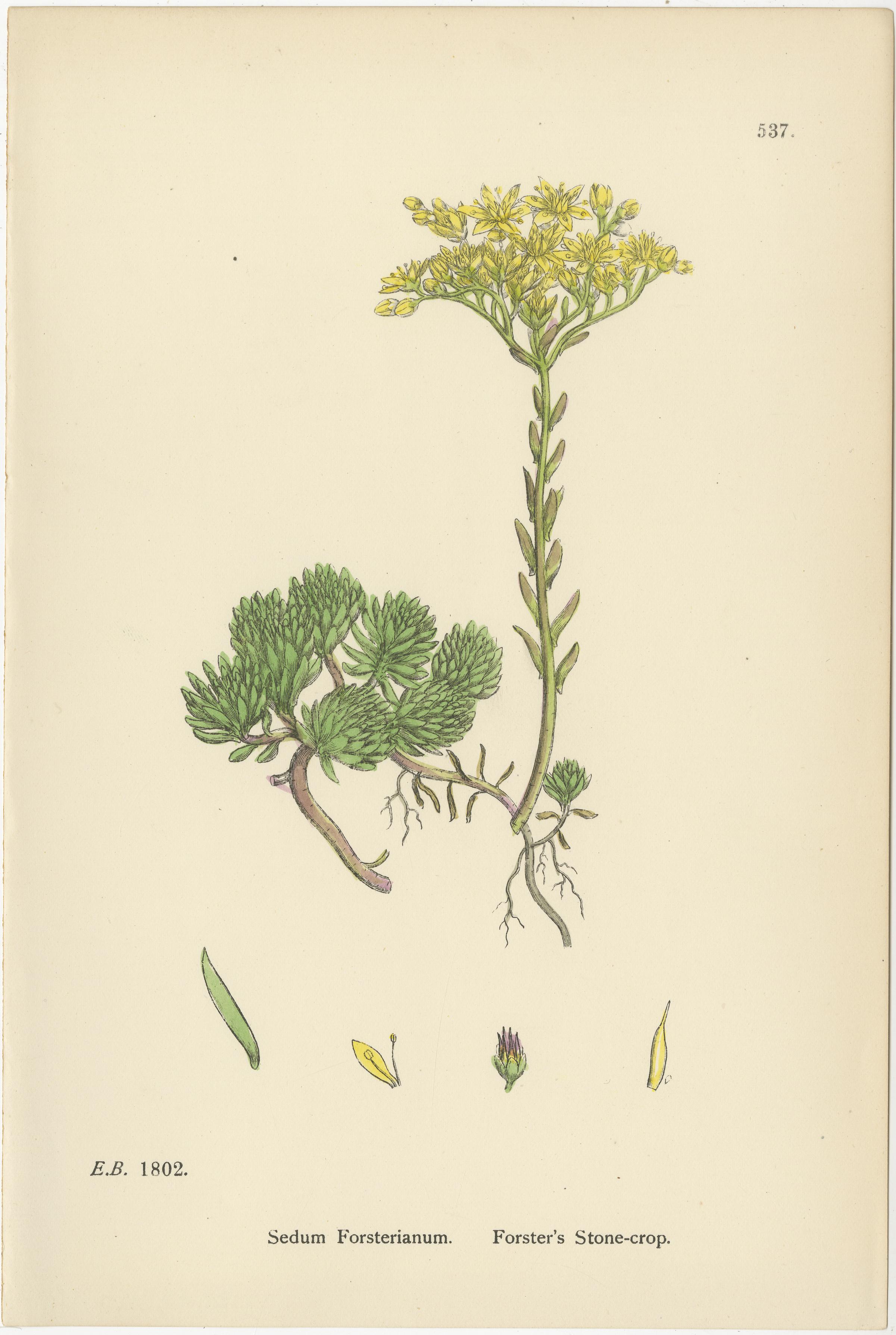
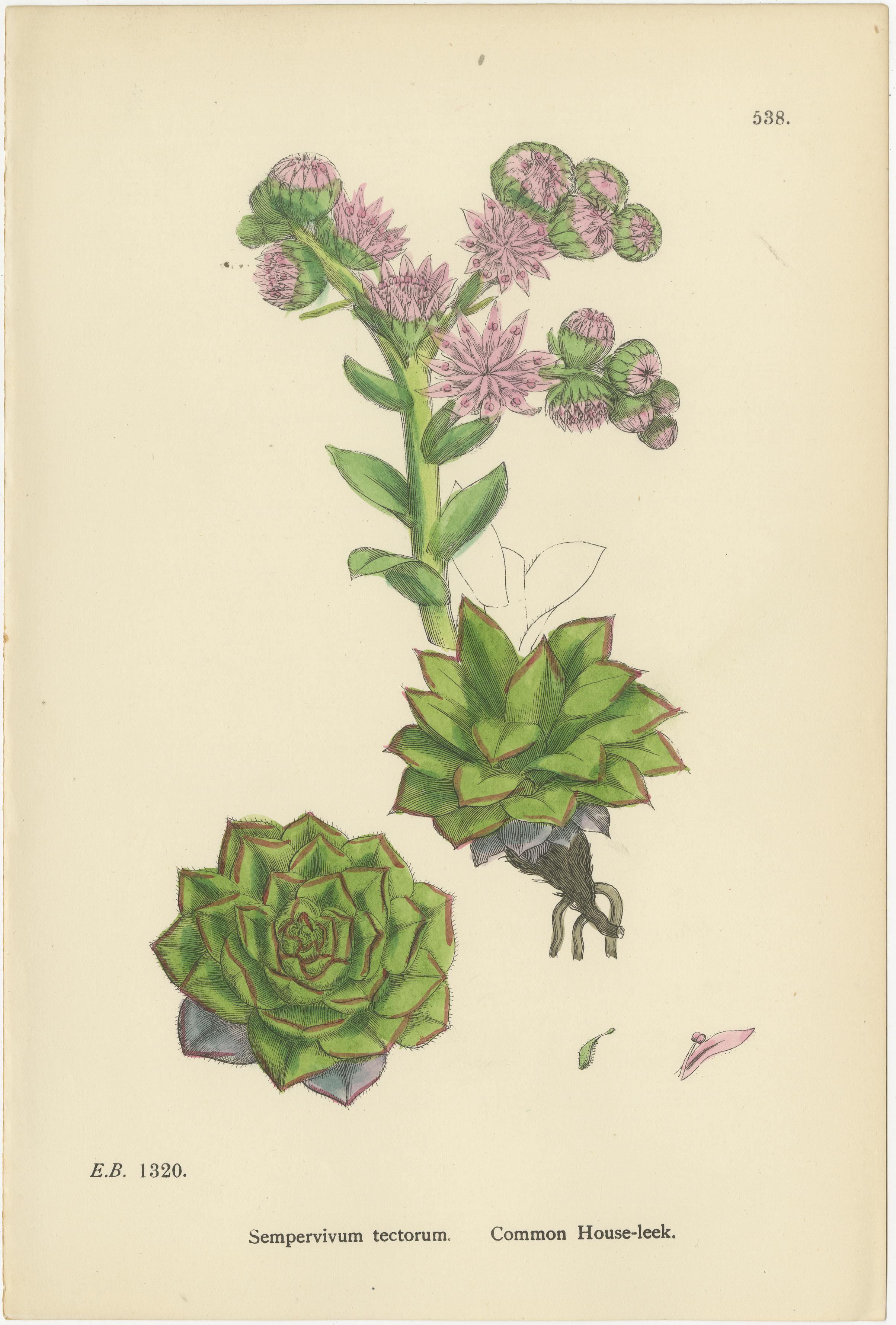
This striking set of three hand-colored botanical engravings from 1902 showcases *Sedum elegans* (Rock Stone-crop), *Sedum forsterianum* (Forster’s Stone-crop), and *Sempervivum tectorum* (Common House-leek) — a beautiful study of hardy alpine succulents prized for their ability to thrive in rocky, sunlit environments. The engravings display the refined artistry and scientific precision characteristic of turn-of-the-century English natural history illustration.
The first plate, Rock Stone-crop, presents a graceful stem bearing clusters of vivid yellow star-shaped flowers, rising above thick green leaves tinged with pink. The delicate detailing of the roots and blossoms illustrates both botanical accuracy and artistic elegance. The central plate, Forster’s Stone-crop, shows a lower, mat-forming variety with compact rosettes of bright green foliage and sprays of pale yellow flowers, often found clinging to cliffs and old walls. The third print, Common House-leek, offers a striking contrast with its geometric rosette of fleshy leaves and stout flowering stalk topped with clusters of pinkish-purple blooms. Long cultivated on cottage roofs for protection and healing, the House-leek is beautifully rendered here as both sculptural and symbolic.
Each plate is delicately engraved and hand-colored in soft, natural tones. The subtle watercolor application enhances the texture and depth of the leaves and petals, while the engraved outlines preserve scientific clarity. This trio exemplifies the intersection of scientific observation and fine art, making it an ideal collection piece for lovers of botany and early botanical illustration.
Condition report: Excellent condition for age. Slight age toning confined to margins; strong plate impressions and wide borders retained. Hand coloring remains fresh and well-preserved.
Framing tips: These three complementary succulents form a visually balanced set when framed together in natural wood or gilded frames. Cream or light gray mounts highlight the botanical tones, making this trio perfect for a conservatory, botanical-themed space, or refined modern interior.
Technique: Hand-colored engraving Maker: British, published London, 1902