About this sheet
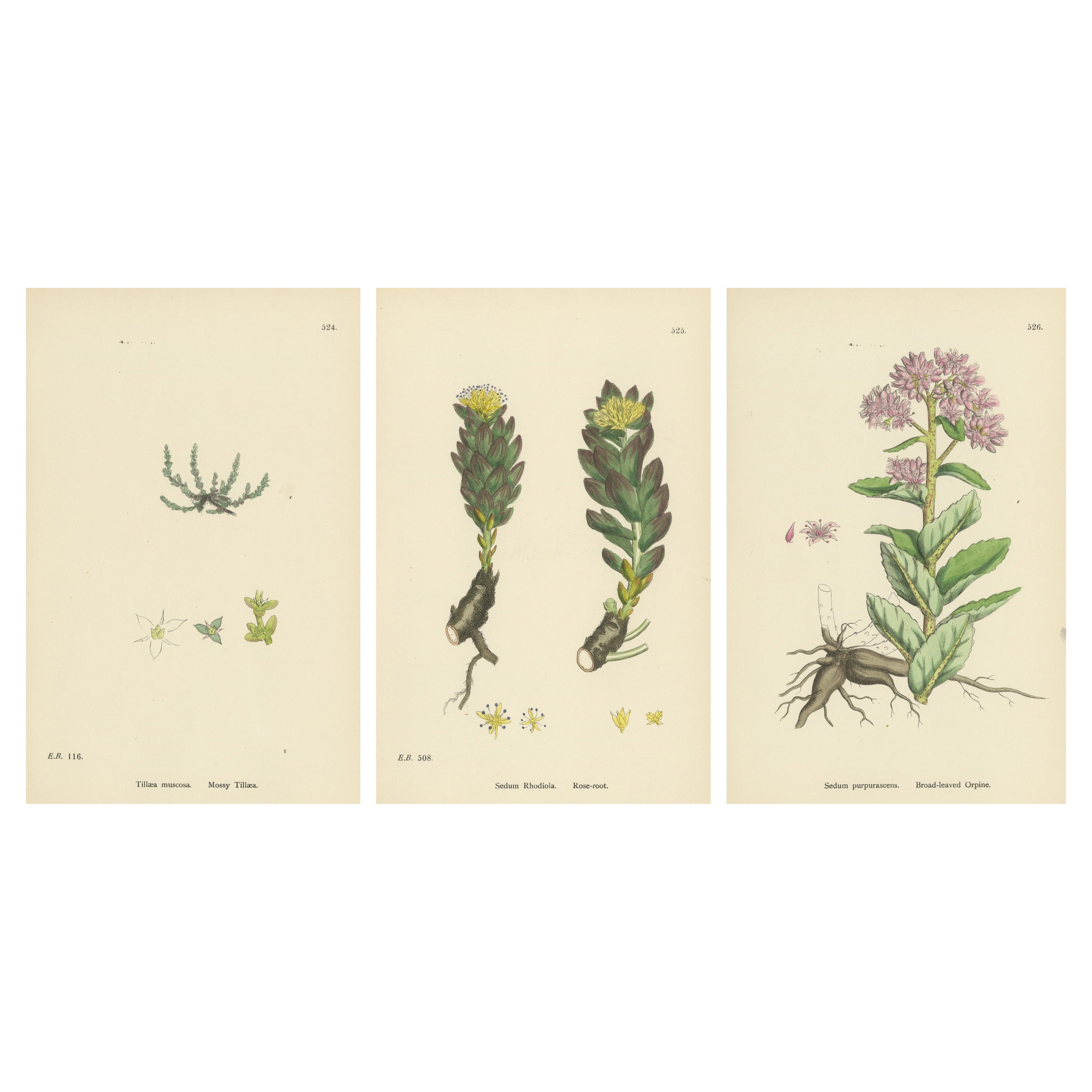
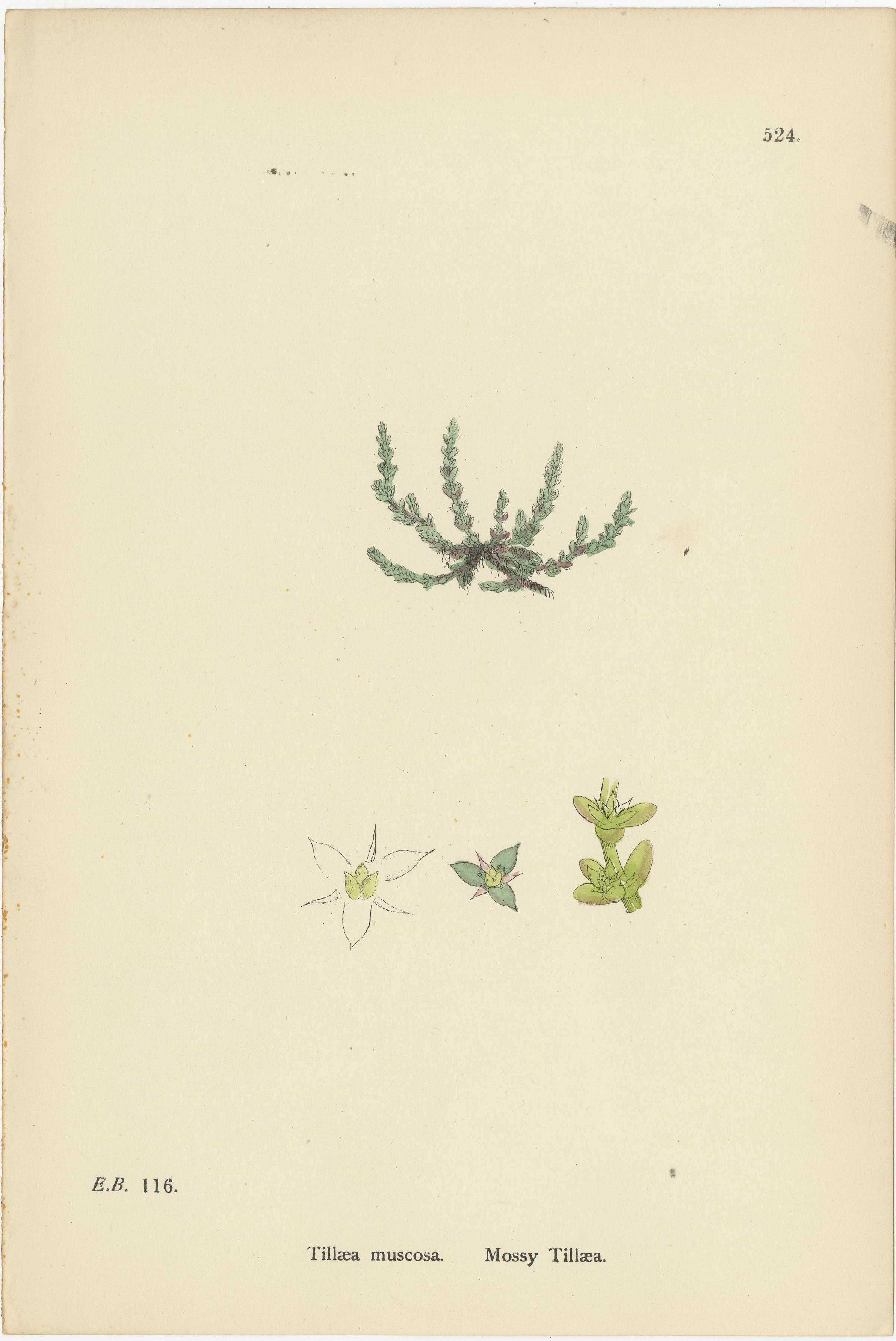
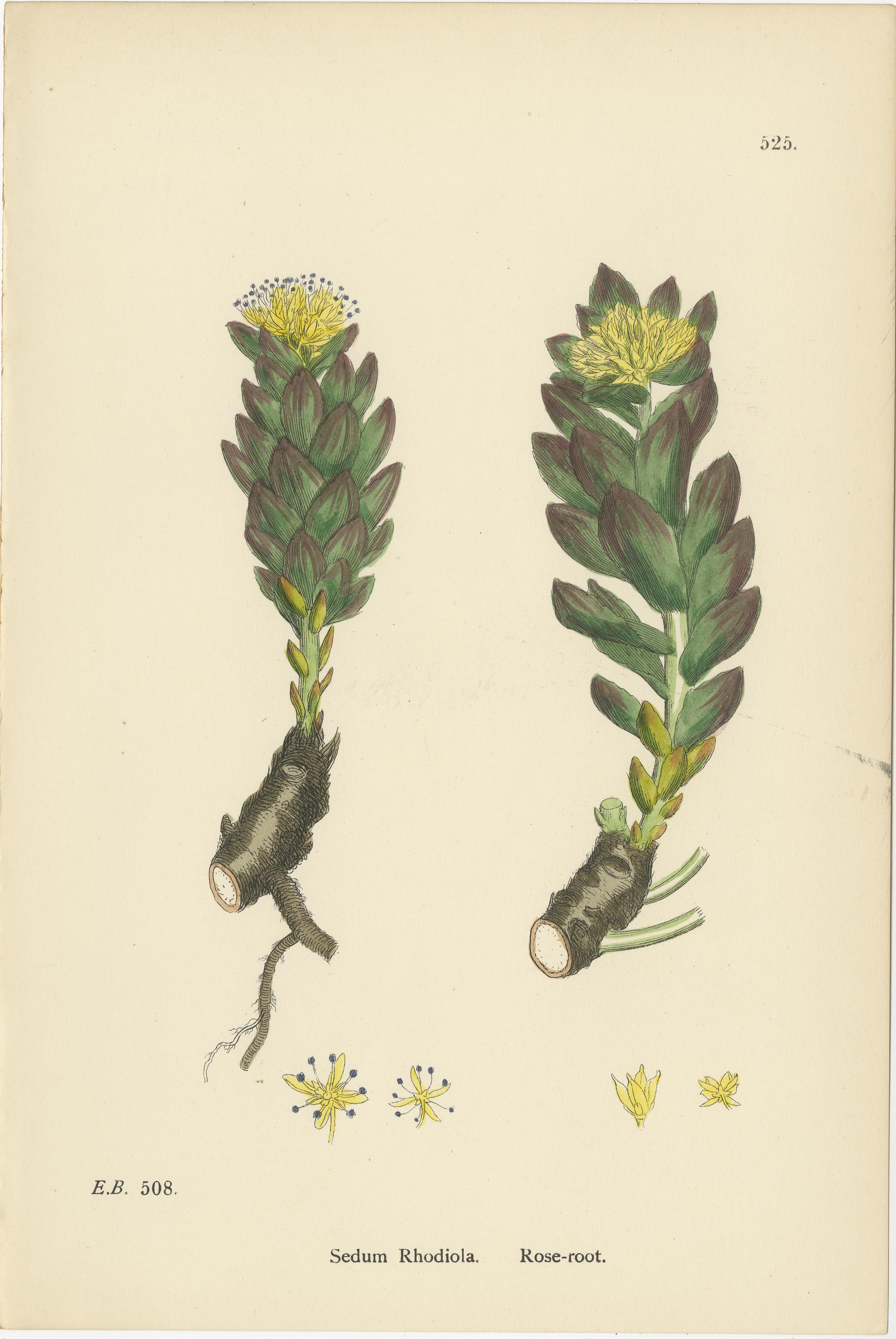
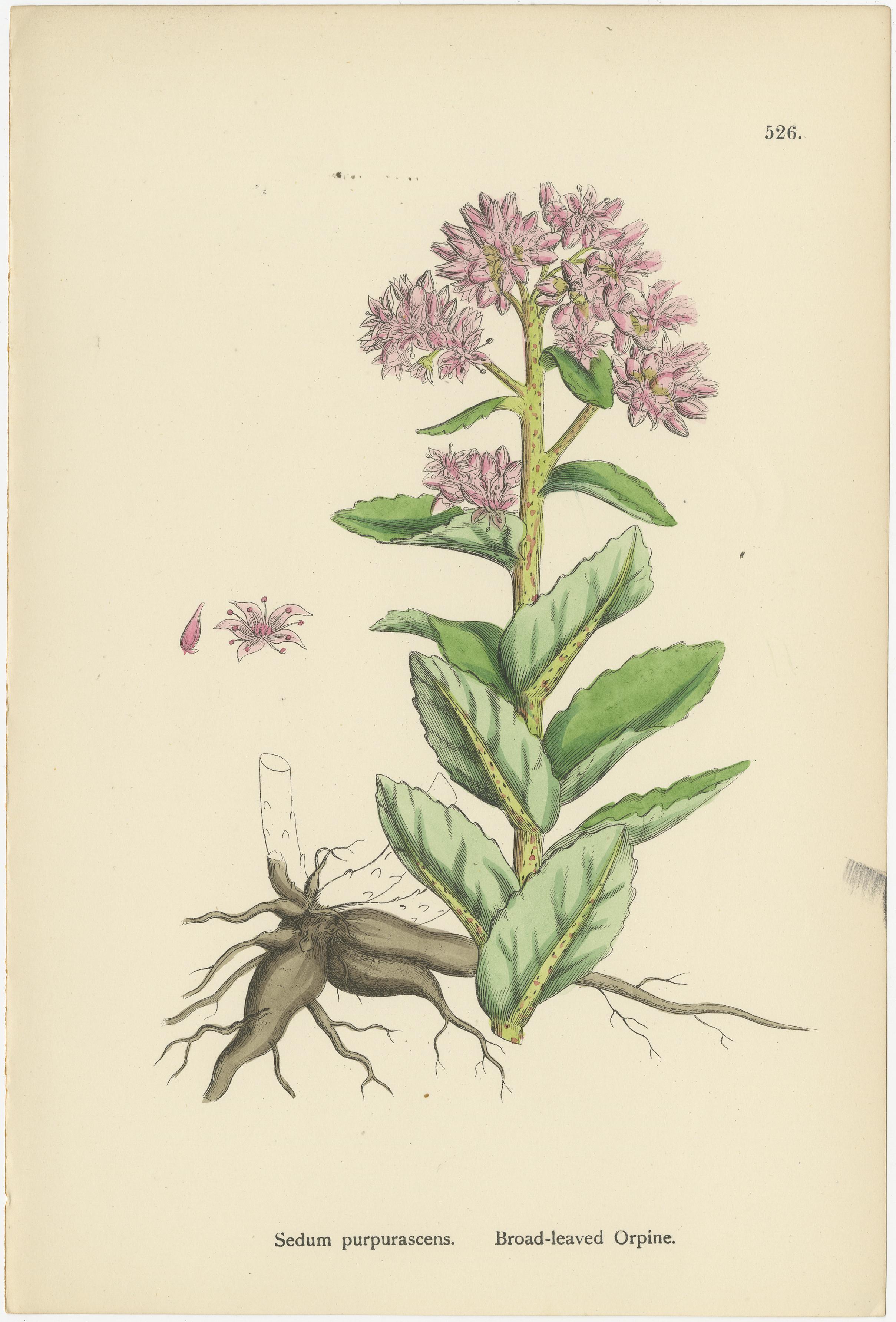
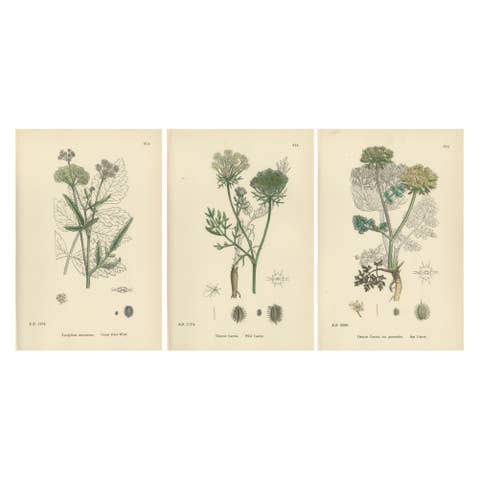
This elegant set of three hand-colored botanical engravings from 1902 presents a captivating study of succulent and alpine flora. The plates depict Tillaea muscosa (Mossy Tillaea), Sedum Rhodiola (Rose-root), and Sedum purpurascens (Broad-leaved Orpine). Together, they offer a fine contrast between the delicate, moss-like growth of Tillaea and the more substantial, fleshy forms of the Sedum species — a visual dialogue between miniature groundcover and robust mountain plants.
The first plate, Mossy Tillaea, illustrates a low, spreading plant with tiny star-shaped flowers and fine green stems, a subtle and charming depiction of a species often found in damp or sandy soil. The central composition, Rose-root, is rendered with bold botanical clarity, showing thick, succulent leaves arranged in rosettes and crowned by yellow starry blossoms. Known for its aromatic roots, Rose-root thrives in rocky alpine regions and has long been valued for its resilience. The final plate, Broad-leaved Orpine, displays a more vigorous plant with tall stems, broad oval leaves, and clusters of pink-purple flowers. The engraving includes detailed views of the tuberous roots and individual blossoms, demonstrating the scientific precision typical of the series.
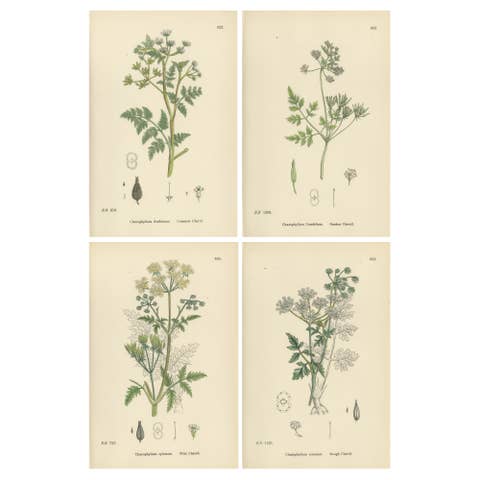
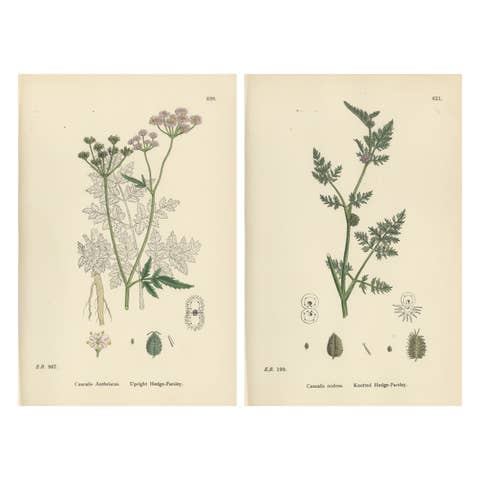
Each engraving combines delicate linework with carefully applied watercolor tones that emphasize the natural textures and colors of the plants. The result is both educational and decorative, representing the perfect balance between natural history documentation and artistic refinement.
Condition report: Excellent for age. Subtle age toning and small specks confined to margins. Strong impressions with visible plate marks and generous borders intact. No tears or repairs.
Framing tips: This trio of succulents and alpine plants makes a serene and modern display when framed together in light wood or gold frames with cream or pale green mounts. Their varied forms — from tiny moss to stately orpine — offer beautiful visual rhythm, ideal for a botanical-themed study, conservatory, or nature-inspired interior.
Technique: Hand-colored engraving
Maker: British, published London, 1902