About this sheet
Hand-Colored Botanical Engravings of London-Pride Varieties and Yellow Marsh Saxifrage, 1902
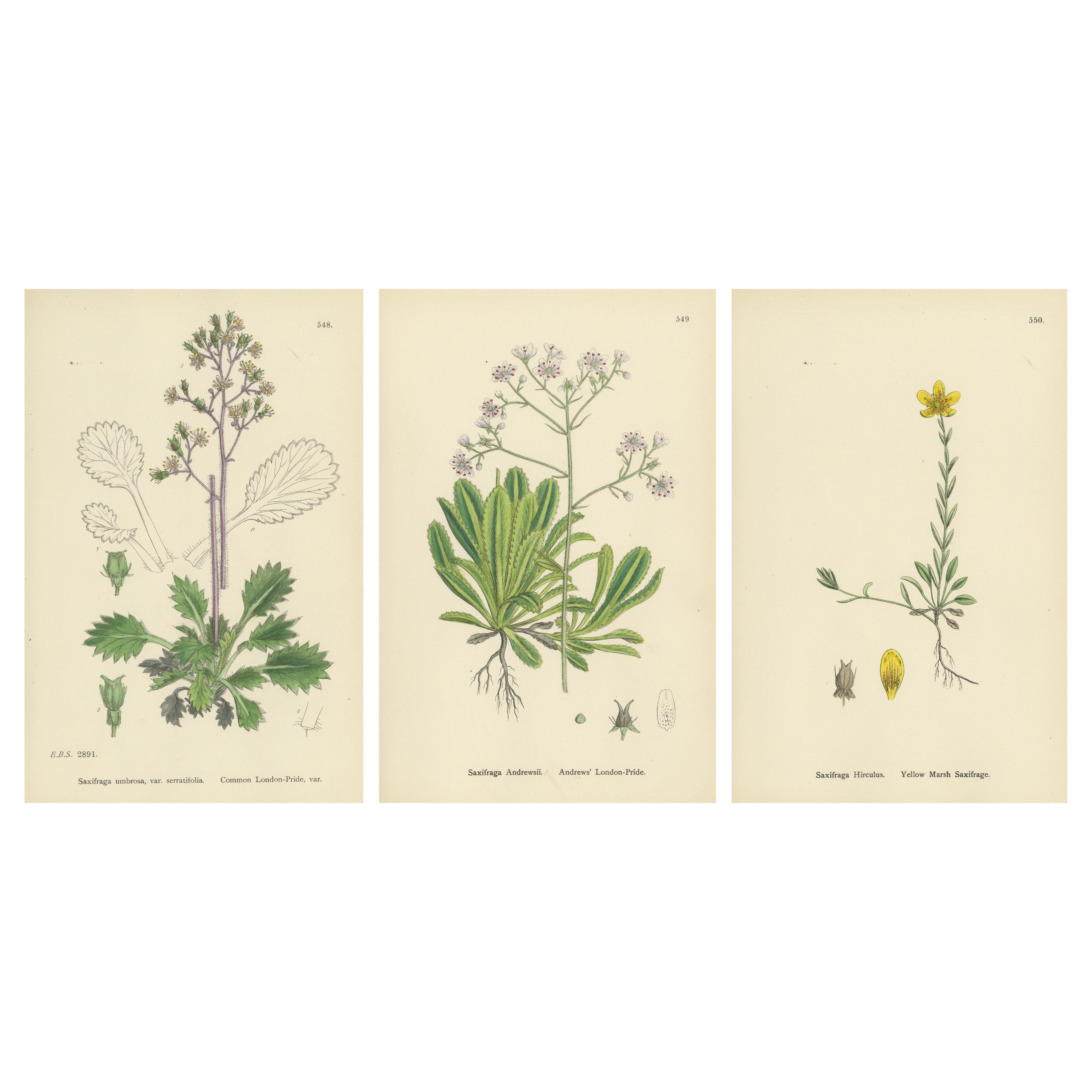
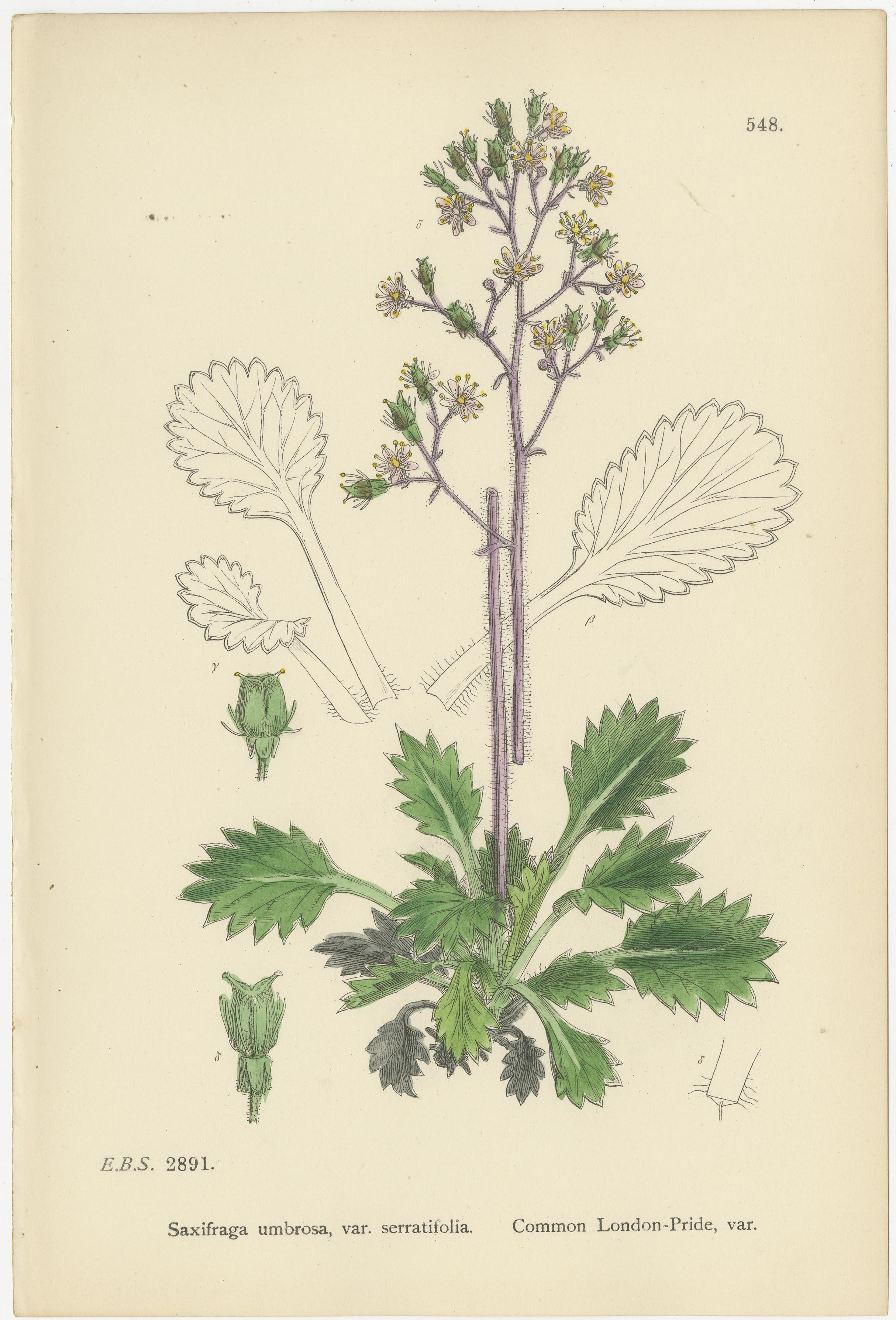
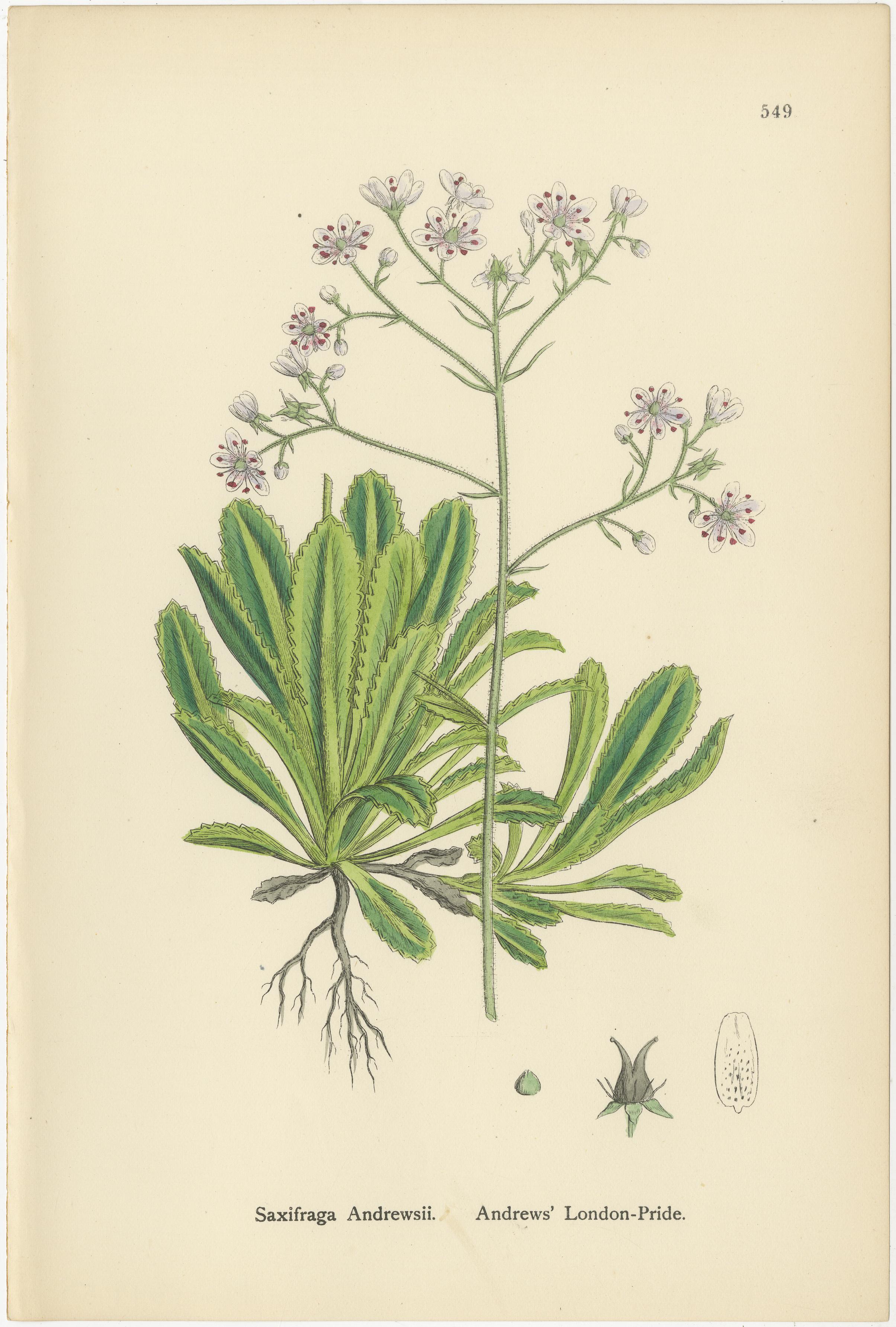
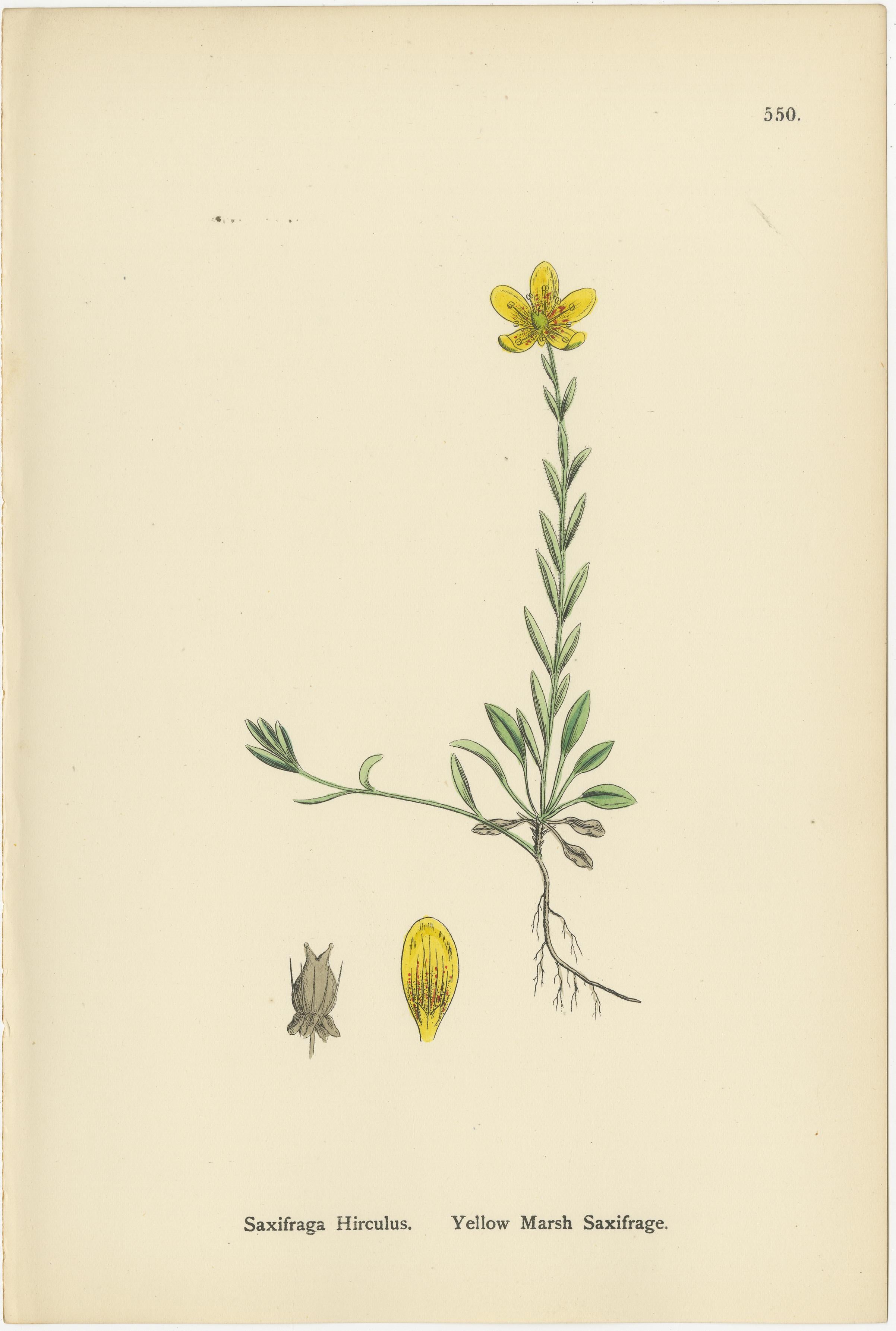
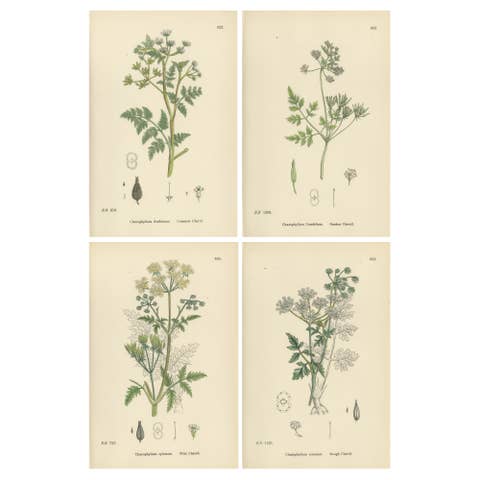
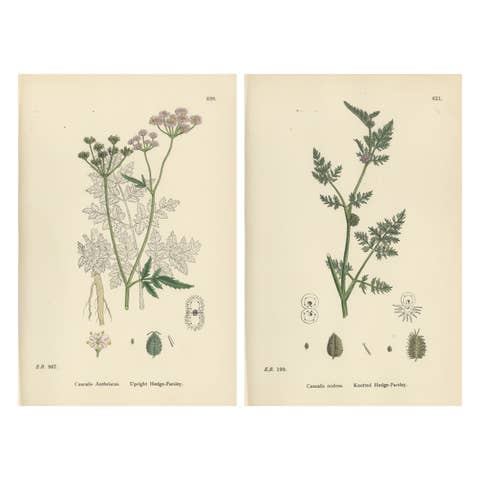
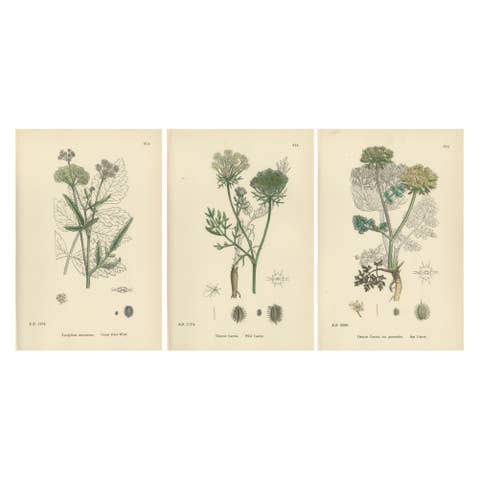
This elegant trio of hand-colored botanical engravings from 1902 illustrates three distinctive Saxifraga species and varieties — Saxifraga umbrosa var. serratifolia (Common London-Pride, variety), Saxifraga andrewsii (Andrews’ London-Pride), and Saxifraga hirculus (Yellow Marsh Saxifrage). Each engraving reflects the refined botanical artistry of the early 20th century, merging scientific precision with the beauty of natural form.
The first plate, Saxifraga umbrosa var. serratifolia, presents a robust form of the familiar London-Pride, characterized by its deep green, sharply serrated leaves and pale flowering sprays tinged with yellow. The detailed engraver’s line work captures the crisp texture and bold structure of the foliage, supported by subtle watercolor shading. The second engraving, Saxifraga andrewsii, depicts a more slender alpine species with elongated, lanceolate leaves forming a tidy rosette, from which rises an elegant flowering stem covered in small, white blossoms delicately spotted in pink. The third plate, Saxifraga hirculus, shifts the tone entirely — a bright, yellow-flowered marsh species with narrow, smooth leaves and a single erect stem. The simplicity of the plant contrasts beautifully with the intricate structure of its golden petals, which are rendered with luminous delicacy.
Together, these plates chart the diversity of the Saxifraga genus, from rock-garden favorites to wetland blooms. The engravings demonstrate both taxonomic clarity and artistic charm, revealing the subtle distinctions between leaf shape, floral arrangement, and habitat adaptation.
Condition report: Very fine condition with minimal toning and wide margins intact. Coloring remains fresh and original, showing soft hand-applied washes over sharp, clear line engravings.
Framing tips: These works form a harmonious set when framed in gold, maple, or dark green wood frames with ivory mounts. Their mix of greens, whites, and yellows complements both traditional and natural-themed interiors, especially garden rooms and botanical displays.
Technique: Hand-colored engraving
Maker: British, published London, 1902