About this sheet
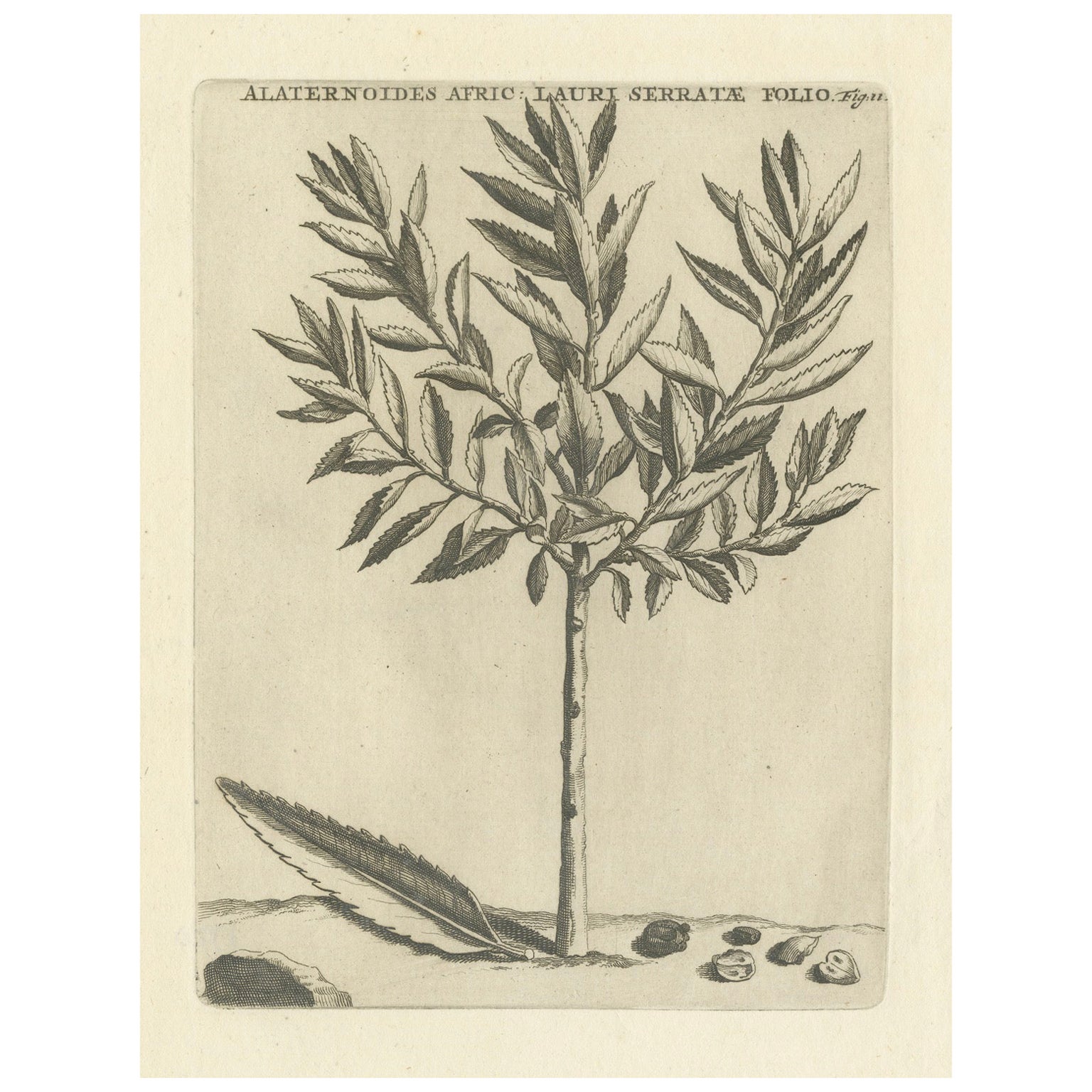
Botanical Engraving of Alaternoides Afric Lauri Serratae from Caspar Commelin, 1706
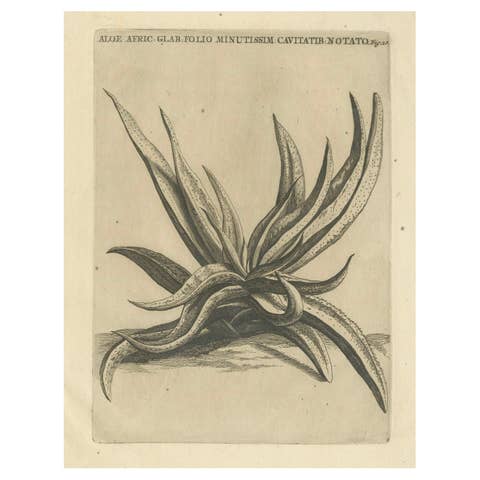
This engraving is possibly a botanical illustration from Caspar Commelin's "Praeludia Botanica," published in 1703. It depicts Alaternoides Afric Lauri Serratae Folio, an African plant species with serrated, laurel-like leaves. The Latin title translates to "African Alaternoides with serrated laurel leaves."
This engraving could be a proof print (proefdruk) of Caspar Commelin's work, "Horti Medici Amstelaedamensis Plantæ Rariores et Exoticæ ad Vivum Æri Incisæ," published in 1706 by Fredericum Haringh in Leiden (Lugduni Batavorum).
The style and botanical detail in the engraving align with the scientific and illustrative approach typical of the Commelins' botanical works. These illustrations were often created directly from life ("ad vivum") to document rare and exotic plants, many of which were housed at the Amsterdam Hortus Medicus.
Given that proof prints were commonly produced to ensure accuracy before inclusion in published works, this engraving may be part of the preparatory process for Commelin's publications. It fits with the layout and descriptions found in the 1706 edition of Caspar Commelin's botanical works, which continued the legacy initiated by his uncle, Jan Commelin.
The engraving shows a plant with serrated, laurel-like leaves growing on a slender stem. The leaves are detailed with jagged edges, and the base of the plant is shown with additional botanical elements, such as seeds and a fallen leaf.
- Leaf Structure: The engraving carefully depicts the serrated edges of the leaves, highlighting their laurel-like shape. The plant's slender stem supports a dense arrangement of leaves.
- Botanical Elements: At the base of the plant, the illustration shows a fallen leaf and small seeds or fruits, providing further detail about the plant's growth and reproductive features.
What It Shows:
The engraving provides a detailed depiction of Alaternoides Afric, showcasing its serrated, laurel-like leaves. The plant is likely native to Africa and was valued for its ornamental or medicinal properties. This engraving serves as an accurate scientific illustration, helping botanists and herbalists study the plant's unique characteristics.
This engraving likely contributed to European efforts in the 18th century to classify and document exotic species, focusing on their botanical features and potential uses.xotic species, focusing on their botanical features and potential uses.