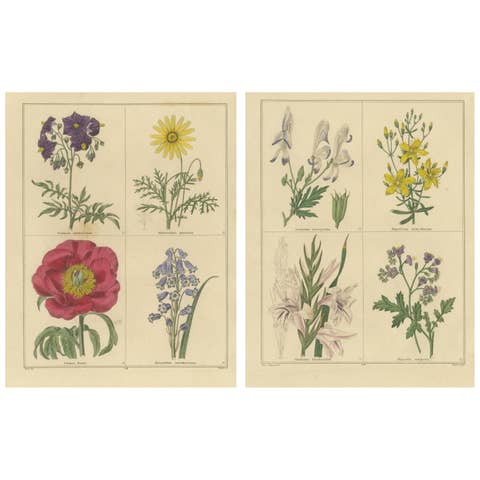
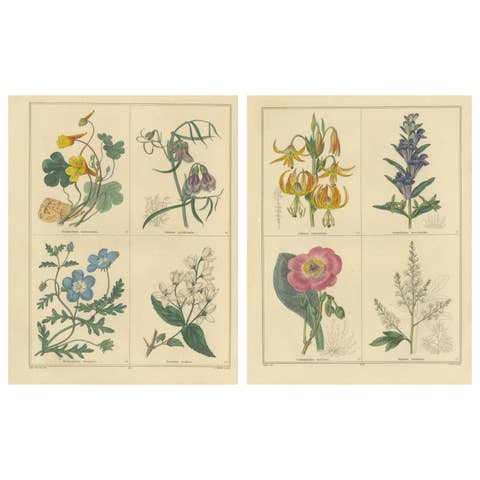
Benjamin Maund Botanical Flower Prints from London c.1836 – Pair
€ 220
One of a kind: this is the sheet in the photographs. Ships from Langweer, the Netherlands.
Date
1836
Sheet size
24 × 18 cm (9.4 × 7.1 in)
Condition
Good
Reference
BG-14141-23 & BG-14141-24
Condition
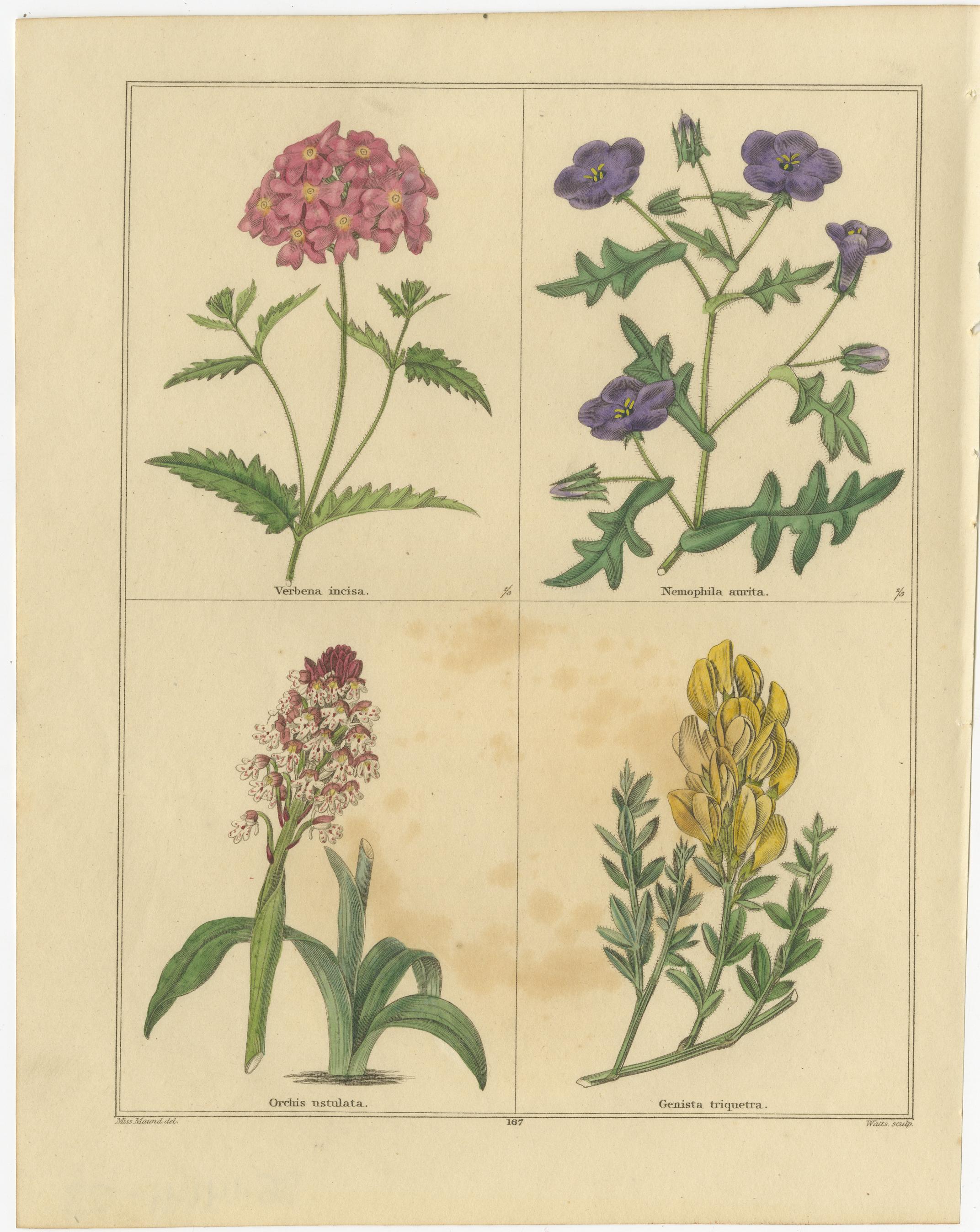
Good impressions with clear plate marks and vibrant original color. Occasional light foxing, especially on one print, and slight toning consistent with age. Margins ample and paper strong.
About this sheet
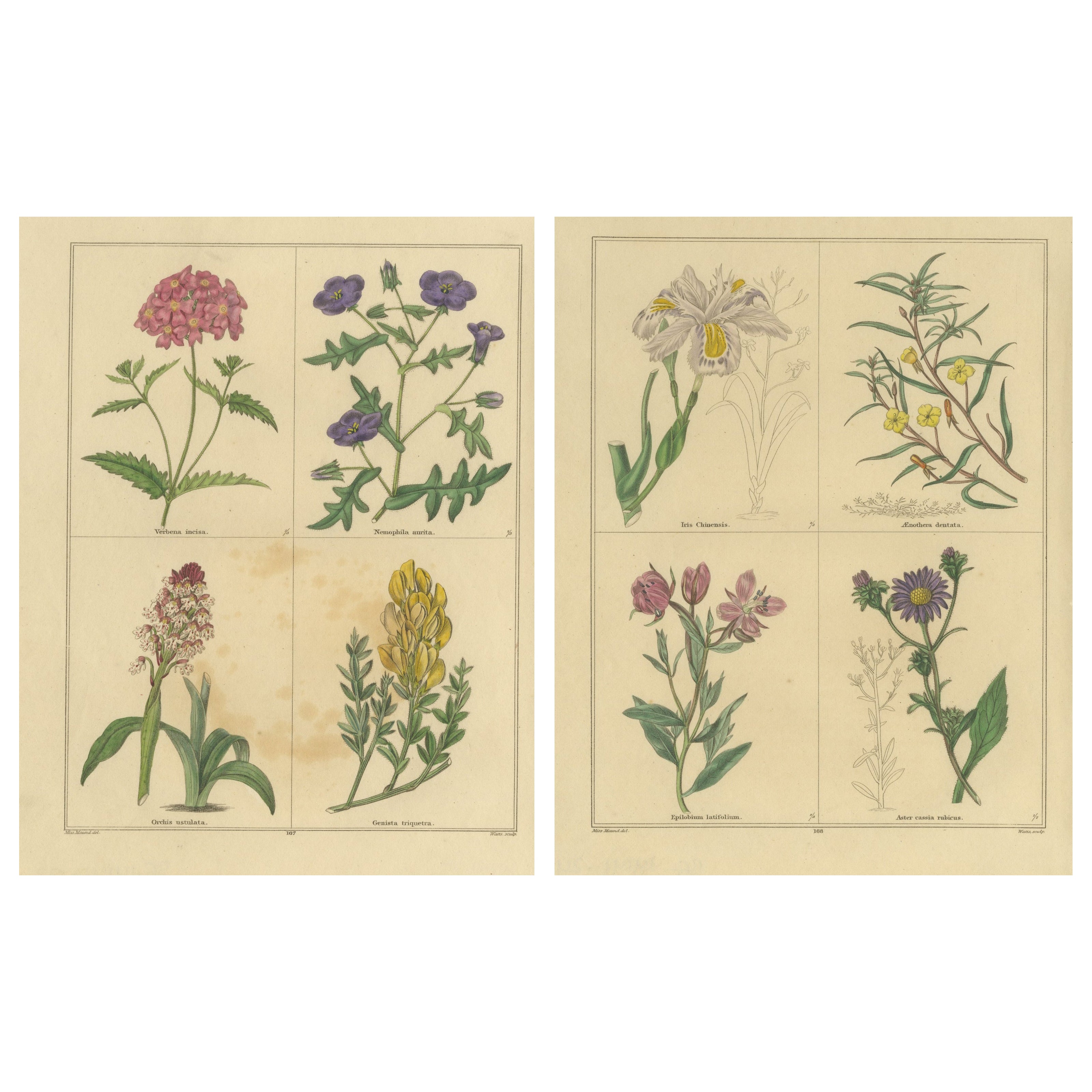
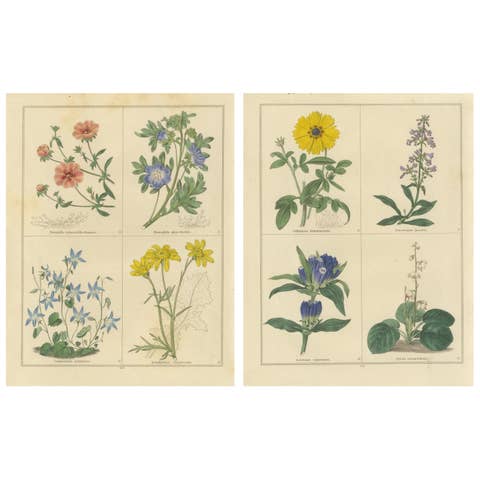
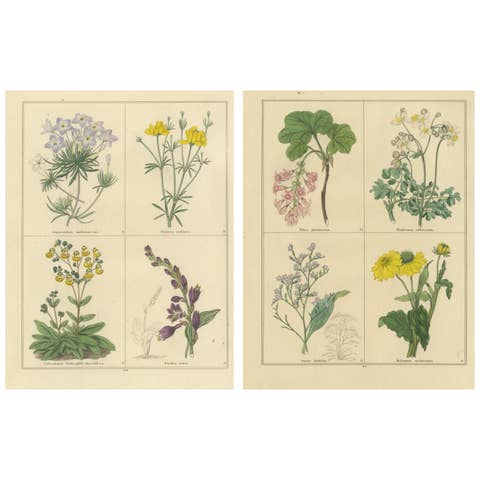
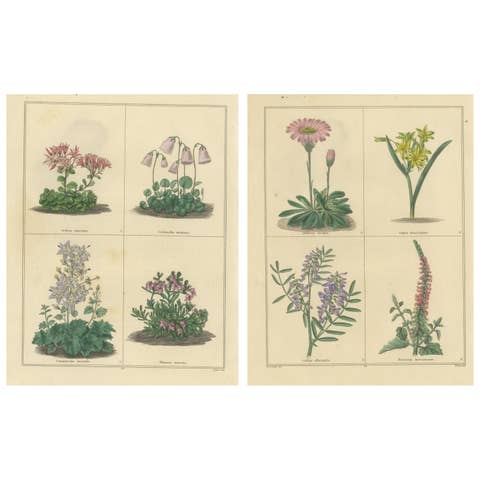
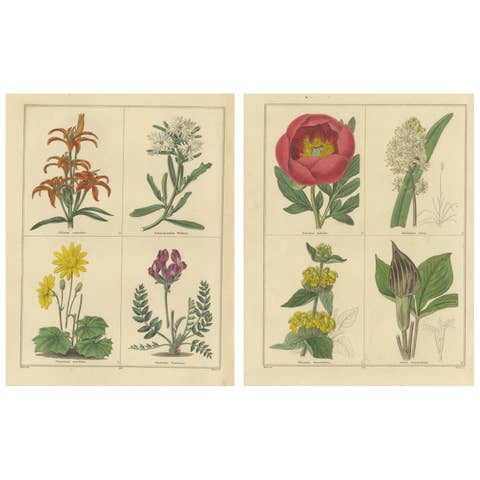
Pair of Botanical Engravings from *The Botanic Garden* by B. Maund, London c.1836
An elegant pair of original hand-colored botanical engravings from *The Botanic Garden* by Benjamin Maund (1790–1864), published in London circa 1836. These finely engraved and vividly colored plates represent the beauty and diversity of 19th-century ornamental flora, rendered with the precision and artistry that made Maund’s work a cornerstone of Victorian botanical illustration.
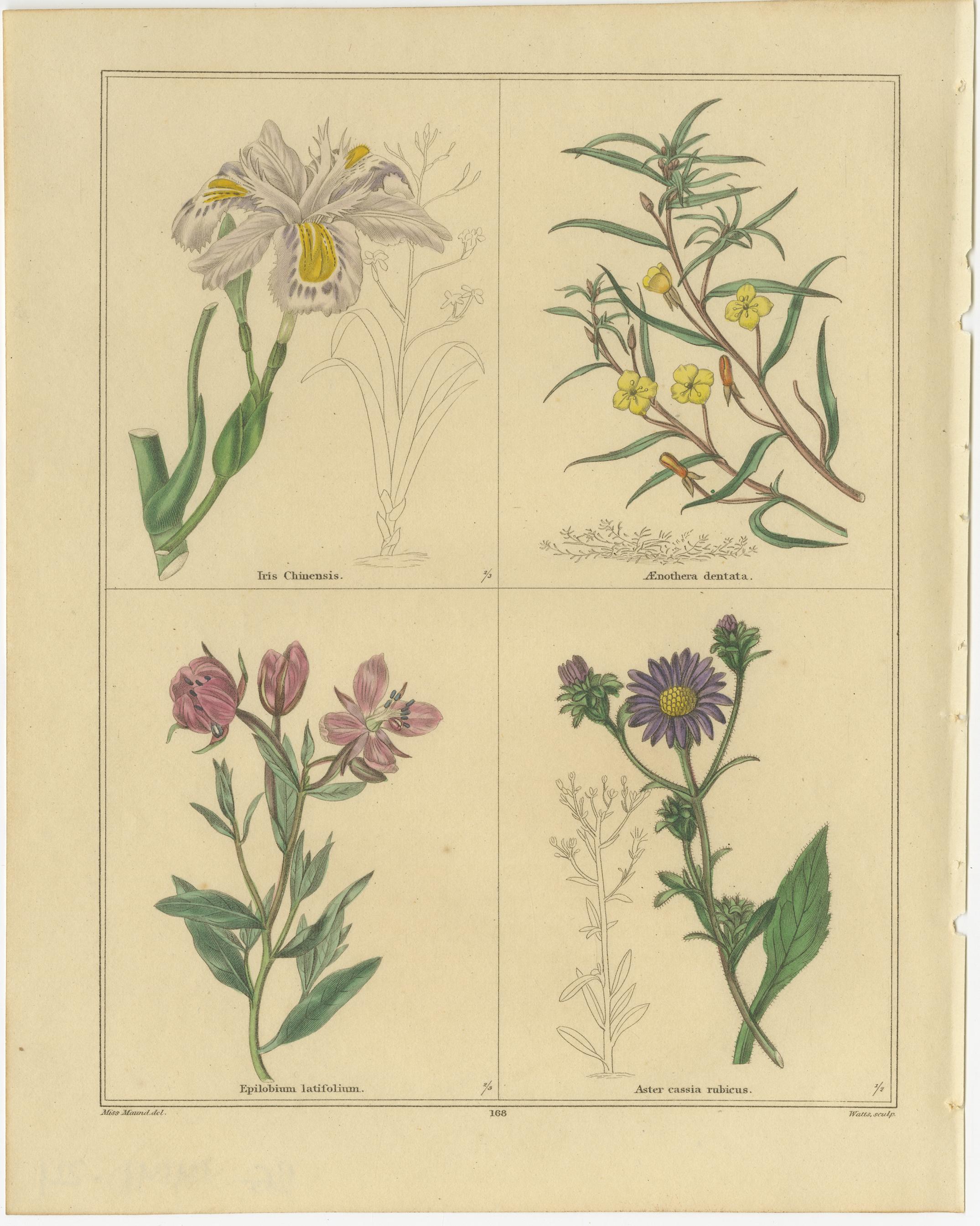
The left-hand sheet features *Verbena incisa* (cut-leaved vervain), *Nemophila aurita* (baby blue eyes), *Orchis ustulata* (burnt orchid), and *Genista triquetra* (three-angled broom). The right-hand engraving depicts *Iris Chinensis* (Chinese iris), *Ænothera dentata* (evening primrose), *Epilobium latifolium* (river beauty willowherb), and *Aster canus ruber* (red aster). Each plant is beautifully arranged in balanced compositions, emphasizing their distinct floral forms, textures, and coloration.
Benjamin Maund’s *The Botanic Garden; consisting of Highly Finished Representations of Hardy Ornamental Flowering Plants Cultivated in Great Britain* was issued in parts between 1825 and 1851, and is among the most admired botanical serials of its time. The plates were drawn by E.D. Smith and engraved by S. Watts, under Maund’s supervision. This publication sought to merge art and science, making horticultural knowledge accessible to enthusiasts and scholars alike while maintaining high aesthetic standards.
Printed on fine wove paper and hand-colored with delicate natural hues, these copperplate engravings exemplify the refined craftsmanship of 19th-century botanical printing. Their vibrant palette and precise engraving capture the lifelike texture and tone of each plant, making them ideal both as educational works and as decorative art.
Condition report: Good impressions with clear plate marks and vibrant original color. Occasional light foxing, especially on one print, and slight toning consistent with age. Margins ample and paper strong.
Framing tips: Frame together or separately using ivory or cream mounts with dark oak or gilt frames. Their harmonious natural palette makes them ideal for interior spaces emphasizing classic botanical or naturalist décor.
Technique: Hand-colored copperplate engraving Maker: Engraved by S. Watts after E.D. Smith; published by Benjamin Maund, London, c.1836