About this sheet
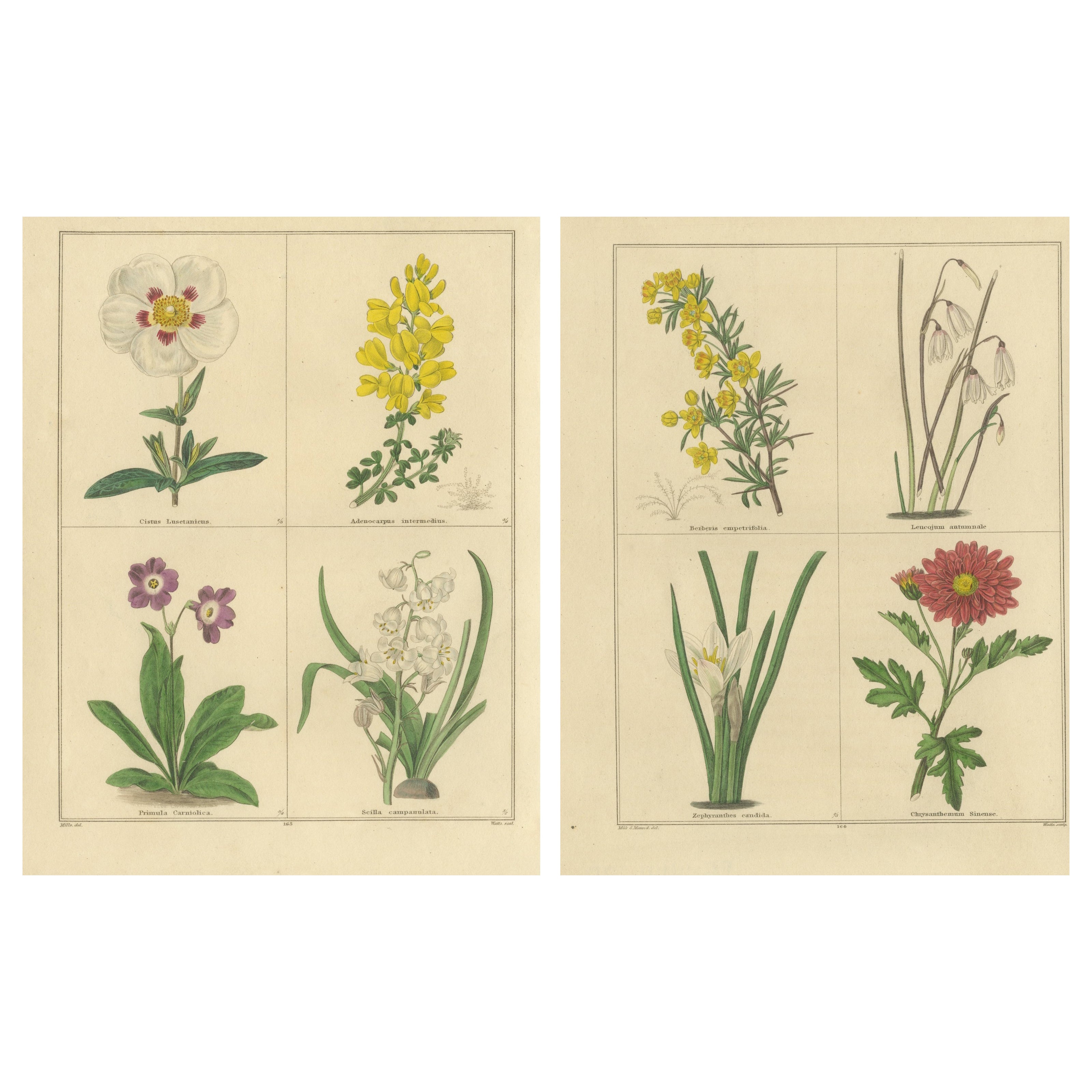
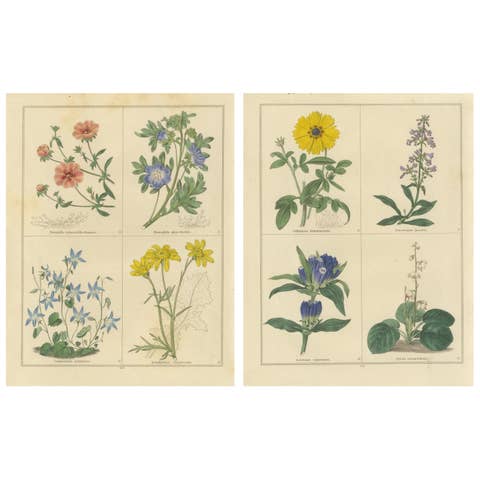
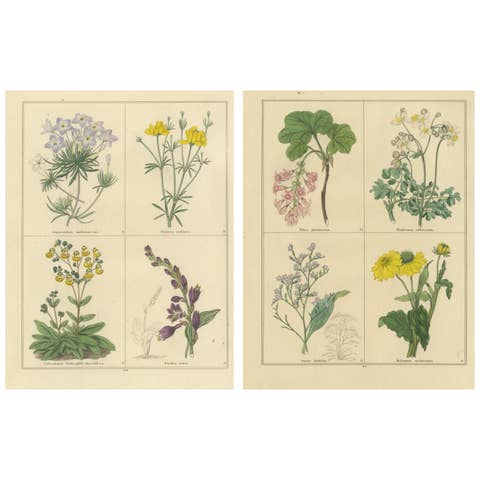
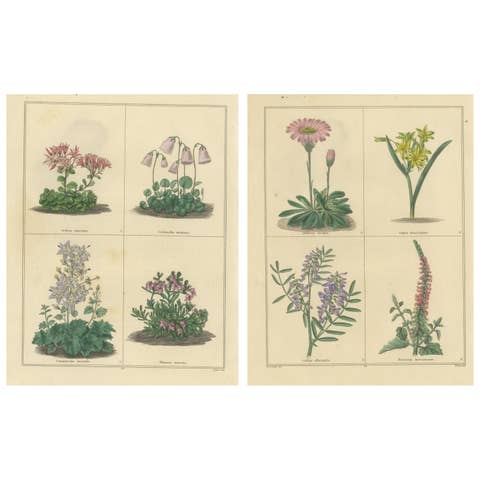
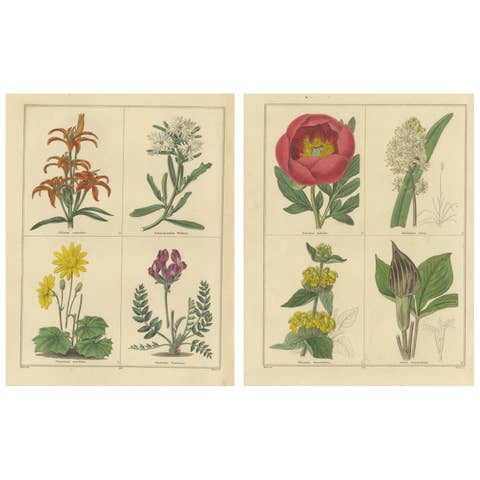
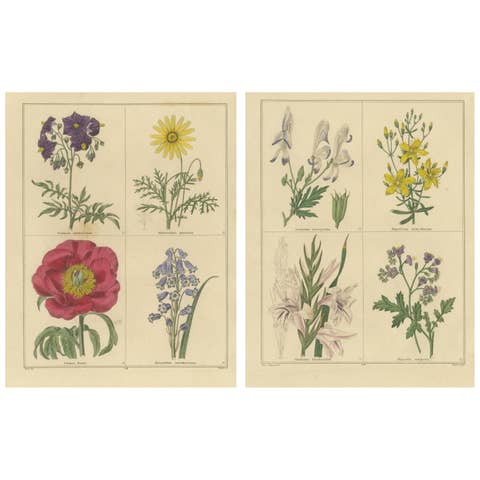
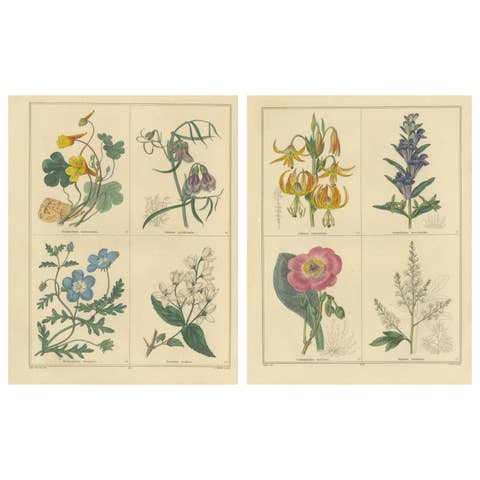
Pair of Botanical Engravings from The Botanic Garden by B. Maund, London c.1836
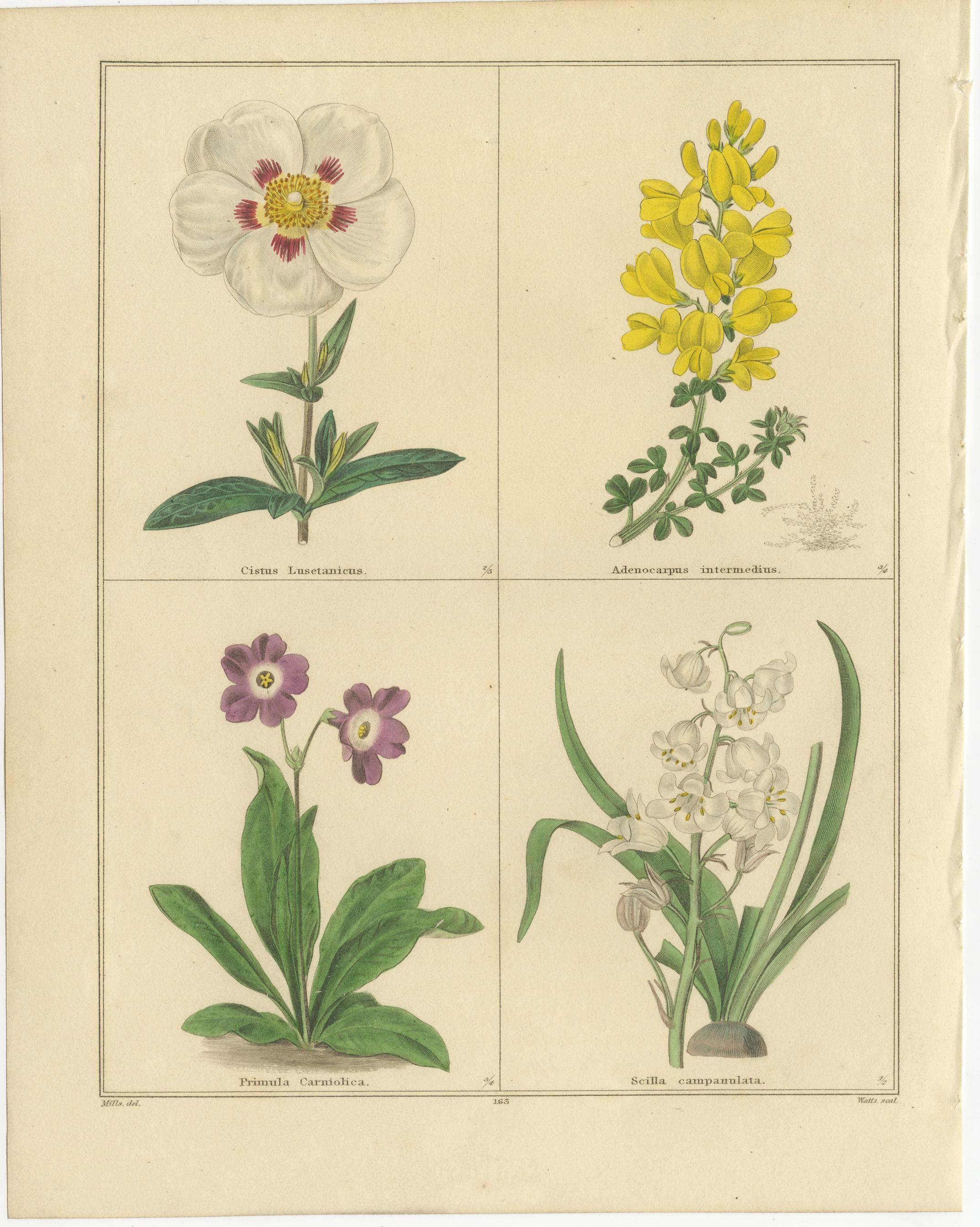
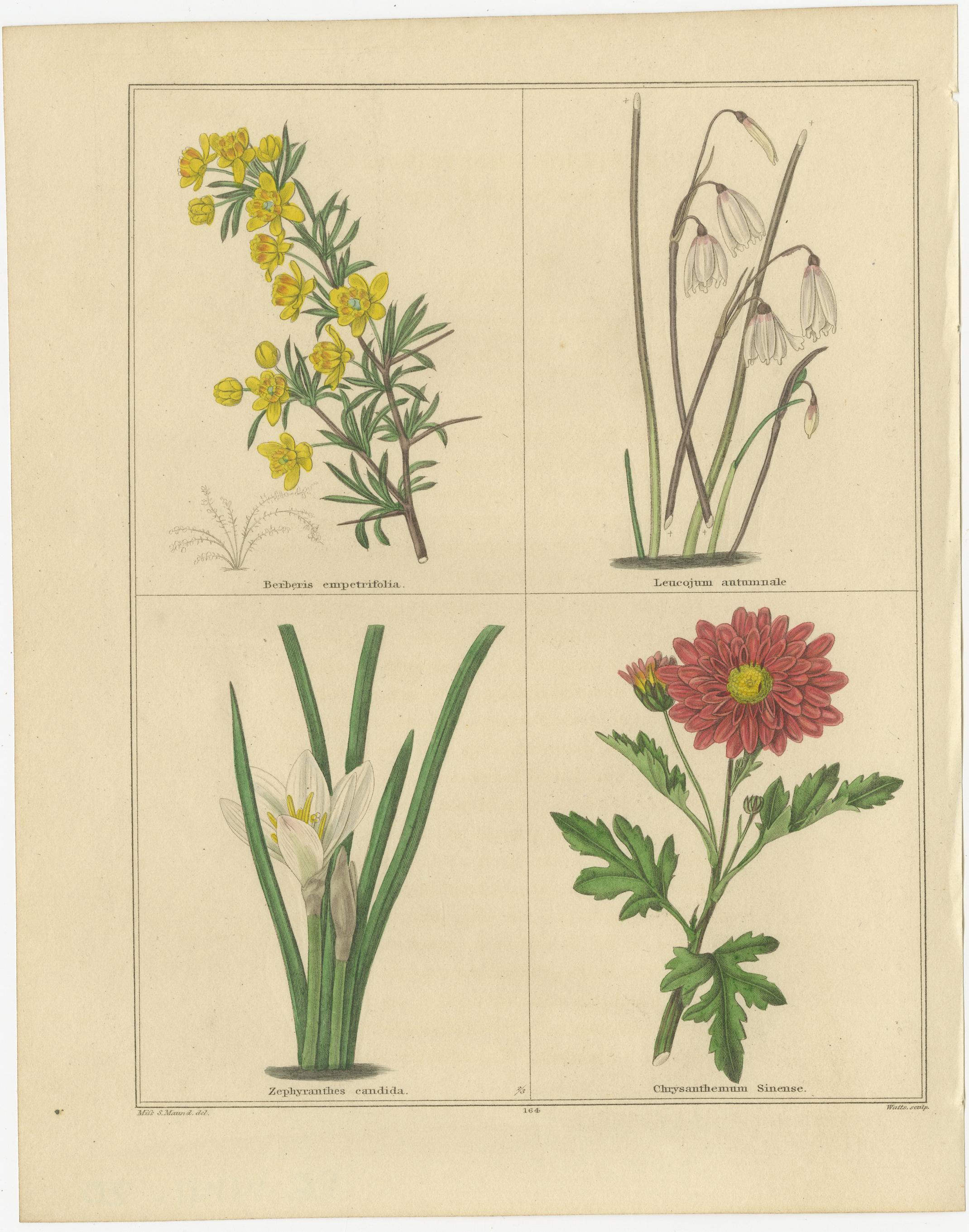
A refined pair of original hand-colored botanical engravings from *The Botanic Garden* by Benjamin Maund (1790–1864), Volume VII, published in London around 1836. These exquisite prints exemplify the harmony between scientific illustration and artistic beauty, hallmarks of early Victorian botanical art. Each plate features four different flowering plants, engraved with meticulous detail and delicately colored by hand.
The left-hand sheet presents *Cistus Lusitanicus* (Portuguese rockrose), *Adenocarpus intermedius* (yellow broom), *Primula Carnolica* (Carniolan primrose), and *Scilla campanulata* (Spanish bluebell). The right-hand engraving depicts *Berberis empetrifolia* (Patagonian barberry), *Leucojum autumnale* (autumn snowflake), *Zephyranthes candida* (white rain lily), and *Chrysanthemum sinense* (Chinese chrysanthemum). The engravings capture the diversity of flowering plants cultivated in Great Britain, reflecting Maund’s passion for both horticulture and aesthetics.
Benjamin Maund’s *The Botanic Garden; consisting of Highly Finished Representations of Hardy Ornamental Flowering Plants Cultivated in Great Britain* was one of the most celebrated botanical publications of the 19th century. Drawn by E.D. Smith and engraved by S. Watts, the series combined accuracy and elegance to document the floral riches of the British Isles. Maund, a Fellow of the Linnean Society, designed his work to educate gardeners and naturalists while appealing to collectors with its delicate compositions and lifelike coloring.
Printed on quality wove paper and finished with hand-applied color, these copperplate engravings represent the finest English botanical craftsmanship of their time. Their balance of scientific precision and artistic grace makes them highly desirable for collectors of natural history prints.
Condition report:
Very good condition with crisp plate impressions and vibrant original hand-coloring. Slight toning and occasional foxing in margins, consistent with age. Clear plate marks visible.
Framing tips:
Display as a harmonious pair in soft cream or muted green mats with classic gold or natural wood frames. Ideal for a study, library, or botanical-themed interior, where their gentle symmetry and rich color palette can be fully appreciated.
Technique: Hand-colored copperplate engraving
Maker: Engraved by S. Watts after E.D. Smith; published by Benjamin Maund, London, c.1836