About this sheet
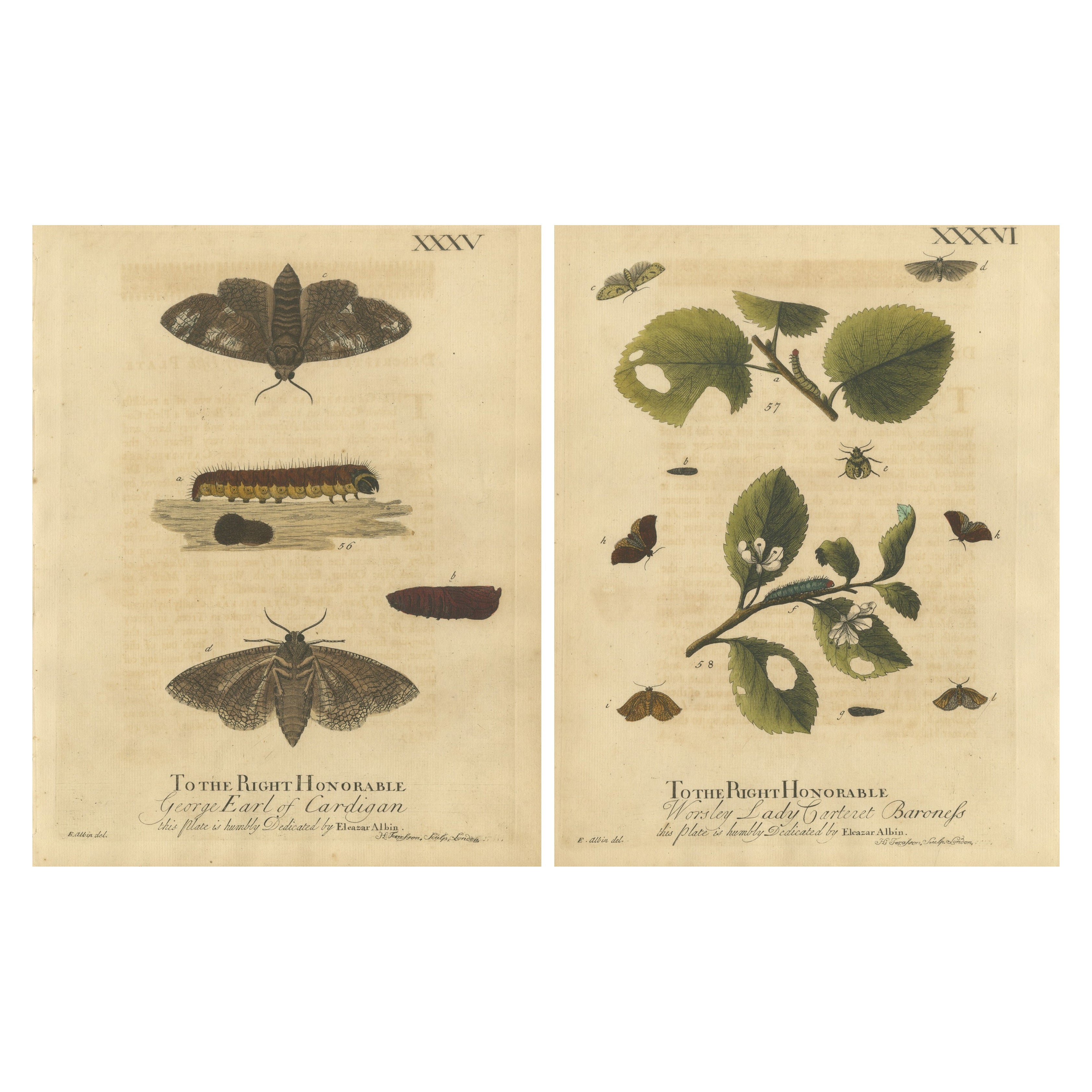
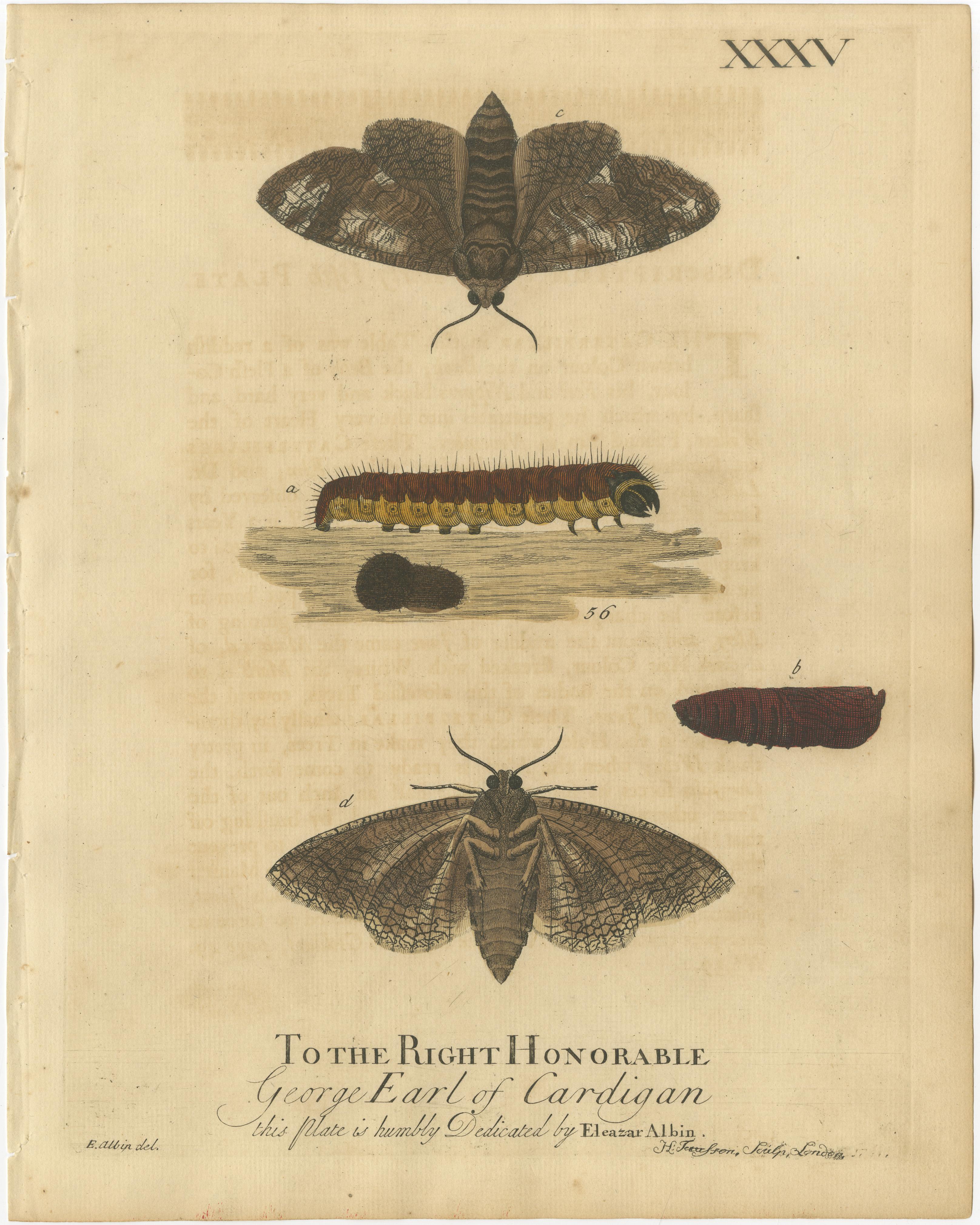
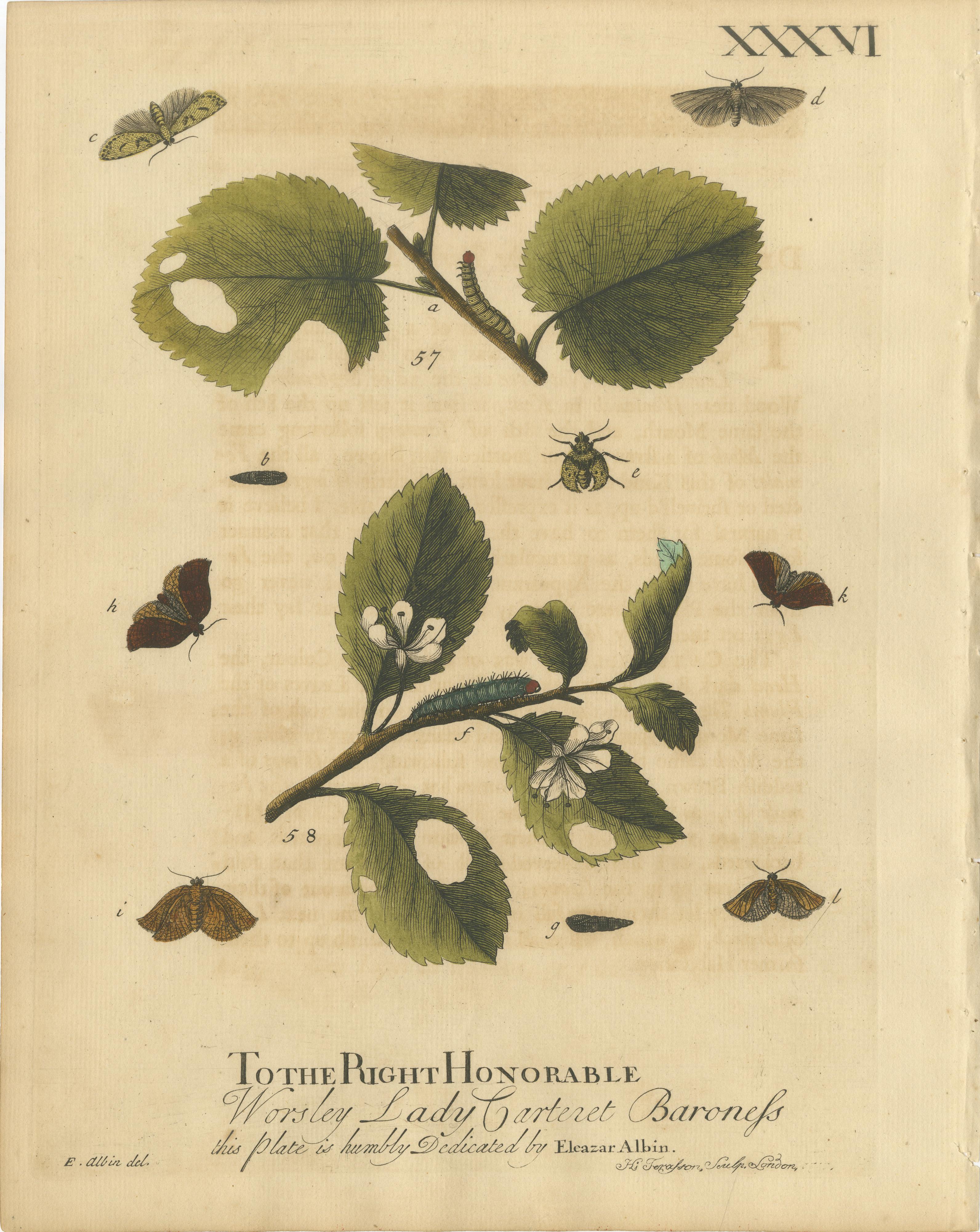
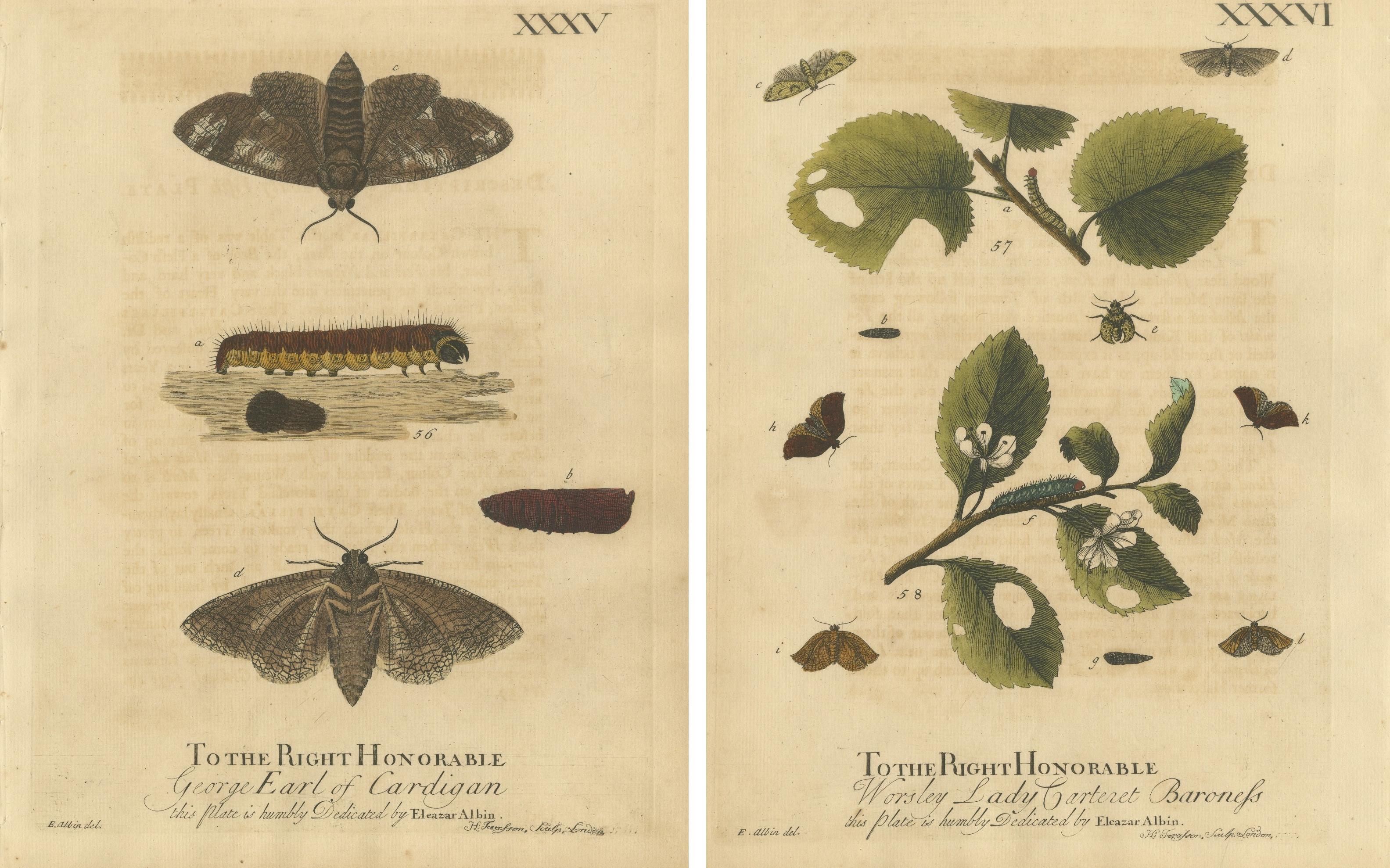
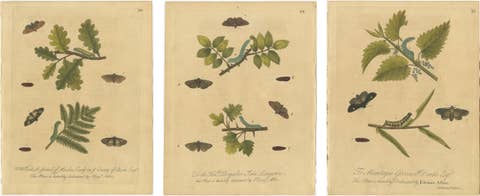
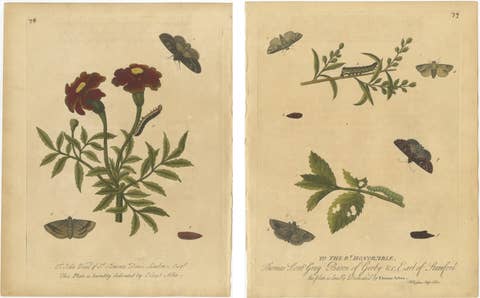
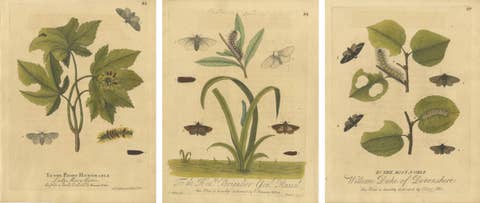
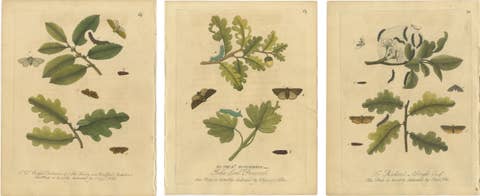
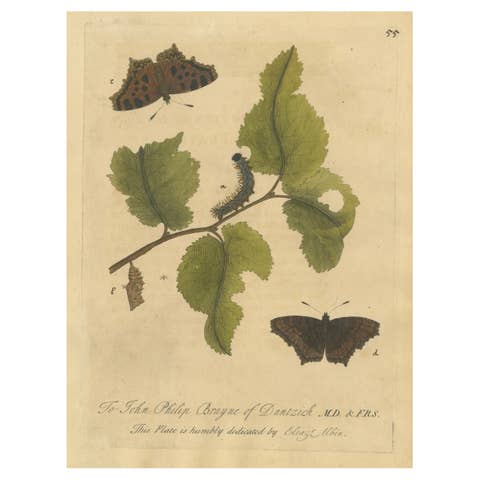
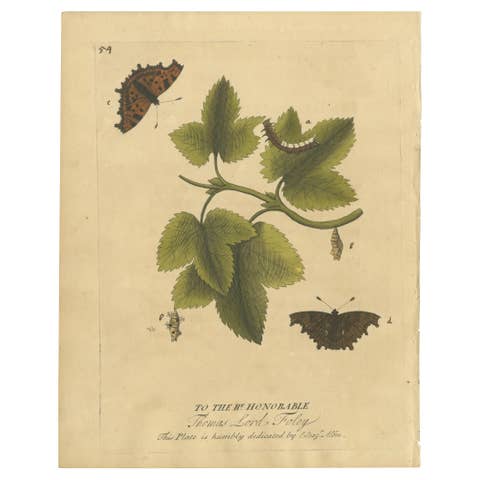
This set of two original hand-colored copper engravings was published in London in 1720 as part of Eleazar Albin’s influential work A Natural History of English Insects*. Each plate presents English moths shown together with their caterpillars, pupae, and host plants, reflecting Albin’s intention to document the full life cycle of each species in a single, comprehensible composition.
The first plate in this set is dedicated by Albin “To the Right Honorable George Earl of Cardigan.” It is more insect-focused than botanical, prominently featuring large adult moths with finely detailed wings rendered in soft browns and greys. Beneath them, a robust caterpillar and its chrysalis are shown resting on a simplified ground surface. The emphasis on the insect anatomy and wing patterning gives this plate a strong scientific character and highlights Albin’s careful observation of form and texture.
The companion plate is dedicated “To the Right Honorable Worsley Lady Carteret, Baroness.” It presents caterpillars feeding on leafy branches with clearly veined, serrated leaves, accompanied by adult moths arranged around the plant. Additional life stages, including eggs and pupae, are shown in small detail. The composition balances insect and plant equally, with soft green foliage contrasting against the warmer tones of the moths’ wings.
Together, these two engravings form a complementary pair: one emphasizing the moth itself, the other integrating insect and host plant in a more naturalistic setting. Their consistent hand coloring, aristocratic dedication inscriptions, and early eighteenth-century paper make them an appealing set for collectors of British natural history prints or for refined interior display.
Condition report:
Light overall toning consistent with early 18th-century paper. Minor age-related spotting and surface marks. Hand coloring remains clear and well defined.
Framing tips:
Frame as a matched pair with dark wood or ebonized frames and soft off-white mats to enhance contrast while respecting the antique character of the paper.