About this sheet
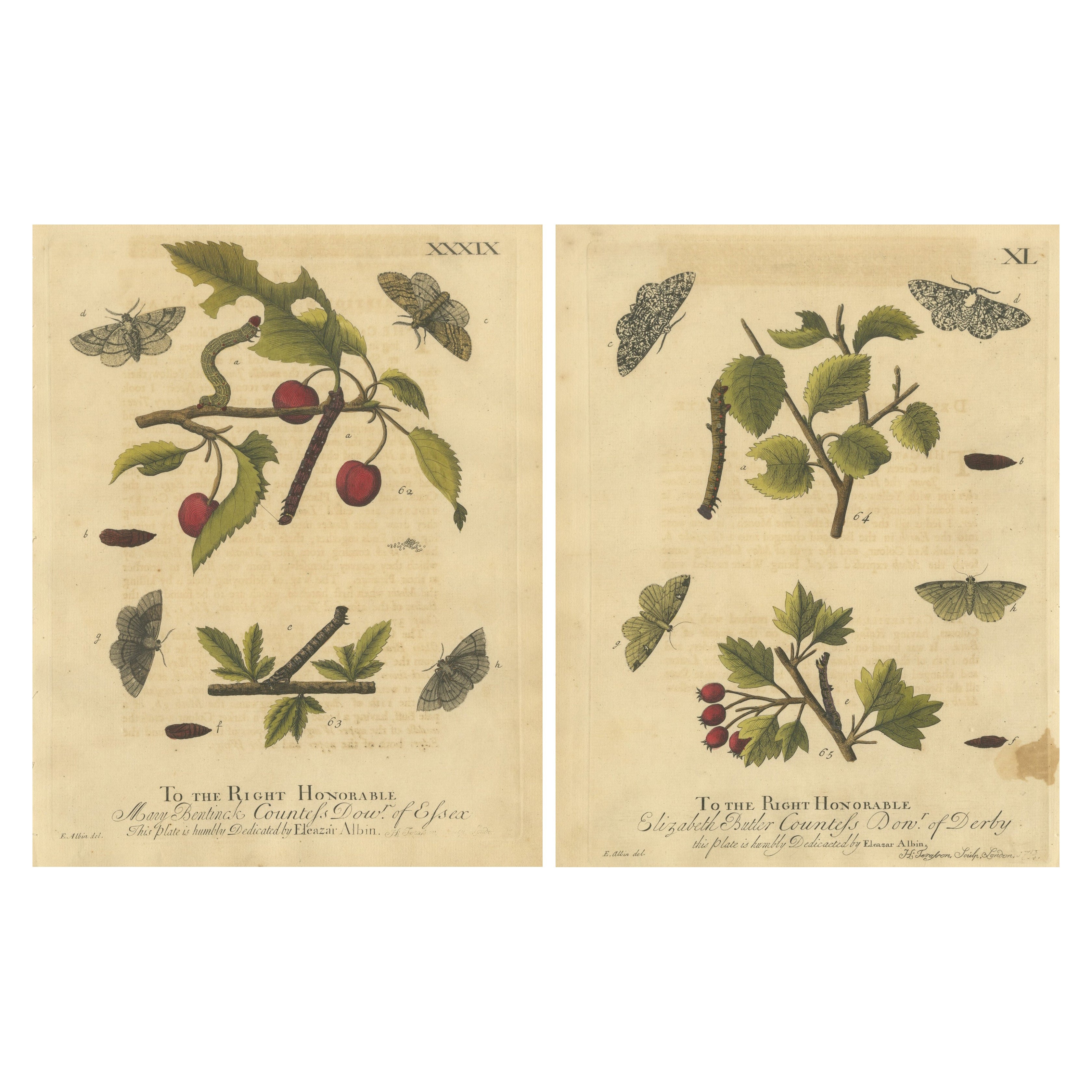
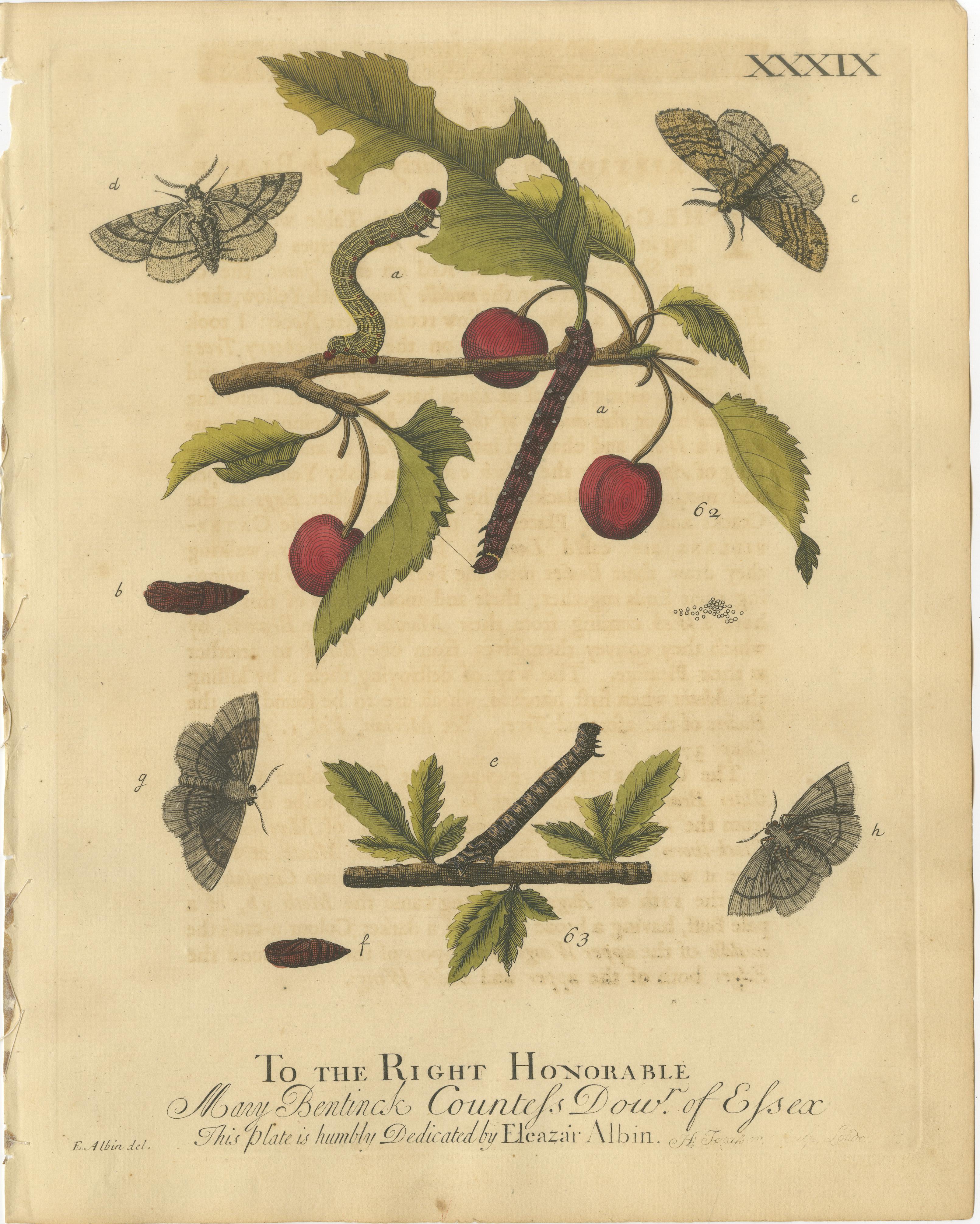
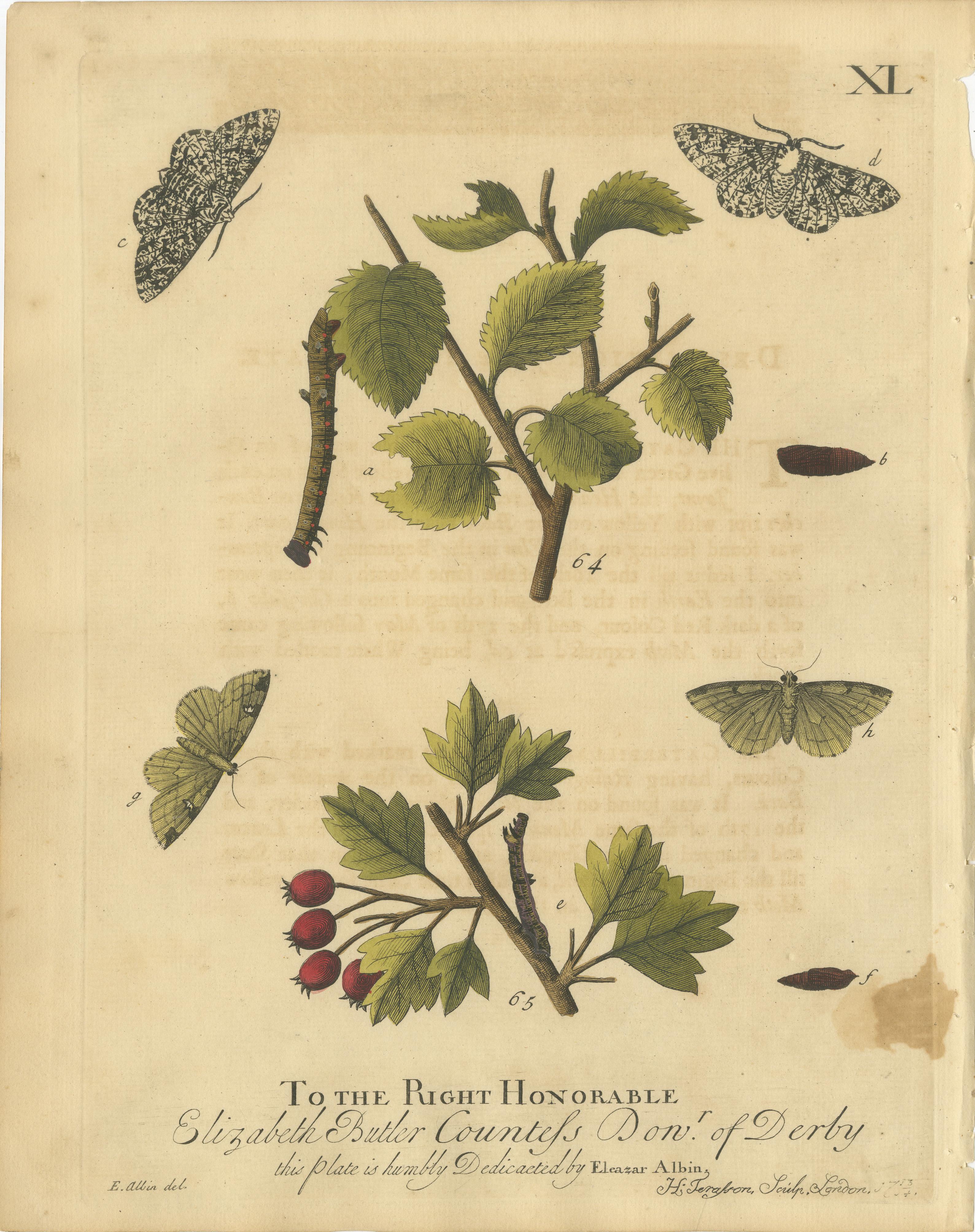
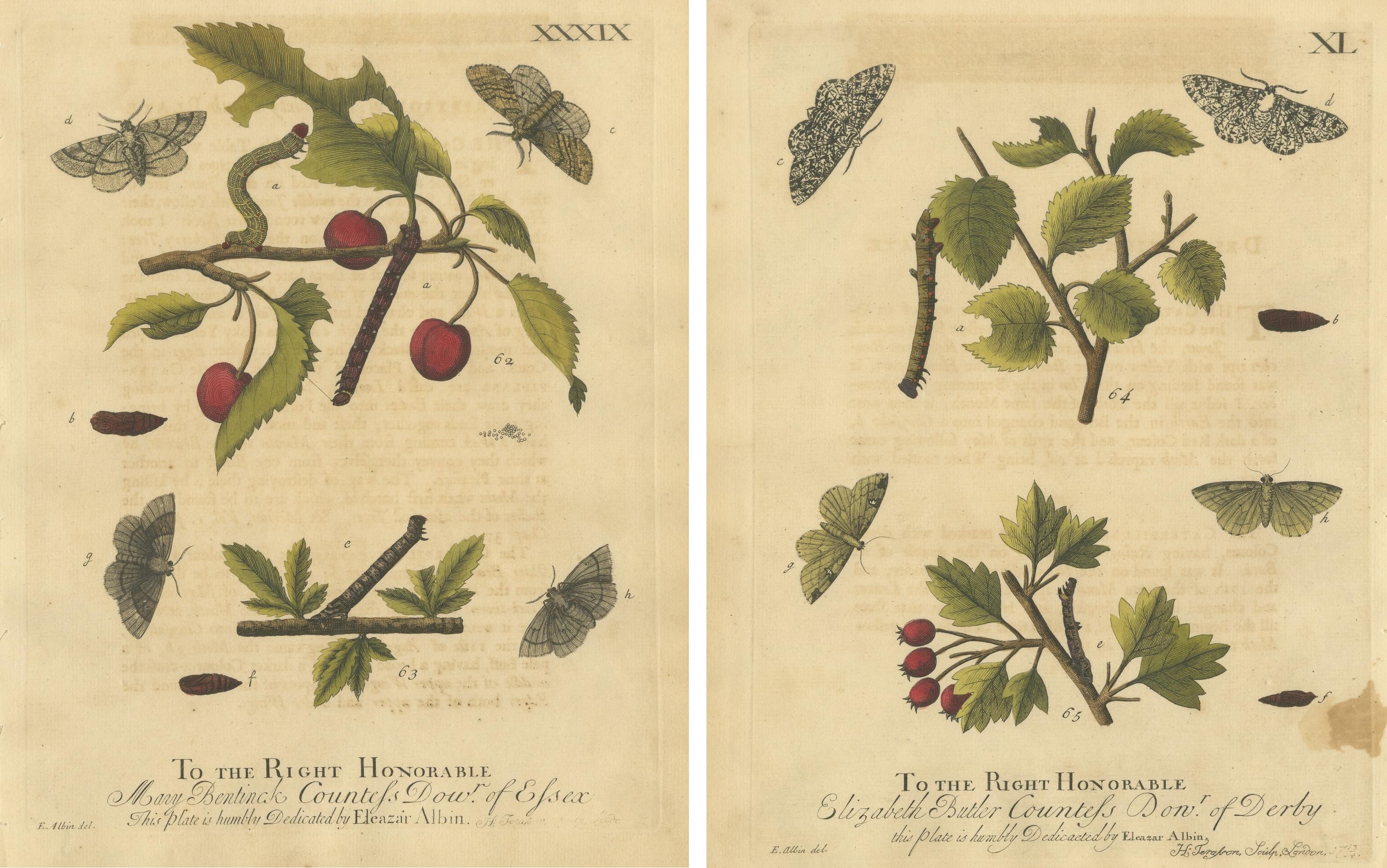
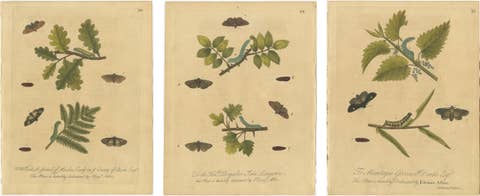
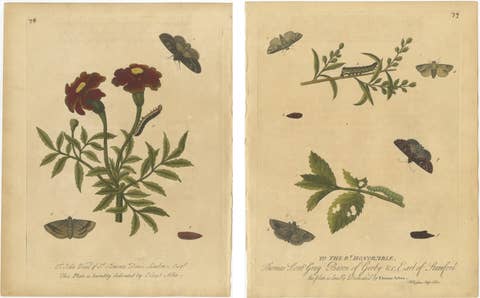
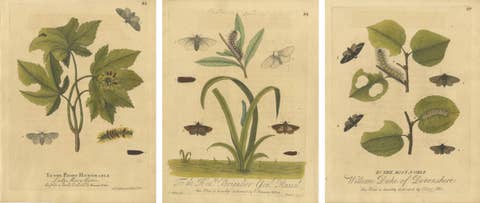
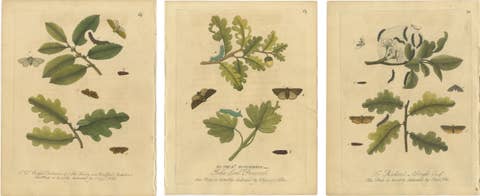
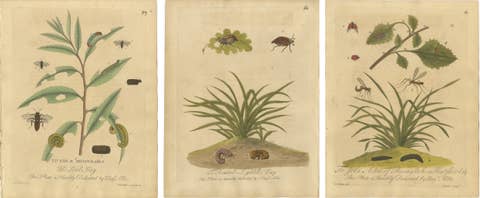
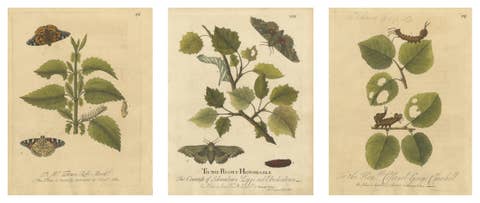
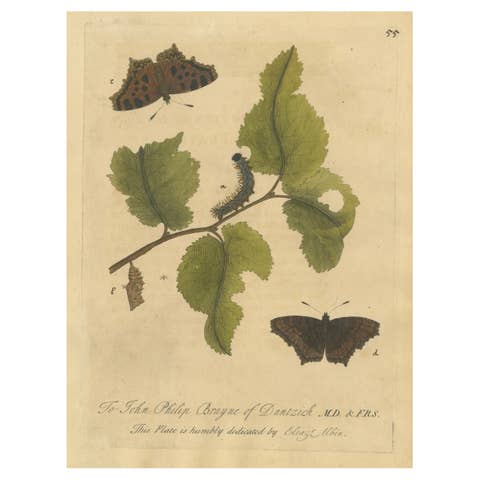
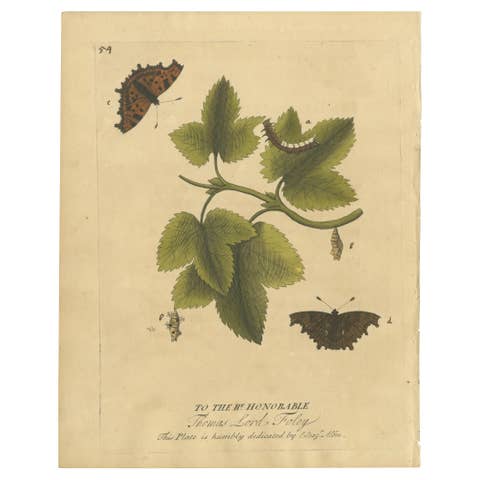
This set of two original hand-colored copper engravings was published in London in 1720 as part of Eleazar Albin’s influential A Natural History of English Insects. As throughout the series, Albin presents English moths together with their caterpillars, pupae, eggs, and host plants, arranging the elements to illustrate the full life cycle while maintaining a refined, decorative balance.
The first plate in this set is dedicated by Albin “To the Right Honorable Mary Bentinck, Countess Dowager of Essex.” It depicts caterpillars feeding on a fruit-bearing branch, the red fruits strongly suggesting cherry or a closely related hedgerow species. Adult moths with finely patterned wings are arranged around the branch, while the chrysalis and eggs are shown separately below. The contrast between the deep red fruit and the soft green foliage gives this plate particular visual richness and makes it one of the more colorful compositions in the series.
The companion plate bears the dedication “To the Right Honorable Elizabeth Butler, Countess Dowager of Derby.” It shows caterpillars feeding on a woody shrub with serrated leaves and clusters of red berries, likely hawthorn or a similar English hedgerow plant. Adult moths appear in both resting and spread-wing positions, rendered in pale greys and mottled patterns typical of noctuid and geometer species. The inclusion of the pupal stage reinforces Albin’s systematic approach to documenting metamorphosis.
Together, these two engravings form a harmonious pair centered on fruiting and berry-bearing shrubs common in the English countryside. Their consistent hand coloring, aristocratic dedication inscriptions, and combination of botanical and entomological detail make them especially appealing to collectors of early British natural history and to interior designers seeking historically grounded decorative works.
Condition report:
Light overall toning consistent with early 18th-century paper. Minor age-related spotting and light surface marks. Hand coloring remains clear and well defined.
Framing tips:
Frame as a matched pair with dark wood or walnut frames and soft off-white mats to enhance the contrast between the foliage, fruit, and antique paper tone.