About this sheet
Antique English Botanical Prints – Hare’s-ear & Water Dropwort for Interiors c.1902
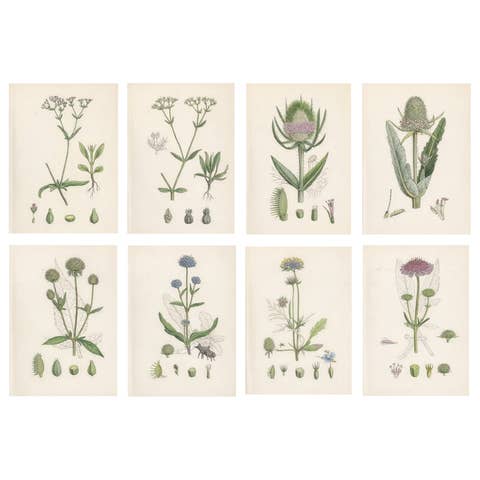
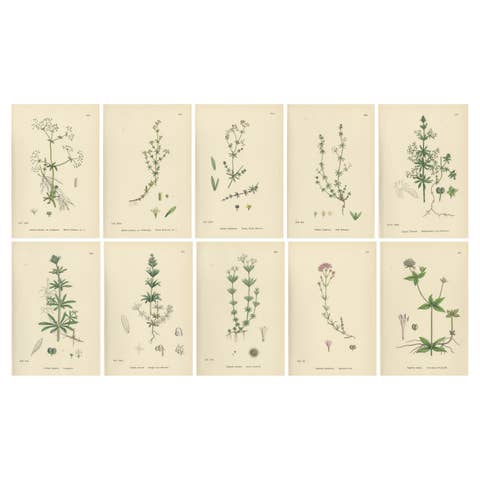
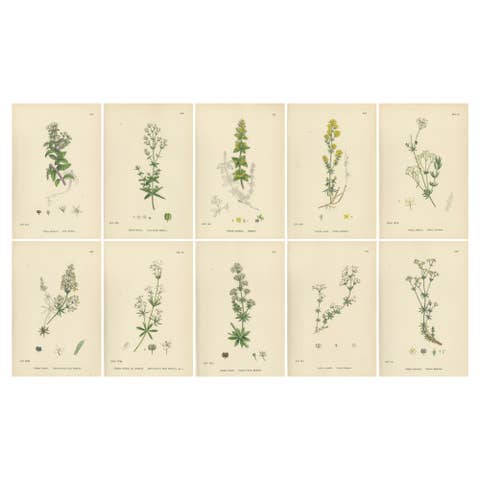
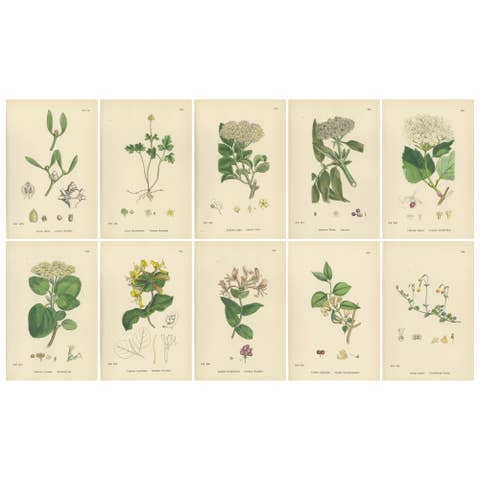
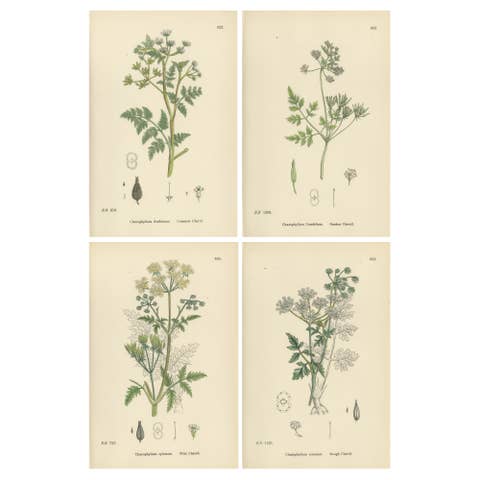
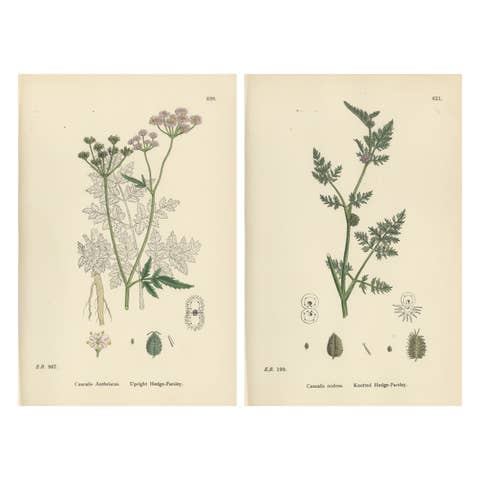
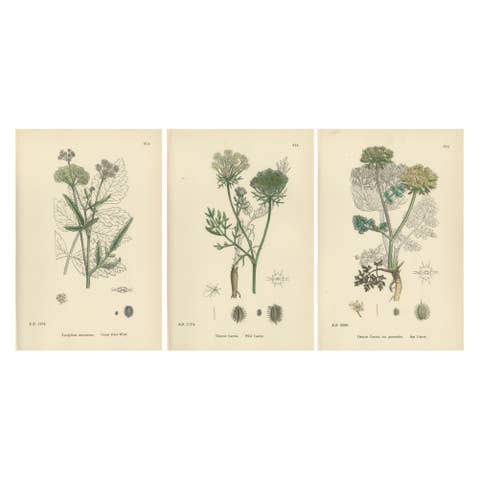
This attractive set of four original hand-colored botanical plates comes from English Botany; or, Coloured Figures of British Plants, Third Edition, edited by John T. Boswell Syme and published in London by George Bell & Sons in 1902. The illustrations are based on the classic work of James Sowerby and J.E. Sowerby, whose plates remain benchmarks for accuracy and visual clarity in British botanical art.
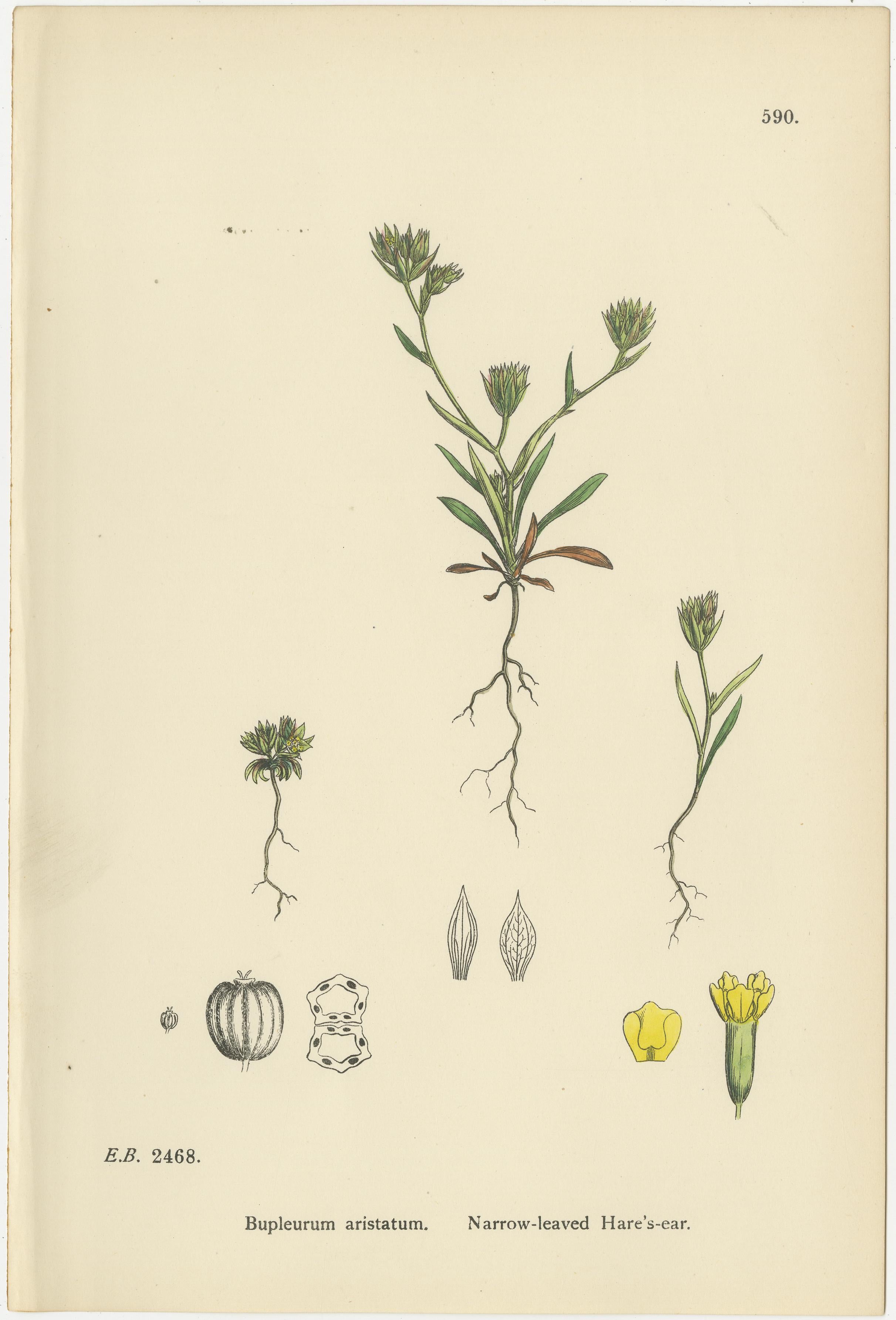
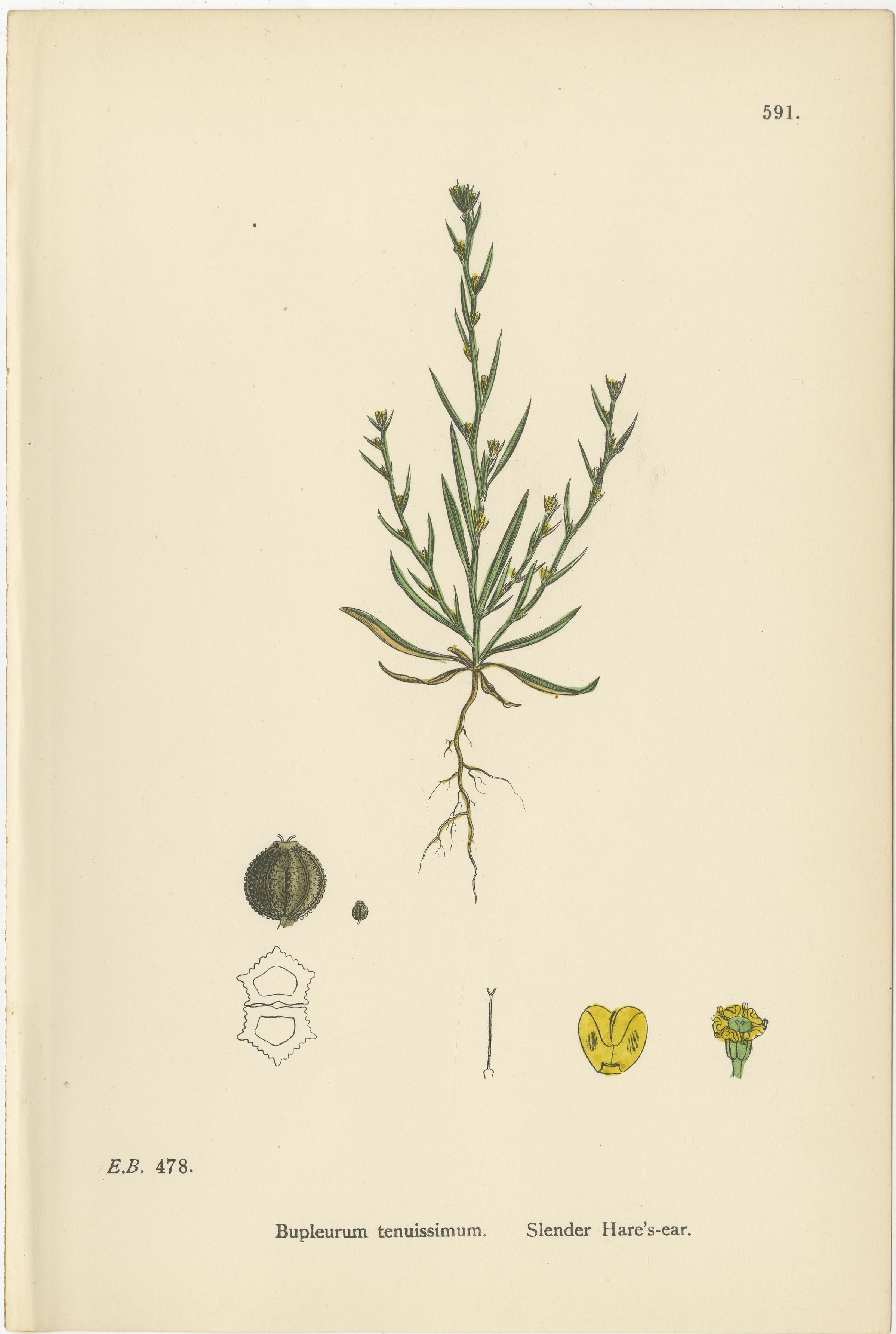
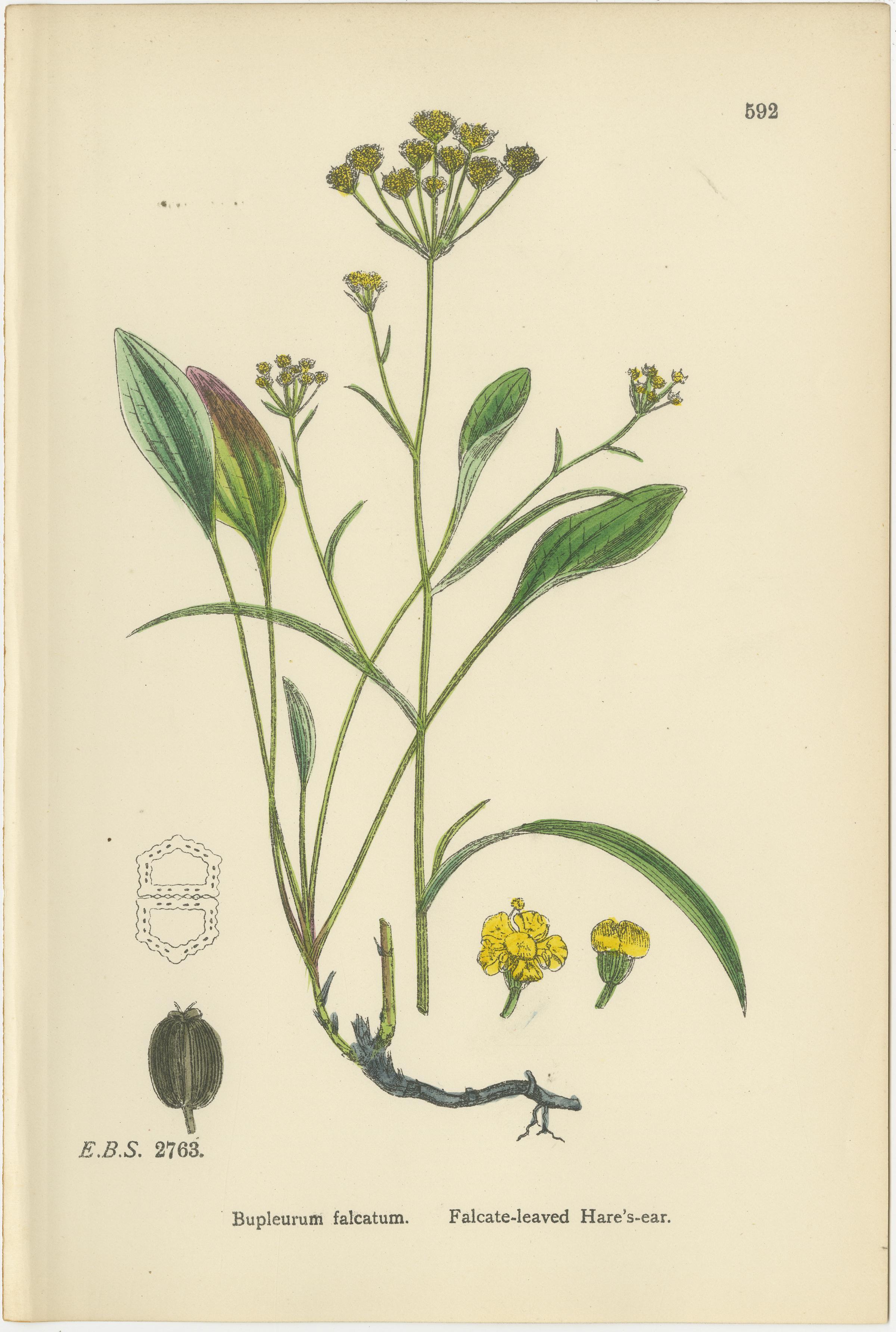
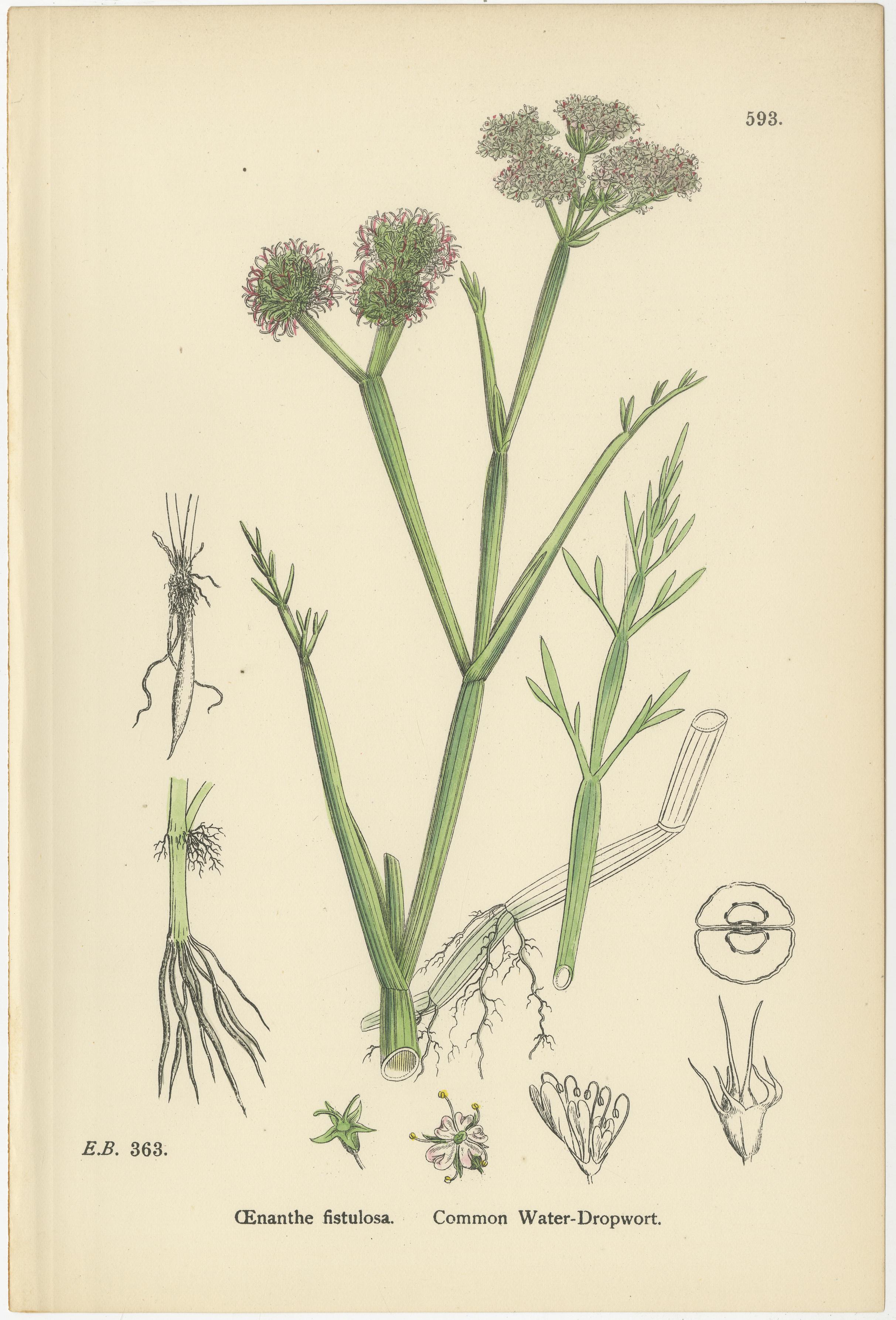
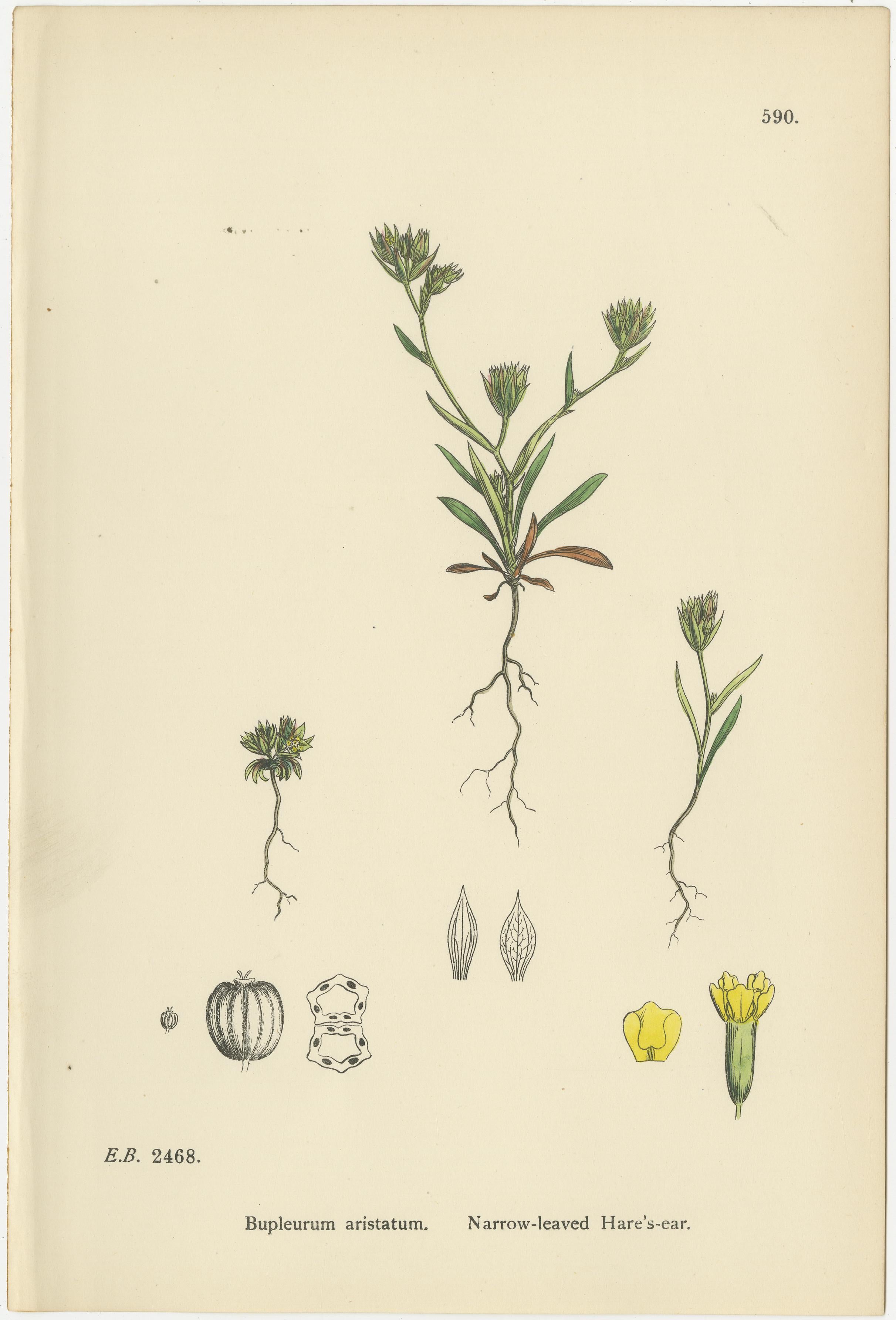
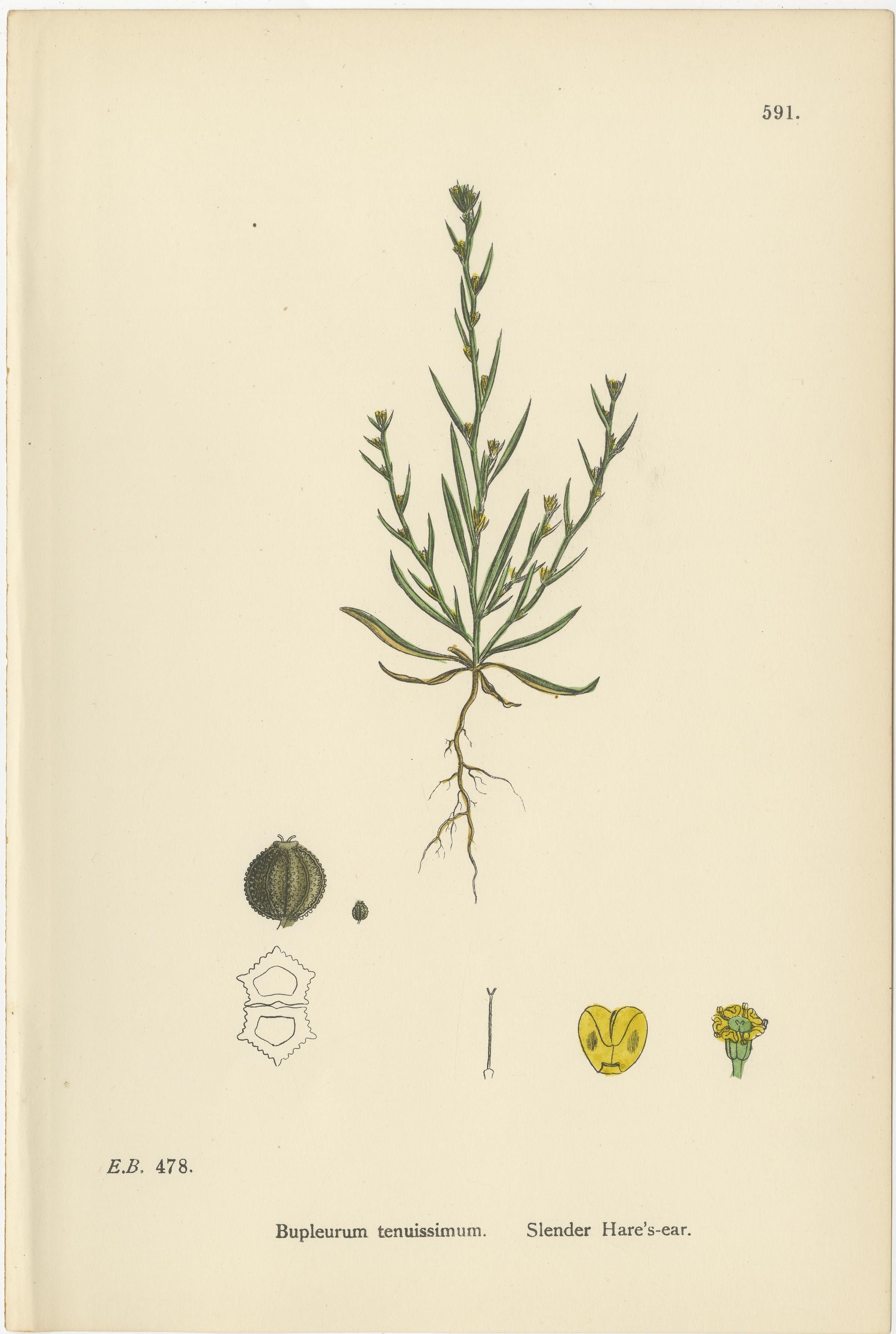
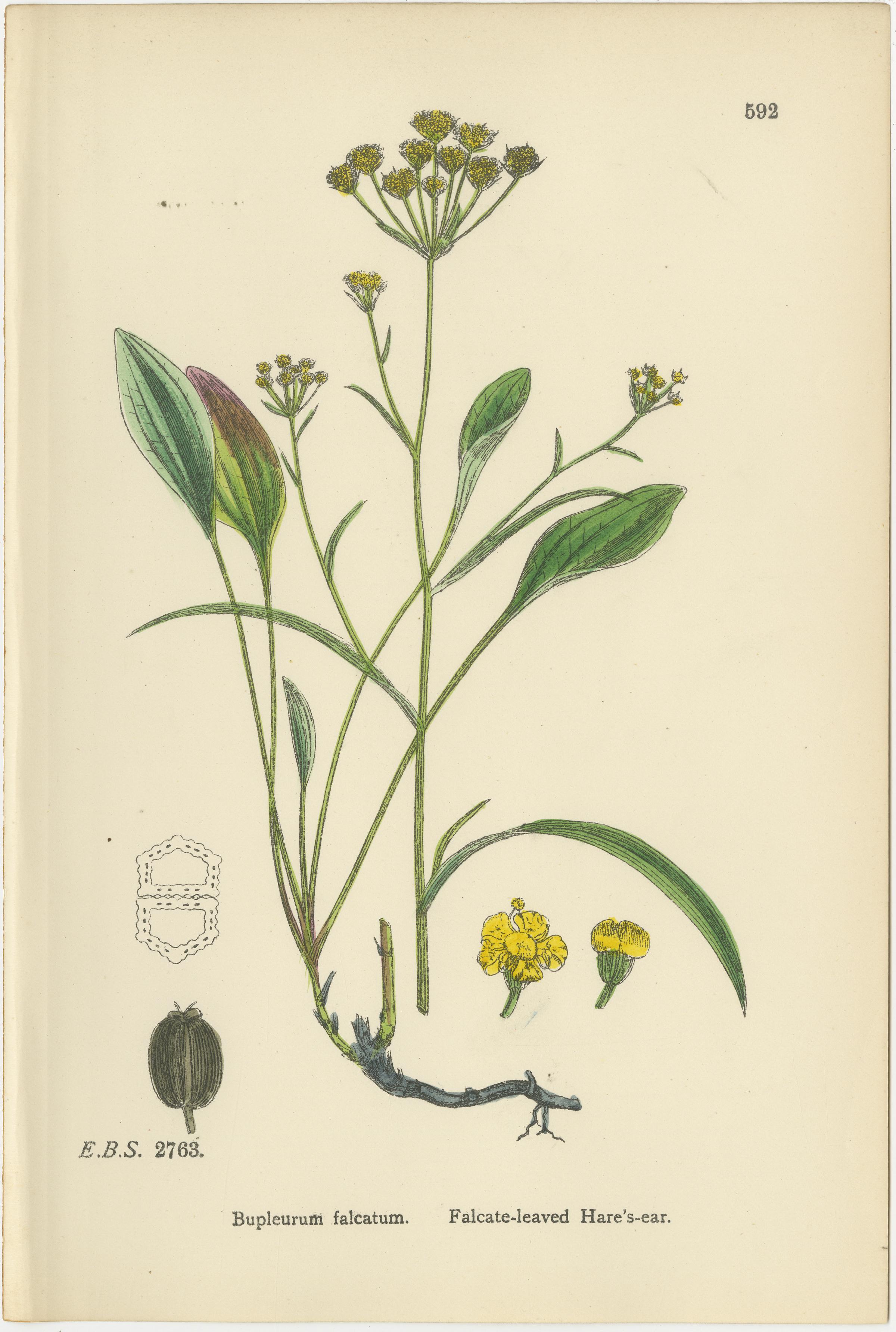
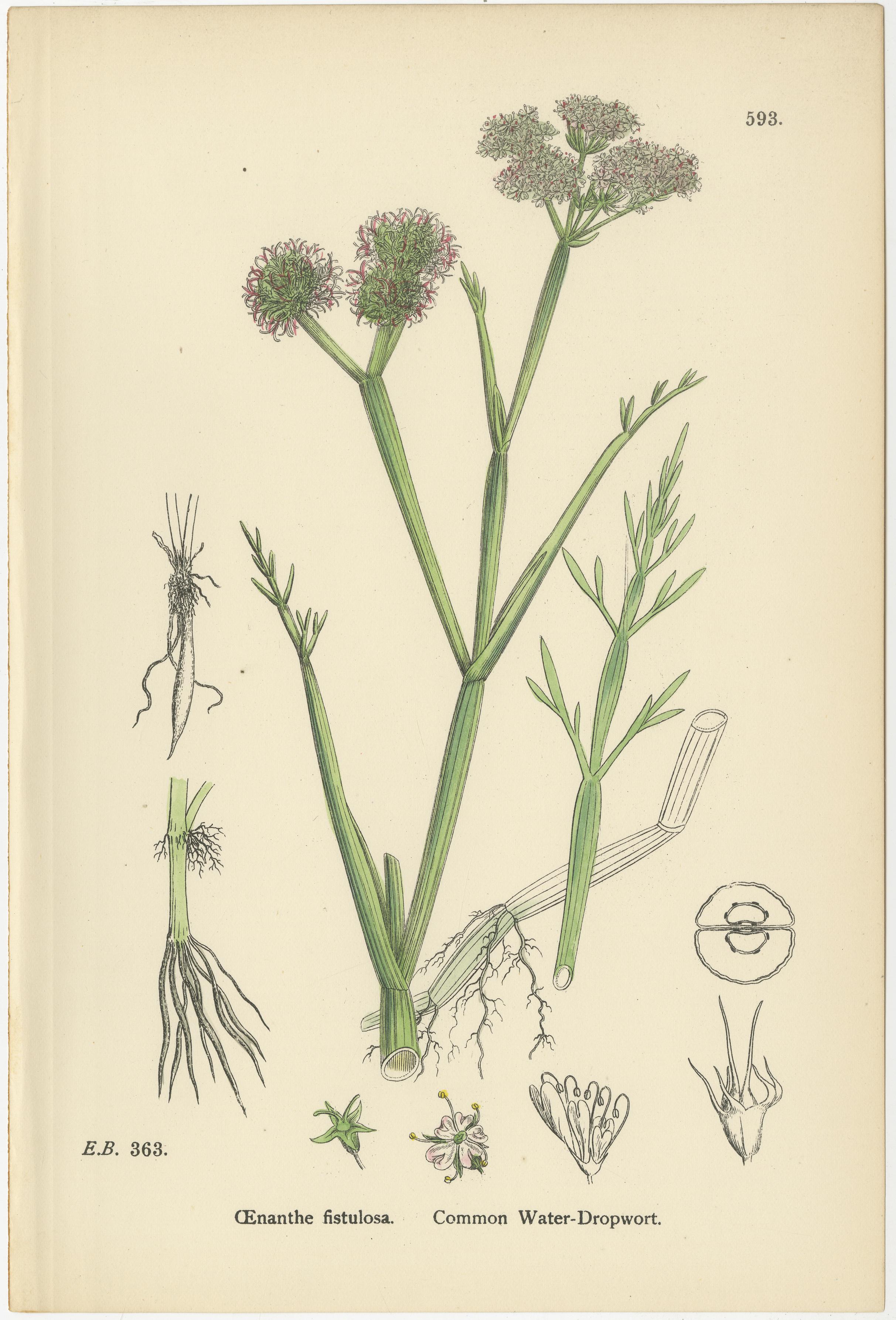
The group focuses on elegant, linear species with strong graphic appeal, making them particularly suitable for refined interior settings. Depicted are three members of the Hare’s-ear genus and one wetland species. Narrow-leaved Hare’s-ear (Bupleurum aristatum) is shown with its slim leaves and compact habit, while Slender Hare’s-ear (Bupleurum tenuissimum) presents an even more delicate, airy structure. Falcate-leaved Hare’s-ear (Bupleurum falcatum) is instantly recognizable by its curved, sickle-shaped leaves, giving the plate a dynamic rhythm. Completing the group is Common Water-Dropwort (Oenanthe fistulosa), a tall marshland plant illustrated with flowering umbels, hollow stems, and detailed root studies.
Each plate includes the full plant, root system, and enlarged details of flowers, fruits, and seeds, reflecting the scientific purpose of the work while maintaining a calm, decorative balance. The restrained palette of greens and soft yellows, combined with generous margins, gives these prints a timeless elegance. They work beautifully in pairs or as a small grid and are ideal for interiors seeking a subtle botanical or natural-history accent, from classic country houses to modern, minimalist spaces.
Keywords: antique botanical print, English botany, British wildflowers, Hare’s-ear, Water Dropwort, Sowerby botanical, hand-colored engraving, botanical wall art, nature interior.
Condition report:
Very good antique condition. Light, even age toning consistent with early 20th-century paper. Minor scattered specks or faint handling marks may be present. Colors remain fresh and well defined.
Tips for framing:
Best framed with light oak, walnut, or slim black frames. Use off-white or pale cream mats to preserve the airy look and emphasize the fine botanical detail.