About this sheet
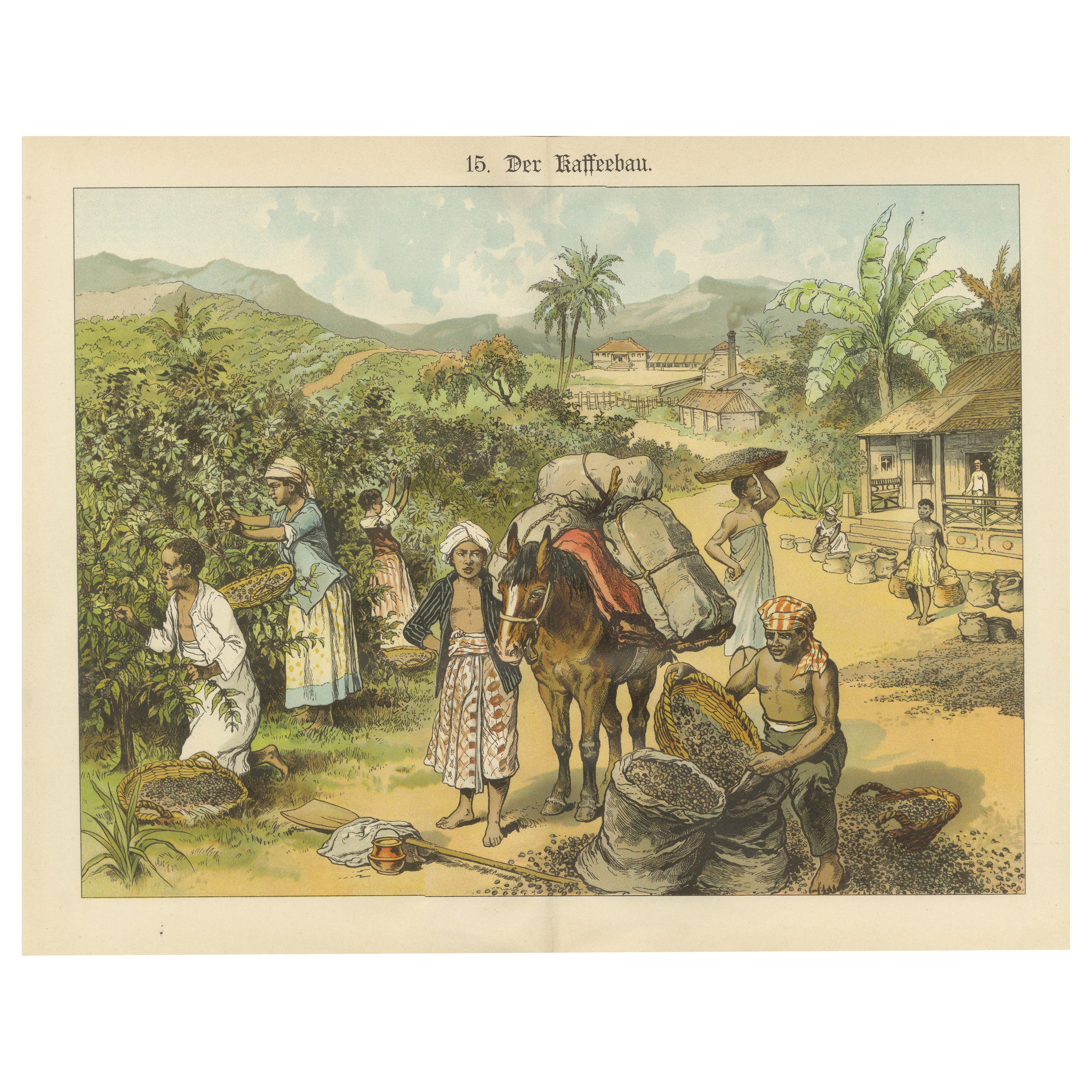
Antique Chromolithograph of 19th Century Coffee Cultivation, circa 1890
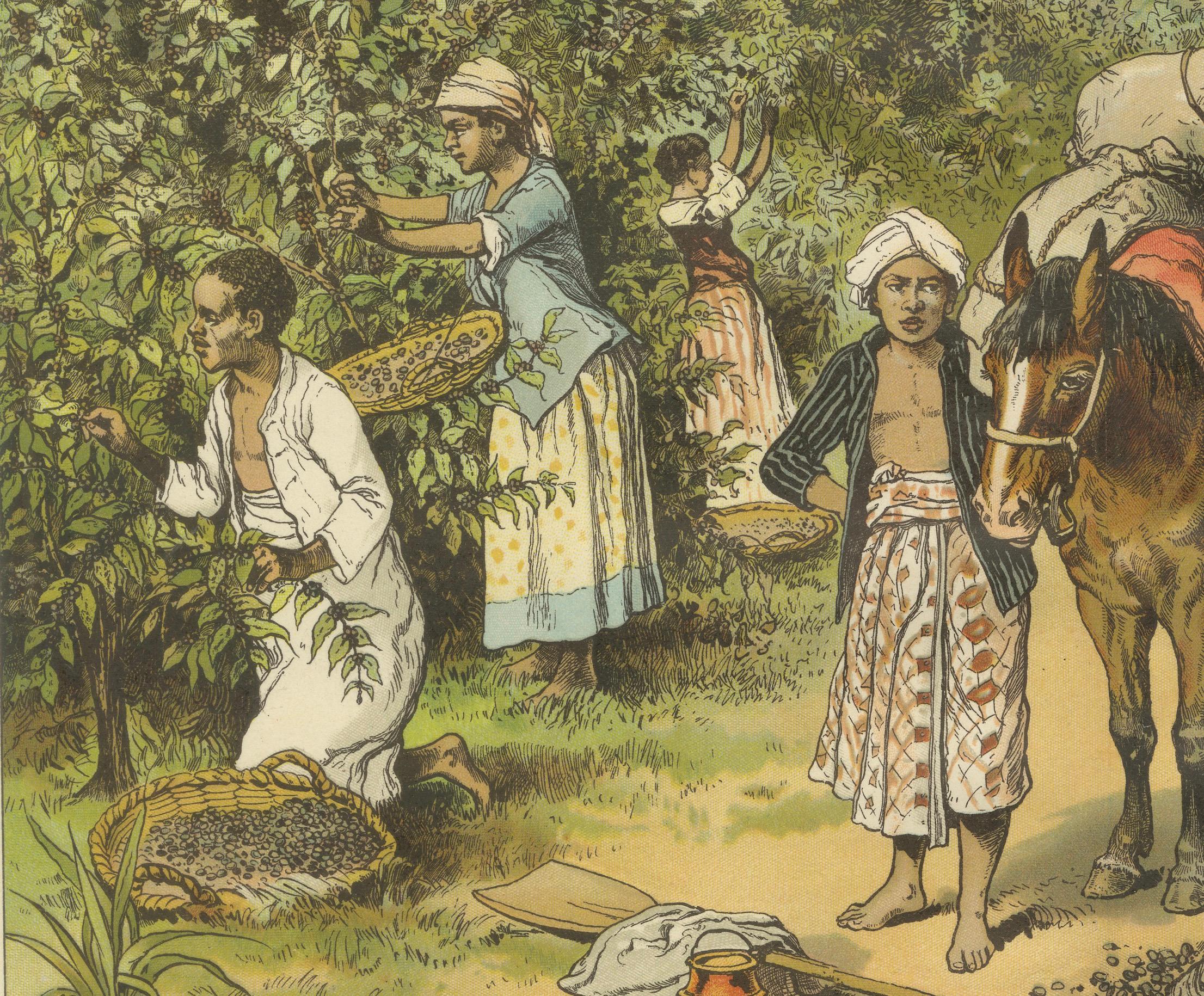
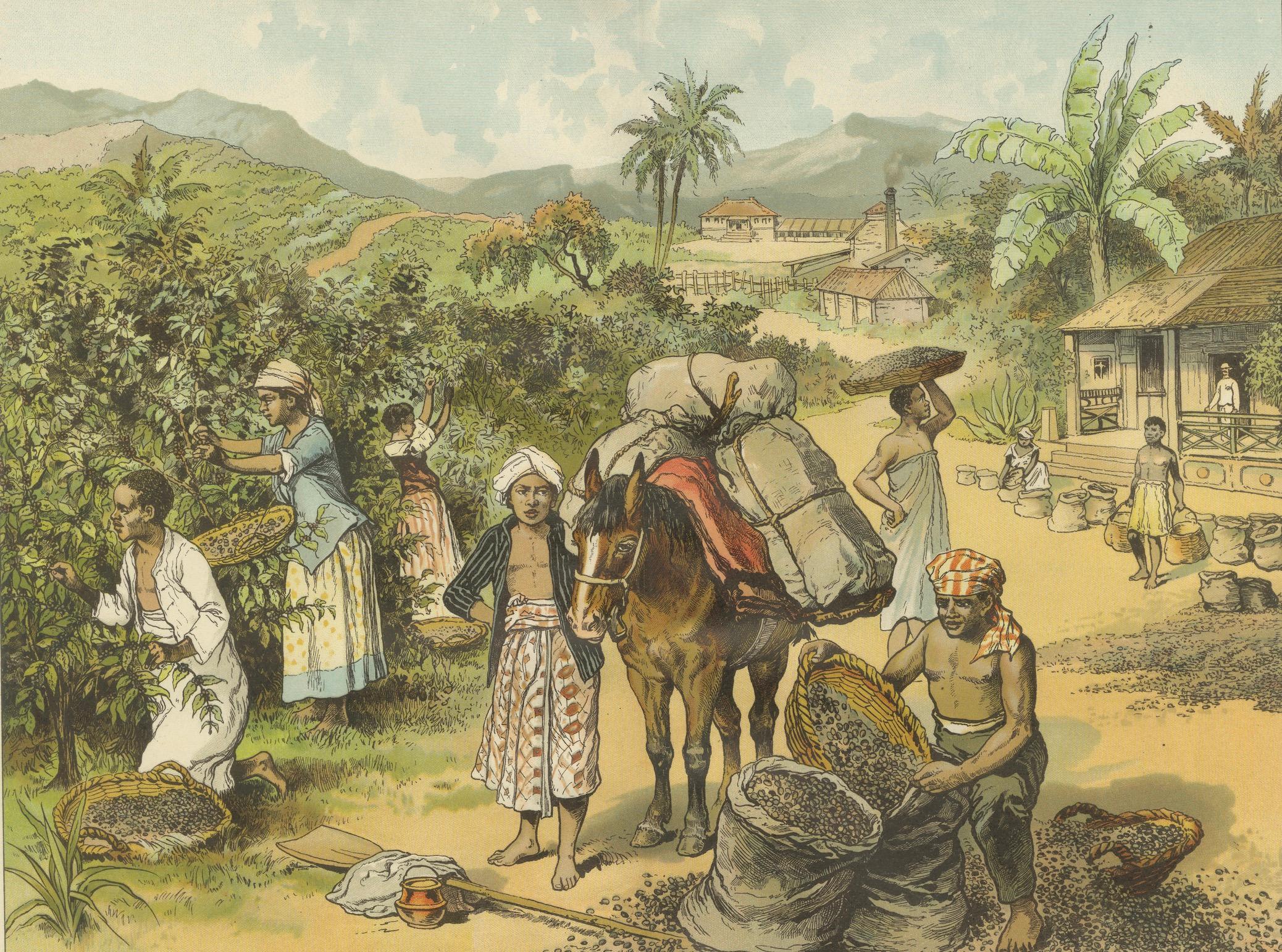
This richly detailed chromolithograph titled “Der Kaffeebau” (Coffee Cultivation) was produced circa 1890 and provides a vivid visual account of the coffee-growing process as it took place in colonial plantation settings during the 19th century. Rendered in full color through the chromolithographic technique, this print combines documentary realism with a striking visual composition, making it both an educational tool and a collector’s piece of cultural history.
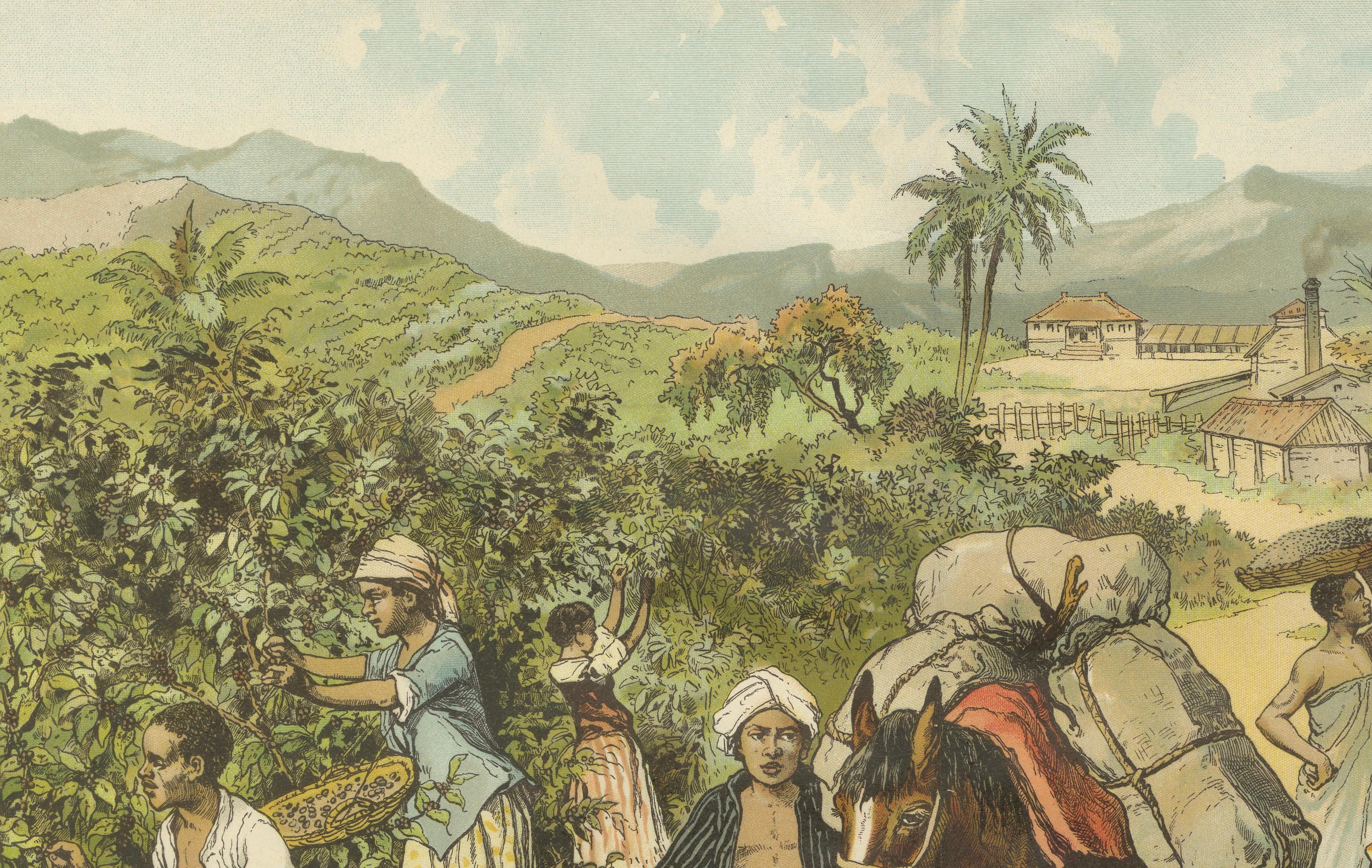
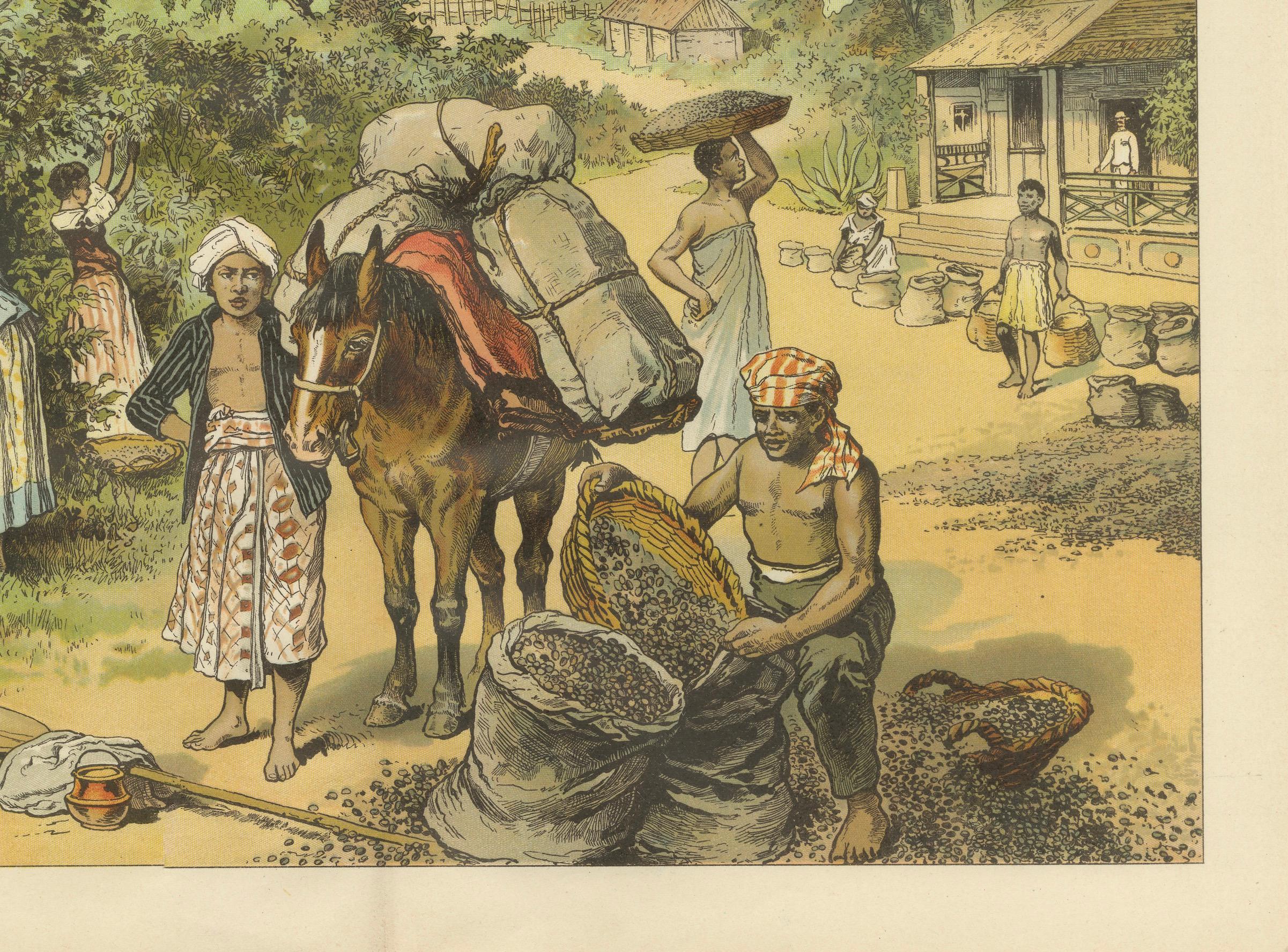
The scene depicts a bustling plantation, likely in a tropical colonial region such as Java, the West Indies, or East Africa. In the foreground, laborers—many of them barefoot and dressed in local garments—are shown engaged in various stages of coffee production. To the left, women handpick ripe coffee cherries from lush green plants and place them in large woven baskets. In the center, a mule laden with heavy sacks of harvested beans stands ready for transport, accompanied by children and adult workers.
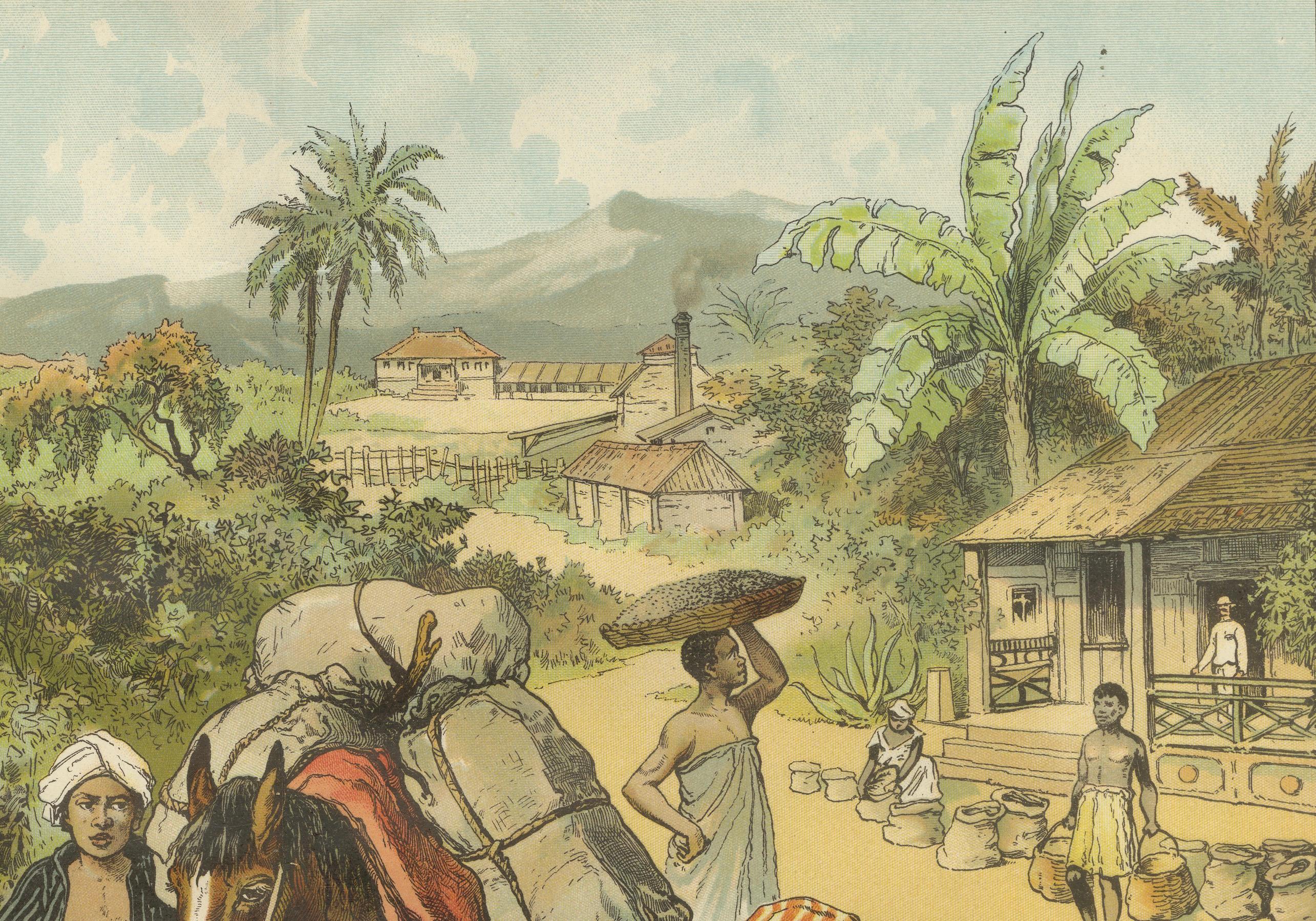
To the right, a man pours dried beans from a basket into a sack, preparing them for weighing and shipment. Behind him, more workers move filled sacks into a warehouse or processing facility, while others carry loads on their heads or work near the buildings of the estate. The background is filled with architectural and botanical detail—colonial-style plantation buildings, palm and banana trees, and the misty outline of mountainous terrain—suggesting a fertile and productive tropical landscape.
This image is particularly valuable for its layered portrayal of labor, trade, and colonial economics. It was likely intended for use in educational publications, illustrating global agricultural systems for a European audience. Today, it holds significance for collectors of ethnographic prints, coffee history, colonial-era documentation, and antique chromolithographs.
Condition Report:
Good condition. The colors are strong and well-preserved. Minor age-toning may be visible in the margins, and there are some small spots typical of prints of this age. No tears, folds, or repairs noted. Paper is stable and clean.
Framing Tips:
To complement the warm earth tones and historical subject, a dark wood frame—such as mahogany or teak—would be ideal. Pair with a cream or light tan acid-free mat to enhance the detail without overwhelming the image. Use museum glass for clarity and UV protection. This piece would be particularly suited for display in kitchens, cafes, libraries, or any setting with a colonial or botanical theme.