About this sheet
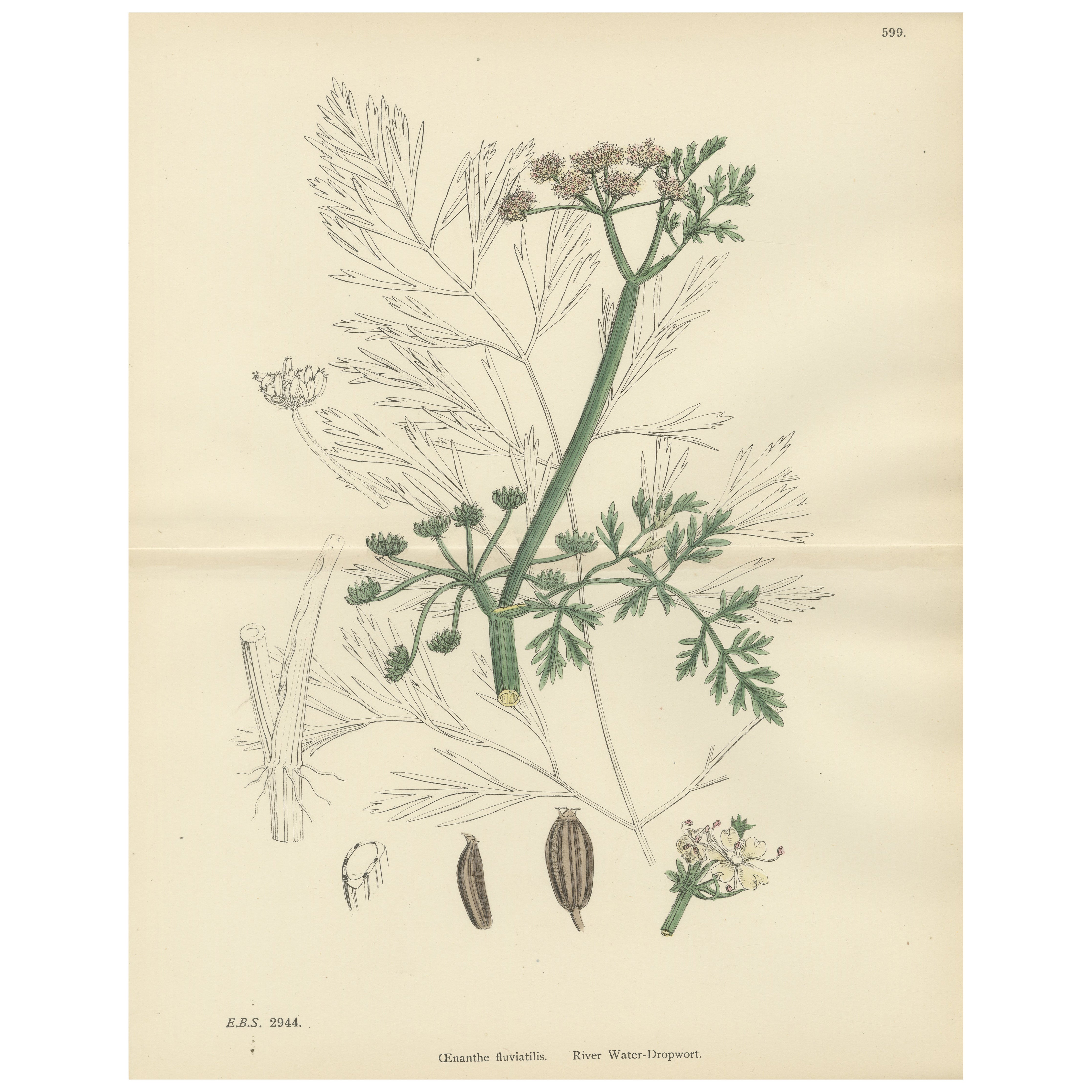
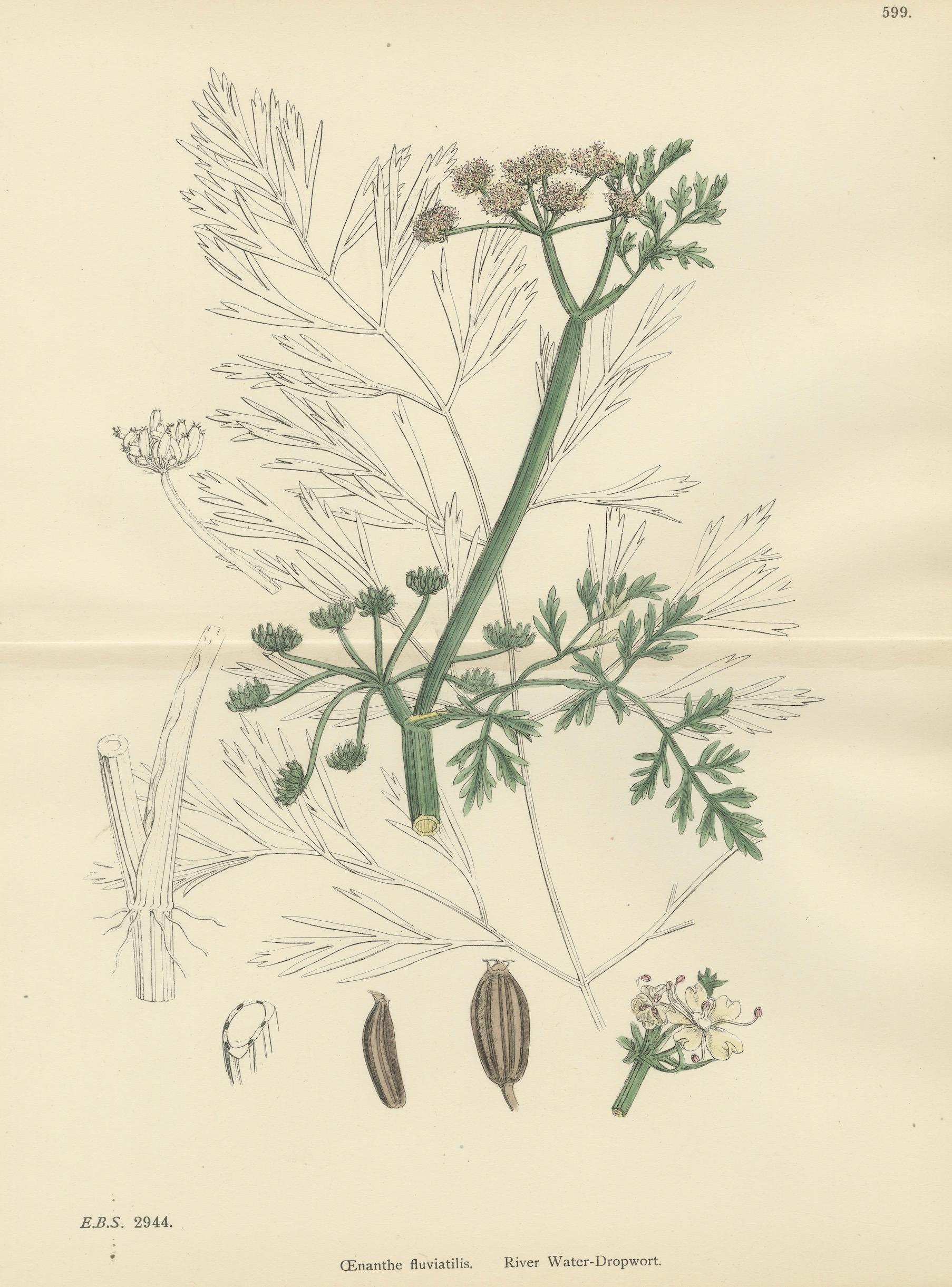
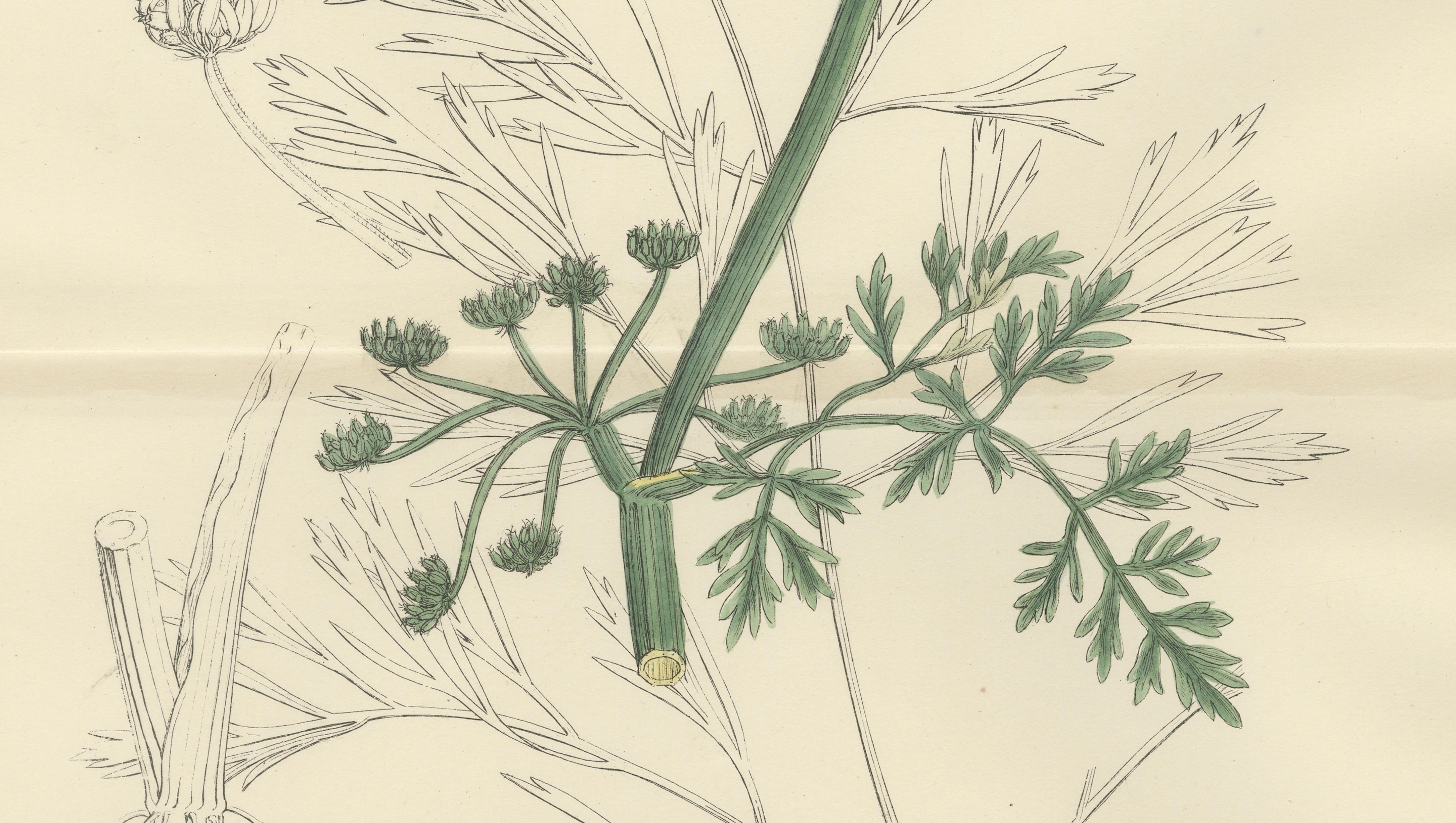
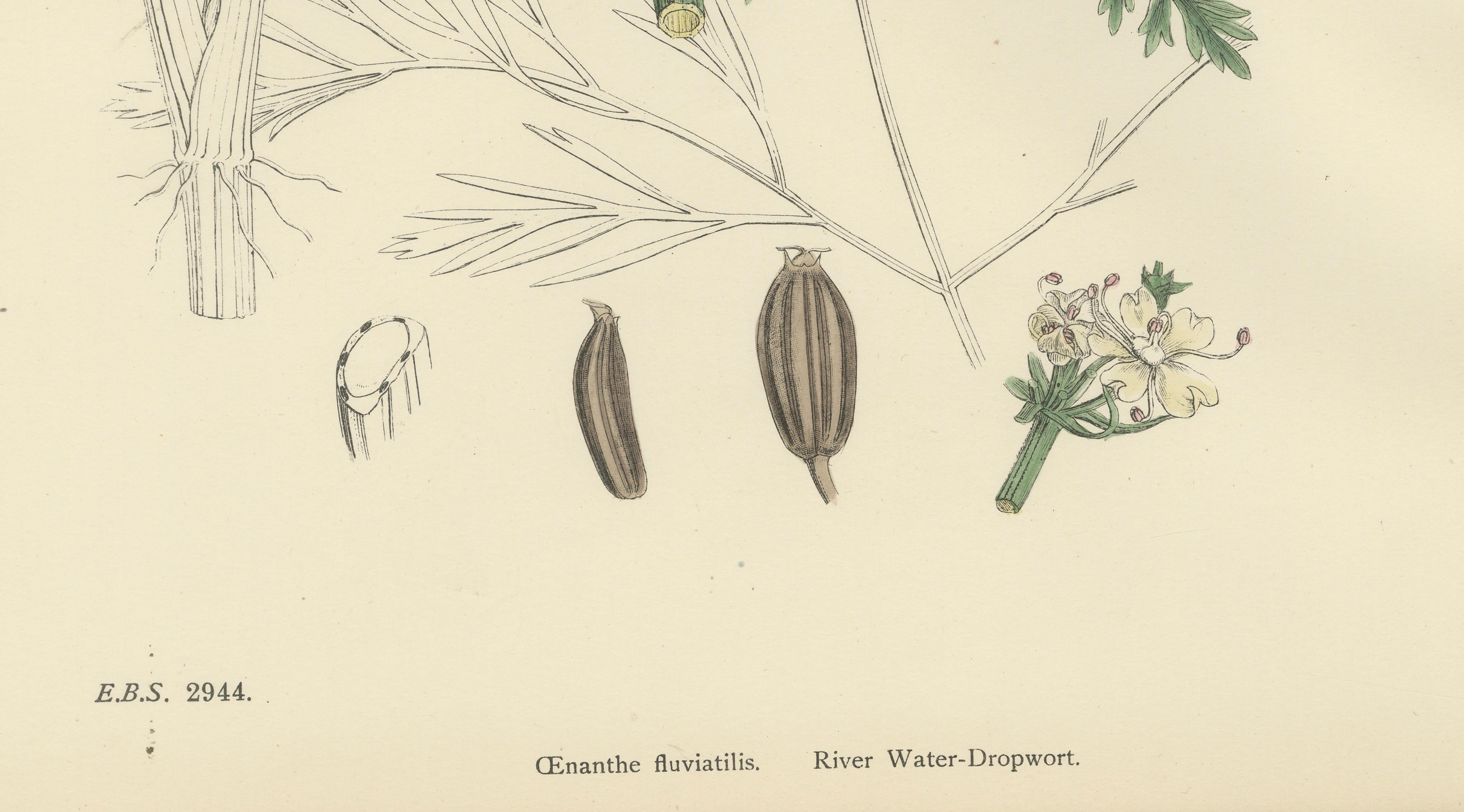
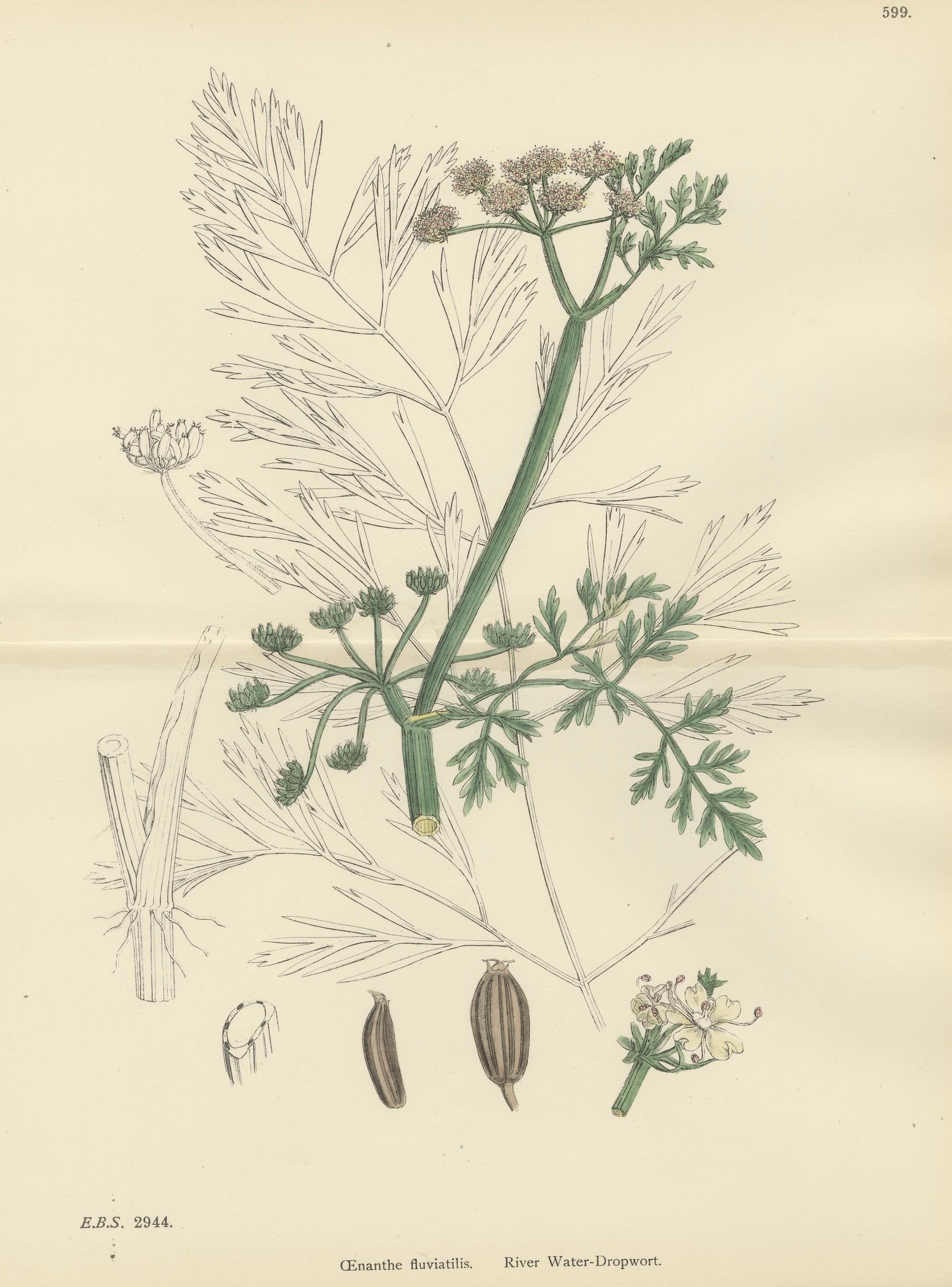
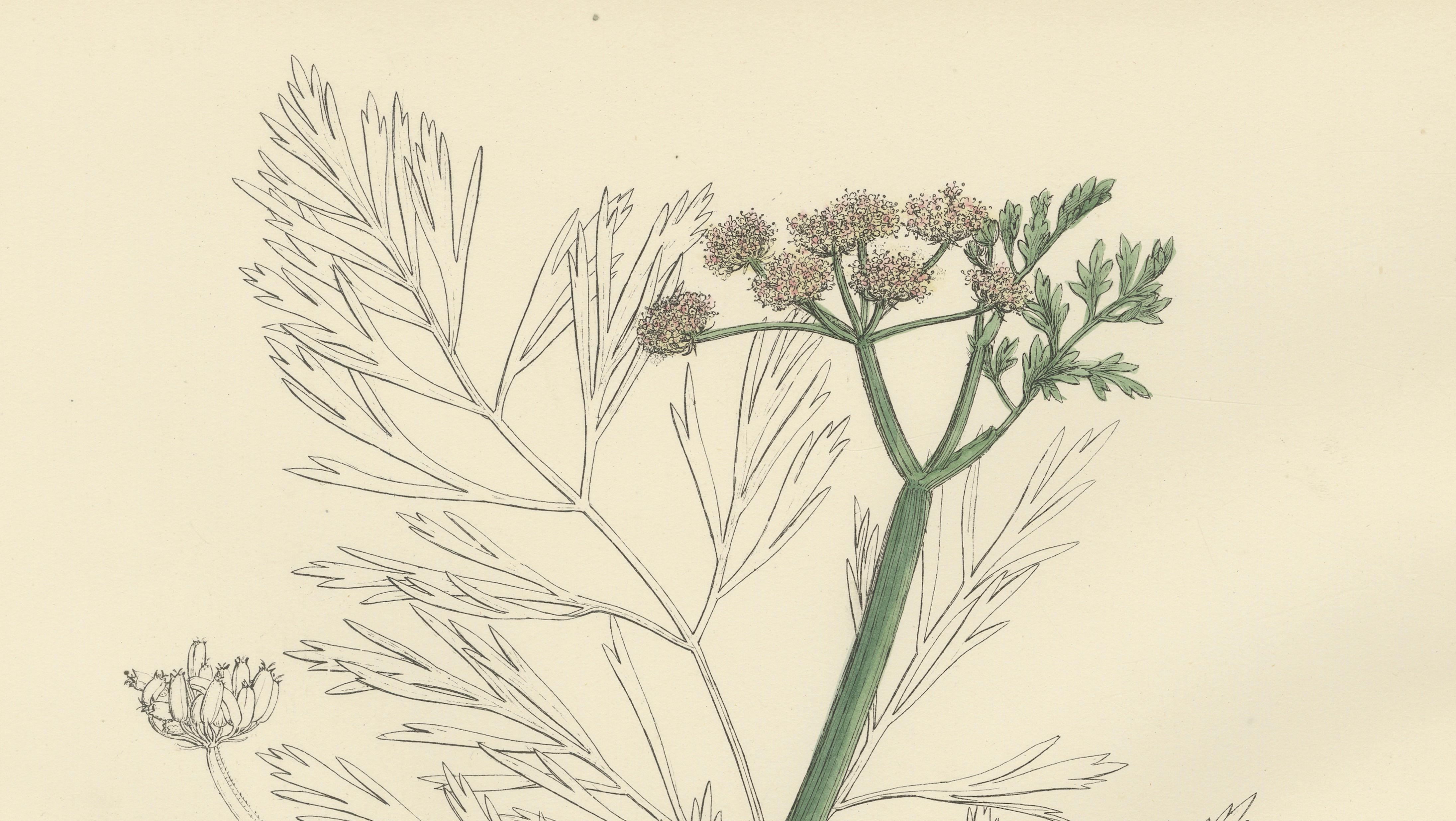
This original hand-colored botanical engraving depicts River Water-Dropwort, scientifically known as Oenanthe fluviatilis, a graceful aquatic plant native to Britain and parts of Europe. The print originates from English Botany; or, Coloured Figures of British Plants, Third Edition, edited by John T. Boswell Syme and published in London by George Bell & Sons in 1902. The illustration is based on the authoritative work of James Sowerby and J.E. Sowerby, whose botanical plates are widely admired for their combination of scientific accuracy and refined visual balance.
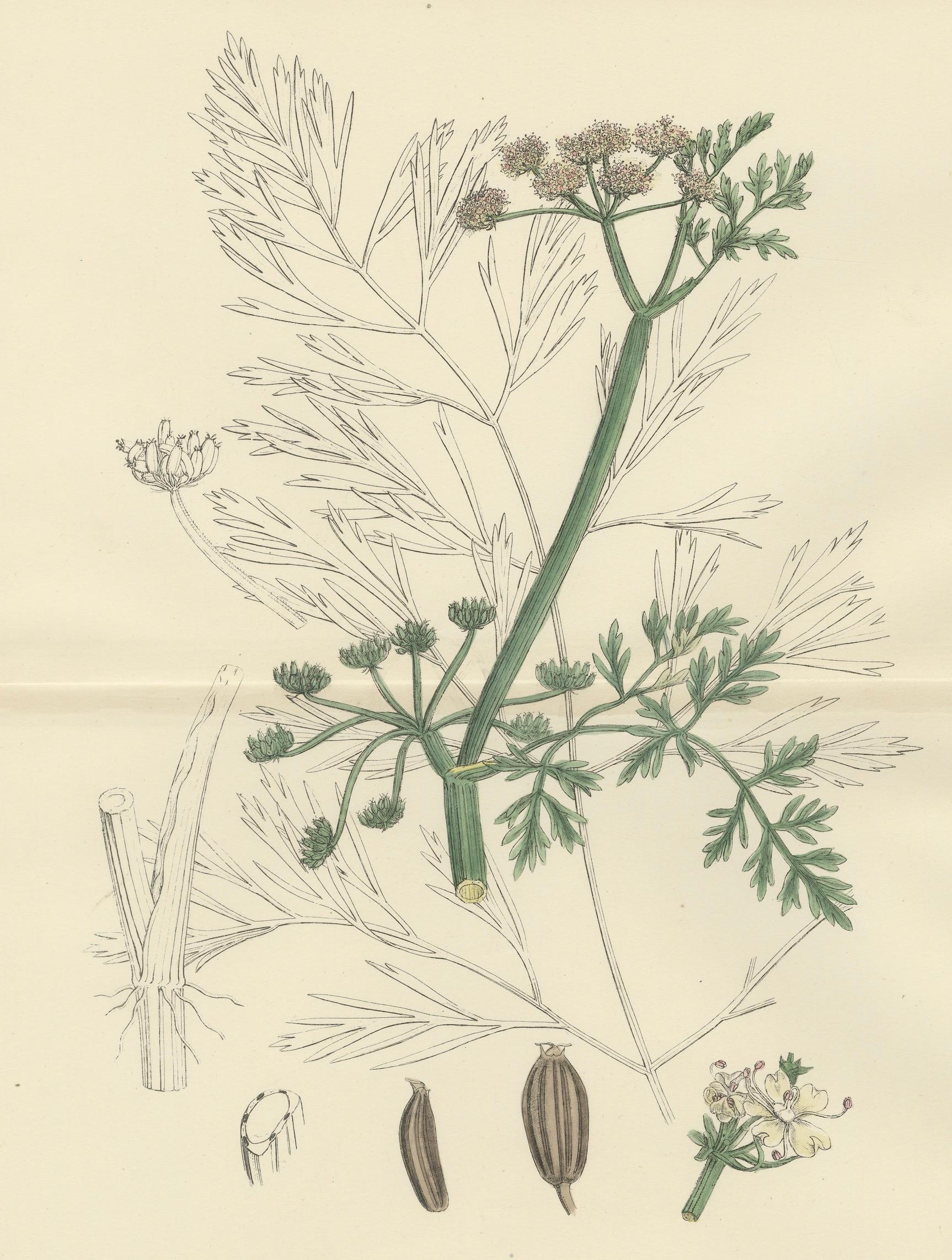
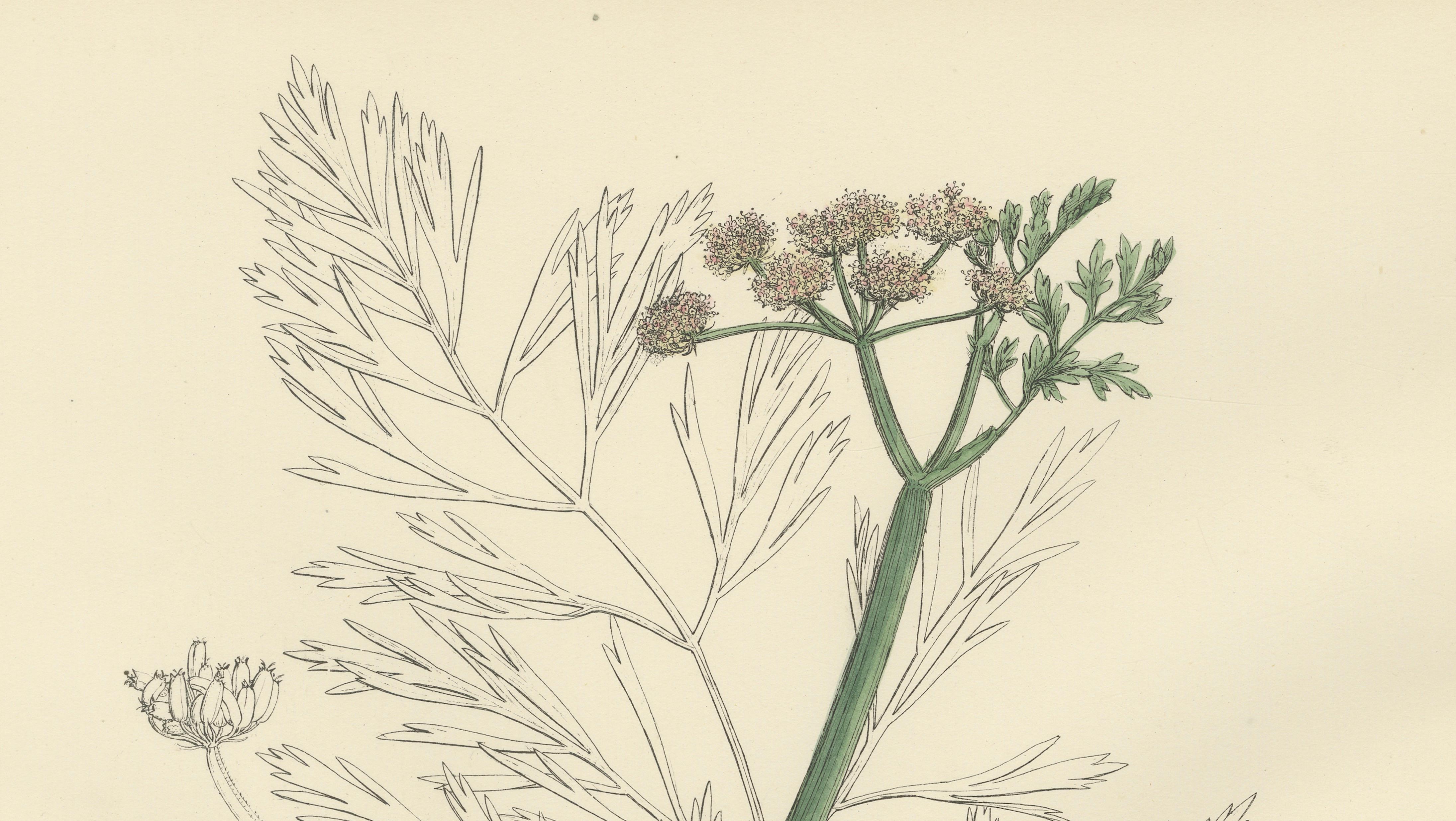
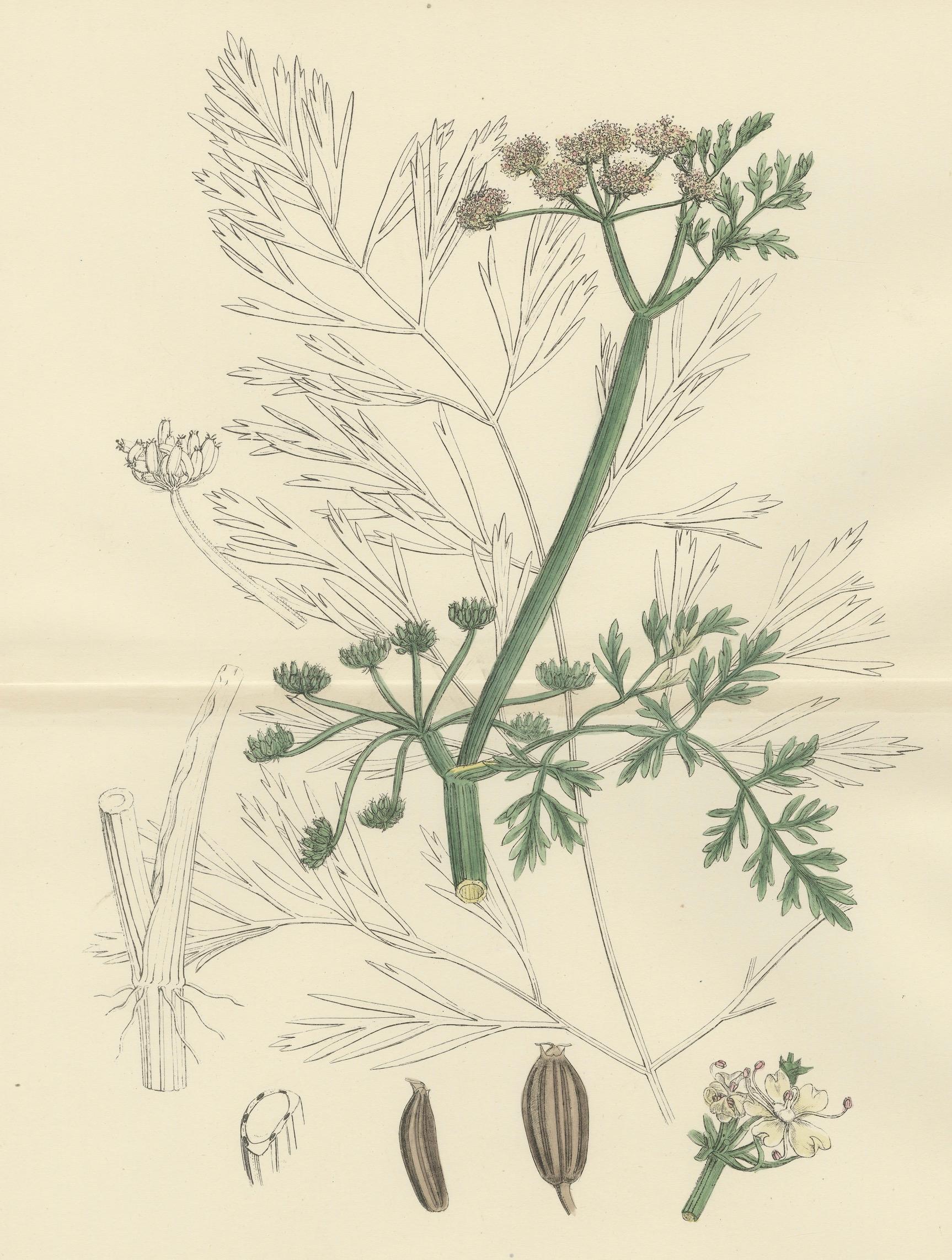
River Water-Dropwort is shown here in a characteristic aquatic form, with finely divided submerged foliage and more compact flowering structures above the waterline. The plate carefully illustrates the plant’s hollow stems, umbels of small pale flowers, and the distinctive fruits and seed forms used for identification. This species is also sometimes referred to simply as Water-Dropwort or Floating Water-Dropwort, reflecting its riverine habitat and adaptability to flowing water.
The composition blends detailed line work with subtle hand coloring in soft greens and muted natural tones. Additional botanical details, including stem sections and fruit studies, surround the main figure, creating a visually engaging yet calm layout. The generous margins and vertical format make this print especially suitable for interior display, whether as a standalone piece or combined with related water-plant subjects. It fits beautifully into classic interiors, libraries, studies, or modern spaces seeking a quiet botanical or natural-history accent.
This print appeals to collectors of antique botany, lovers of British wildflowers, and interior designers looking for authentic botanical art with understated elegance.
Keywords: antique botanical print, English botany, River Water-Dropwort, Oenanthe fluviatilis, British wildflowers, Sowerby botanical, hand-colored engraving, botanical wall art, classic interior decor.
Condition report:
Very good antique condition. Light, even age toning consistent with early 20th-century paper. A faint horizontal fold as issued. Minor scattered specks may be present. Colors remain clear and well preserved.
Tips for framing:
Frame in light oak, walnut, or a slim black frame. Use an off-white or soft ivory mat to emphasize the fine detail and preserve a refined, timeless botanical presentation.