About this sheet
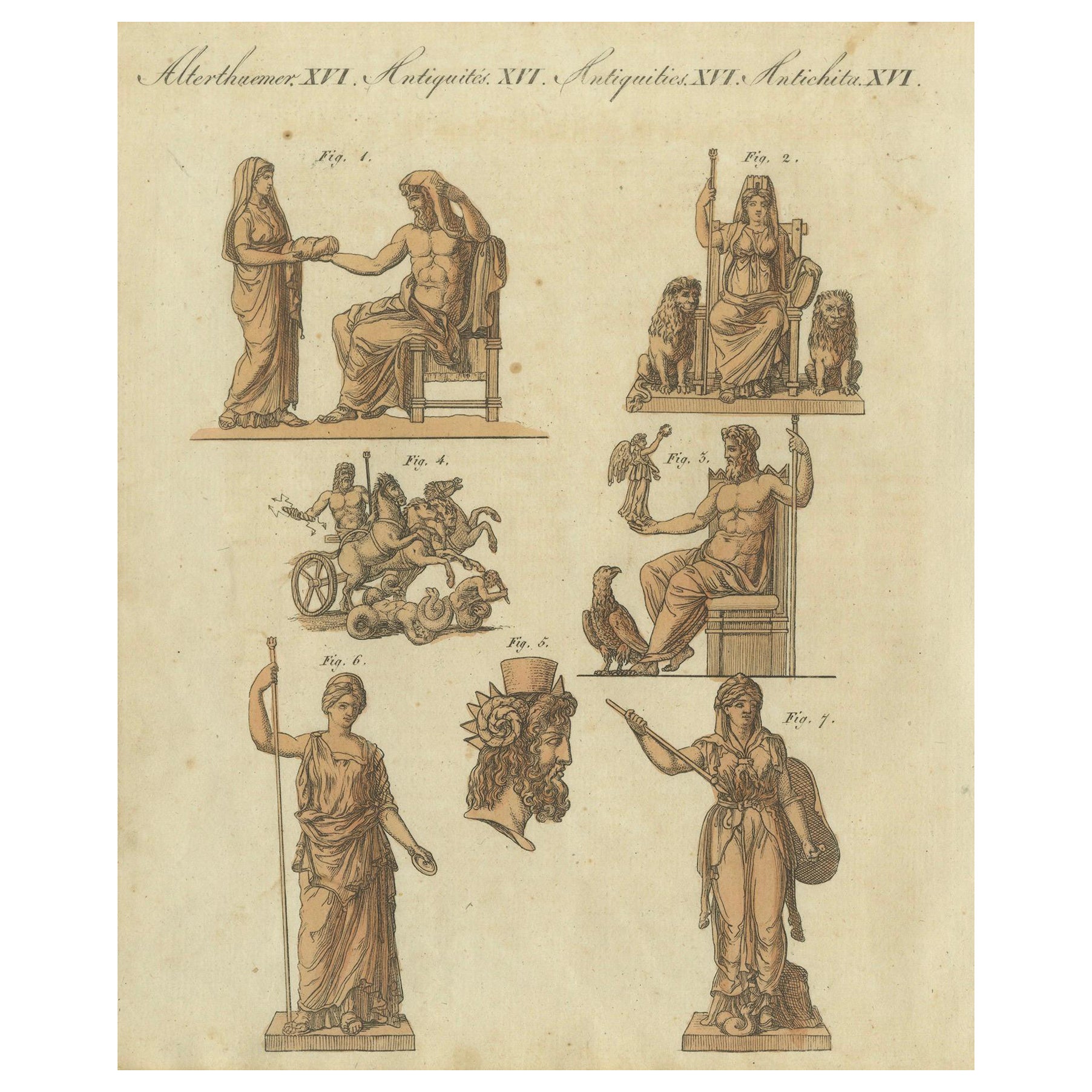
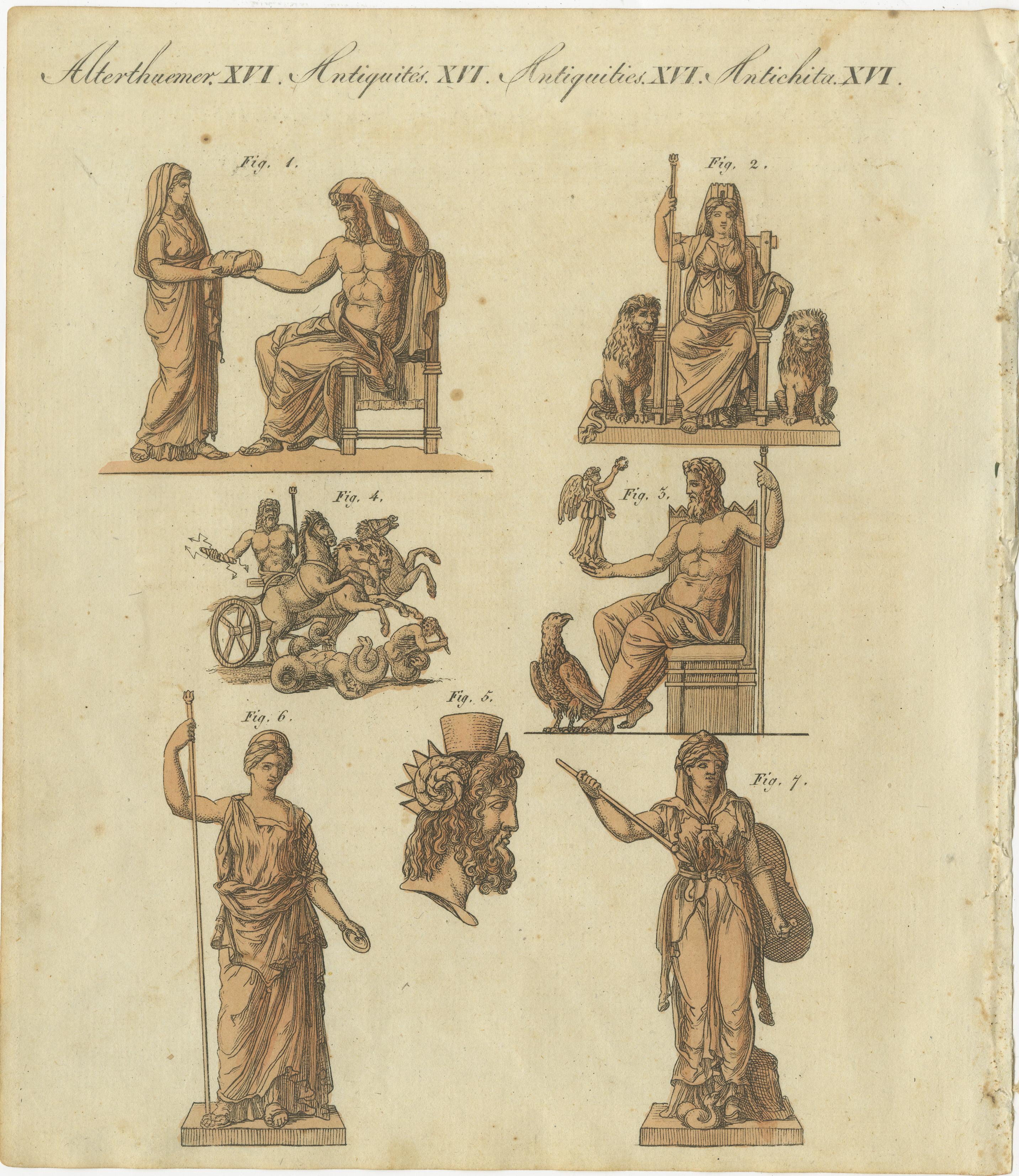
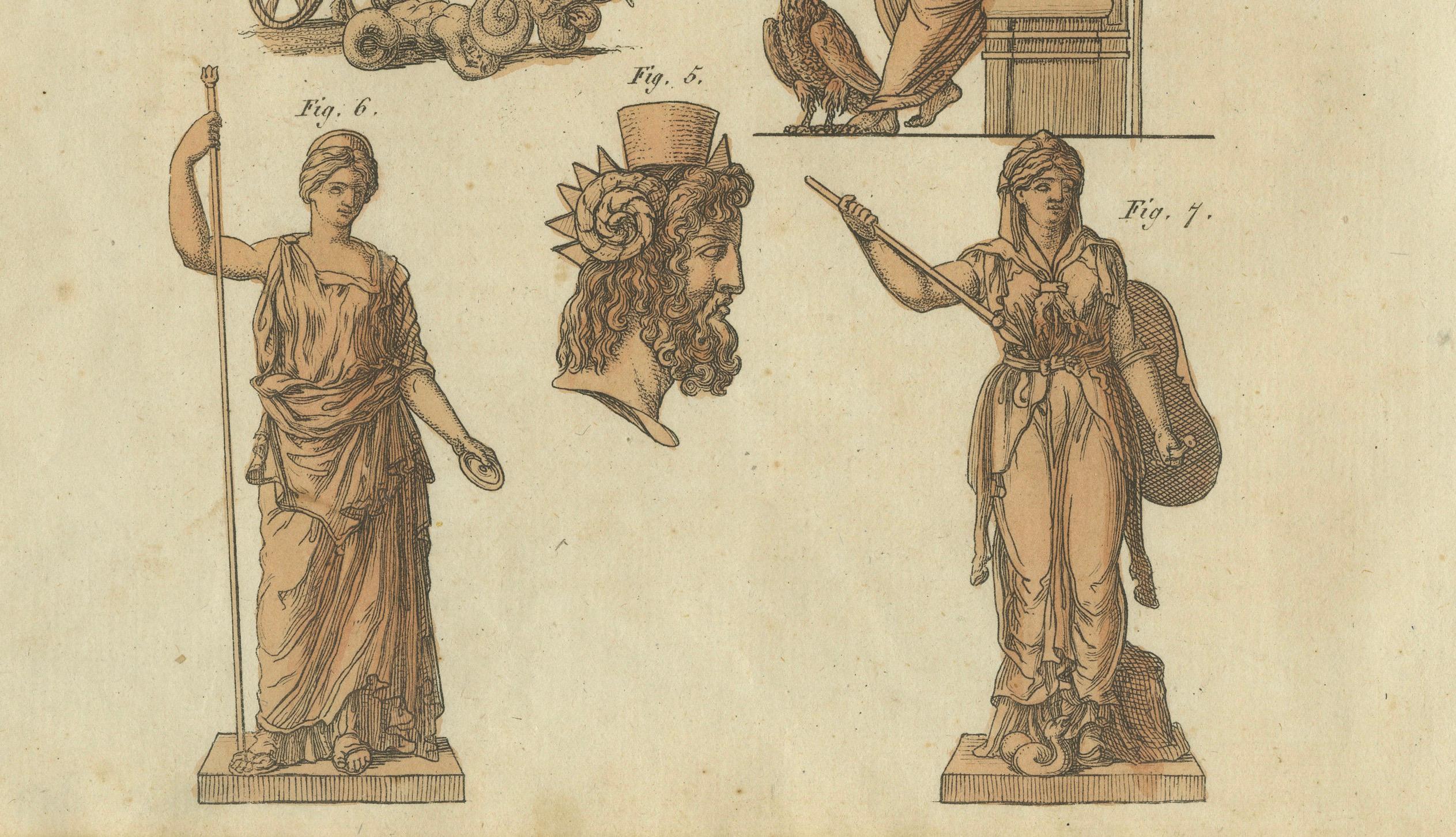
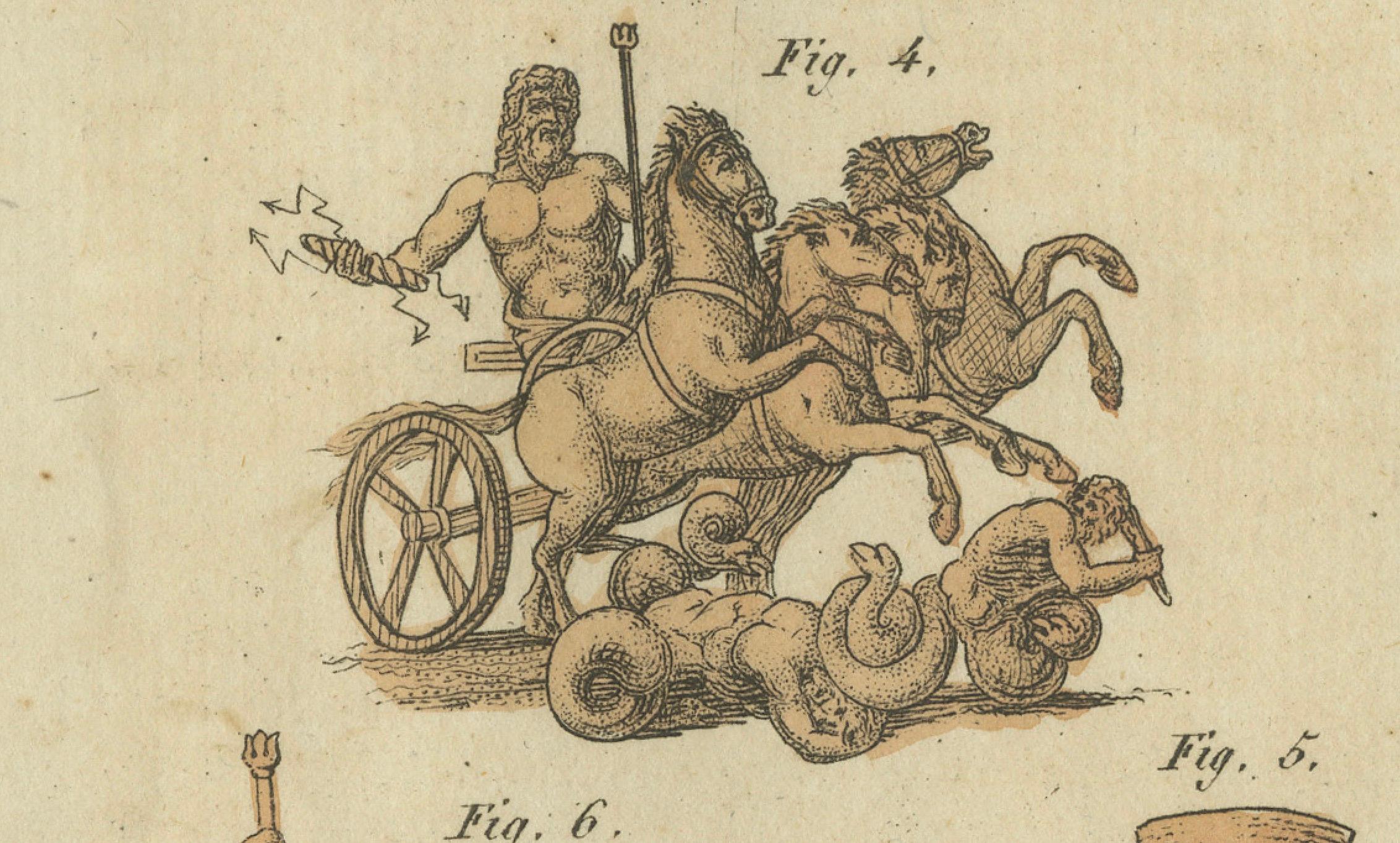
Zeus (Jupiter) Engraving from Bertuch’s 1805 Porte-Feuille des Enfants – Classical Mythology Print
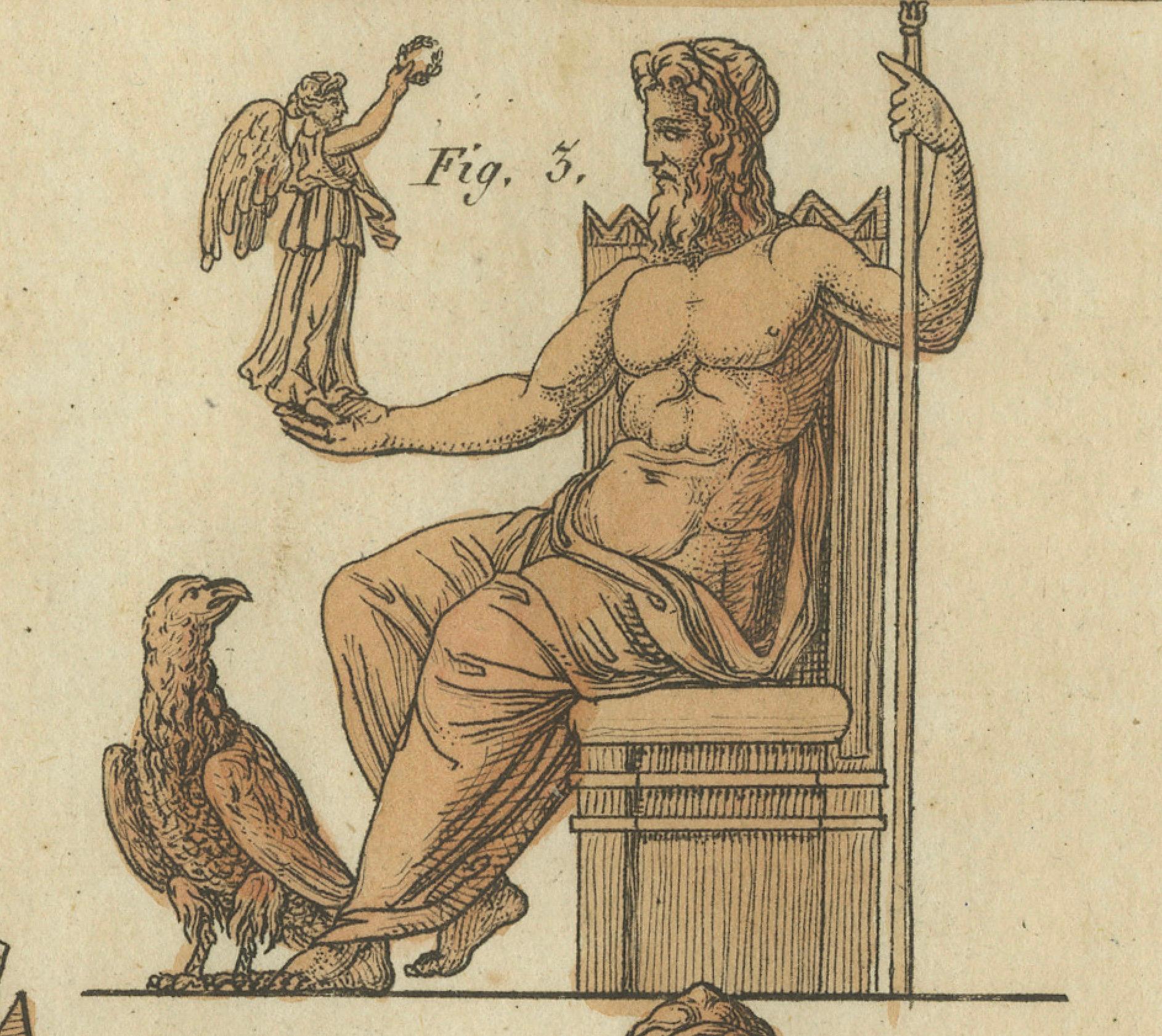
This finely detailed engraving, published in 1805 as part of Friedrich Justin Bertuch’s Porte-Feuille des Enfants (Children's Portfolio), depicts Zeus, the king of the Greek gods (known as Jupiter in Roman mythology), in a pose that exudes authority and power. Seated on a grand throne with an eagle at his side, Zeus holds a scepter, signifying his dominion over the skies and his role as ruler of the gods.
The print is executed with exceptional precision, capturing the intricate details of Zeus’s muscular form, the folds of his drapery, and the noble posture of the eagle, a symbol of strength and divine power. Subtle hand-tinting adds depth and character to the artwork, enhancing its timeless appeal.
This piece is part of a renowned collection of early 19th-century engravings designed to introduce young readers to the rich world of mythology, art, and antiquity. Its historical and artistic significance makes it a standout addition to any collection of classical prints.
The engraving is rendered with meticulous detail, showcasing the artistry and craftsmanship of the early 19th century. The subtle hand-colored tones enhance the divine aura of Zeus, making this print a timeless addition to any collection of classical antiquities or mythological art.
- Date of Publication: 1805
- Origin: Friedrich Justin Bertuch’s *Porte-Feuille des Enfants*
- Condition: The engraving is in good condition with minor age-related foxing and light discoloration typical of early 19th-century prints. Well-preserved overall.
This print is a perfect choice for collectors, historians, or anyone with an appreciation for classical mythology and 19th-century art.
Here are some recommendations for framing and presenting this engraving to enhance its historical and artistic appeal while ensuring proper preservation:
1. Frame Style
- Material: Choose a high-quality wooden or gilded frame. Options like mahogany, walnut, or an antique gold finish complement the classical theme.
- Design: Select a simple yet elegant frame with subtle decorative details, such as beading or fluted edges, to echo the neoclassical style without overshadowing the engraving.
2. Matting
- Color: Use an acid-free mat in a neutral tone, such as ivory, off-white, or pale cream, to draw attention to the artwork and prevent contact with the glass.
- Border Size: A slightly wider mat border (around 2–4 inches) creates balance and helps focus the viewer's attention on the engraving.
- Double Matting (Optional): For a refined look, consider an inner mat in a soft complementary color like light gray or pale gold to add depth.
3. Glass
- UV-Protective Glass: Opt for museum-grade UV-filtering glass or acrylic to safeguard the engraving from light exposure while reducing glare.
- Non-Glare Option: Non-reflective glass ensures optimal viewing, especially in brightly lit areas.
4. Backboard and Mounting
- Archival Backing: Use an acid-free backing board to protect the engraving from moisture and dust while providing structural support.
- Mounting Method: Secure the engraving with archival-quality corners or hinges to avoid adhesive contact with the artwork.
5. Presentation Placement
- Display the framed engraving in a stable environment with consistent temperature and low humidity to prevent damage. Avoid direct sunlight or exposure to harsh artificial light.
- Suitable spaces include libraries, studies, or galleries where the engraving complements other classical or antique items.
6. Labeling
- Add a small engraved brass plaque or label beneath the frame with details such as "Zeus (Jupiter) – Published in 1805 by Friedrich Justin Bertuch" to highlight its provenance and historical value.
7. Alternative Display
- If not framed traditionally, consider showcasing the engraving in a display case alongside other related prints or artifacts. Use museum-grade lighting to accentuate its details without causing harm.
---
Keywords:
- Zeus engraving
- Jupiter mythology print
- Classical mythology art
- Bertuch 1805 Porte-Feuille
- King of gods print
- 19th-century hand-colored engraving
- Antique mythology art
- Greek and Roman deities print
- Classical art collection
- Friedrich Justin Bertuch