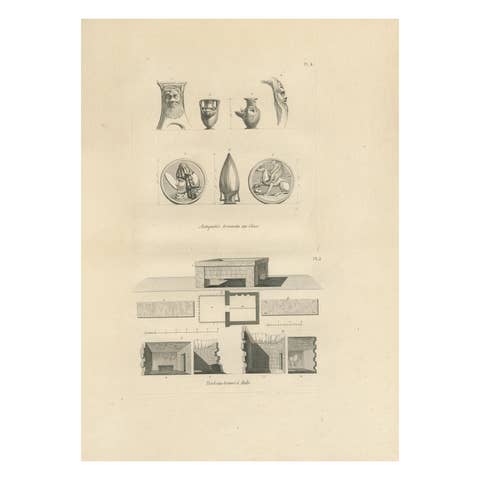
Detailed 1805 Engraving of Ancient Statues and Deities from Bertuch’s Work
€ 130
Original antique · The actual sheet photographed · Certificate of authenticity on request · Sold unframed · Worldwide shipping from € 15 (rates)
Date
1805
Sheet size
23 × 19 cm (9.1 × 7.5 in)
Reference
BG-14000-25
What the condition grades mean
Excellent
Bright and clean, with no faults worth mentioning.
Very good
Only light signs of age, such as faint toning.
Good
Normal signs of age for a sheet of this period: toning, some foxing, small marks or neat old repairs.
Fair
Clear faults such as staining, tears or repairs, priced to match.
Every fault we see is written in the condition note, and the whole sheet is shown uncropped in the photos.
Condition
Light foxing and minor toning along edges; the engraving retains its sharp details and historical charm. Please review the images for further condition details.
About this sheet
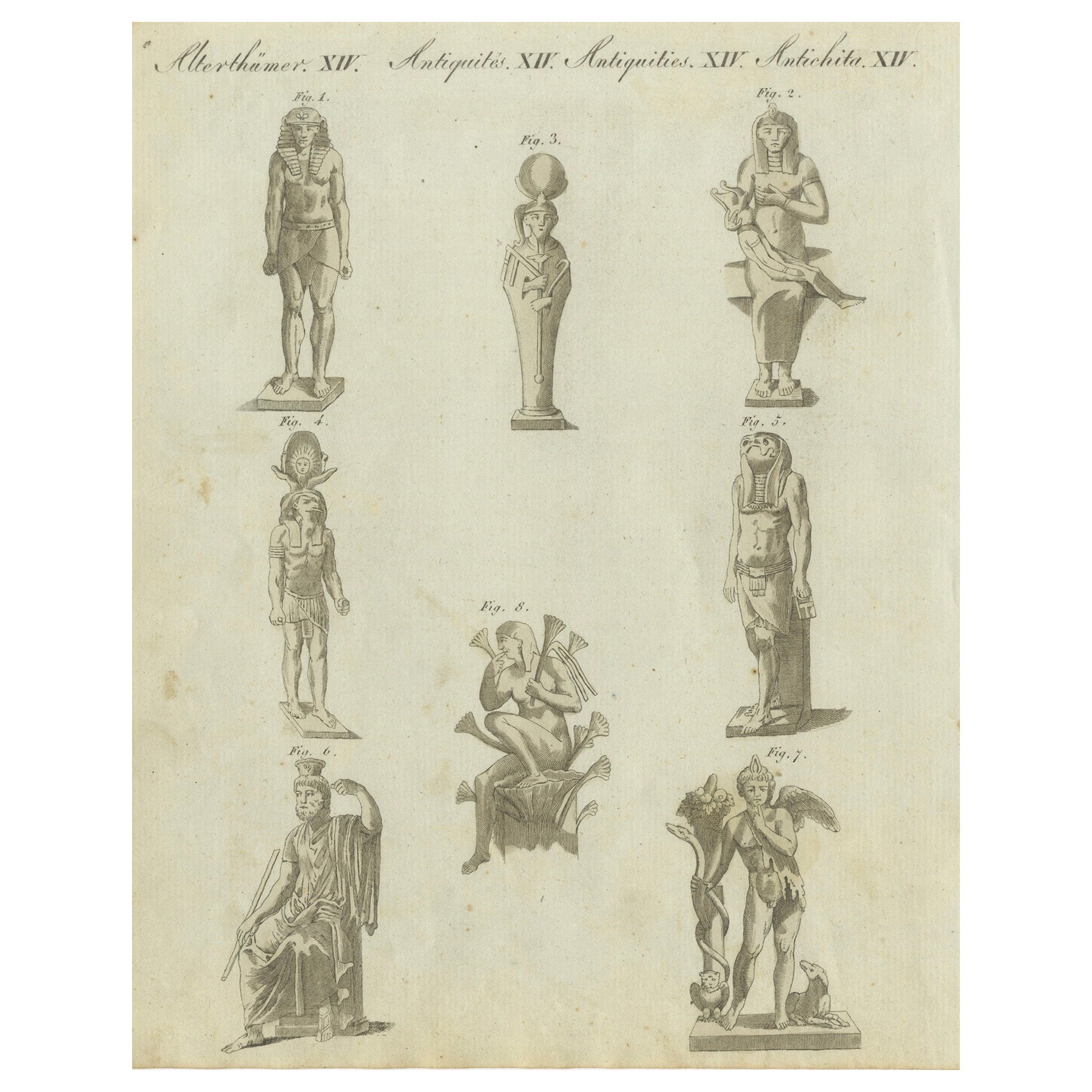
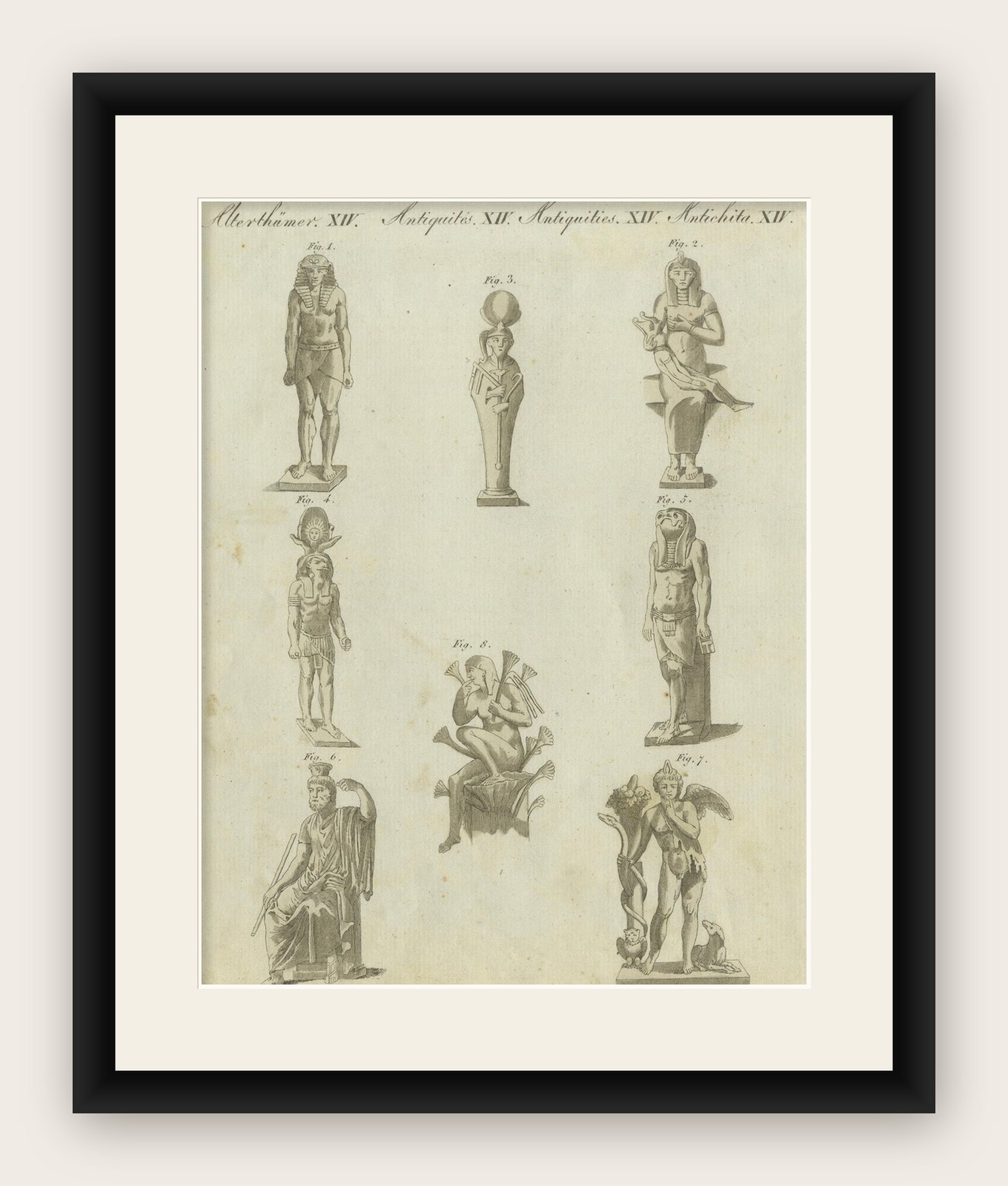
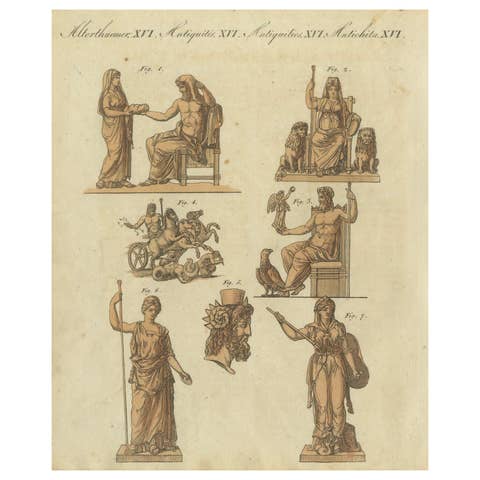
This captivating engraving, sourced from Friedrich Justin Bertuch’s Porte-Feuille des Enfants (Children's Portfolio), published in 1805, presents a series of ancient statues and deities from various cultures. Each figure is rendered with remarkable precision, offering a glimpse into historical artistic representations of mythological and religious iconography.
The plate features: - Fig. 1: A standing Egyptian deity or pharaoh, showcasing the characteristic style of ancient Egyptian sculpture. - Fig. 2: A seated Egyptian goddess, possibly Isis, holding symbolic objects. - Fig. 3: An Egyptian figure with a sun disc, likely Hathor or another deity associated with the sun. - Fig. 4: A deity or warrior figure with a unique headdress, reflecting cultural symbolism. - Fig. 5: A representation of a hybrid figure or deity, blending human and divine attributes. - Fig. 6: A seated classical figure, potentially a Greek or Roman god, holding a staff. - Fig. 7: A cherubic figure entwined with symbolic elements like a snake and other animals, indicative of mythological themes. - Fig. 8: A reclining figure amidst sheaves, possibly symbolizing fertility or harvest.
This plate reflects Enlightenment-era curiosity about ancient civilizations and their artistic heritage, making it an excellent piece for collectors of antiquities, mythology, or historical art.