About this sheet
Antique Caryatid Sculpture Print, Louvre Institut Tribune – Baltard 1803
This striking early 19th-century architectural engraving originates from the rare and important French publication *Paris et ses Monuments, mesurés, dessinés et gravés*, created by the architect and engraver Louis-Pierre Baltard and published in Paris in 1803. The monumental work aimed to document the most significant architectural monuments of Paris with exceptional precision, combining artistic mastery with measured architectural study. Baltard dedicated the publication to Napoleon Bonaparte, reflecting the era’s fascination with classical architecture and the systematic documentation of national monuments.
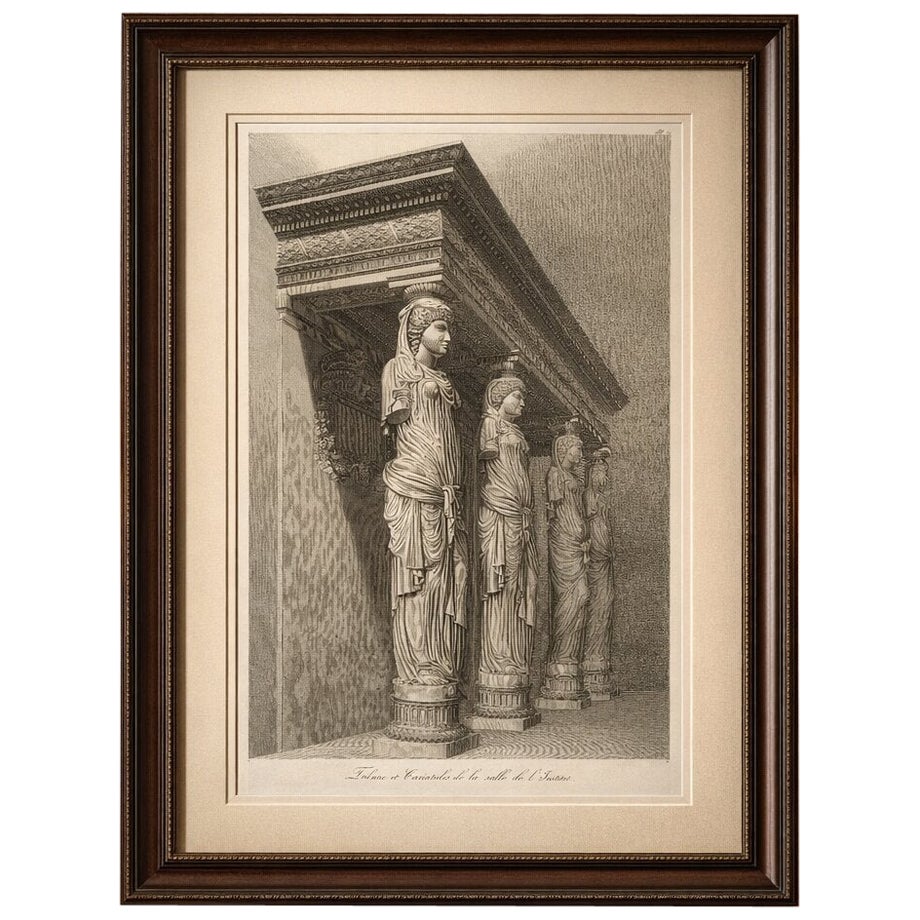
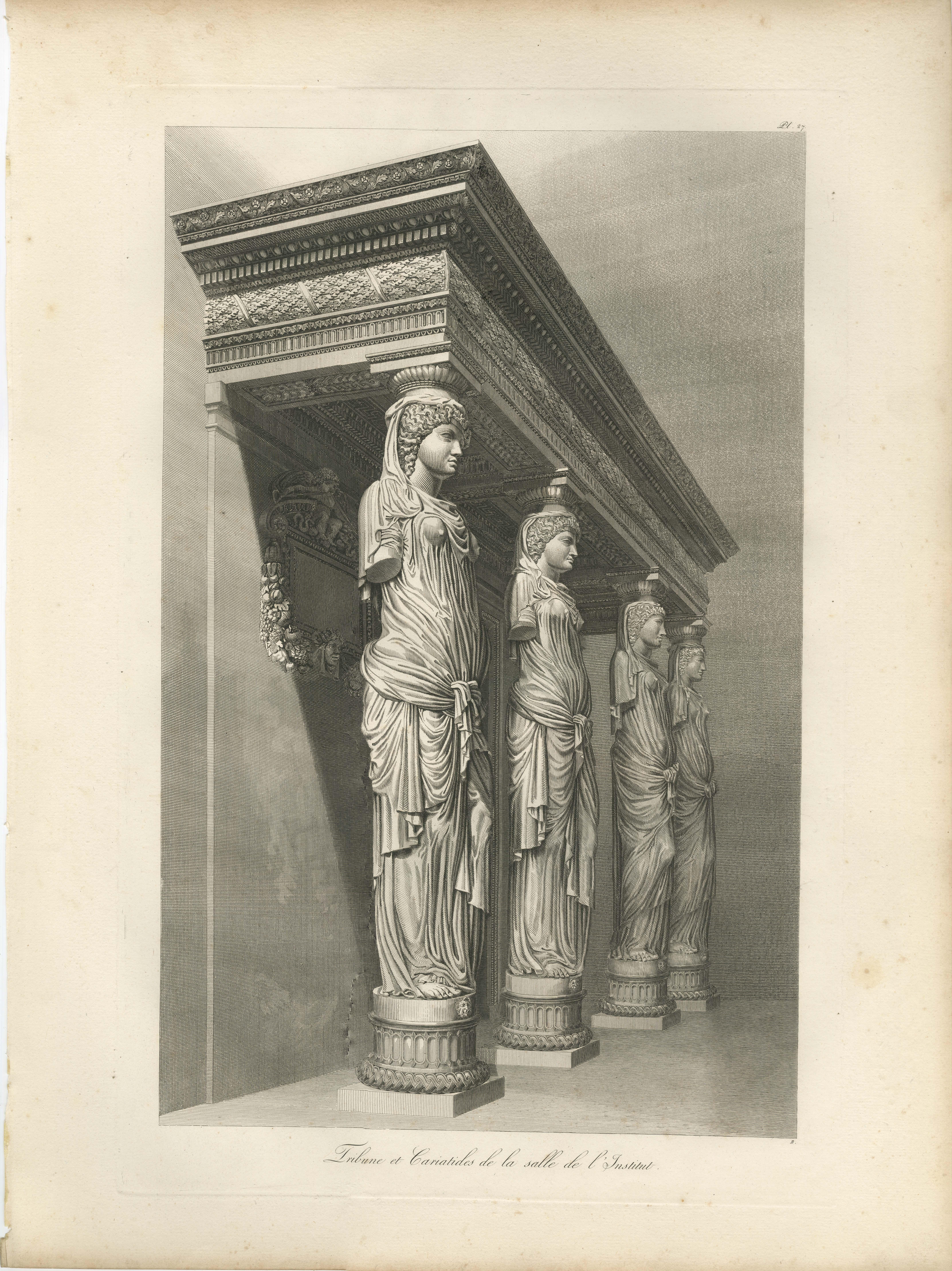
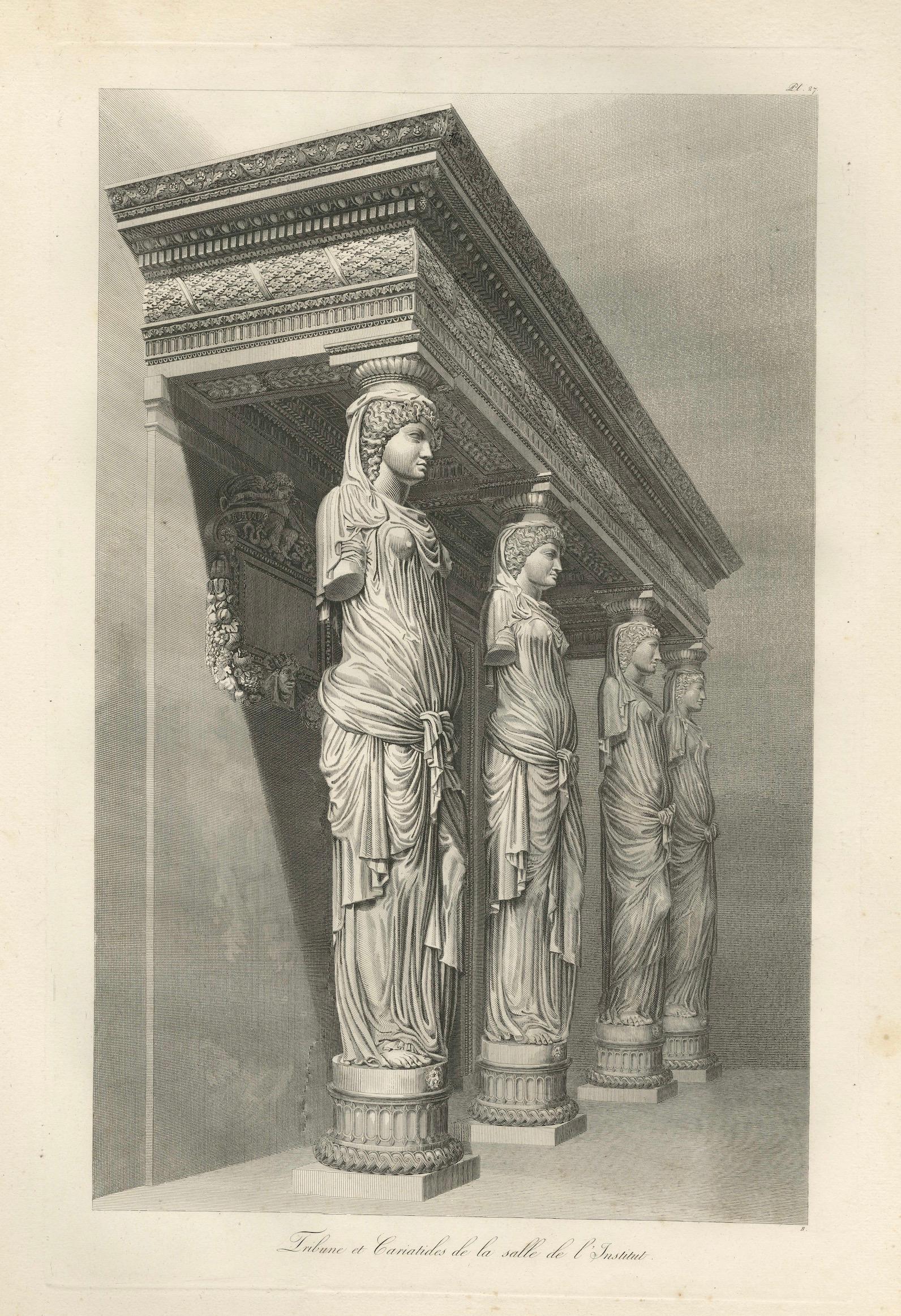
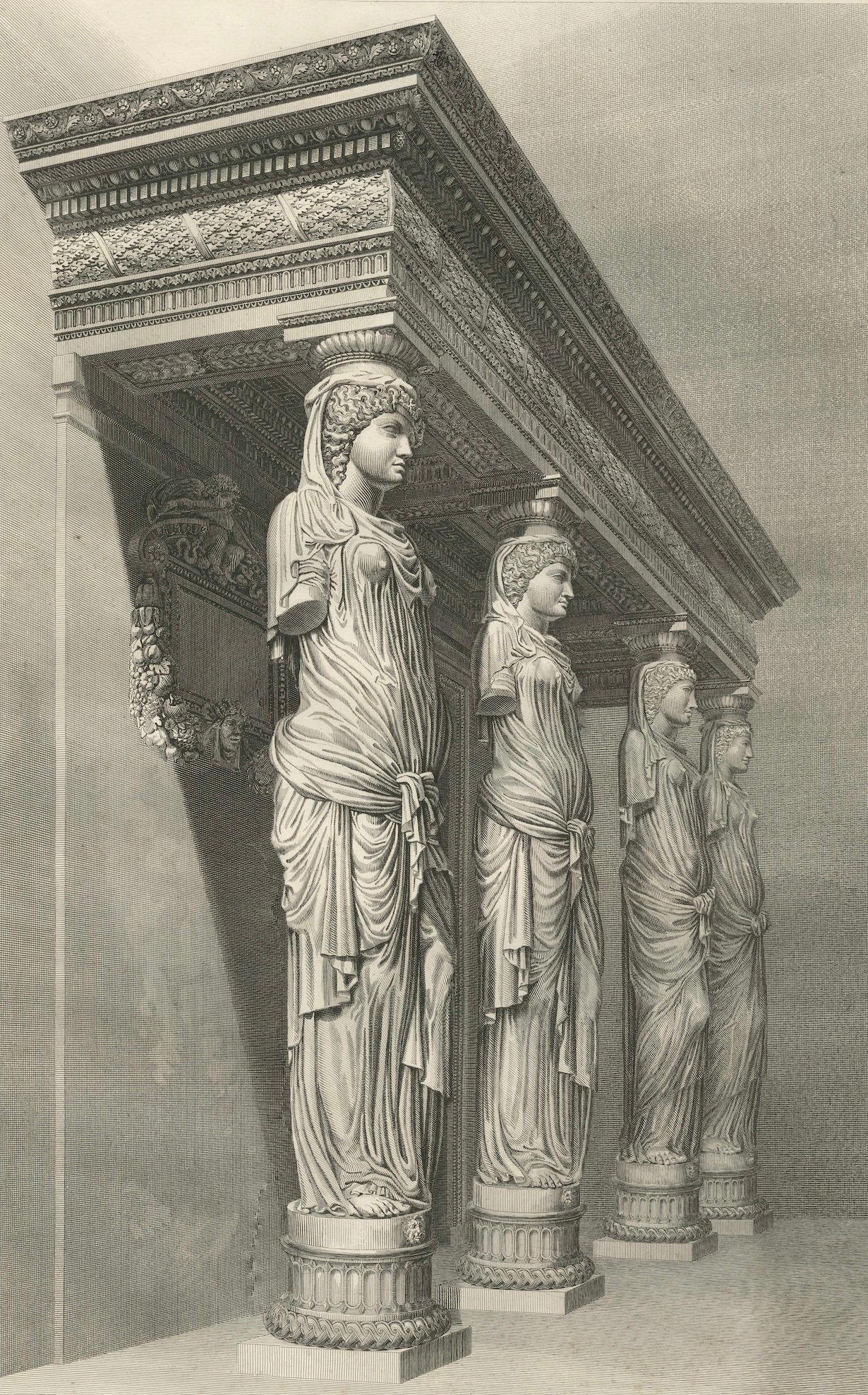
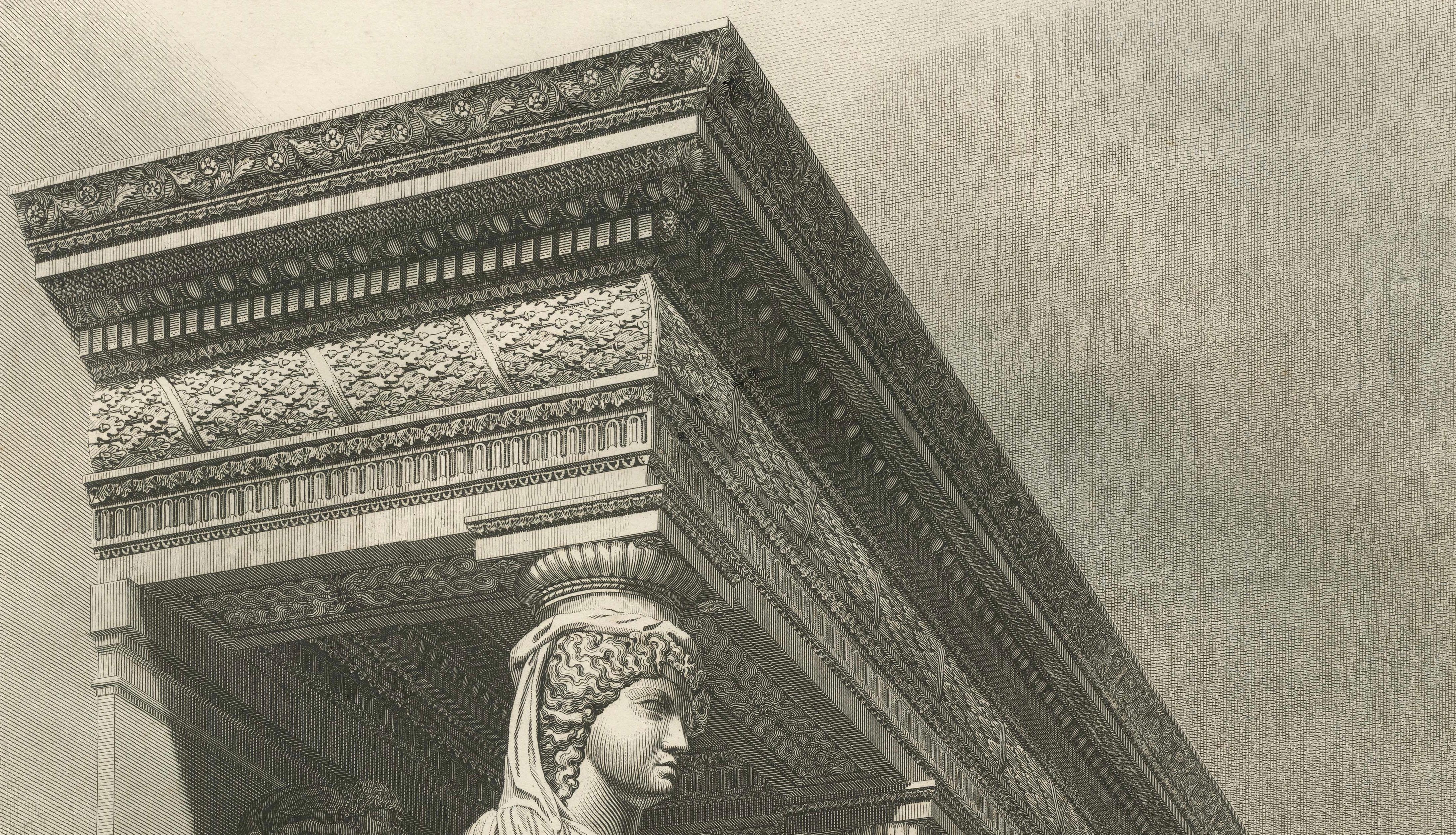
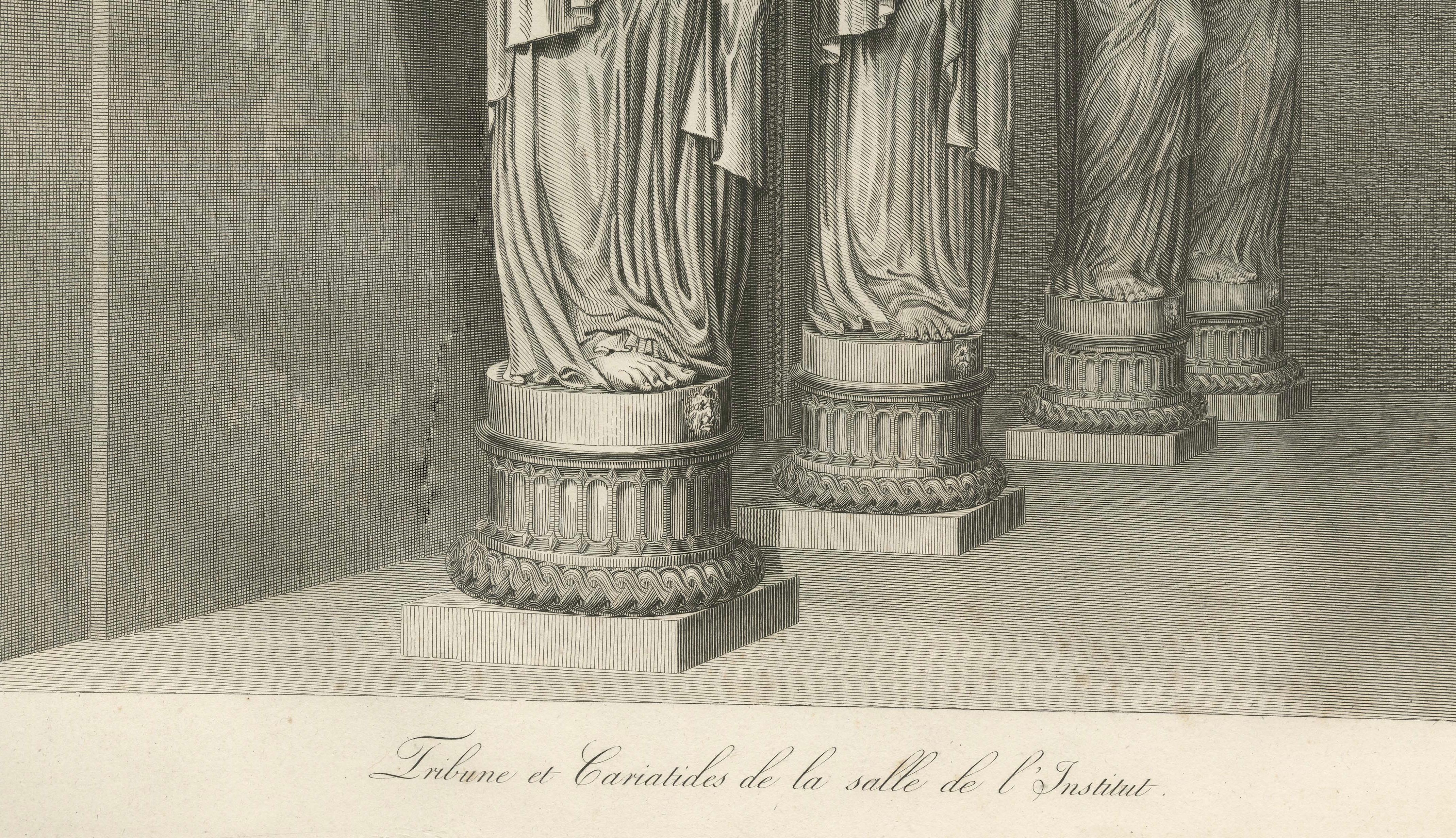
The engraving is titled *Tribune et Caryatides de la Salle de l’Institut* and depicts a magnificent architectural composition featuring caryatid figures supporting a richly ornamented entablature. Caryatids are sculpted female figures used as architectural supports, a motif that originated in ancient Greek architecture and was widely revived during the Renaissance and Neoclassical periods.
The composition presents three monumental draped female statues standing in profile beneath an elaborately decorated architectural canopy. Each figure stands upon an ornate pedestal and supports the heavy entablature above, creating a powerful illusion of structural weight balanced by elegant sculptural grace. The figures are shown with finely carved classical drapery that falls in rhythmic folds, emphasizing the sculptural form beneath. Their poses, garments, and hairstyles evoke antique prototypes, reflecting the Renaissance admiration for classical antiquity that deeply influenced French architecture.
The scene represents decorative sculpture associated with the Louvre complex and the Institut de France during the early modern period. At the time Baltard produced this publication, the Institut de France had been housed within the Louvre Palace before its relocation to the Collège des Quatre-Nations in 1805. Baltard’s engravings aimed to record these architectural treasures with almost scientific accuracy, preserving important details of French Renaissance decoration for future architects, artists, and historians.
The extraordinary detail achieved in the engraving demonstrates Baltard’s mastery of copperplate engraving techniques. Using delicate burin work, he reproduced the texture of carved stone, deep shadows of architectural recesses, and the subtle folds of classical drapery. The result is a convincing trompe-l'œil effect that gives the flat sheet the appearance of sculpted relief and architectural depth.
Architectural prints such as this served not only as documentation but also as inspiration for artists and architects studying classical ornament and Renaissance design. Today they remain highly valued by collectors of architectural prints, historians of French art, and interior designers seeking authentic classical imagery.
This is an original print from the year of publication, not a later reproduction. The print is offered unframed, allowing the buyer full freedom of framing choice according to personal or interior design preferences. Any framed examples shown in photographs are for visual inspiration only.
Condition:
Good antique condition with general age-related toning and occasional light foxing. Wide margins preserved. Strong, dark impression with visible plate mark. Minor handling wear consistent with age.
Framing tips:
This engraving frames beautifully with a generous ivory or cream mat and a dark walnut, black lacquer, or gilded frame. The strong architectural perspective and sculptural subject make it particularly effective in library interiors, classical interiors, or gallery walls focused on architectural studies.
Technique: copperplate engraving
Maker: Louis-Pierre Baltard, Paris, 1803
Keyword block:
antique architectural print, caryatid sculpture engraving, baltard paris monuments, louvre architectural print, institut de france engraving, french neoclassical architecture, caryatid column sculpture, paris monument engraving, 1803 copperplate engraving, french renaissance architecture print, classical sculpture engraving, louvre palace decoration, architectural study print, antique paris architecture print, neoclassical architectural engraving