About this sheet
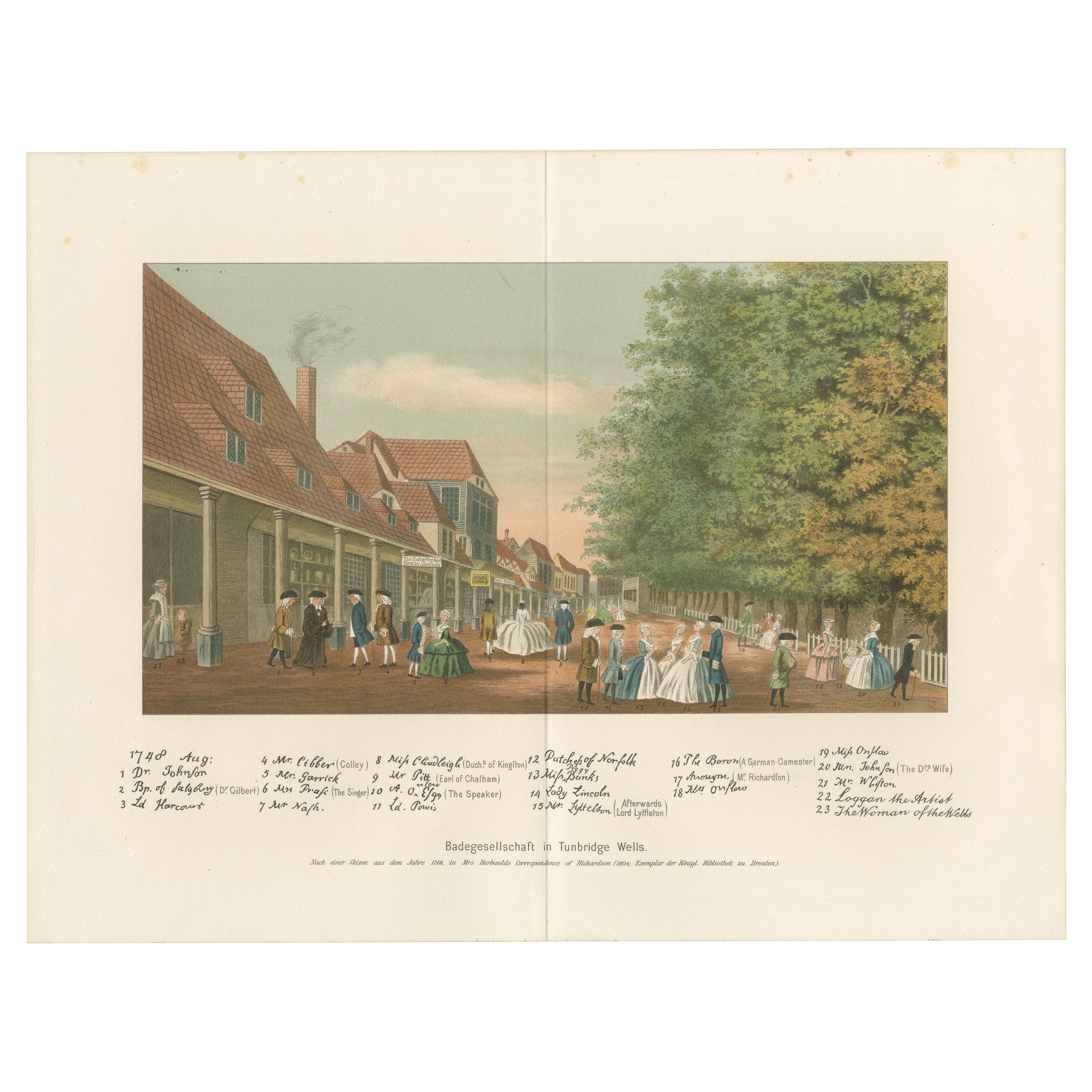
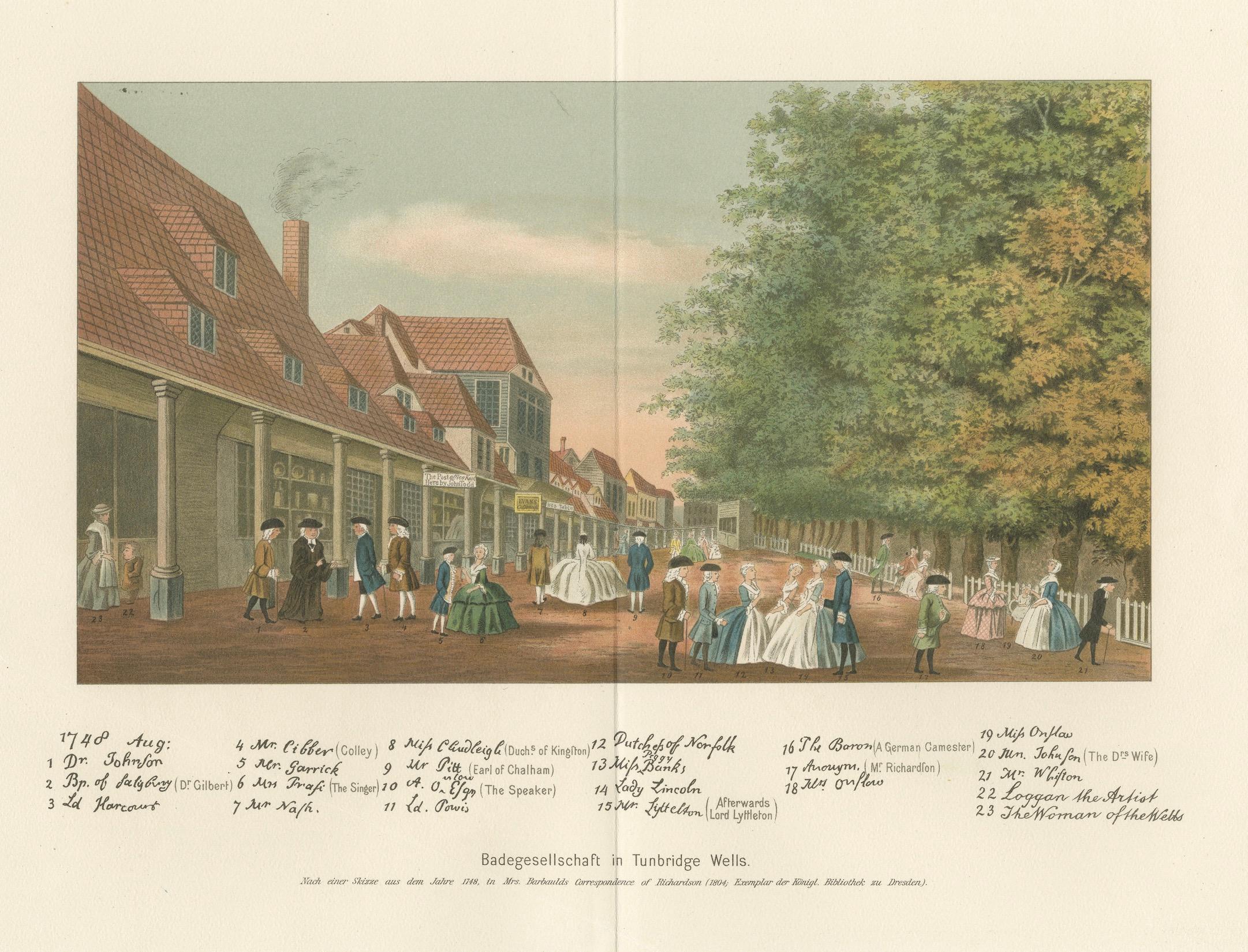
The illustration depicts a scene of spa visitors in Tunbridge Wells, Kent, England, based on a historical sketch from 1748. This particular version was likely published around 1890, as it was a common practice in the 19th century to create and distribute prints of earlier historical scenes.
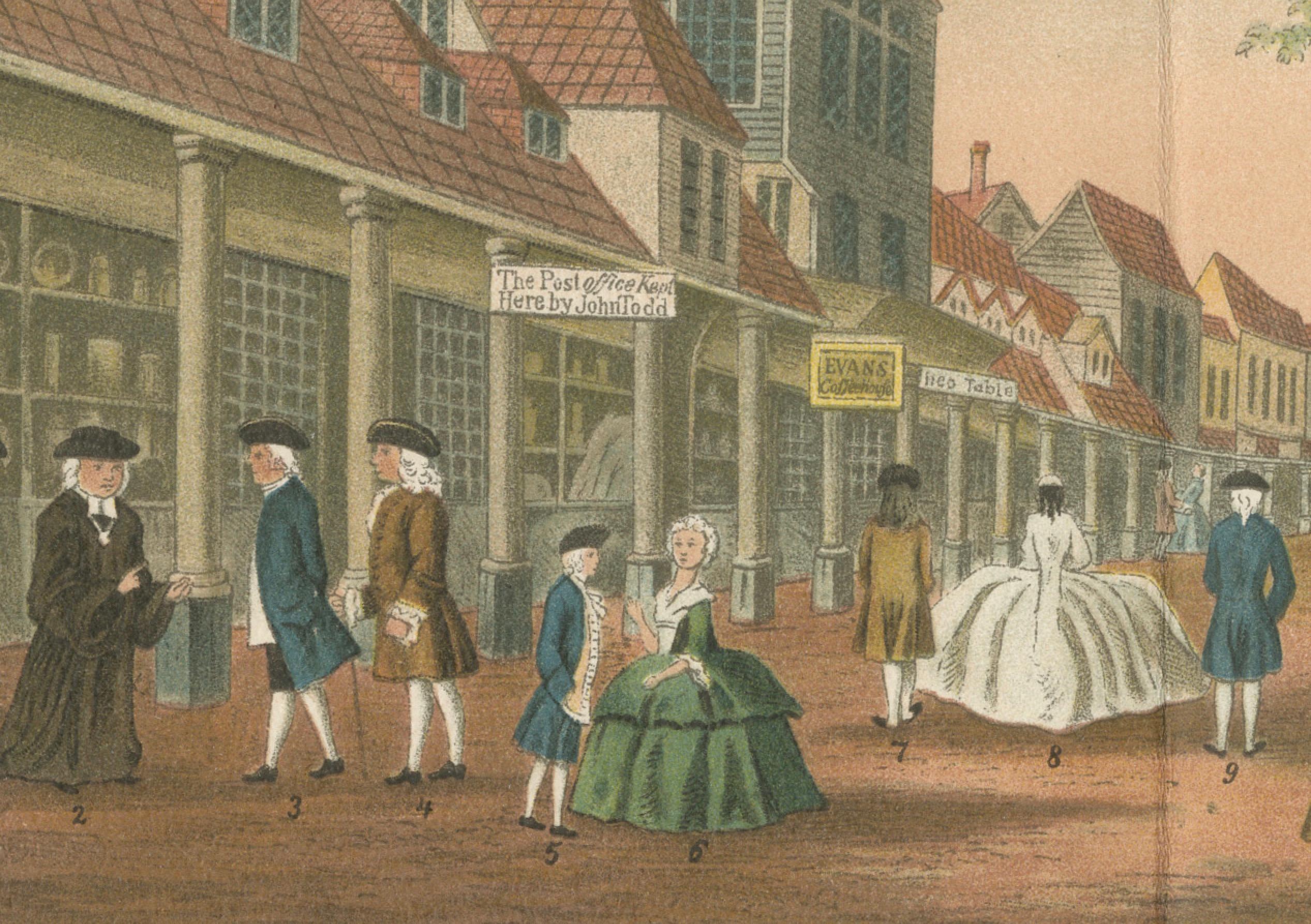
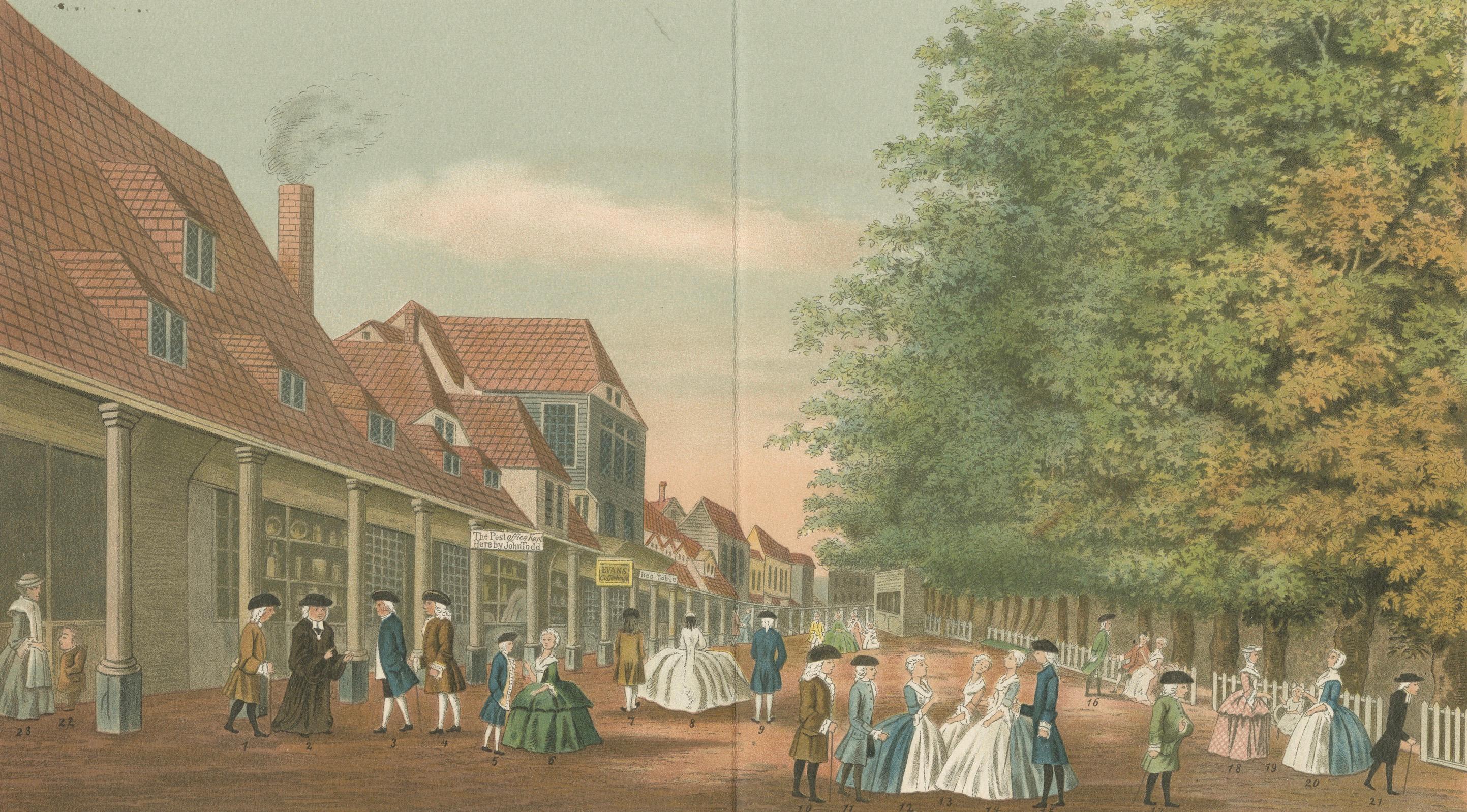
The scene shows a lively group of elegantly dressed men and women strolling and socializing along a promenade in Tunbridge Wells, a popular spa town. The setting includes:
- Architecture: The buildings along the left side feature traditional red-tiled roofs and support columns, typical of English town structures of the period. Some of the buildings appear to be shops or accommodations, with signs visible, indicating commercial activity catered to the spa visitors.
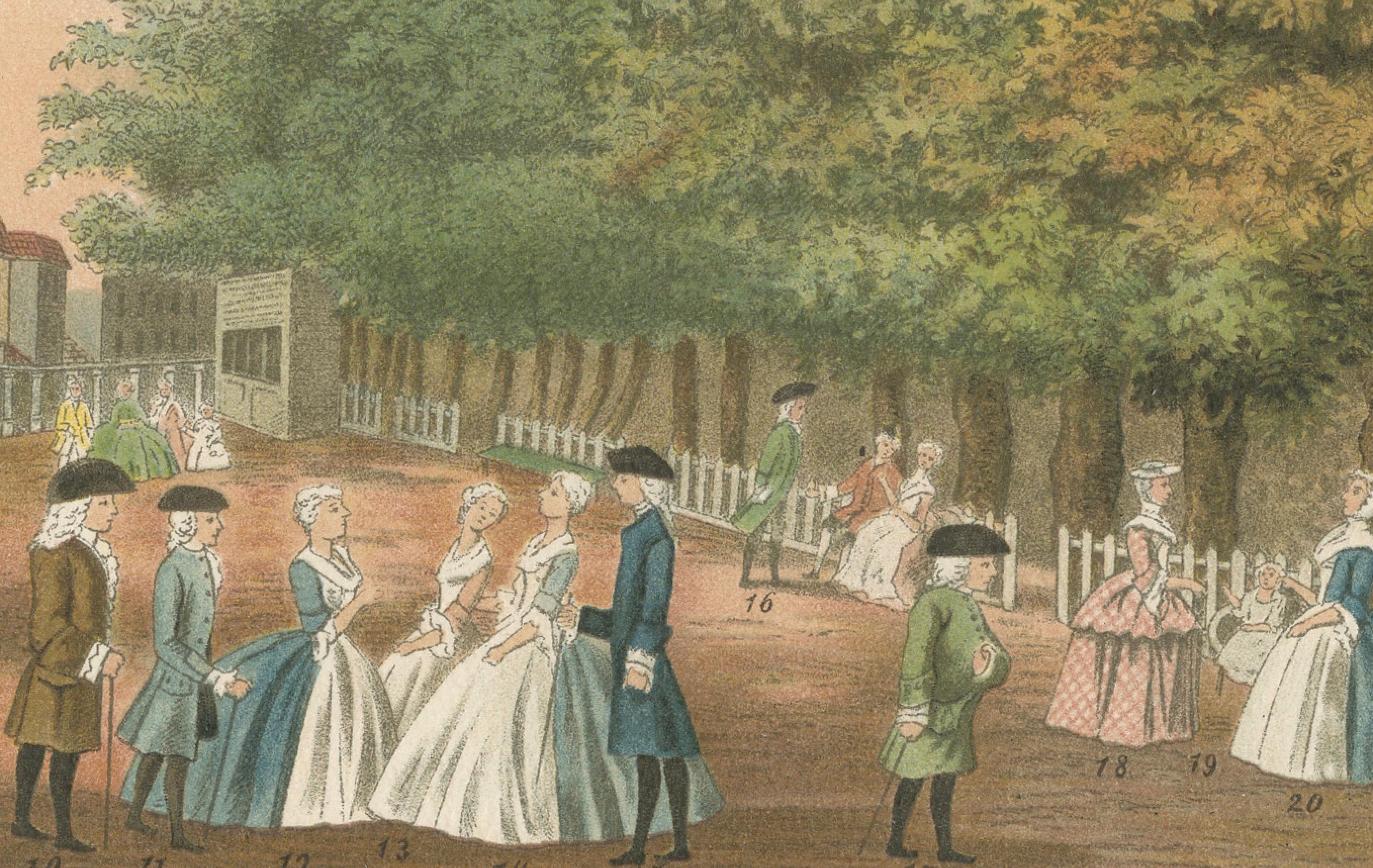
- Figures and Fashion: The people are dressed in the attire of the mid-18th century, showcasing the fashion of that time. Men are seen wearing coats, breeches, and tricorn hats, while women are dressed in long, flowing gowns with wide skirts. The scene suggests a relaxed and social atmosphere, typical of spa towns where visitors would come for both health treatments and leisure.
- Landscape: On the right side, there is a tree-lined path, adding a natural, park-like feel to the setting, which was part of the appeal of spa towns like Tunbridge Wells, known for their scenic beauty and healing spring waters.
Historical Context:
Tunbridge Wells became a popular spa town in the 17th and 18th centuries after the discovery of the Chalybeate Spring in 1606. The iron-rich spring water was believed to have health benefits, attracting visitors from across the country, including nobility and wealthy merchants. By the 18th century, Tunbridge Wells had established itself as a fashionable destination for the English elite, offering not only health treatments but also a venue for social interaction, entertainment, and relaxation.
Notable Figures
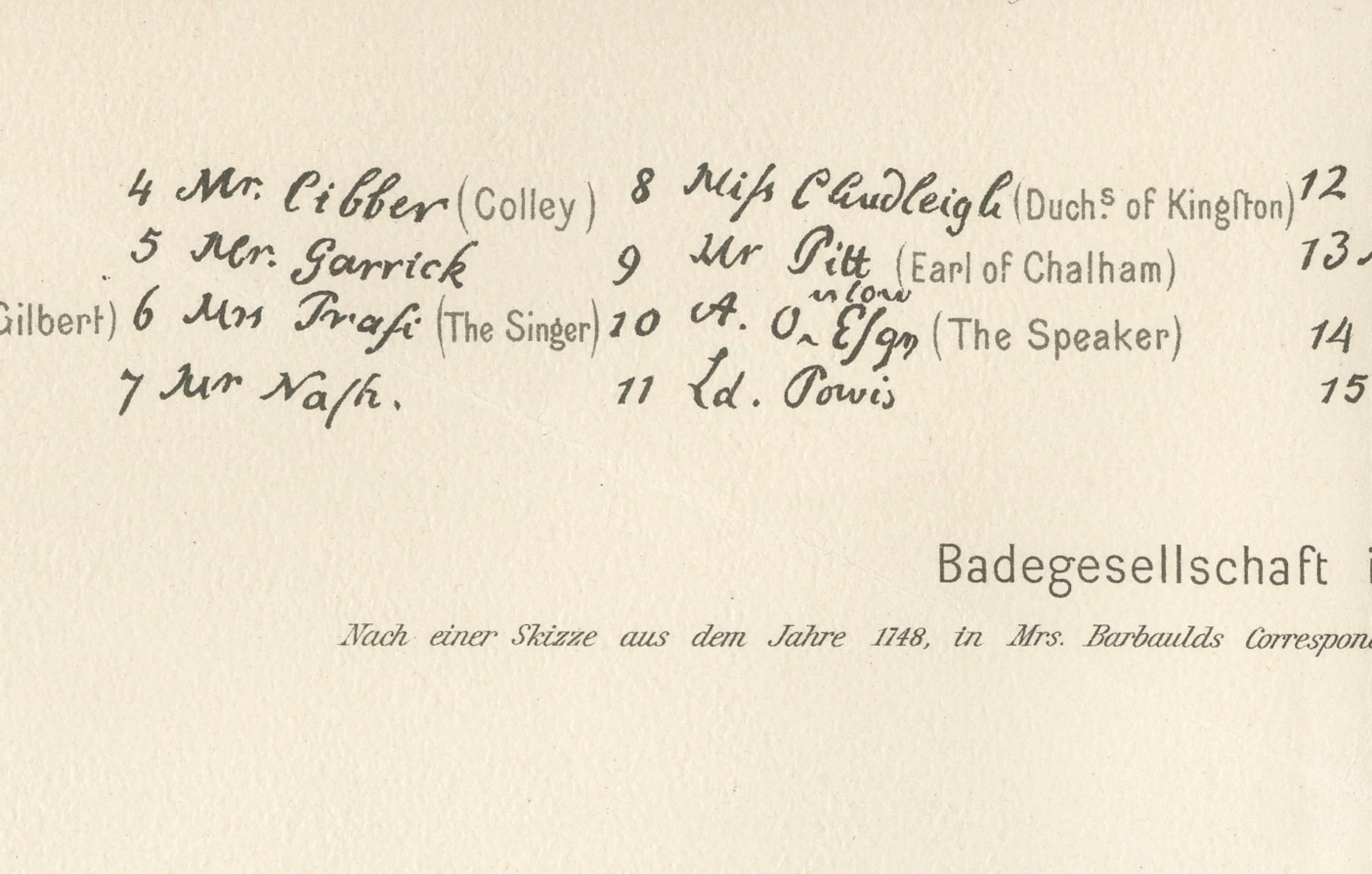
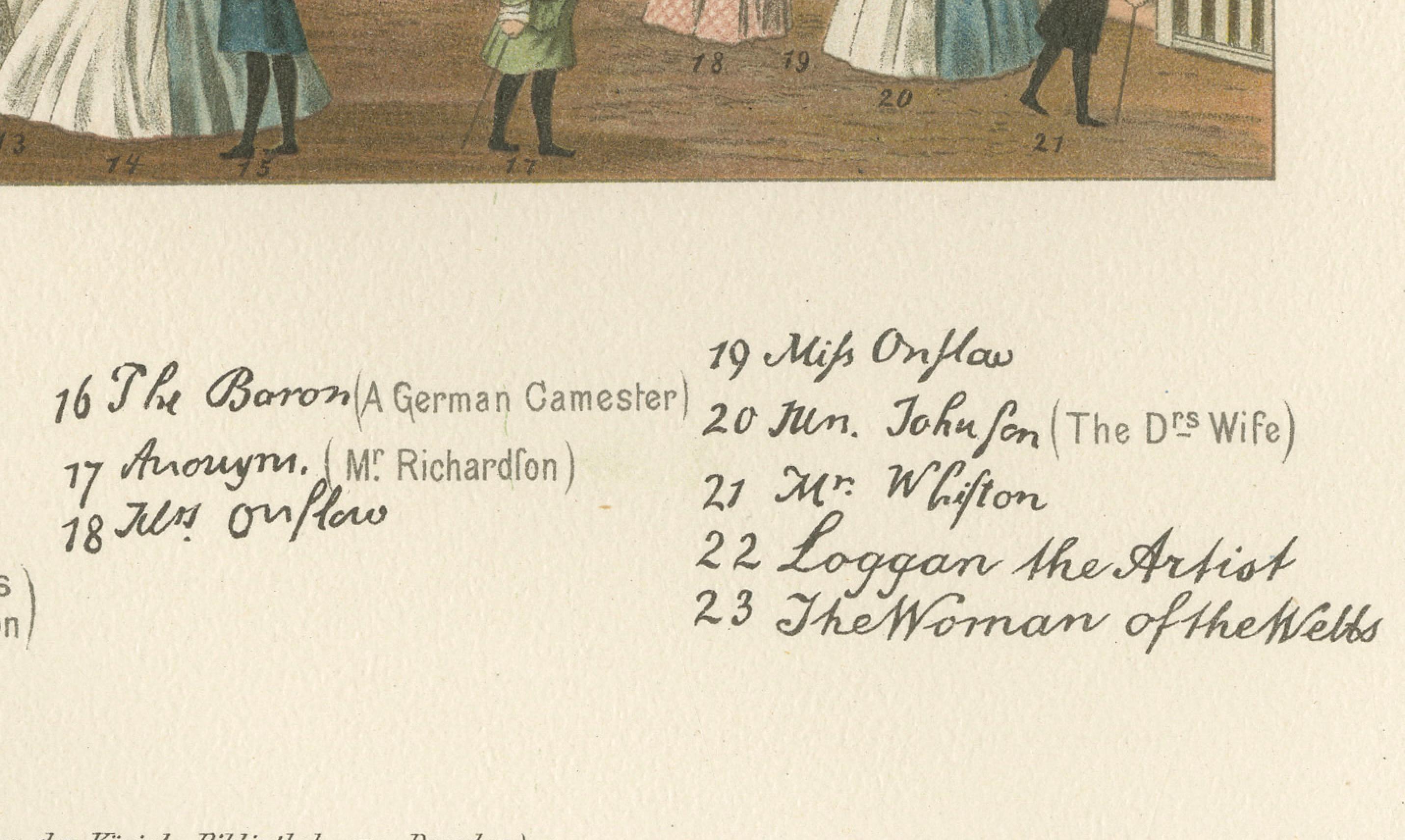
The list beneath the image names various notable individuals, suggesting they were either depicted in the original scene or known visitors to Tunbridge Wells around 1740. These figures include:
1. Dr. Johnson (likely Samuel Johnson, the famous lexicographer and writer)
2. Lord Chesterfield (a noted statesman and author)
3. Lady Lincoln, who later became Lady Lyttelton
These names indicate the high social standing of those who frequented Tunbridge Wells, emphasizing its status as a prestigious location.