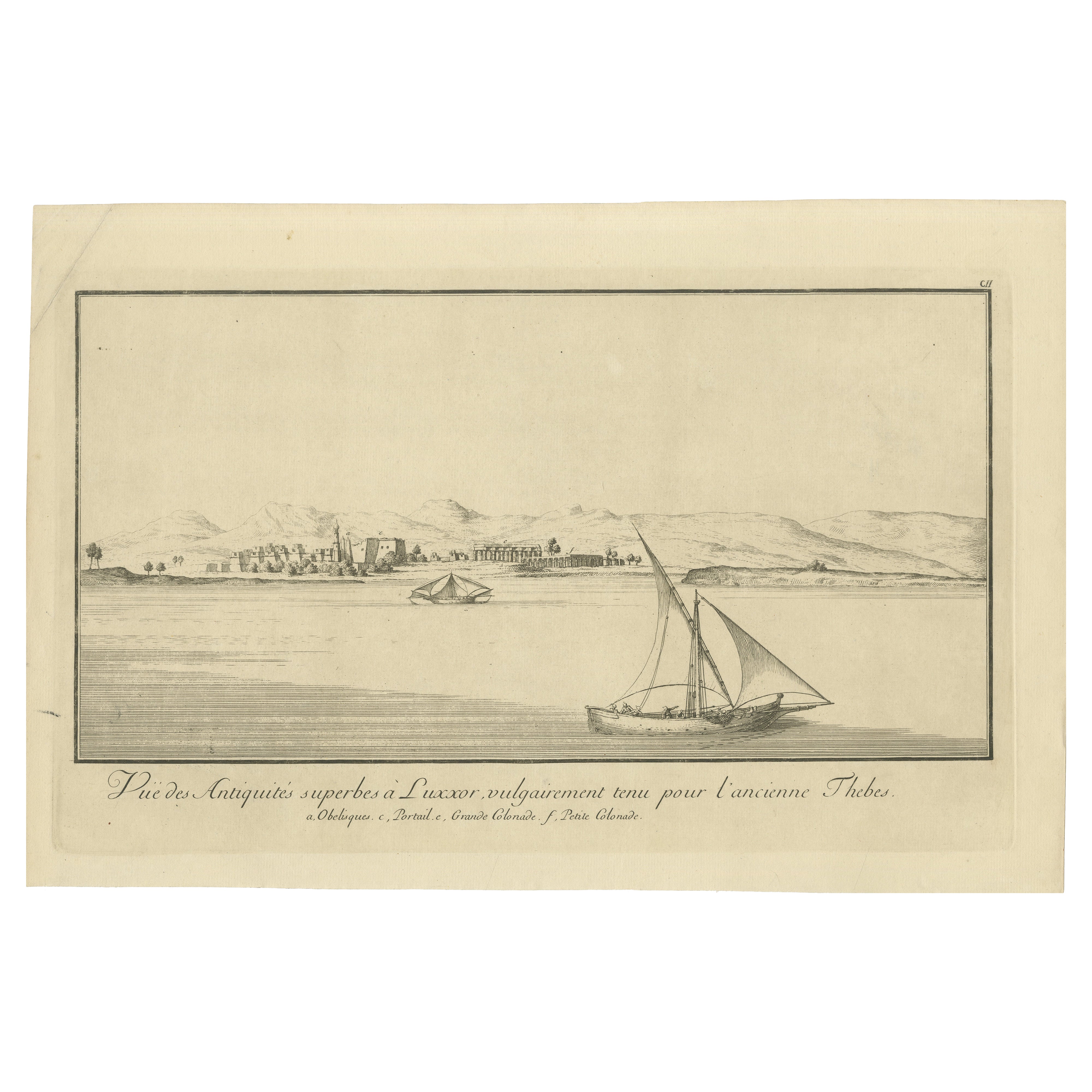
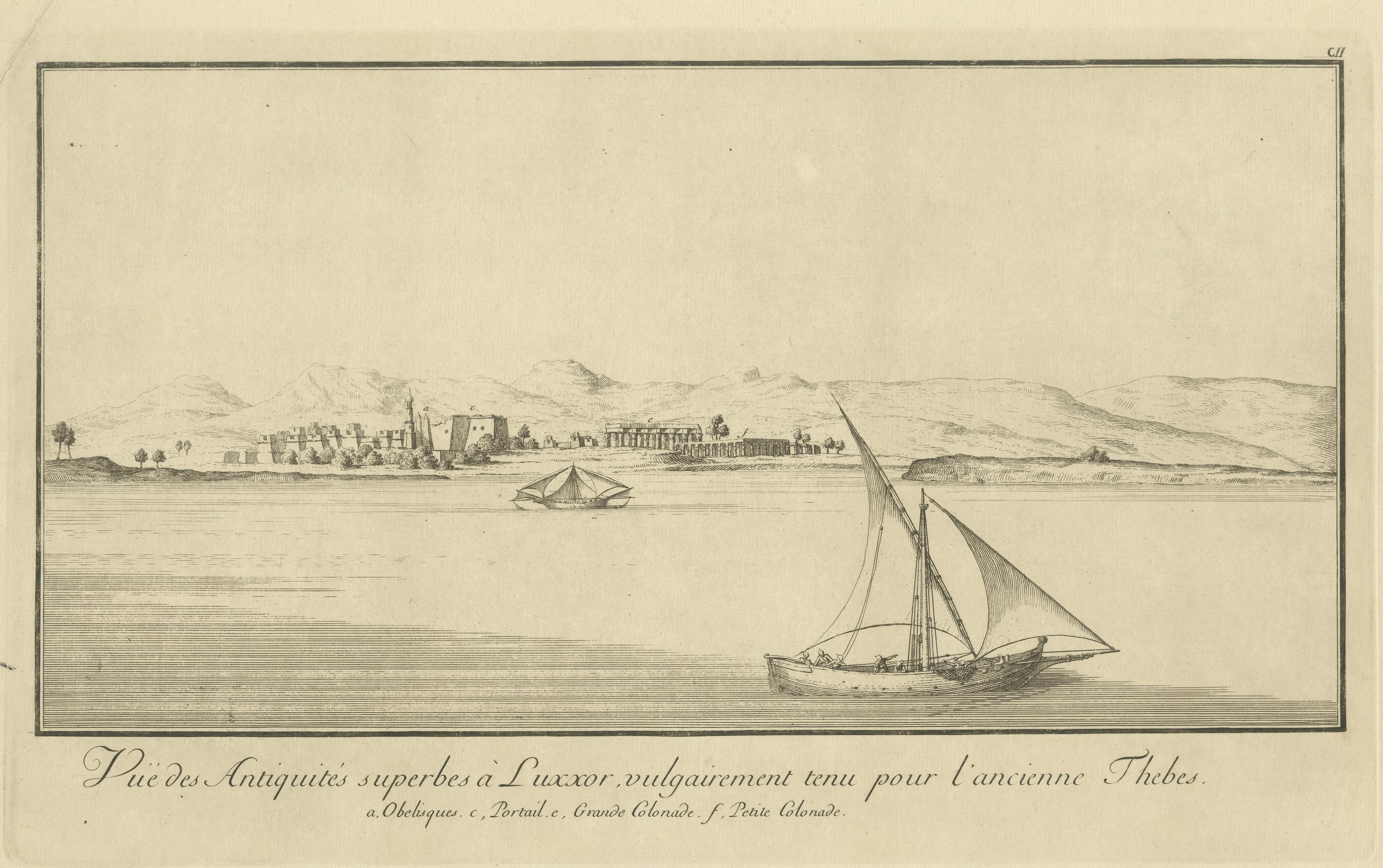
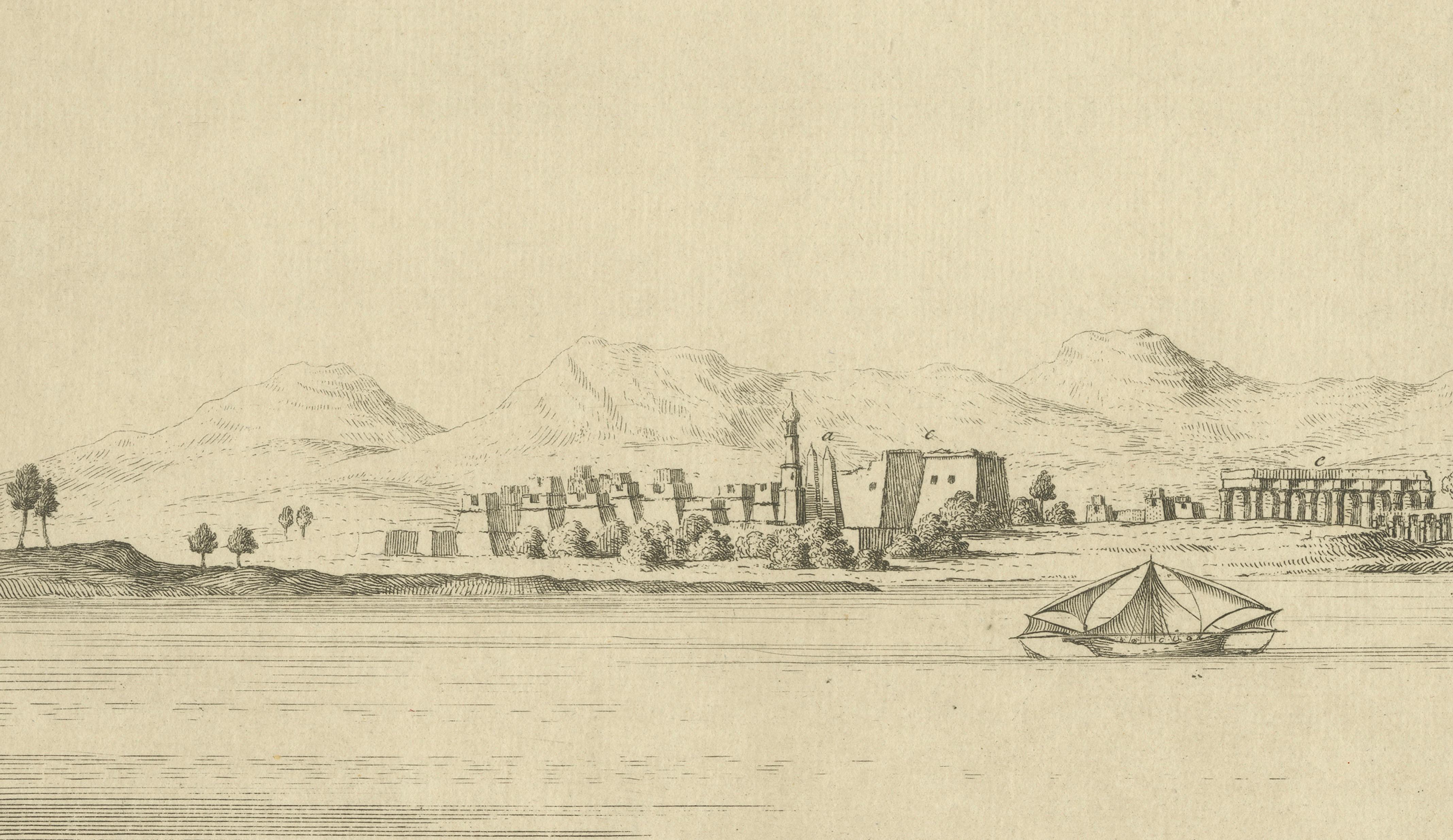
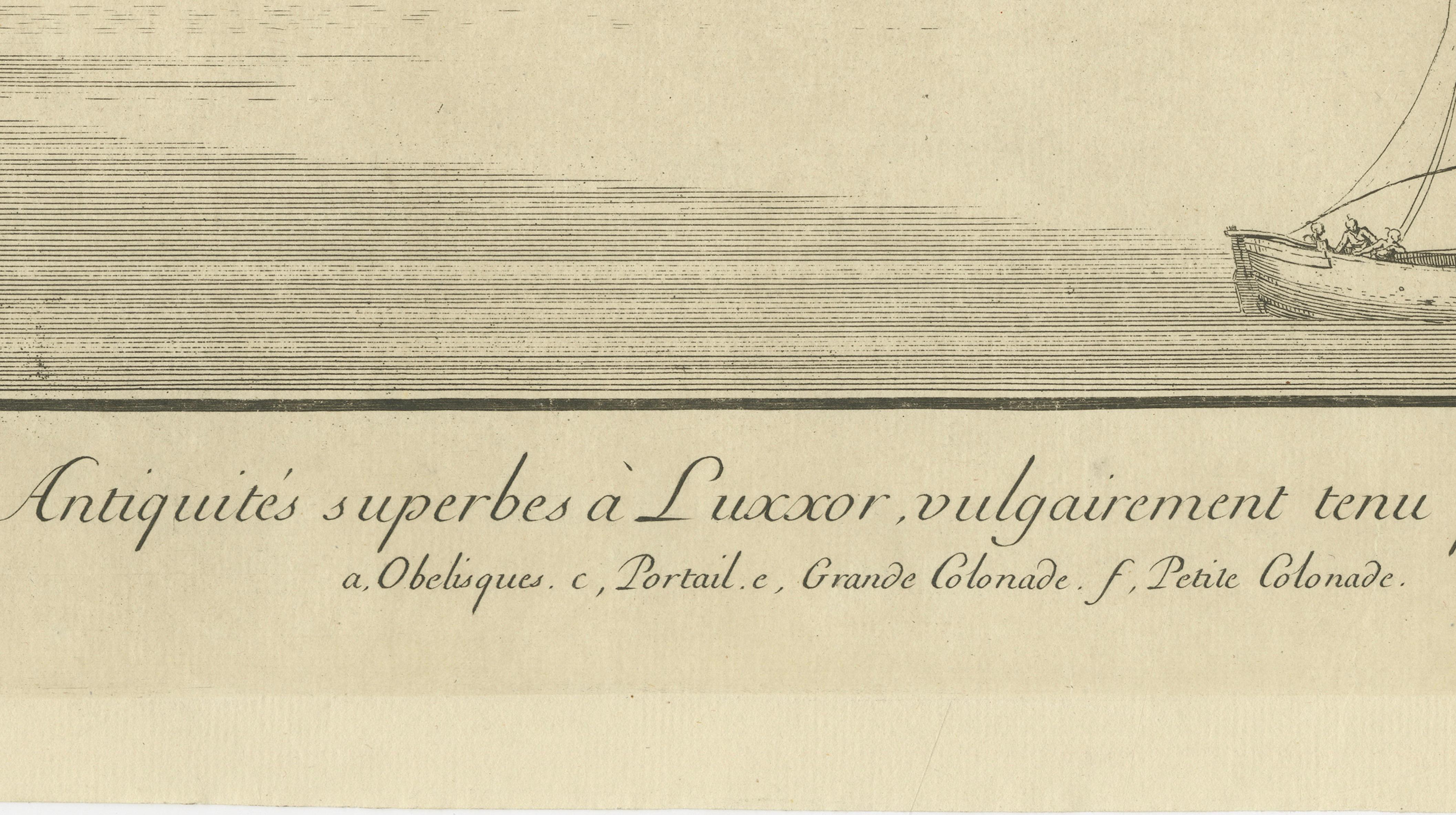
Antiquities of Luxor (Ancient Thebes), Norden Egypt Engraving, 1755
€ 420
One of a kind: this is the sheet in the photographs. Ships from Langweer, the Netherlands.
Date
1755
Sheet size
29 × 44.6 cm (11.4 × 17.6 in)
Condition
Good
Reference
BG-14183-24
Condition
Original copper engraving on laid paper. Light age toning and scattered minor spotting. A soft, old fold line visible at the upper left, stable and typical of early atlas handling. Strong impression with visible plate mark and full margins.
About this sheet
Antiquities of Luxor (Ancient Thebes), Norden Egypt Engraving, 1755
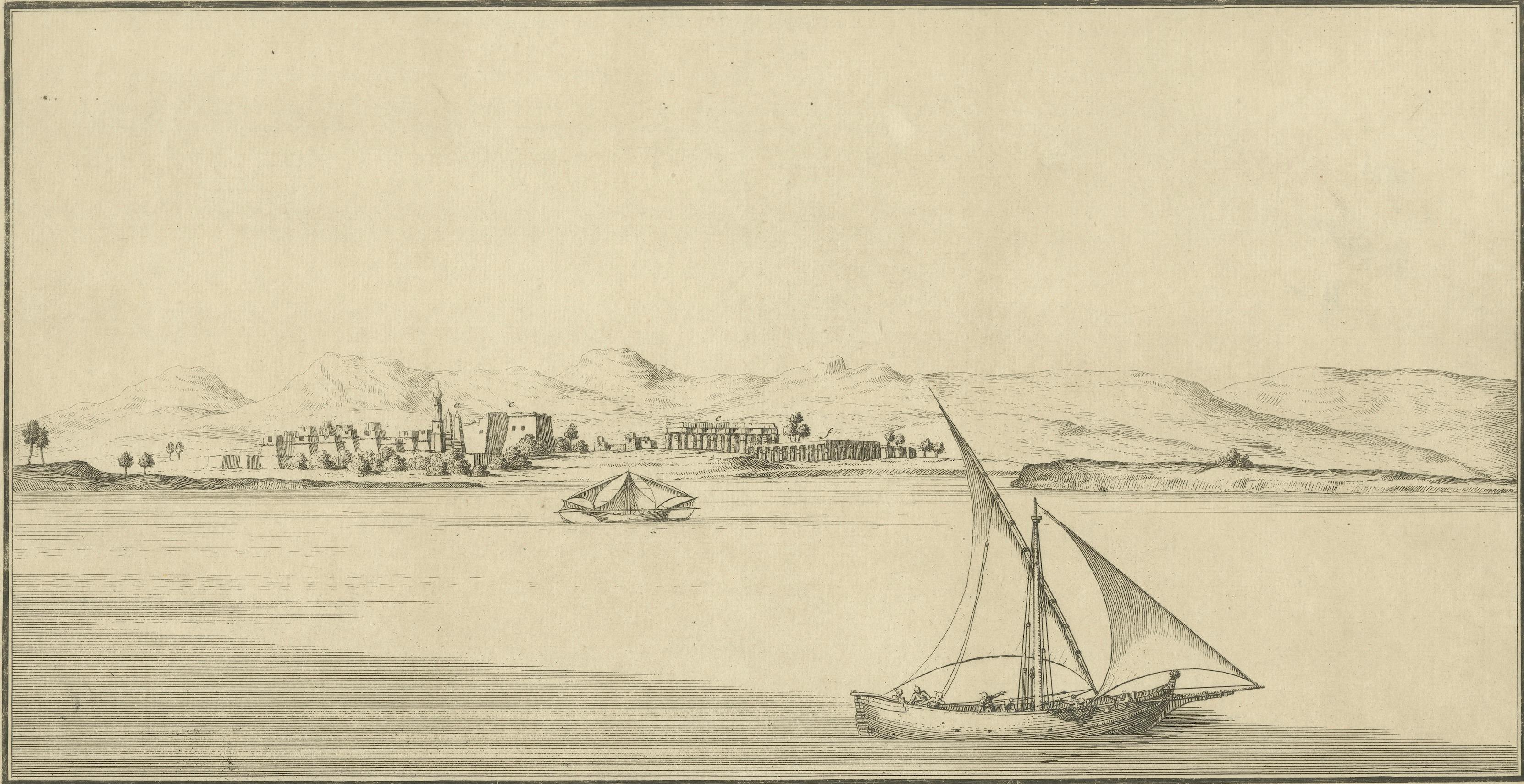
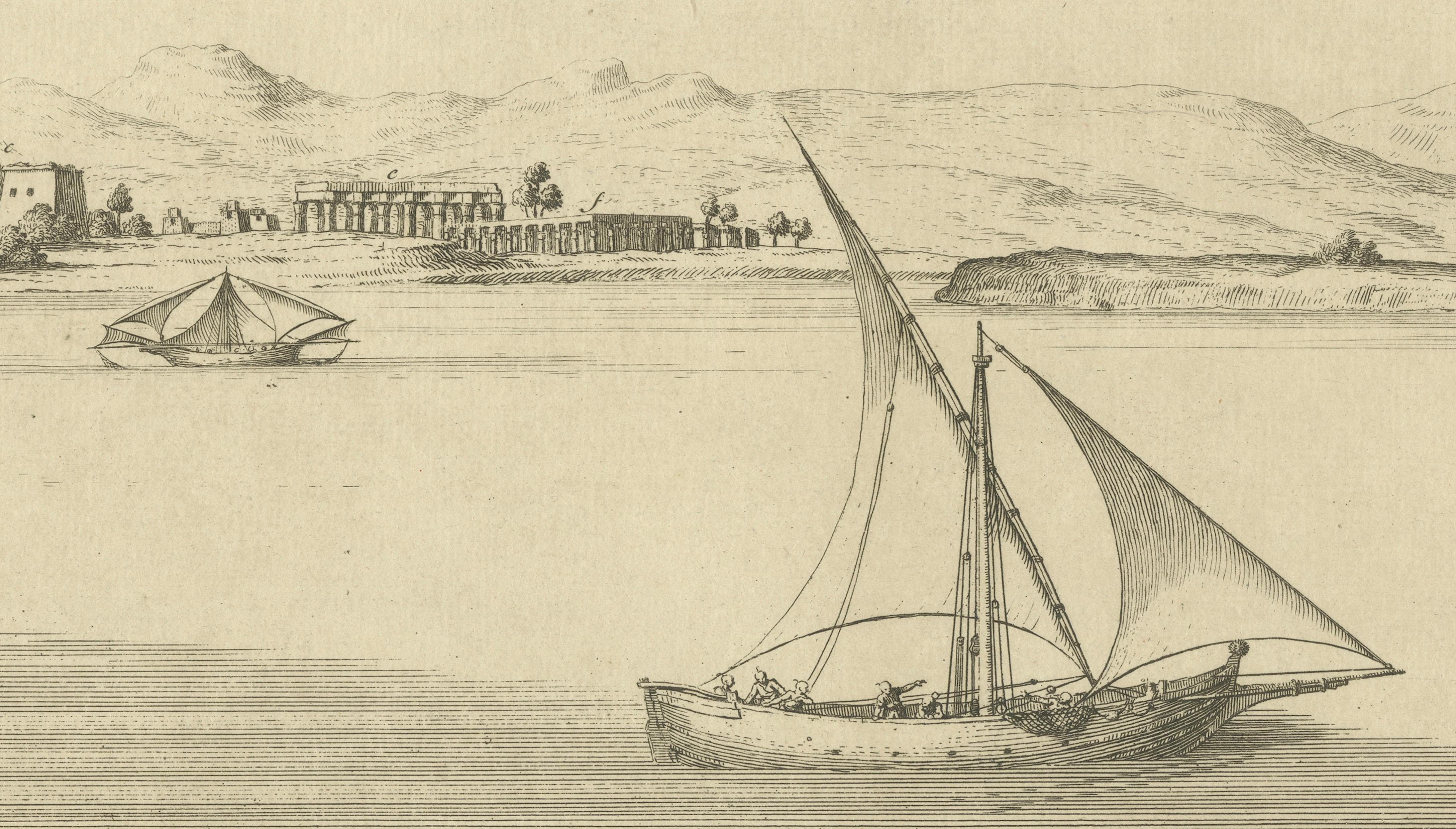
Description This powerful engraving depicts the monumental antiquities of Luxor, the site of ancient Thebes, one of the most important ceremonial and architectural centers of Pharaonic Egypt. Colossal ruins rise along the Nile’s edge, rendered with clarity and restraint, emphasizing both their scale and their integration into the surrounding landscape.
The plate originates from Voyage d’Egypte et de Nubie (Copenhagen, 1755), the seminal work of Frederik Ludvig Norden, whose journey predates Napoleon’s expedition by several decades and represents one of the earliest systematic visual documentations of Egypt. Norden’s drawings were engraved by Marcus Tuscher, whose disciplined copper engraving translates architectural mass and spatial depth with remarkable precision.
Luxor held a central place in Enlightenment-era scholarship, and Norden’s view captures the ruins before large-scale excavation or restoration, preserving an authentic early record of the site’s condition. The composition balances archaeological documentation with a strong sense of atmosphere, making the engraving equally compelling to collectors of Egyptiana and to interior designers seeking a historically grounded focal work.
As an architectural subject, this plate stands among the most significant in Norden’s series, representing Upper Egypt and the monumental heart of ancient civilization.
Condition report Original copper engraving on laid paper. Light age toning and scattered minor spotting. A soft, old fold line visible at the upper left, stable and typical of early atlas handling. Strong impression with visible plate mark and full margins.
Framing tips This plate benefits from a wide, light parchment or ivory mat paired with a dark walnut or black frame. A restrained frame emphasizes the architectural weight and archaeological seriousness of the image.
Technique: Copper engraving Maker: Frederik Ludvig Norden after Marcus Tuscher, Copenhagen, 1755