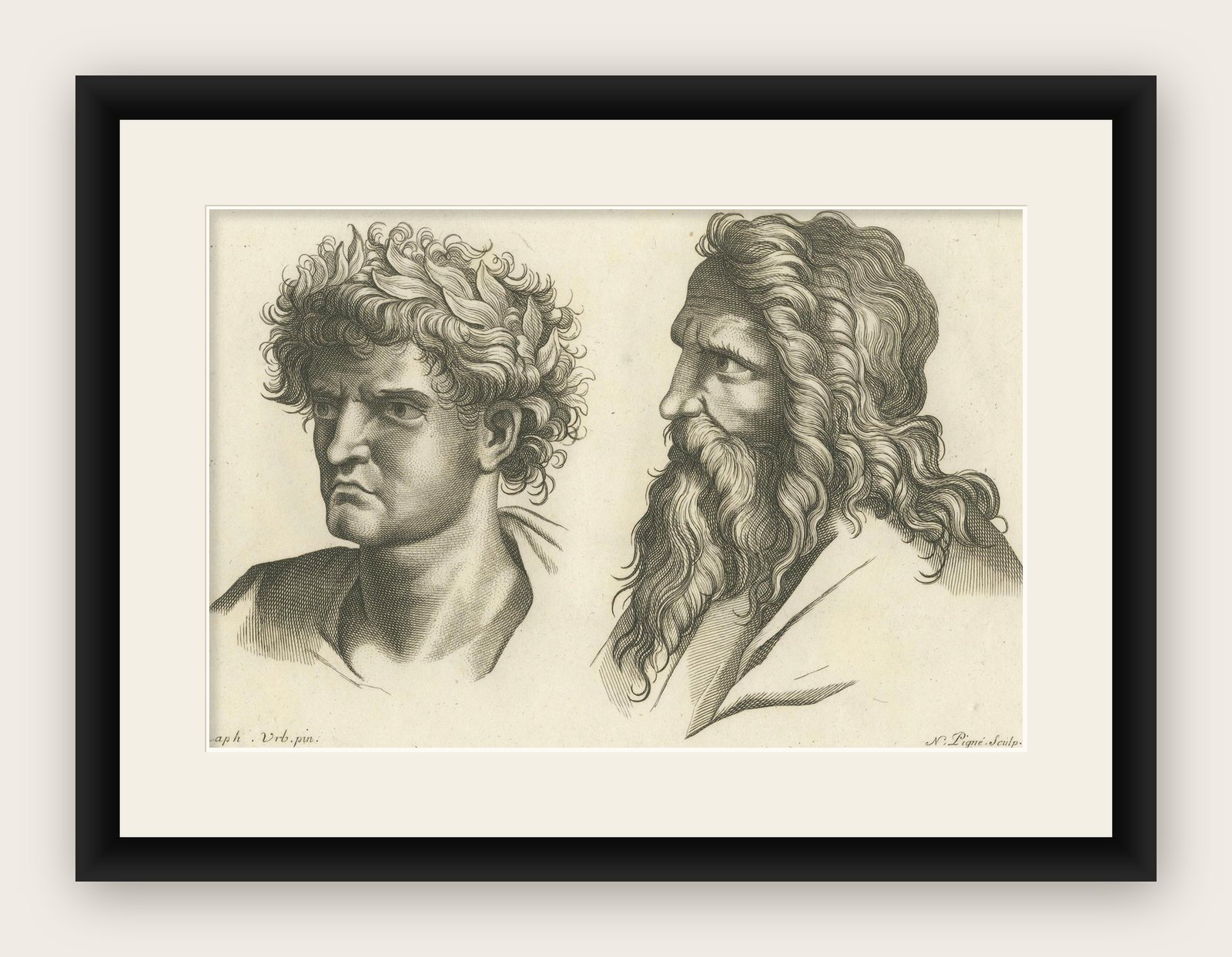
Contrast of Time: Ancient Wisdom Engraved by Pigné, 1740
€ 340
Original antique · The actual sheet photographed · Certificate of authenticity on request · Sold unframed · Worldwide shipping from € 15 (rates)
Date
1740
Sheet size
26 × 42 cm (10.2 × 16.5 in)
Reference
BG-13675-34
What the condition grades mean
Excellent
Bright and clean, with no faults worth mentioning.
Very good
Only light signs of age, such as faint toning.
Good
Normal signs of age for a sheet of this period: toning, some foxing, small marks or neat old repairs.
Fair
Clear faults such as staining, tears or repairs, priced to match.
Every fault we see is written in the condition note, and the whole sheet is shown uncropped in the photos.
Condition
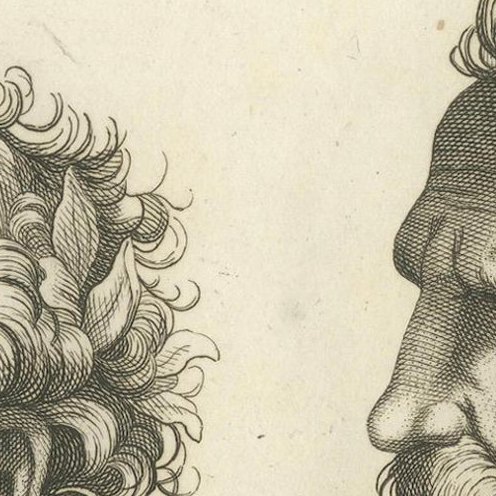
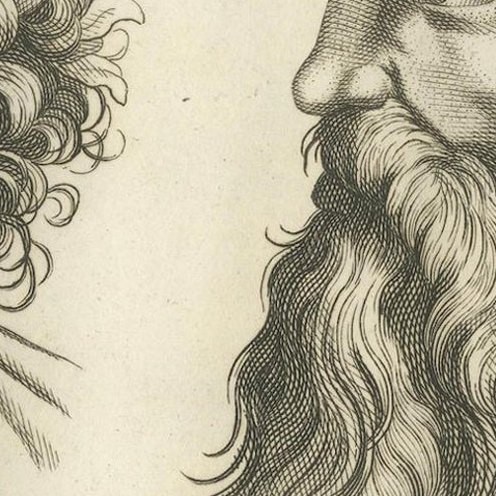
General age related toning and occasional staining from handling or damp, mostly in the marges and lower right corner - as visible on the scans. Strong impressions, no tears, crisp lines.
About this sheet
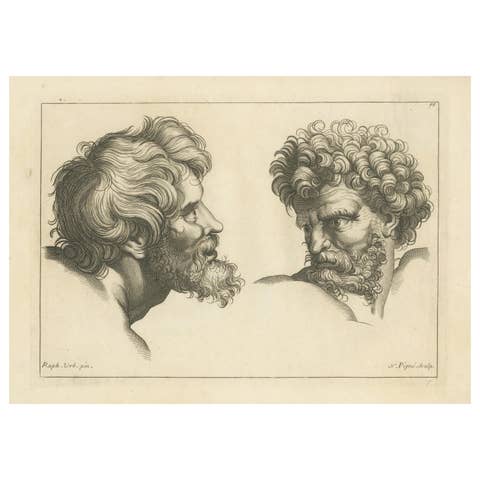
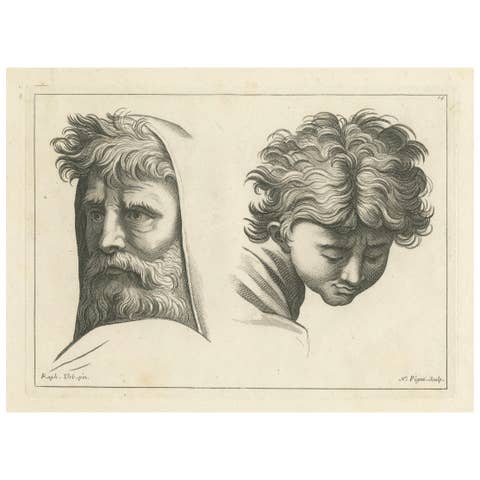
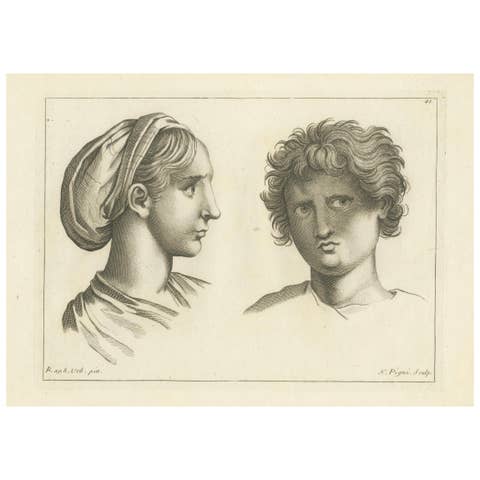
The engraving, attributed to the "Recueil de XC Têtes" series, displays two male profiles with distinctive expressions and hairstyles, characteristic of Renaissance portraiture. The man on the left is depicted with a calm, thoughtful expression, his wavy hair framing his face in loose curls. This profile suggests a figure of philosophical or sagacious character, reminiscent of classical depictions of scholars or deities.
In contrast, the figure on the right shows a stern visage with tightly coiled curls and a piercing gaze. His furrowed brow and the tension in his eyes convey a sense of intensity or perhaps inner turmoil. The detailed rendering of the curls and the play of light and shadow on both faces demonstrate the engraver's skill in creating texture and depth.
Marked "Raph. Urb. pin." for Raphael's original design and "N. Pigné. sculp." for Nicolas Pigné's engraving work, this piece exemplifies the collaborative efforts to bring Raphael's works to a broader audience. The contrast between the two figures might represent differing aspects of human nature or philosophy, a subject often explored in Renaissance art. The engraving captures the essence of Raphael's art, reflecting the nuanced expressions and emotions that are hallmarks of his style.
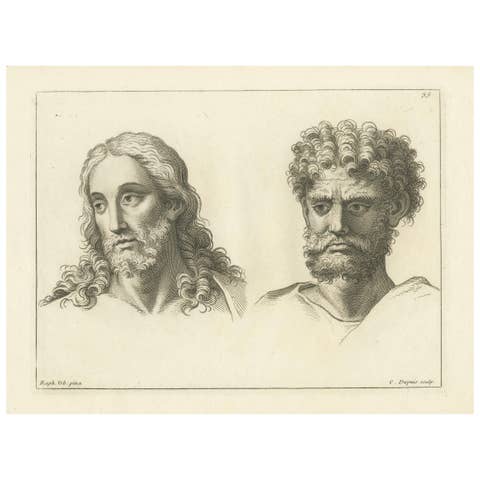
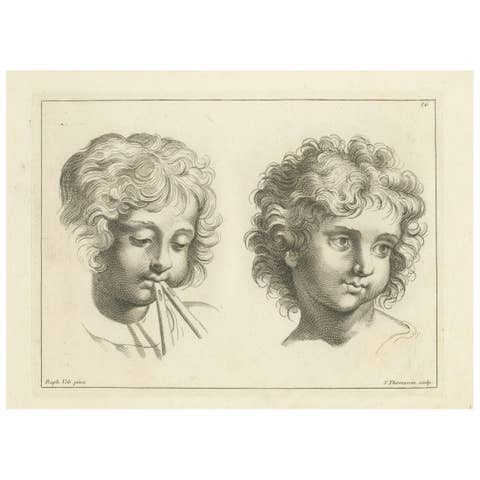
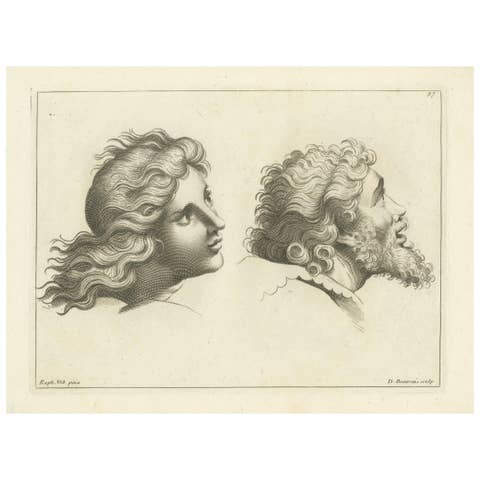
The engraving is part of a series known as "Recueil de XC Tetes tirees des Sept Cartons des Acts des Apotres peints par Raphael Urbin," which translates to "Collection of 90 Heads drawn from the Seven Cartoons of the Acts of the Apostles painted by Raphael of Urbino." This series was derived from the Raphael Cartoons at Hampton Court, which are famous works by the Italian Renaissance master Raphael. These cartoons were originally created as full-size designs for tapestries depicting scenes from the lives of Saints Peter and Paul.
Nicolas Dorigny, a renowned French engraver, was responsible for creating these engravings. He was invited to England and worked on engraving the Raphael Cartoons, which he completed in 1719. Dorigny's engravings were sold by subscription and were highly regarded for their fidelity to Raphael's original designs and for their artistic excellence. His work was part of the broader European tradition of reproducing and disseminating the works of great Renaissance artists.
These particular engravings are historically significant as they represent one of the key moments in the history of printmaking, providing an elite educated market with access to Raphael's artistry through the medium of engraving. Dorigny's work, including this series, was aimed at a knowledgeable audience, with all the lettering in the engravings done in Latin, highlighting the scholarly nature of the intended patrons.