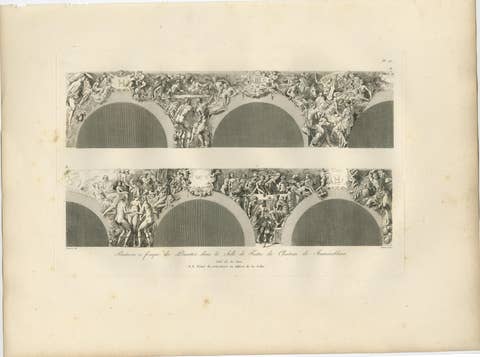
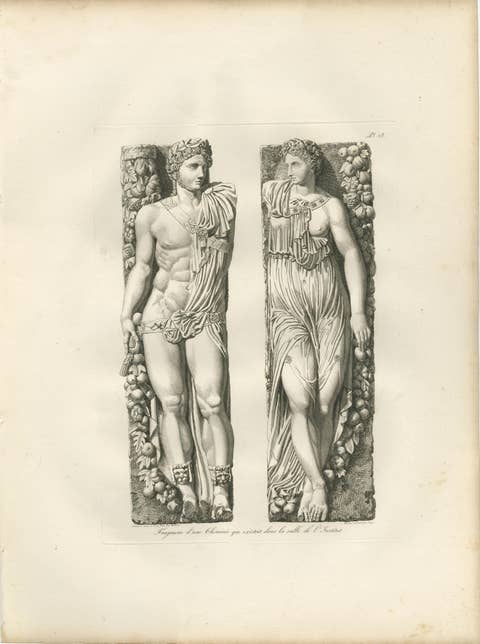
Relics of Antiquity: Egyptian Sphinx and Colossal Statues of Canopus, 1801
€ 290
Original antique · The actual sheet photographed · Certificate of authenticity on request · Sold unframed · Worldwide shipping from € 15 (rates)
Date
1801
Sheet size
26.5 × 20 cm (10.4 × 7.9 in)
Condition
Good
Reference
BG-13597-9
What the condition grades mean
Excellent
Bright and clean, with no faults worth mentioning.
Very good
Only light signs of age, such as faint toning.
Good
Normal signs of age for a sheet of this period: toning, some foxing, small marks or neat old repairs.
Fair
Clear faults such as staining, tears or repairs, priced to match.
Every fault we see is written in the condition note, and the whole sheet is shown uncropped in the photos.
Condition
Good condition. Mild foxing and no damage. Not a dark impression. This is not a reproduction but an original engraving. Study the image carefully.
About this sheet
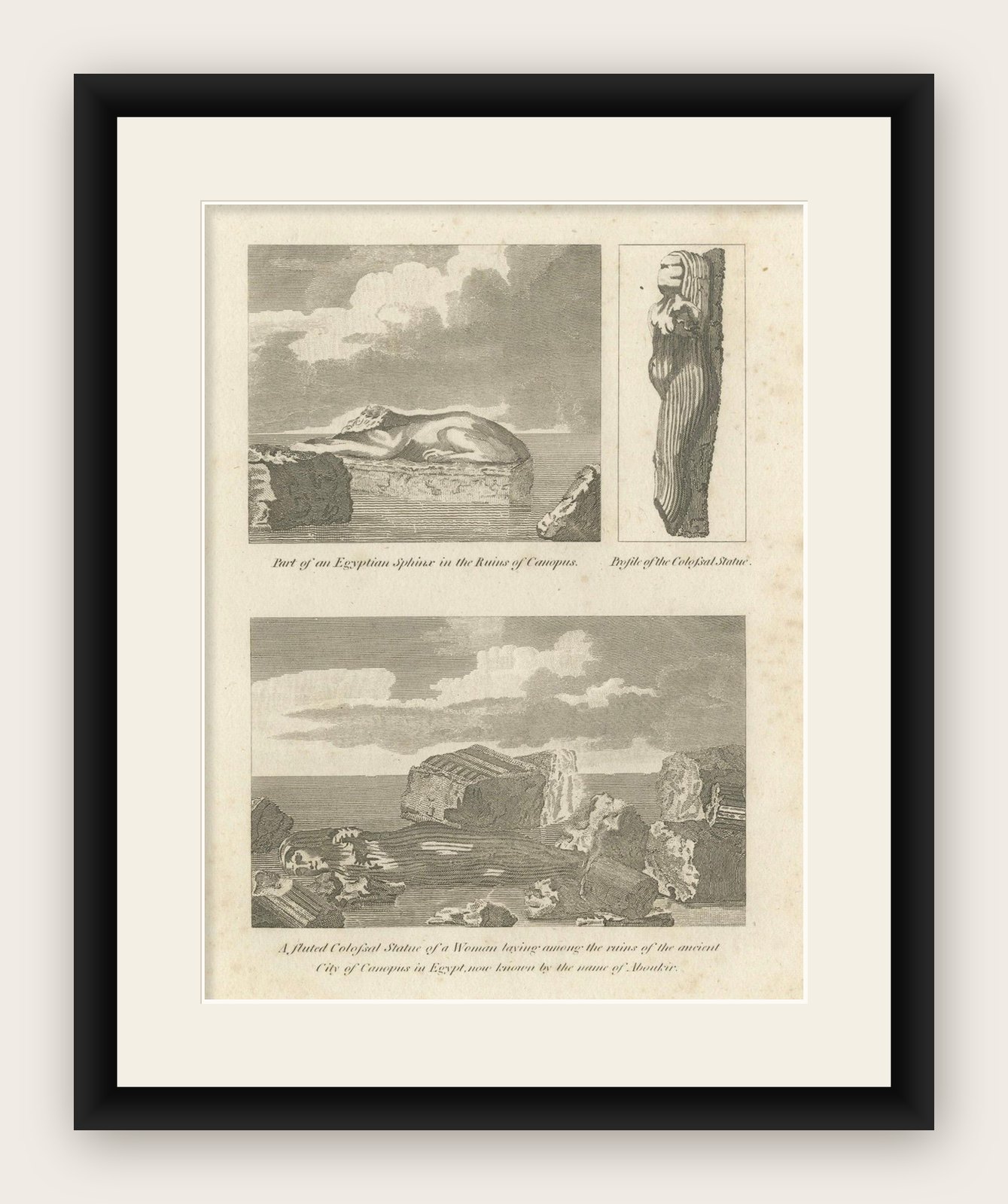
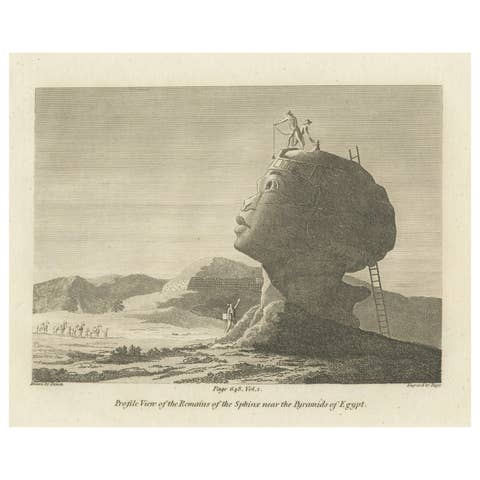
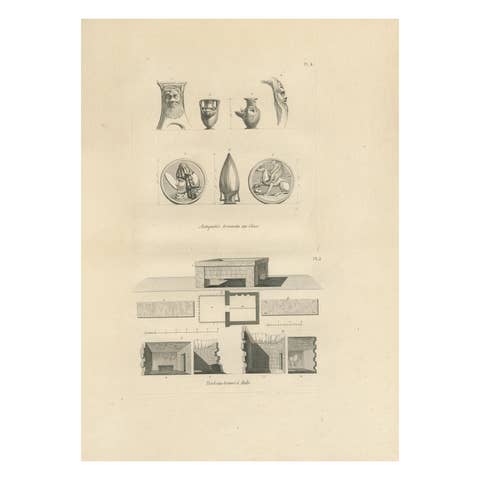
This print showcases two striking images from George Alexander Cooke's "Universal Geography." The upper panel illustrates part of an Egyptian sphinx found amidst the ruins of Canopus, a classical city with rich historical significance. Below, a colossal statue of a woman towers among the ruins, evoking the grandeur of ancient Egyptian civilization. Engraved in 1801, this work captures the essence of discovery from the age of explorers, immortalized on cotton-rich paper using the intricate copper plate engraving technique.
Description: This is a 1801 copperplate engraving from George Alexander Cooke's "Universal Geography" .
More info on its publication: The print is part of George Alexander Cooke's comprehensive work "A Modern and Authentic System of Universal Geography." This book was a significant compilation of geographical knowledge during the late 18th century, offering descriptions and accounts of various parts of the world, influenced by the age of exploration. It includes narratives of famed explorers like Captain James Cook and Ferdinand Magellan, detailing their discoveries and journeys that expanded the European understanding of the globe. Cooke's work served as both a chronicle and reference for the territories and cultures encountered by these voyagers.