About this sheet
Set of Three Antique Fish Engravings from Diderot’s Encyclopédie, 1770s
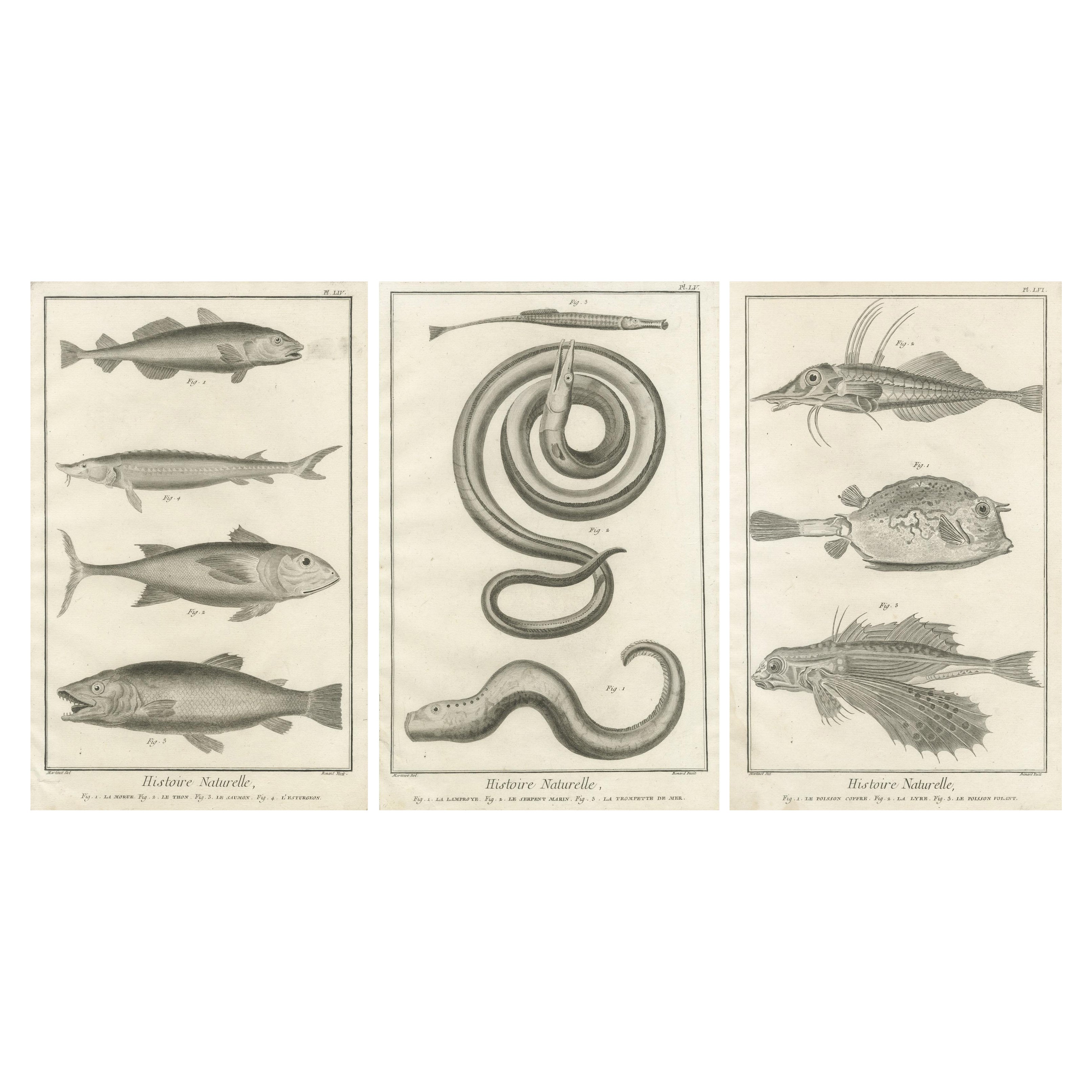
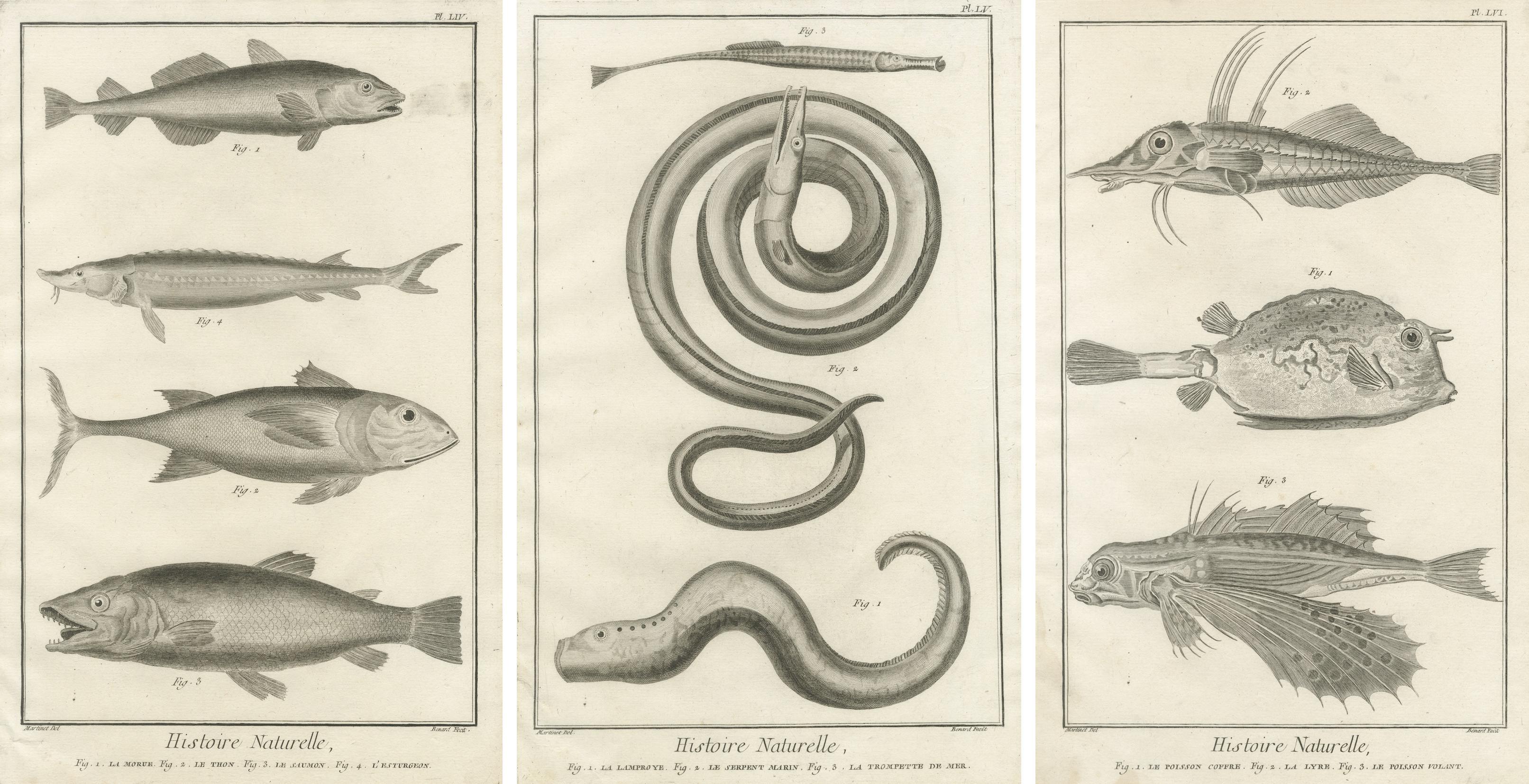
A fine and complete set of three copperplate engravings from Denis Diderot and Jean le Rond d’Alembert’s monumental Encyclopédie, ou Dictionnaire raisonné des sciences, des arts et des métiers, issued in Paris during the 1770s–1780s. These plates, engraved by Robert Bénard after drawings by François-Nicolas Martinet, belong to the Histoire Naturelle section of the work and exemplify the Enlightenment ambition to classify and illustrate the natural world with both scientific precision and artistic refinement.
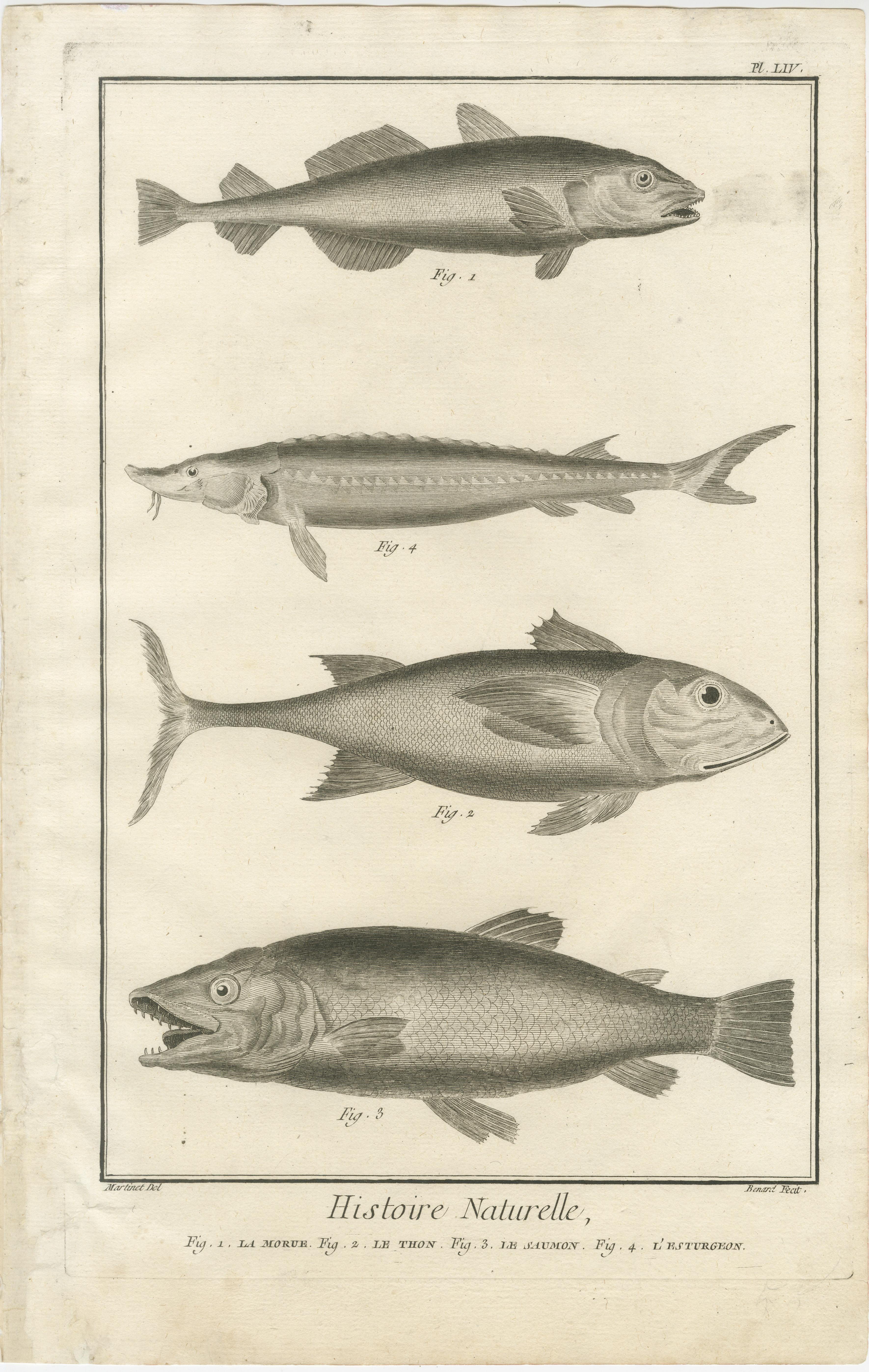
The first plate (Pl. LIV) depicts four familiar food and game fishes of Europe: La Morue (Cod), Le Thon (Tuna), Le Saumon (Salmon), and L’Esturgeon (Sturgeon). These species were not only of biological interest but also held economic and cultural importance in 18th-century France.
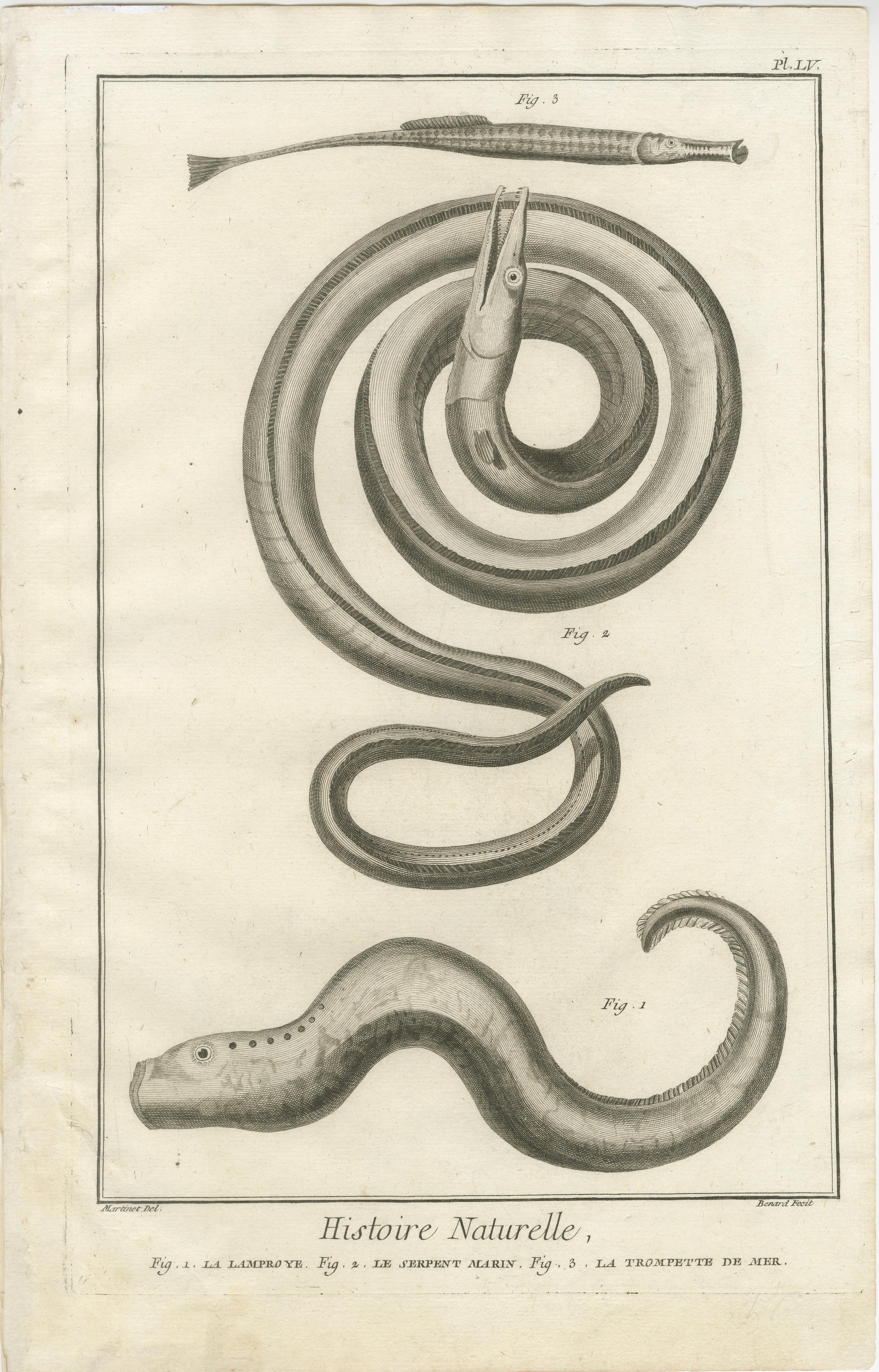
The second plate (Pl. LV) shows more curious and exotic marine forms: La Lamproye (Lamprey), Le Serpent Marin (Sea Serpent or eel-like fish), and La Trompette de Mer (Trumpetfish). Such depictions reflect the era’s fascination with the diversity of sea life and the blending of observation with reports from maritime exploration.
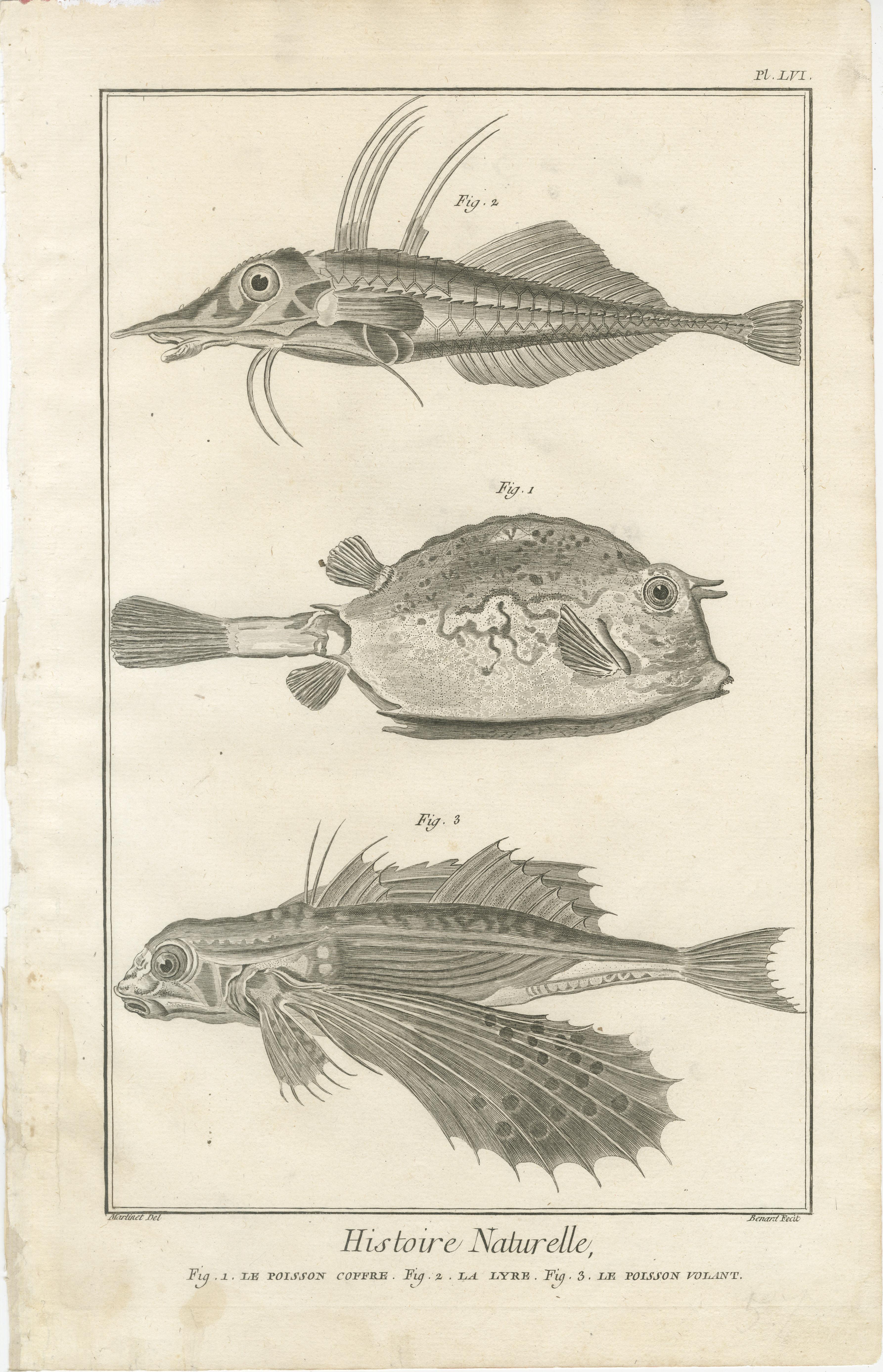
The third plate (Pl. LVI) illustrates striking tropical fish: Le Poisson Coffre (Boxfish), La Lyre (Lyre fish), and Le Poisson Volant (Flying fish). These unusual species, with their vivid forms and defensive adaptations, epitomize the natural wonders that captured Enlightenment imagination.
Together, these three engravings present a cross-section of ichthyology as understood in the late 18th century, ranging from familiar edible fish to exotic marine oddities. They remain highly decorative works that balance fine scientific draughtsmanship with artistic elegance, making them both collectible natural history prints and appealing interior decoration.
Condition report: Good impressions with visible plate marks. Paper shows general age-related toning with some minor foxing and light handling marks, consistent with 18th-century sheets. Blank versos.
Framing tips: Best displayed as a set of three in matching frames, either horizontally or vertically aligned. Wide ivory or cream mounts will emphasize the crisp engraving lines, while dark wood or gilt frames add depth and classical elegance. For subtle emphasis, consider double matting with a thin blue or green inner line to echo the marine subject.
Technique: Copperplate engraving
Maker: François-Nicolas Martinet (del.), Robert Bénard (sculp.), Paris, 1770s–1780s