One of a kind: this is the sheet in the photographs. Ships from Langweer, the Netherlands.
Date
1776
Sheet size
27.3 × 25 cm (10.7 × 9.8 in)
Condition
Good
Reference
BG-14102-53
Condition
Condition report: Excellent impression. Slight age toning and a few minor edge nicks. Vertical centerfold as issued. Crisp lines and clear architectural details.
About this sheet
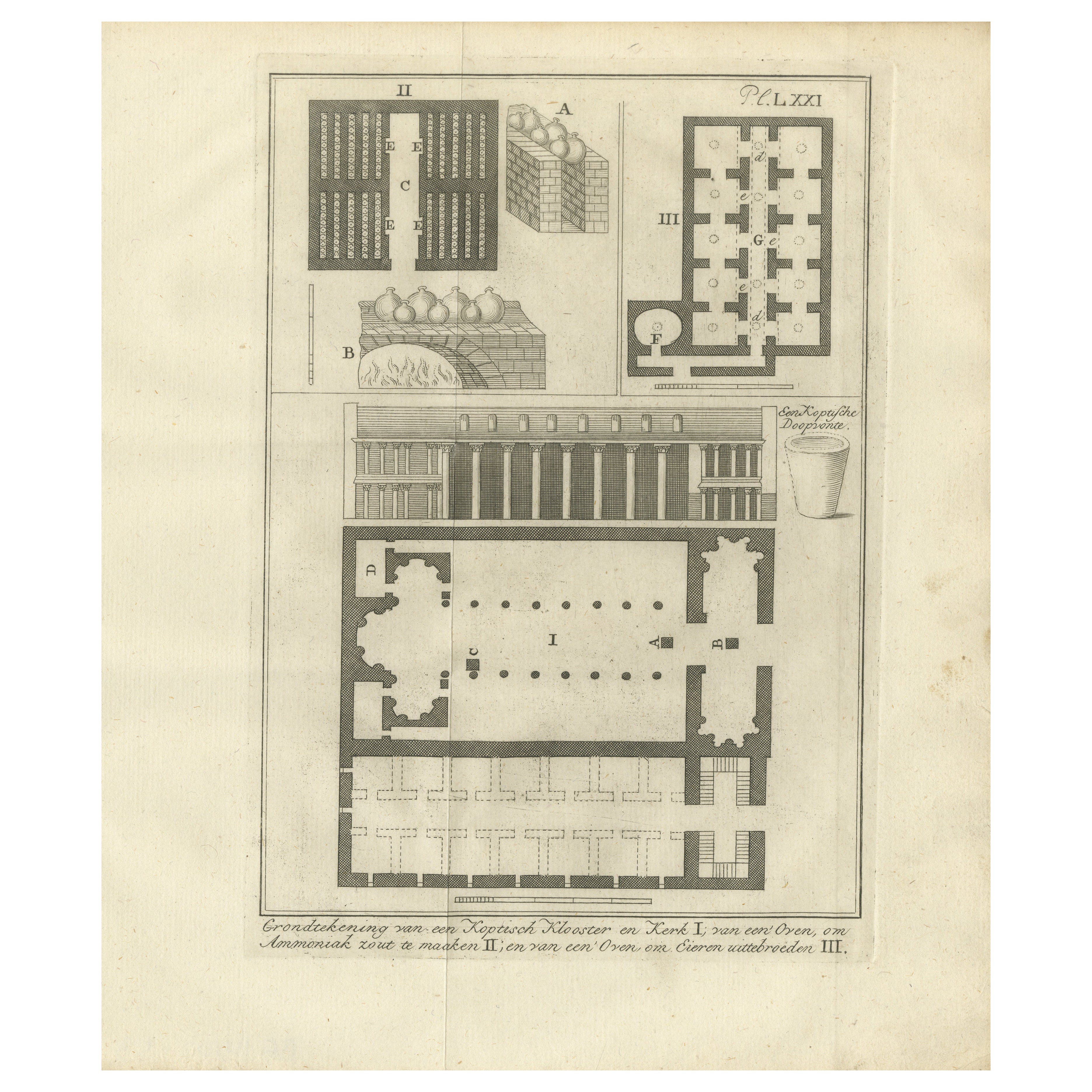
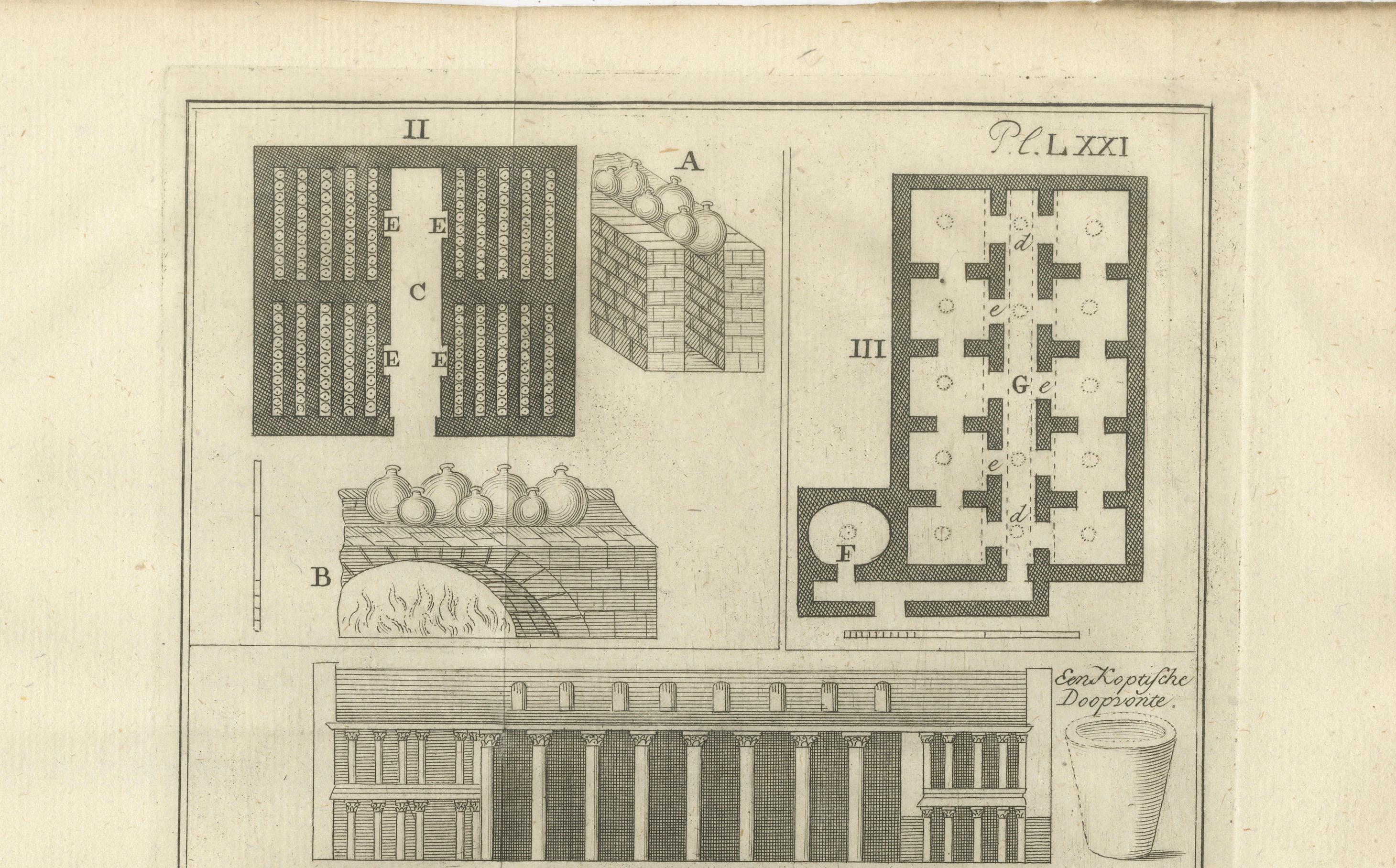
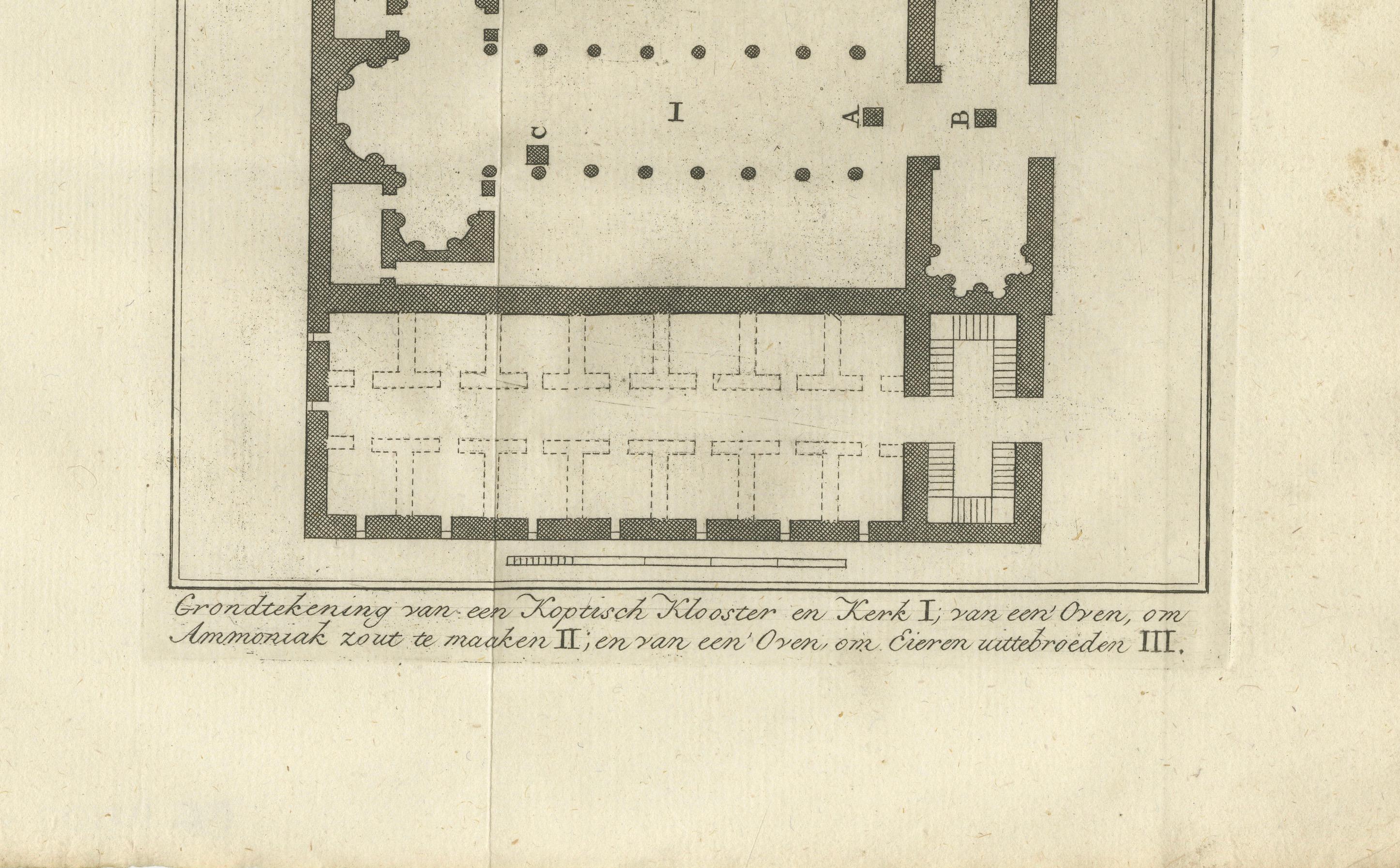
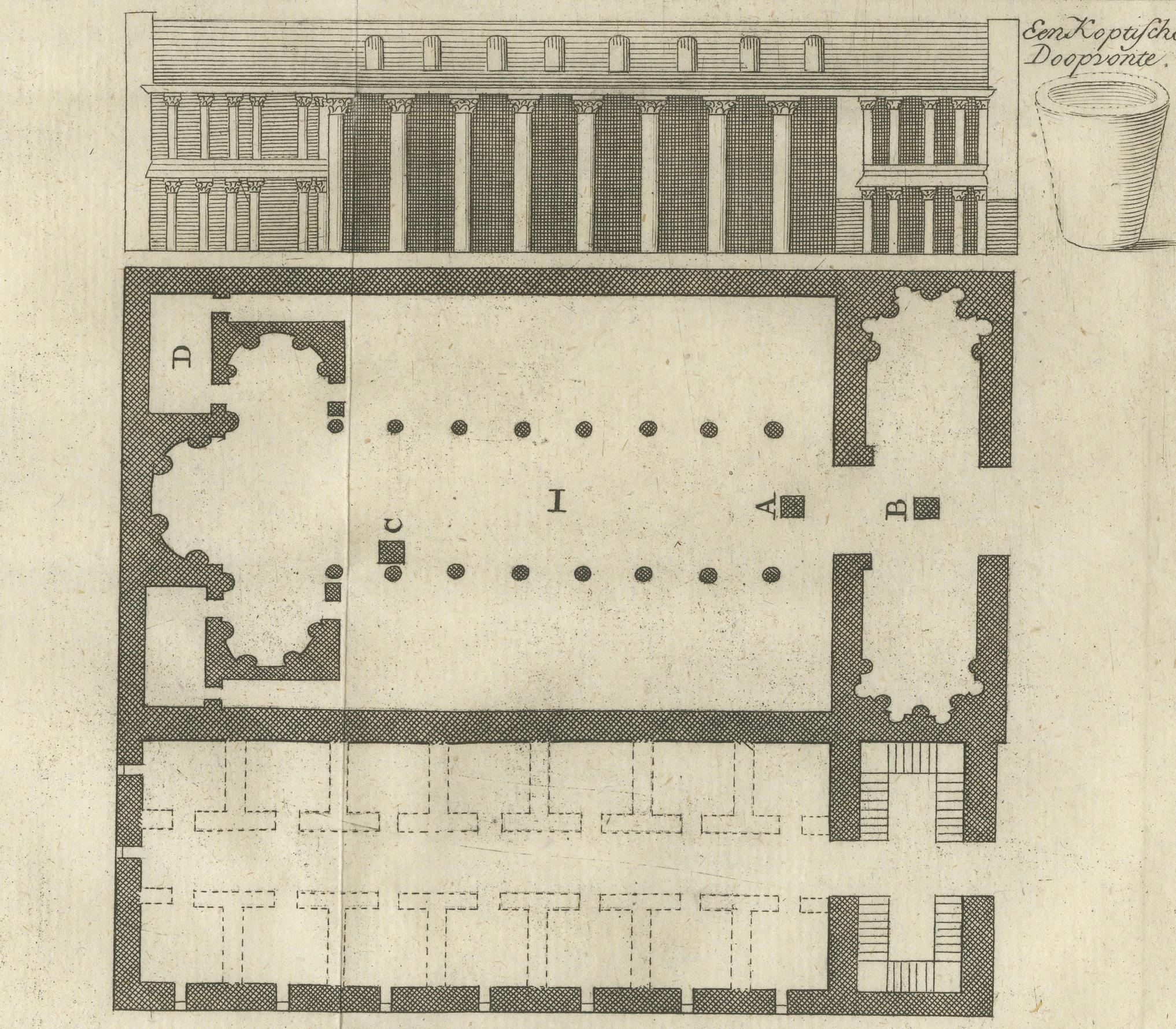
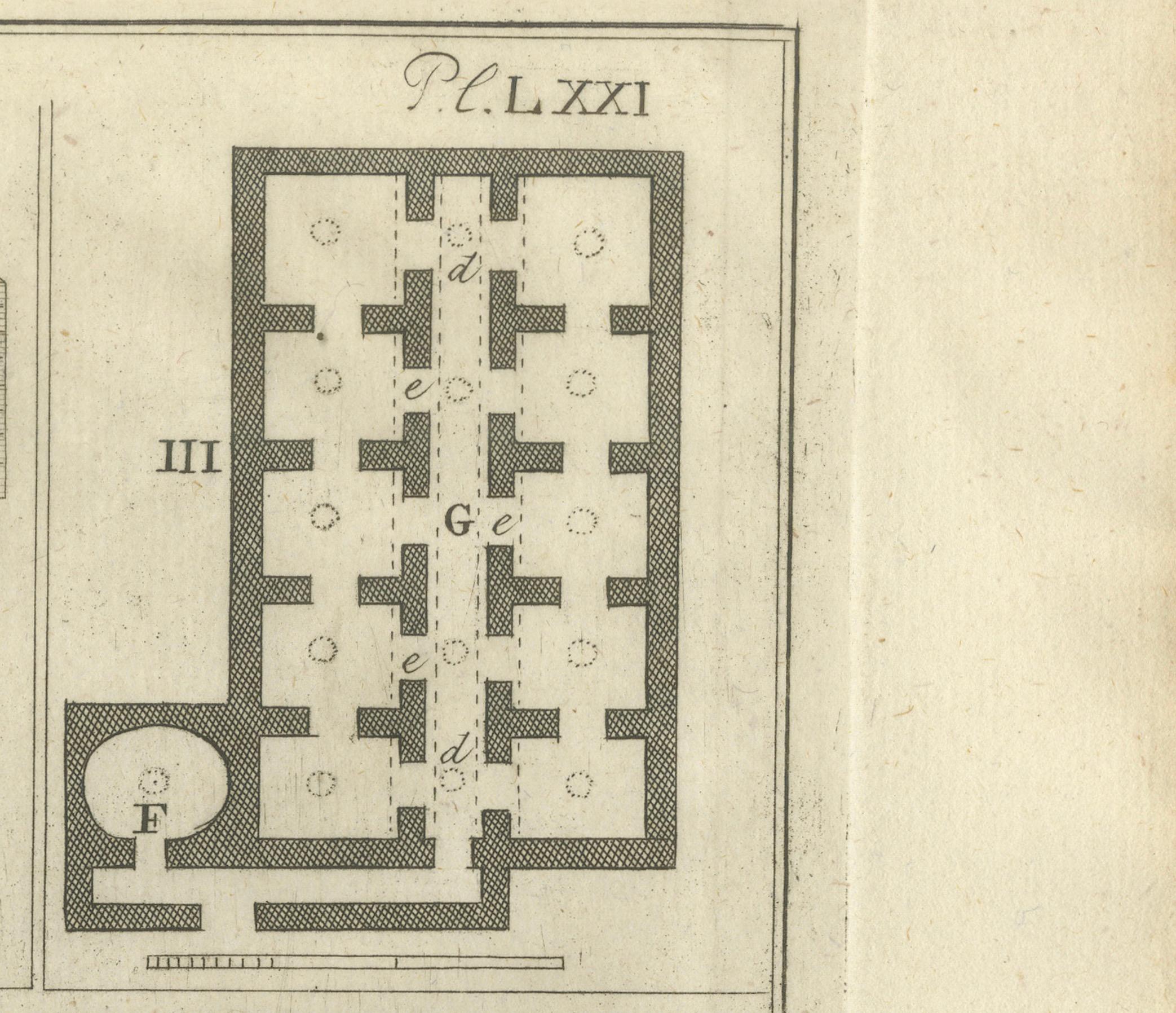
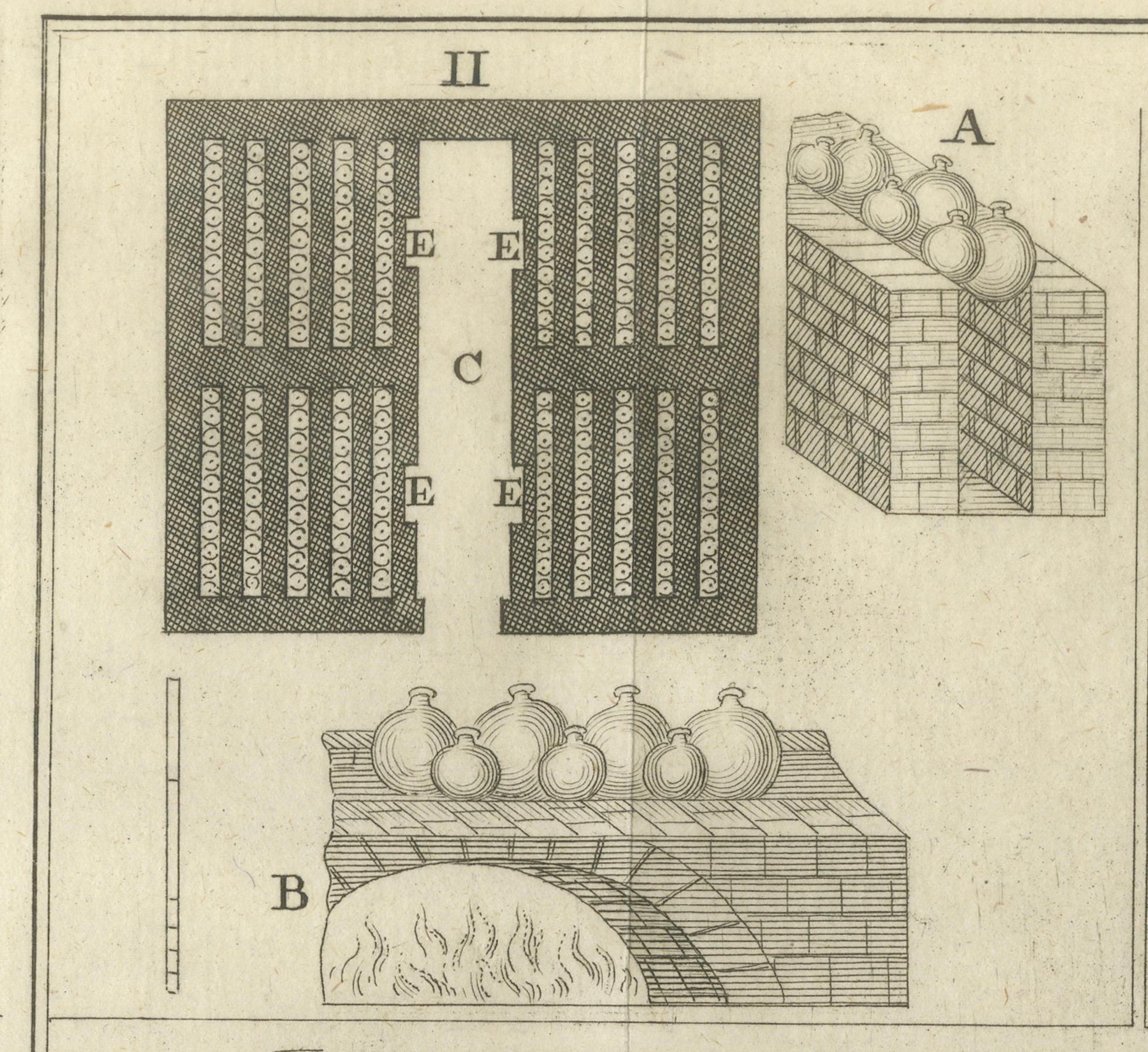
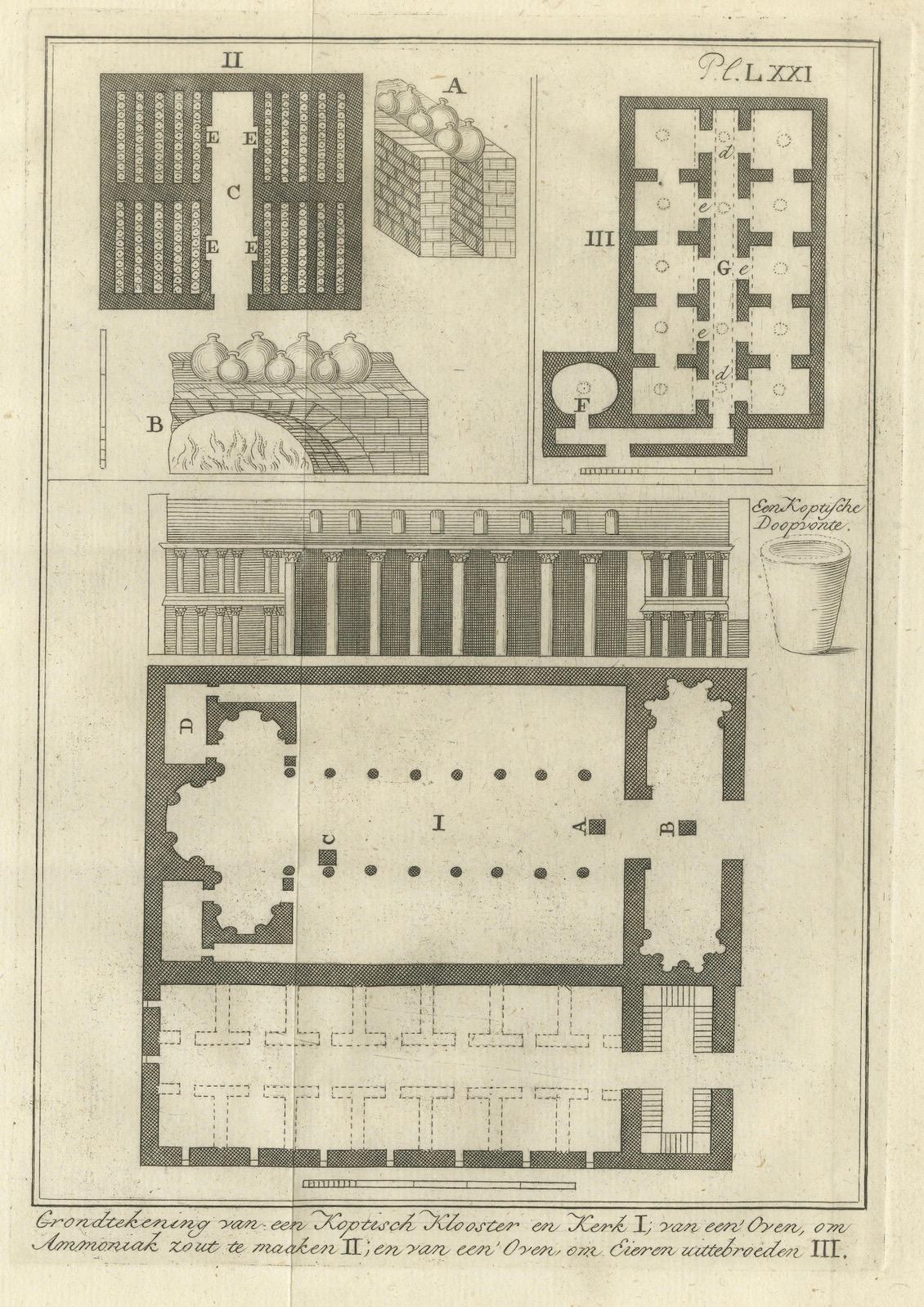
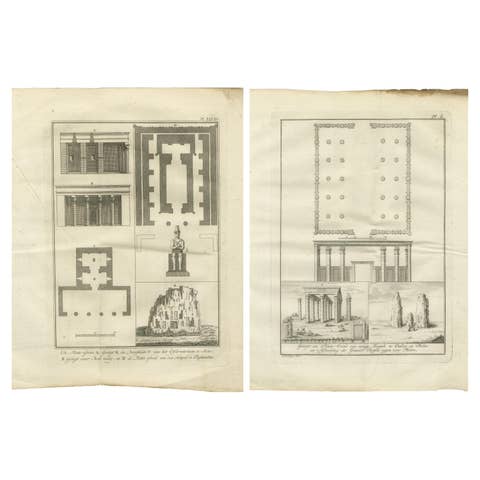
Coptic Monastery Plan, Ammonia Oven & Egg Incubator, Egypt c.1776 This fascinating antique engraving, dating from circa 1776 presents a detailed architectural and technological overview titled in Dutch: "Grondteekening van een Koptisch Klooster en Kerk I, van een Oven, om Ammoniak zout te maken II, en van een Oven om Eijeren uuttebroeijen III." Translated, it means: "Ground plan of a Coptic Monastery and Church (I), an oven for making ammonium salt (II), and an oven for hatching eggs (III)." The plate offers rare insight into the architectural and practical innovations of early Egyptian Christian monastic life and industrial ingenuity.
Section I illustrates the floor plan of a Coptic monastery and its adjoining church. The layout reveals a central colonnaded hall, surrounding cells or chambers for monks, and a sanctuary or altar space. The accompanying elevation drawing shows the columns and classical influence in the facade—characteristic of early Christian architecture in Egypt influenced by Greco-Roman traditions.
Section II shows the design and cross-section of an oven used in the manufacture of ammonium salts, possibly derived from natron or similar mineral deposits. These salts had various uses in medicine, mummification, and possibly fertilization. The detailed schematic displays layers of brickwork and jars placed above the furnace, with sections labeled A through E to indicate different structural and functional components.
Section III provides a floor plan and sectional view of an Egyptian egg incubator—a remarkable and efficient technique that impressed early European travelers. These ancient structures were heated by fire and carefully insulated to maintain the right temperature for hatching eggs, allowing for large-scale poultry production long before the invention of modern incubators.
This plate is an exceptional artifact that combines religious, industrial, and agricultural architecture in a single visual record. It likely originates from an 18th-century Dutch or German encyclopedic or travel publication documenting the wonders of Egypt. Such prints were essential in transmitting knowledge about non-European technologies to a curious Enlightenment audience.
Condition report: Excellent impression. Slight age toning and a few minor edge nicks. Vertical centerfold as issued. Crisp lines and clear architectural details.
Framing tips: Best displayed in a simple black or dark brown frame with a light cream mat to complement the architectural focus and period feel.
Technique: Engraving Maker: Anonymous, Dutch or German school, circa 1776