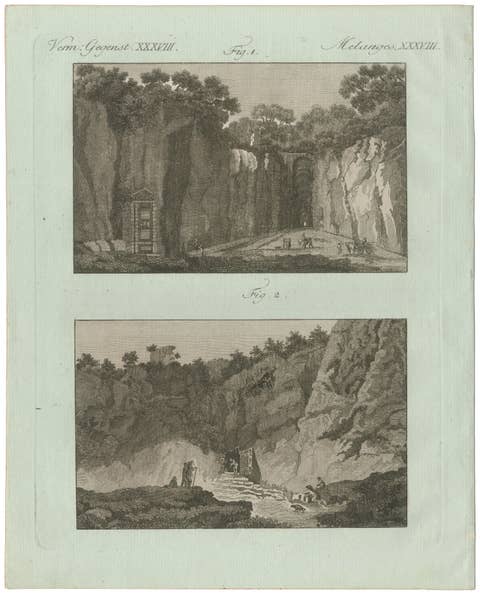
Original antique · The actual sheet photographed · Certificate of authenticity on request · Sold unframed · Worldwide shipping from € 15 (rates)
Date
1760
Sheet size
28.5 × 21 cm (11.2 × 8.3 in)
Condition
Good
Reference
BG-13718-23
What the condition grades mean
Excellent
Bright and clean, with no faults worth mentioning.
Very good
Only light signs of age, such as faint toning.
Good
Normal signs of age for a sheet of this period: toning, some foxing, small marks or neat old repairs.
Fair
Clear faults such as staining, tears or repairs, priced to match.
Every fault we see is written in the condition note, and the whole sheet is shown uncropped in the photos.
Condition
Good condition. Beautiful hand-colored with some traces of soiling due to handling and age, but mostly outside the plate-mark. Study the images carefully.
About this sheet
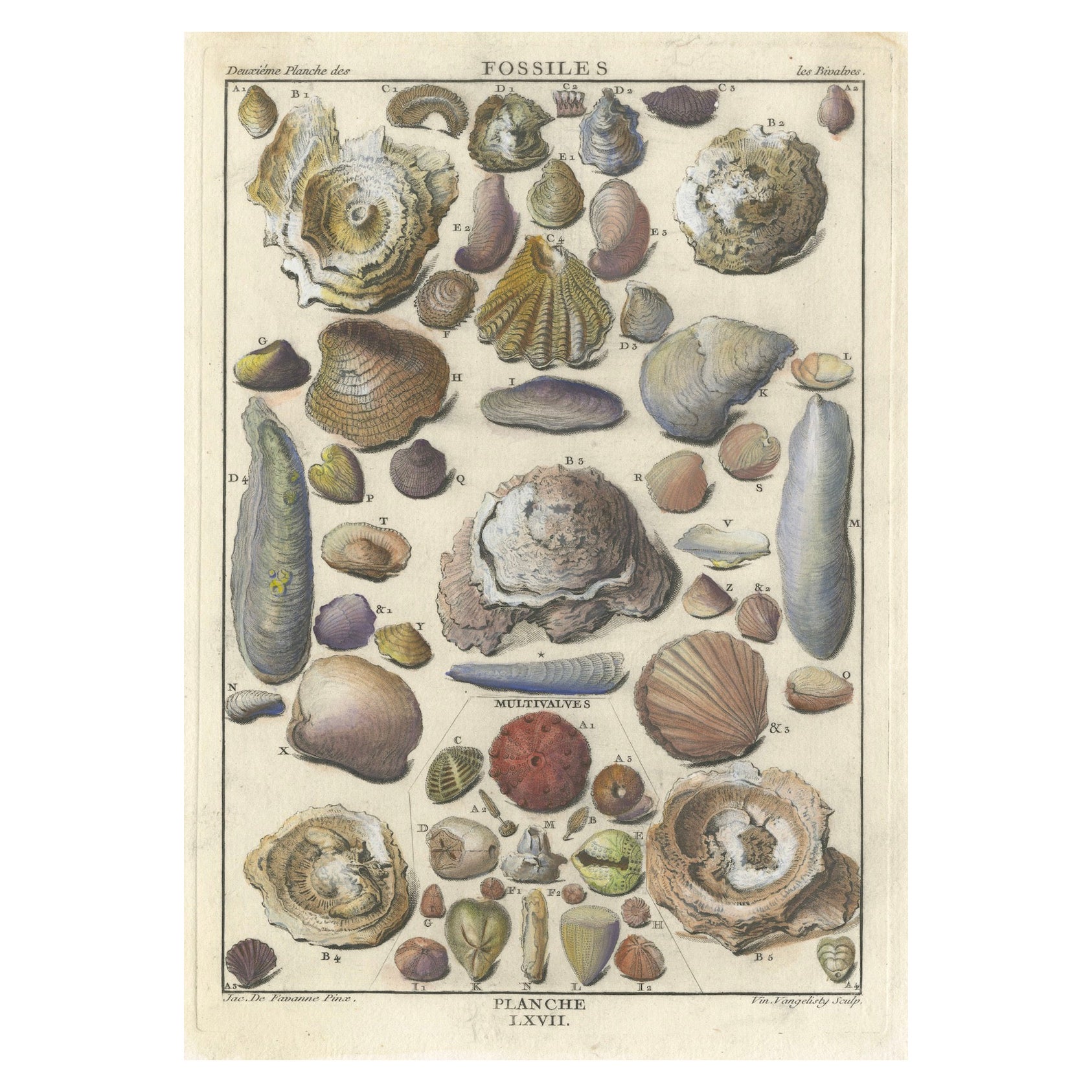
This antique engraving is a detailed illustration of various marine fossils and multivalves, originally published as Plate LXVII in Histoire Naturelle. It beautifully captures the diversity and intricate forms of marine life as understood in the 18th century. The engraving showcases numerous fossilized shells, coral, and other marine specimens with labels corresponding to their classification.
The depicted fossils include:
The engraving was created by the talented artist Jacques de Favanne and engraved by François-Nicolas Martinet, notable illustrators of natural history works during the 18th century. It is a fine representation of marine fossils and showcases the meticulous detail characteristic of early scientific illustration. This engraving, published around 1760, serves as both an artistic and scientific document, illustrating marine life as it was understood during the Enlightenment.
This piece is not yet framed but ideal for collectors of natural history art, fossil enthusiasts, or anyone interested in adding a vintage touch to their collection. The engraving provides an intriguing glimpse into the early study of paleontology and the fascination with the natural world in the 18th century.