Marine Curiosities: An Assortment of Shells and Sea Life, 1845
€ 280
One of a kind: this is the sheet in the photographs. Ships from Langweer, the Netherlands.
Date
1845
Sheet size
26.5 × 17 cm (10.4 × 6.7 in)
Condition
Good
Reference
BG-13261-143
Condition
Very Good. Right edge cut rough, but enough margin to frame. Superb colors, considering its age. Please study the image carefully.
About this sheet
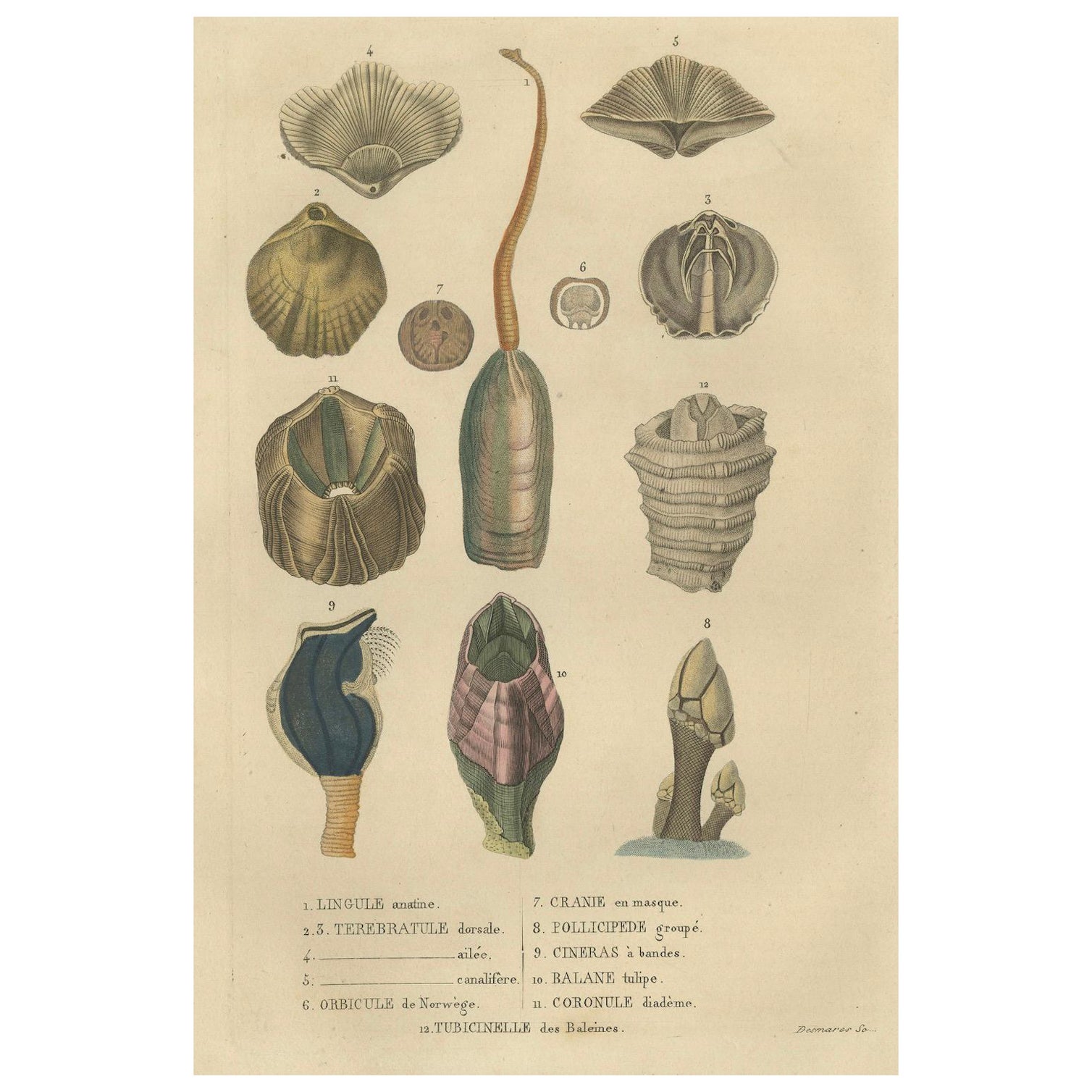
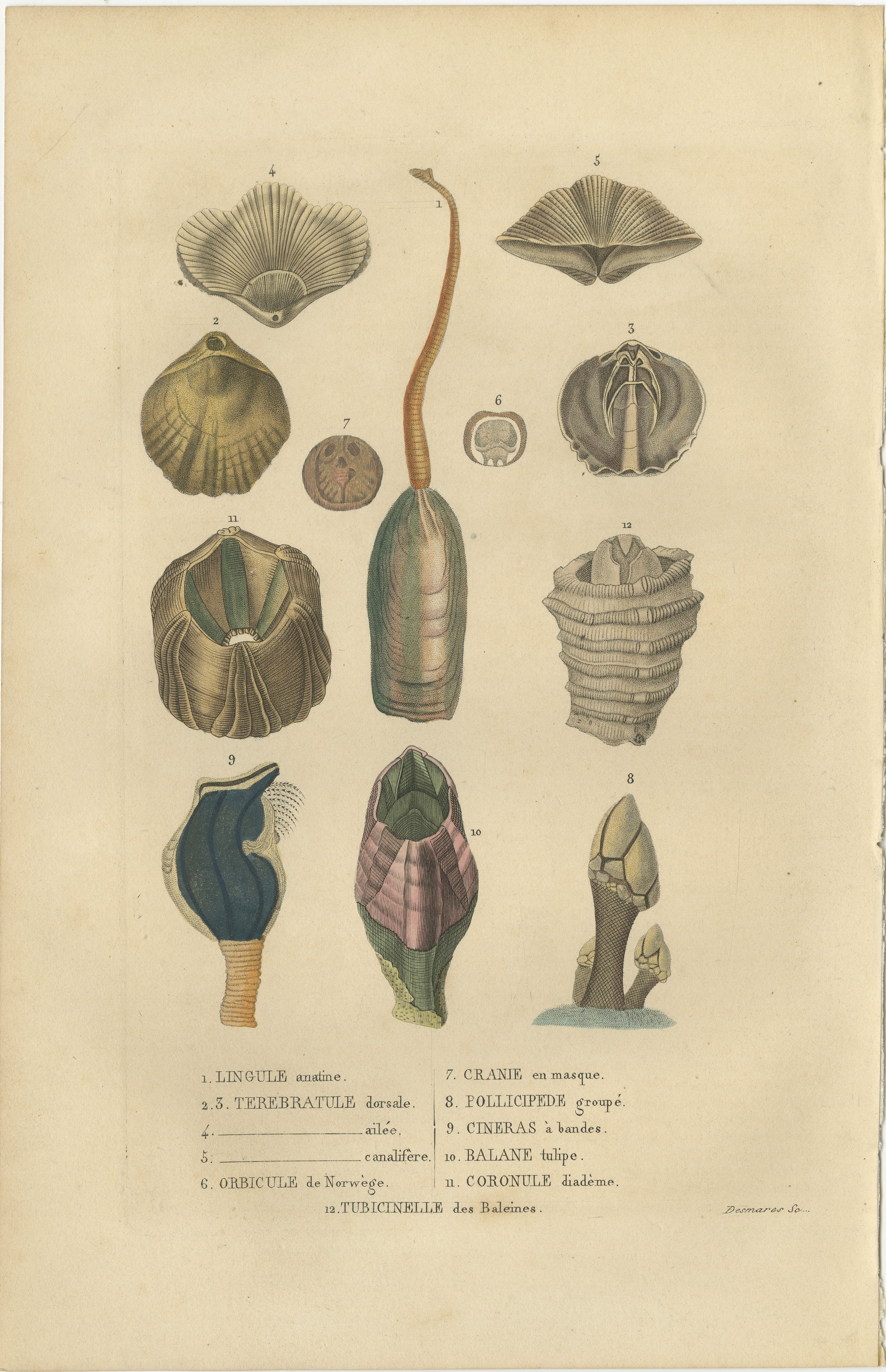
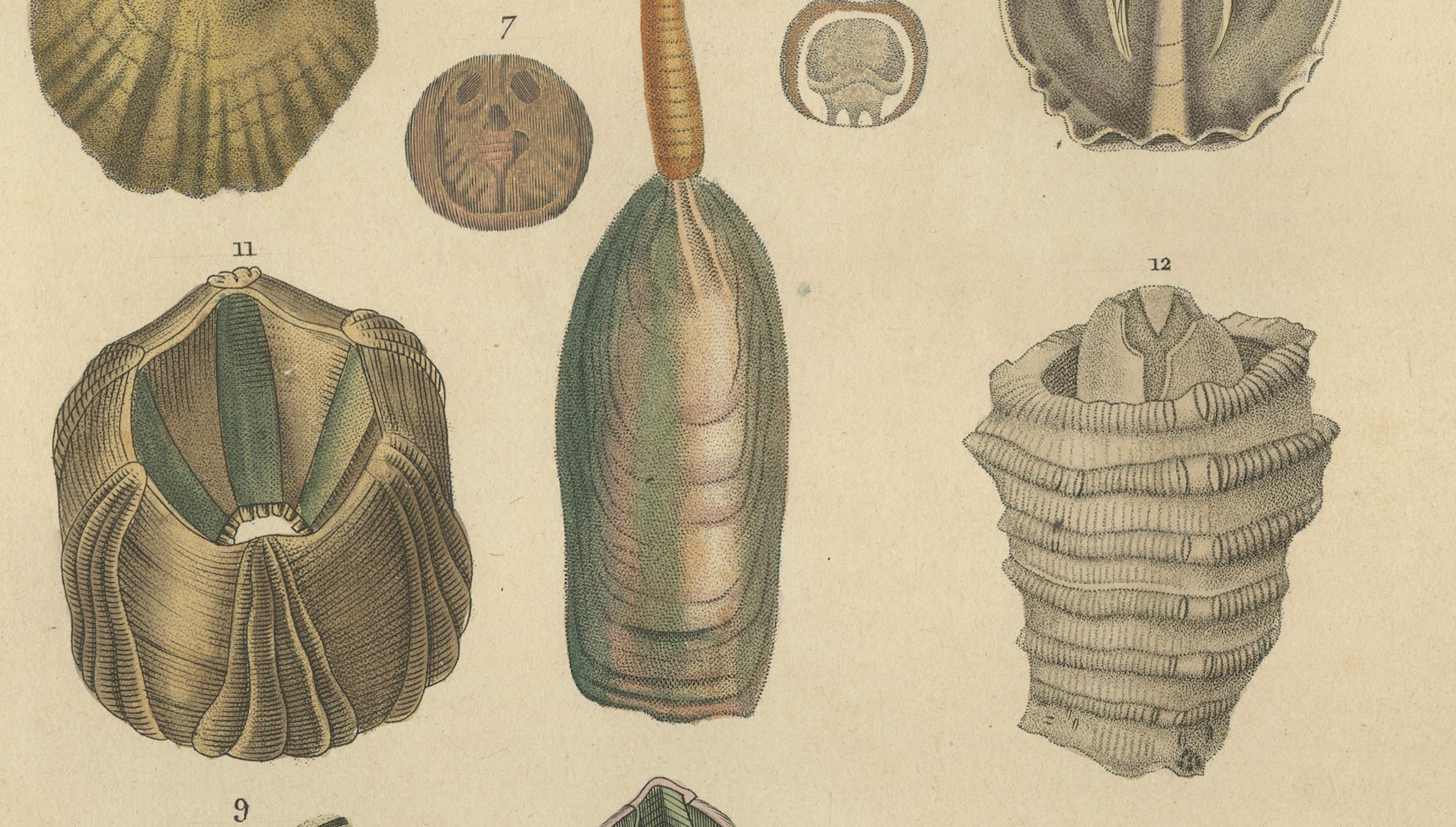
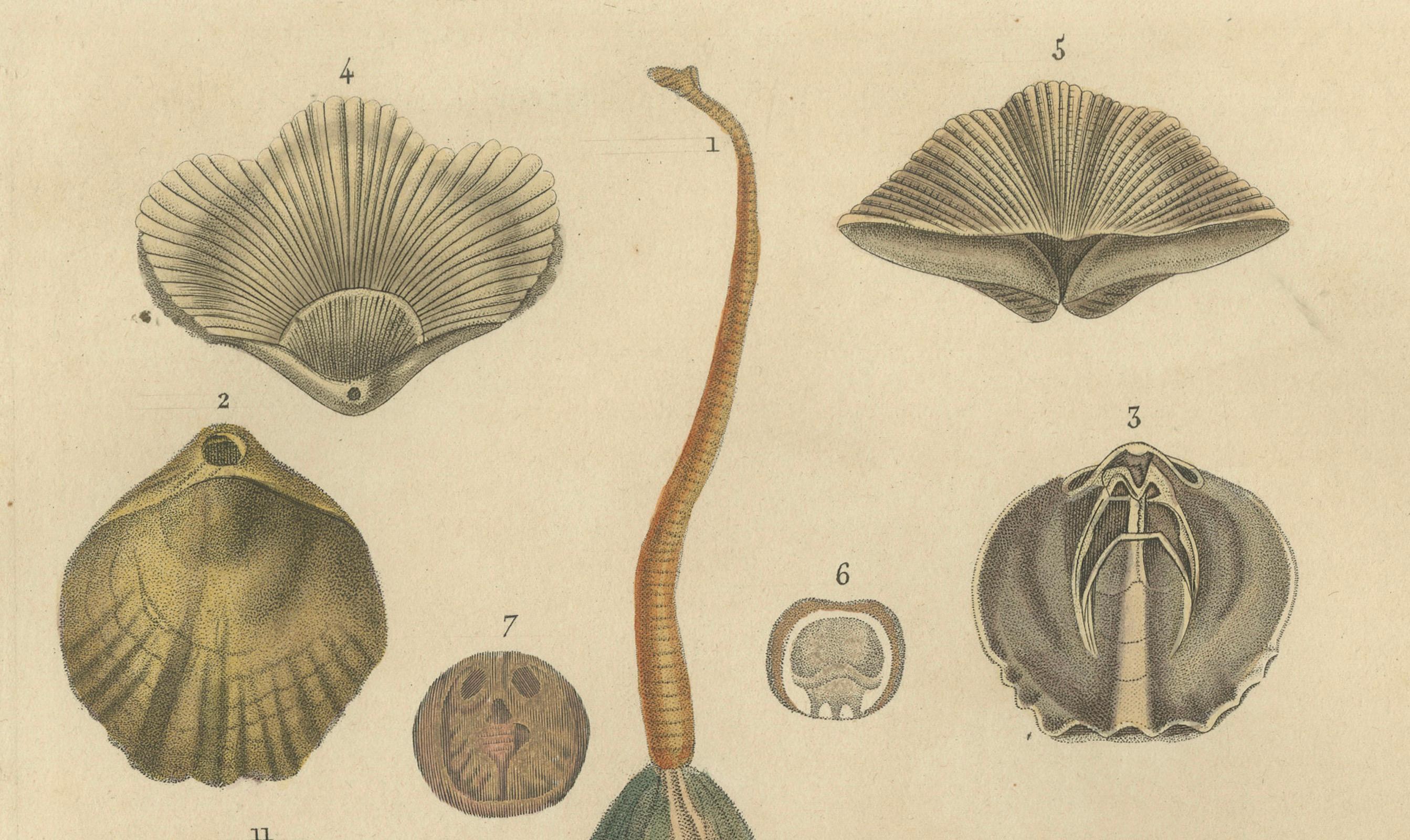
The illustration, an original hand-colored engraving, features a collection of shells and marine organisms, likely from various classes of the phylum Mollusca:
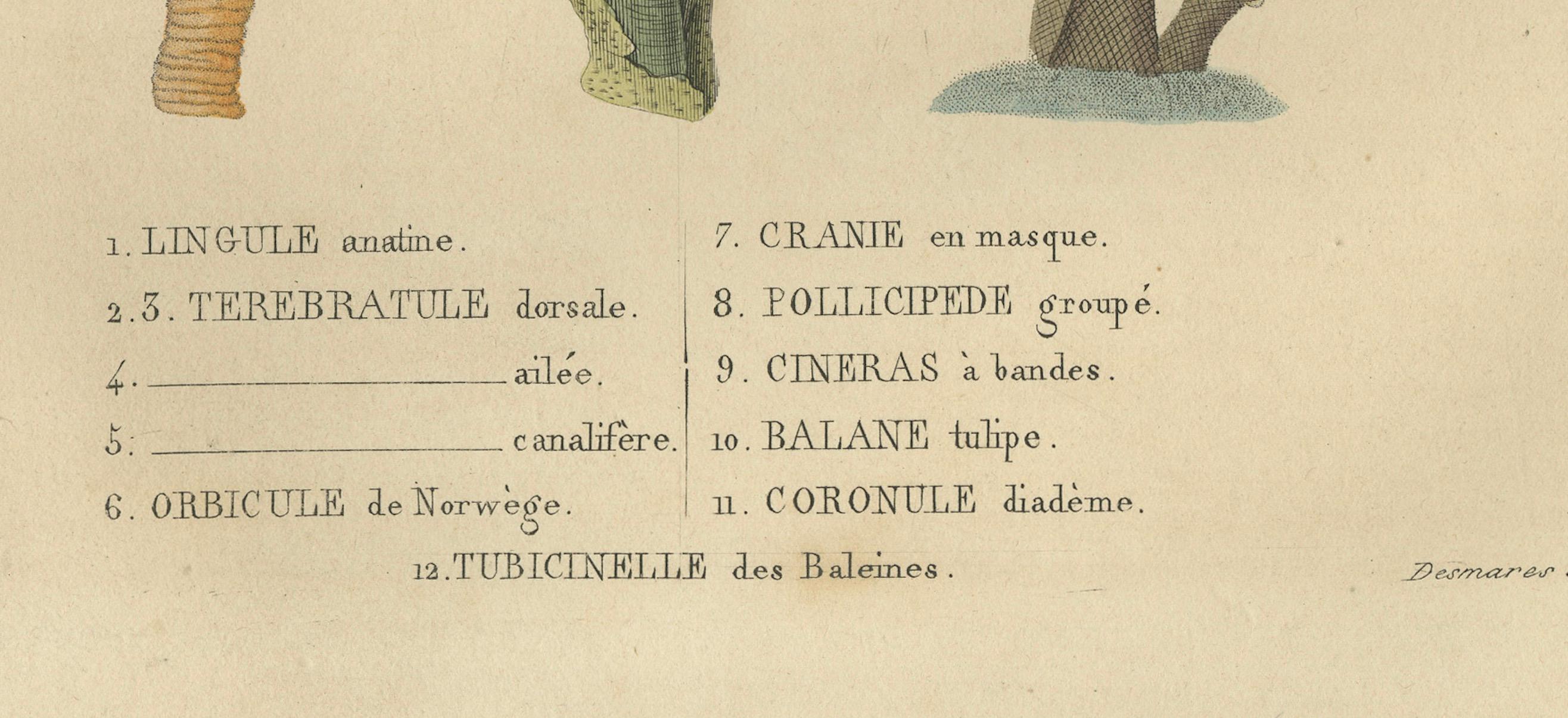
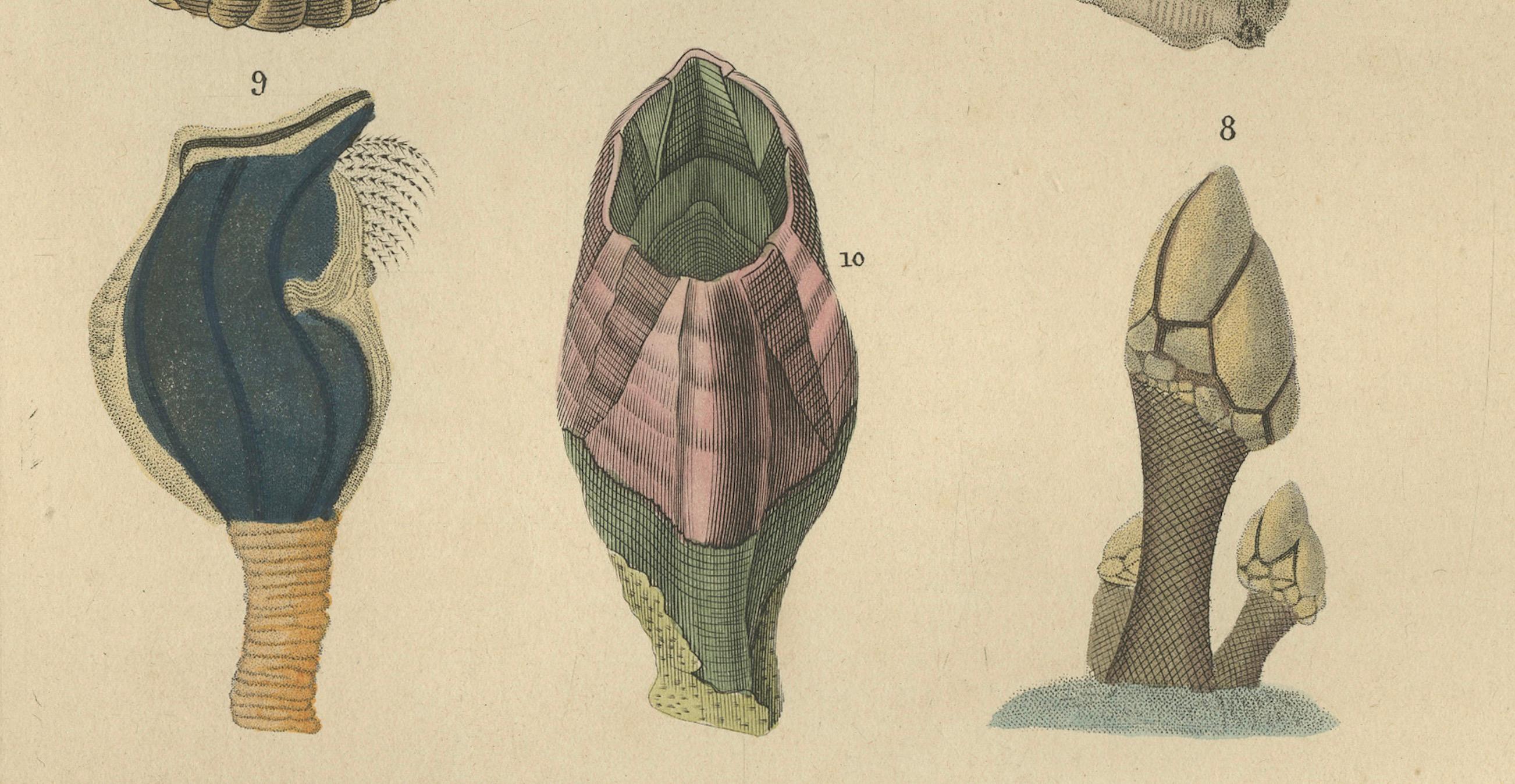
1. **Lingule anatine** - This could represent Lingula anatina, a species of brachiopod, which are marine animals with bivalve-like shells. 2. & 3. **Terebratule dorsale** - Likely a dorsal view of a Terebratulid brachiopod, recognized for their lamp shell shape. 4. **----- ailée** - The descriptor suggests a winged form, which could refer to a type of bivalve or possibly another brachiopod with wing-like extensions. 5. **----- canalière** - This term might indicate a shell with a channeled structure. 6. **Orbicule de Norvège** - Could be referring to Orbicula, a genus of small, disc-shaped brachiopods. 7. **Cranie en masque** - Possibly a "mask-like" cranial structure of a marine organism, but the exact type is unclear. 8. **Pollicipède groupé** - Suggestive of a clustered barnacle (order Pedunculata), which are sessile crustaceans with hard plates. 9. **Cinéras à bandes** - This might be related to a banded sea creature, potentially a type of sea urchin or similar echinoderm. 10. **Balane tulipe** - Appears to be a tulip-shaped barnacle, another type of crustacean. 11. **Coronule diadème** - Likely a type of coronulid barnacle, known to attach to whales or other large marine animals. 12. **Tubicinelle des Baleines** - This name suggests a relationship with whales, which could be a tubeworm or barnacle that attaches to whales.
The hand-colored engraving from 'The 'Dictionnaire Classique des Sciences Naturelles' by Pierre Auguste Joseph Drapiez is a detailed depiction of marine life forms, designed for educational and scientific purposes in the mid-19th century.