About this sheet
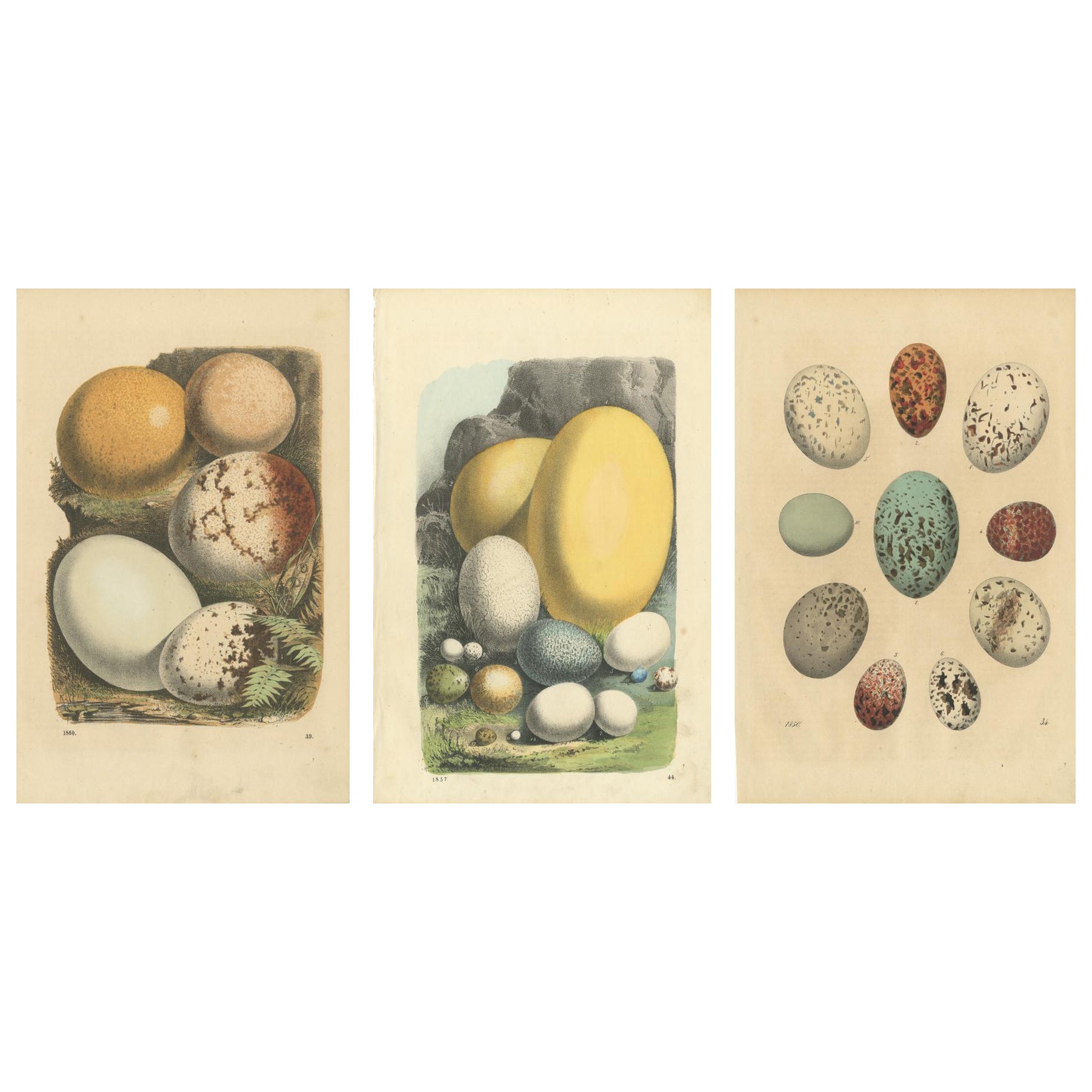
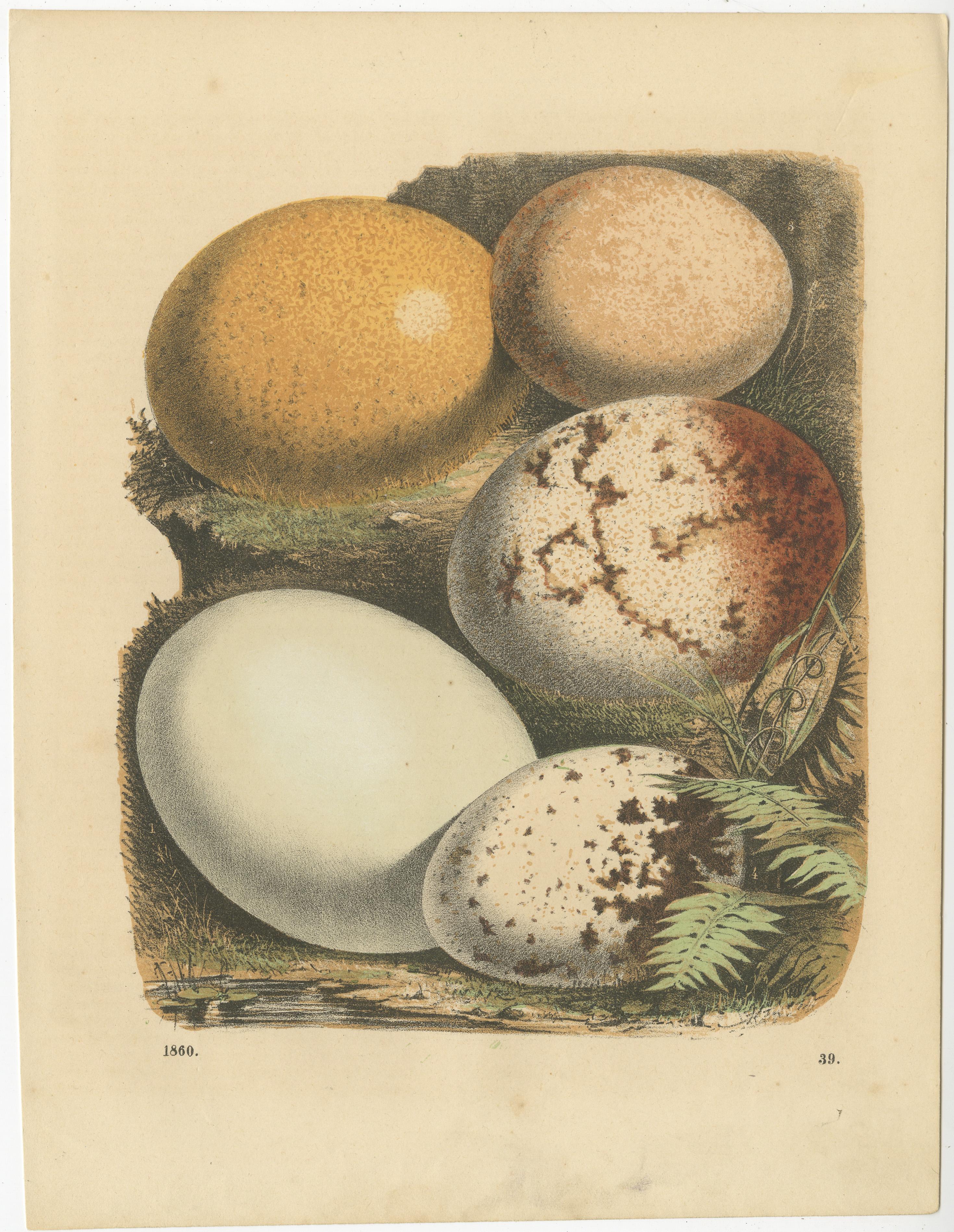
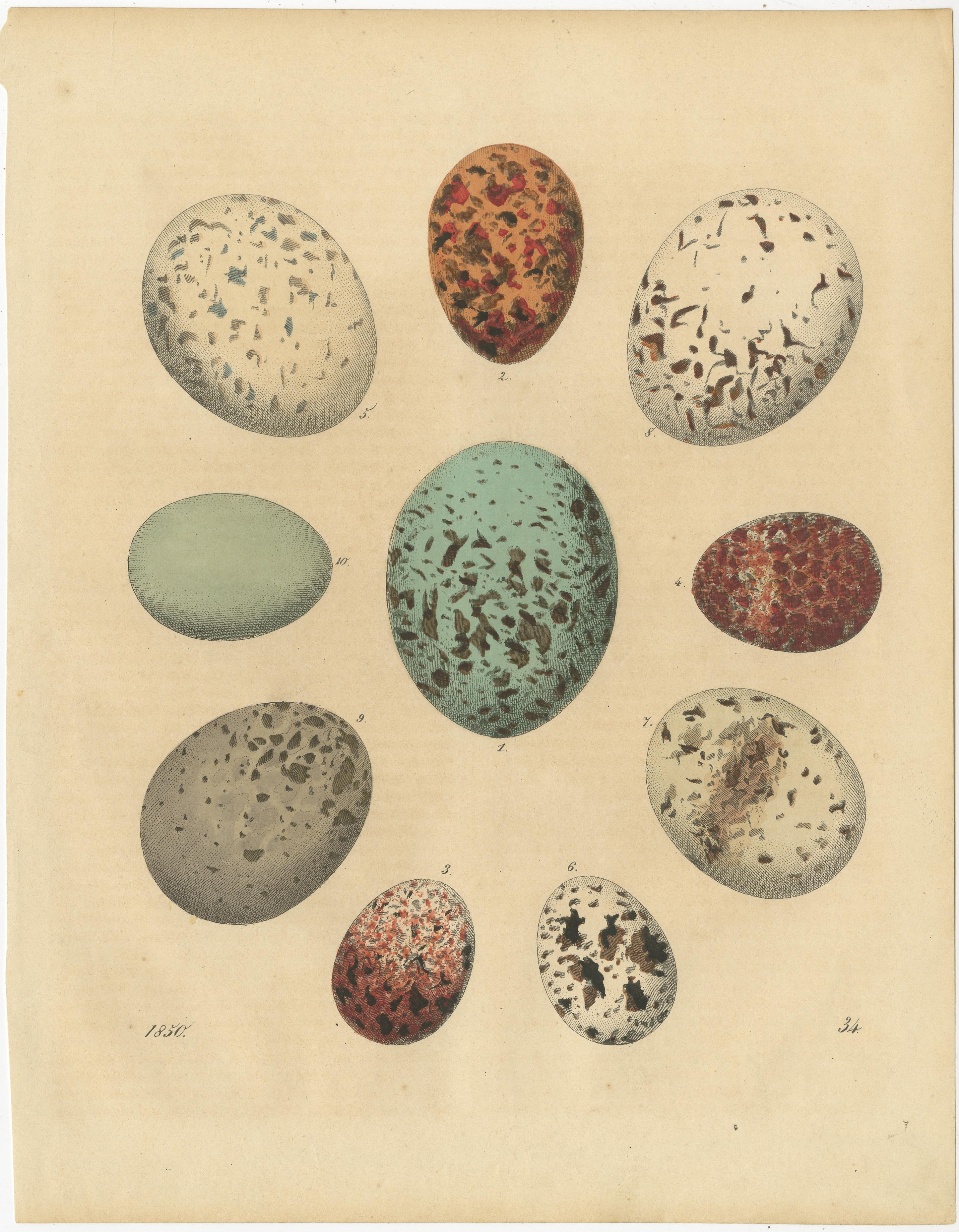
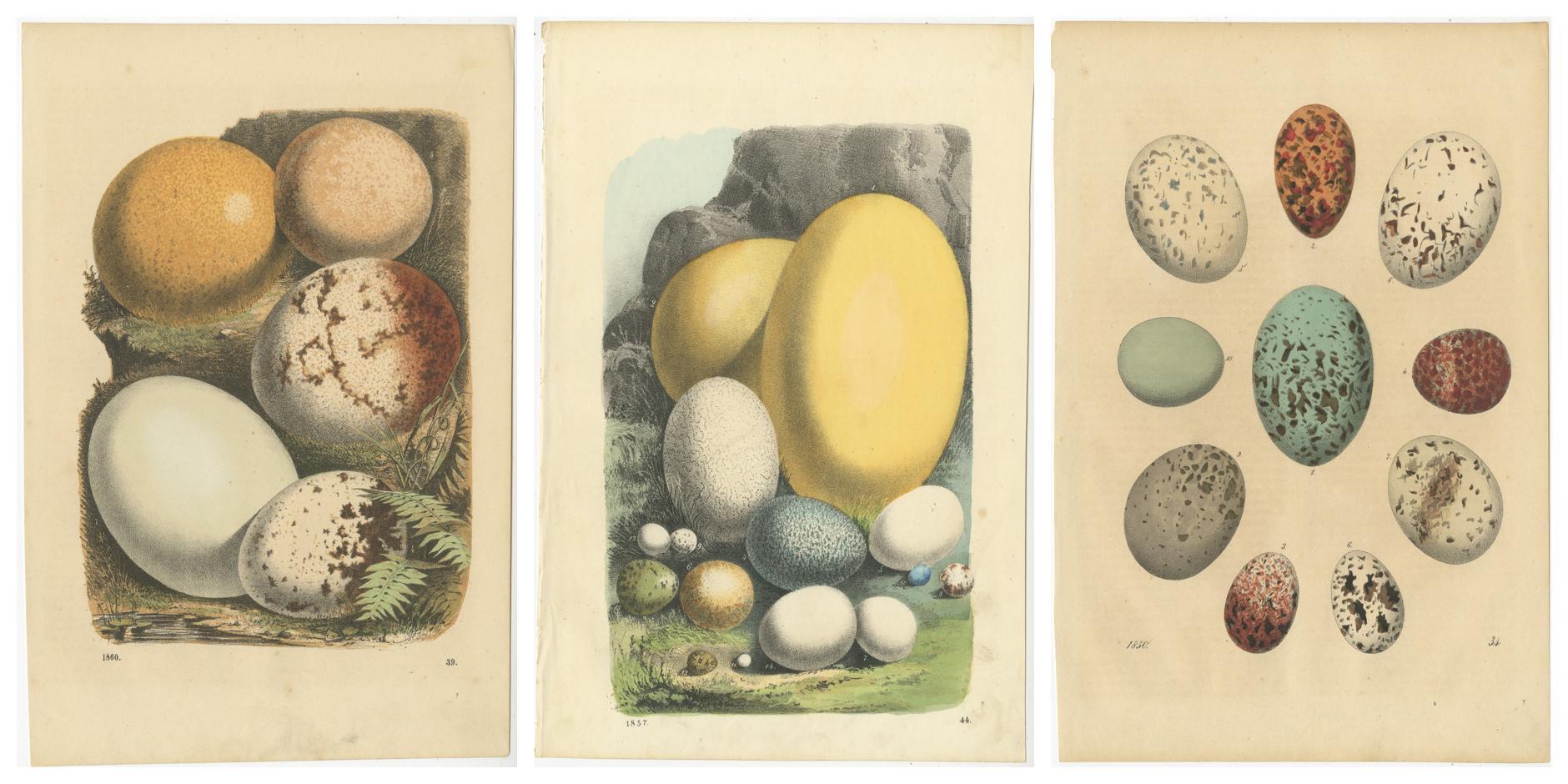
The hand-colored lithographs from Das Buch der Welt (The Book of the World), published in 1847, are a stunning example of 19th-century natural history illustration. These lithographs, which often depicted various bird species, eggs, and other elements of the natural world, combined scientific accuracy with artistic beauty.
Key Characteristics of the Lithographs:
1. Hand-Coloring: The lithographs were meticulously hand-colored, a common practice during the 19th century, adding depth, vibrancy, and realism to each print. The use of natural pigments helped the colors remain vivid over time, enhancing the detailed lines produced by lithography.
2. Scientific Accuracy: These prints were produced at a time when natural history was expanding as a scientific discipline. The images were designed not only for artistic appreciation but also to aid in scientific study. Birds, for instance, were often depicted with precise anatomical features, true-to-life postures, and natural habitats.
3. Composition: Many of the lithographs featured the birds and other animals in dynamic poses, either in flight or perched on branches. Some prints showcased multiple species together, while others focused on the depiction of eggs or specific bird features. The backgrounds were typically understated but often included trees, rocks, or foliage to contextualize the subject within its environment.
4. Lithographic Technique: Lithography, a printing method developed in the late 18th century, allowed for finer, more detailed prints. The lithographer would draw the image onto a stone plate using oil-based ink, after which the plate would be used to print the image on paper. Hand-coloring would then be applied to enhance the lithographic details.
5. Subject Matter: The lithographs from Das Buch der Welt often covered a wide range of bird species from various geographic regions, including European, tropical, and exotic species. There were also illustrations of eggs, which were depicted with detailed speckling and texture variations to reflect the differences in species. These prints provided viewers with an opportunity to study species that were otherwise inaccessible to the general public.
Context and Legacy:
Das Buch der Welt was a comprehensive attempt to document and share the wonders of the natural world with a broader audience, contributing to the 19th-century fascination with exploration, natural history, and scientific discovery. The hand-colored lithographs, in particular, remain valued for their artistic beauty and their role in disseminating knowledge about bird species and other aspects of nature.
Today, these lithographs are not only prized by collectors for their historical and artistic significance, but they also represent an important bridge between science and art in the 19th century, capturing a period when the natural world was being rigorously studied and celebrated in European publications.
Some of the eggs - more research needed:
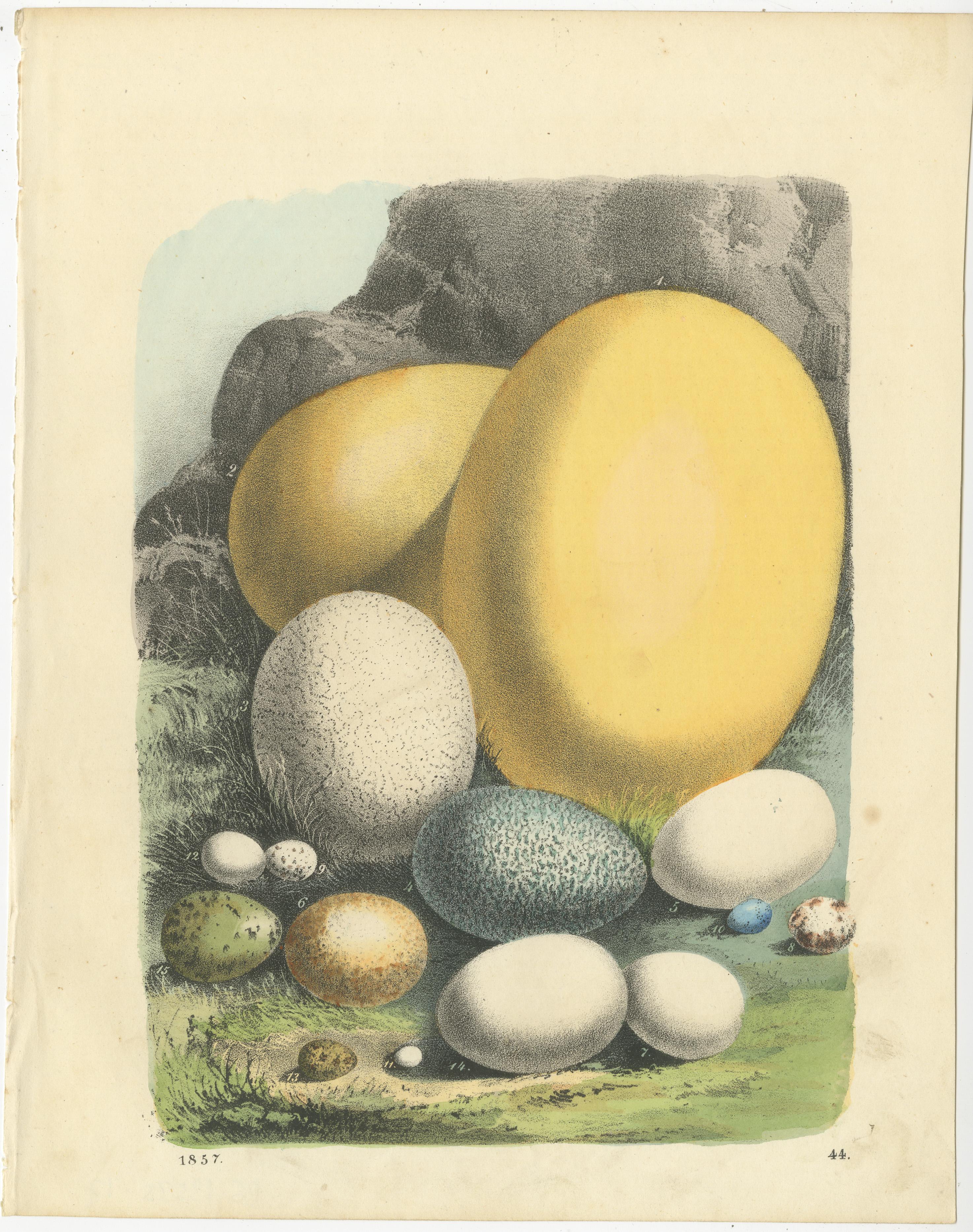
This hand-colored lithograph from Carl Hoffmann's Book of the World (Stuttgart, 1857) showcases a diverse array of bird eggs, each meticulously illustrated to capture their unique colors, sizes, and patterns. Among the eggs depicted are some from extinct species and large birds, including:
Additional eggs represent various other species, including those of birds like the missel thrush, blackbird, peregrine falcon, and kestrel, each intricately detailed in size, shape, and pattern. These eggs not only illustrate the biological diversity among birds but also the remarkable artistry and scientific accuracy of 19th-century natural history...