About this sheet
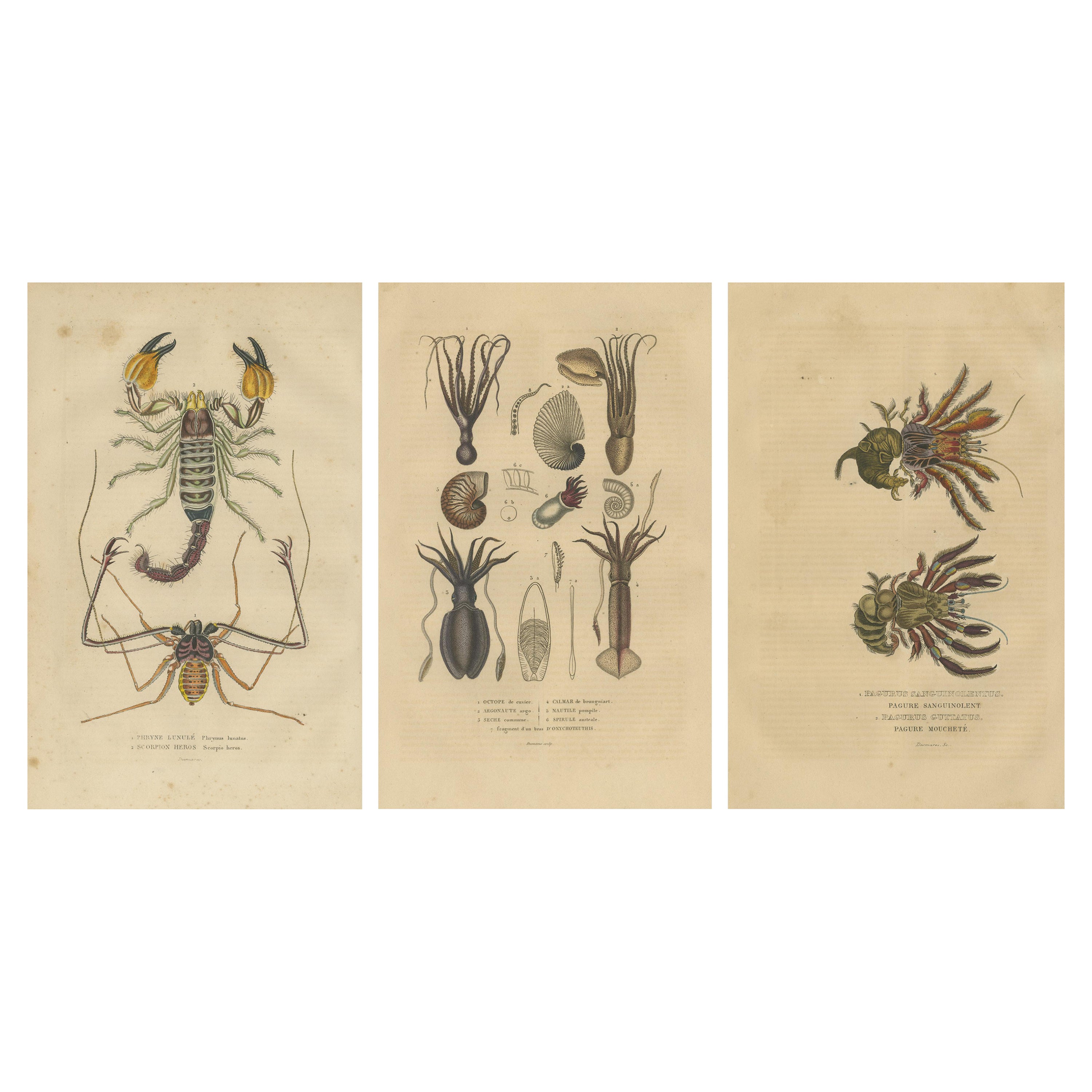
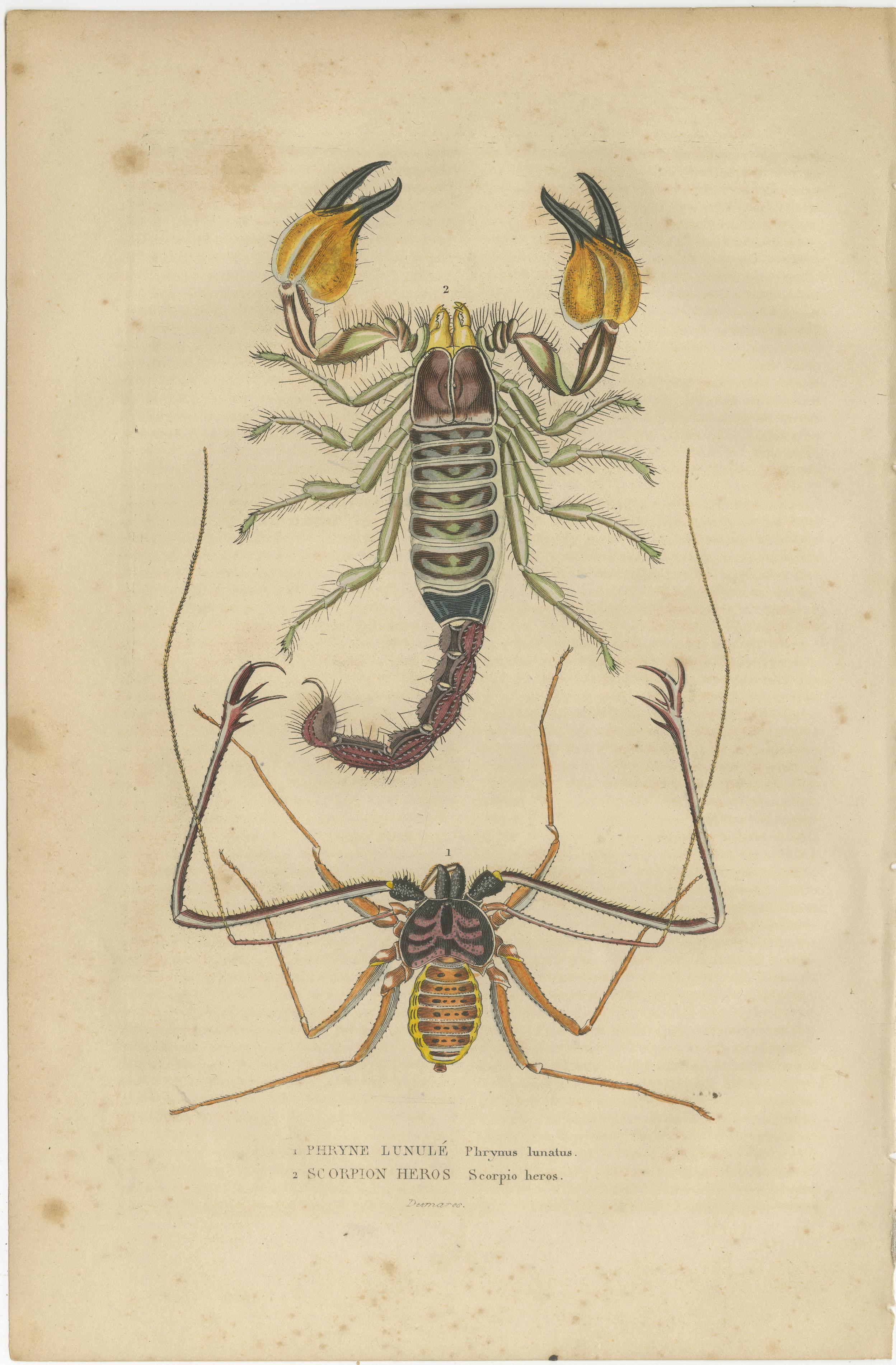
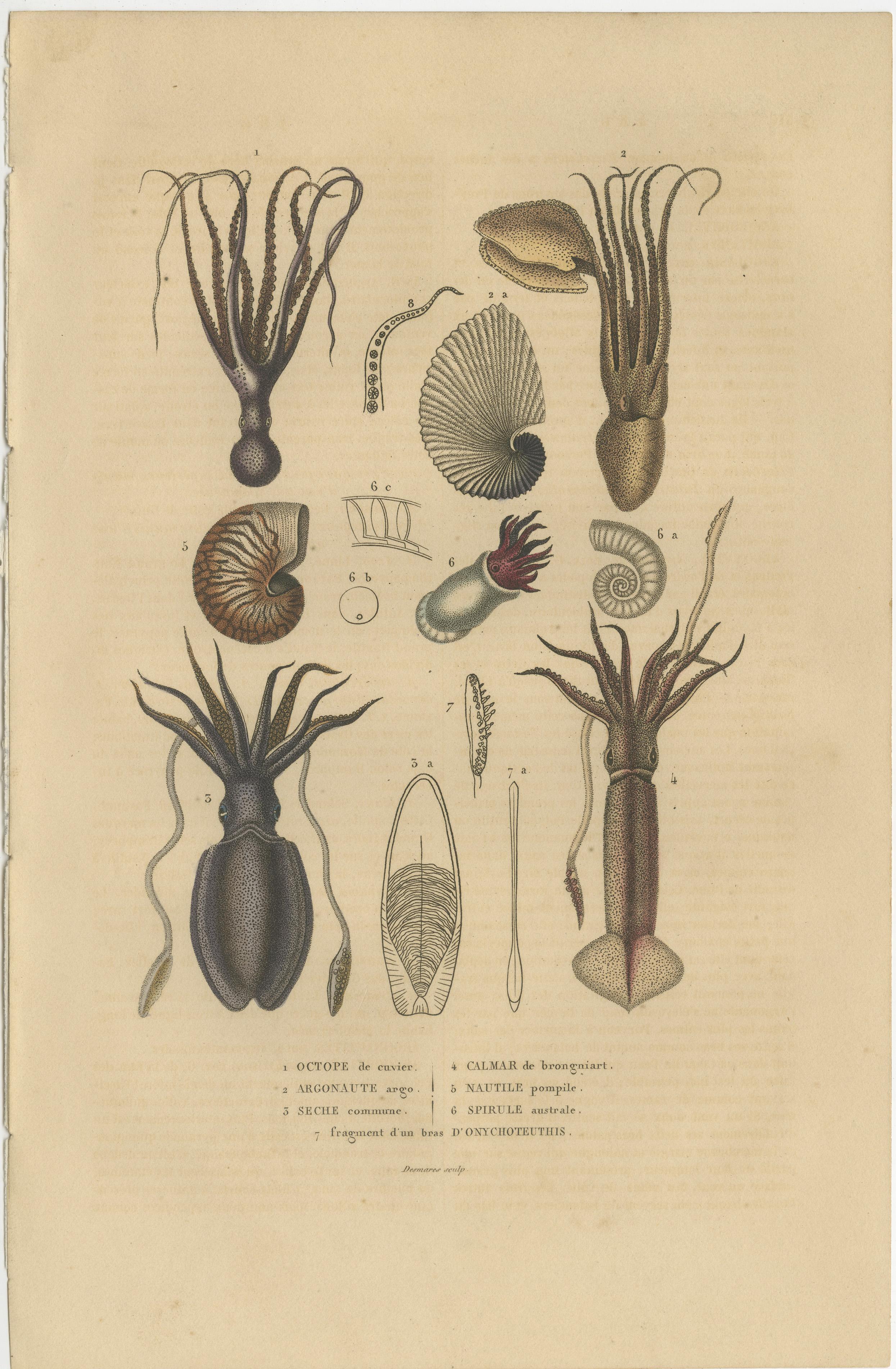
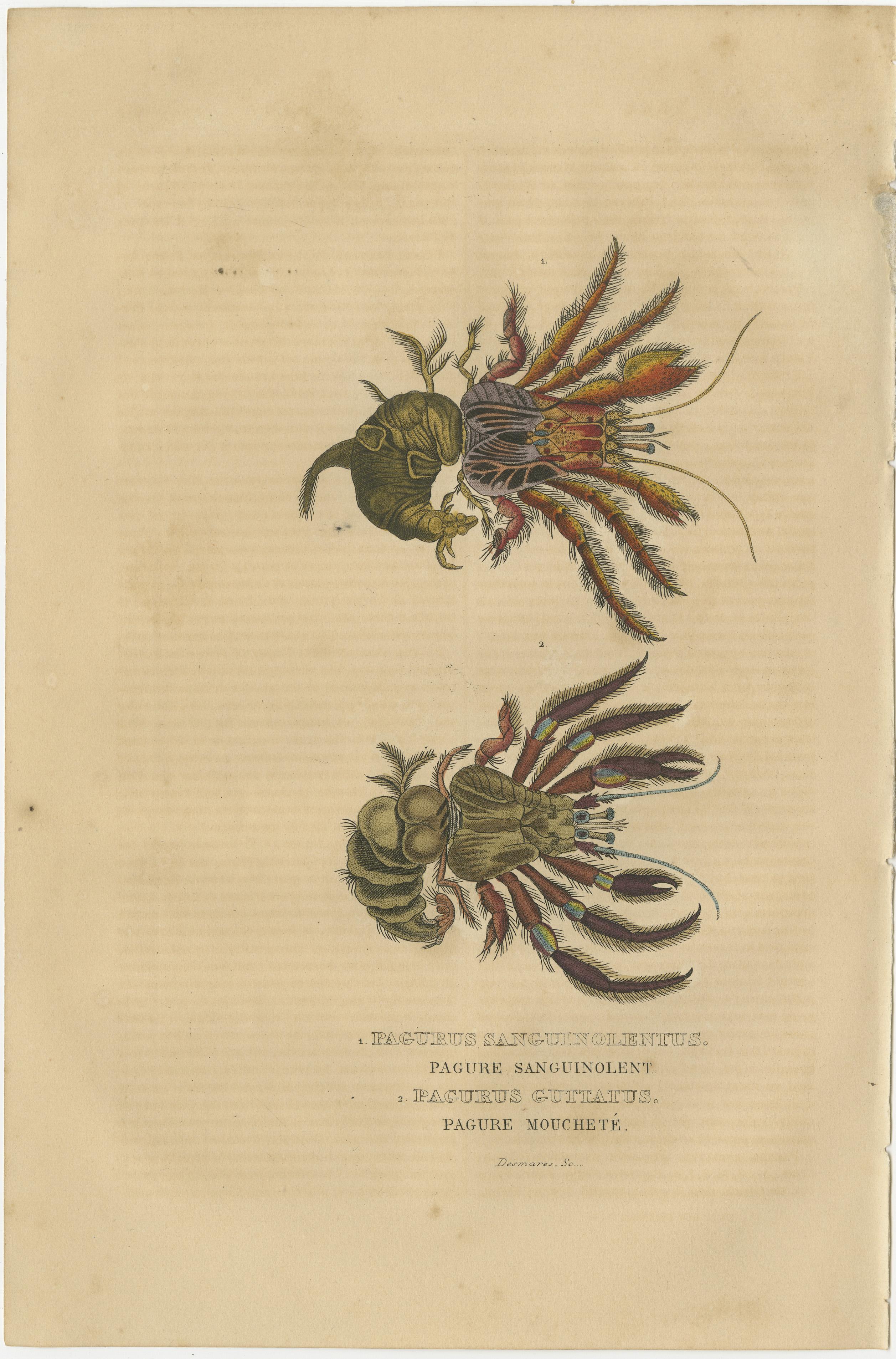
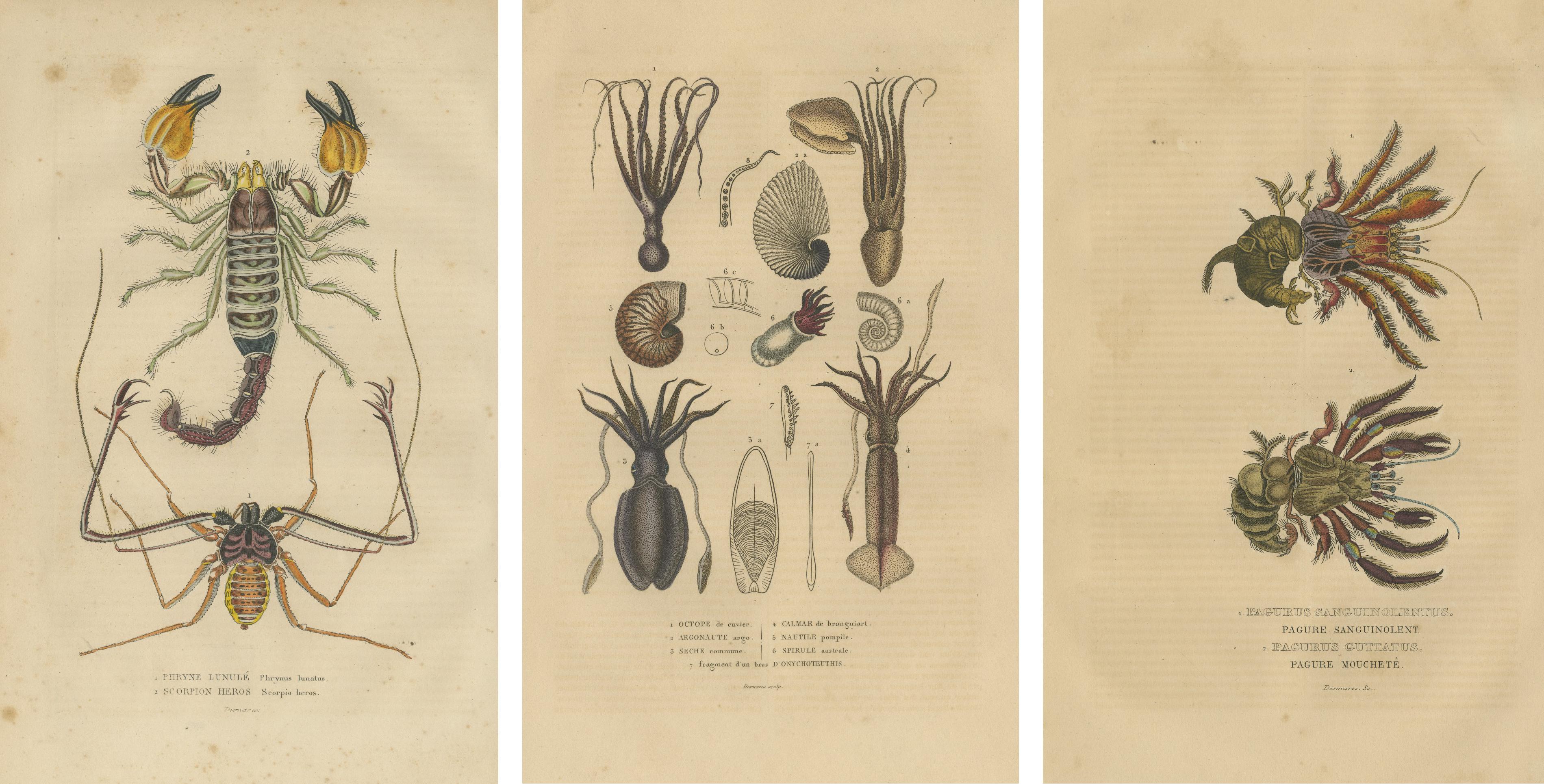
The collage presents a delicate assembly of antique scientific prints, each one a remnant from a time when the natural world was still shrouded in mystery. Featured prominently are the Phrynus Lunatus, known for its crescent-shaped markings, and the Scorpio Héros, a symbol of strength in the arachnid world. Delving into the ocean's depths, the 'Octope de cuvier' and 'Argonaute argo' float alongside the 'Seche commune', while the 'Calamar de brongniart' hints at the unseen wonders of the deep sea. The 'Nautile pompile' and 'Spirule australe' spiral into view, evoking the golden ratio often found in nature. The final touch is the 'Pagure Sanguinolent', contrasted by the 'Pagure Mouchete', both encapsulating the vibrant struggle for survival in their vivid hues and dynamic forms. Each illustration, a blend of art and zoology, captures a moment of scientific curiosity and artistic endeavor from centuries past, immortalizing the rich biodiversity of our planet.
More info on the book in which it was published:
The 'Dictionnaire Classique des Sciences Naturelles' by Pierre Auguste Joseph Drapiez stands as a remarkable testament to 19th-century natural sciences. Published in Brussels in 1845, this work represents an expansive collation of knowledge, building upon the pioneering works of Buffon, Daubenton, Lacepede, Cuvier, de Jussieu, and other influential naturalists.
The prints within this compendium likely showcase a rich amalgamation of artistic precision and scientific accuracy. Drapiez, himself a Belgian naturalist, would have aimed for detailed representations of flora, fauna, and scientific phenomena, mirroring the illustrative styles prevalent during his time. Given the era's emphasis on illustration, these prints were likely engraved meticulously, possibly portraying intricate anatomical details or lifelike depictions of the natural world.
With Drapiez's background in natural history, the prints might bear testament to his commitment to scientific authenticity, aiming to educate and inspire scholars and enthusiasts alike. These engravings would have complemented the text, offering visual aids that elucidate the concepts and specimens discussed in the volume.
Overall, the prints of 'Dictionnaire Classique des Sciences Naturelles' likely serve as both artistic representations and invaluable scientific resources, encapsulating the essence of 19th-century natural history exploration and documentation.
Keywords: Scorpion, squid, octopus