About this sheet
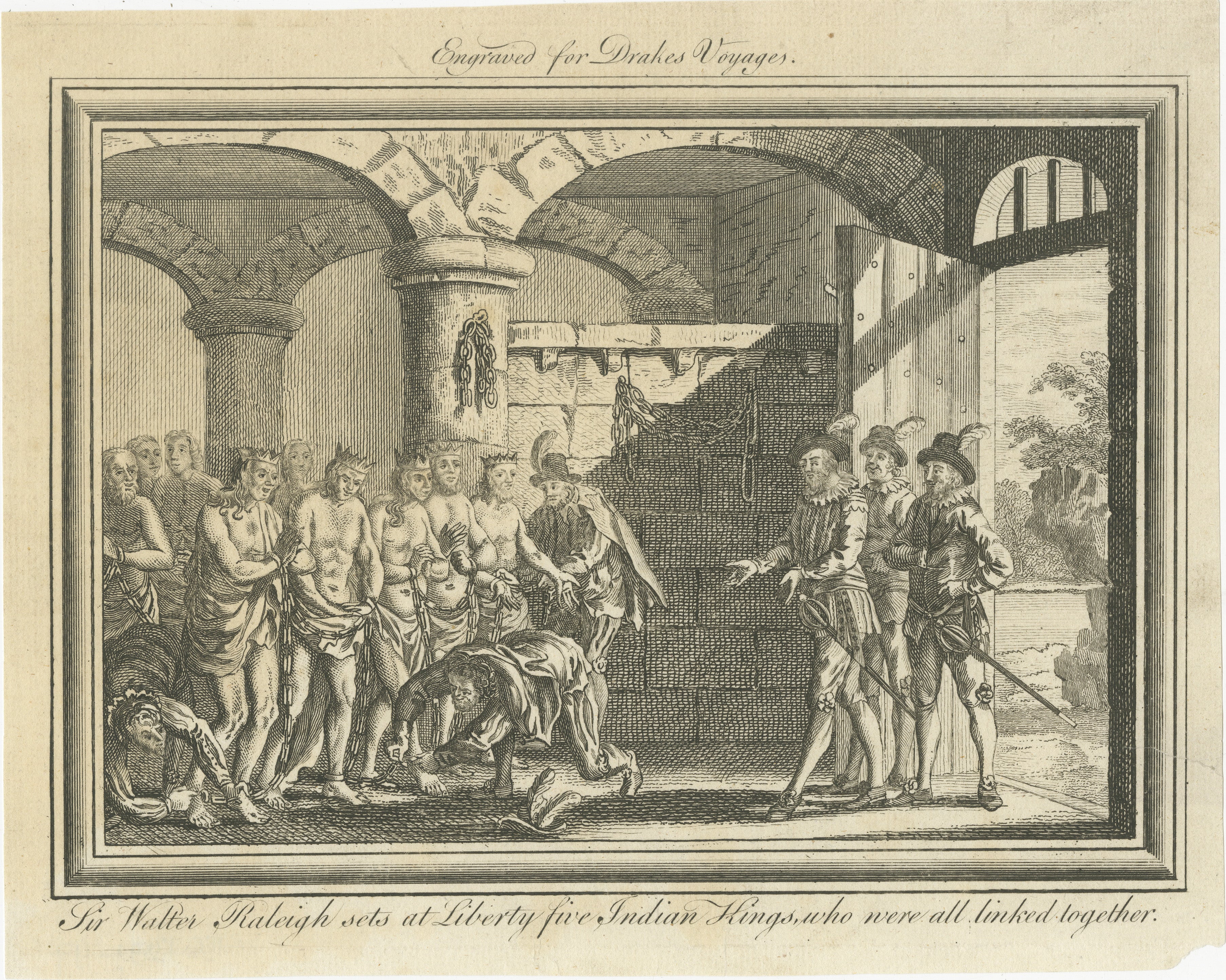
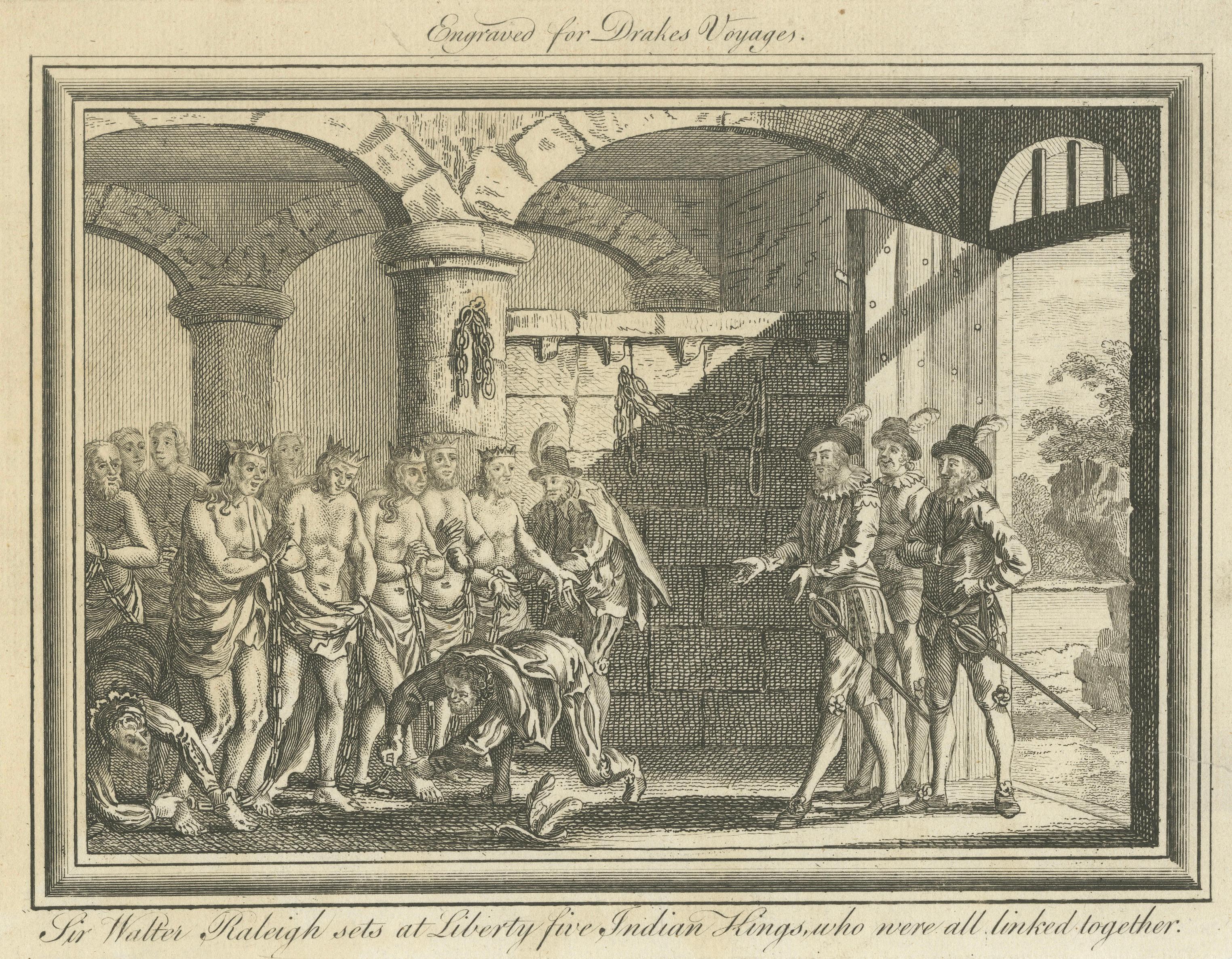
Sir Walter Raleigh Frees Five Indian Kings – Drake Voyages Engraving 1770
This evocative eighteenth-century engraving illustrates a dramatic episode from the early age of exploration, depicting Sir Walter Raleigh liberating five Indigenous leaders who had been imprisoned by Spanish colonists during his expedition to South America. The scene was engraved for Edward Cavendish Drake’s travel compilation A New Universal Collection of Authentic and Entertaining Voyages and Travels, published in London around 1768–1770. Although the book bears the name Drake, it gathered accounts from many explorers, including the famous Elizabethan adventurer Sir Walter Raleigh.
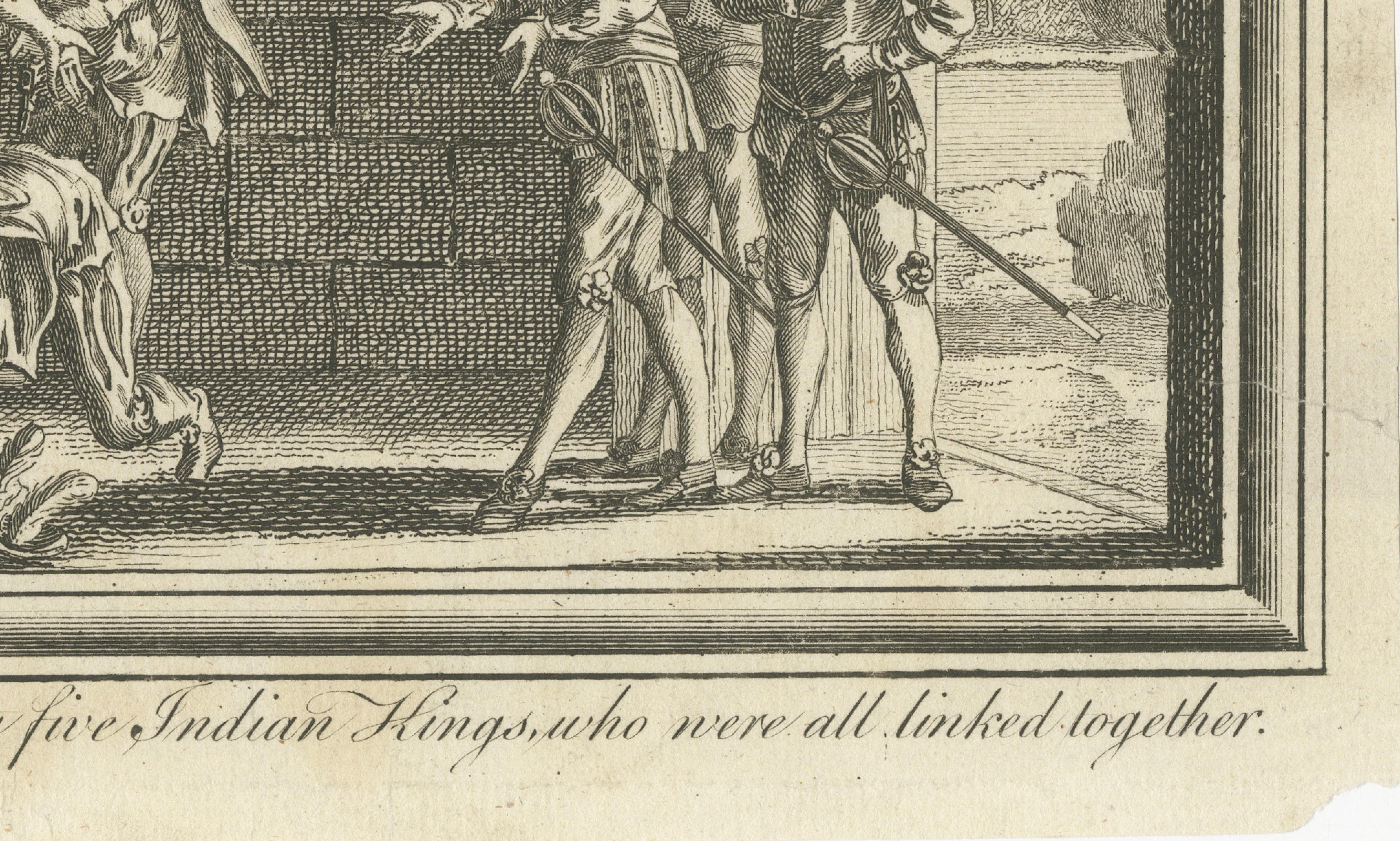
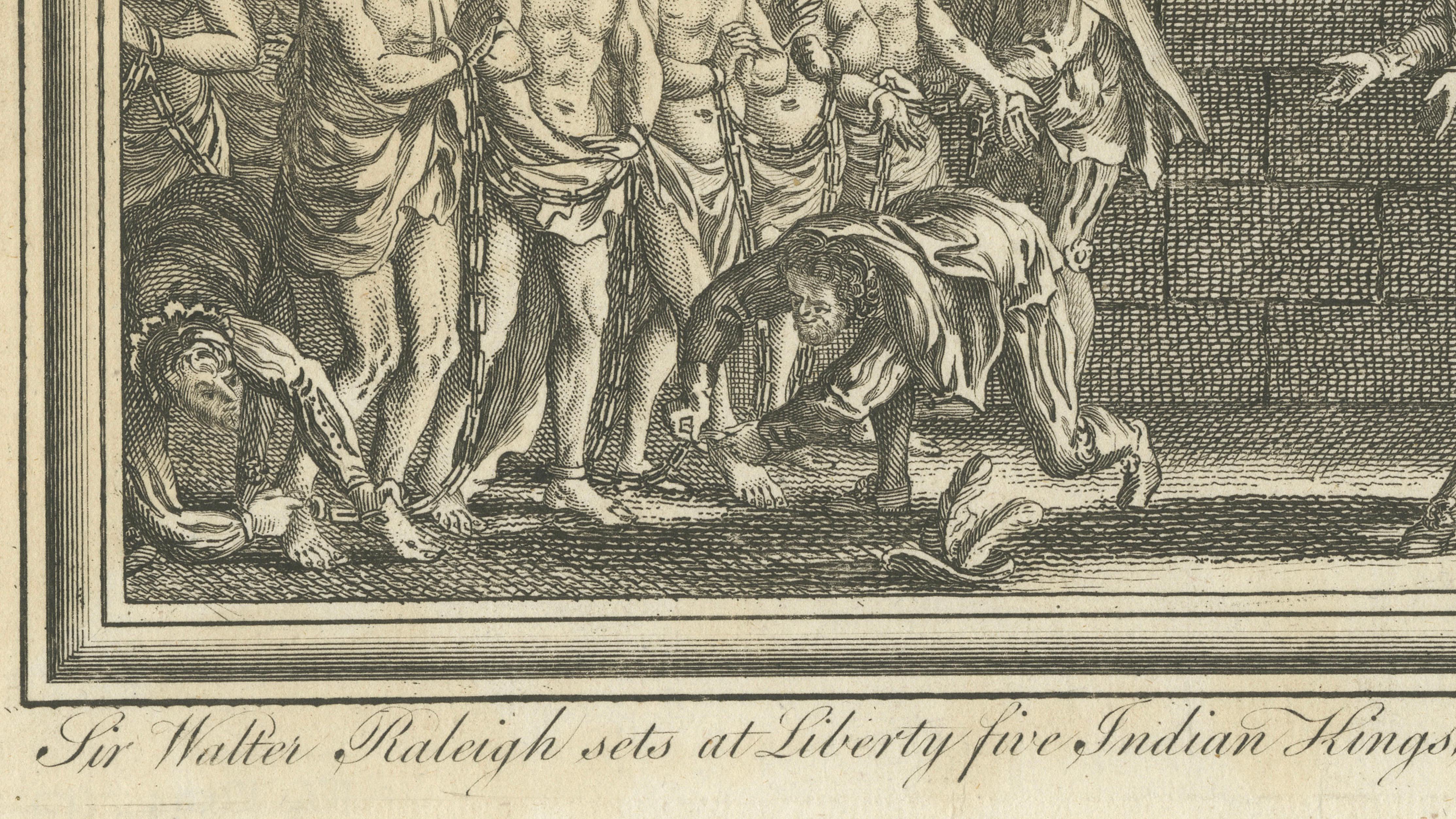
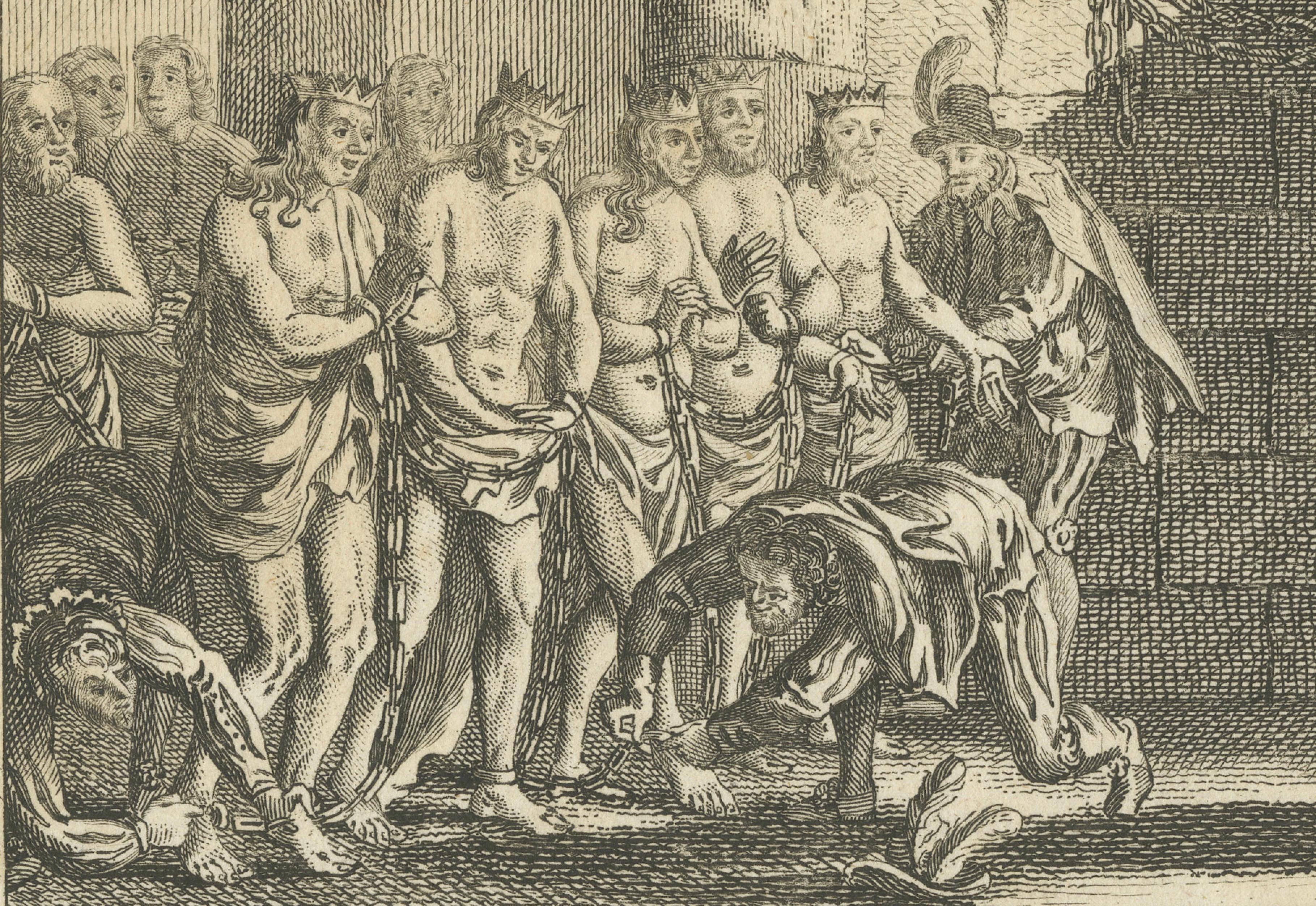
The engraving is titled “Sir Walter Raleigh sets at Liberty five Indian Kings, who were all linked together.” It depicts an event said to have occurred during Raleigh’s 1595 expedition to the region surrounding the Orinoco River, in present-day Venezuela, Guyana, and Trinidad. Raleigh undertook this voyage in search of the legendary city of El Dorado, the fabled kingdom of gold that captivated European imagination throughout the sixteenth century.
According to Raleigh’s own account of the expedition, upon capturing the Spanish settlement of San José de Oruña on the island of Trinidad, he discovered several Indigenous leaders imprisoned in a dungeon. These chiefs, described in English sources as “Indian kings,” had reportedly been chained together by the Spanish governor Antonio de Berrío. The Spanish authorities had attempted to force them to reveal the locations of gold-rich regions inland. Raleigh claimed that he ordered their chains removed and granted them freedom.
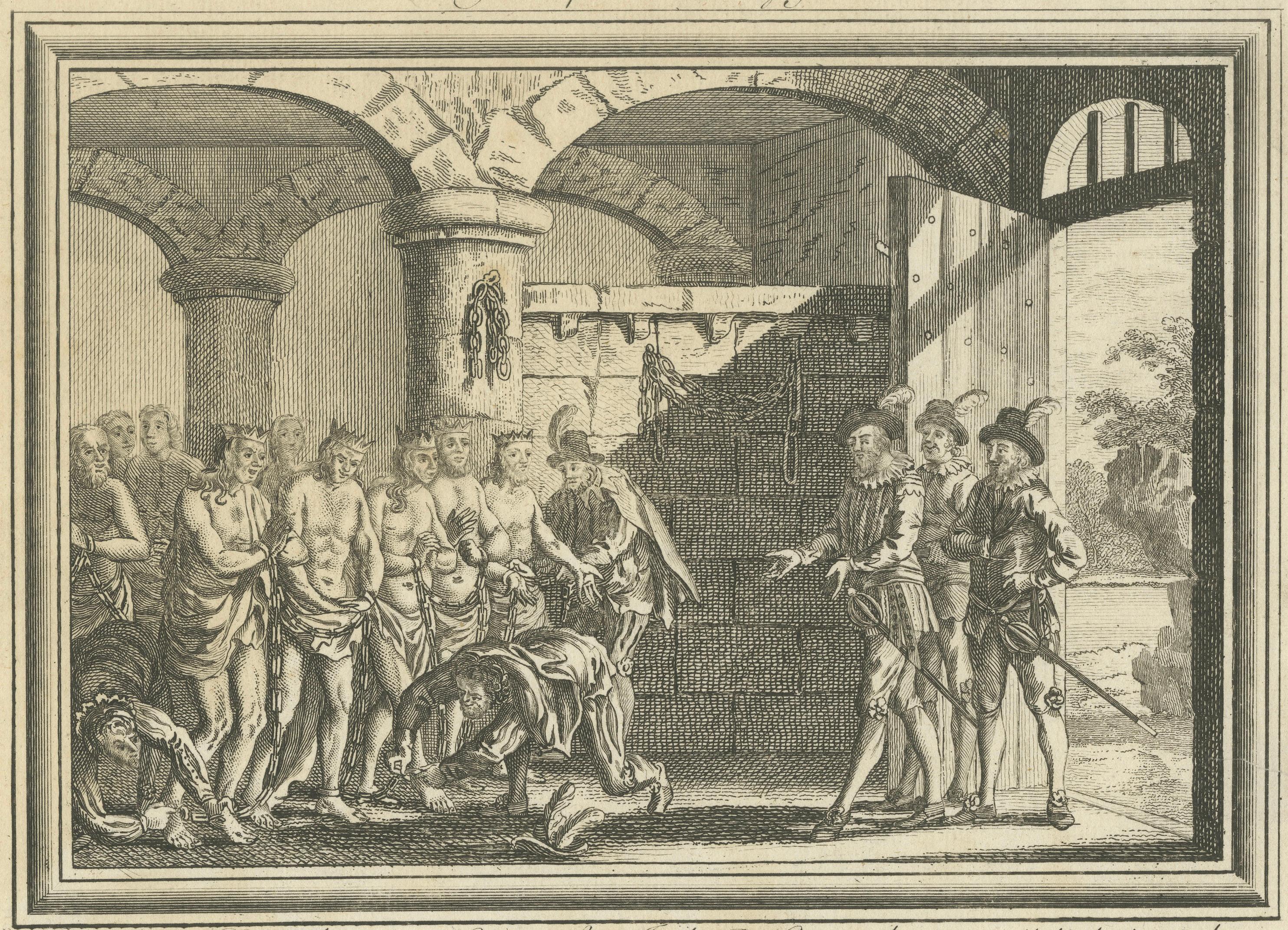
The engraving captures the moment of liberation within the vaulted interior of a stone dungeon. On the left side of the composition the Indigenous leaders stand together, some still partially bound while their chains are being removed. They are depicted wearing crowns, a European artistic convention used to signify their status as local rulers or chiefs. In the center, a man bends down to unlock the shackles connecting the prisoners.
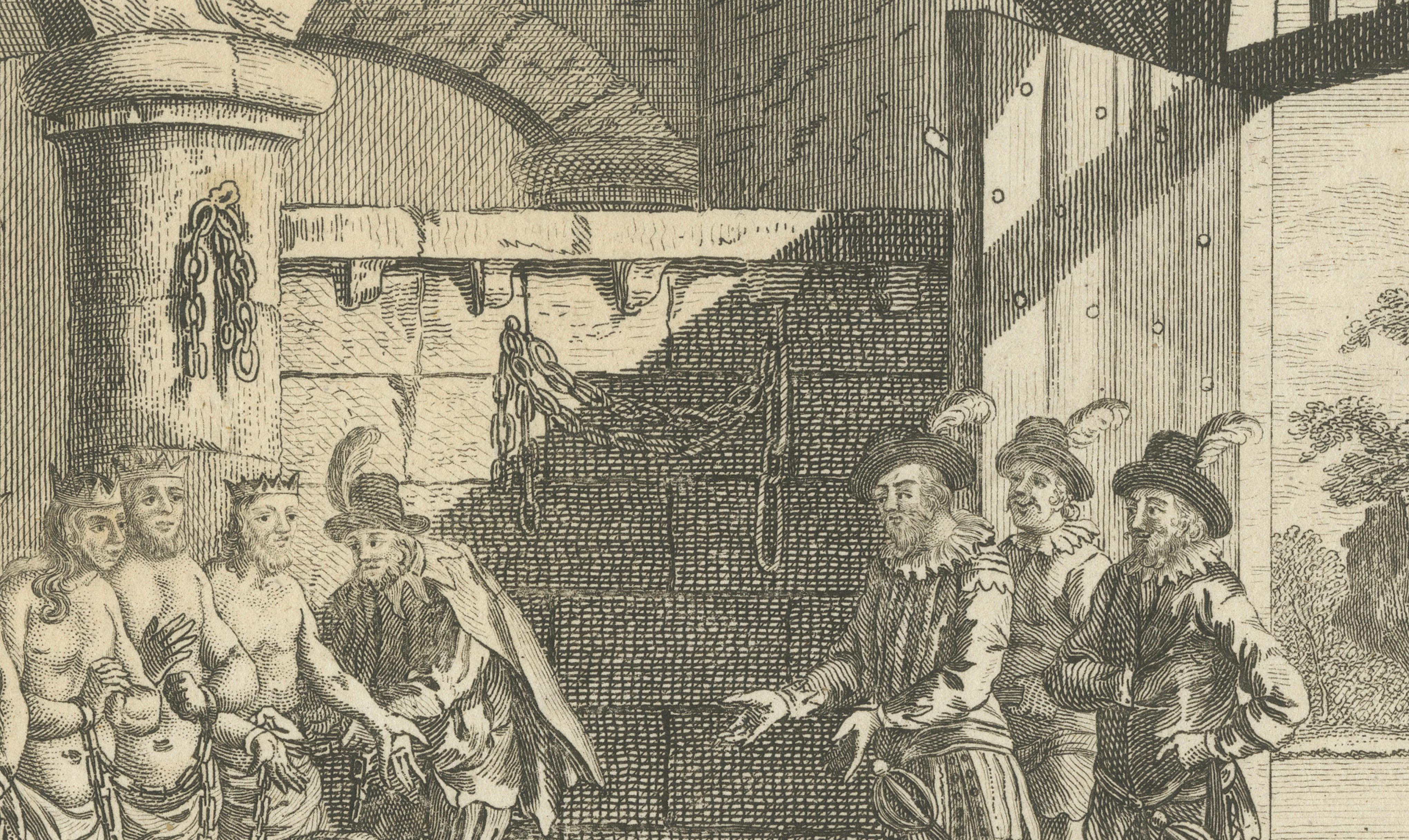
On the right side of the scene stands Sir Walter Raleigh, dressed in characteristic Elizabethan clothing, including a feathered hat and fitted doublet. He gestures toward the prisoners while his companions, also in European dress, observe the event. The open doorway behind them suggests the transition from captivity to freedom, reinforcing the narrative Raleigh promoted of himself as both conqueror and liberator.
This image reflects how European travel books of the eighteenth century presented the exploits of early explorers. Such engravings were not only historical illustrations but also visual narratives that helped shape European perceptions of the Americas, colonial conflict, and exploration. The refined copperplate engraving technique and careful line work demonstrate the high standard of book illustration in London during the period.
Today the print is valued both as a historical document relating to Raleigh’s South American expedition and as a compelling example of eighteenth-century travel book illustration.
Condition: Good antique condition with age-appropriate toning and light foxing. Minor handling marks and faint creases consistent with an eighteenth-century book plate. Plate mark visible.
Framing tip: This engraving works well with a generous ivory mat and a dark walnut or black frame, allowing the dramatic historical scene and fine engraved detail to stand out.
Technique: Copperplate engraving
Maker: Engraved for Edward Cavendish Drake, London, circa 1768–1770
Keywords: Sir Walter Raleigh, El Dorado expedition, Trinidad, San José de Oruña, Orinoco River, Guyana, Venezuela, South America exploration, Antonio de Berrío, Elizabethan explorers, Drake Voyages, Edward Cavendish Drake, Raleigh engraving, colonial Americas history, Indian kings engraving, indigenous chiefs South America, early exploration print, 18th century travel illustration, antique exploration engraving