Engravings of Egypt's Sphinx and Hermopolis: Early European Exploration, c.1795
€ 140
One of a kind: this is the sheet in the photographs. Ships from Langweer, the Netherlands.
Date
1795
Sheet size
20.8 × 27 cm (8.2 × 10.6 in)
Reference
BG-13600-37 and BG-13600-38
Condition
fair, given age. Overall light foxing. General strong age-related toning and/or occasional minor defects from handling. Some text offset visible. Prints with a rich patina. Please study scans carefully.
About this sheet
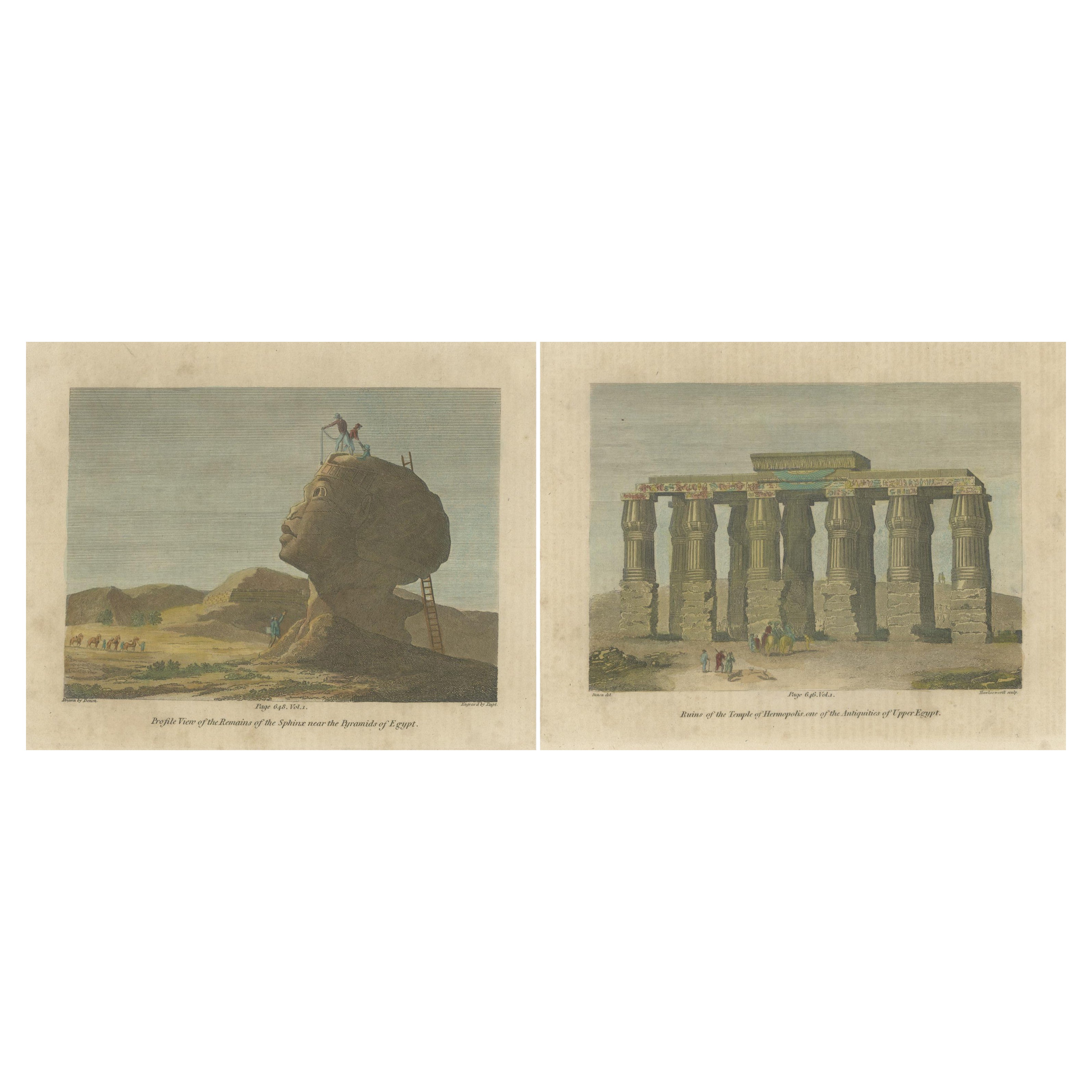
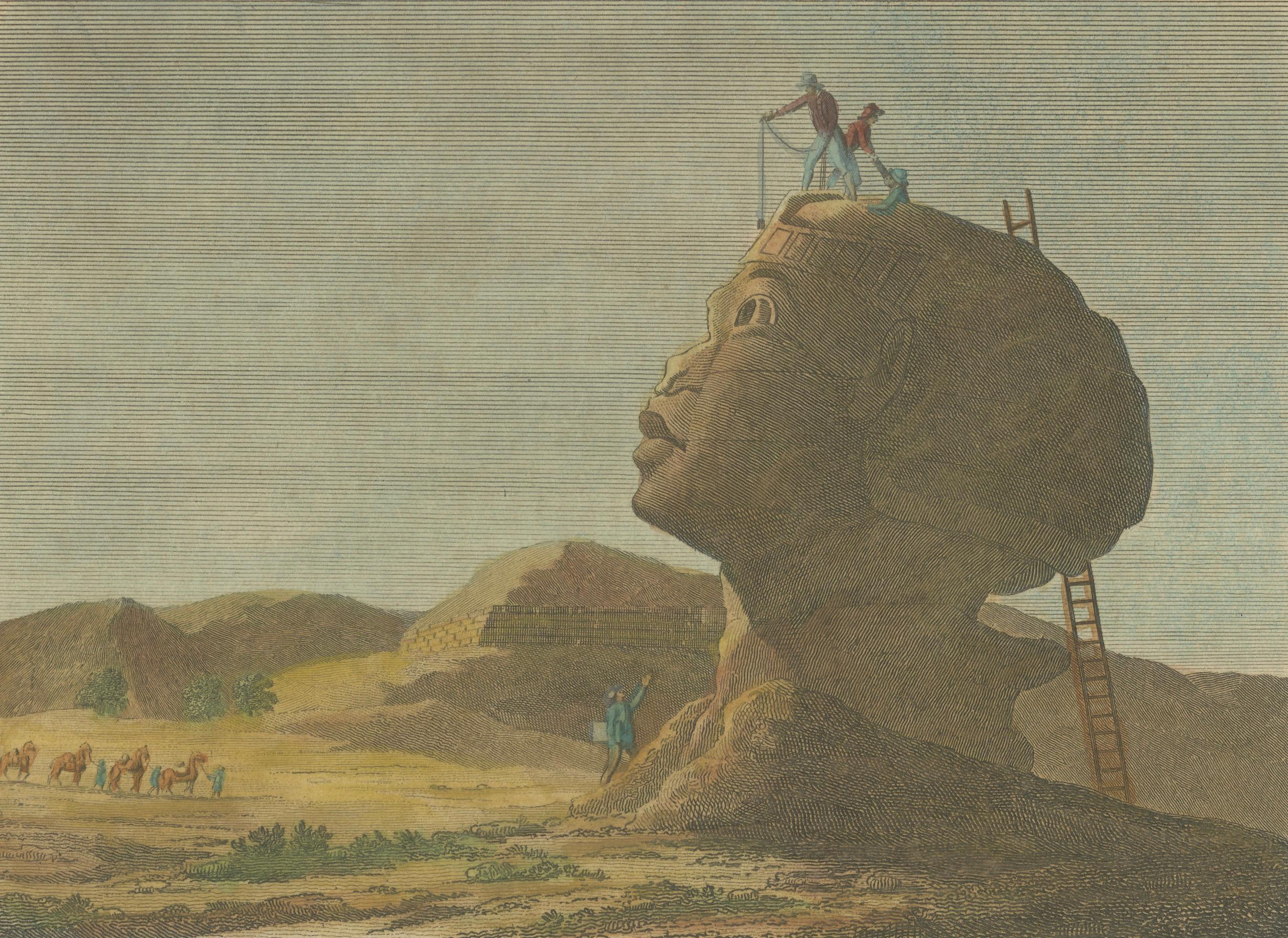
The two engravings displayed side by side depict monumental structures from ancient Egypt and are dated to the late 18th century. They are both examples of European interest in documenting and exploring Egyptian antiquities during the period of early exploration and fascination with the ancient world.
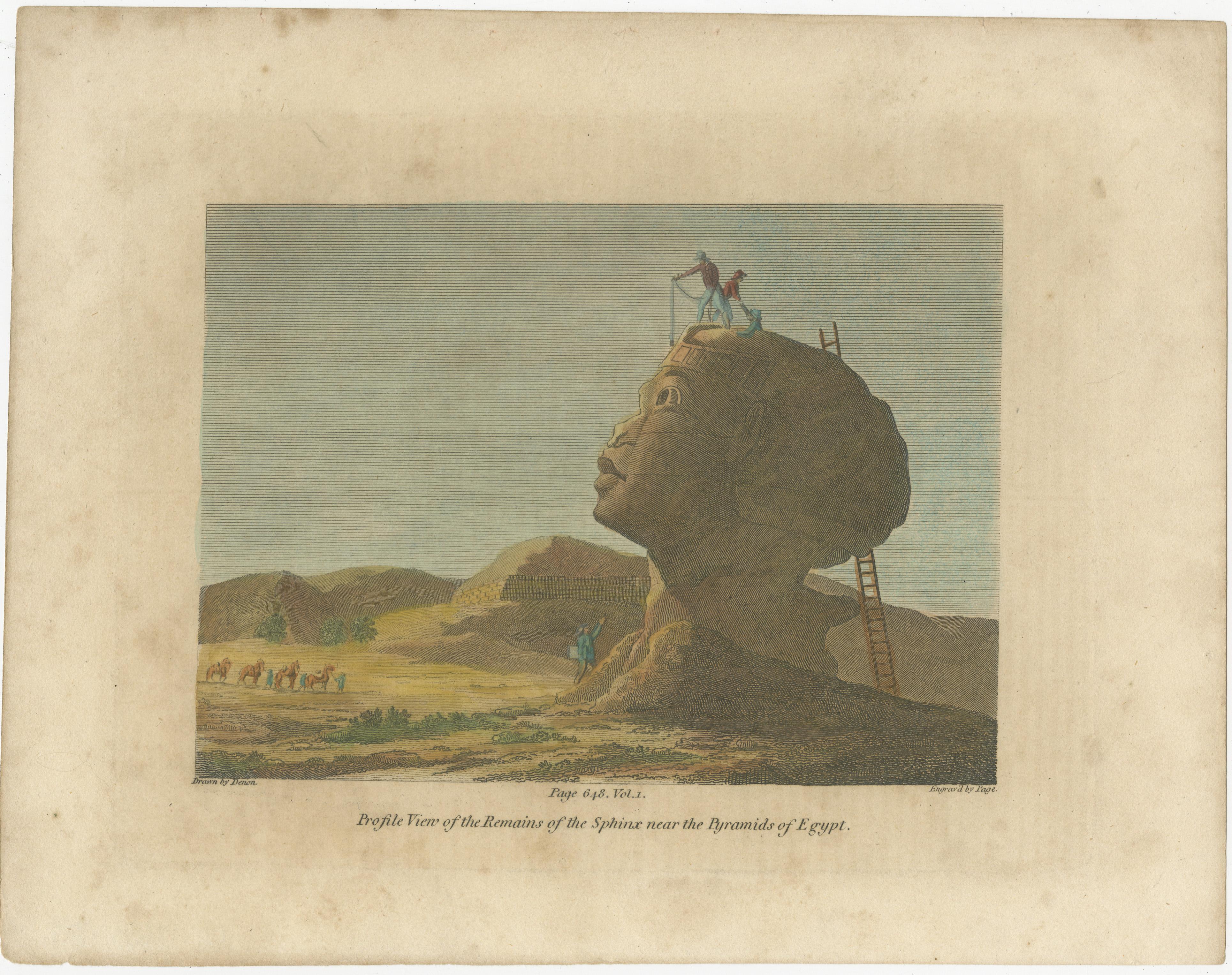
### Image 1: Profile View of the Remains of the Sphinx near the Pyramids of Egypt - Subject: The Sphinx, one of Egypt's most iconic monuments, is shown with its body largely buried in sand, as it was during this period before modern excavations. The figures atop and around the Sphinx provide scale and show the magnitude of the monument. The image also captures European explorers and researchers measuring the Sphinx, emphasizing the curiosity and study of ancient civilizations. - Age: This engraving likely dates from the late 18th century, during a time when European expeditions to Egypt were becoming more common, particularly following Napoleon's campaign in the late 1790s, which sparked Egyptomania across Europe. - Maker: The engraving is credited to Denon and Lege, both of whom were active artists and engravers during this time. Dominique Vivant Denon was one of the key figures in documenting Egyptian antiquities. - Significance: The depiction of the Sphinx half-buried in sand is a reminder of how much of ancient Egypt was still undiscovered at the time. This engraving illustrates the early stages of European fascination with Egypt, which would eventually lead to major archaeological discoveries in the 19th century.
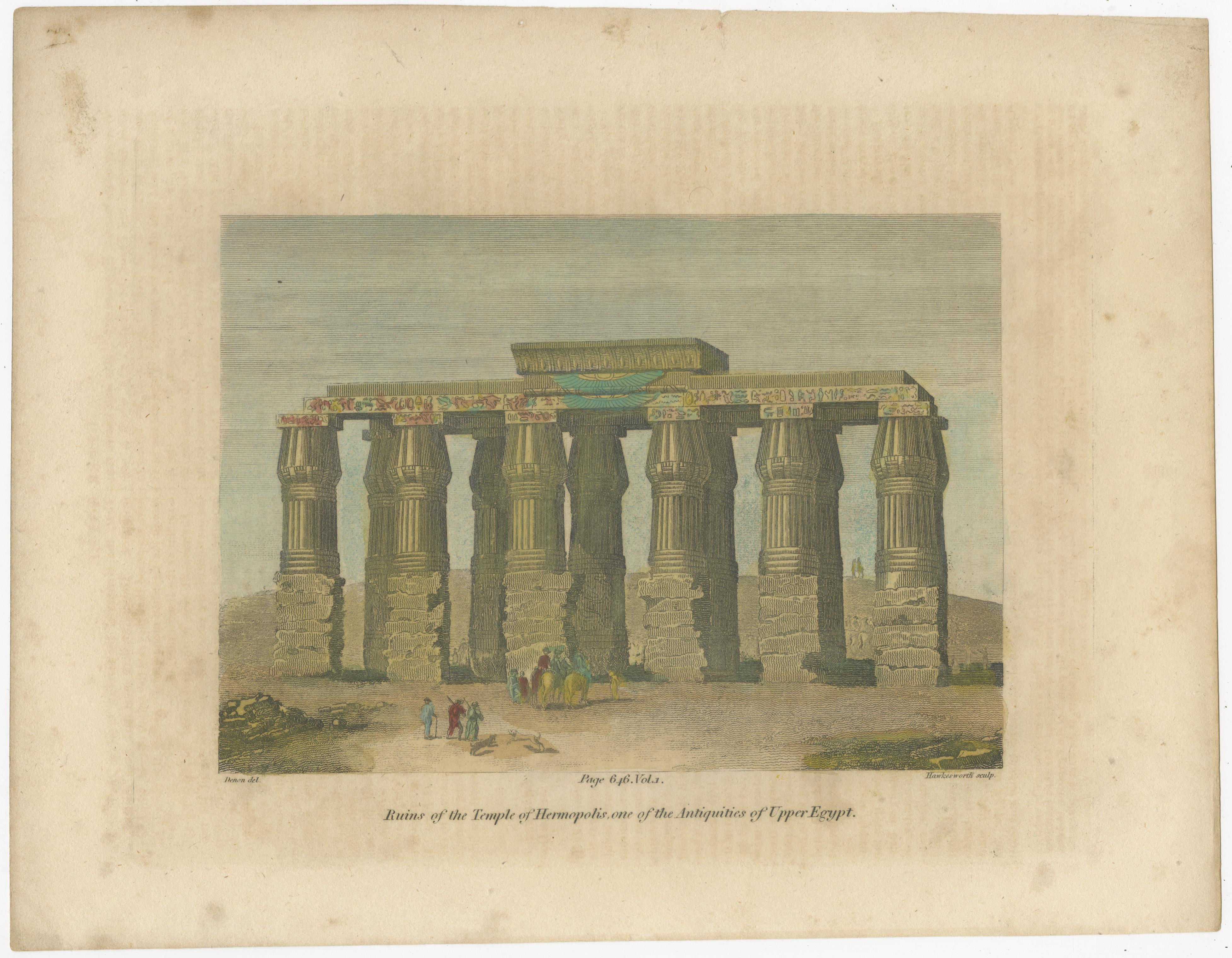
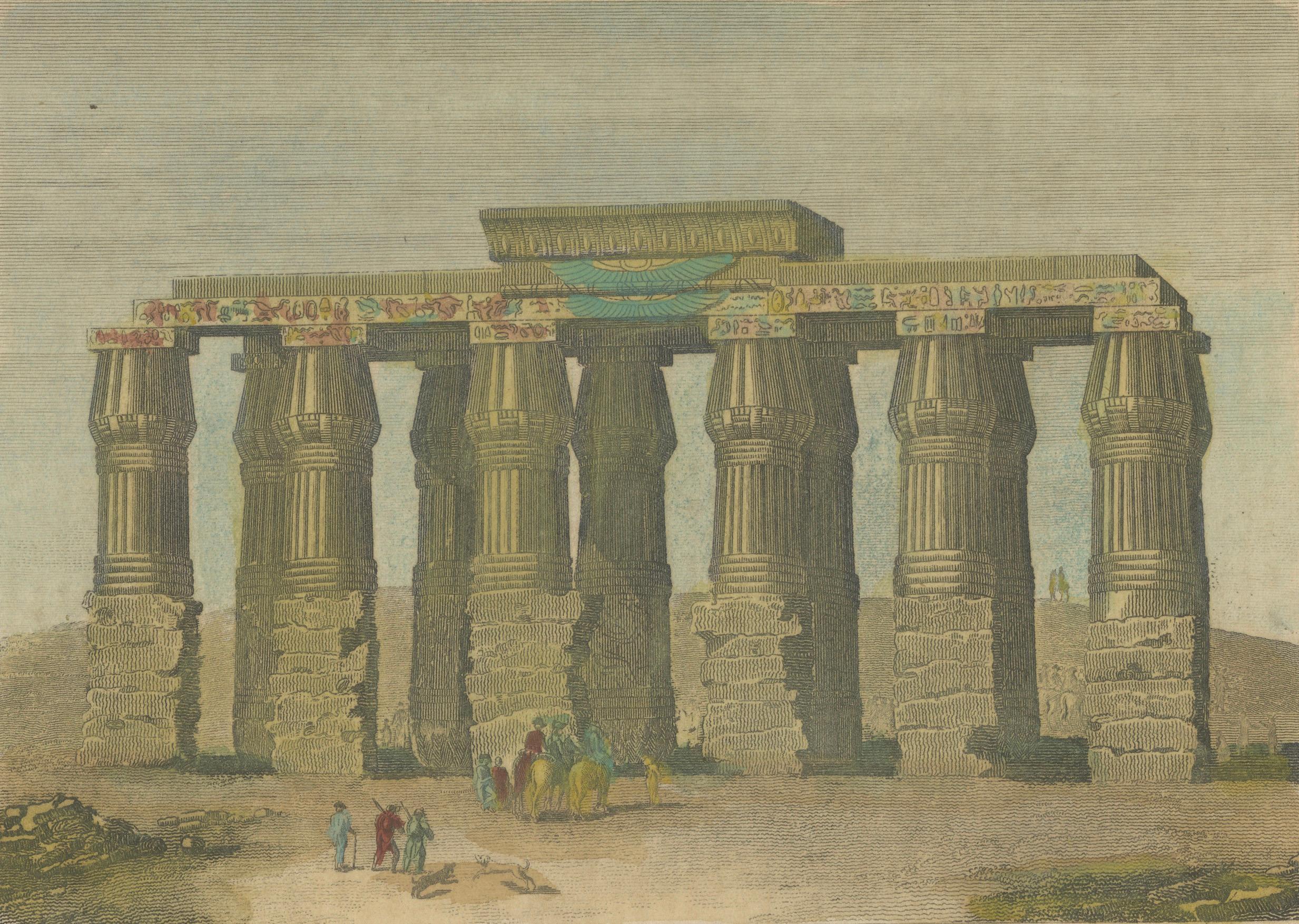
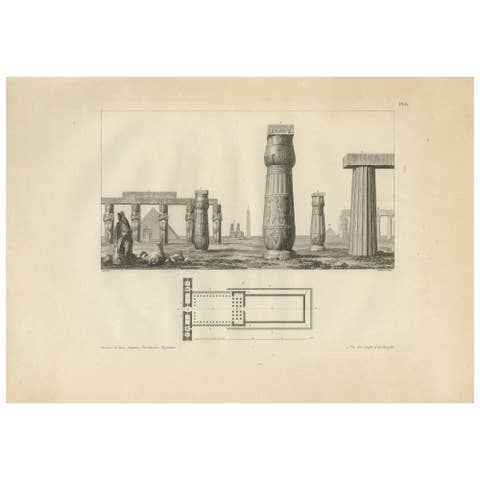
### Image 2: Ruins of the Temple of Hermopolis, one of the Antiquities of Upper Egypt - Subject: This image captures the ruins of the Temple of Hermopolis in Upper Egypt. The temple columns, although damaged, stand in remarkable condition, emphasizing the scale and grandeur of ancient Egyptian architecture. Several travelers and locals are depicted exploring the site, again demonstrating the interest in ancient cultures. The hieroglyphic inscriptions are carefully depicted on the architrave, a feature that reflects growing European knowledge of Egyptian writing systems, even though they had not yet been fully deciphered by the time this engraving was made. - Age: Also from the late 18th century, this image fits within the broader context of European expeditions and the burgeoning field of Egyptology. - Maker: The engraving is credited to Harlowe and Denon. Dominique Vivant Denon was known for his role in accompanying Napoleon’s expedition to Egypt and was one of the early figures responsible for documenting the country’s antiquities. His works were widely influential in popularizing the study of Egypt. - Significance: The Temple of Hermopolis was one of many sites in Upper Egypt visited by European explorers. The careful attention to detail in this engraving, particularly the hieroglyphs, underscores the scholarly efforts to document Egypt’s past. It also reflects the sense of awe with which Europeans viewed these ancient ruins, which were often romanticized in art and literature.
### Why These Images Are Interesting: 1. Historical Context: These engravings date from a time when European explorers were only beginning to uncover and document the treasures of Egypt. They reflect both the scientific and romantic interests of the period. 2. Documenting the Past: The images serve as valuable historical documents, offering a visual record of how these monuments appeared before large-scale archaeological excavations began. 3. Artistic Style: The engravings are detailed, with a focus on accuracy in depicting the monuments, as well as the human figures involved in their exploration. The presence of these figures adds a sense of scale and conveys the monumental size of the ruins. 4. Cultural Exchange: These images symbolize the exchange of knowledge and fascination between Europe and the ancient world, and they played a role in shaping 19th-century Europe’s understanding of ancient Egyptian civilization.
Overall, these engravings are not only artistic representations but also important cultural artifacts from a period of intense European interest in the rediscovery of ancient Egypt.