18th Century Engravings of Exploration: Banks, Tolago Bay, Terra del Fuego, 1790
€ 340
One of a kind: this is the sheet in the photographs. Ships from Langweer, the Netherlands.
Date
1790
Sheet size
38 × 23.5 cm (15.0 × 9.3 in)
Reference
BG-13599-34
Condition
good, given age. General age-related toning and/or occasional minor defects from handling. Please study scan carefully.
About this sheet
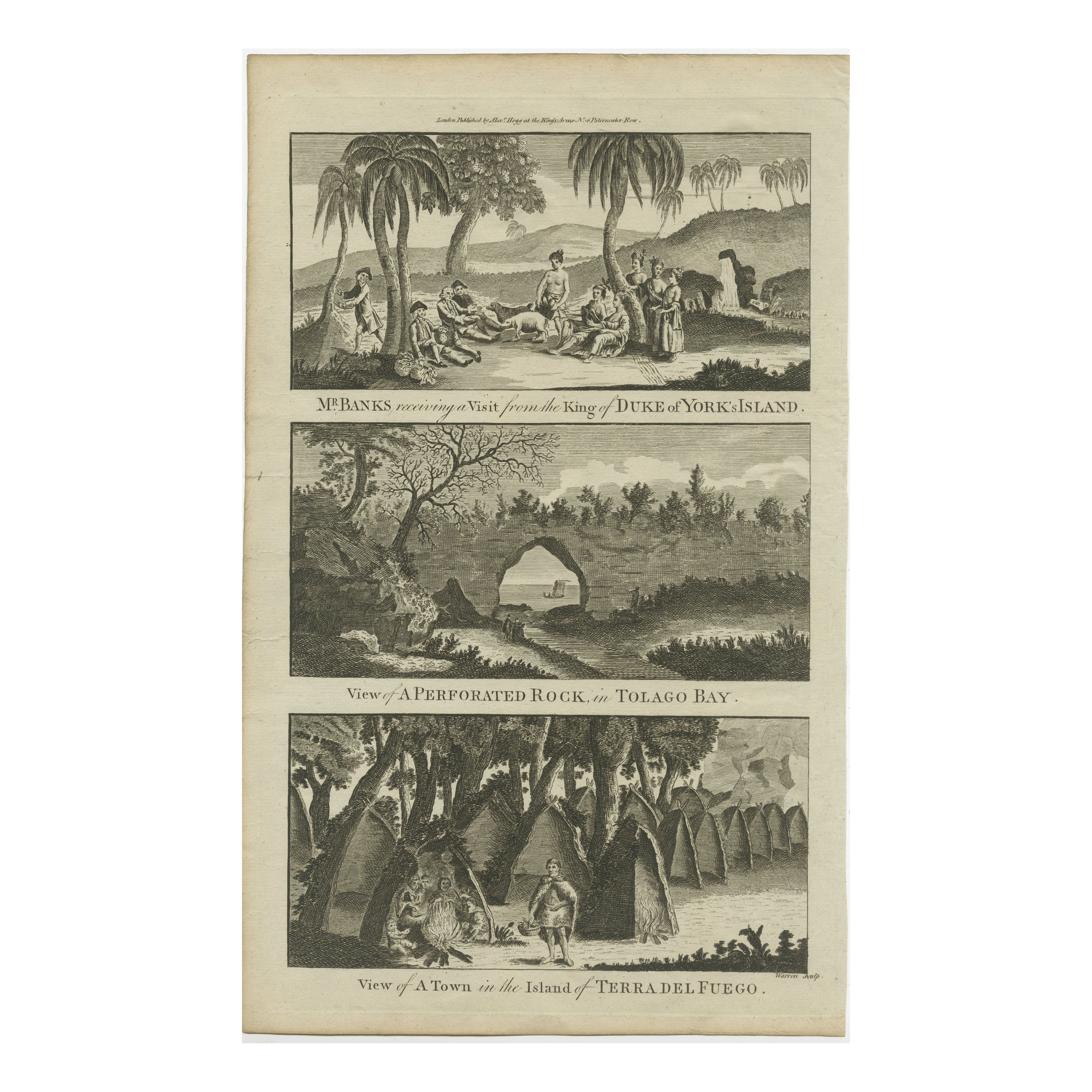
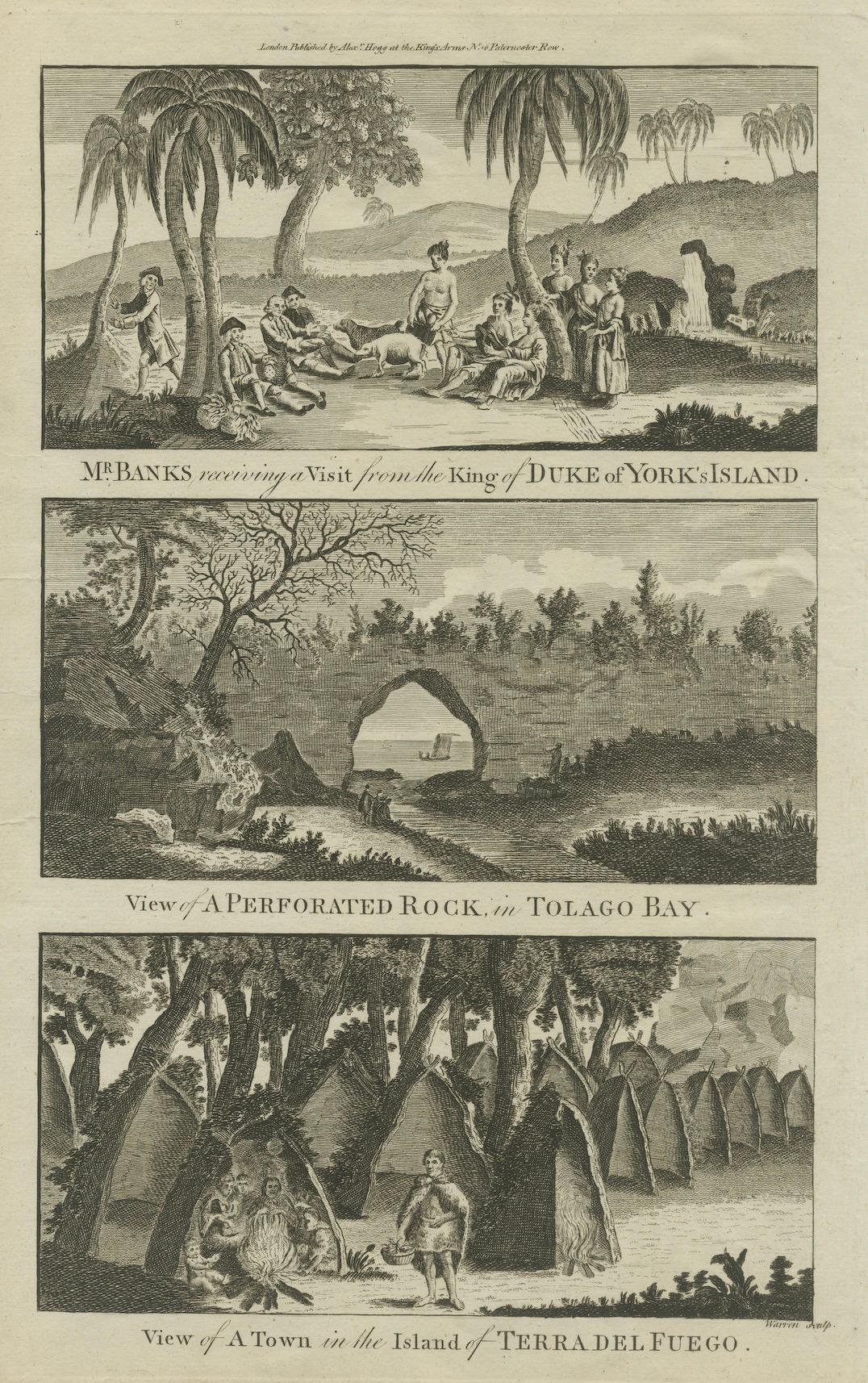
The sheet contains three separate engravings, each depicting a different scene:
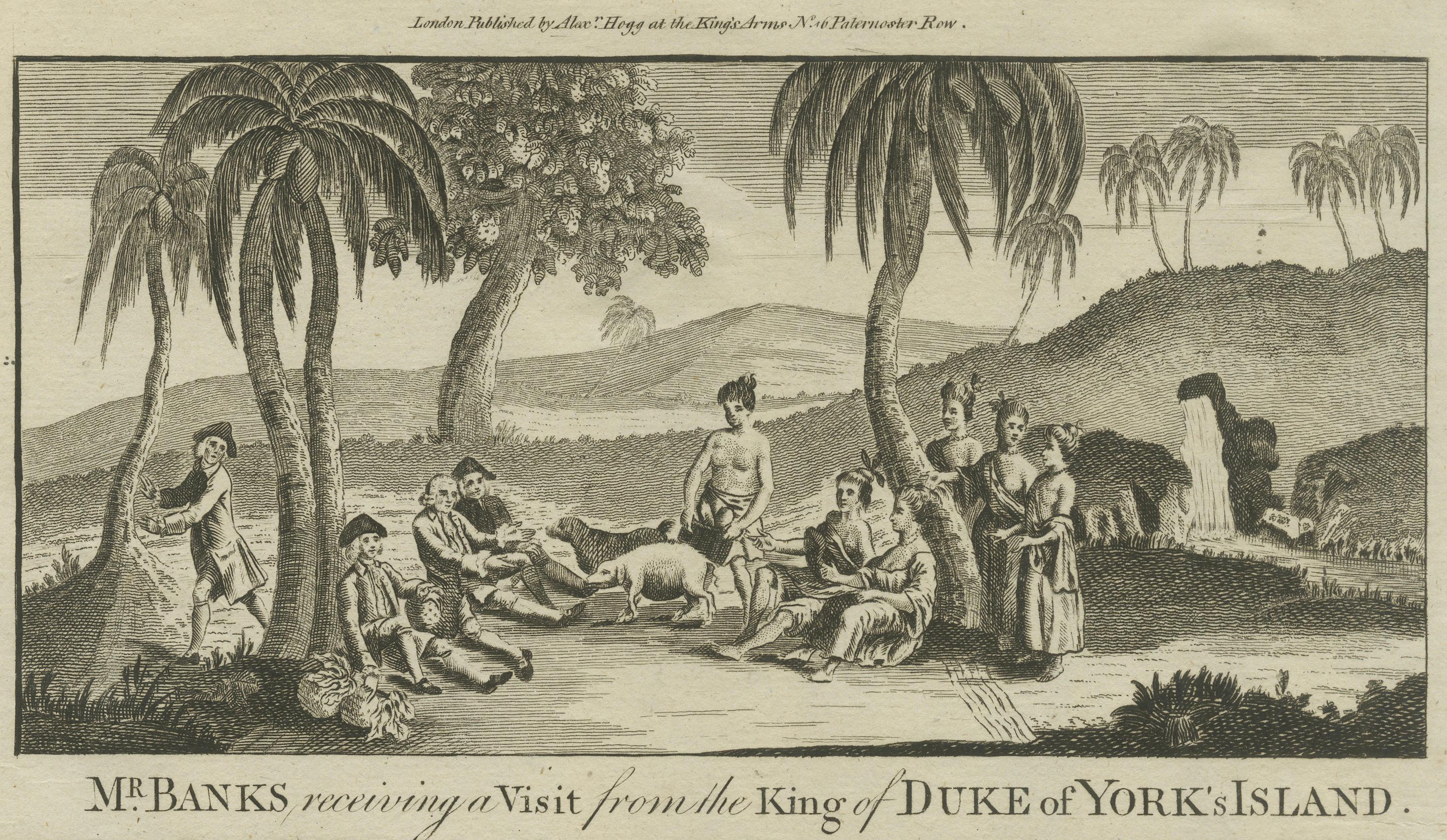
1. Top Engraving: "Mr. Banks receiving a Visit from the King of Duke of York's Island"
- This engraving illustrates a meeting between Joseph Banks, the naturalist who accompanied Captain James Cook on his first voyage, and the King of Duke of York's Island. The scene is set in a tropical environment with palm trees and native inhabitants, some of whom are seated or standing, conversing with Banks and his companions.
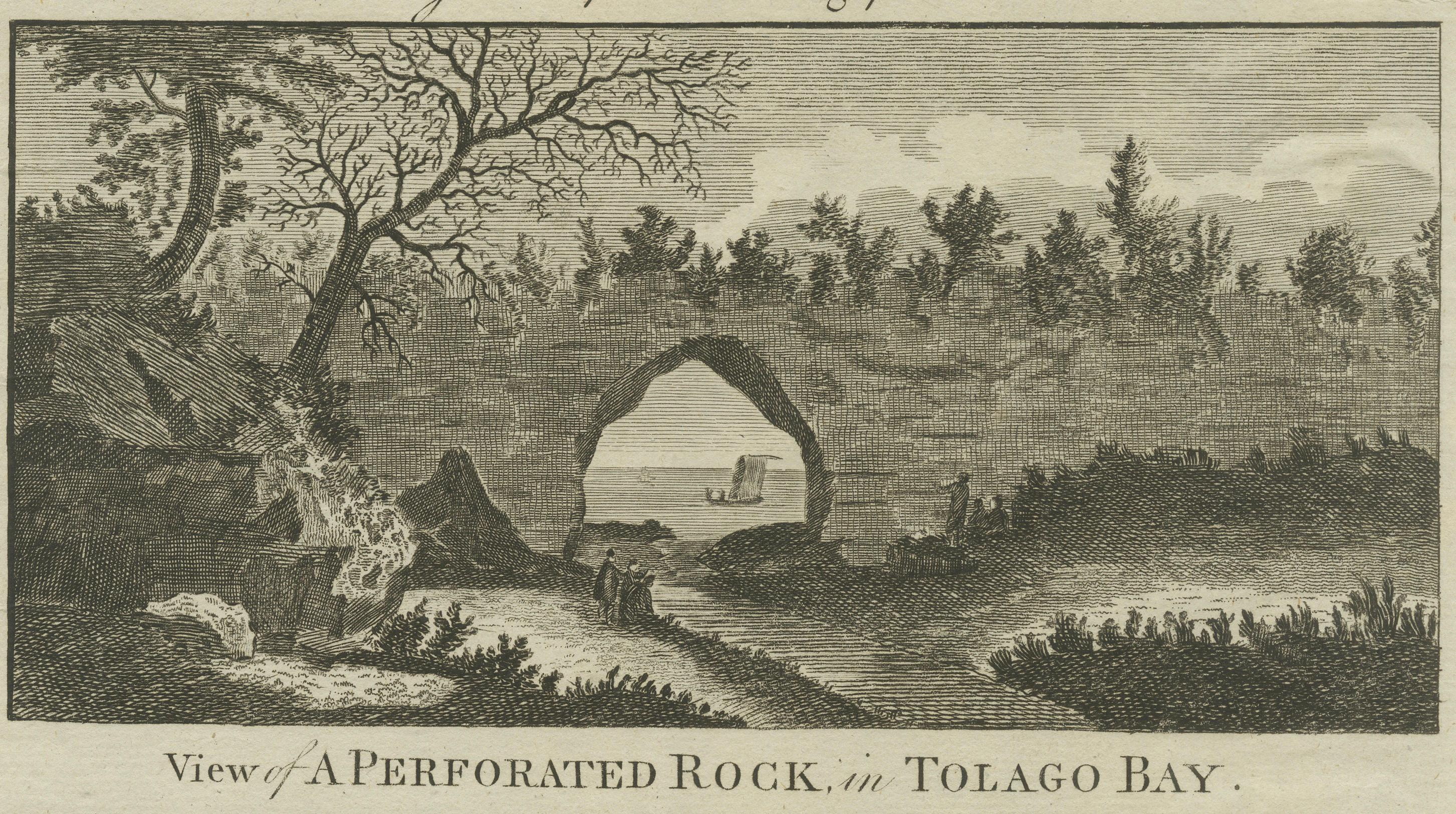
2. Middle Engraving: "View of a Perforated Rock in Tolago Bay"
- This engraving depicts a natural rock formation with a large hole or arch, known as a perforated rock. The scene includes a coastal setting with trees and a distant view of a ship on the water. There are also small groups of people observing the rock formation.
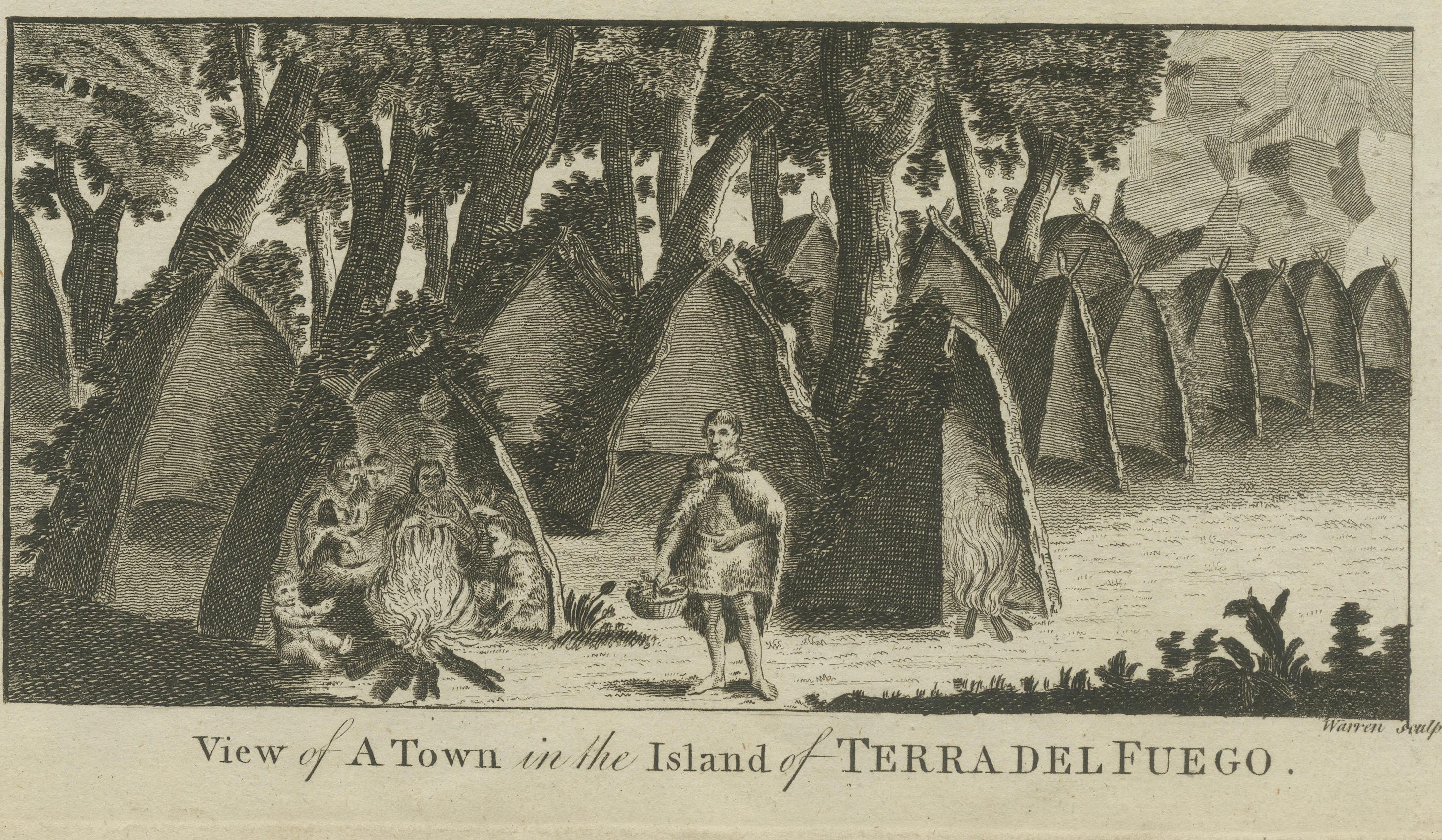
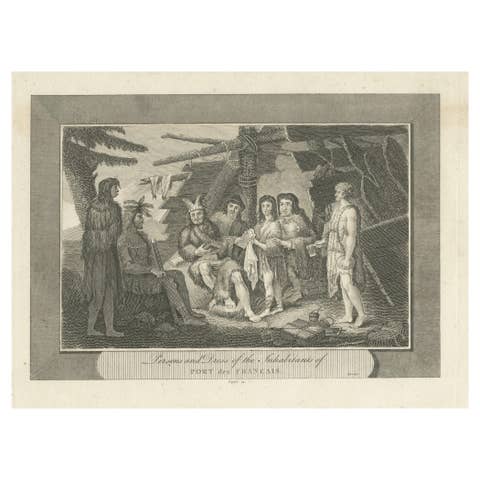
3. Bottom Engraving: "View of a Town in the Island of Terra del Fuego"
- This scene shows a settlement in Terra del Fuego, with indigenous people gathered around a fire and several conical huts or shelters made from natural materials. The background includes dense forest and rugged terrain.
Maker and Year: - The engravings were published by Alex Hogg, who was an active publisher in London during the late 18th century. The specific address given is at the Kings Arms No.16 Paternoster Row.
- The year of publication is not explicitly mentioned on the sheet, but Alex Hogg was known for his works published around the 1780s and 1790s. These engravings are likely from a work documenting the voyages of Captain Cook or related explorations, as Joseph Banks was prominently involved in Cook's expeditions.
The style and subjects of the engravings are consistent with 18th-century European depictions of exploration and encounters with indigenous peoples in newly charted territories.