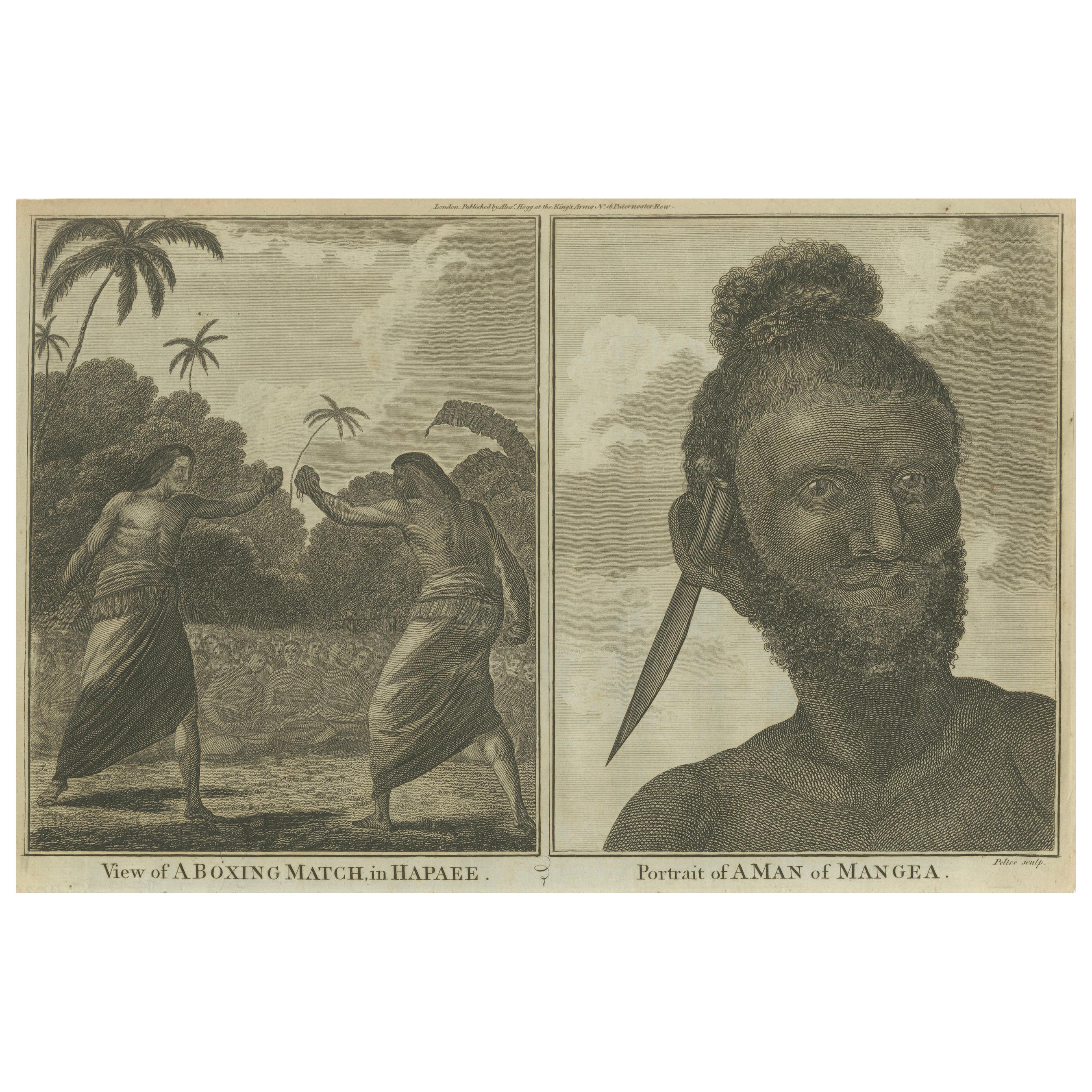
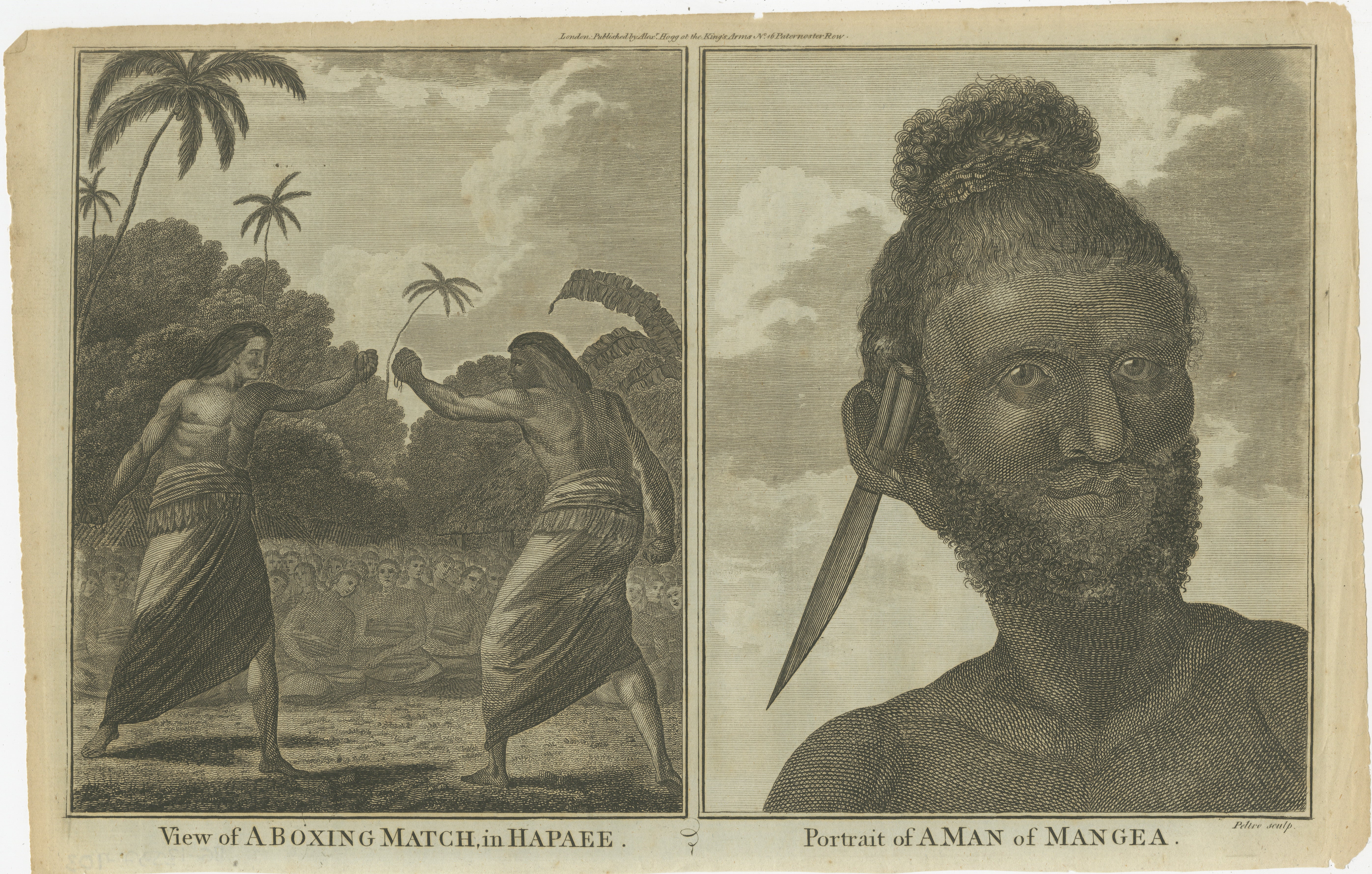
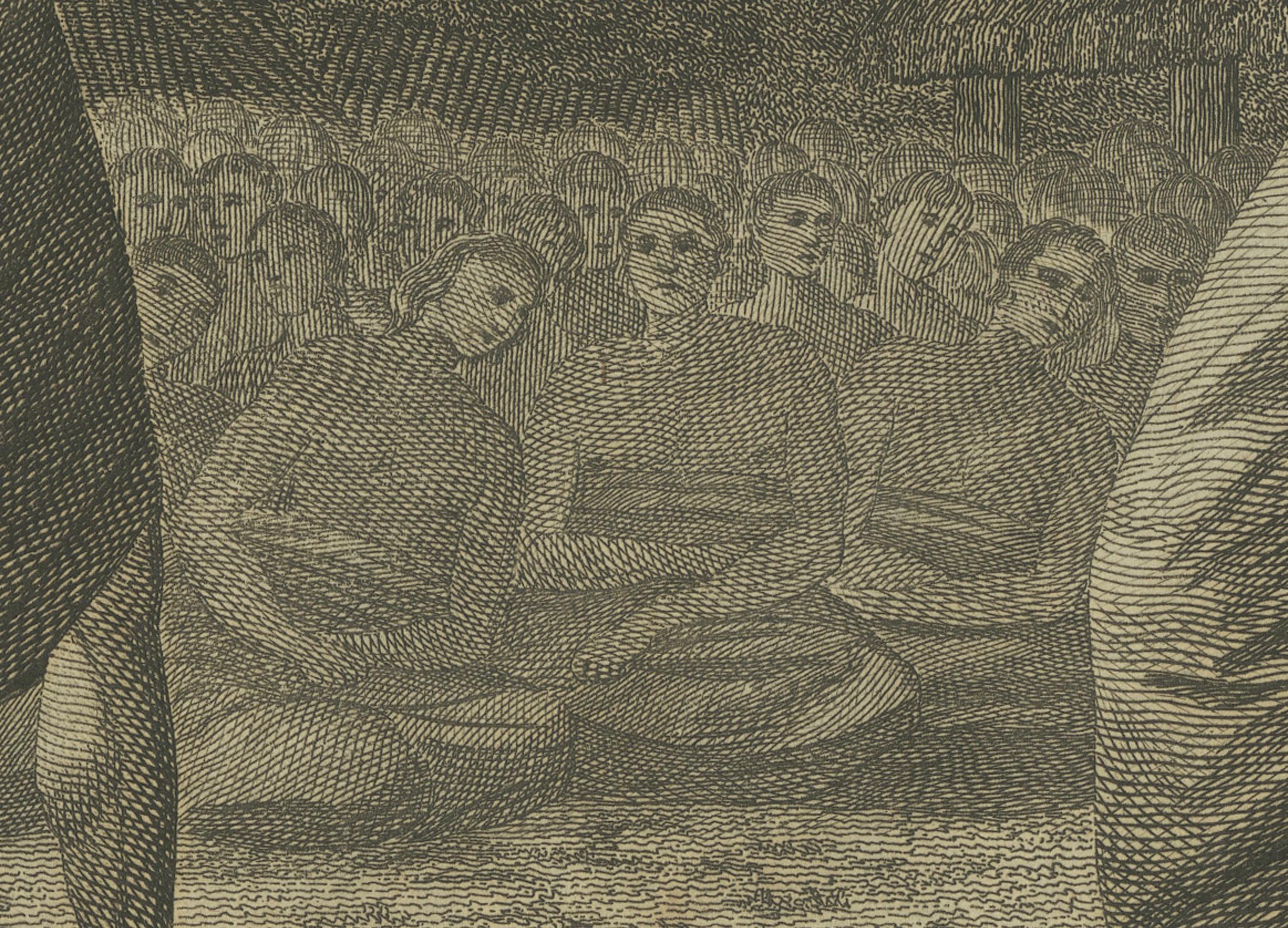
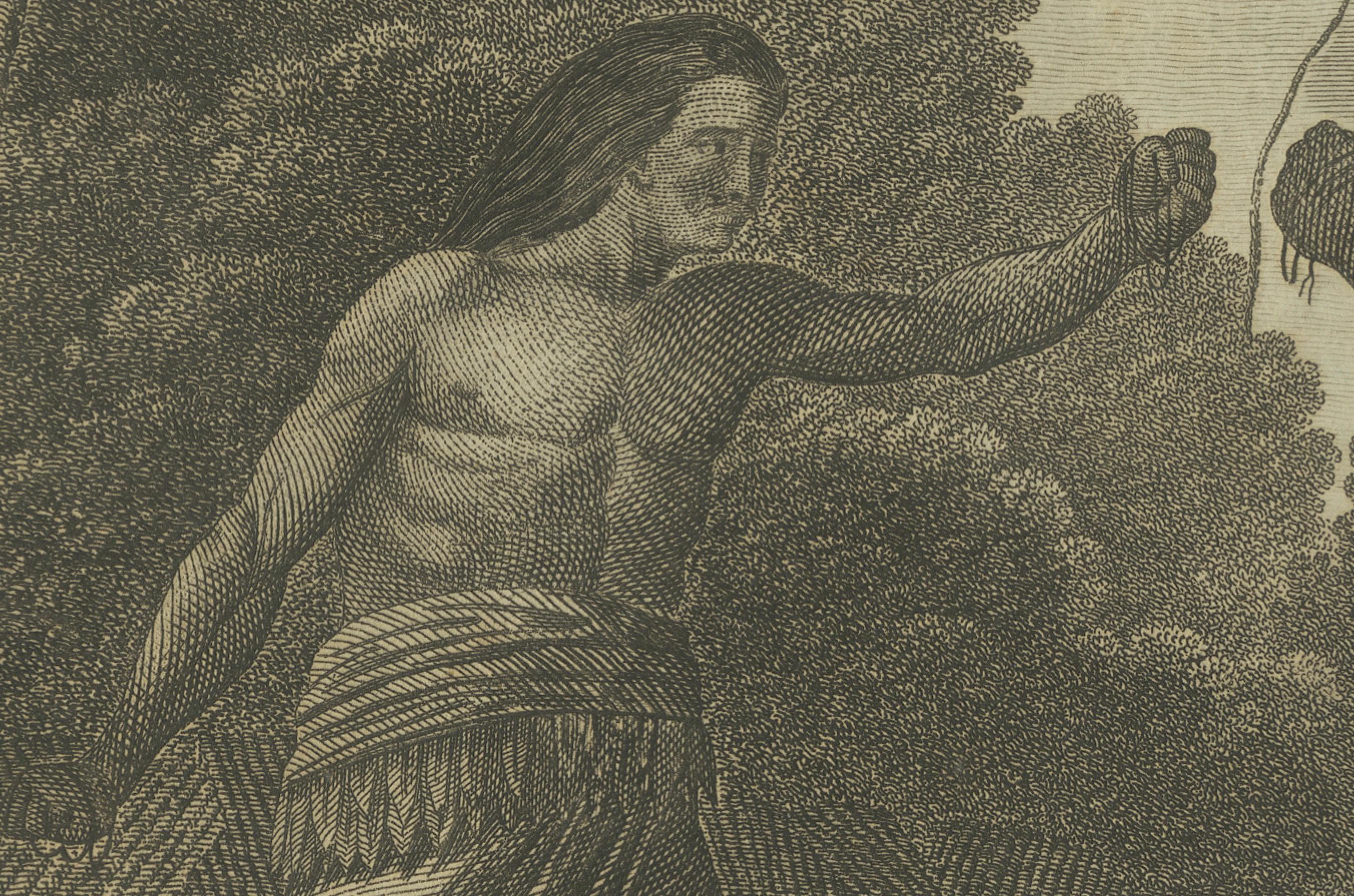
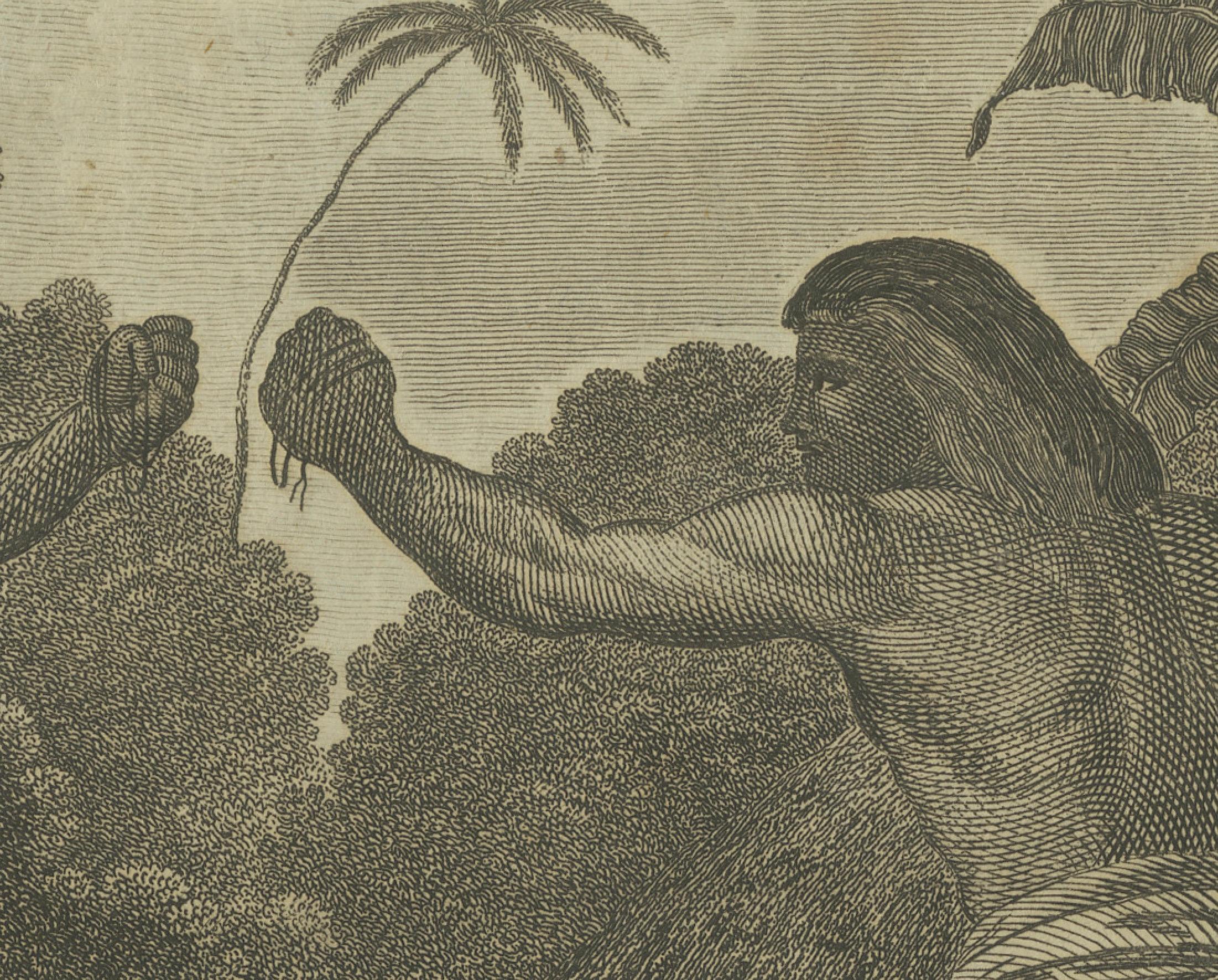
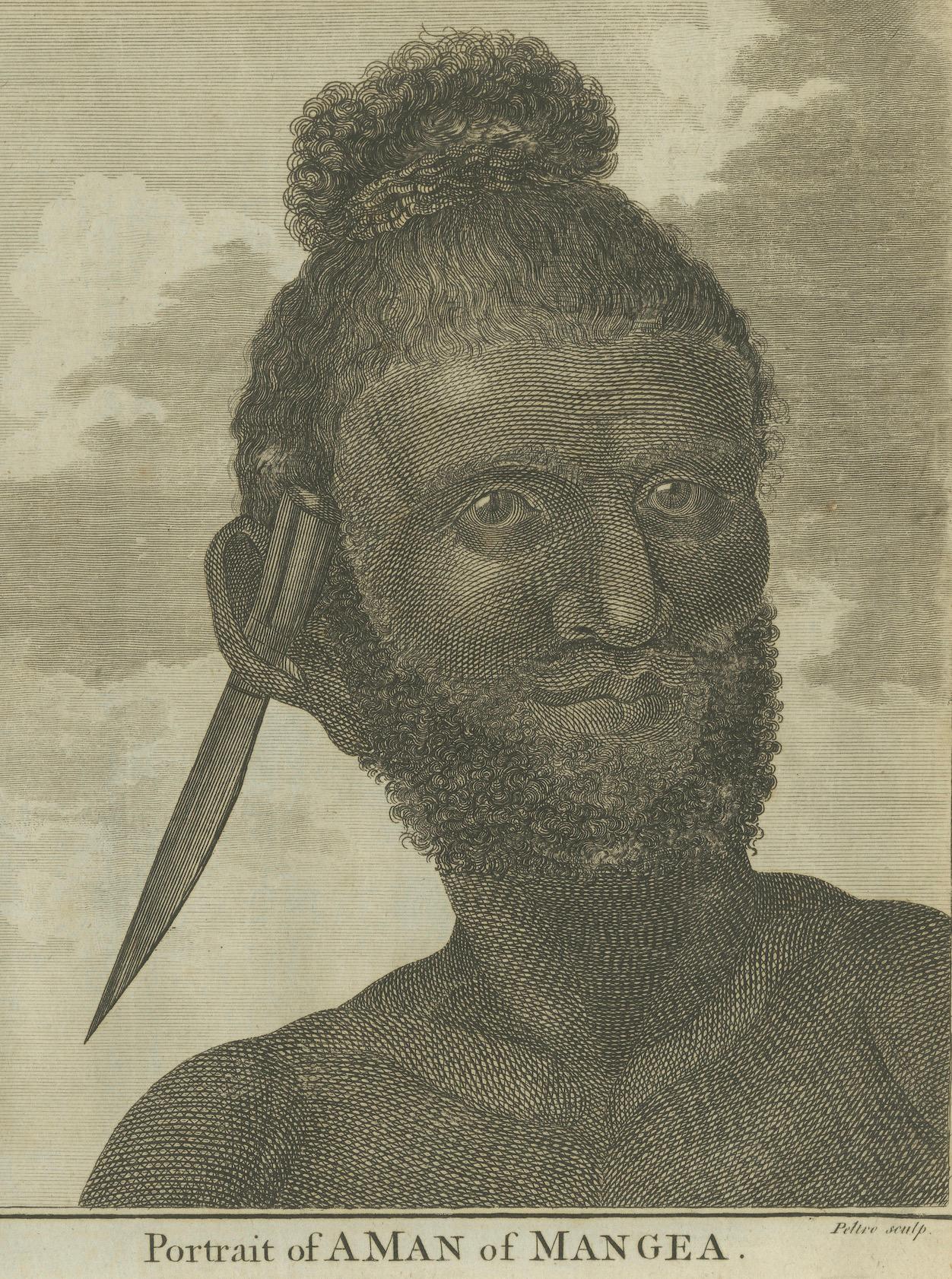
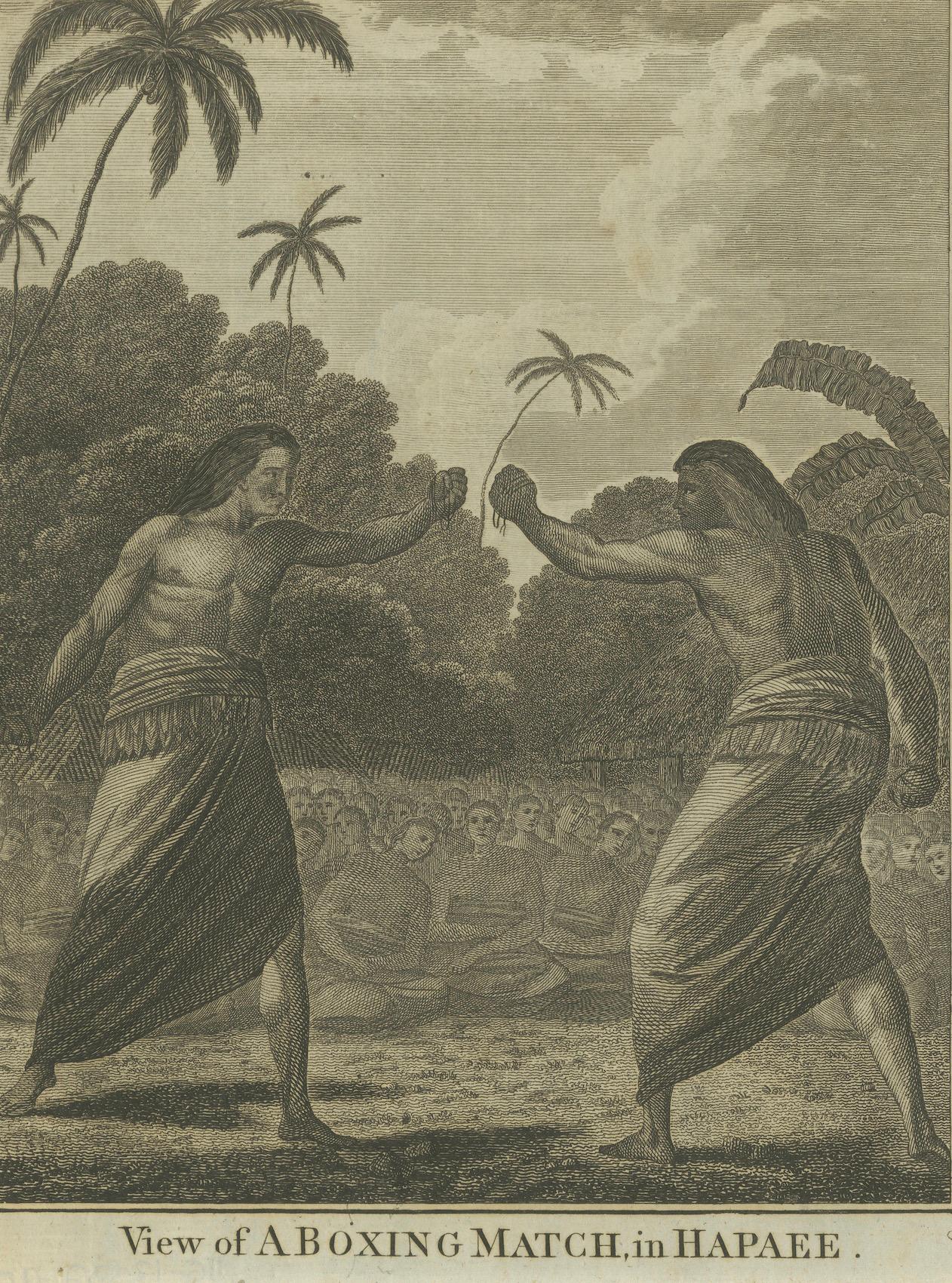
Traditions and Faces of the Pacific: Boxing in Ha'apai and a Man of Mangea, 1785
€ 220
One of a kind: this is the sheet in the photographs. Ships from Langweer, the Netherlands.
Date
1785
Sheet size
24.5 × 38 cm (9.6 × 15.0 in)
Condition
Fair
Reference
BG-13597-103
Condition
Fair condition. The paper thin and showing some soiling and minor browning, mostly around the edges. Some edges rough with creases but mostly outsides the images. Study the images carefully.
About this sheet
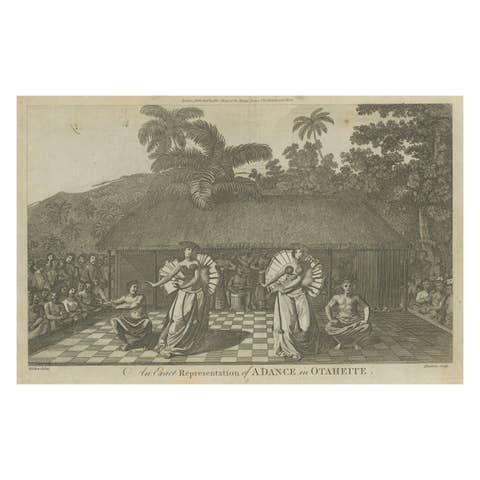
The engraving appears to be from the Captain James Cook's voyages, which took place between 1768 and 1779. Since it is related to Cook's expeditions and given the style of the engraving, it's likely that this piece was published in the late 18th century, possibly in the years following Cook's last voyage, which ended in 1779.
The mention of "A New, authentic and complete account of voyages around the world ..." suggests it might have been published as part of a comprehensive account of Cook's journeys. These accounts were often published shortly after the voyages themselves to satisfy public interest, so a reasonable estimate for the publication of this engraving would be in the 1780s.
**Ha'apai (Hapaee):** Ha'apai is a group of islands that form part of the Kingdom of Tonga in the South Pacific. The islands are known for their rich cultural heritage, and they were one of the many places visited by Captain James Cook during his Pacific voyages. The engraving showing a boxing match is likely to be an illustration of a local sport or cultural practice observed by the crew of Cook's expedition. Traditional sports such as boxing were important social events in many Pacific cultures, often associated with festivals or ceremonial occasions.
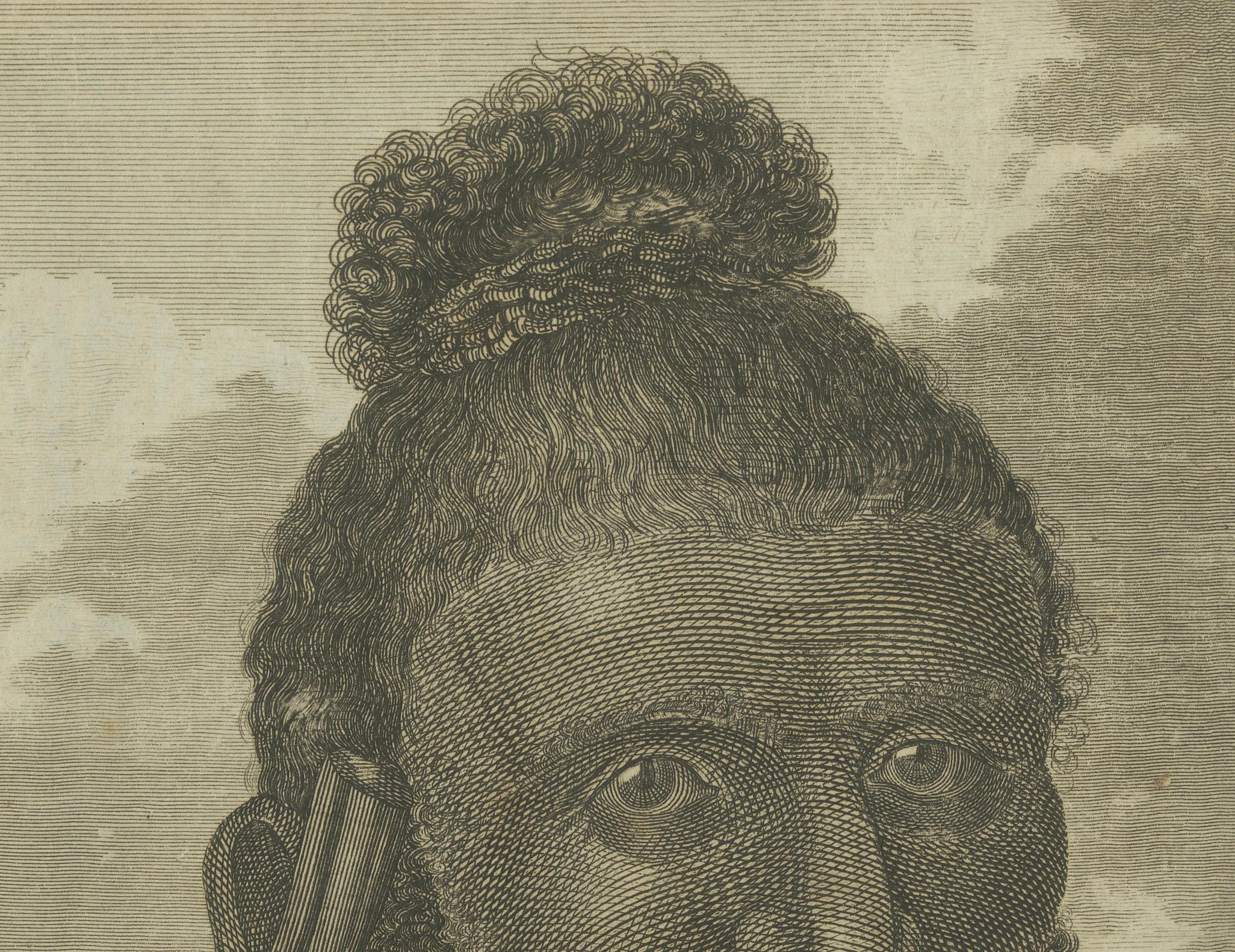
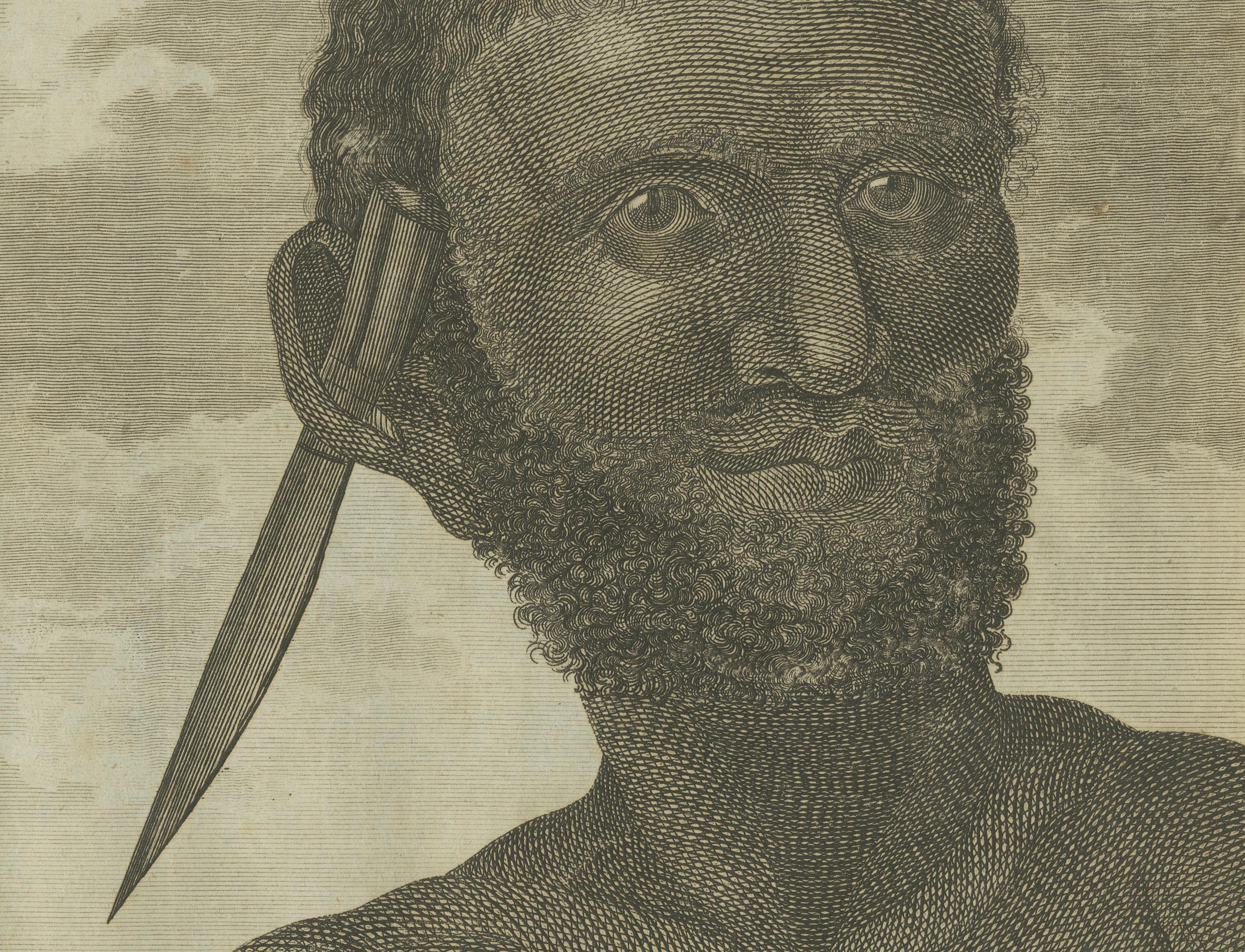
**Mangaia (Mangea):** Mangaia is the most southerly of the Cook Islands and the second largest, after Rarotonga. It is known for its rich history and is often referred to as an island with strong traditions and cultural practices. The Cook Islands themselves were named after Captain James Cook, although he only visited some of the islands that now bear his name. Mangaia has a deeply layered cultural history with a social structure that includes traditional leaders known as 'ariki and a warrior class. The detailed portrait of a man from Mangaia in the engraving would have been of significant interest to Europeans of the time, as it provided a visual record of the physical appearance and personal adornment of people from a culture so different from their own.
Both Ha'apai and Mangaia were important stops during the age of exploration in the Pacific, providing Europeans with new insights into the diversity of cultures, languages, and practices in this part of the world. The interactions between European explorers and the inhabitants of these islands would have been moments of cultural exchange, curiosity, and, at times, misunderstanding, but they significantly contributed to the broader knowledge of the Pacific peoples during this period.