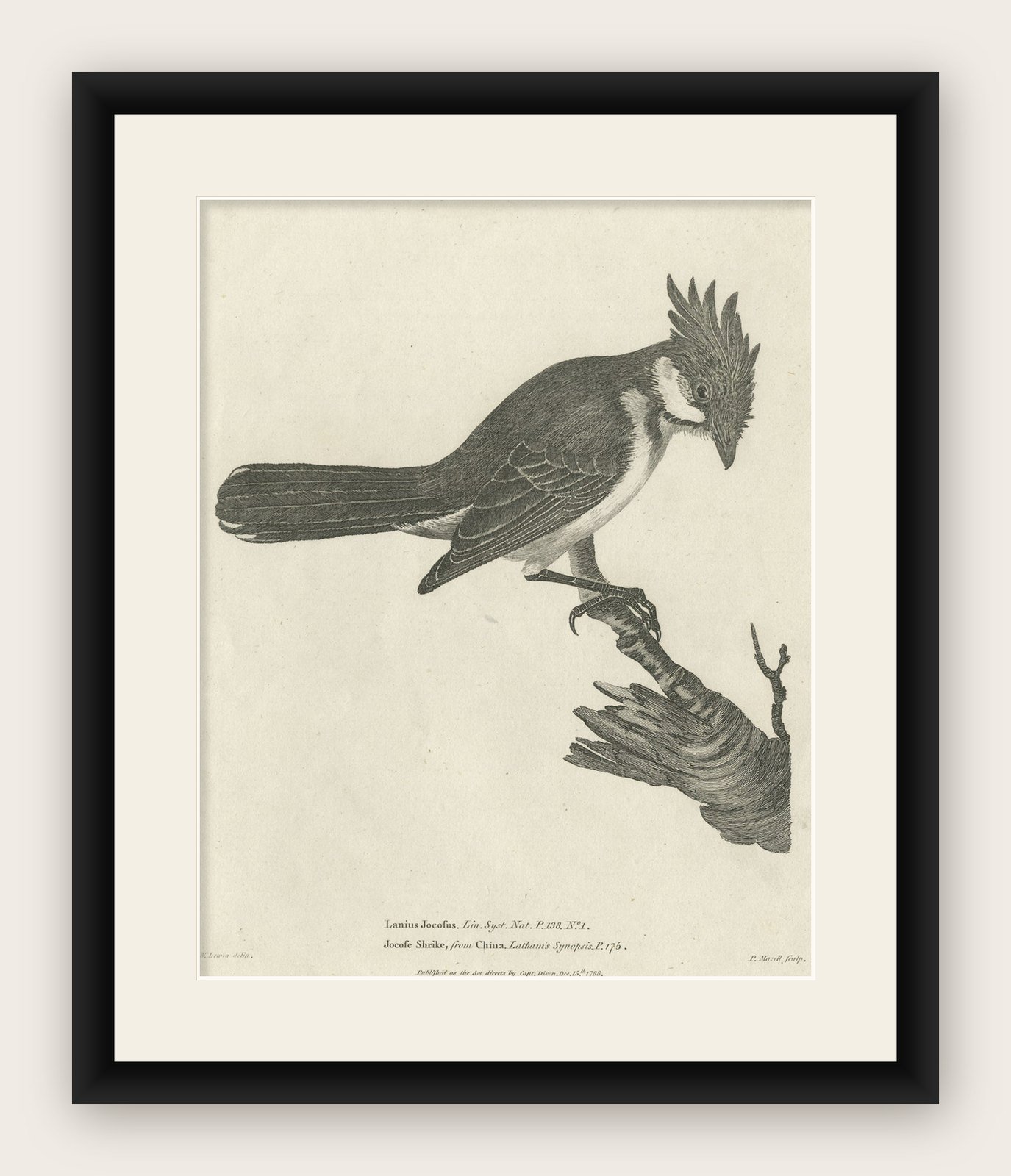
The Merry Minstrel of the Tropics: The Red-Whiskered Bulbul Engraved in 1788
€ 330
Original antique · The actual sheet photographed · Certificate of authenticity on request · Sold unframed · Worldwide shipping from € 15 (rates)
Date
1788
Sheet size
27.5 × 21.5 cm (10.8 × 8.5 in)
Condition
Good
Reference
BG-13597-36
What the condition grades mean
Excellent
Bright and clean, with no faults worth mentioning.
Very good
Only light signs of age, such as faint toning.
Good
Normal signs of age for a sheet of this period: toning, some foxing, small marks or neat old repairs.
Fair
Clear faults such as staining, tears or repairs, priced to match.
Every fault we see is written in the condition note, and the whole sheet is shown uncropped in the photos.
Condition
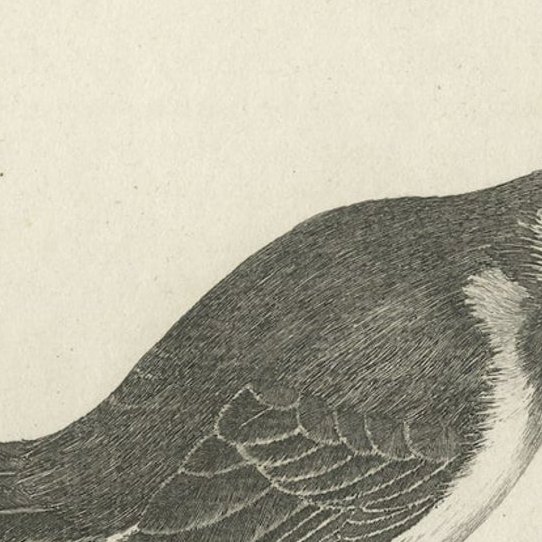
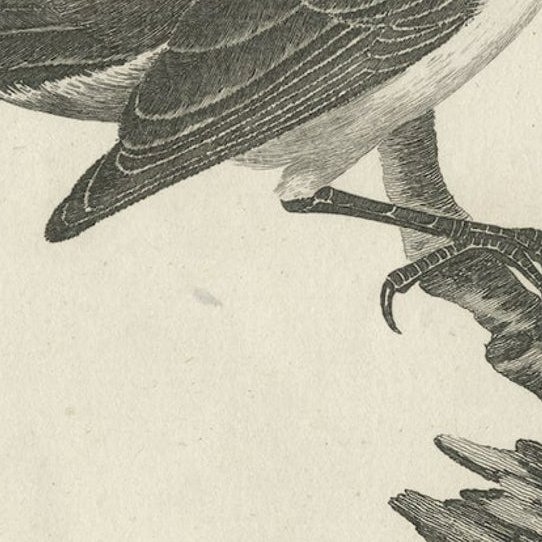
Good condition. Some minor wear due to age and handling. Study the image carefully.
About this sheet
An old engraving depicting the red-whiskered bulbul, also known by the scientific name Pycnonotus Jocosus. This bird species, native to Asia, is renowned for its distinctive appearance and has been mentioned in various scientific works dating back to the 18th century. The engraving itself seems to be from the publication "A Voyage Round the World; But More Particularly to the North-West Coast of America: Performed in 1785, 1786, 1787, and 1788, in the King George and Queen Charlotte, Captains Portlock and Dixon" by George Dixon, published in 1789.
The text in the image provides historical context about the taxonomy of the red-whiskered bulbul, including its initial description by Carl Linnaeus and the later classification changes. It is interesting to note that the bird was once classified under the genus Lanius and later reclassified to the genus Pycnonotus. The specific epithet "jocosus" suggests a playful (joke) or merry characteristic, referencing the bird's vocal nature.
It's a fine example of historical zoological illustrations, which played a crucial role in the study and documentation of wildlife before the advent of modern photography. These illustrations were vital for scientific communication and the sharing of knowledge between scholars across the world.