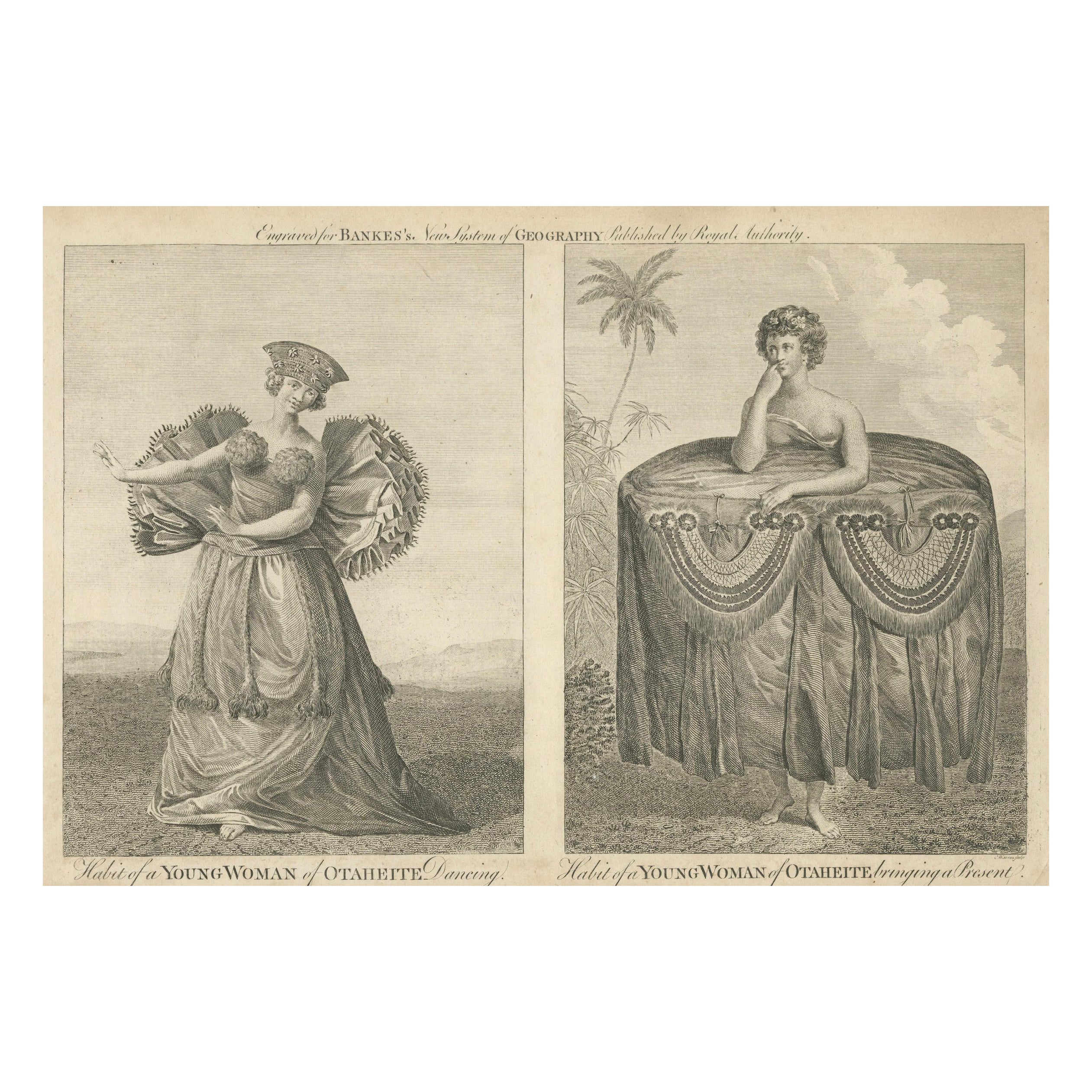
Cultural Habits of Tahitian Women: Dance and Ceremony, circa 1790
€ 160
One of a kind: this is the sheet in the photographs. Ships from Langweer, the Netherlands.
Date
1790
Sheet size
23.5 × 35.5 cm (9.3 × 14.0 in)
Reference
BG-13597-44
Condition
fair, given age. With soiling and minor water staining in the top, outside the image. General age-related toning and/or occasional minor defects from handling. Lower border cut short. Study images carefully.
About this sheet
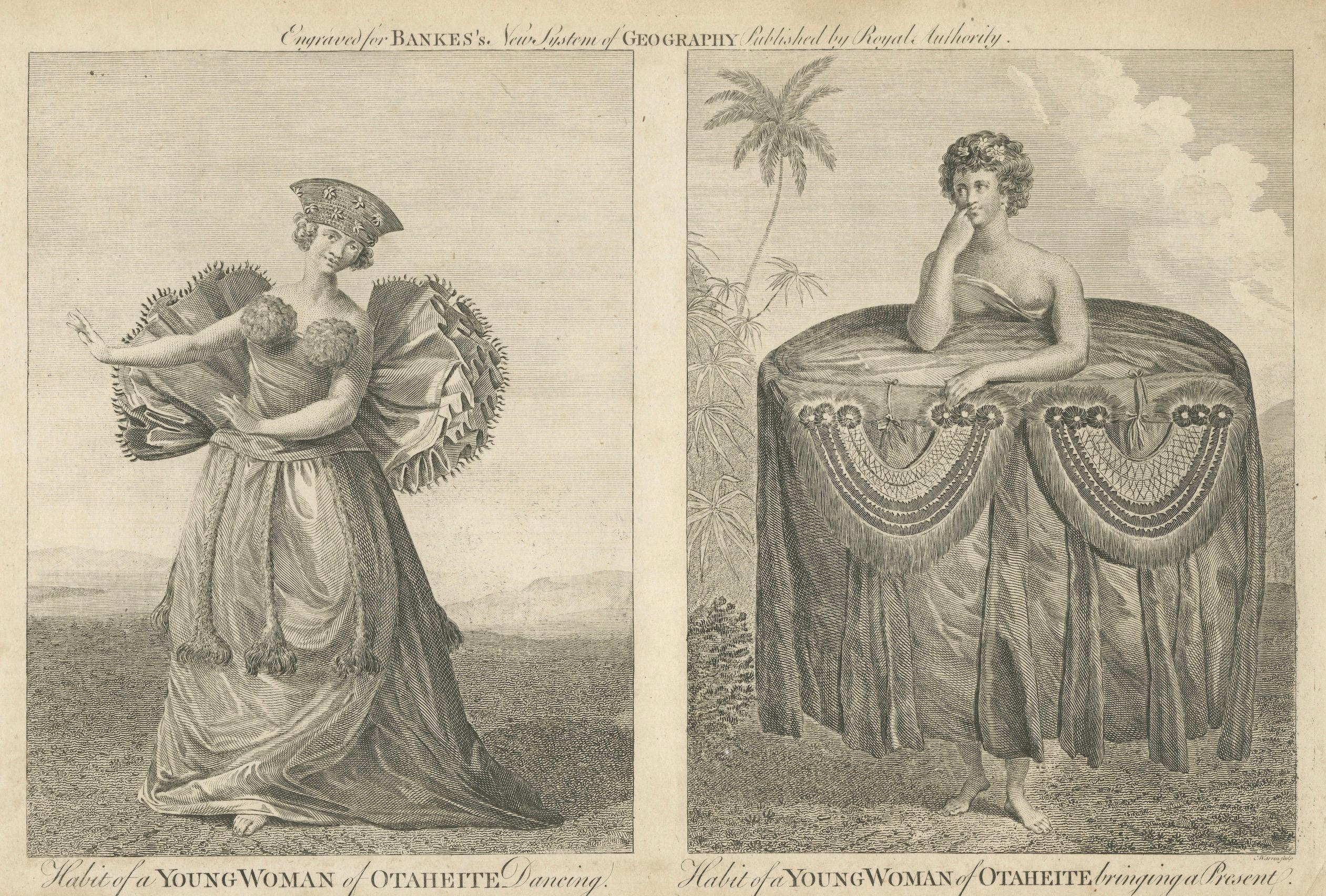
This engraving is titled "Habits of a Young Woman of Otaheite", and it was produced as part of Bankes's New System of Geography, which was a popular geographical work published in the late 18th century. The title at the top of the engraving indicates that this was "Published by Royal Authority," which suggests an official or authorized publication, often used to lend credibility to works on exotic locations.
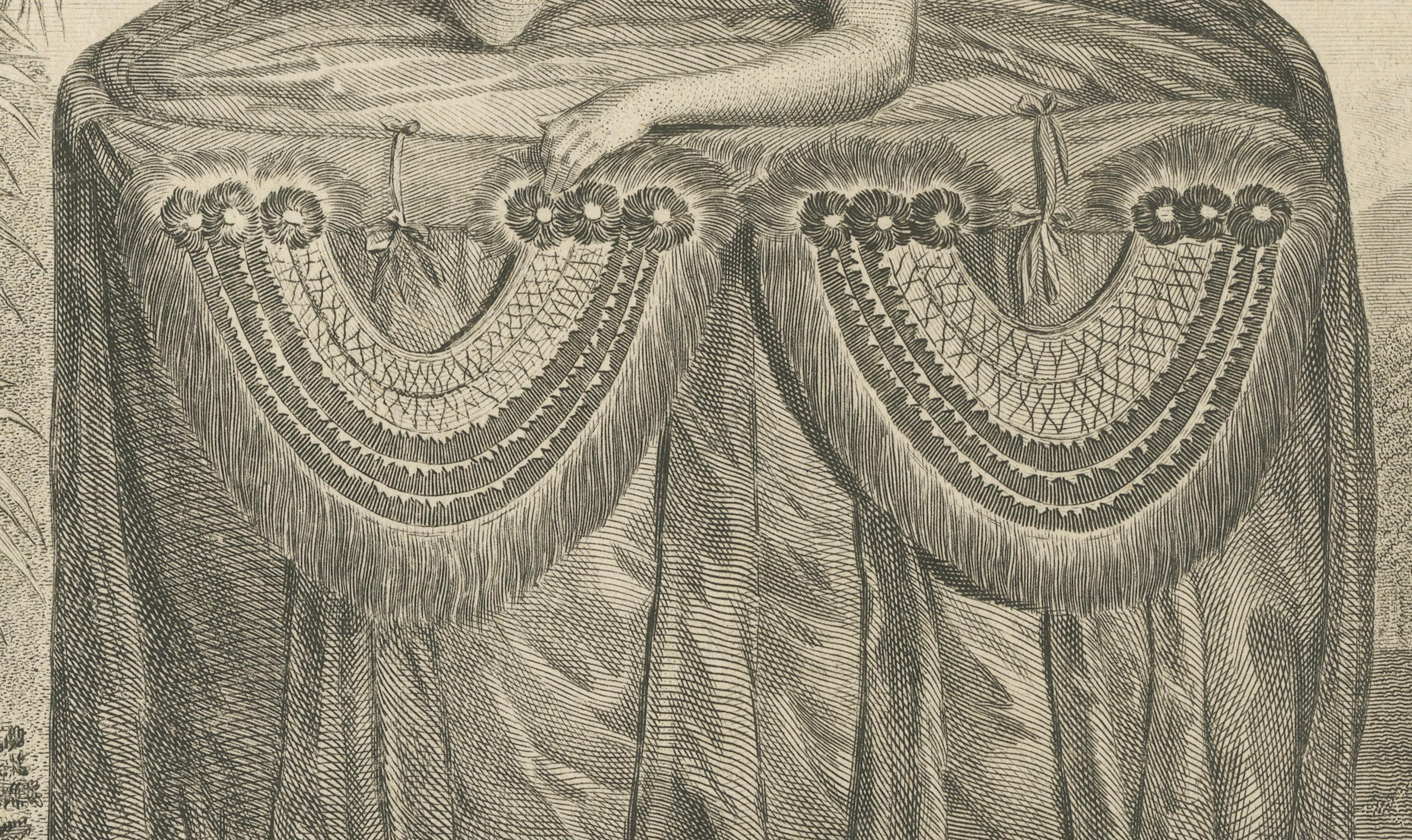
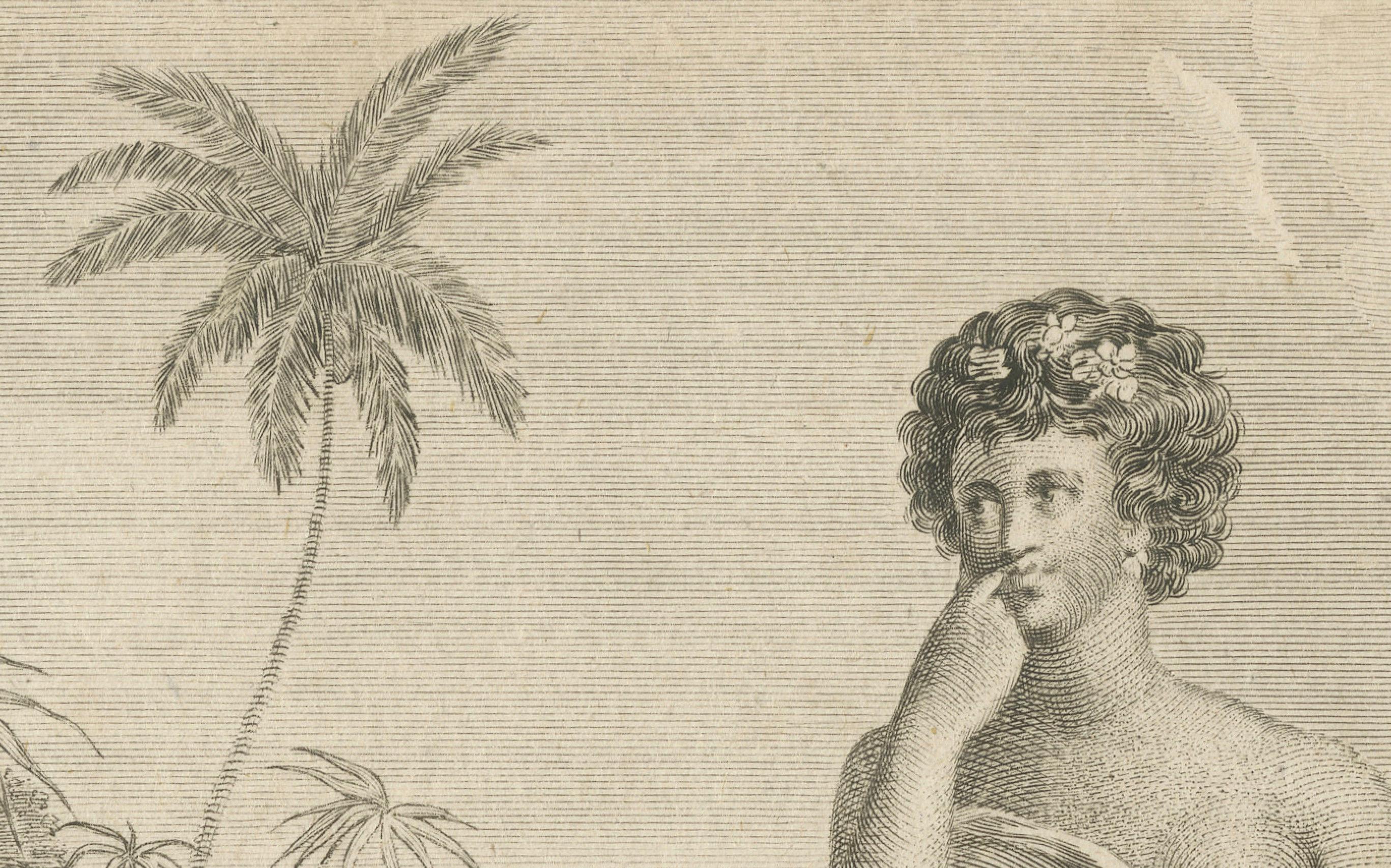
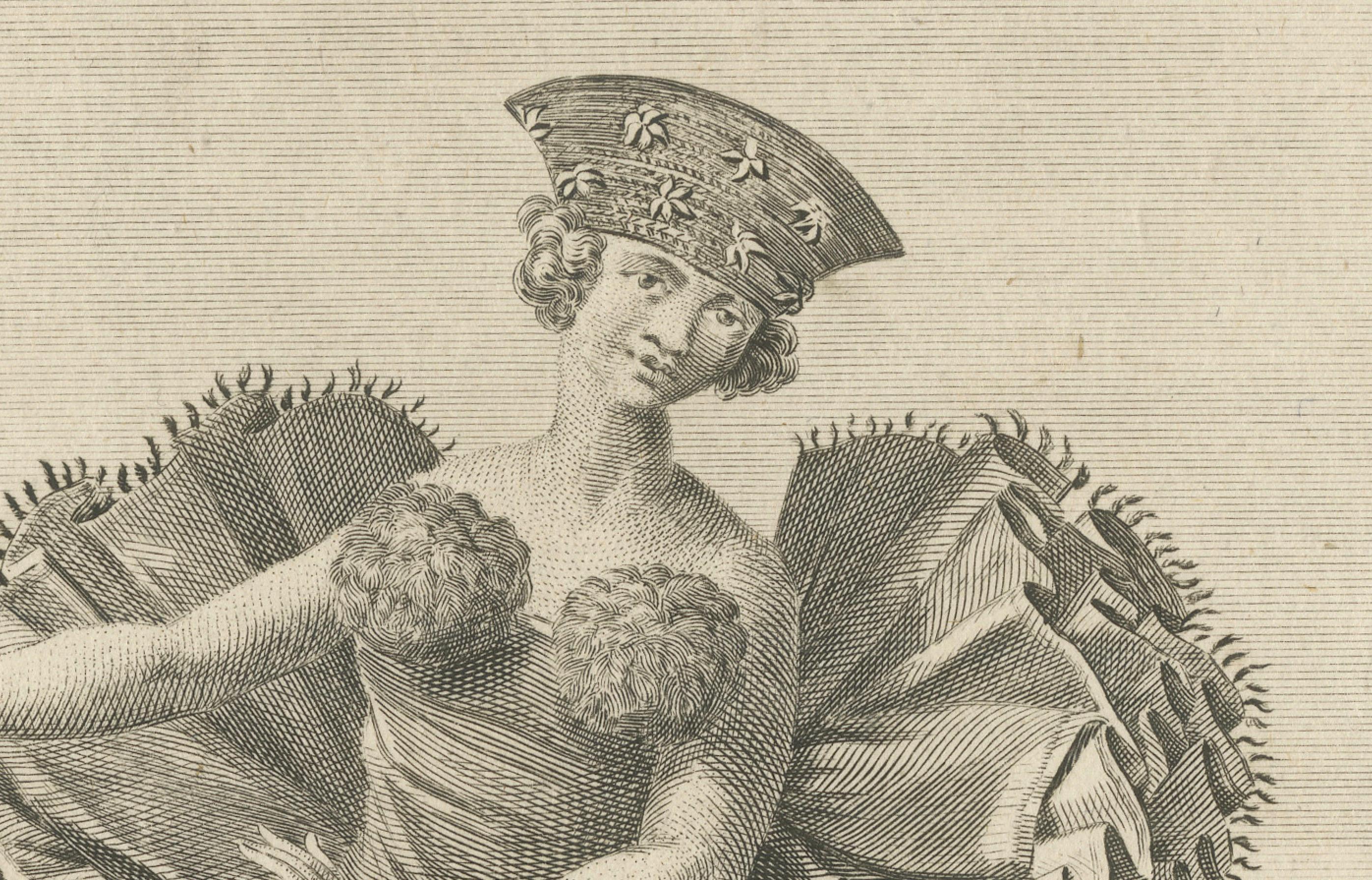
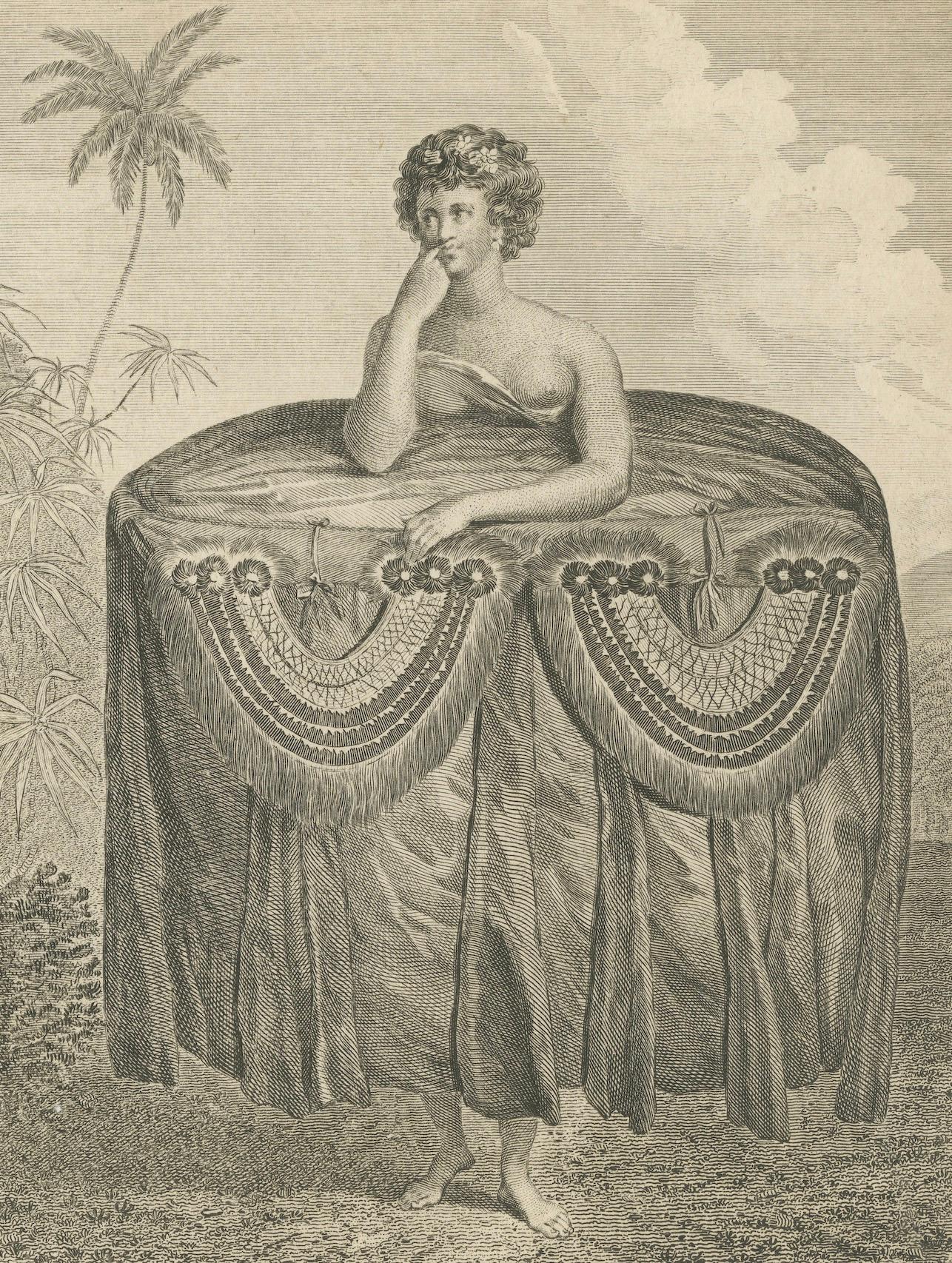
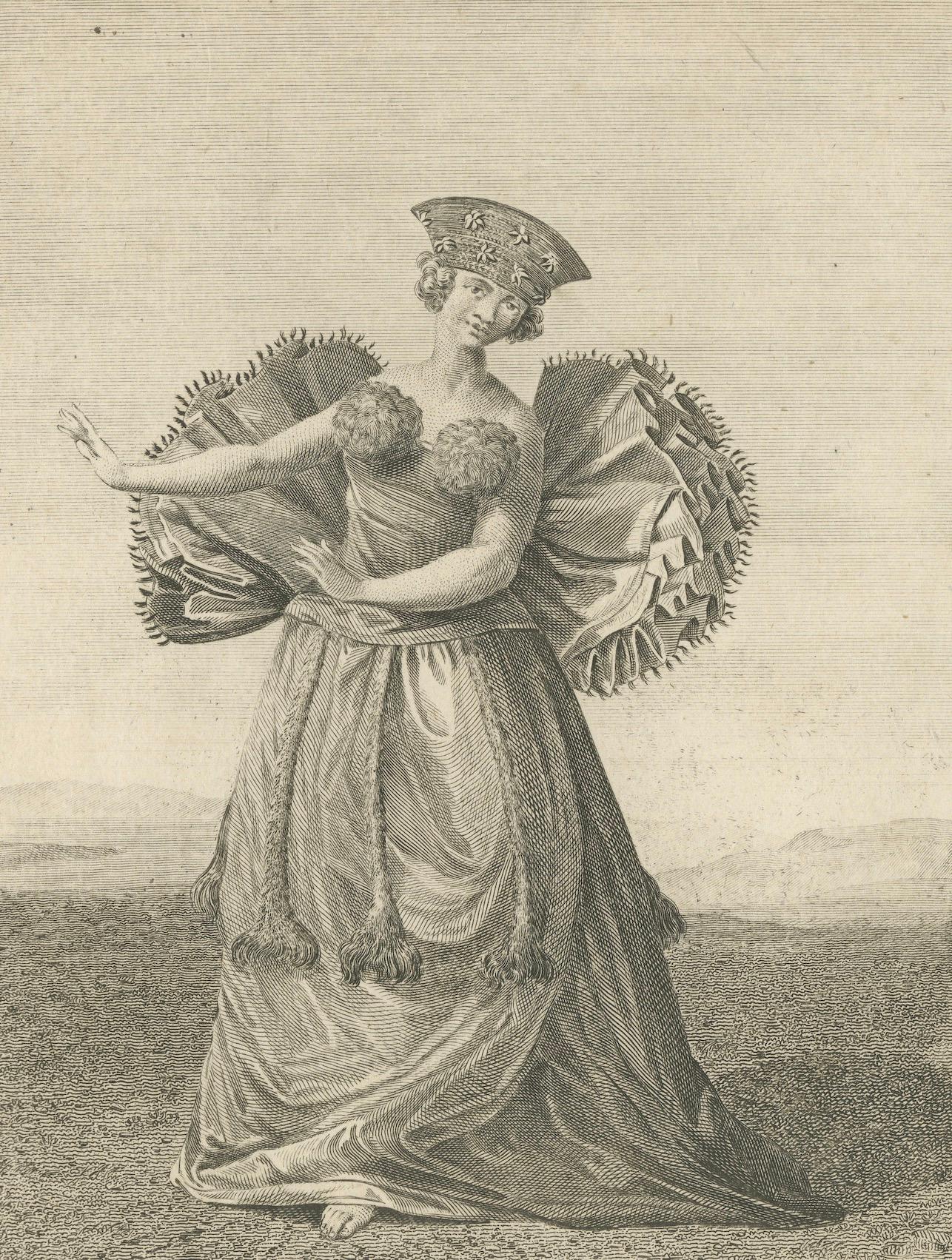
The two figures in the engraving depict women from Tahiti, referred to by the historical name "Otaheite," which was commonly used in European texts after Captain James Cook's voyages in the Pacific. The woman on the left is shown in a traditional dance costume, with voluminous skirts and elaborate accessories, while the woman on the right is depicted bringing a gift, wrapped in a heavy draped fabric. These prints reflect European curiosity about the cultures encountered during exploration.
Maker and Year: While the artist's name is not explicitly mentioned in this particular engraving, the reference to *Bankes's New System of Geography* points to one of the many illustrators or engravers who contributed to this multi-volume work, commonly published around 1787-1798.
Story and Significance: This engraving is part of the genre of ethnographic illustrations that became highly popular in Europe during the 18th century, especially following the expeditions of Captain Cook to the Pacific. These illustrations were often produced based on sketches by explorers or based on second-hand descriptions and offered a European interpretation of non-Western cultures. They served not only to educate the public about distant places but also to promote imperialist and colonial narratives by romanticizing the "exotic" and reinforcing European superiority.
Interesting Aspects: - The image demonstrates how European artists portrayed Indigenous cultures, often through an idealized or dramatized lens. - The juxtaposition of dance and gift-giving offers a glimpse into European perceptions of Tahitian ceremonial life. - The engravings' detailed costumes and accessories reveal European fascination with the "exotic" and the ways in which they often misinterpreted or exaggerated elements of foreign cultures for their audience.
The inclusion of the print in a work of geography highlights how 18th-century European works often combined scientific observation with cultural representation, though the latter was heavily filtered through Eurocentric ideas.