Siberian Traditions: The Tungoose Hunter and Tungoosi Shaman, Published in 1814
€ 240
One of a kind: this is the sheet in the photographs. Ships from Langweer, the Netherlands.
Date
1814
Sheet size
24 × 17 cm (9.4 × 6.7 in)
Condition
Good
Reference
BG-13605-4-42 & BG-13605-4-58
Condition
Very good, given age. General age-related toning and/or occasional minor defects from handling. Right edge rough, but leaving enough space for proper framing. Please study scan carefully.
About this sheet
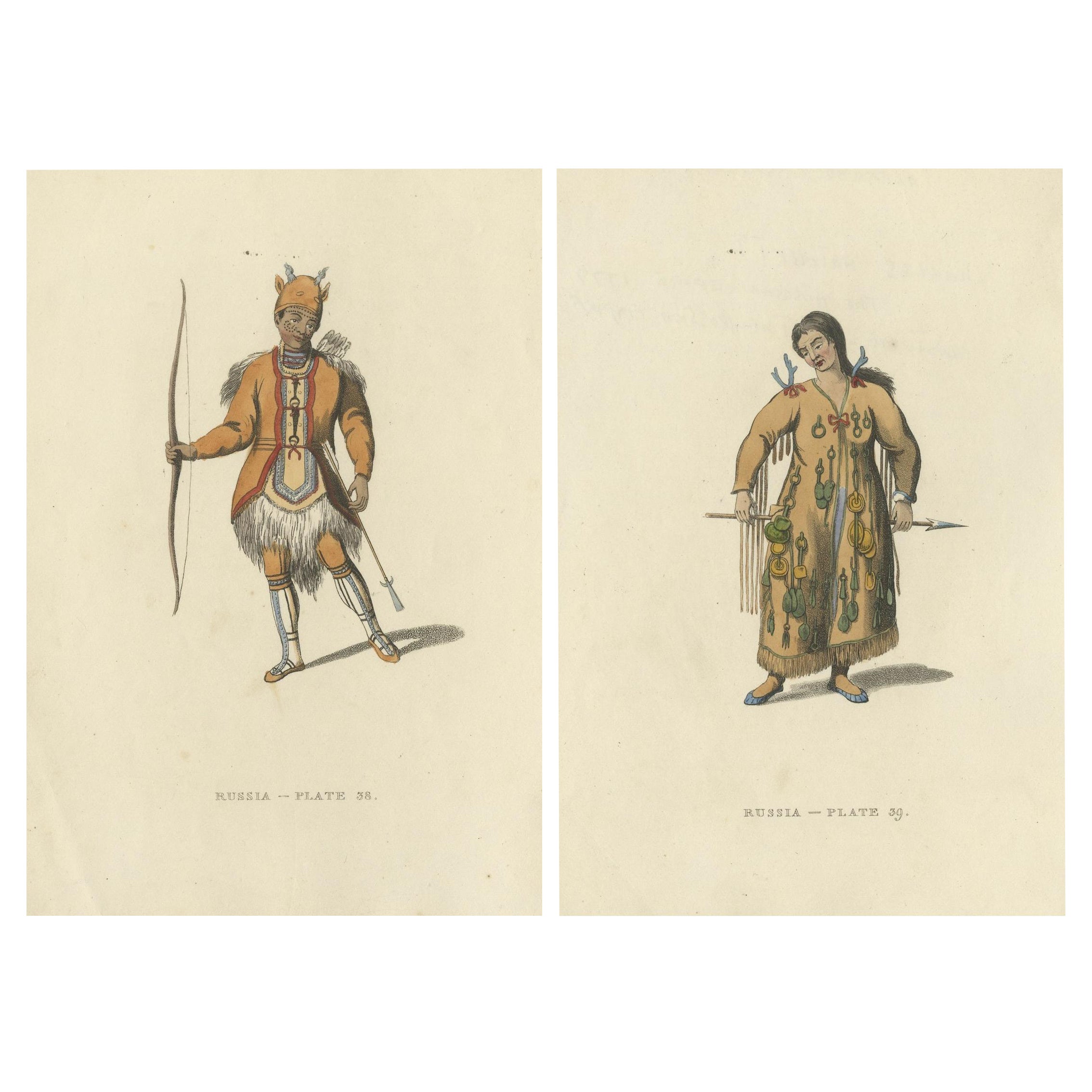
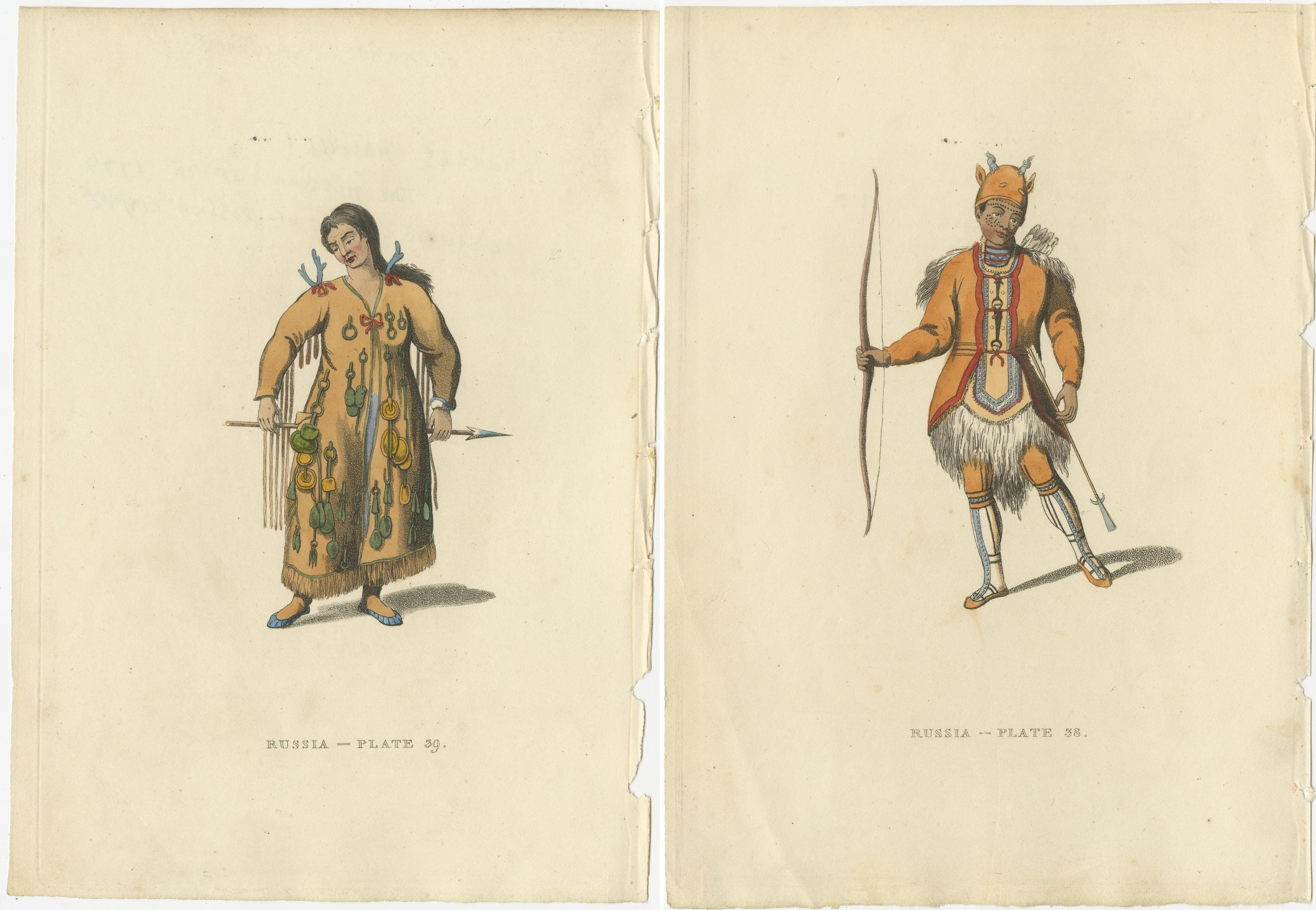
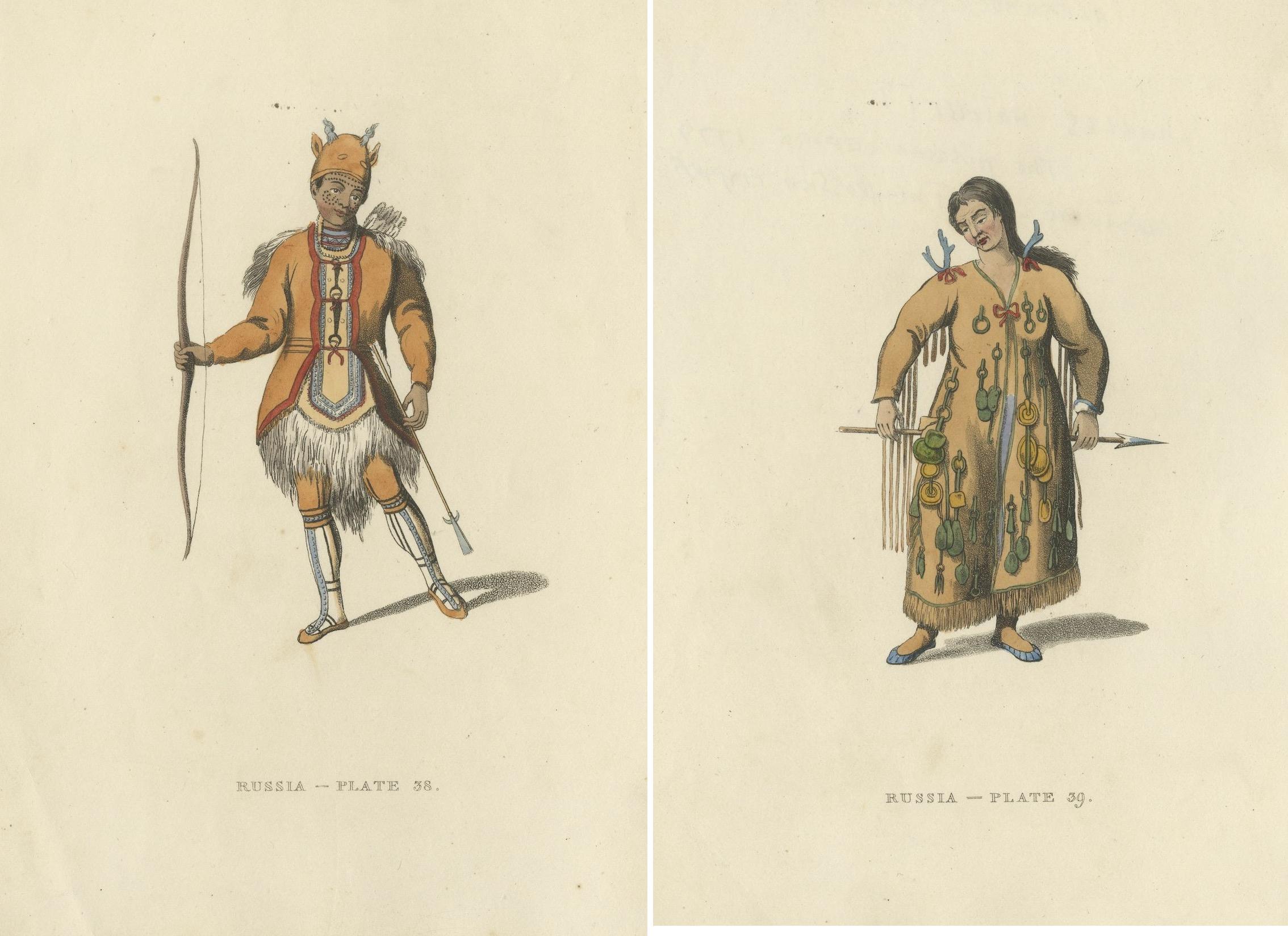
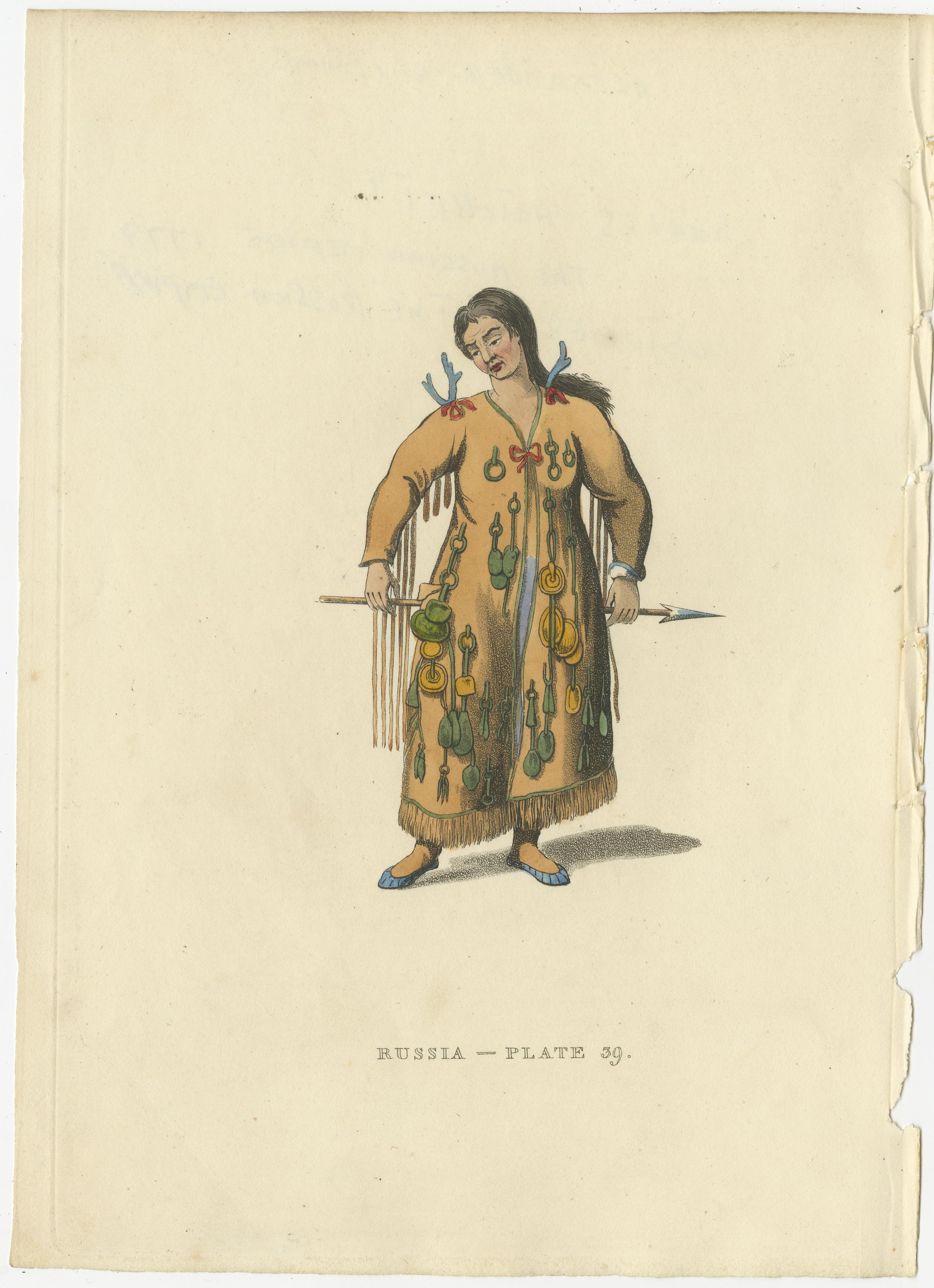
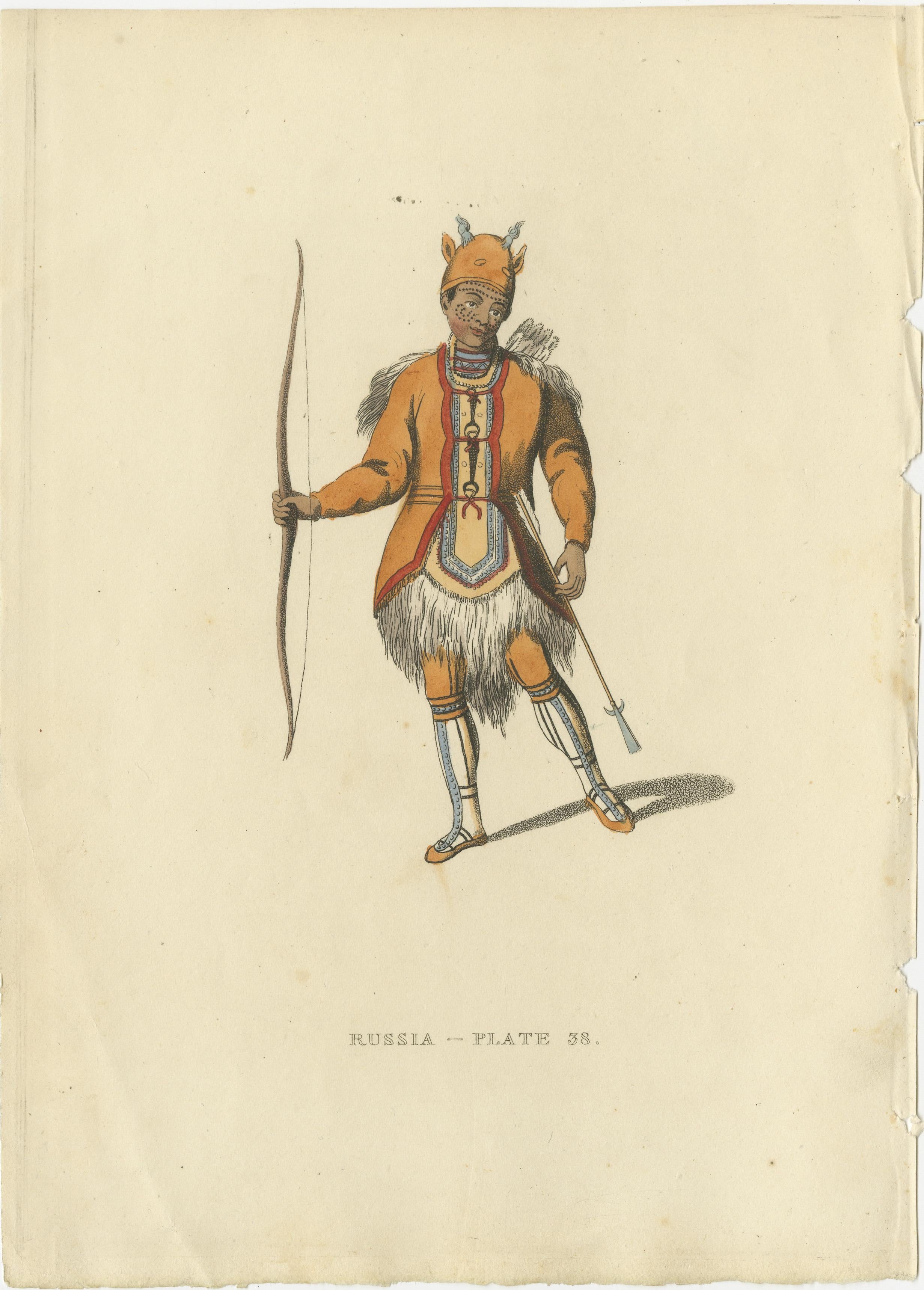
The two engravings vividly depict members of the Tungusic peoples of Siberia, known for their distinct cultural practices and attire.
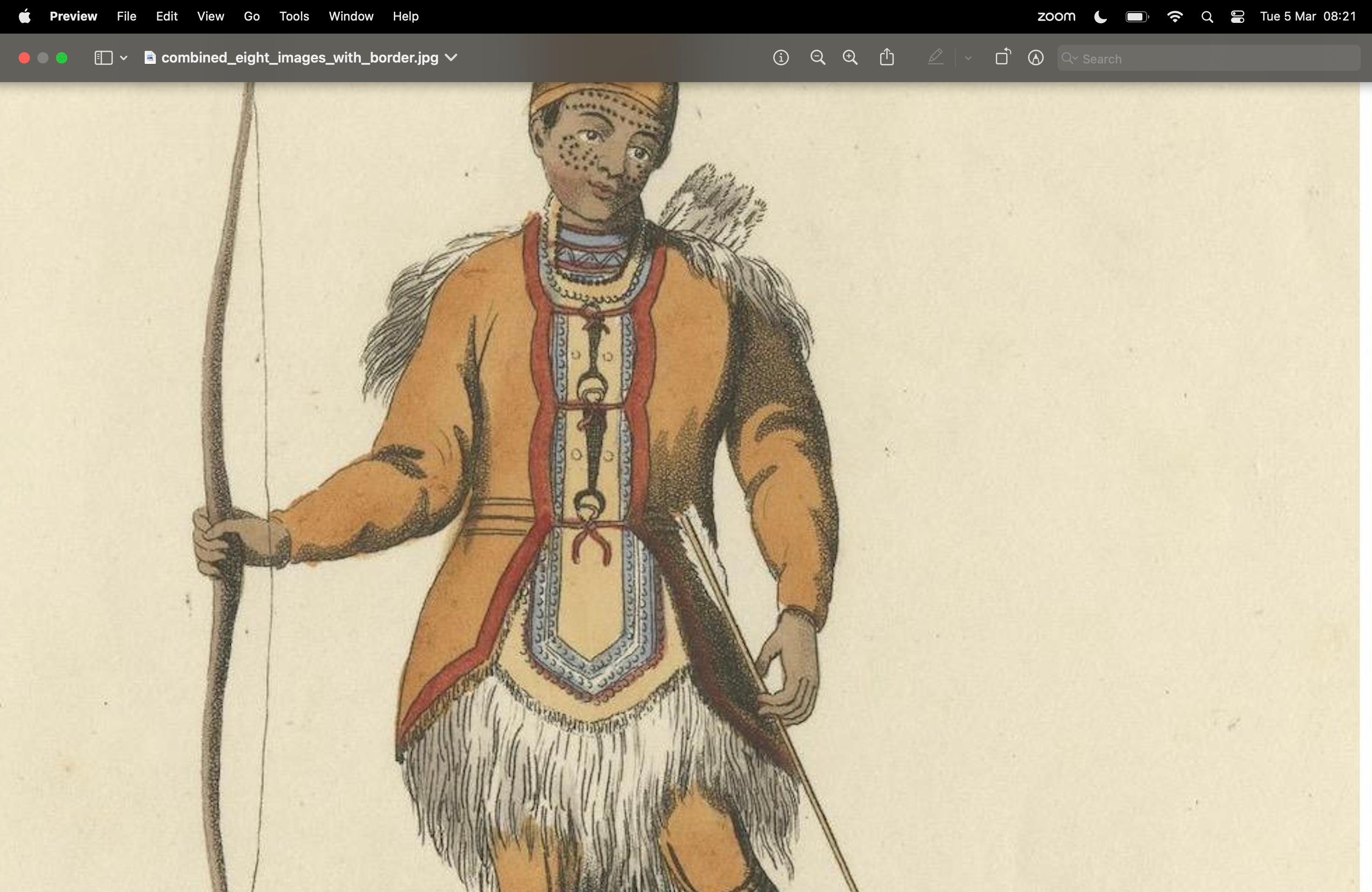
1. The "Tungoose" engraving shows an individual in traditional dress, equipped for the demanding environment of Siberia. He is wearing a thick robe with fur trim, which is essential for insulation against the cold. The robe is decorated with elaborate symbols and patterns, possibly signifying his tribal identity or social status within the group. The accessories and weaponry, including the bow, suggest that he is a hunter, integral to the subsistence lifestyle of his people. His footwear and the leggings are practical for traversing the rugged landscape.
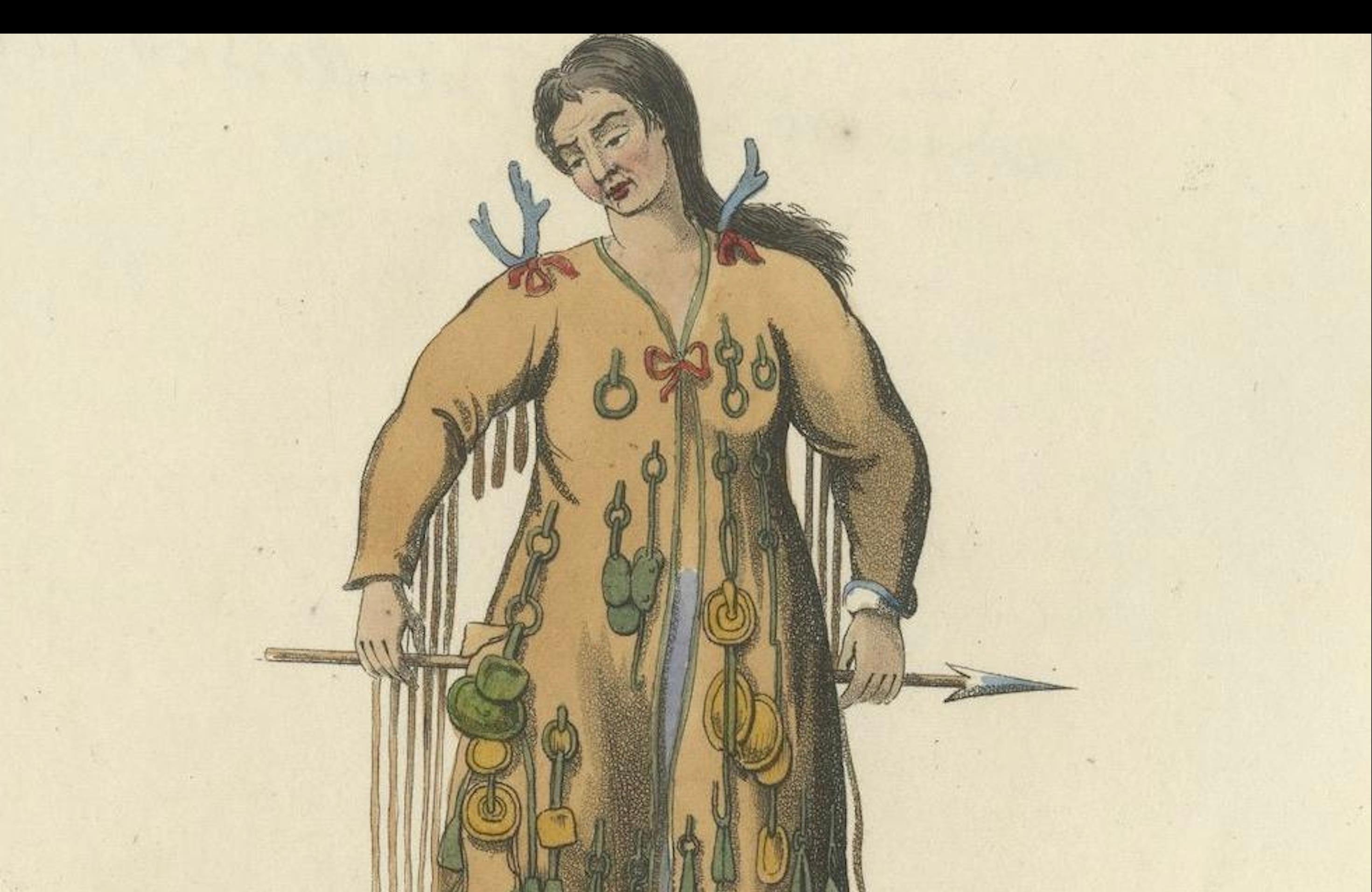
2. The "Shaman of the Tungoosi" portrays a figure of significant spiritual importance within his or her community. The shaman's dress is heavy with symbolic ornamentation, featuring what are likely to be charms and items used in rituals and ceremonies. His or her headgear is particularly notable, often an emblem of his connection to the spiritual realm and his role as an intermediary between the physical and spirit worlds. The shaman's facial expression and posture suggest a moment of ritualistic importance or a trance-like state, common in shamanistic practices.
These engravings by William Alexander are more than just artistic renderings; they are ethnographic records that provide deep insights into the lives and customs of the Tungusic peoples in the early 19th century. The attention to detail in the clothing, accessories, and the depictions of the individuals themselves offer a window into their world—one where clothing and personal adornment serve functional, social, and spiritual purposes. These images, part of Alexander's efforts to document the diversity of Russian imperial subjects, are a valuable resource for understanding the rich tapestry of cultural identities present at the time.
Source: The publication "Picturesque Representations of the Dress and Manners of the Russians," which includes sixty-four colored engravings with descriptions. The writer of this work is William Alexander, and it was published by John Murray in 1814.