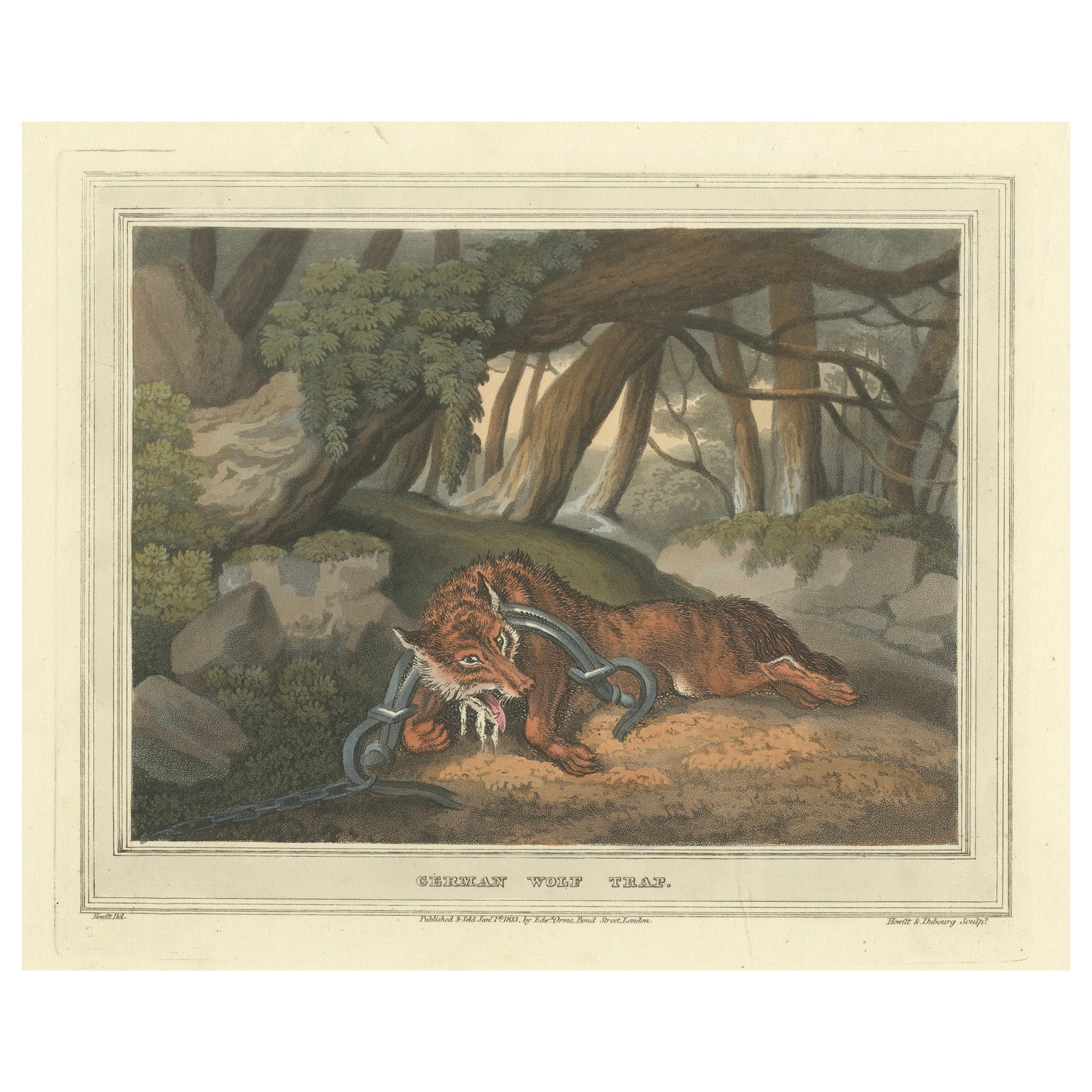
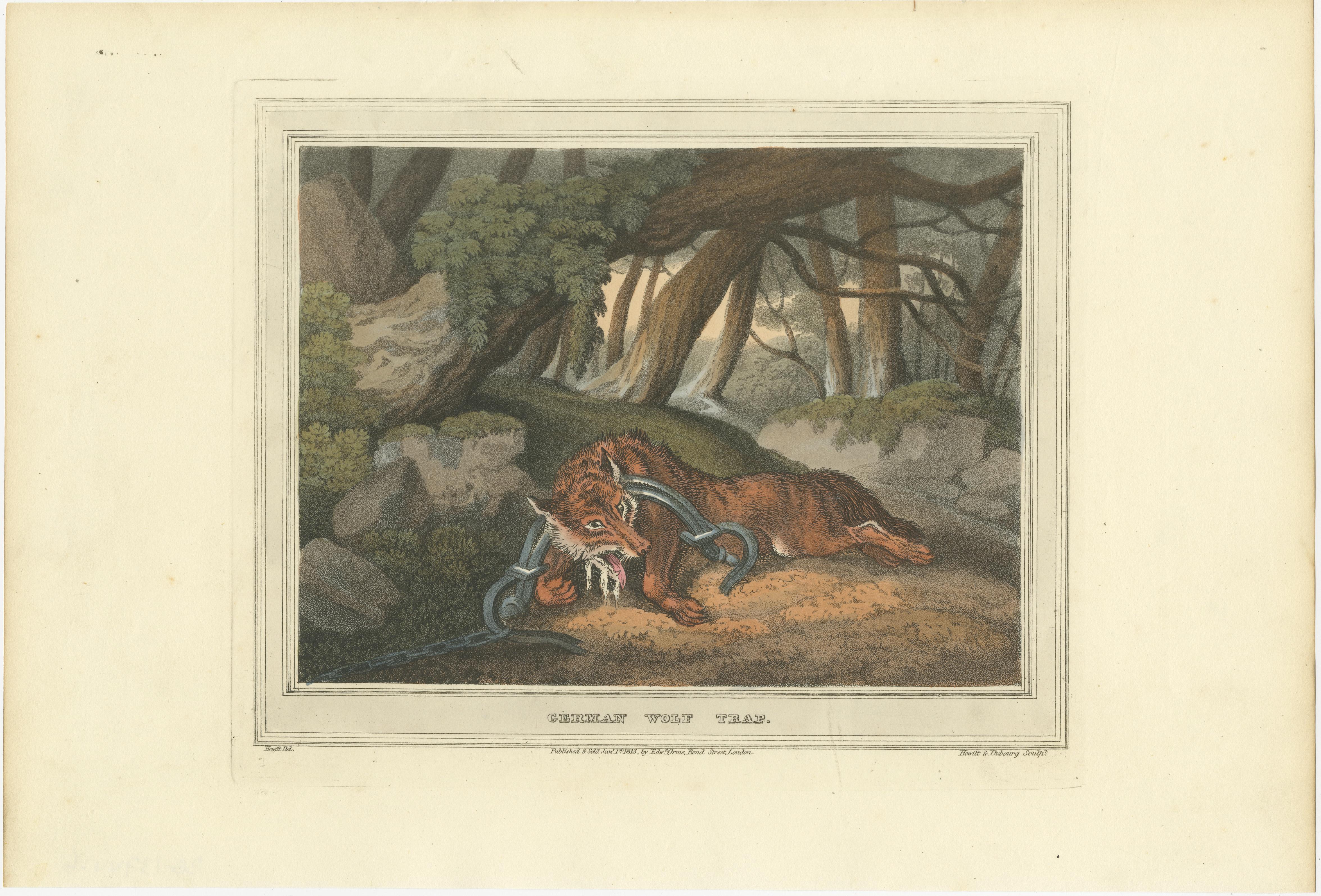
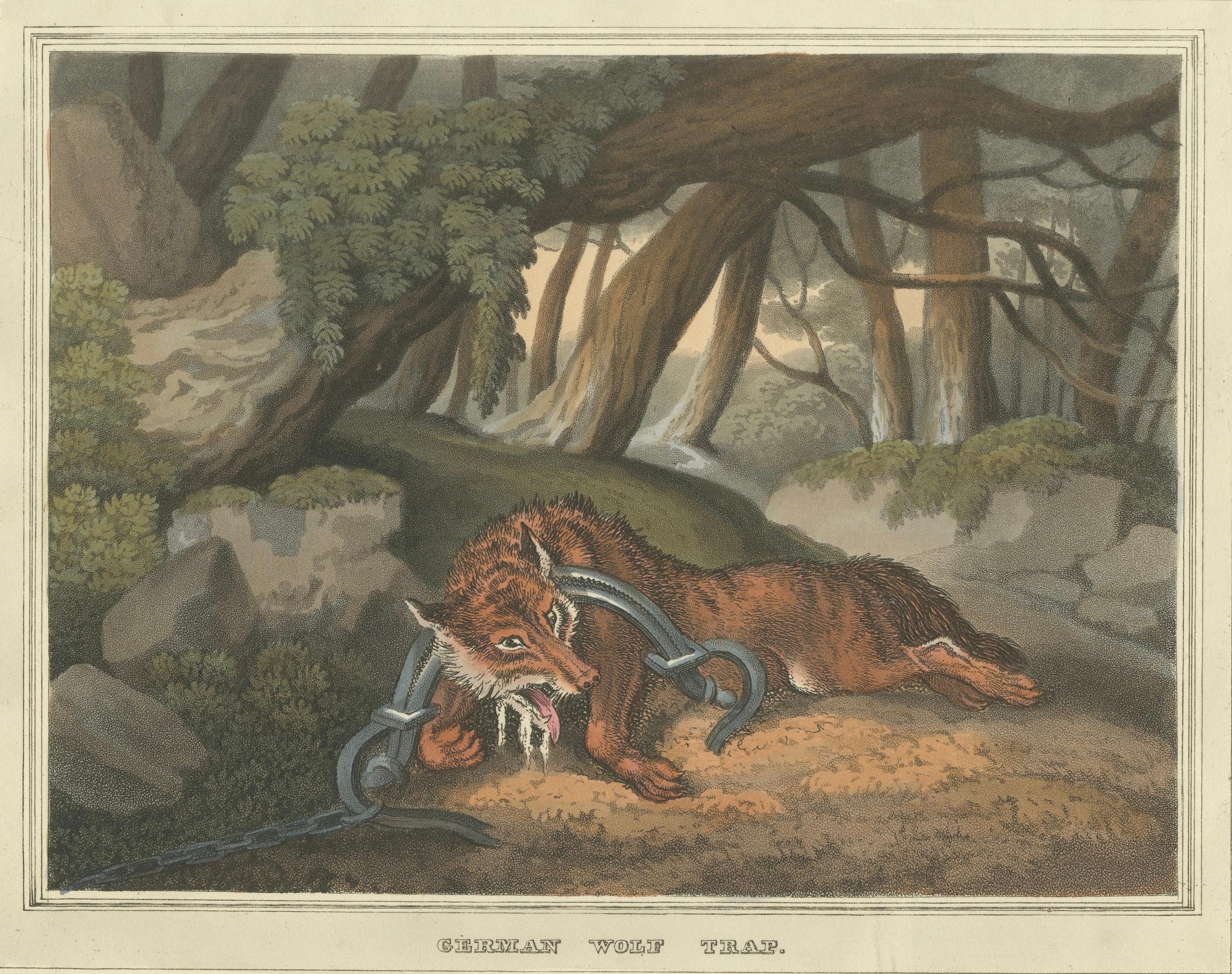
Foreign Field Sports: German Wolf Trap Aquatint by Dubourg & Howitt, 1813
€ 240
One of a kind: this is the sheet in the photographs. Ships from Langweer, the Netherlands.
Date
1813
Sheet size
22.2 × 33 cm (8.7 × 13.0 in)
Reference
BG-13740-6
Condition
In good condition given age. General age related toning due to age and handling. Please study scan carefully.
About this sheet
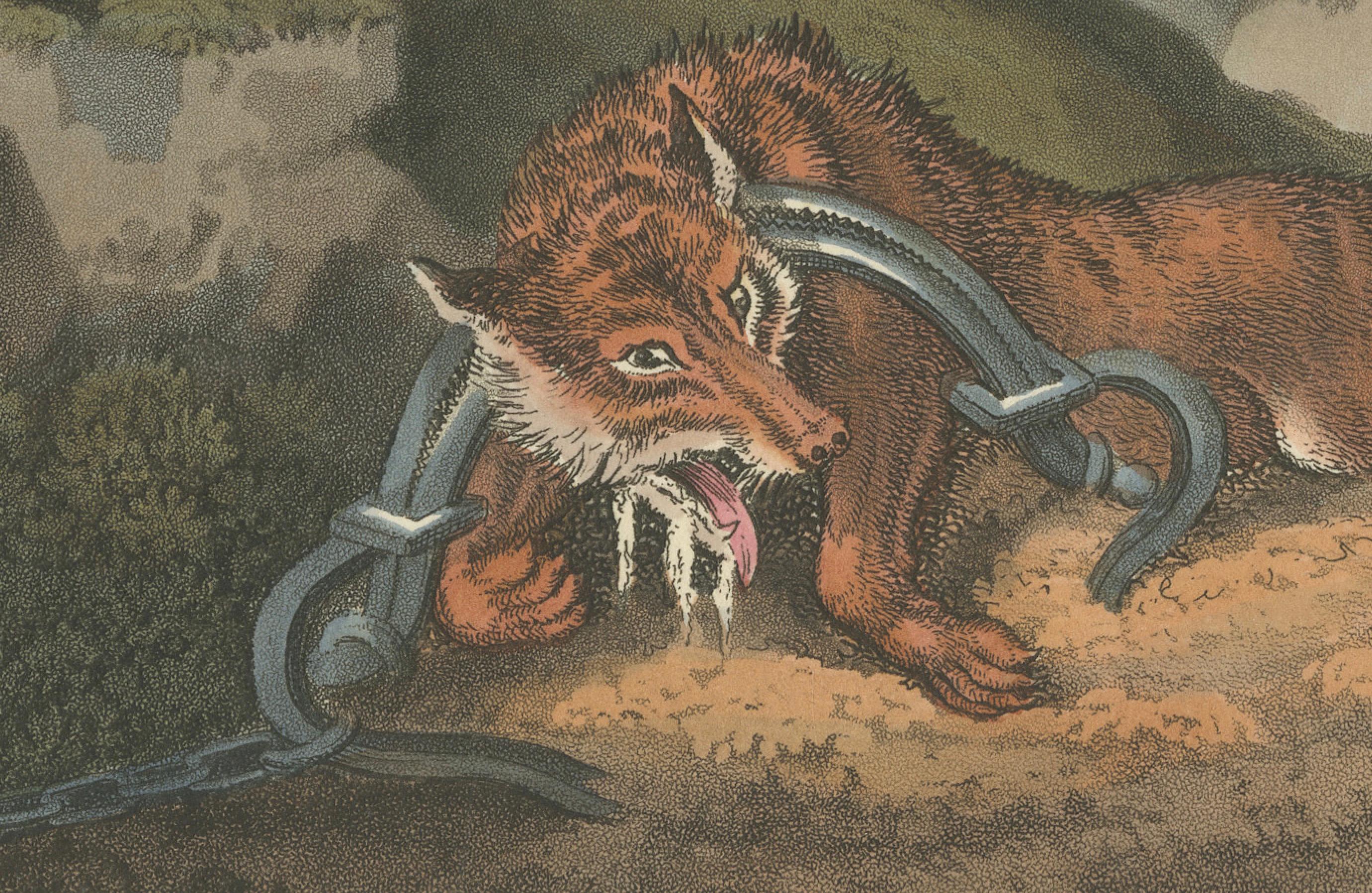
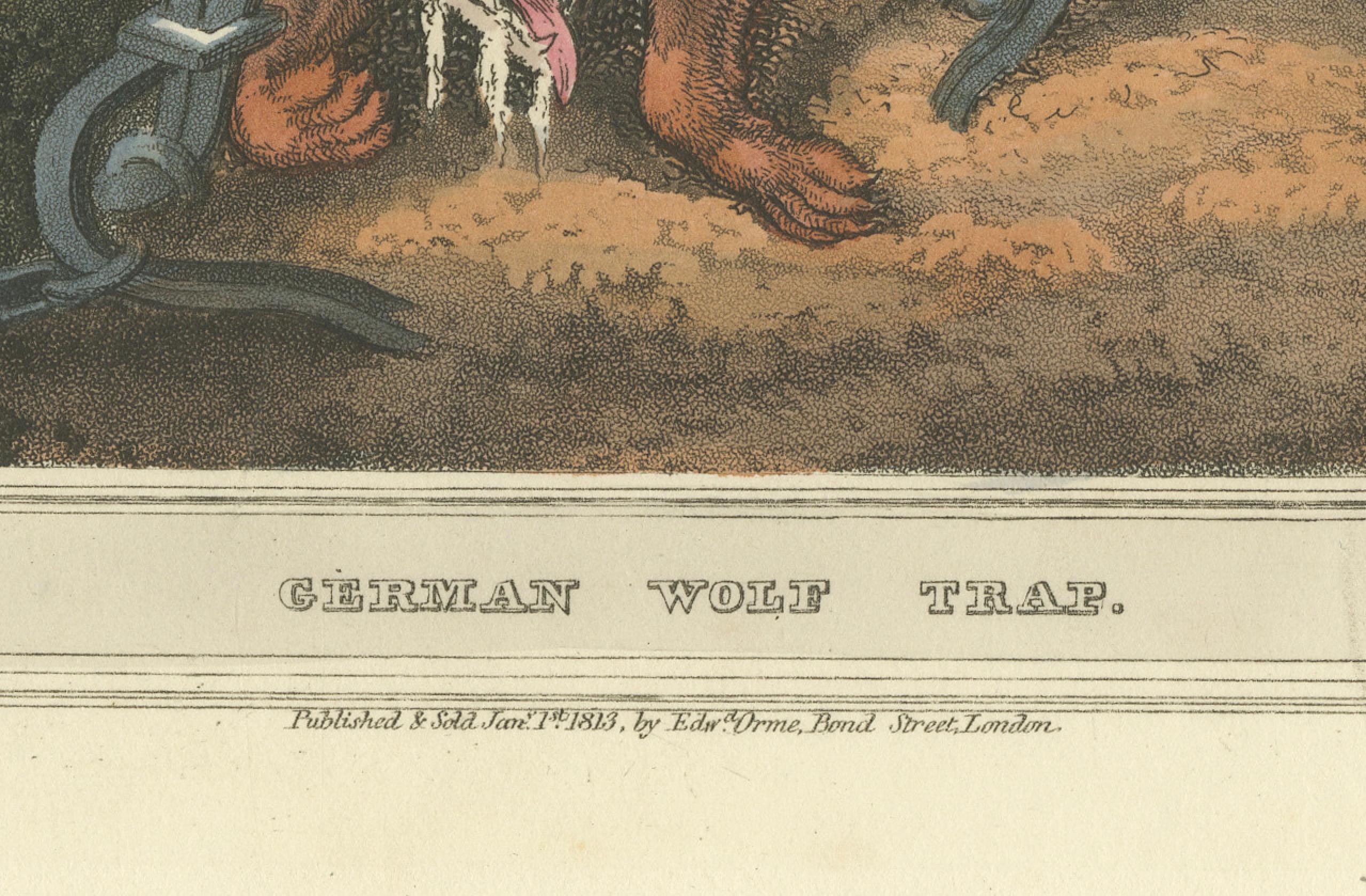
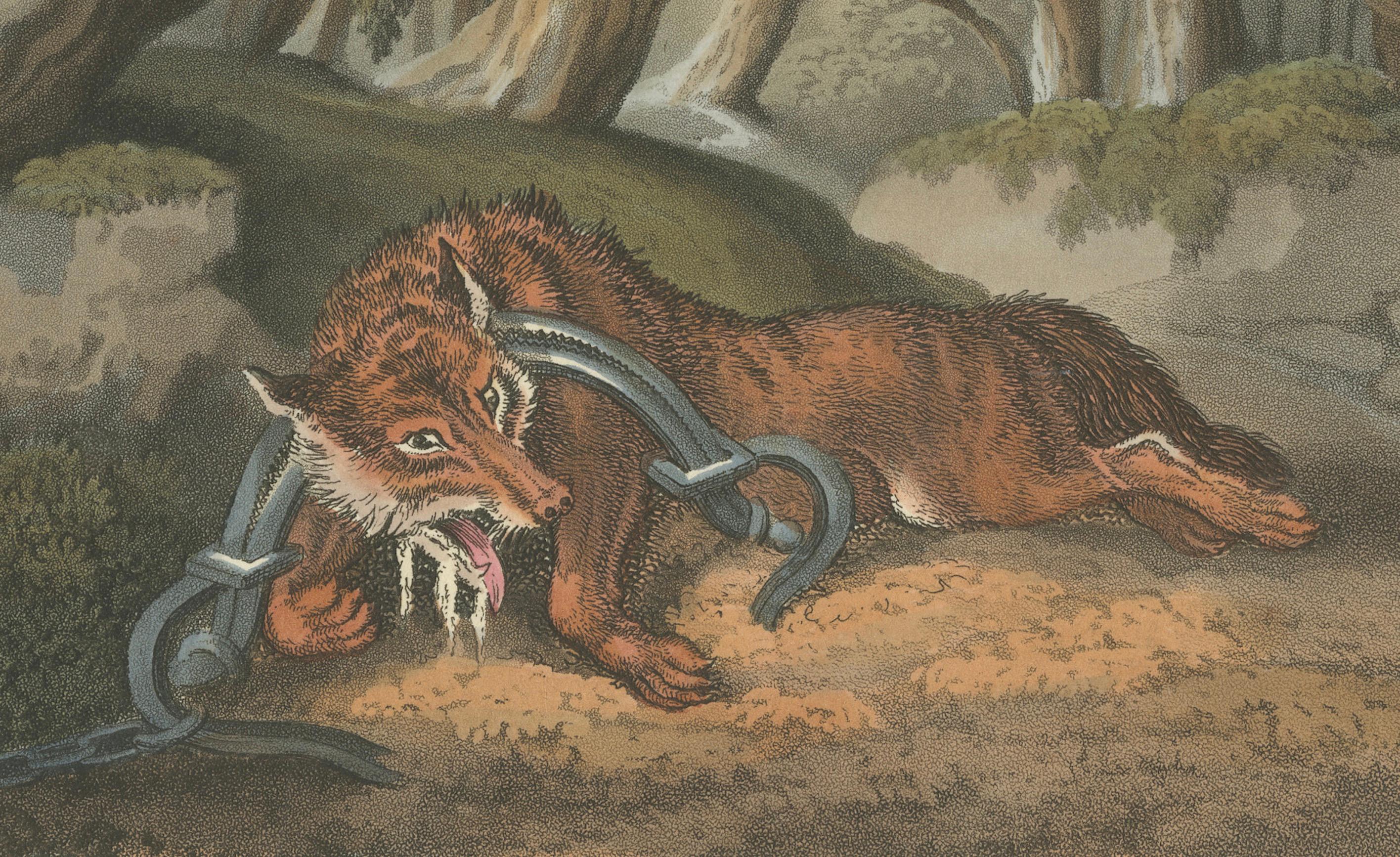
This print titled "German Wolf Trap" depicts a dramatic scene of a wolf caught in a trap within a dense forest. The wolf, shown with a look of distress and exhaustion, has its leg ensnared in a heavy metal trap attached to a chain. The forest background is detailed with large trees, rocks, and underbrush, creating a dark and ominous atmosphere. The wolf's fur is rendered in rich brown tones, and the hand-coloring of the aquatint adds to the vividness of the scene. The title at the bottom confirms the setting and purpose of the illustration.
Countries Where This Happened Historically and Currently:
Wolf trapping has a long history in Europe, particularly in regions where wolves were seen as a threat to livestock and human settlements. Countries where wolf trapping was common include:
1. **Germany**: The scene depicted in the print. 2. **France**: Particularly in rural and forested areas. 3. **Poland**: Known for its vast forests and wolf populations. 4. **Russia**: Extensive trapping practices in Siberia and other regions. 5. **Scandinavia**: Norway, Sweden, and Finland.
**Contemporary Context:** Today, wolf trapping is highly regulated and often banned in many countries due to conservation efforts to protect wolf populations. However, in some regions, controlled trapping may still occur under strict regulations to manage wolf populations and protect livestock:
1. **United States**: In certain states where wolves are not protected under the Endangered Species Act. 2. **Canada**: Particularly in areas where wolf populations are managed. 3. **Russia**: Some regions still practice controlled trapping. 4. **Certain parts of Europe**: In countries like Finland and Norway, where controlled measures are taken.
These contemporary practices are subject to conservation laws and international agreements aimed at maintaining sustainable wildlife populations.