About this sheet
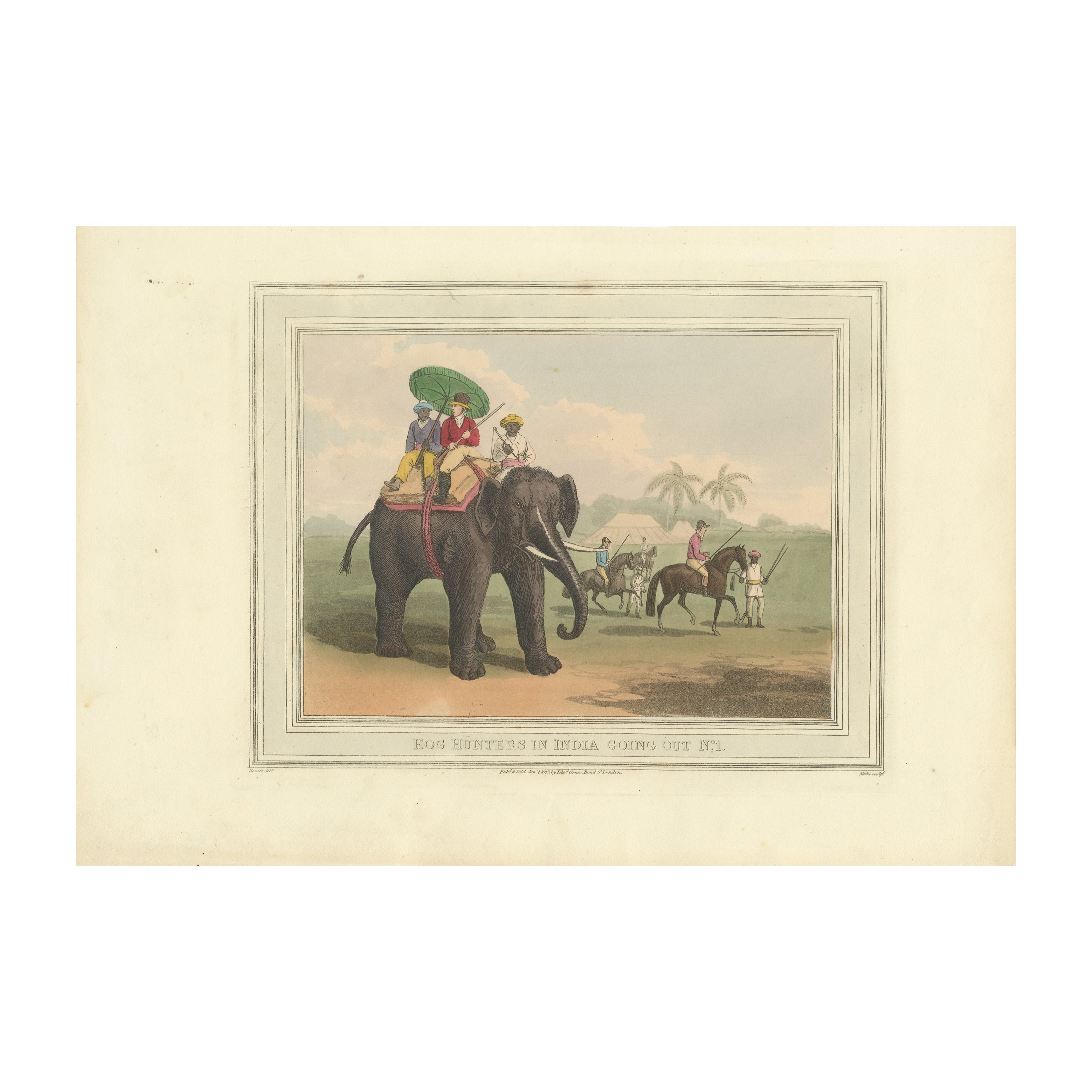
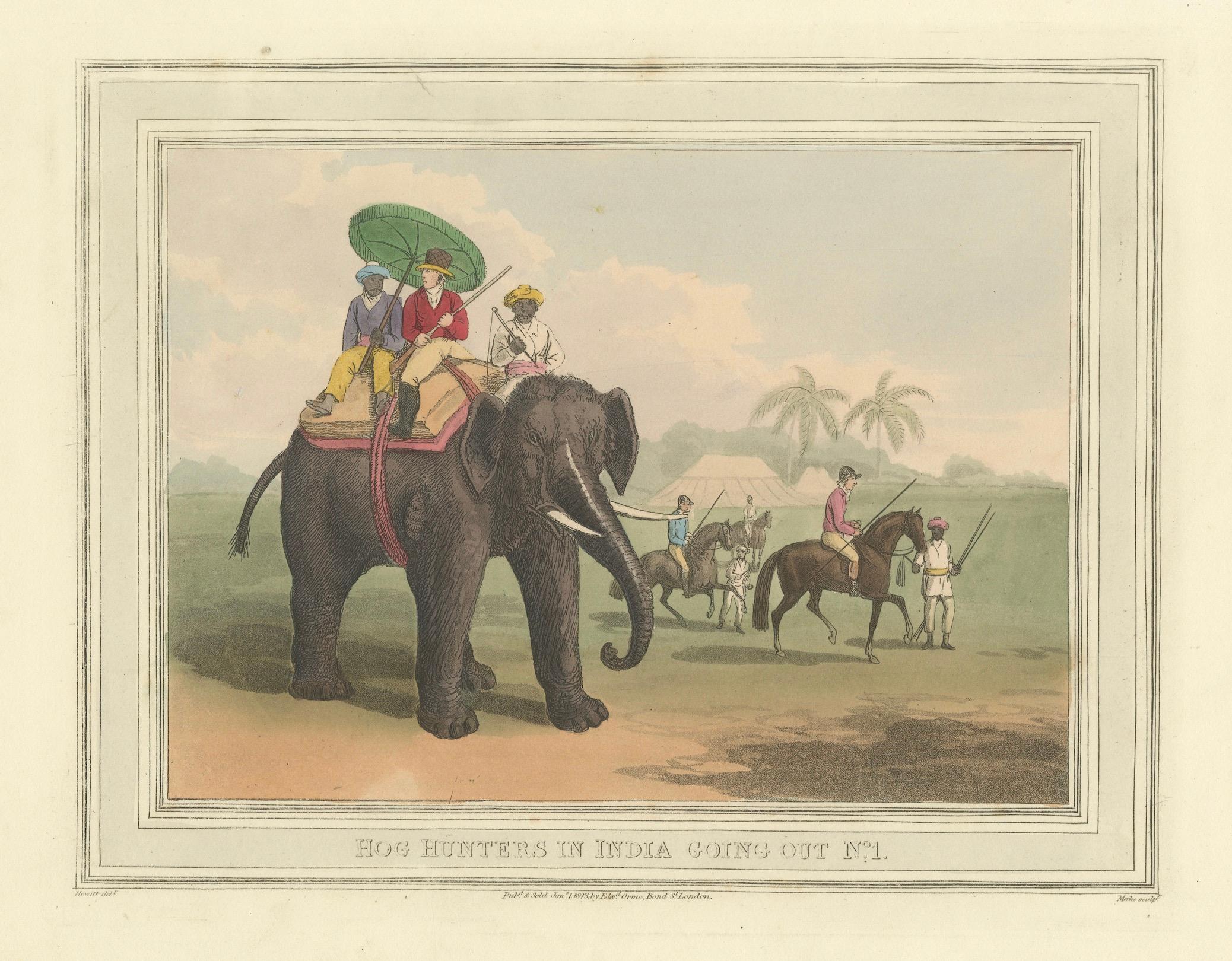
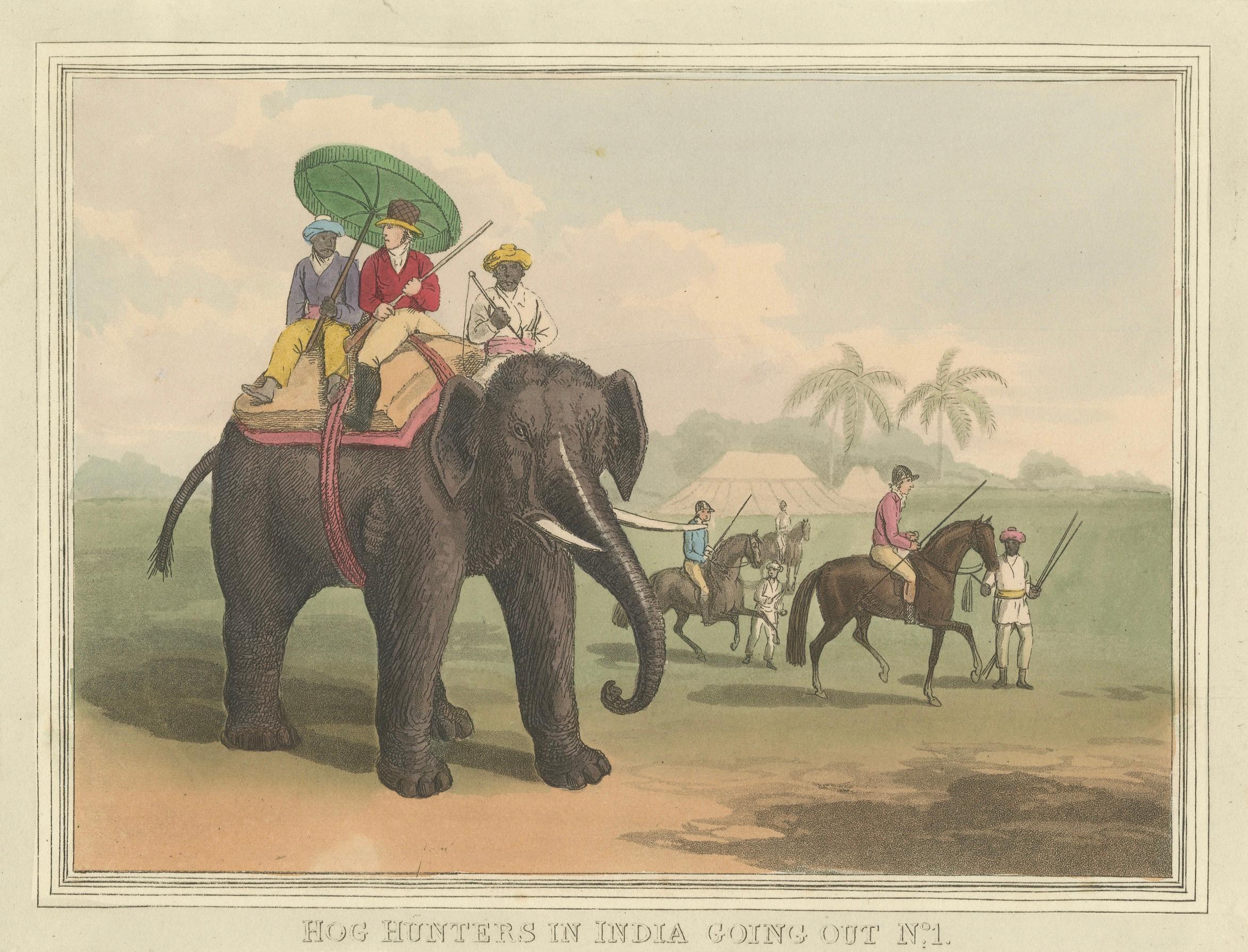
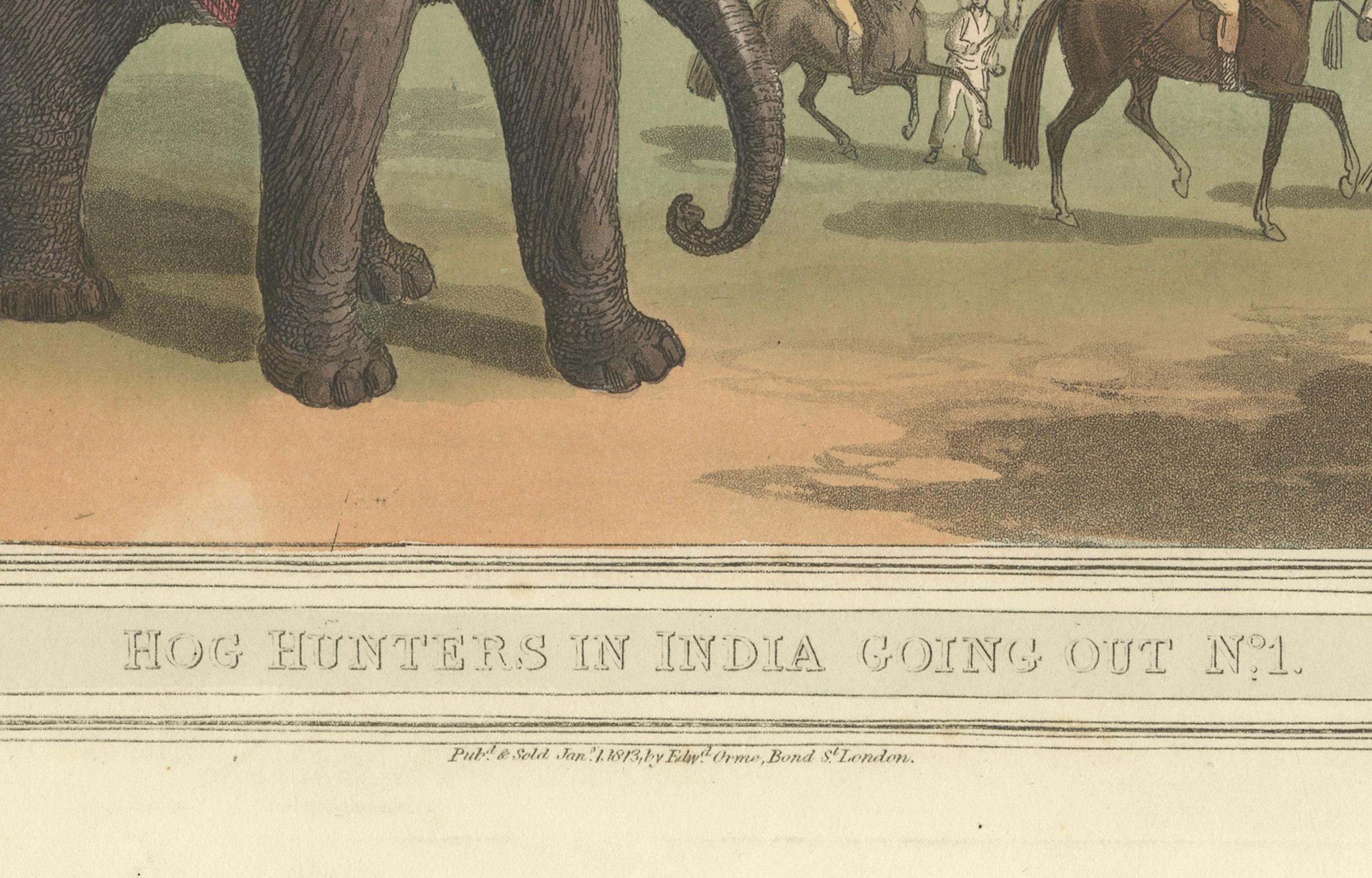
"London, E. Orme, (1813). Hand-Coloured Aquatint 'Hog Hunters in India Going Out No.1' by Dubourg, Merke & Howitt, from 'Foreign Field Sports'"
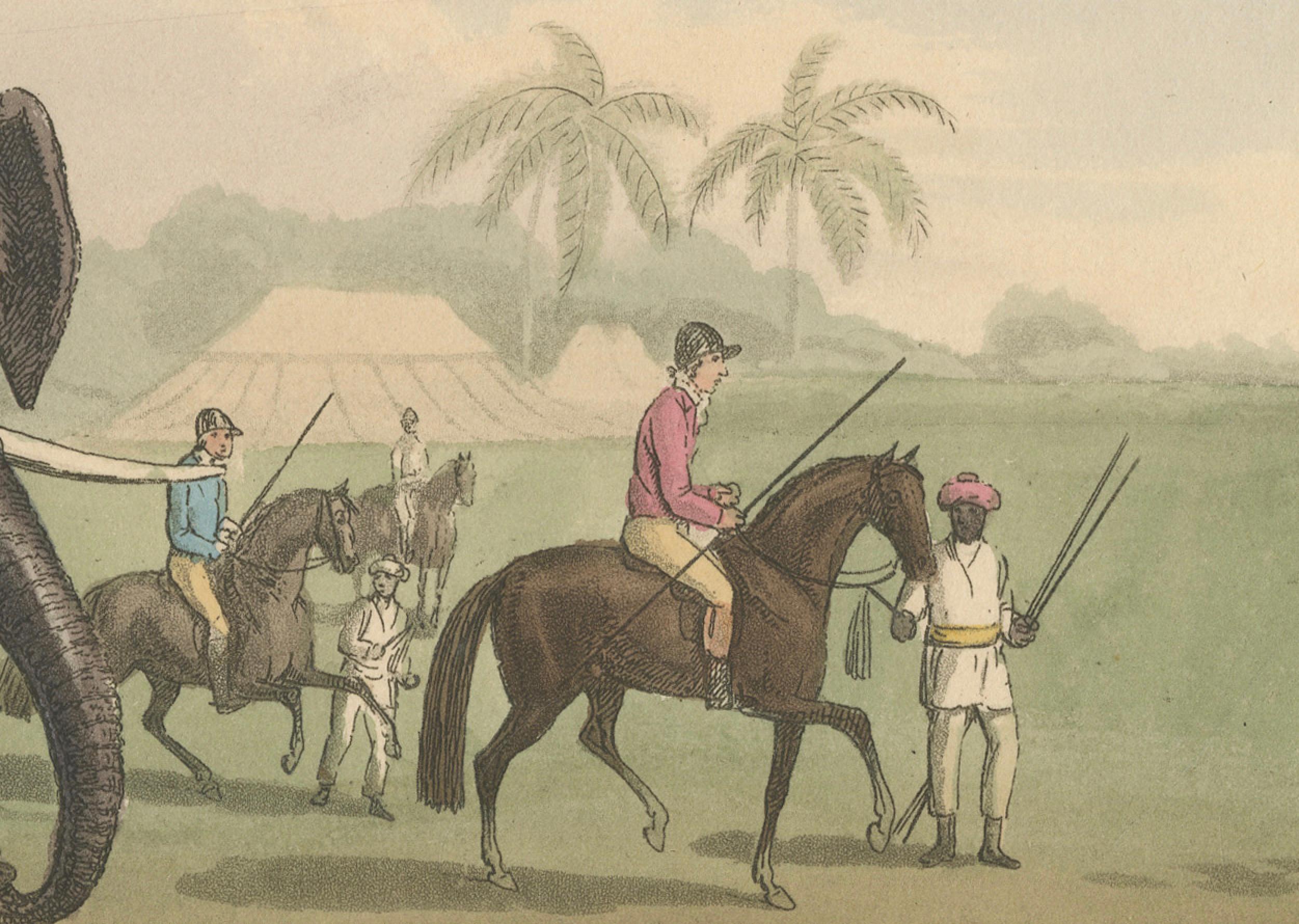
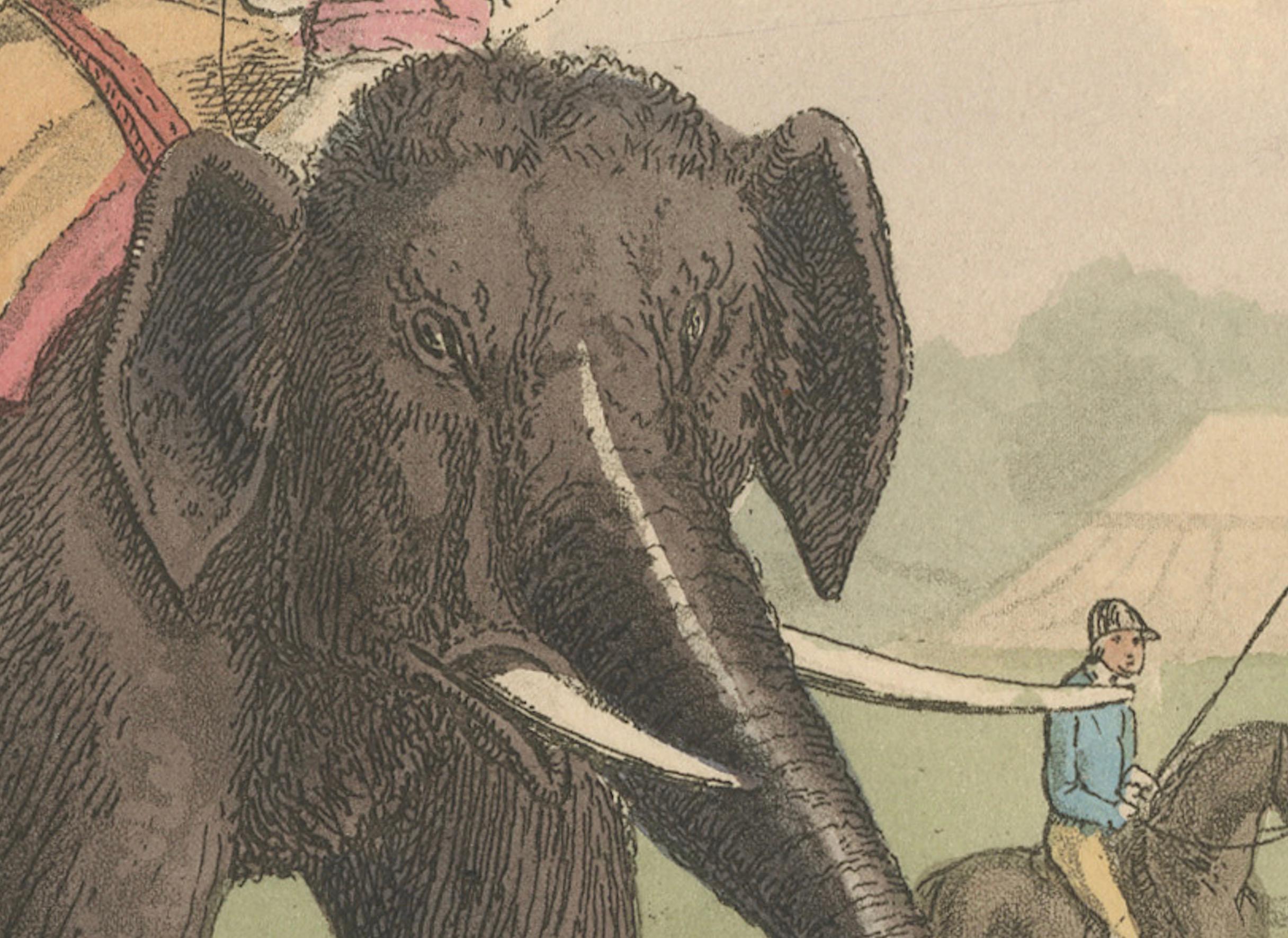
This exquisite hand-coloured aquatint, titled "Hog Hunters in India Going Out No.1," was published in London by E. Orme in 1813. The print is a part of the renowned series 'Foreign Field Sports' and is masterfully coloured by Dubourg, Merke & Howitt, following the designs of Howitt & Clark.
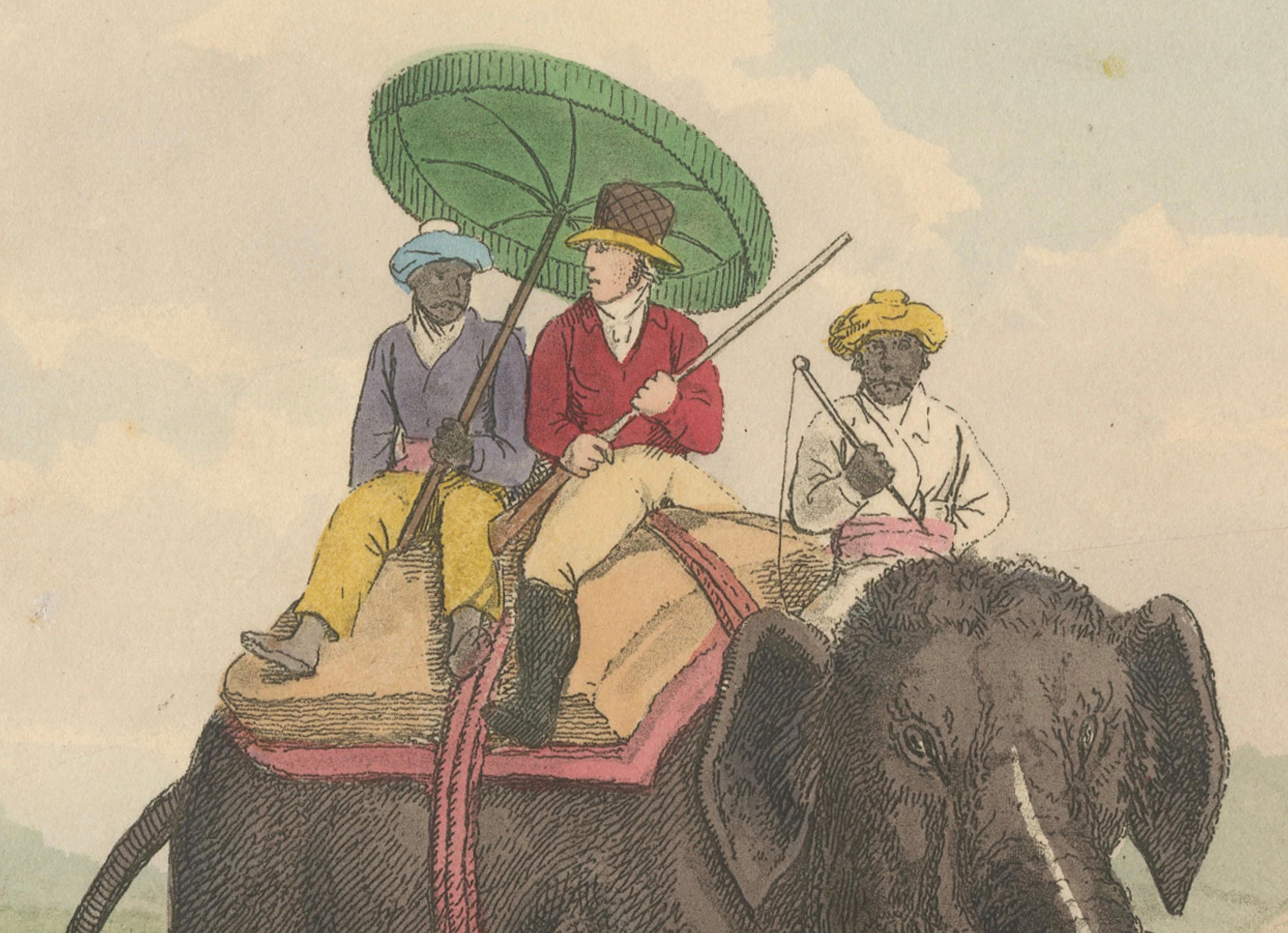
The artwork captures a vivid scene of a hunting expedition in India. At the forefront, an imposing elephant carries three men: a European hunter clad in a red jacket and two local attendants, one holding a green parasol. The background reveals more members of the hunting party on horseback, equipped with spears and traditional attire, set against a serene landscape with palm trees and a distant tent. The intricate detailing and vibrant hand-colouring bring the historical and cultural aspects of the hunting practice to life.
This print not only exemplifies the artistic excellence of early 19th-century British aquatints but also offers a fascinating glimpse into colonial hunting expeditions in India, making it a valuable addition to any collection of historical prints or sporting art.
Hog Hunting Practices Today
Hog hunting has evolved significantly from the historical depictions like those shown in the print "Hog Hunters in India Going Out No.1." Today, hog hunting is not only a popular sport but also a crucial activity for managing wildlife populations and protecting ecosystems.
Modern Practices
1. **Hunting Techniques**: Common techniques include spot-and-stalk, stand hunting, and baiting. Spot-and-stalk involves tracking hogs by sight, while stand hunting uses elevated positions to wait for hogs to approach baited areas.
2. **Equipment**: Hunters use various firearms and bows suitable for the size of the hogs. Essential gear includes camouflage clothing, scent control products, and safety gear like eye and ear protection.
3. **Ethical Hunting**: Modern hunters prioritize humane practices, ensuring quick and ethical kills to minimize suffering. This includes proper shot placement and preparedness to track and retrieve animals. Ethical hunting also involves respecting hunting regulations, using appropriate equipment, and ensuring safety at all times.
4. **Sustainability**: Sustainable hog hunting practices are crucial for preserving biodiversity and supporting local economies. This includes regulated hunting seasons, quotas, and habitat conservation efforts. Sustainable practices ensure that hunting remains a viable and environmentally friendly activity.
Importance of Hog Hunting
1. **Population Control**: Feral hogs reproduce rapidly, and without hunting, their populations can become uncontrollable, leading to extensive ecological damage. Hunting helps manage these populations, protecting native wildlife and habitats..
2. **Agricultural Protection**: Feral hogs are notorious for their destructive behavior in agricultural areas, causing significant economic losses. Hunting reduces the impact on crops and livestock, supporting agricultural communities.
3. **Disease Control**: Feral hogs can carry diseases that are transmissible to humans and livestock. Controlling their populations through hunting helps mitigate the spread of these diseases, protecting public health.
4. **Economic Benefits**: Hog hunting generates significant revenue through hunting tourism. Guided hunts attract hunters nationwide, supporting local businesses and contributing to rural economies.
In summary, modern hog hunting practices blend tradition with contemporary ethical and sustainable approaches. These practices ensure that hunting contributes positively to wildlife management, ecological balance, and economic support for local communities.
Countries Where Hog Hunting is Practiced Today:
1. **United States**: Hog hunting is widespread across the U.S., particularly in southern states like Texas, Florida, Georgia, and Hawaii. These states have significant feral hog populations that cause agricultural damage and ecological issues. Hunting is used as a means of population control and is often encouraged year-round on both public and private lands.
2. **Italy**: In Italy, hog hunting is a popular and traditional activity, deeply rooted in the culture. Various methods such as battue (collective hunts with beaters) and driven hunting are practiced, especially in regions with high wild boar populations like Tuscany and the Alp.
3. **Eastern Europe**: Countries such as Romania and Hungary are known for their driven and battue hunts. These collective hunting methods involve groups of hunters and beaters driving the hogs towards the shooters. Wild boar hunting is a significant tradition in these regions, contributing to both culture and tourism.
4. **Germany**: Germany has a long tradition of wild boar hunting, often using methods like high-seat (stand) hunting and driven hunts...