Antique Handcolored Engraving of Frogs and Amphibians, c.1800
€ 160
One of a kind: this is the sheet in the photographs. Ships from Langweer, the Netherlands.
Date
1800
Sheet size
19.5 × 23.5 cm (7.7 × 9.3 in)
Condition
Good
Reference
BG-13997-18
Condition
Good condition. Age-related toning, minor edge wear, and no text on verso. Colors remain vibrant. Please review images carefully.
About this sheet
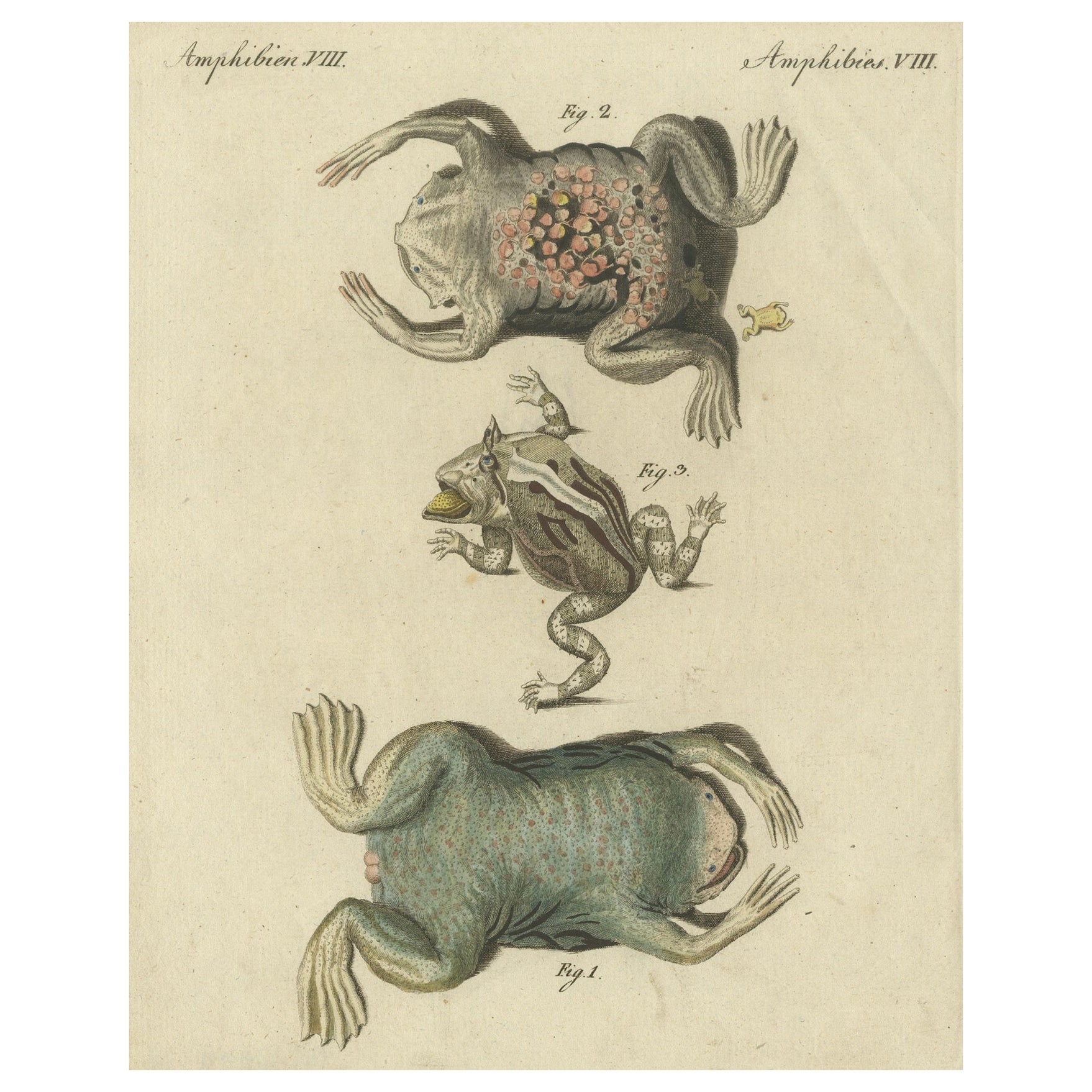
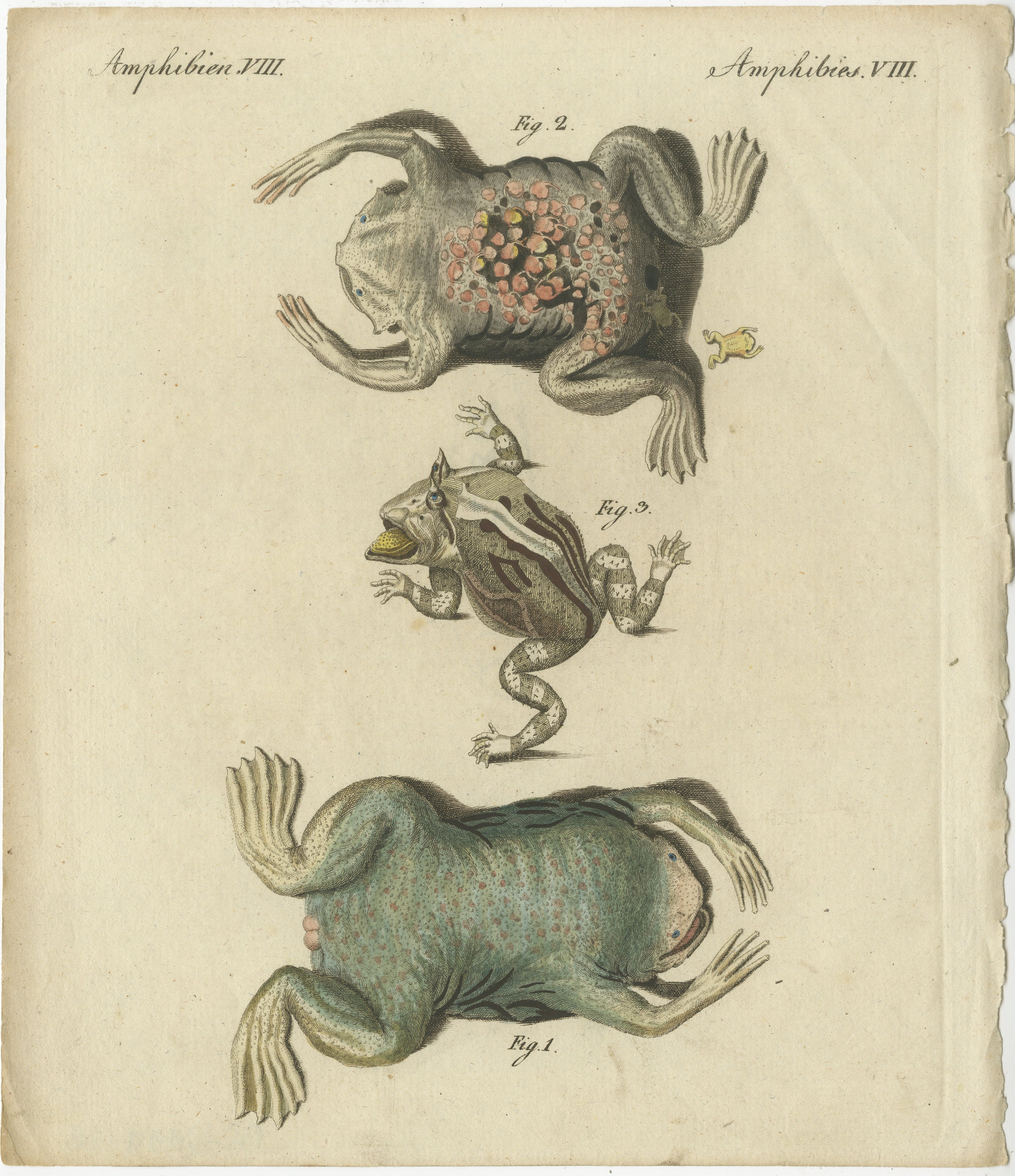
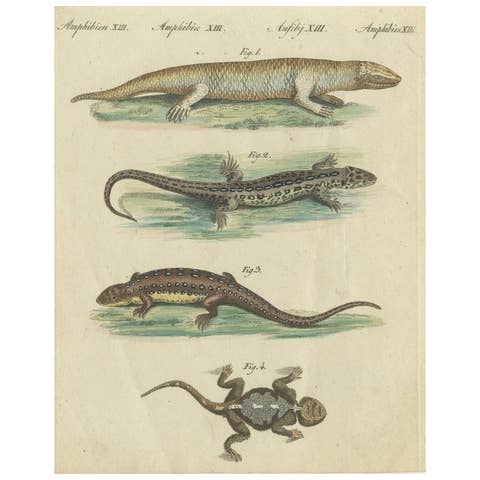
Antique Handcolored Engraving of Frogs and Amphibians, Amphibien VIII, c.1800
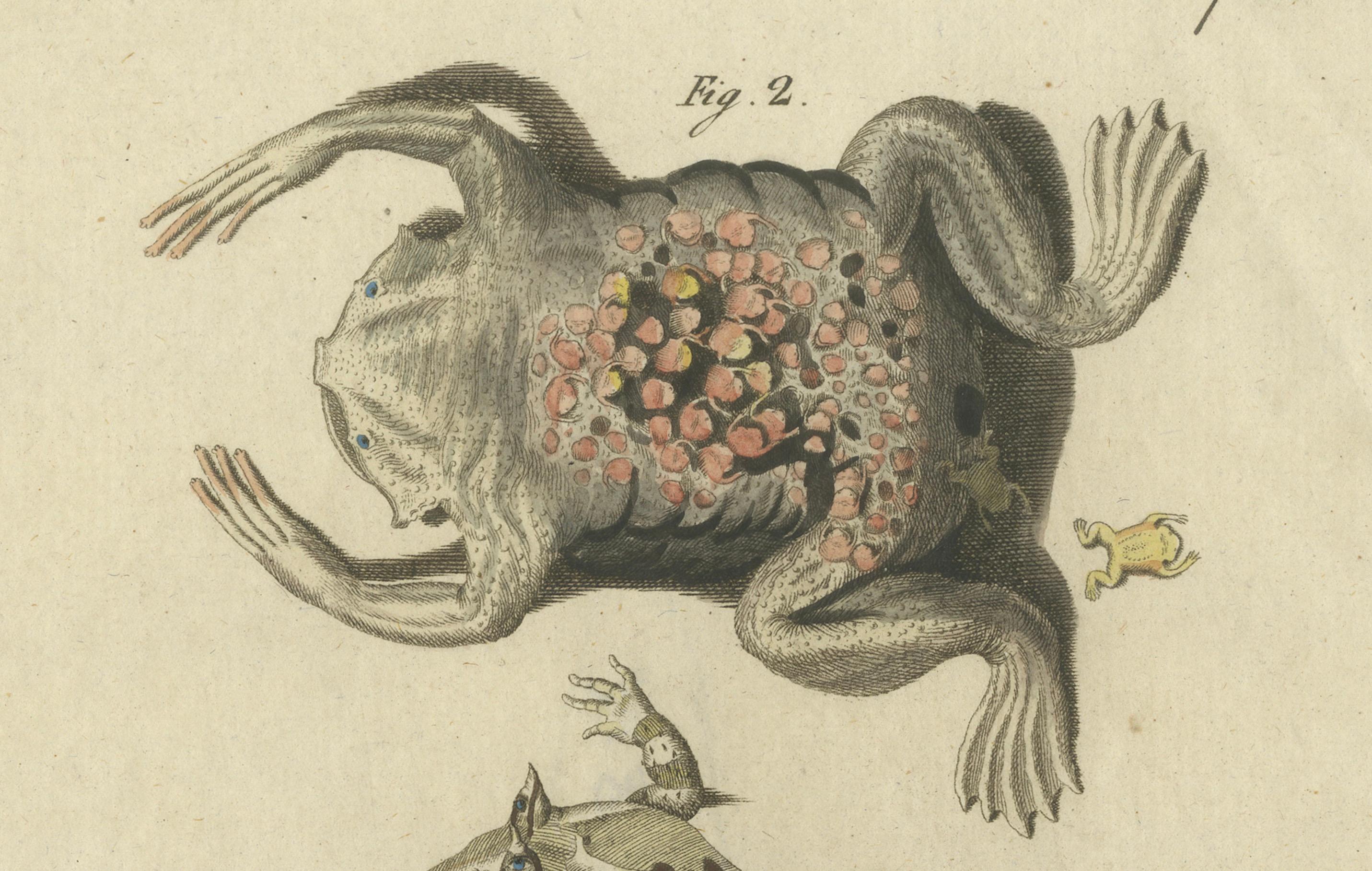
Description; This original handcolored copperplate engraving features three detailed depictions of frogs and amphibians in dynamic postures. The illustration originates from Friedrich Johann Bertuch’s *Bilderbuch für Kinder* (Picture Book for Children), a celebrated 12-volume natural history encyclopedia published between 1790 and 1830. Renowned for its artistic elegance and scientific accuracy, Bertuch’s work played a pivotal role in introducing the natural world to 19th-century audiences.
Each figure is meticulously illustrated to emphasize the unique anatomy and coloration of these amphibians, with vibrant hand coloring that highlights their textures and natural markings. This rare engraving captures the diversity of amphibians and serves as an important educational reference from the period.
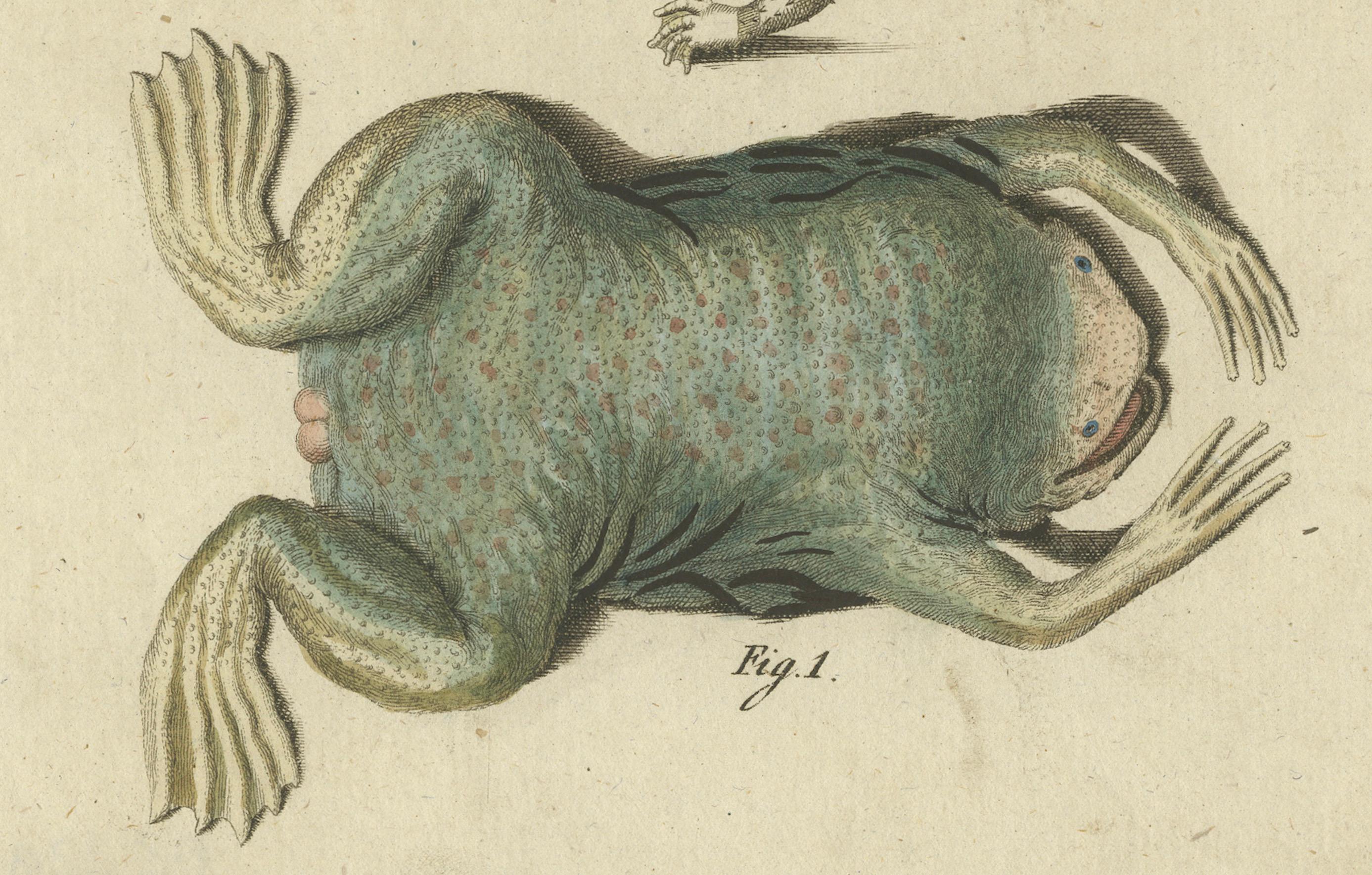
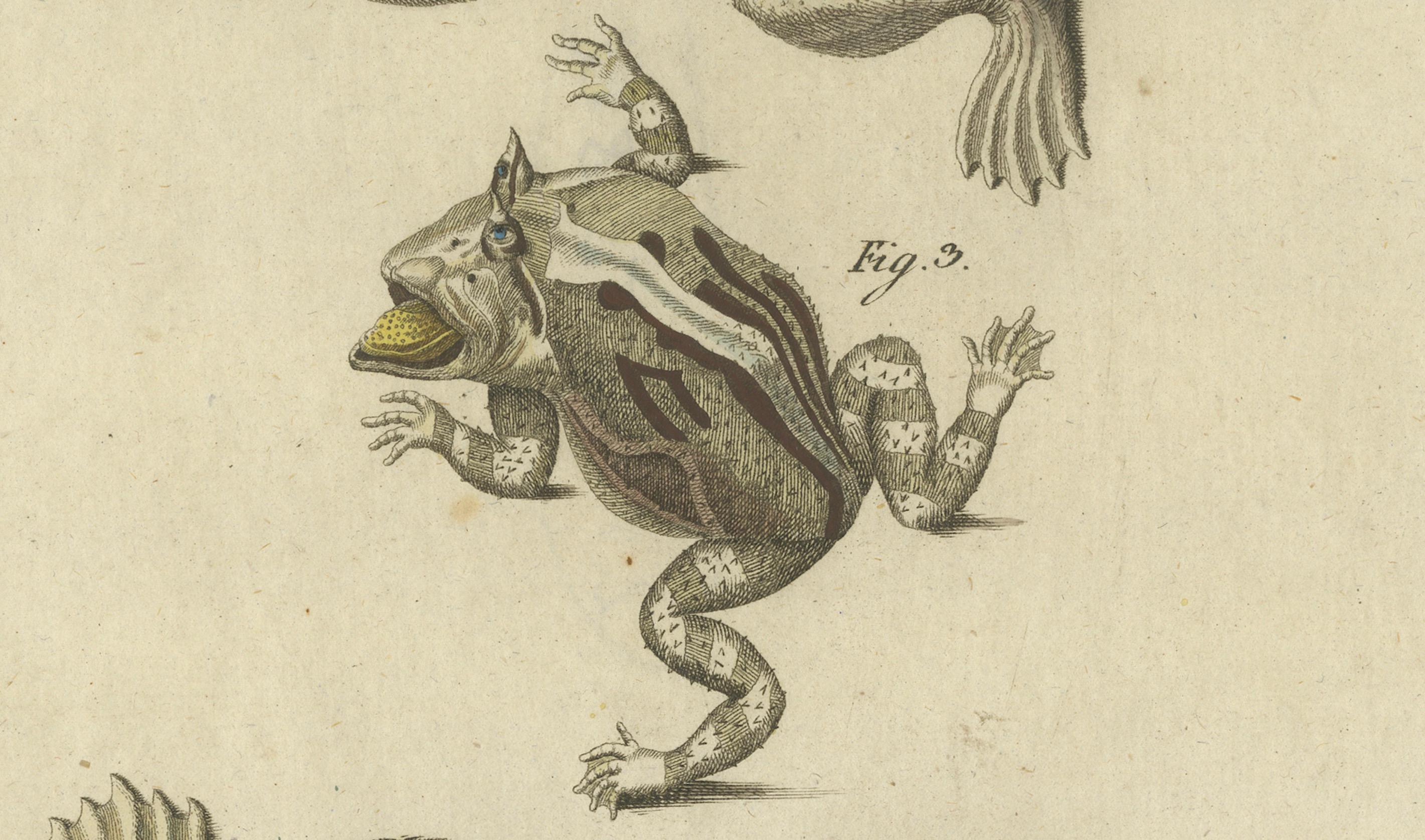
The engraving appears to depict three distinct types of frogs or toads, each represented with unique features. Based on the details:
1. Figure 1 (Bottom): This frog or toad, with its rounded body and speckled pattern, could represent a Common Toad (Bufo bufo) or a related species. The bluish-green tint and mottled skin are characteristic of many toads that use camouflage for protection. Its posture suggests it is resting or displaying a defensive position.
2. Figure 2 (Top): This figure, showing a frog with visible eggs or young on its back, might depict a Surinam Toad (Pipa pipa). Surinam toads are known for their unique reproductive method, where eggs are embedded in the female’s back and hatch into tadpoles. The engraving highlights this unusual trait.
3. Figure 3 (Middle): The middle figure, with its pronounced jaw and striped markings, resembles a Bullfrog (Rana catesbeiana) or another large frog species. Its stance and coloration suggest a predatory amphibian, likely found in freshwater habitats.
Ideal for collectors of natural history art, antique prints, or zoological illustrations, this piece also adds a touch of historical charm to any display.
Condition Report: Good condition. General age toning, minor edge wear, no text on verso. Colors remain vibrant. Please review images carefully.