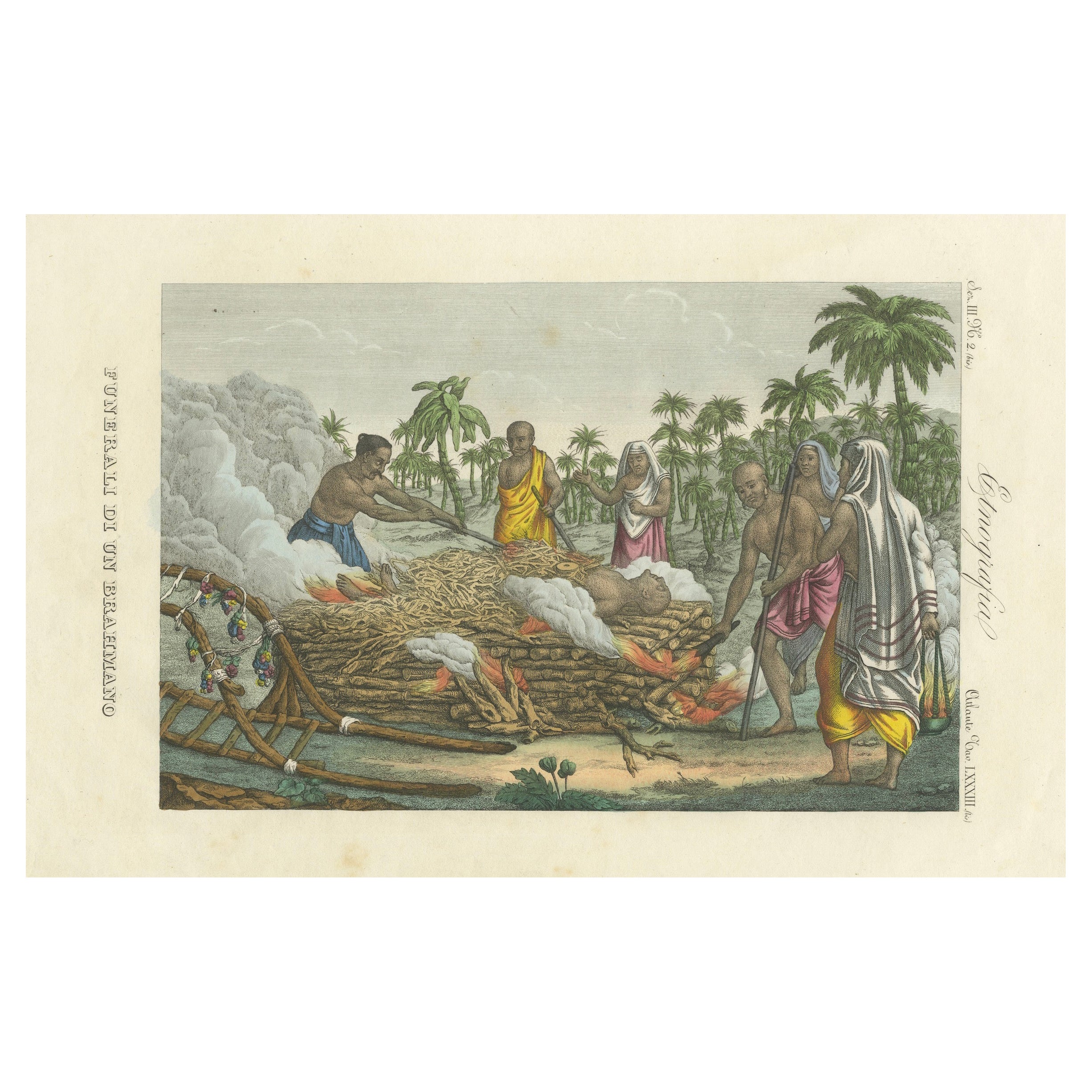
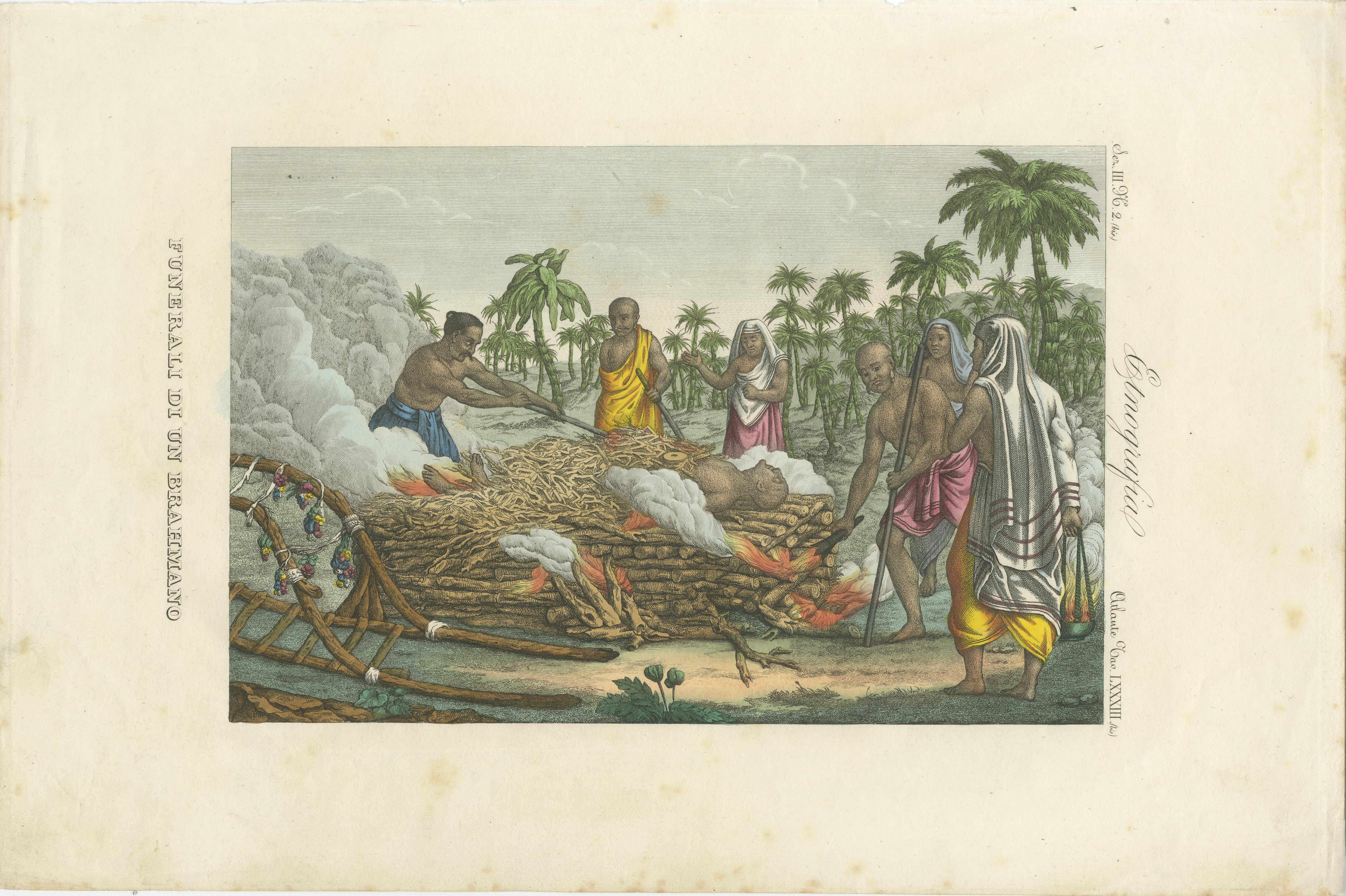
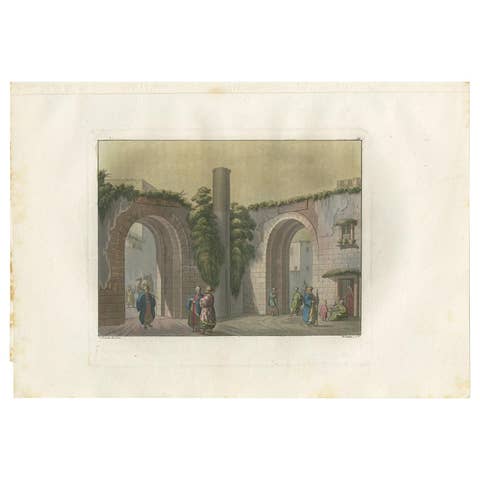
Traditional Hindu Funeral: Cremation of a Brahmin (1827)
€ 290
One of a kind: this is the sheet in the photographs. Ships from Langweer, the Netherlands.
Date
1827
Sheet size
28.7 × 43 cm (11.3 × 16.9 in)
Condition
Good
Reference
BG-13806-7
Condition
The print is in fair condition, with clear imagery and vibrant colors. Some yellowing and minor stains are present, mainly on the borders, indicating age. The text and details remain legible and intact.
About this sheet
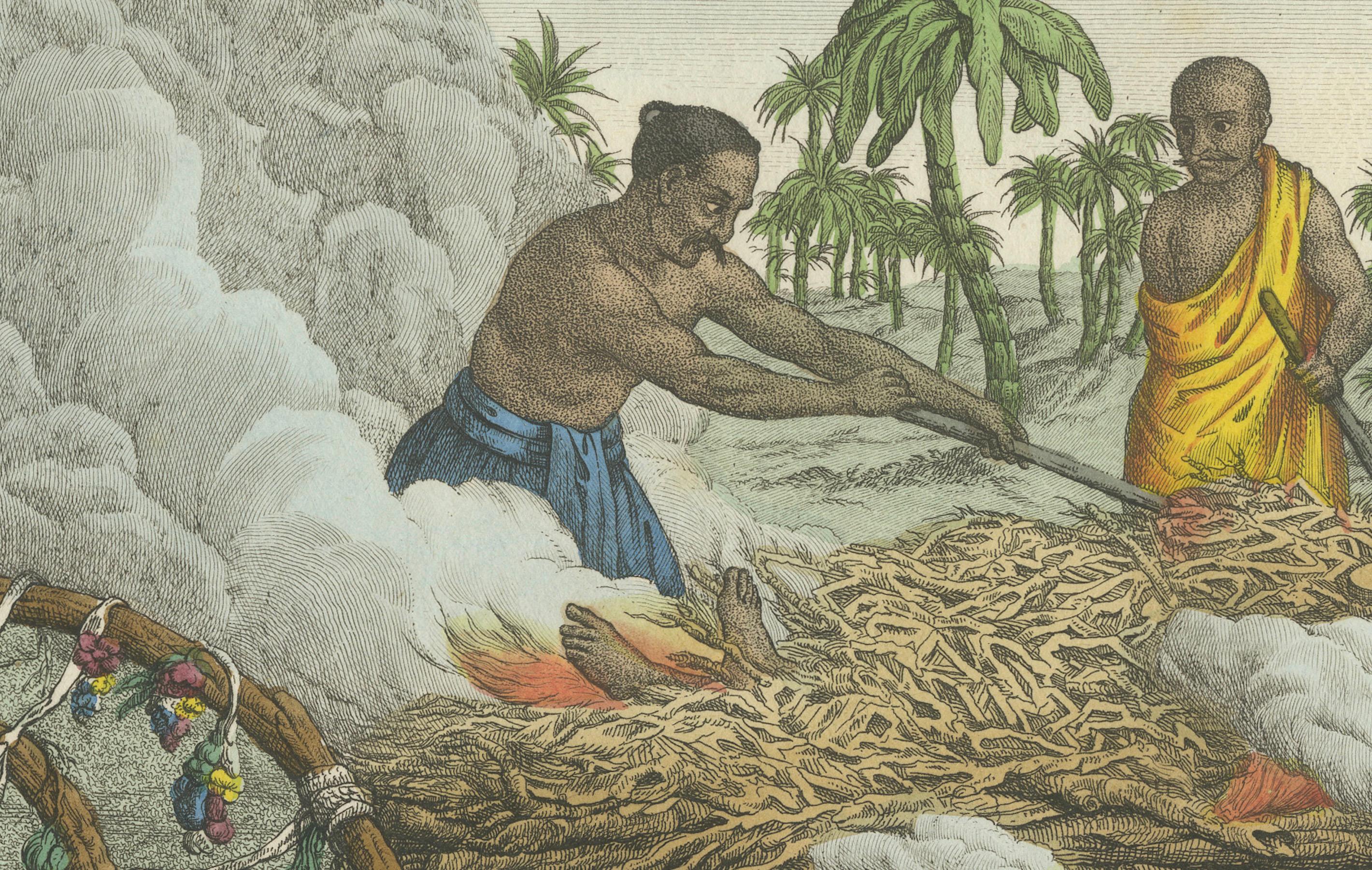
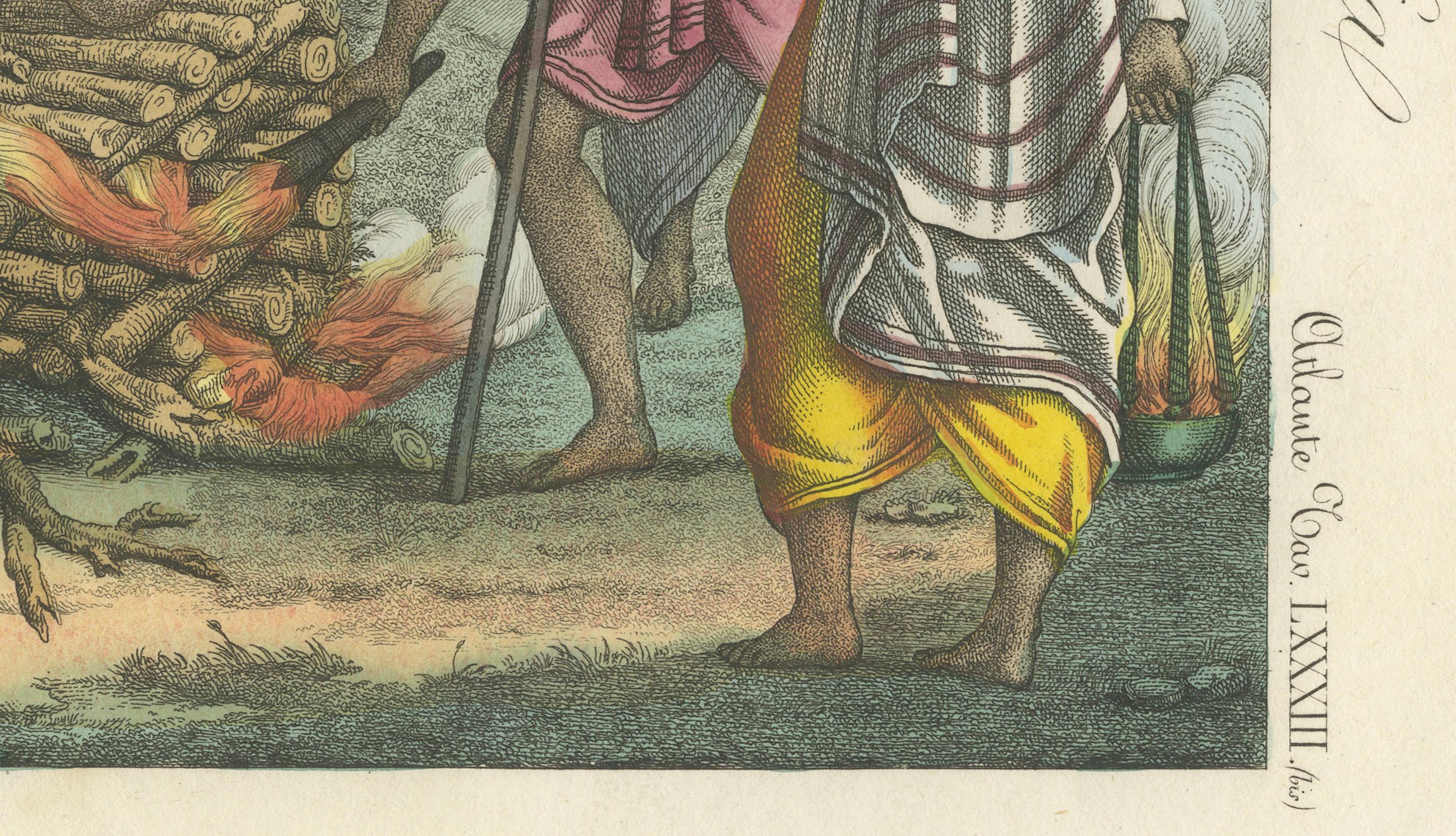
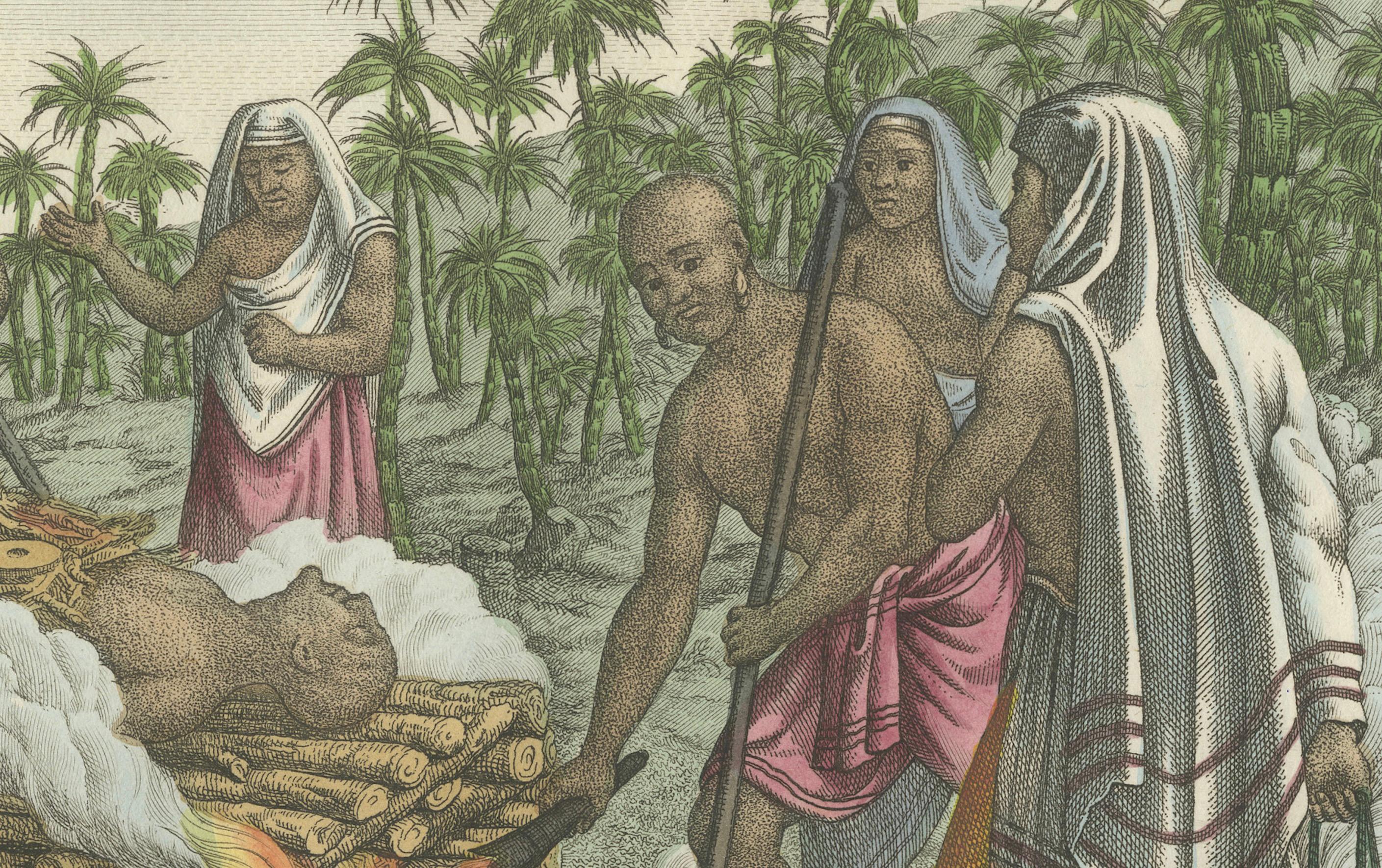
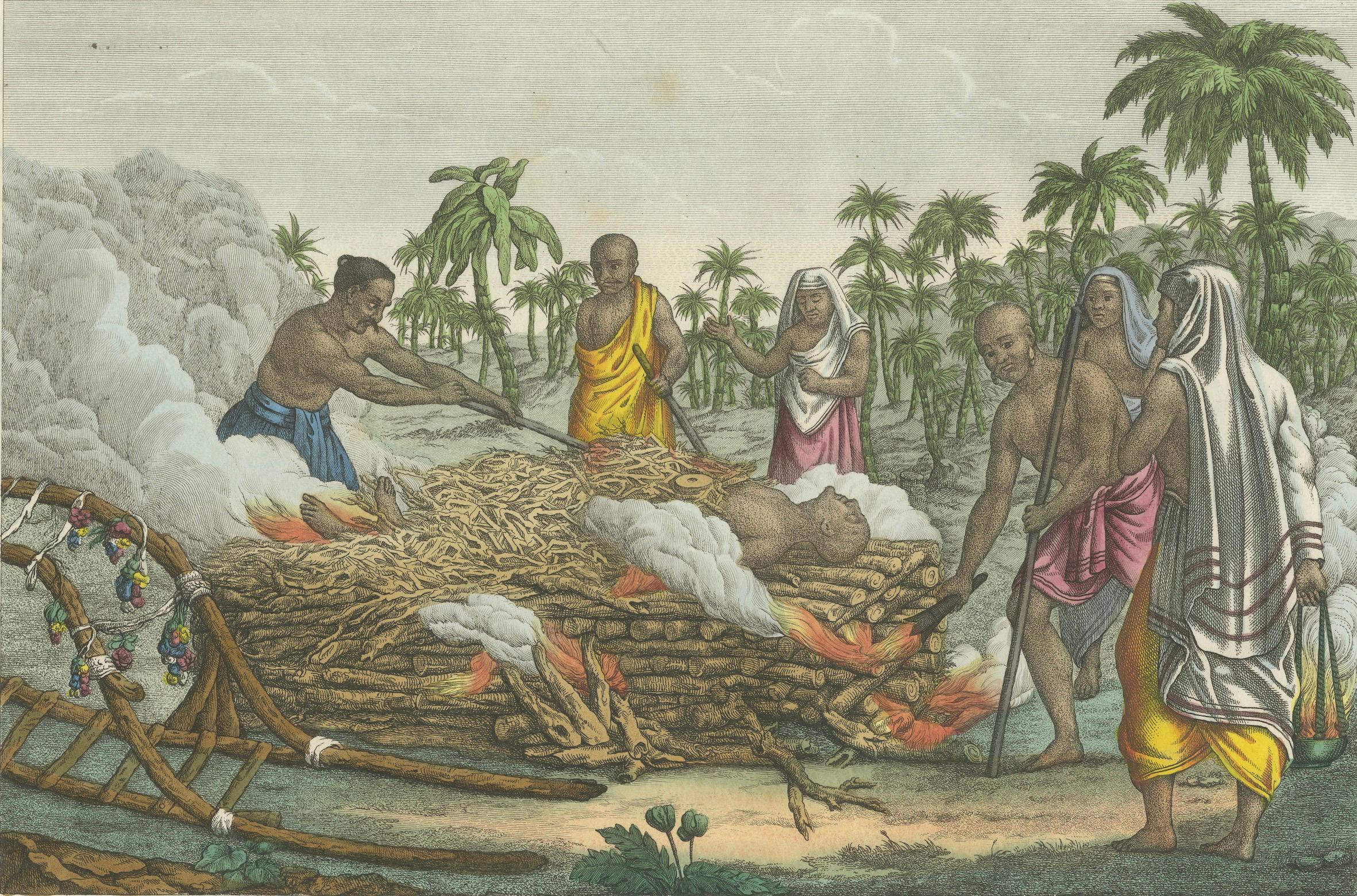
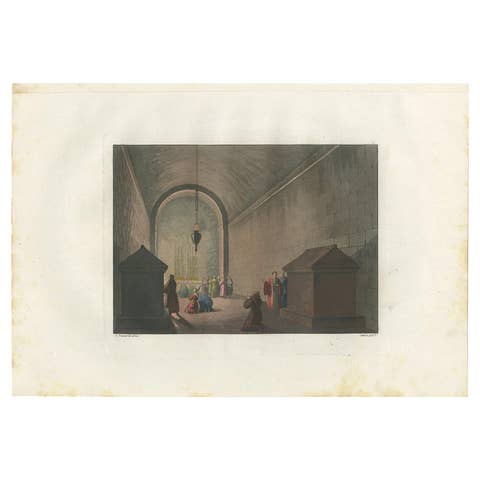
The image is a detailed print titled "Funeral di un Brahamano," which is Italian and translates to "Funeral of a Brahmin." The scene depicts a traditional Hindu funeral ceremony where the body of a Brahmin is being cremated. The print shows several individuals participating in the ritual, with one person tending the funeral pyre while others stand around in traditional attire, including a figure in a yellow robe, possibly indicating a religious leader or a close family member.
The artwork is attributed to Charles Claude Antoine Varin, a French artist known for his work in the 19th century. This print is part of a larger work titled "Genova pubblicato da Lorenzo," suggesting it was published in Genoa, Italy. The date on the print indicates it was created in 1827.
More about the ritual depicted on the print:
The print depicts a traditional Hindu cremation ritual, which is a significant part of Hindu funeral practices. In Hinduism, cremation is the preferred method for the disposal of the dead, as it is believed to aid in the liberation of the soul from the physical body, allowing it to move on to the next stage of its journey, whether that be rebirth or achieving moksha (liberation from the cycle of birth and death).
Key elements of the ritual shown in the print include:
1. **The Funeral Pyre:** The body of the deceased is placed on a pyre made of wood, which is then set on fire. The fire symbolizes purity and the transition of the soul.
2. **Family and Priests:** Close family members and priests are typically present to perform and oversee the rites. The person lighting the pyre is often the eldest son or a close male relative.
3. **Traditional Attire:** The individuals involved are wearing traditional attire, indicating their roles and the cultural context.
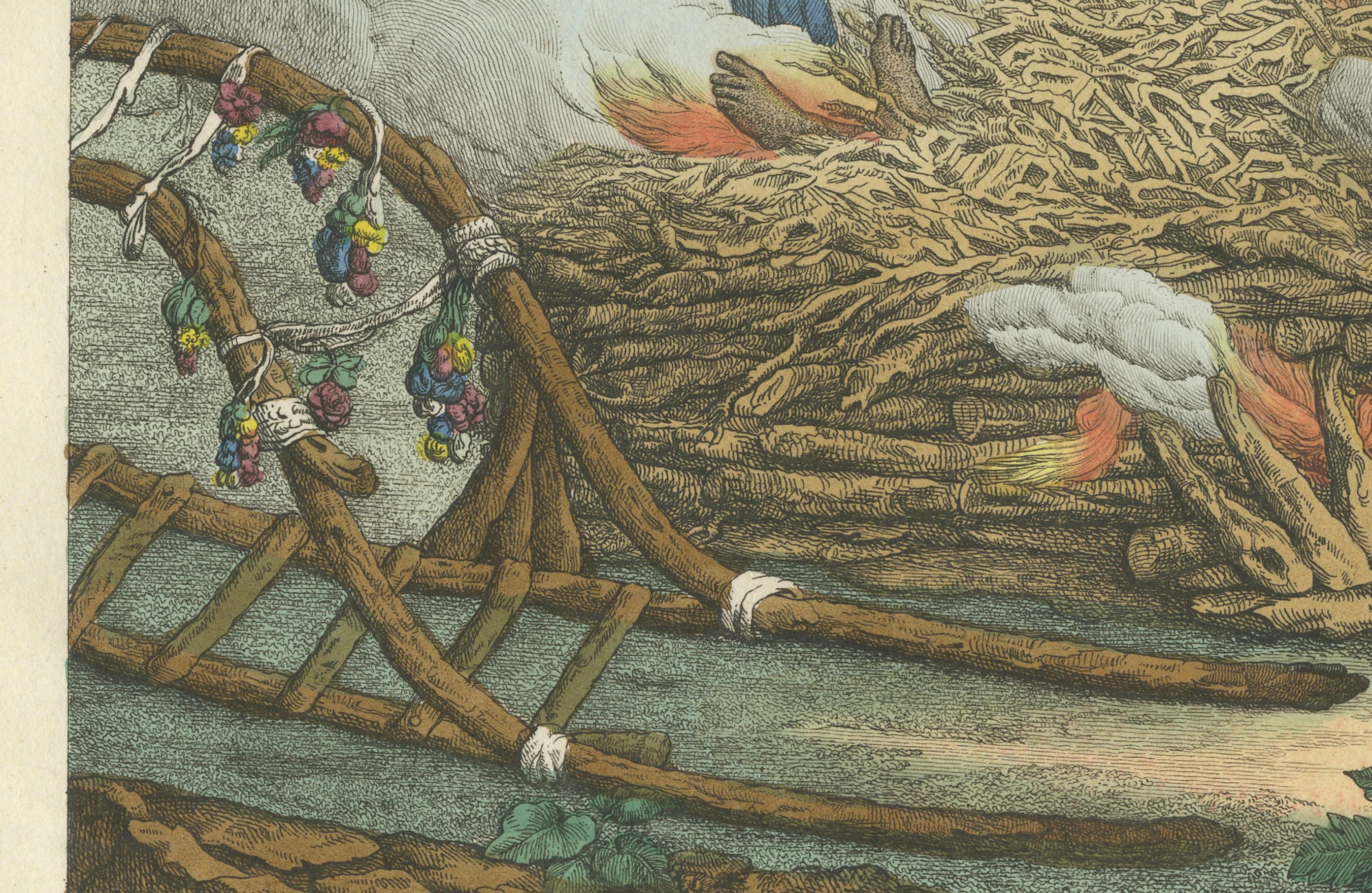
4. **Offerings and Prayers:** There may be various offerings, such as flowers and other ritualistic items, placed on or around the pyre, and prayers are recited to honor the deceased and seek blessings for their soul.
This depiction is a detailed and culturally specific representation of a Brahmin funeral, which adheres to Hindu customs and religious beliefs.