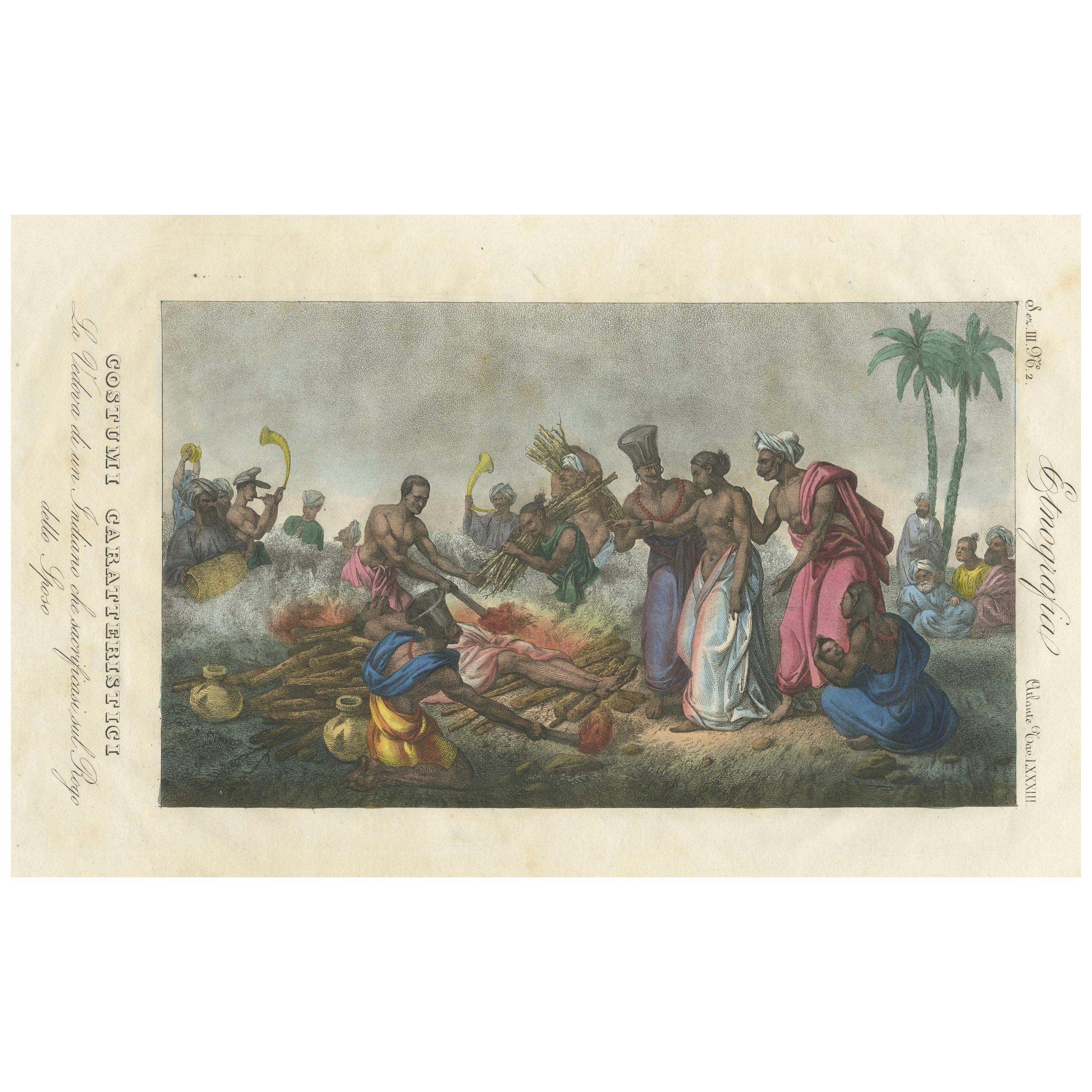
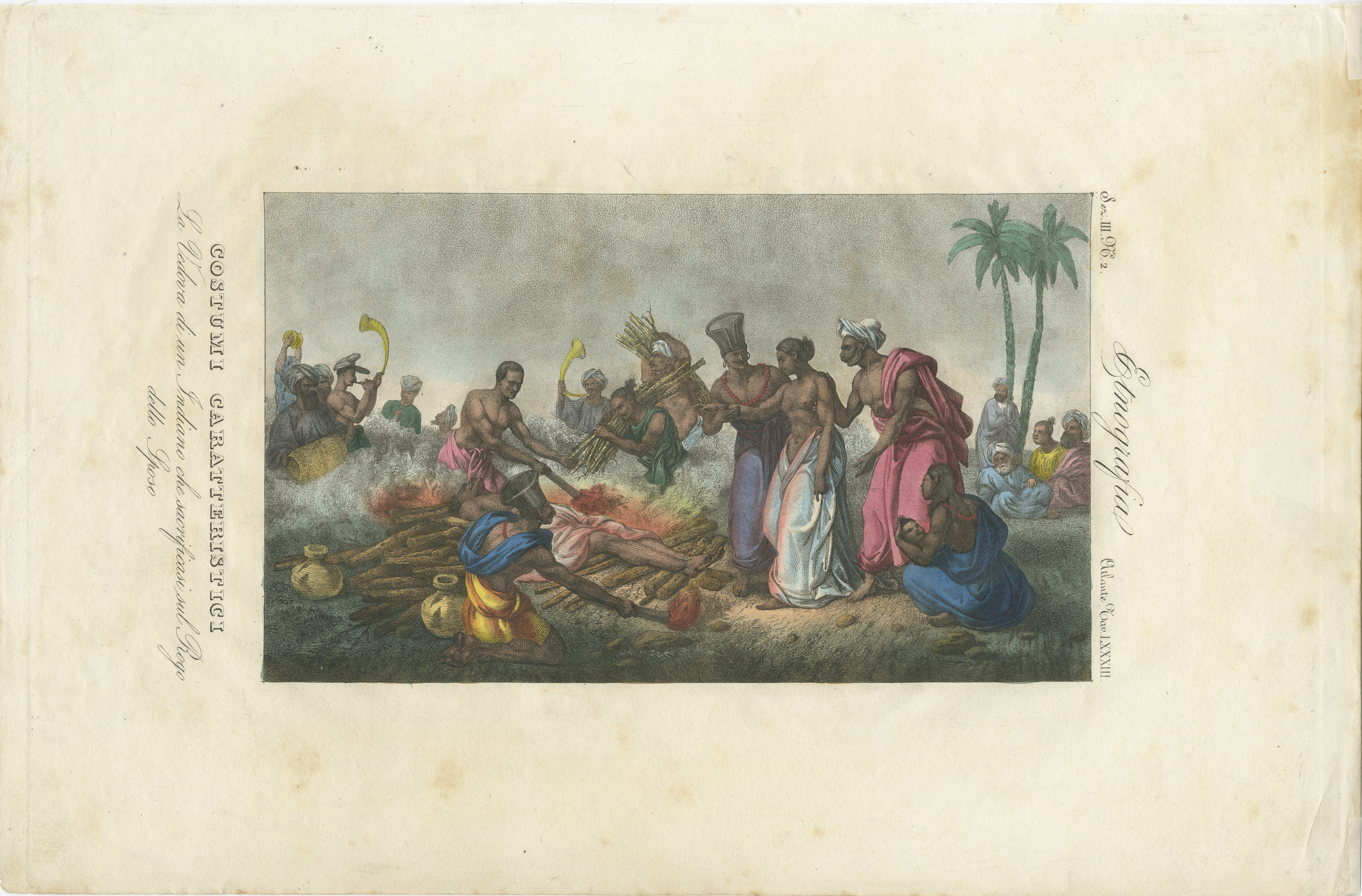
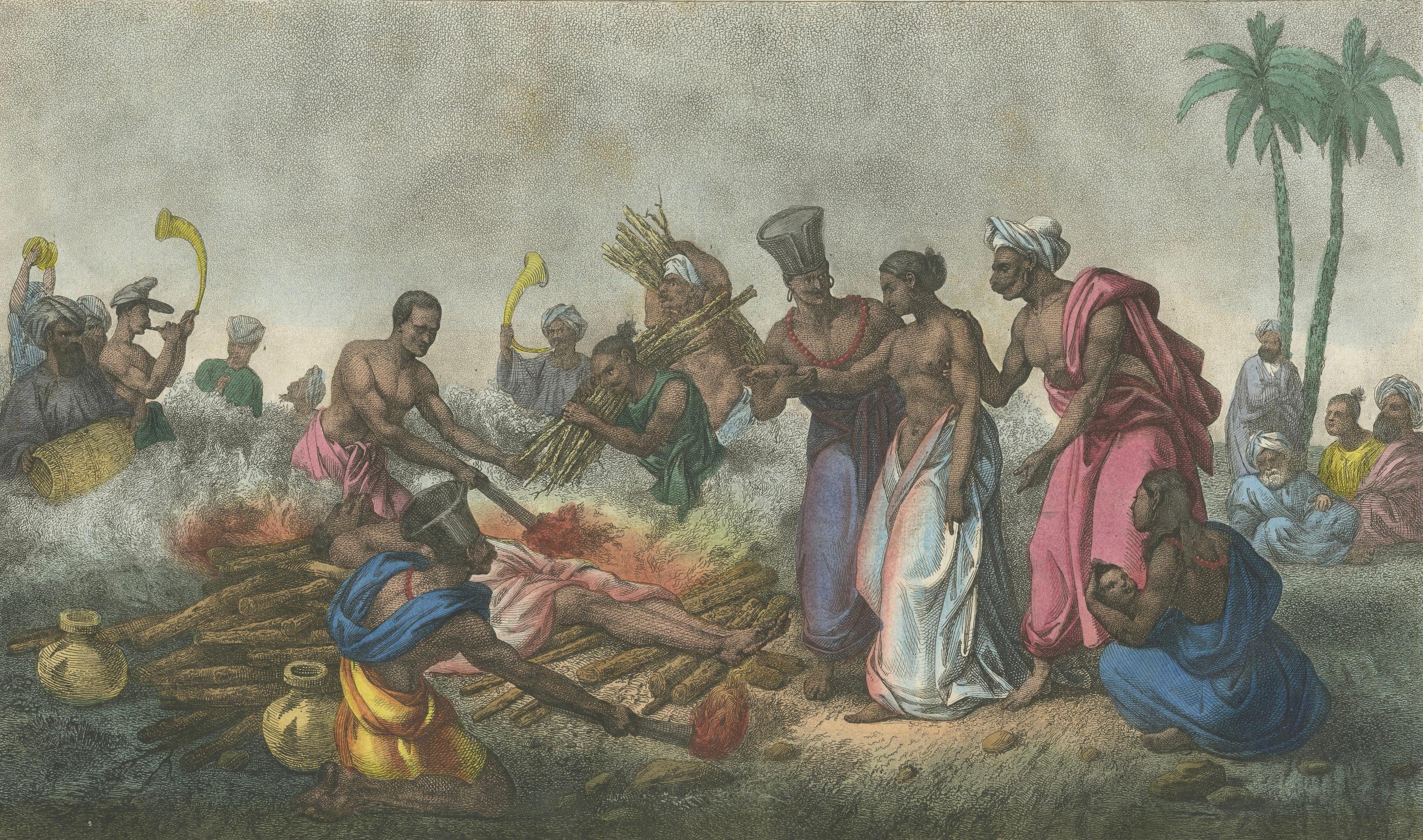
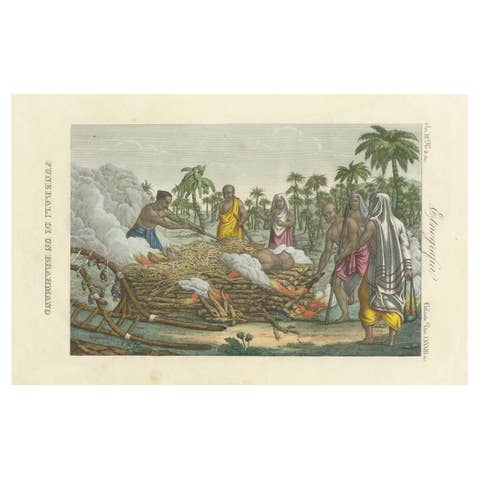
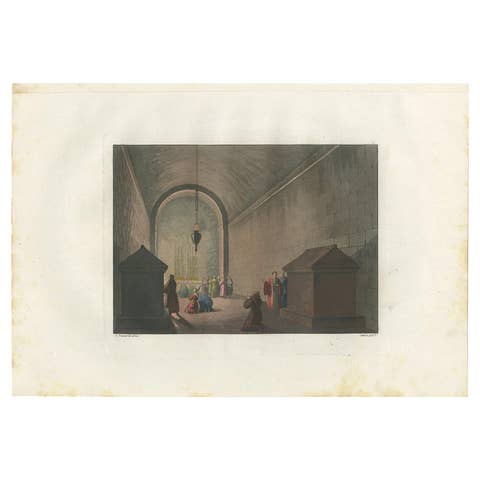
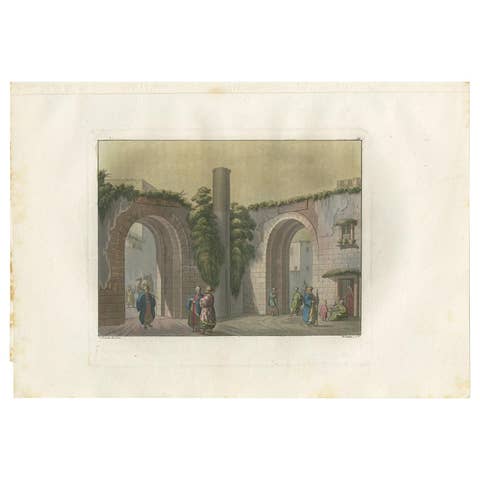
Historical Depiction of a Widow's Sacrifice on a Funeral Fire in India, 1827
€ 290
One of a kind: this is the sheet in the photographs. Ships from Langweer, the Netherlands.
Date
1827
Sheet size
28.7 × 43 cm (11.3 × 16.9 in)
Condition
Good
Reference
BG-13806-8
Condition
The print is in fair condition, with clear imagery and vibrant colors. Some yellowing or browning and stains are present, mainly on the borders, indicating age. The text and details remain legible and intact.
About this sheet
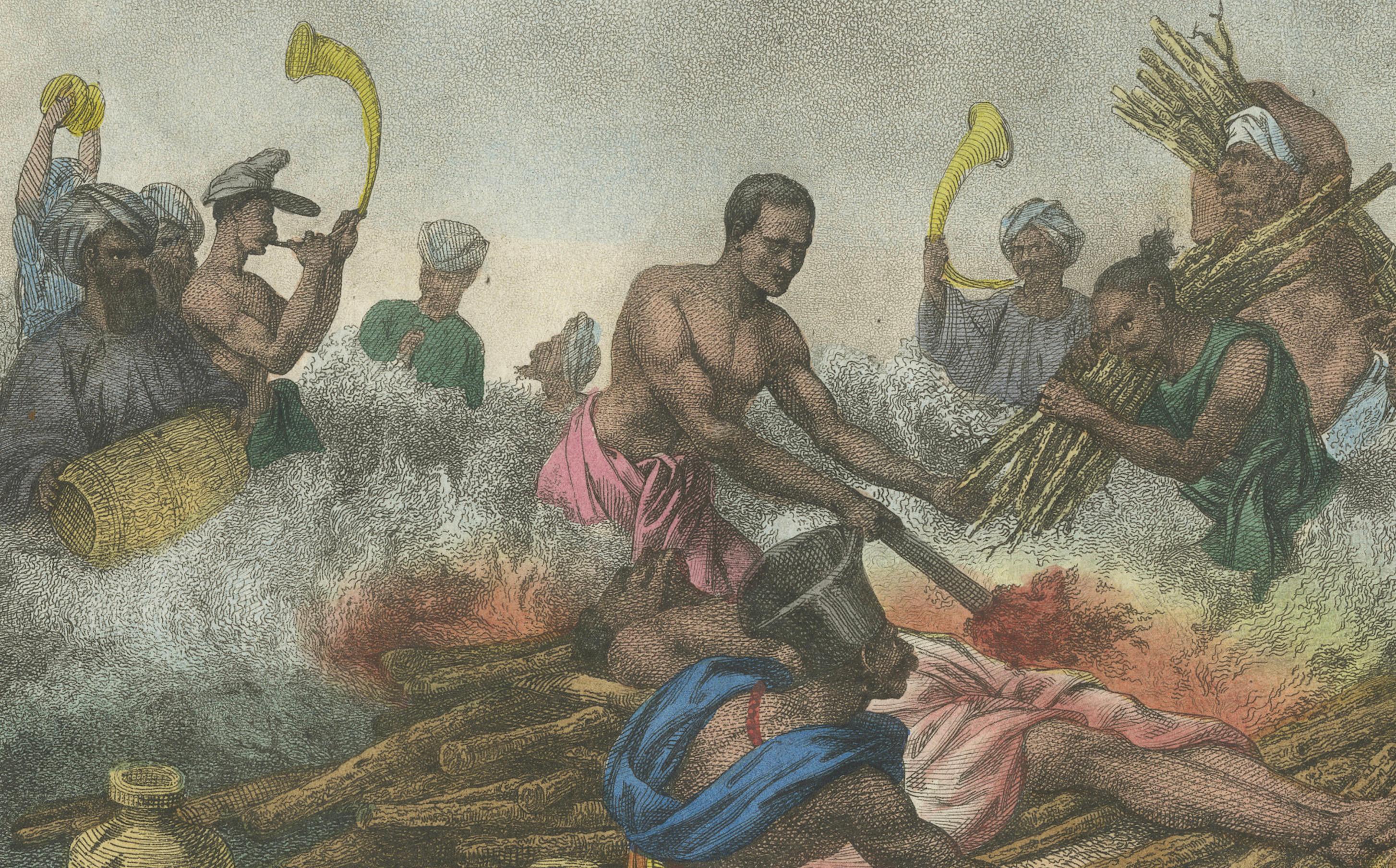
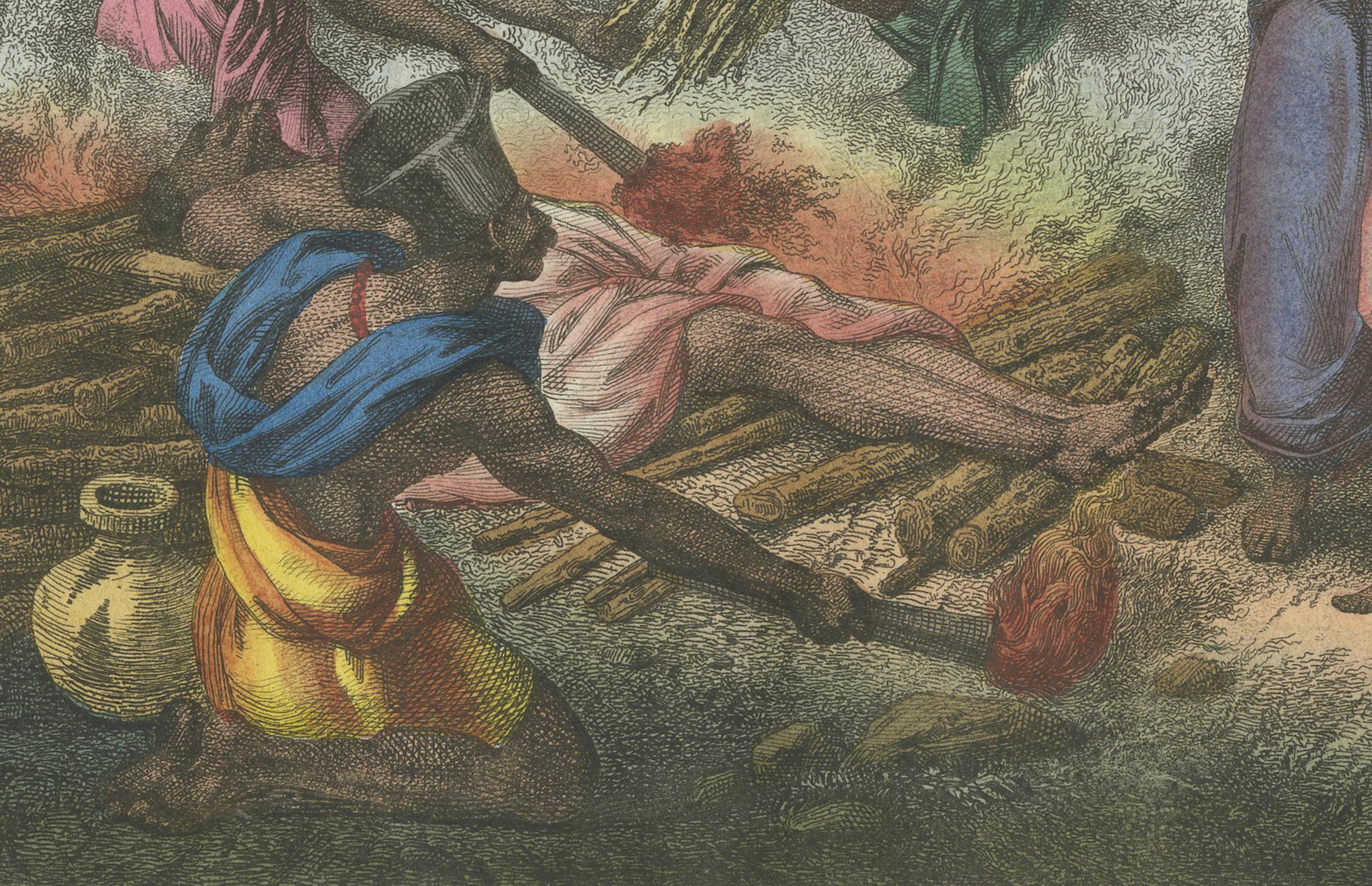
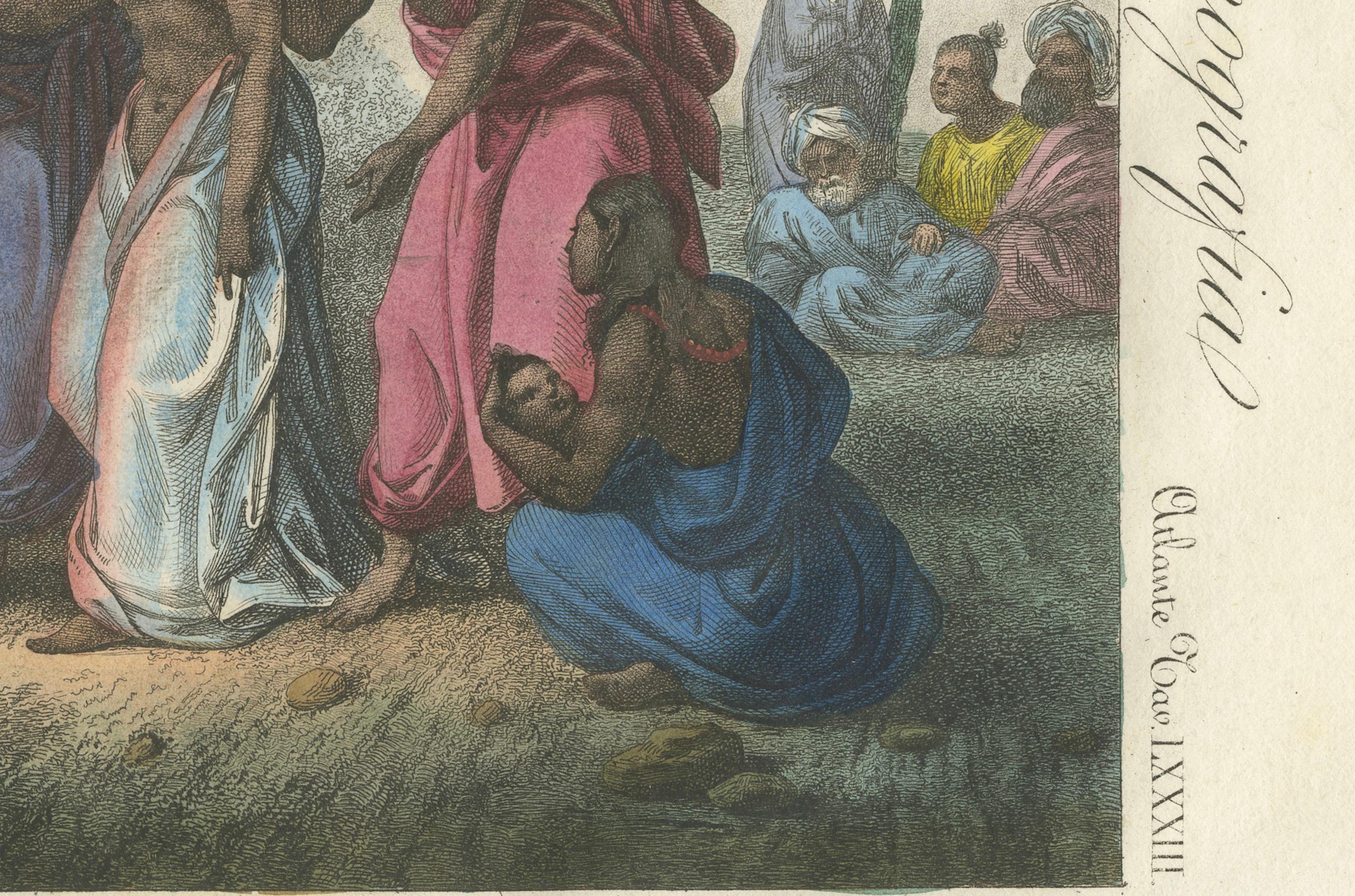
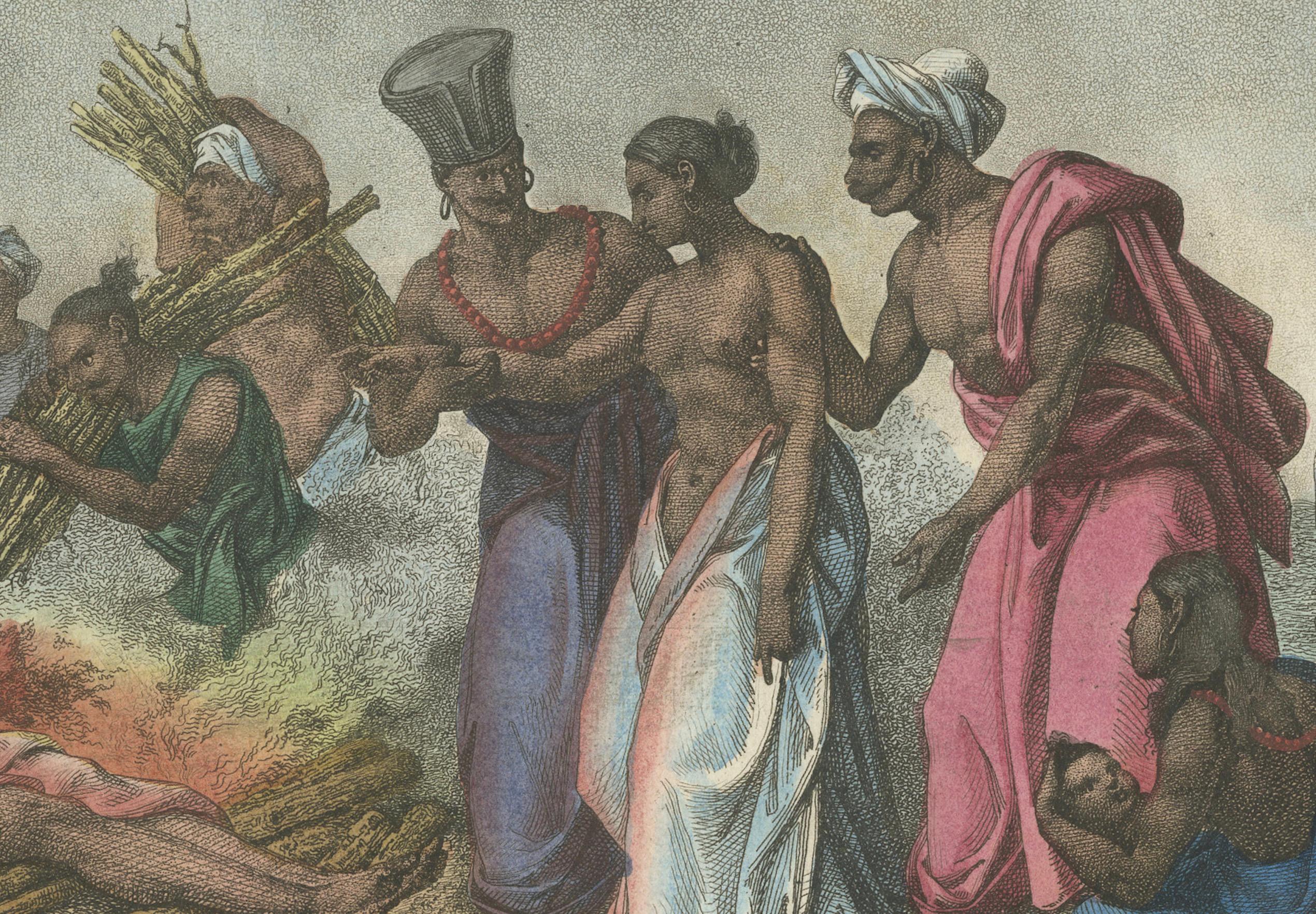
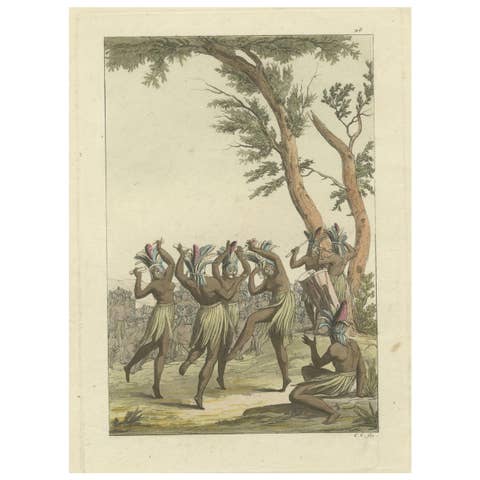
This image is an illustration depicting a traditional scene or ceremony. The caption on the side reads "Costumi Caratteristici" which translates from Italian to "Characteristic Customs," and below it, "La Vedova di un Capo di Guerrieri si Getta sul Rogo" translates to "The Widow of a Chief of Warriors Throws Herself on the Pyre." The scene shows a group of people involved in a ritualistic act, where a widow is preparing to throw herself onto a funeral pyre, a practice known in some cultures as "Sati" or "Suttee."
The practice depicted in the image is known as "Sati" or "Suttee," where a widow immolates herself on her husband's funeral pyre. This practice was historically found in India.
Historical Context: - Location: Primarily in India, especially in the regions of Rajasthan, Bengal, and some other parts of North and Central India. - Time Period: Sati was practiced from ancient times, with records dating back to the 4th century BCE. It was most prevalent during the medieval period and into the early modern period.
Modern Context: - Legality: Sati was officially banned by the British colonial government in 1829 under Lord William Bentinck in Bengal, and the ban was gradually enforced throughout India. - Current Status: While it is illegal and rare, there have been isolated incidents reported in modern times. The last known case of Sati occurred in 1987 in Rajasthan, which led to stricter laws and enforcement against the practice.
Today, Sati is almost entirely eradicated due to legal prohibitions, social reforms, and the efforts of women's rights activists. The Indian government and various organizations continue to work towards ensuring that such practices do not resurface.
This original antique artwork is a historical illustration, likely created to depict or record customs and rituals from a particular culture or region. The colors and details are typical for the 19th century, when such illustrations were common in travelogues and ethnographic studies.