About this sheet
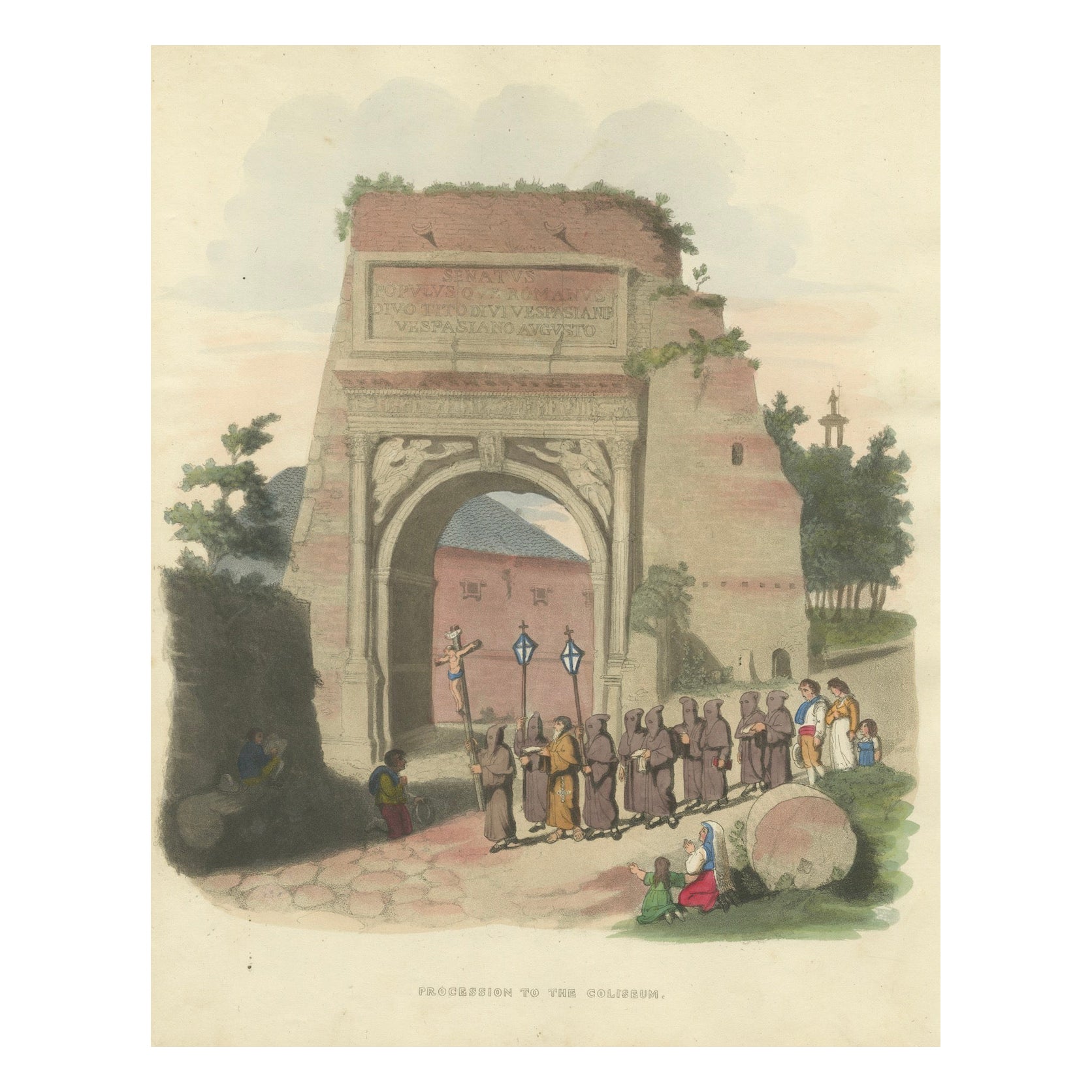
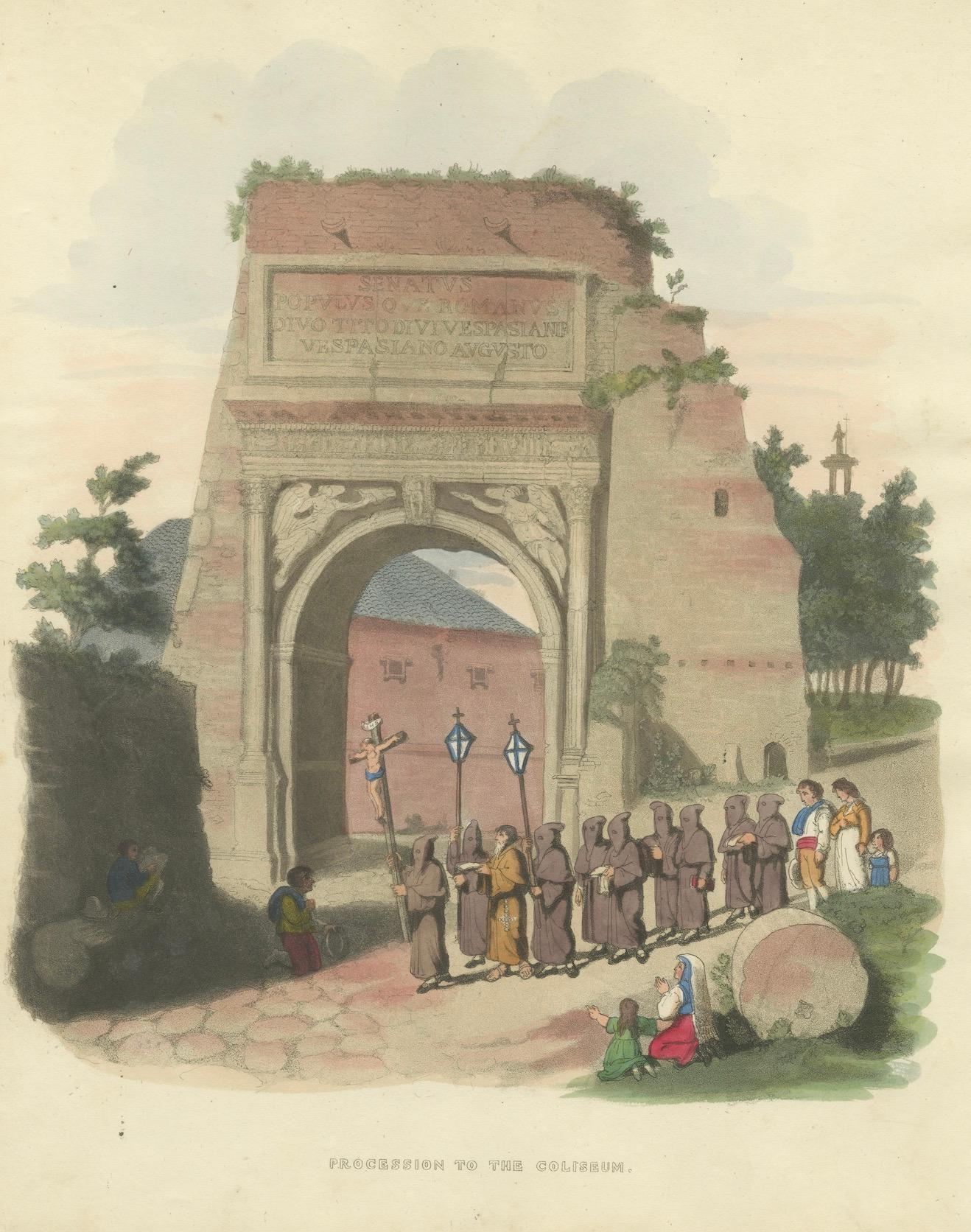
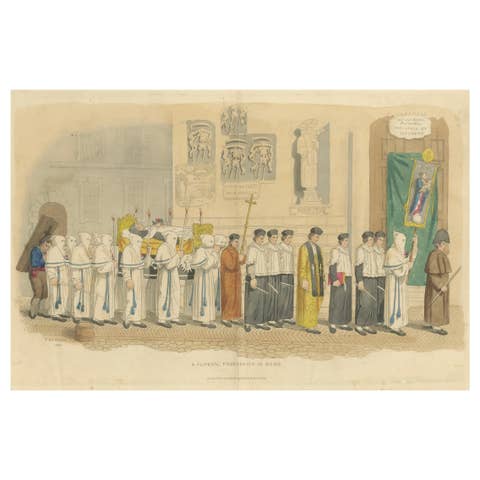
Procession to the Colosseum Through the Arch of Titus, Rome, 1824
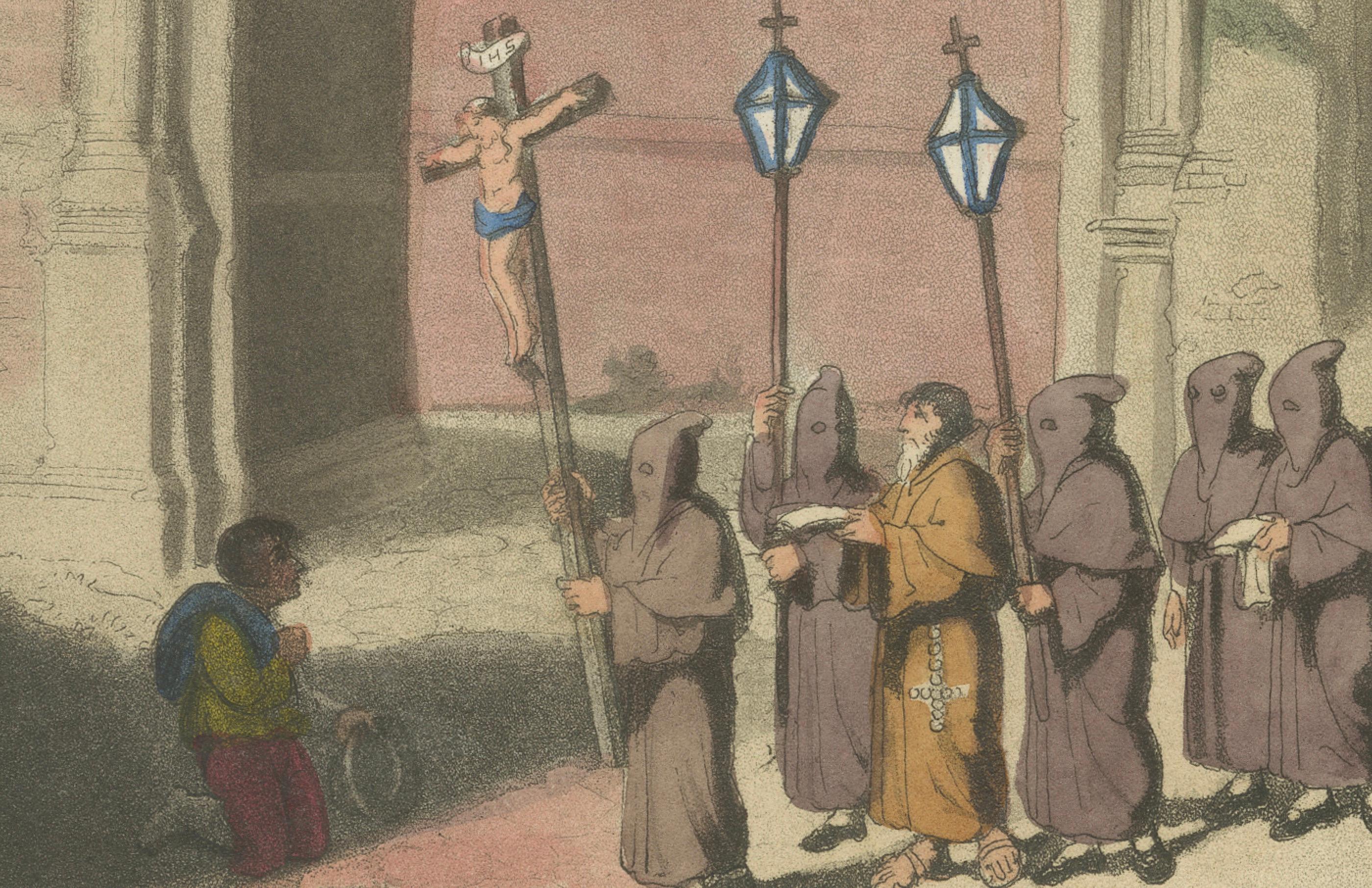
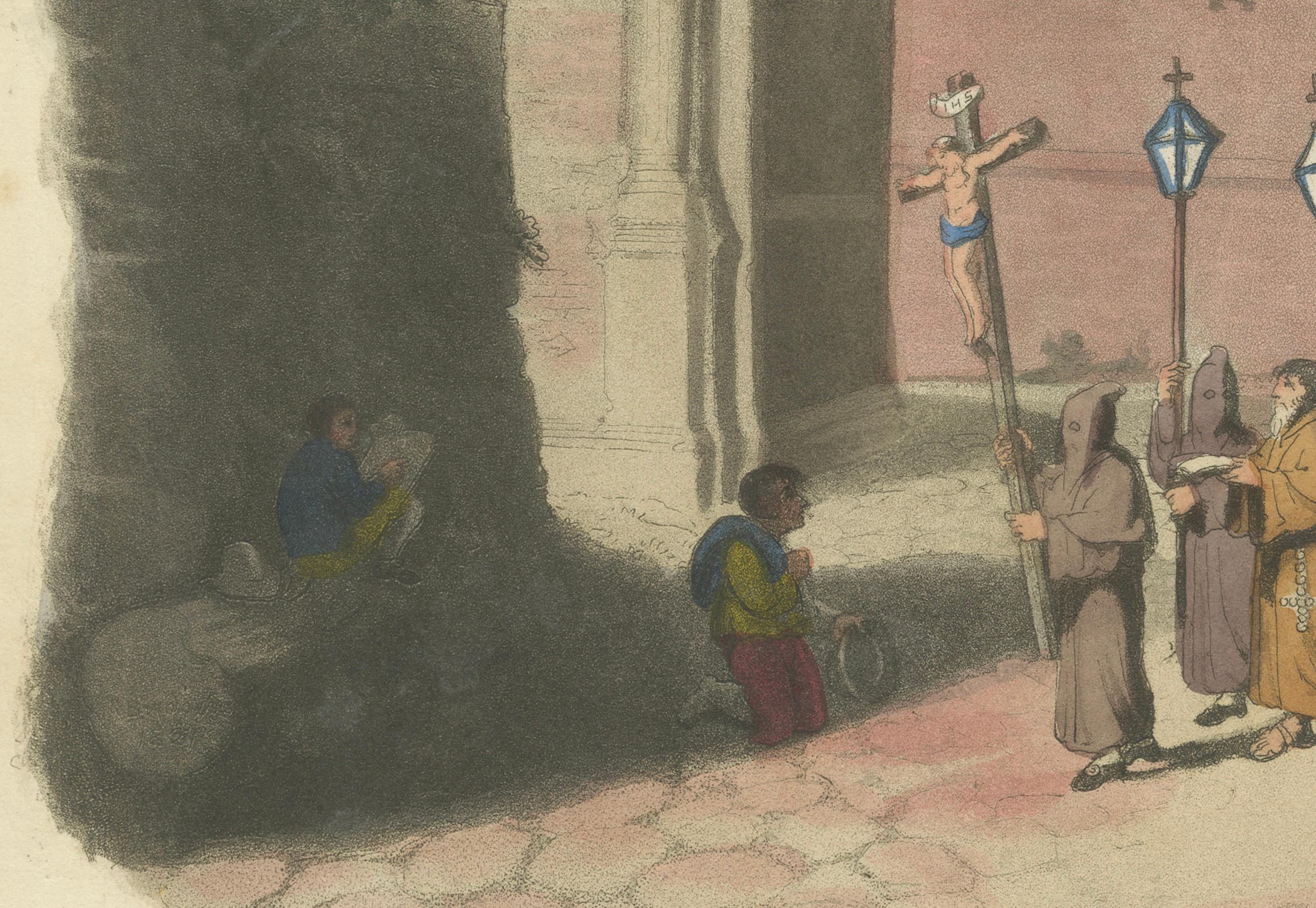
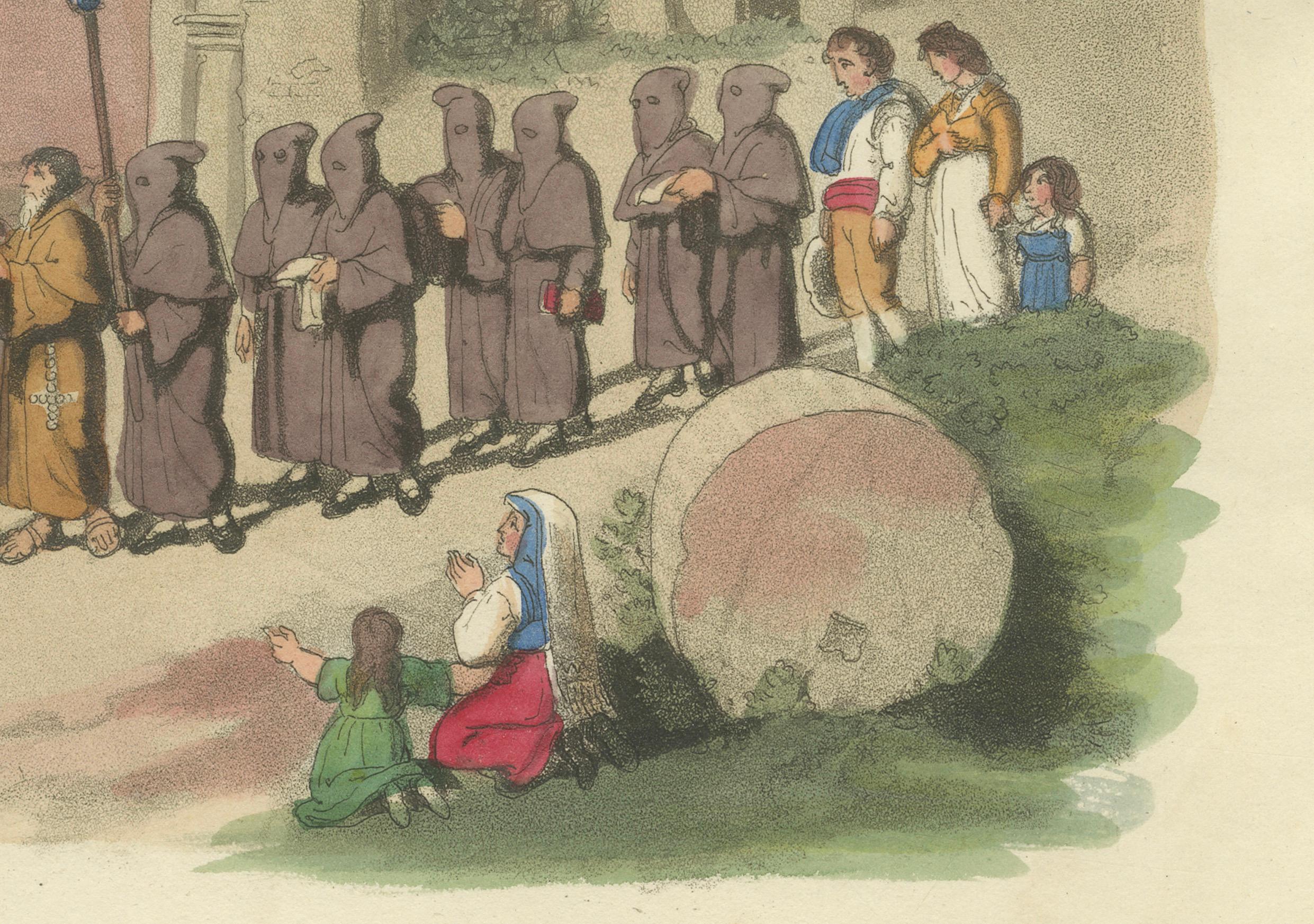
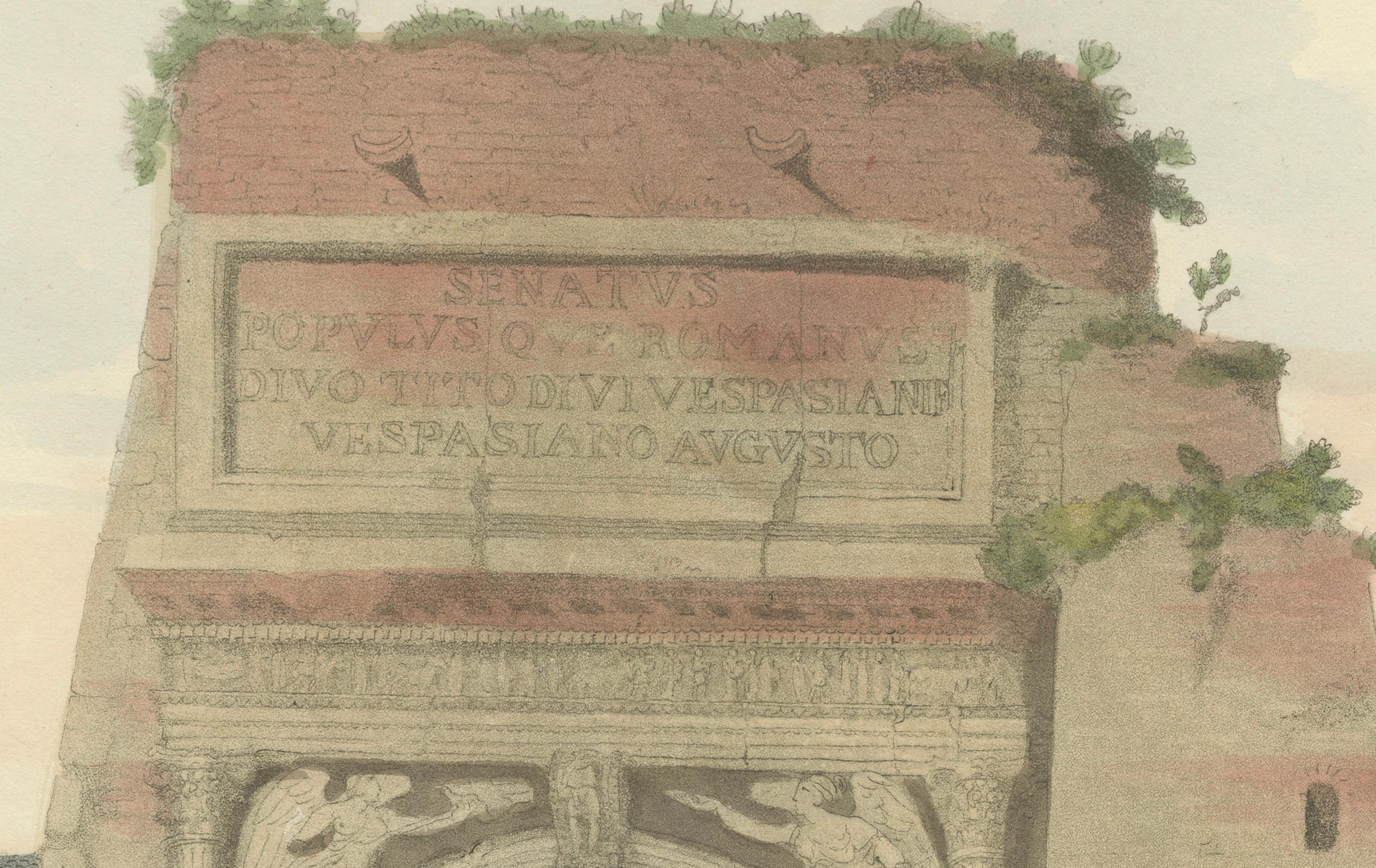
This captivating hand-colored engraving titled “Procession to the Colosseum” depicts a solemn religious scene unfolding beneath the ancient Arch of Titus in Rome. A line of hooded friars, monks, and local townspeople make their way in devotional silence toward the historic amphitheater, carrying crucifixes and lanterns. In the foreground, women and children observe with reverence, highlighting the communal and multigenerational nature of Catholic processions during the early 19th century.
The Arch of Titus, a 1st-century Roman triumphal arch commemorating Emperor Titus’s victories, serves here as both a physical and symbolic threshold—linking classical antiquity to the living religious traditions of modern Rome. The juxtaposition of the aged monument, with its crumbling stonework overgrown with ivy, and the vibrant procession illustrates how the sacred and the historic intertwine in everyday life.
This engraving was published in London in 1824 by William Sams, known for his richly colored costume and ceremonial prints intended to inform and delight British audiences with depictions of continental life. The work likely comes from a larger series capturing papal rituals and Italian customs. The detailed rendering of figures, accurate architectural portrayal, and subtle color palette—faded pink skies, ochres, and rich earth tones—are typical of the refined taste of the Regency period.
The print is both documentary and decorative, ideal for collectors of ecclesiastical art, travel history, or Grand Tour-era imagery. It invites the viewer into a timeless moment of ritual and reverence, framed by one of Rome’s most iconic ruins.
Condition report:
Good condition with fresh coloring and only minor edge spotting. Crisp impression on strong paper. Wide margins suitable for mounting.
Framing tips:
Pair with a walnut or aged gold frame and a light beige or stone-colored mat. Ideal against ivory or pale gray walls to enhance the soft pastel tones and classical atmosphere of the print.