The Otter’s Catch: A Masterpiece Engraving from Johann Daniel Meyer, ca.1750
€ 360
One of a kind: this is the sheet in the photographs. Ships from Langweer, the Netherlands.
Date
1750
Sheet size
45.5 × 30 cm (17.9 × 11.8 in)
Reference
BG-13674-13
Condition
good, given age. General age-related toning and/or occasional minor defects and dirt from handling. Hand-pressed paper with watermark. Please study scan carefully.
About this sheet
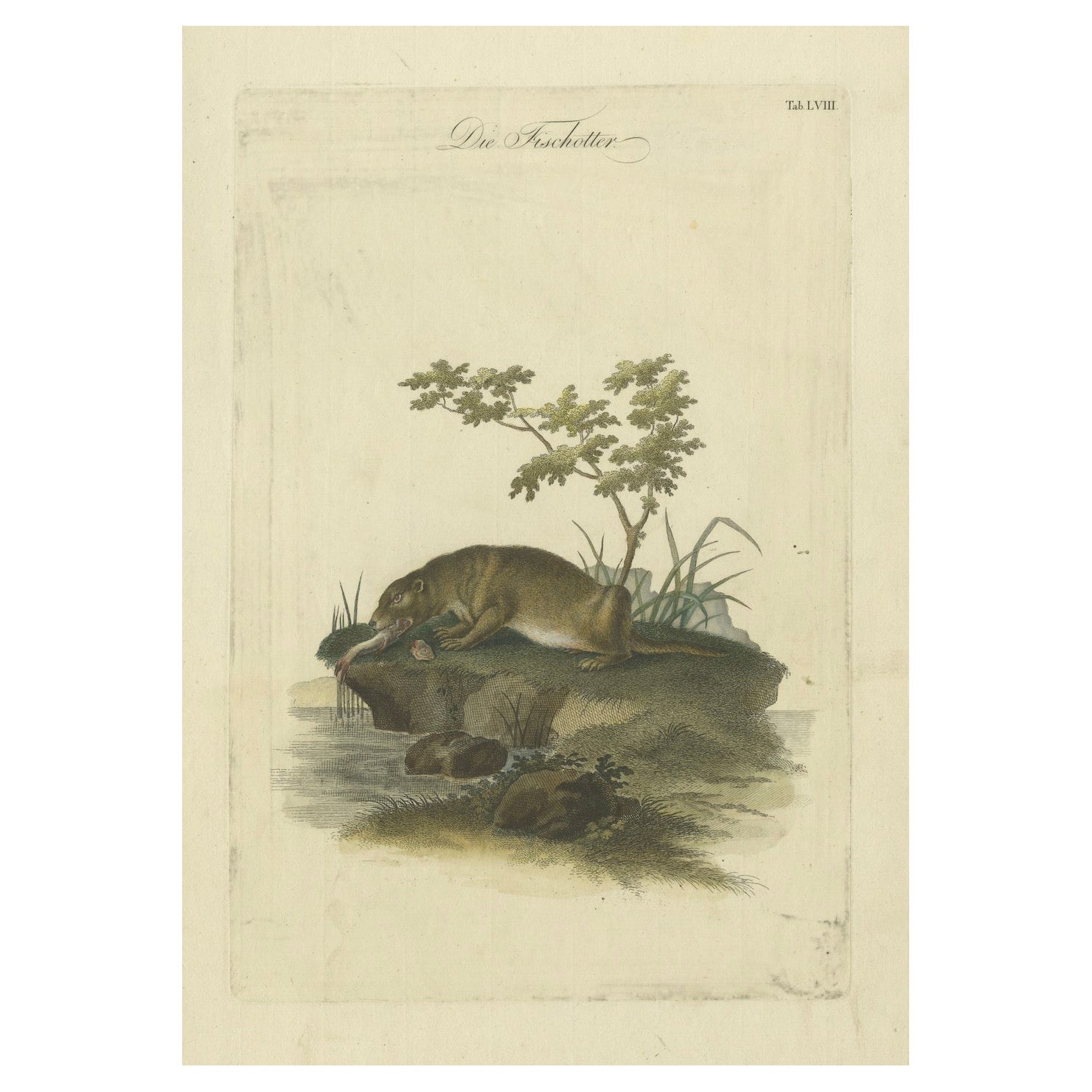
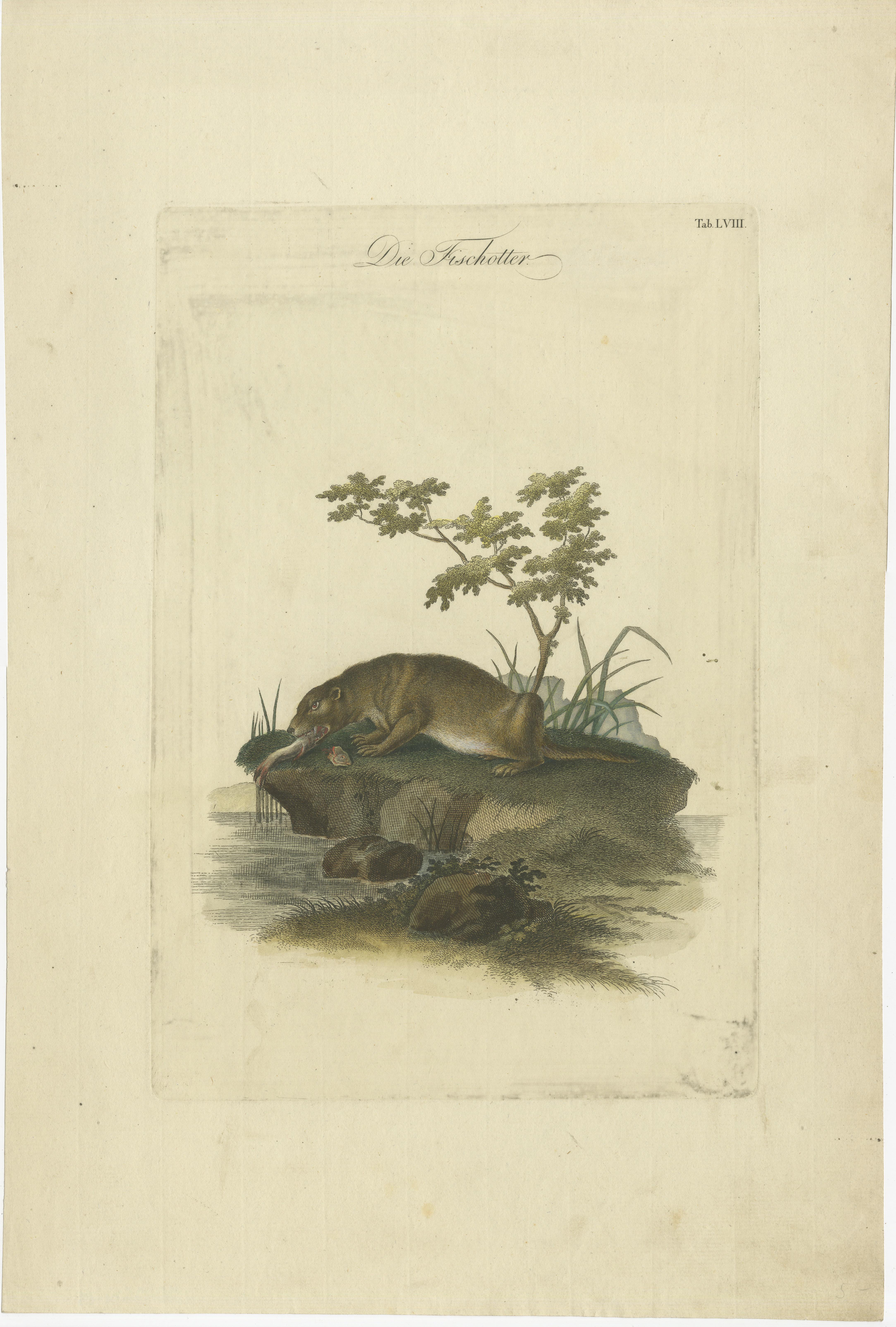
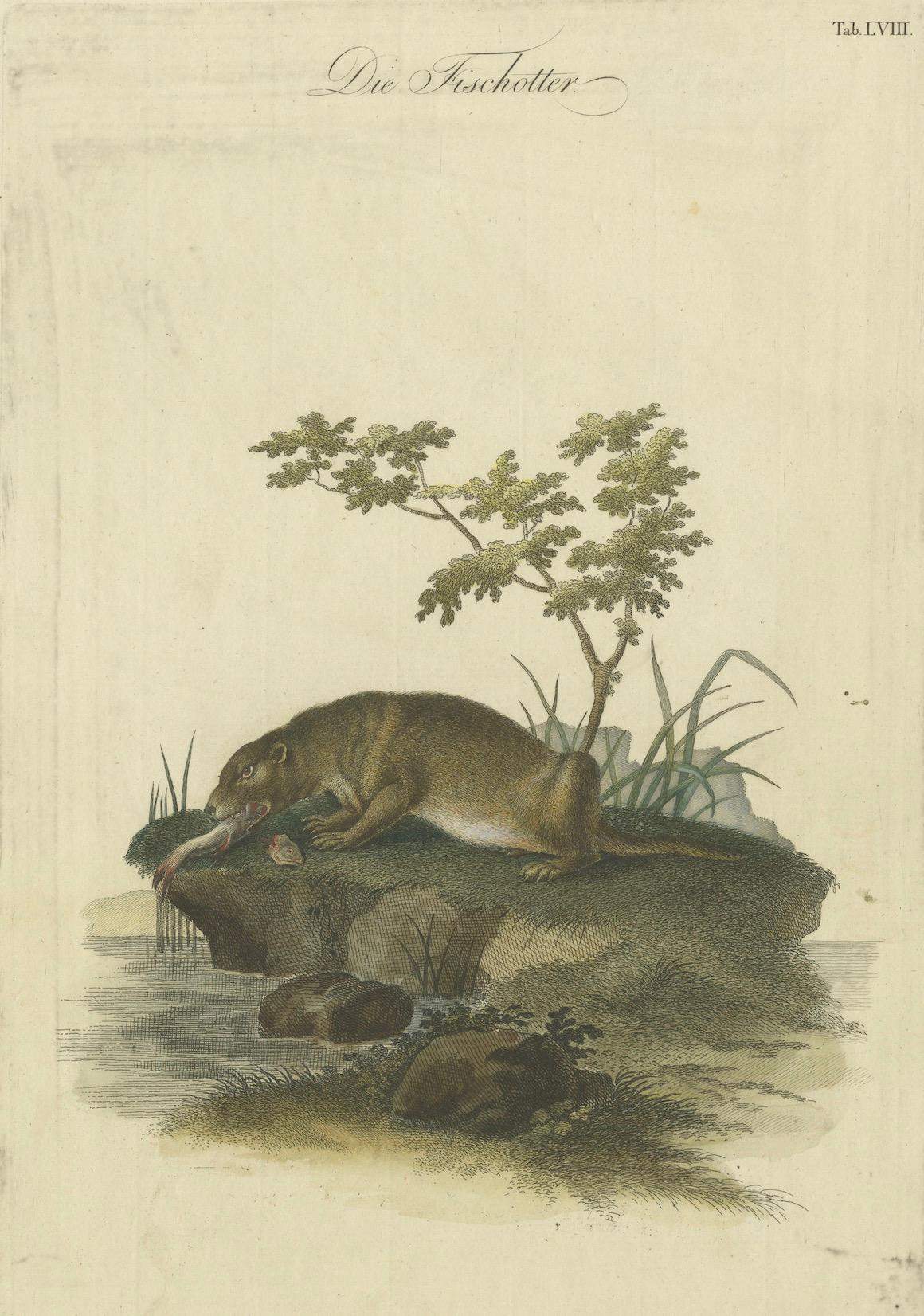
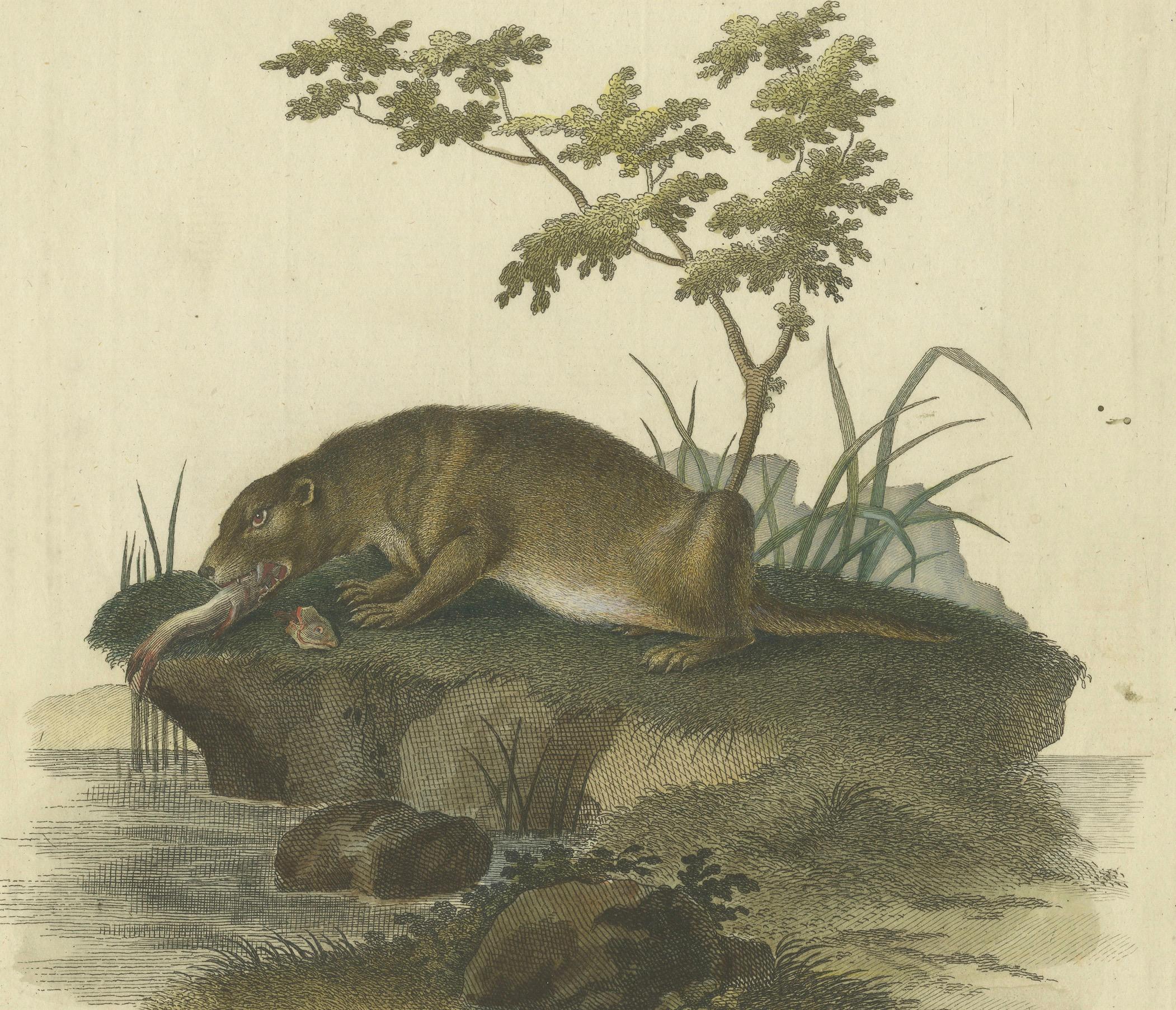
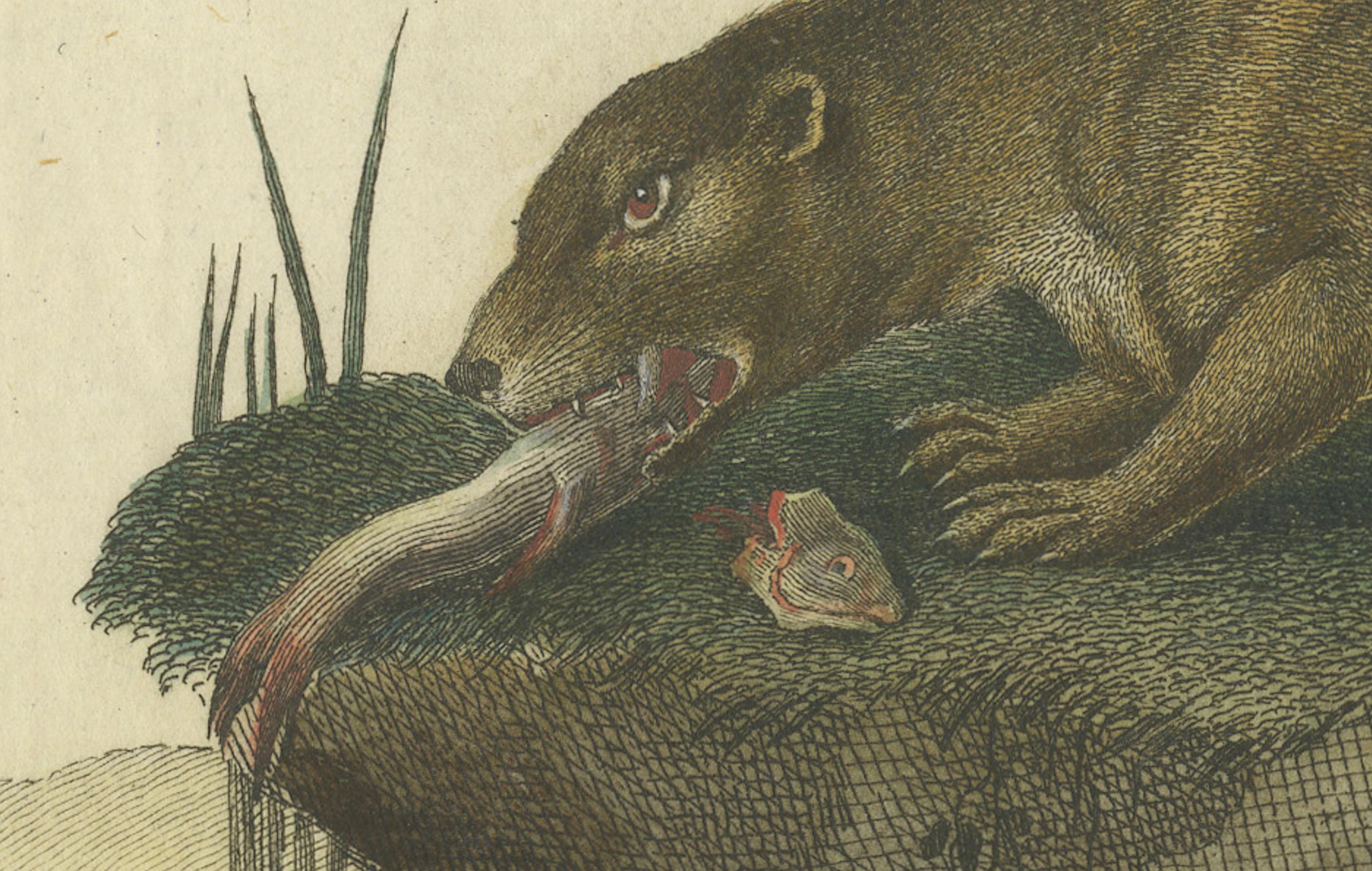
This engraving, titled "Die Fischotter" and marked as Tab.LVIII, depicts an otter in a natural setting, engaging in its typical behavior of eating a fish. This work is from Johann Daniel Meyer's "Angenehmer und nützlicher Zeitvertreib durch allerhand anmuthige und lehrreiche Vorstellungen von allerley Thieren, welche in der Luft, auf der Erde und im Wasser leben" (Pleasant and Useful Pastime of Curious Ideas of All Kinds of Animals that Live and Feed on Land and in Water), published between 1748 and 1756.
Description of the Print
The image showcases a single otter on a riverbank under a small tree, actively consuming a fish. The naturalistic scene is depicted with a high level of detail and accuracy in both the otter's fur and the surrounding environment, including water, rocks, and vegetation. The otter is portrayed in mid-action, which adds a dynamic quality to the scene.
Technique and Artistry
The technique used is a colored copperplate engraving, a method prevalent in the 18th century for high-quality scientific illustrations. This particular print is noted for its careful contemporary coloring, which enhances the visual appeal and realism of the scene. The wide margins and perfect condition of the print suggest that it was well-preserved, making it a valuable collector’s item.
About the Maker
Johann Daniel Meyer was a notable miniature painter, engraver, and art dealer based in Nuremberg. His work primarily focused on detailed and scientifically accurate representations of animals, contributing significantly to the zoological knowledge of the period. Meyer's engravings are celebrated for their artistic quality and precision, making them among the most beautiful German zoological works of the 18th century.
Year of Work
The work was published during a period from 1748 to 1756, aligning with the flourishing of natural history studies and the widespread interest in cataloging and understanding the natural world.