1751 Engraving of Roman Fountain and Church - Fountain of Moses and Santa Maria
€ 1 440
Original antique · The actual sheet photographed · Certificate of authenticity on request · Sold unframed · Worldwide shipping from € 15 (rates)
Date
1751
Sheet size
41.4 × 69.5 cm (16.3 × 27.4 in)
Reference
BHZ8997
What the condition grades mean
Excellent
Bright and clean, with no faults worth mentioning.
Very good
Only light signs of age, such as faint toning.
Good
Normal signs of age for a sheet of this period: toning, some foxing, small marks or neat old repairs.
Fair
Clear faults such as staining, tears or repairs, priced to match.
Every fault we see is written in the condition note, and the whole sheet is shown uncropped in the photos.
Condition
This piece is in very good condition, with crisp impressions and narrow but clean margins. The paper has minimal signs of aging, ensuring its visual impact. Please review the images for further condition details.
About this sheet
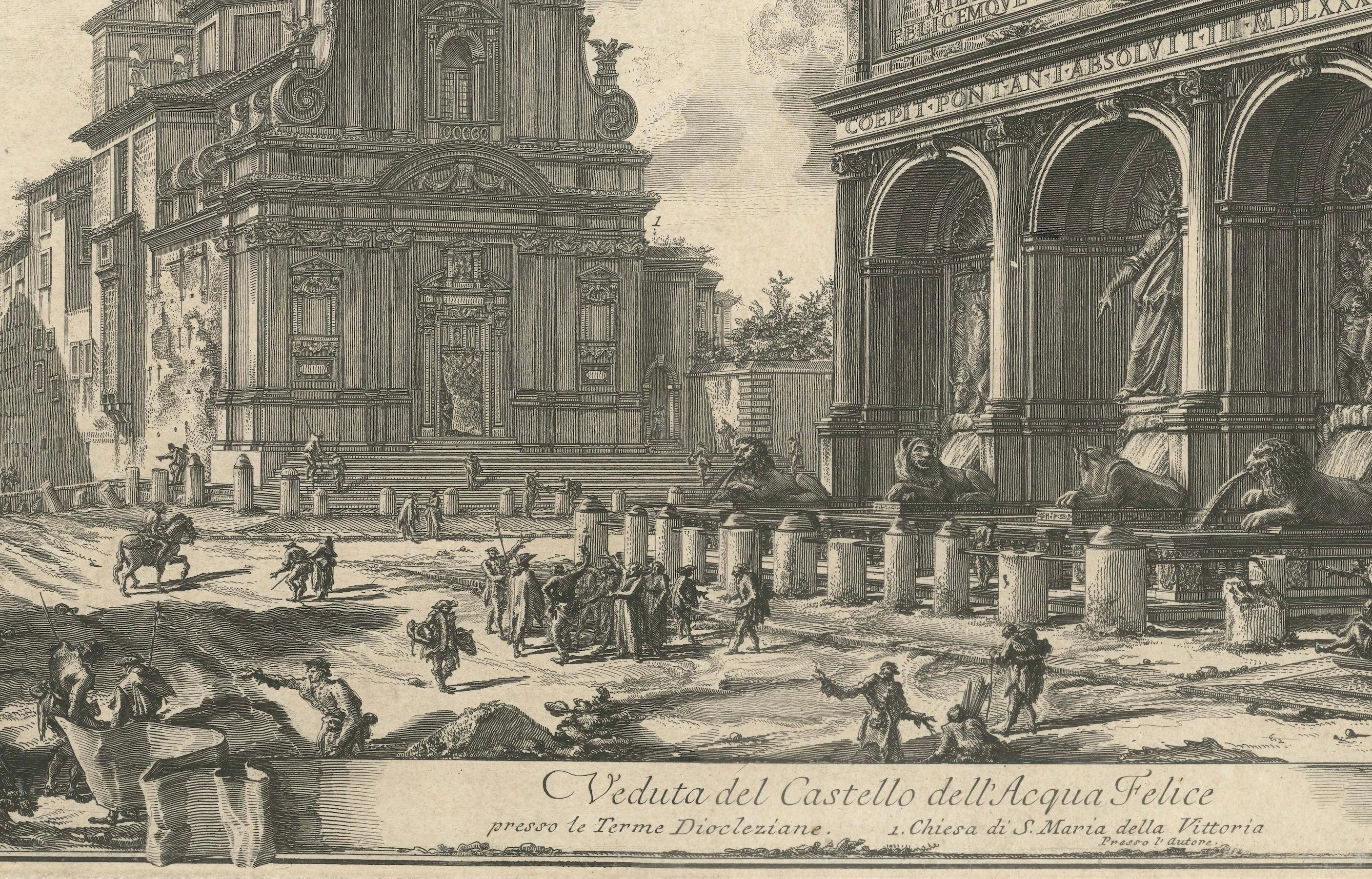
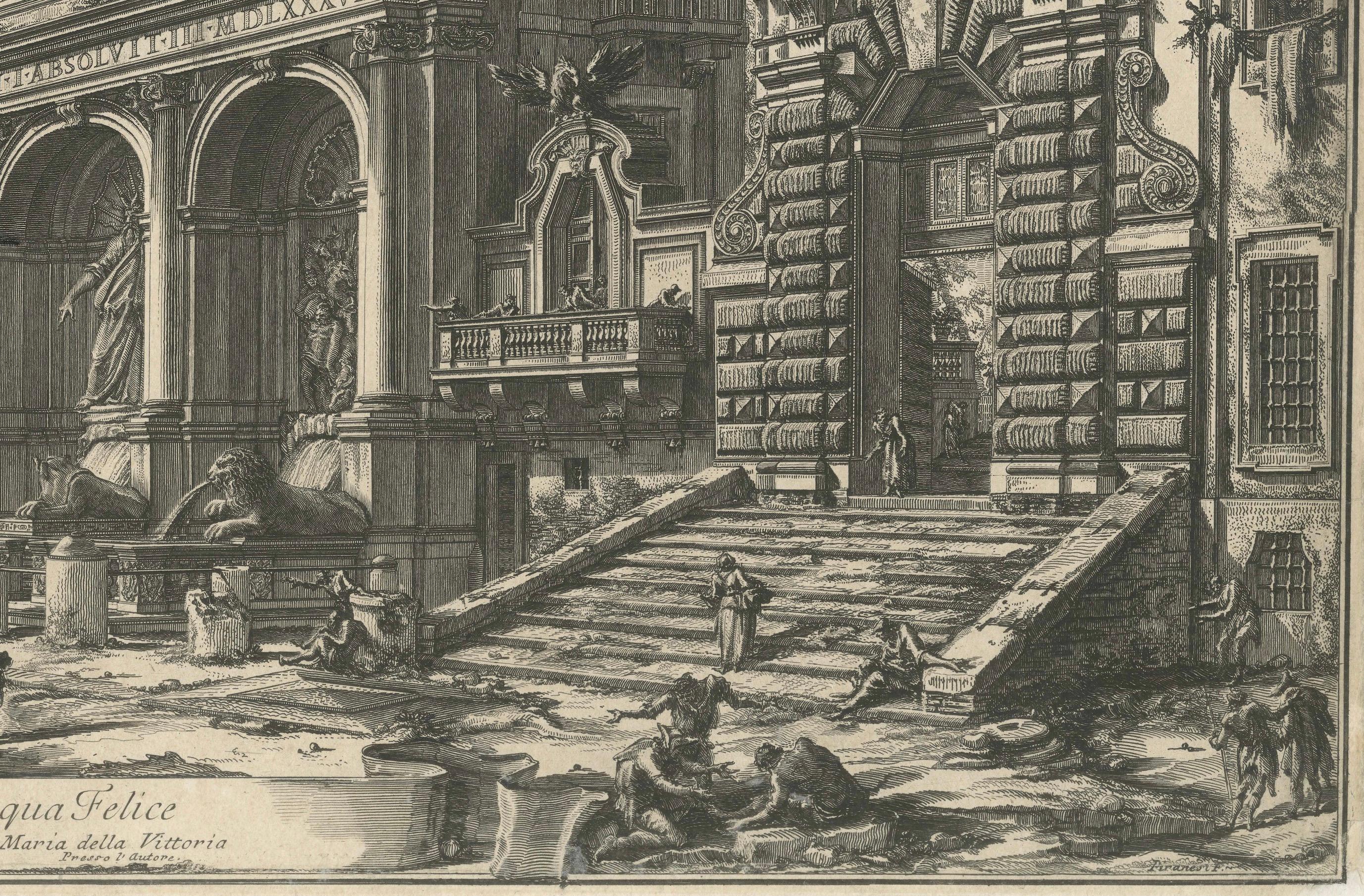
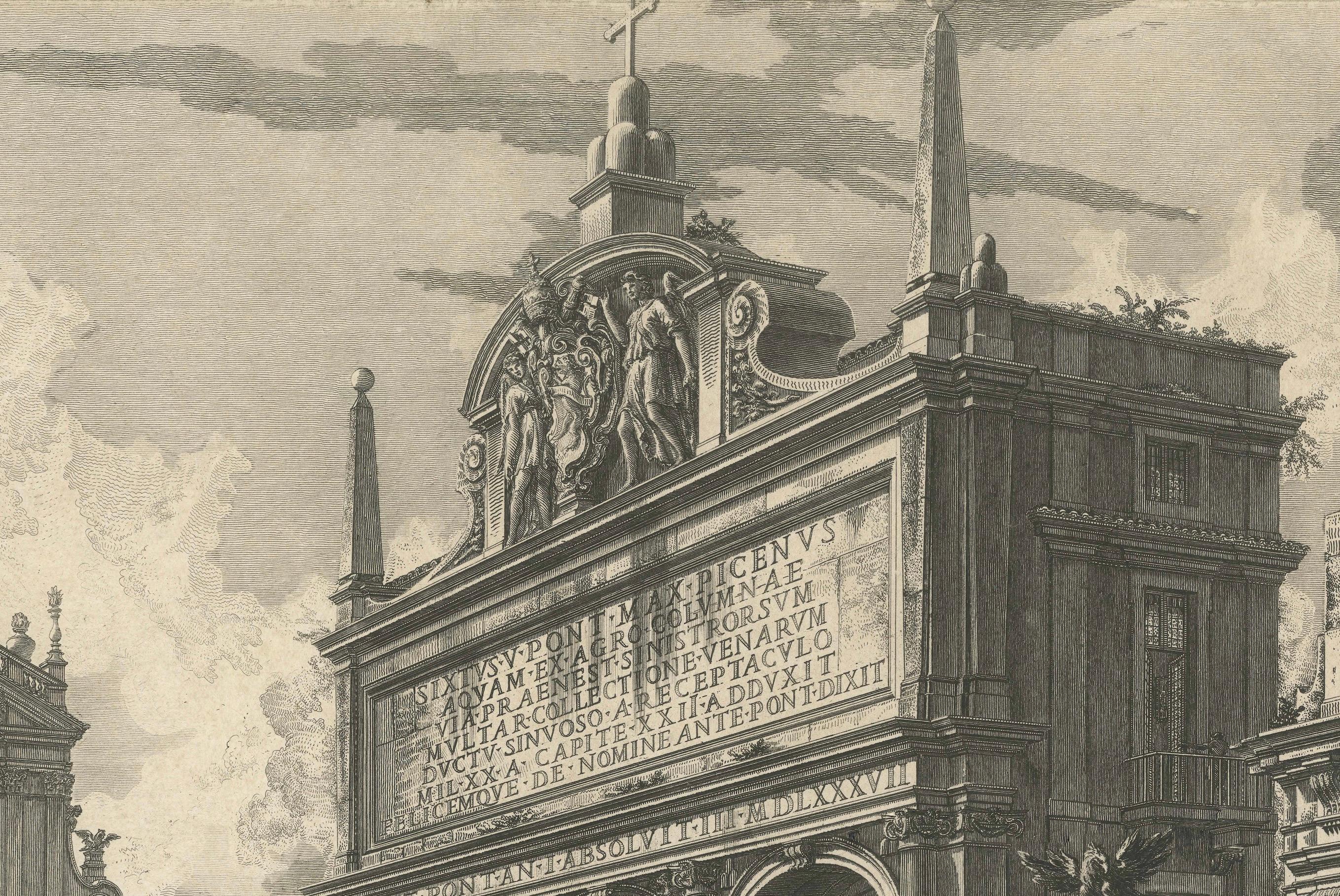
1751 Giovanni Battista Piranesi Engraving - Veduta del Castello dell'Acqua Felice This exquisite engraving by Giovanni Battista Piranesi, Veduta del Castello dell'Acqua Felice, was created in 1751 as part of his monumental series Vedute di Roma. Piranesi, a celebrated engraver, printmaker, and antiquarian, was renowned for his masterful depictions of Roman architecture, blending historical accuracy with dramatic flair.
The artwork captures the grandiose Fountain of Moses (Castello dell'Acqua Felice) and the adjacent church of Santa Maria della Vittoria, combining architectural precision with imaginative perspective. Piranesi’s exceptional skill in manipulating light, shadow, and perspective elevates the scene, immersing the viewer in the grandeur of 18th-century Rome. The engraving not only serves as an artistic masterpiece but also as a historical document, showcasing one of the city's most iconic Baroque fountains, constructed to mark the terminus of the Acqua Felice aqueduct.
Piranesi’s meticulous engraving technique and his ability to dramatize architectural elements reflect his lifelong passion for Roman antiquity. His works were highly sought after by Grand Tourists, making them enduring symbols of 18th-century classical revival and Romanticism. This print is a fine example of his artistic and technical brilliance, suitable for collectors of architectural engravings and Roman history enthusiasts.
Matting and Framing Tips: Use acid-free matting to preserve the engraving’s condition. Opt for a classic black or dark wood frame with a subtle gold accent to enhance its dramatic quality. UV-protective glass is recommended to prevent fading, and proper spacing between the artwork and glass should be maintained. Display in a controlled environment, away from direct sunlight and humidity, to preserve its integrity.