About this sheet
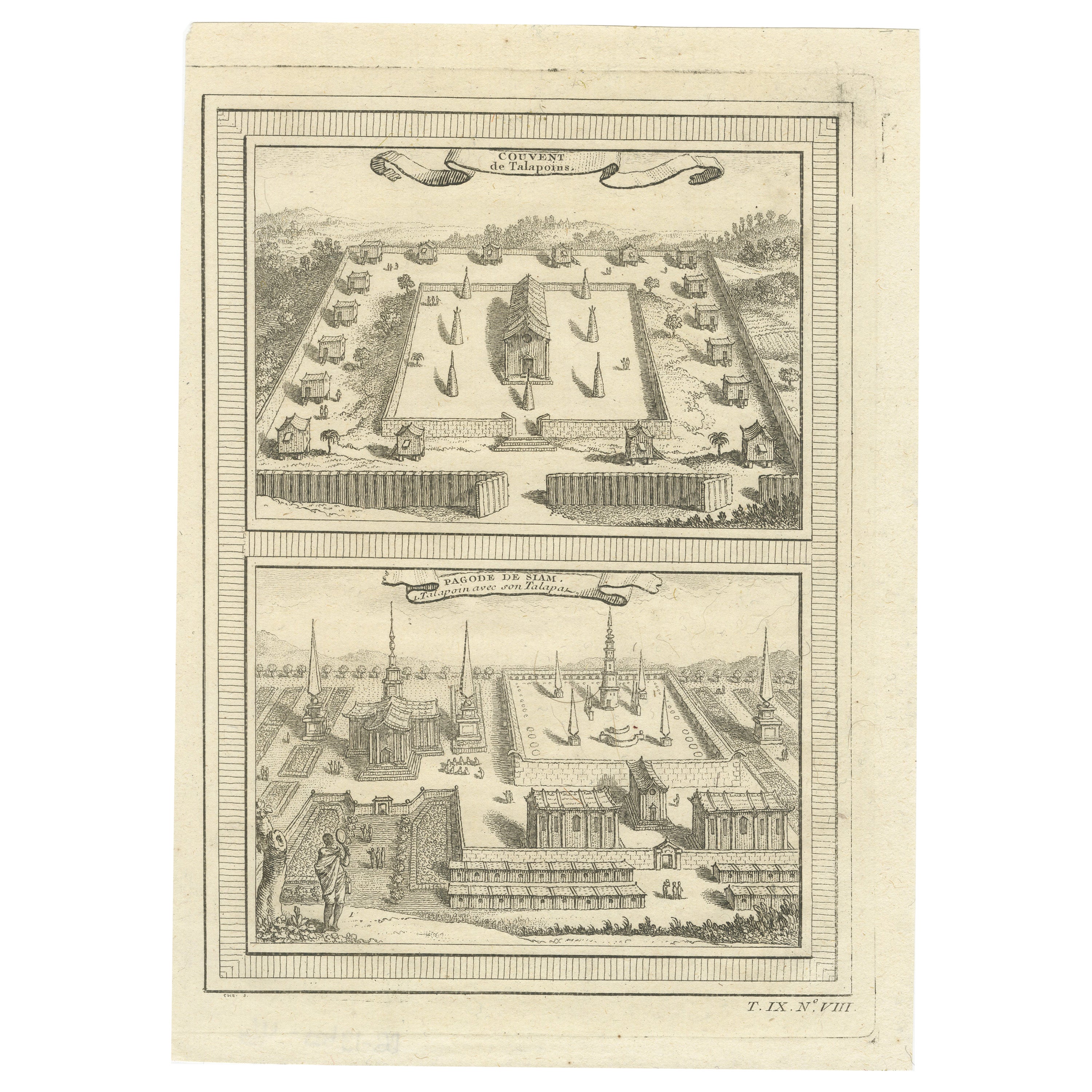
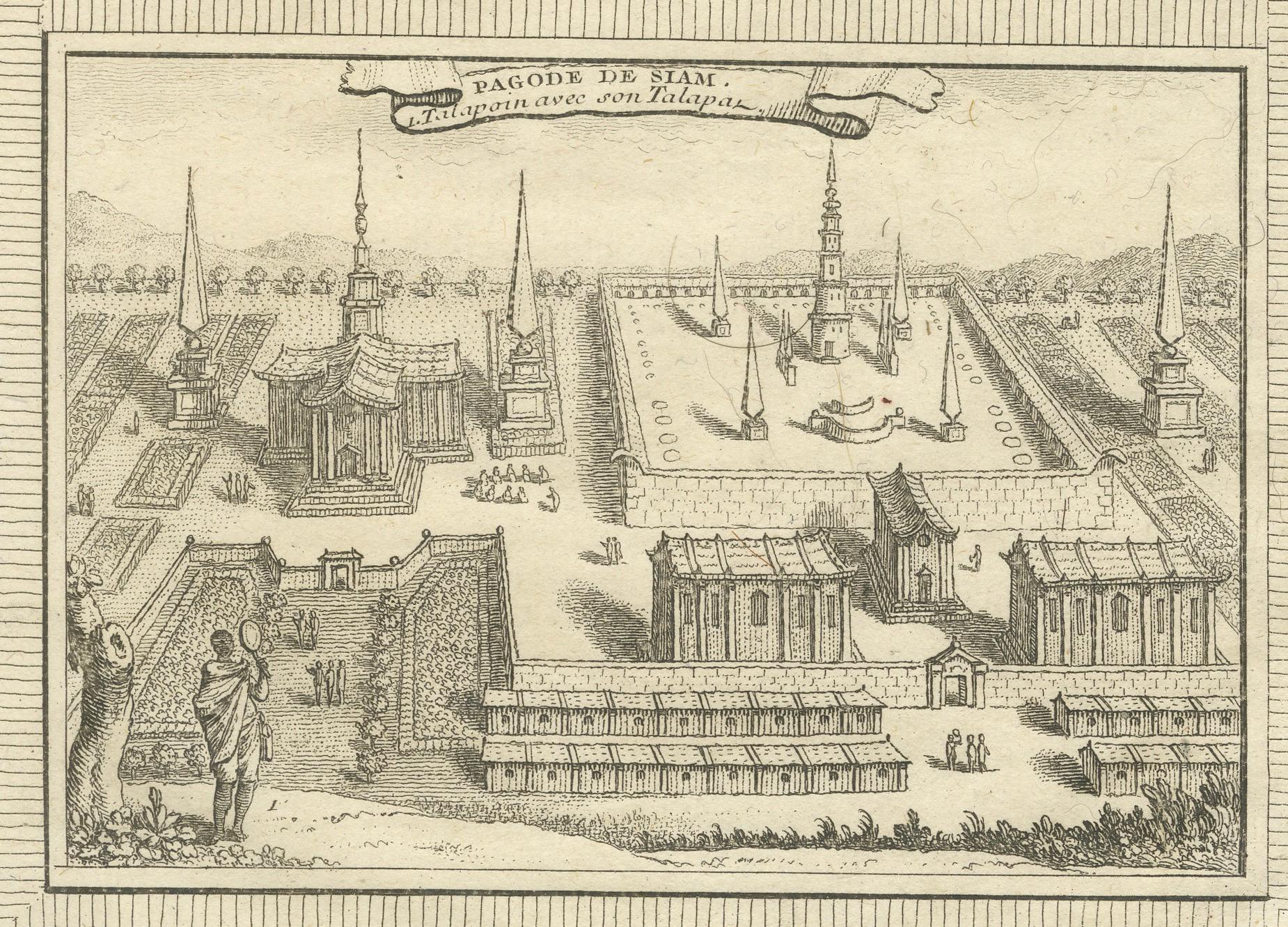
An original antique engraving of two Buddhist temples in Thailand, also known as Siam historically.
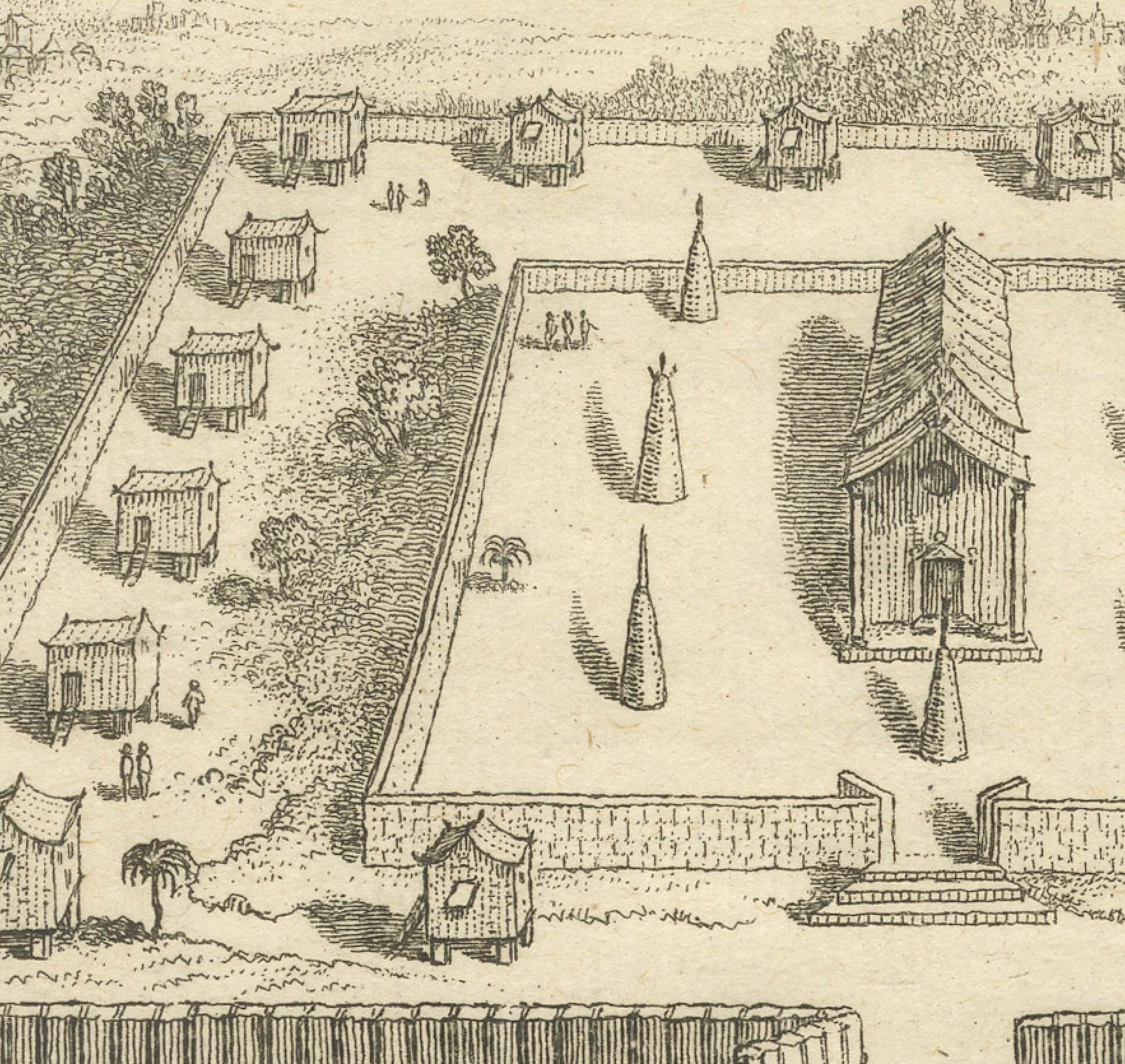
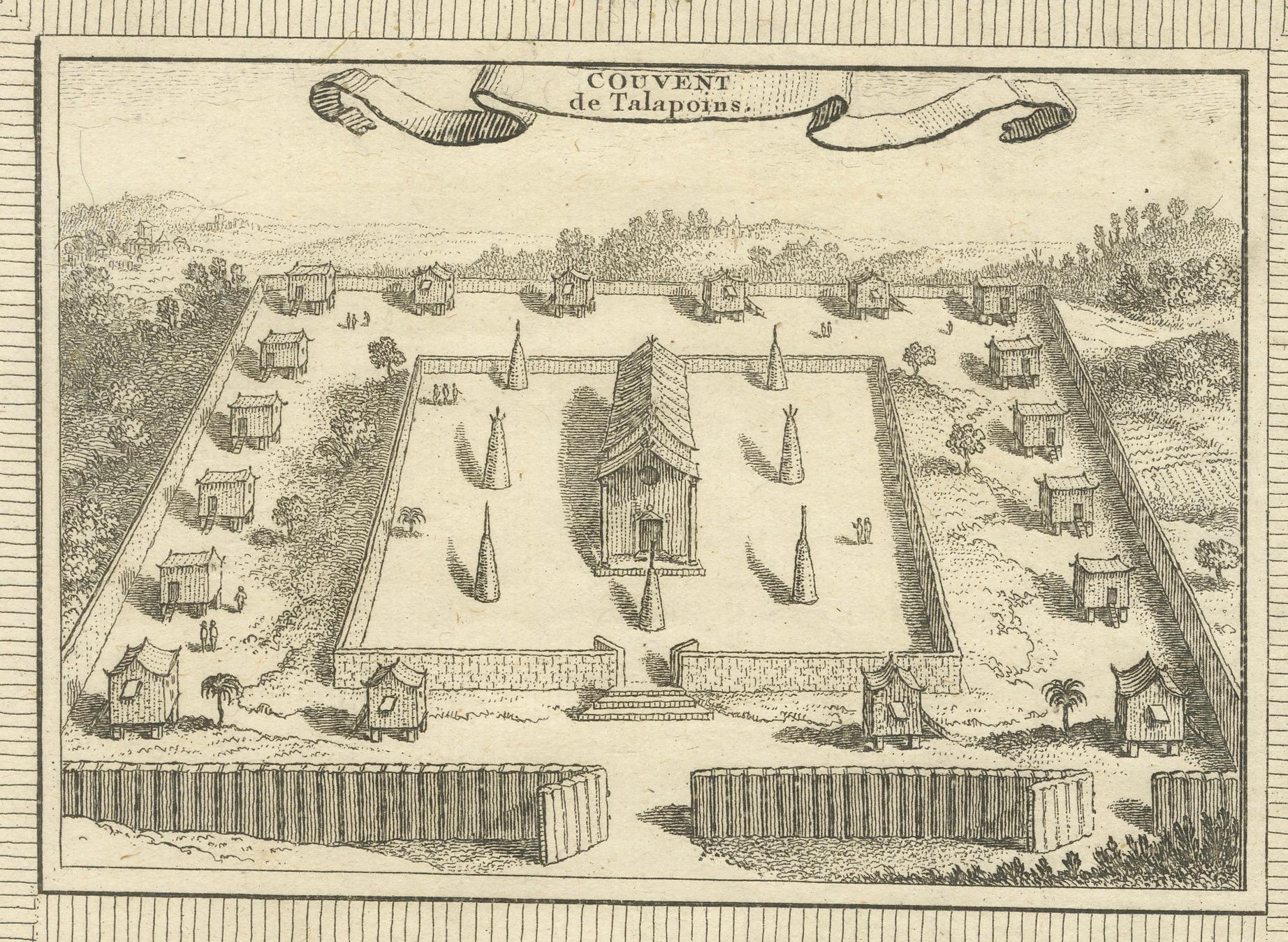
The upper part of the engraving is labeled "COUVENT de Talapoins," which refers to a monastery of Buddhist monks (Talapoin is an older European term for a monk in Southeast Asia, particularly in Thailand). The layout features a central structure surrounded by a courtyard and several smaller buildings, all enclosed within a boundary wall, reflecting the typical design of a Buddhist monastery.
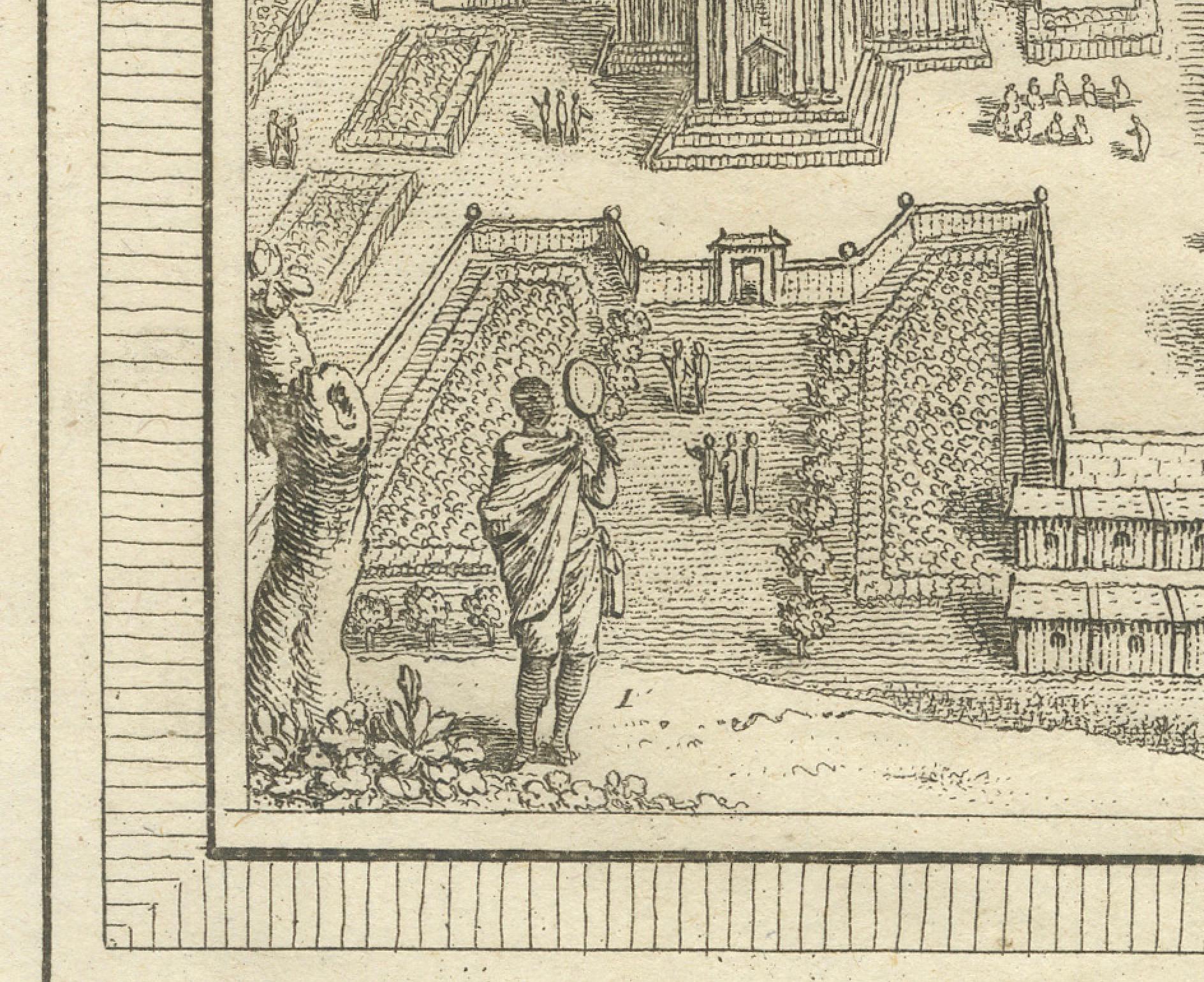
Below that is the "PAGODE DE SIAM," which is the French term for a pagoda in Siam, the name by which Thailand was known to Europeans at the time. This engraving shows a complex of religious buildings, likely a significant temple with multiple spires or stupas, which are common in Thai Buddhist architecture. The central temple structure is surrounded by a walled enclosure and several smaller buildings, indicative of a place of worship and religious study.
Both images show detailed architectural features and give a sense of the religious and cultural importance of these structures. The presence of figures in traditional attire and the serene landscapes surrounding the temples provide context and scale, highlighting the harmonious integration of these spiritual sites with their natural environment.