About this sheet
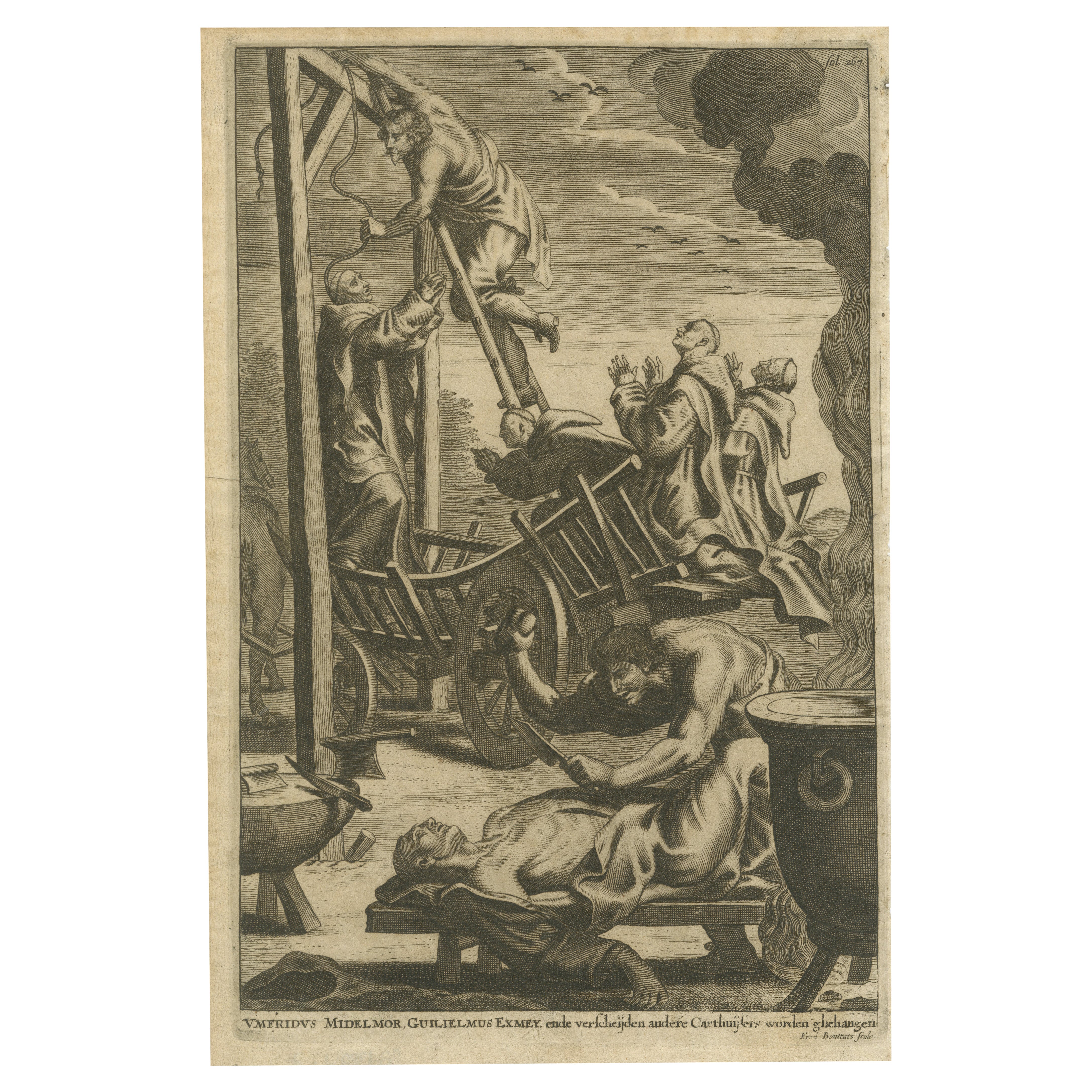
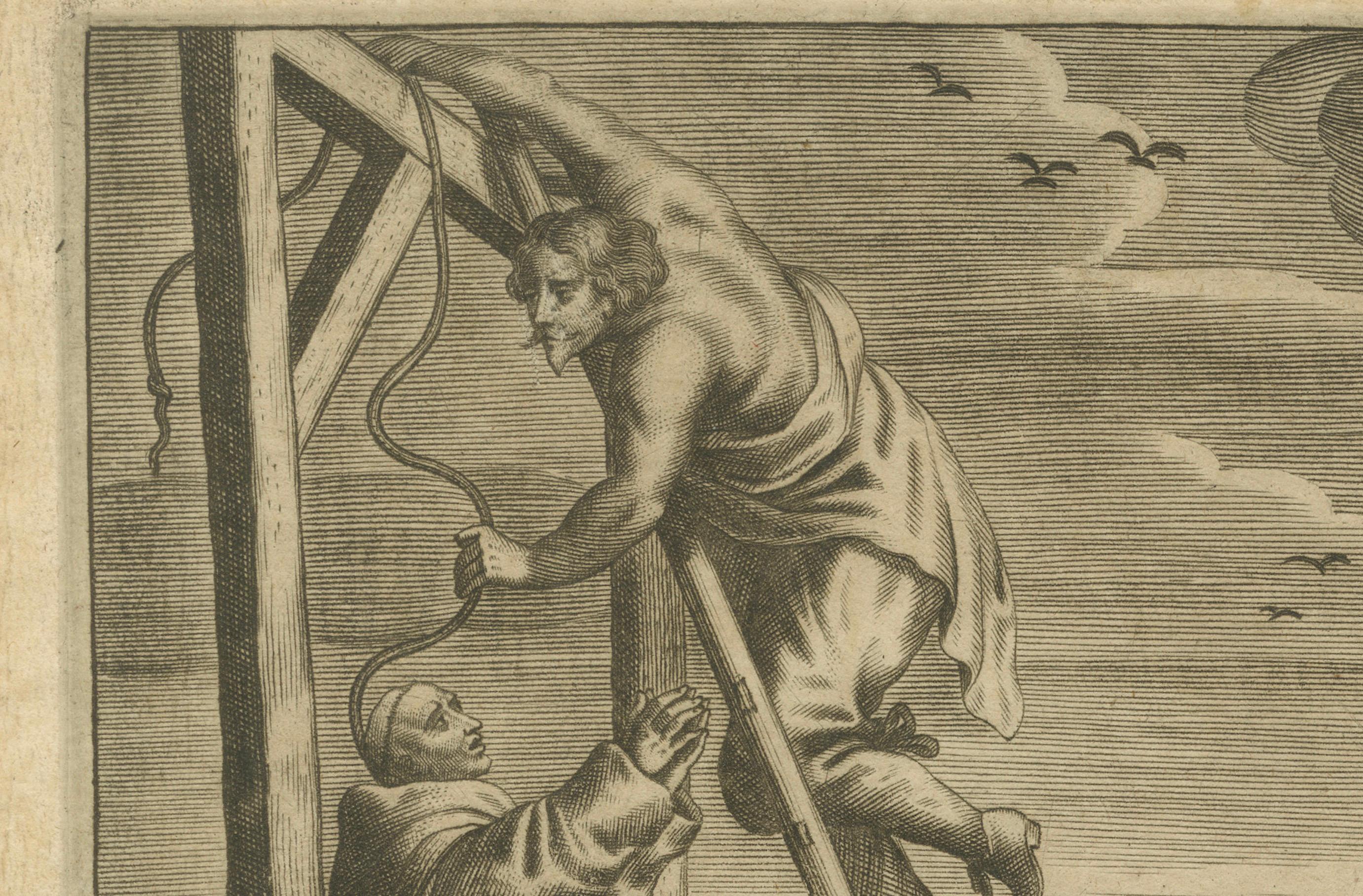
This engraving depicts a group of Carthusian monks being executed, likely by hanging, in a gruesome scene reminiscent of the religious persecution during the Reformation. Here is a detailed analysis, a translated version of the text, and context for the engraving:
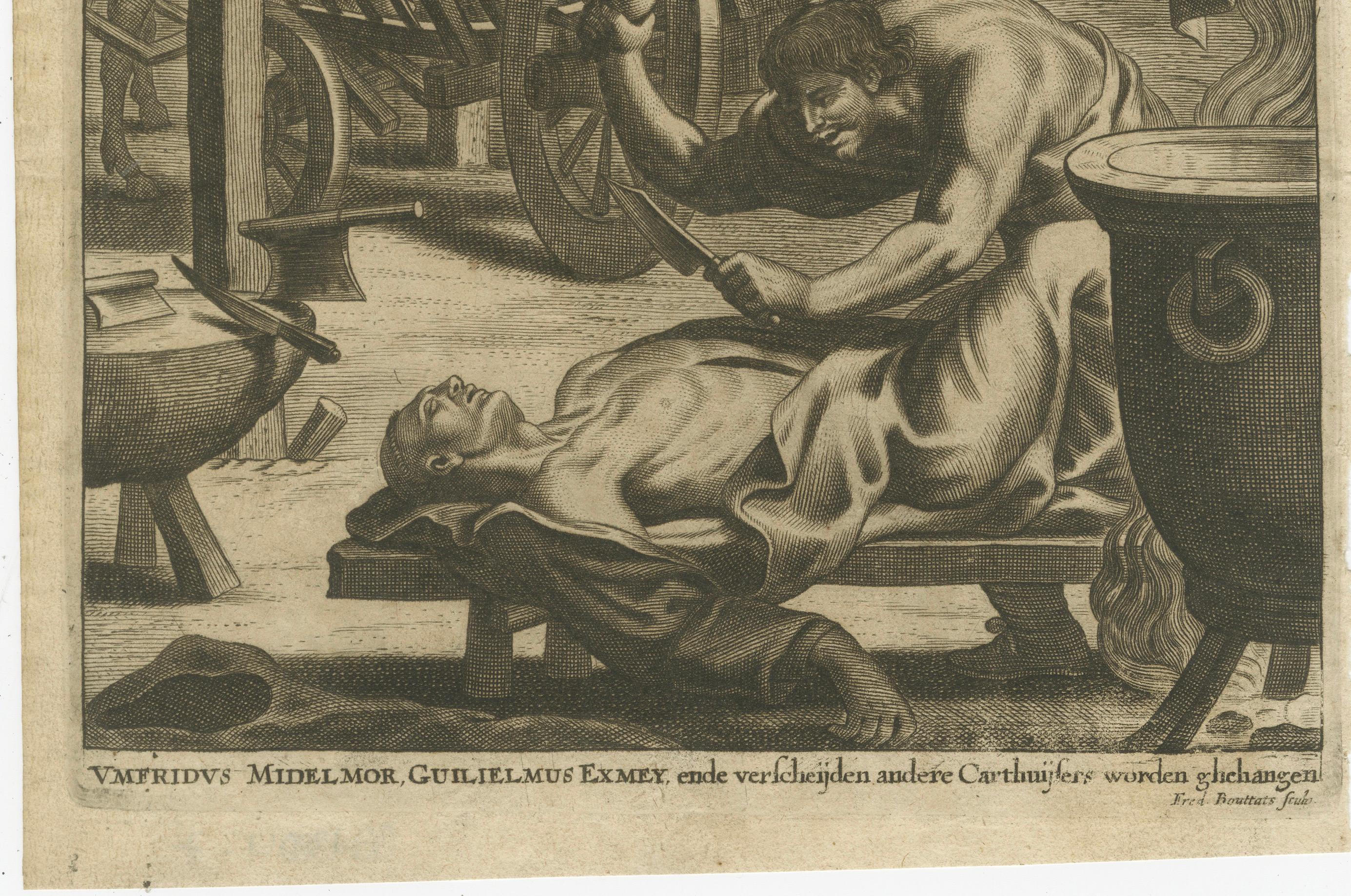
The text at the bottom reads:
"VMFRIDVS MIDELMOR, GULIELMUS EXMEY, ende verscheijden andere Carthuysers worden gehanghen."
Translation: "Humphrey Middlemore, William Exmew, and various other Carthusians are hanged."
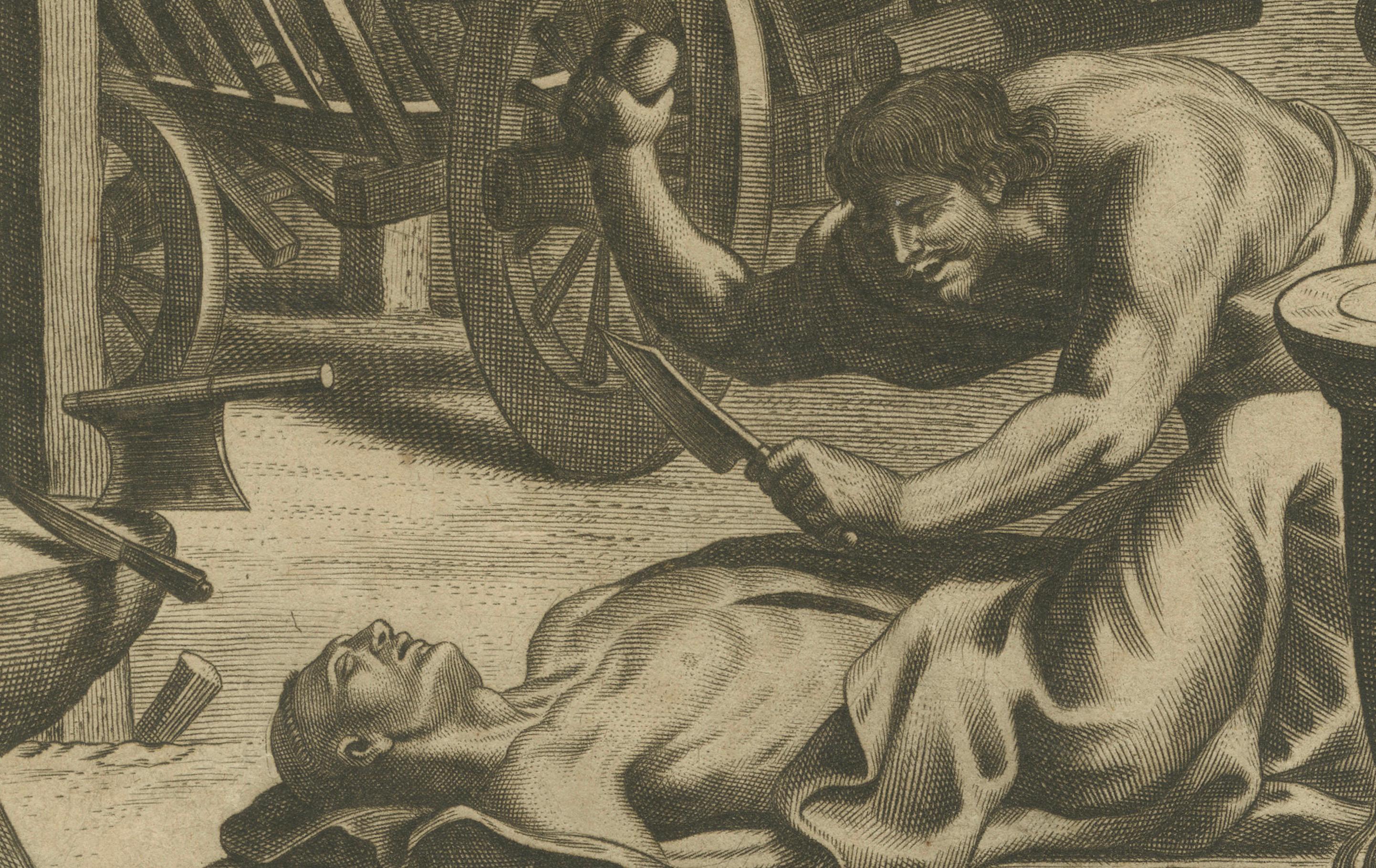
The engraving depicts the martyrdom of Humphrey Middlemore, William Exmew, and several other Carthusian monks, who are shown being hanged. In the foreground, one monk lies dead or unconscious on a bench, while another man—likely the executioner—prepares a knife, suggesting the process of drawing and quartering. A large cauldron stands to the side, further emphasizing the brutality of the execution process.
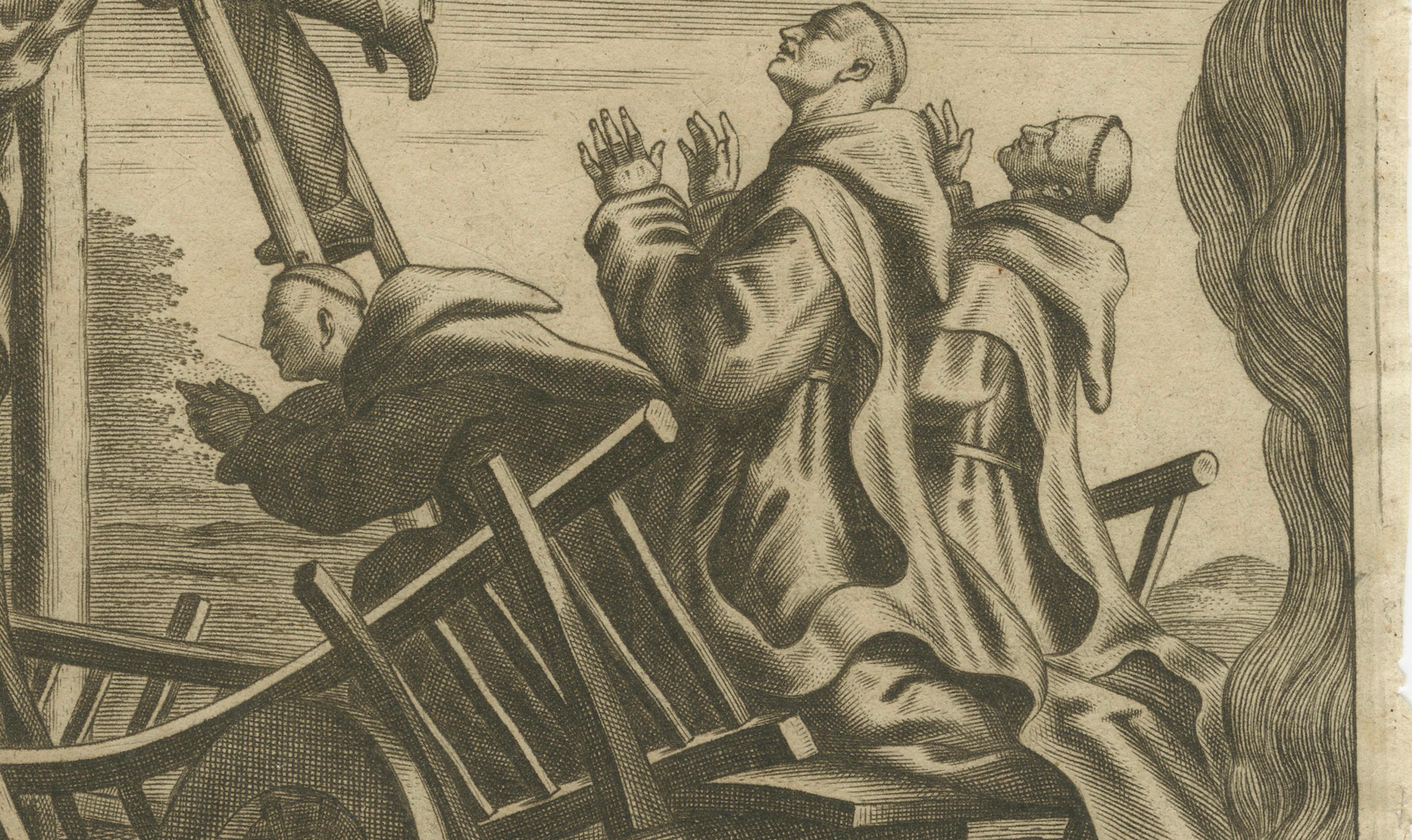
In the background, monks are being pulled in a cart towards the gallows, where others have already been hanged. The expressions of the monks convey both their devotion and the horror of their fate. The dramatic sky and dark clouds, typical of Baroque artwork, add a somber and tense atmosphere to the composition.
The detailed depiction of multiple forms of punishment within a single scene emphasizes the cruelty faced by these religious figures who stood against the religious reforms of King Henry VIII during the English Reformation.
Probable Maker and Source
This engraving likely dates to the late 17th century and may have been made by an artist such as Romeyn de Hooghe or another engraver known for depicting religious and politically charged events. The print style and subject matter—Carthusian monks martyred for their faith—suggest it was part of a series designed to document and evoke sympathy for those who were persecuted for their opposition to Henry VIII's separation from the Catholic Church.
The Carthusians, including Humphrey Middlemore and William Exmew, were notable martyrs who resisted the Dissolution of the Monasteries by Henry VIII. These events took place during a time when the King sought to establish control over the Church in England, resulting in the persecution of those who remained loyal to the Pope.
Significance of the Engraving
This engraving is significant for several reasons:
1. **Historical Context**: It illustrates the brutal punishment of **Carthusian monks** who opposed Henry VIII's religious policies. The depiction of their suffering serves as a stark reminder of the tensions and violence of the **English Reformation**.
2. **Religious Symbolism**: The Carthusian order was known for its asceticism and commitment to faith. This engraving highlights the monks' dedication and the ultimate sacrifice they made for their religious beliefs. It was likely used as **Catholic propaganda** to evoke sympathy and admiration for the martyrs who resisted Protestant reforms.
3. **Artistic Detail**: The detailed, dramatic composition of the scene, characteristic of **Baroque art**, emphasizes the emotional intensity and the tragedy of the event. The use of light and shadow, as well as the dynamic arrangement of the figures, contributes to the overall impact of the engraving.
Medium: Copper engraving on laid paper
Dimensions: Approximately 30 x 20 cm (image size)