About this sheet
Evangelists Matthew and Mark, Pieter Mortier, ca. 1700
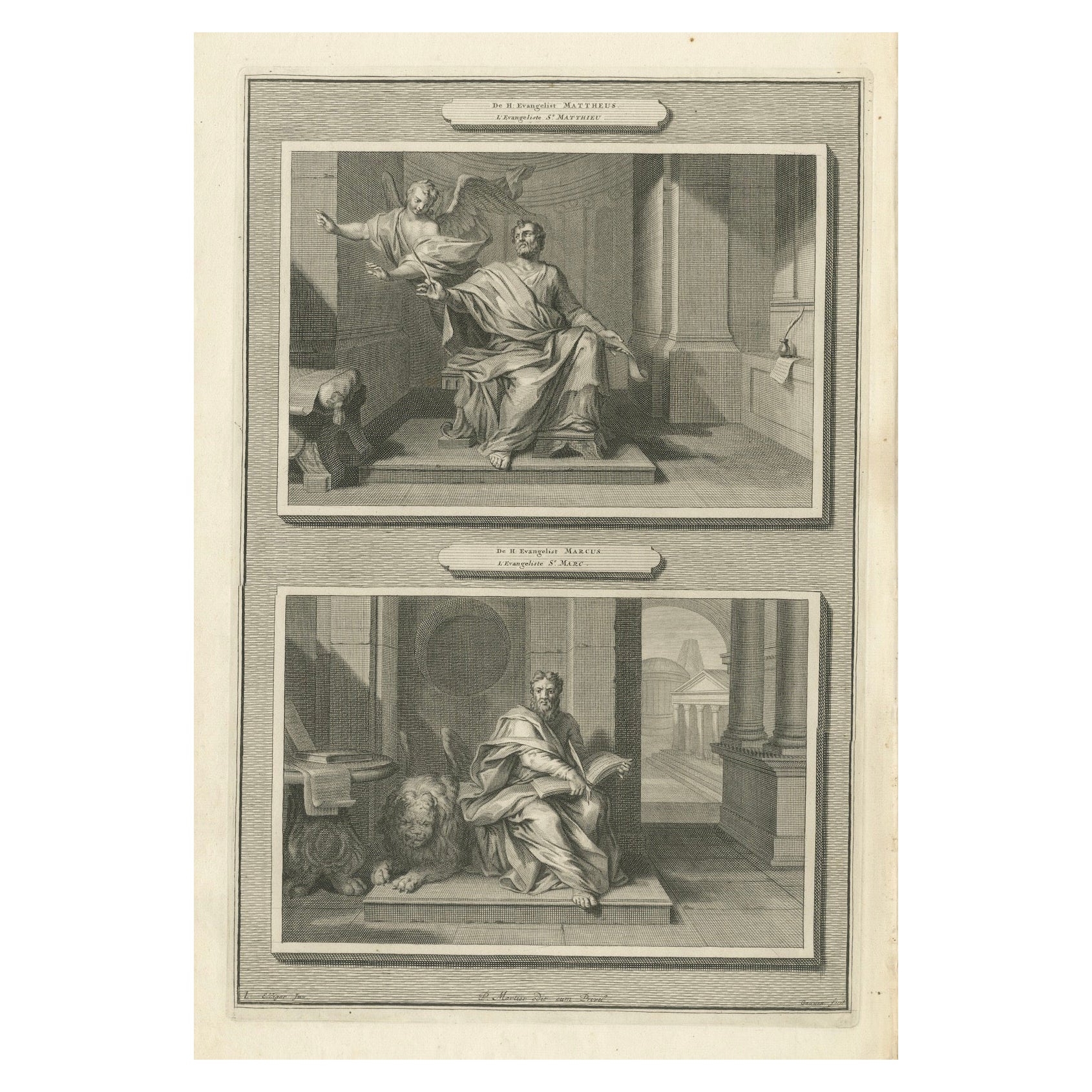
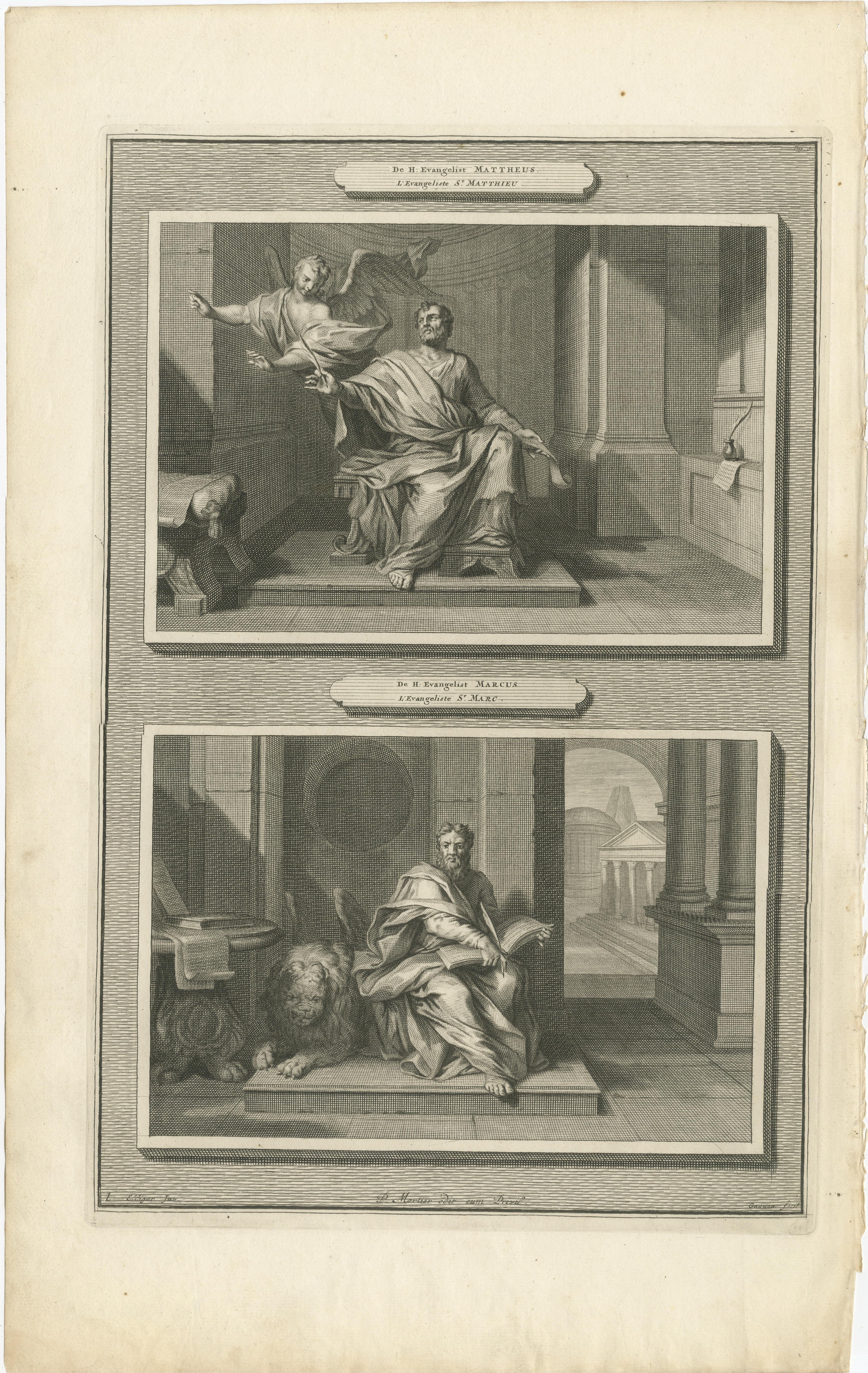
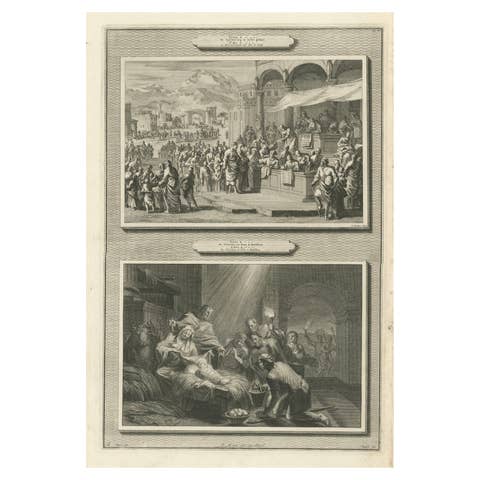
Original antique engraving from Histoire du Vieux et du Nouveau Testament, published in Amsterdam by Pieter Mortier around 1700. This plate presents portrait-style depictions of Saint Matthew and Saint Mark, two of the four Evangelists, each accompanied by their traditional symbols.
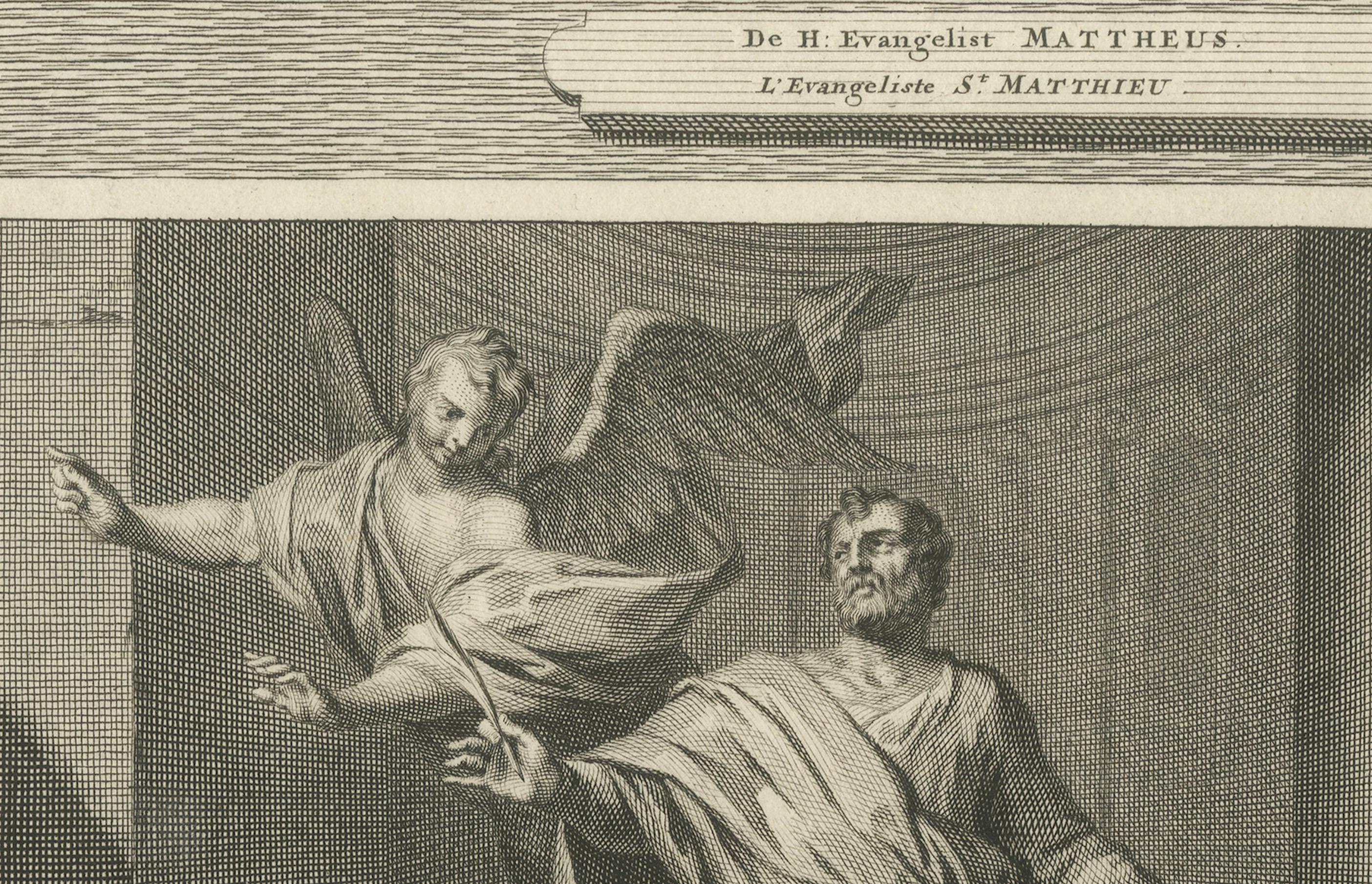
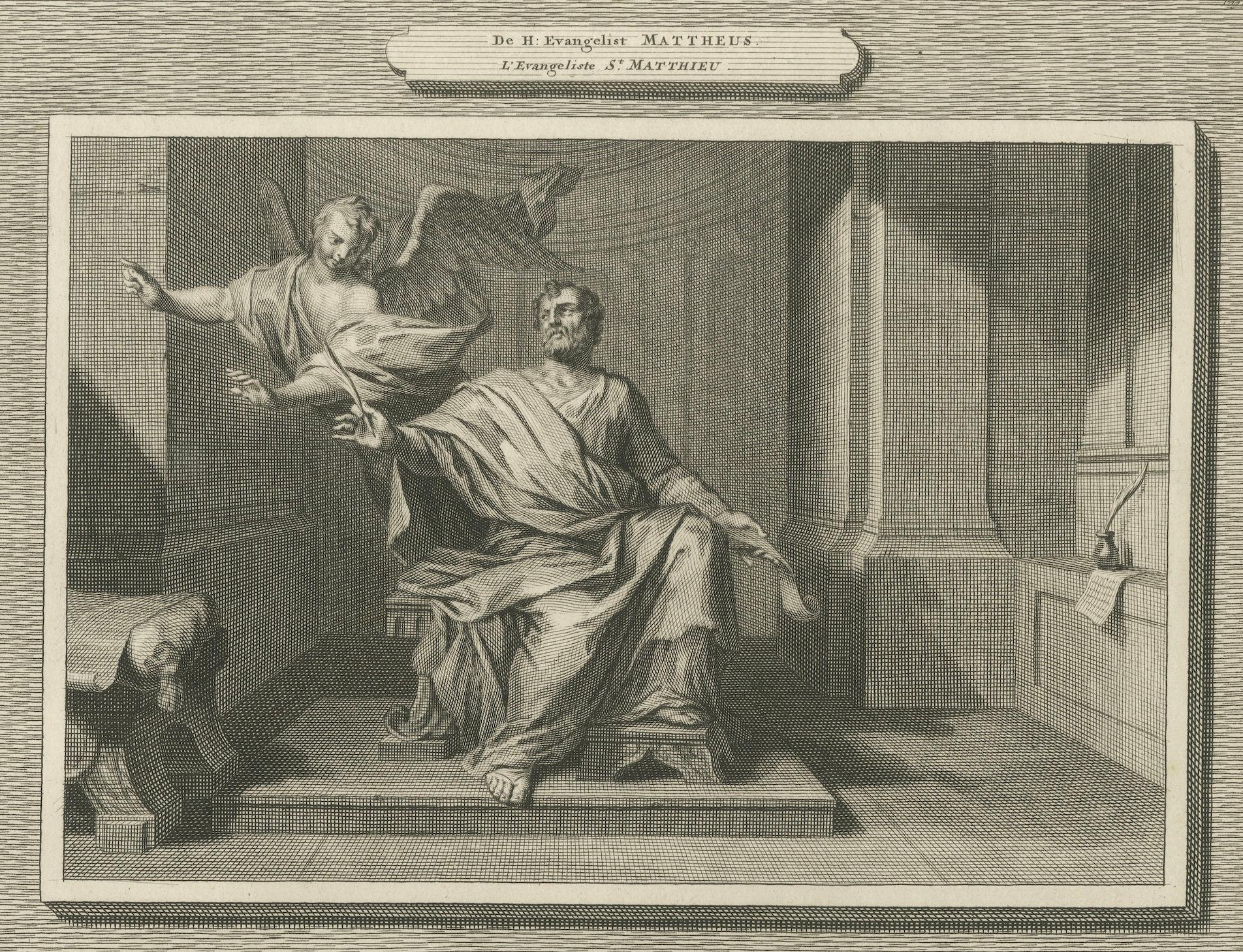
The upper scene shows Saint Matthew seated in a classical interior. He is inspired by an angel, who hovers at his side holding a palm branch, symbolizing divine guidance. Matthew, holding a writing implement and scroll, is shown as the recorder of Christ’s teachings, with his Gospel focusing on Christ as the fulfillment of Old Testament prophecy. His attribute, the winged man, is present in the scene, underlining his role as both apostle and evangelist.
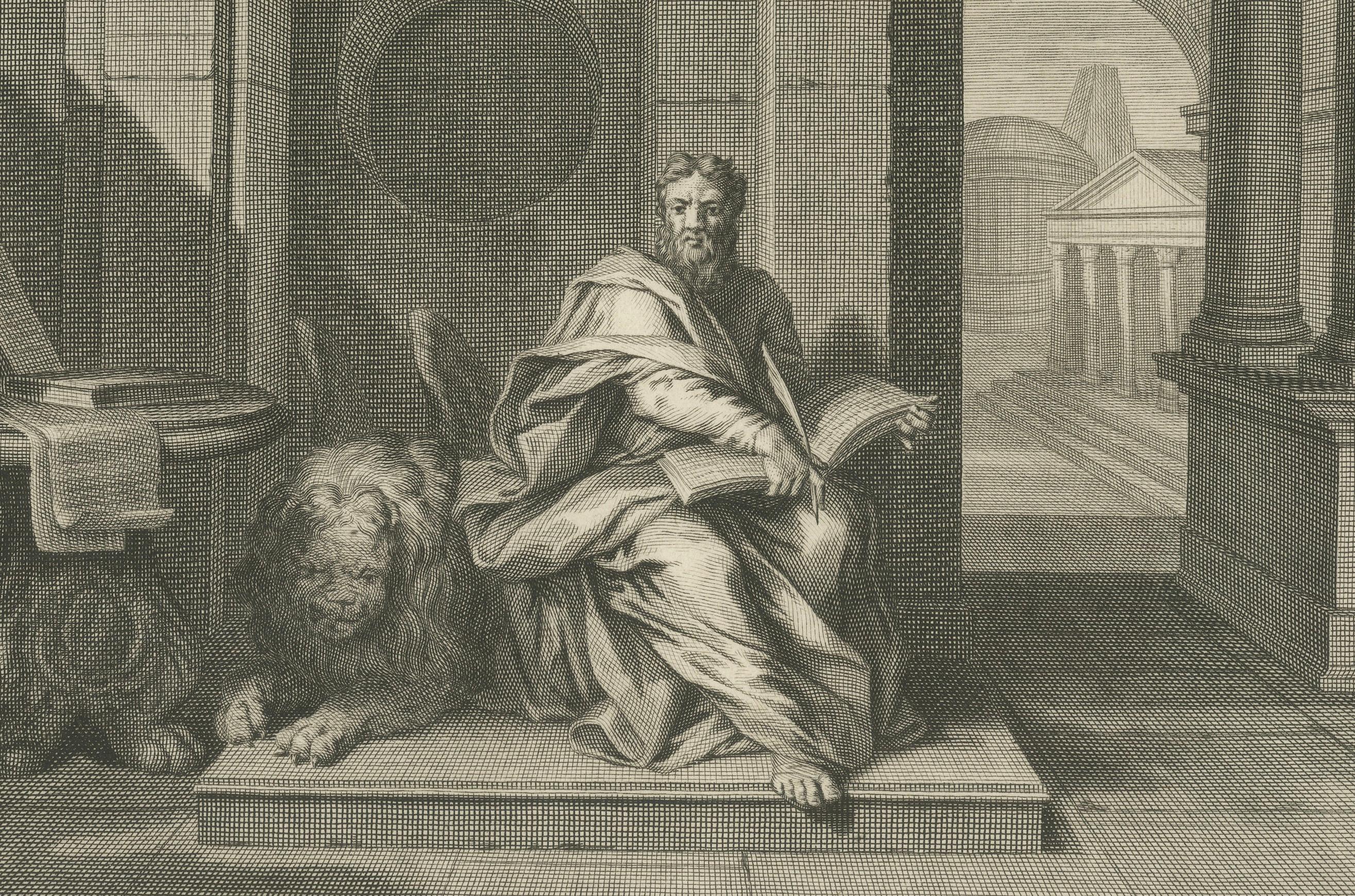
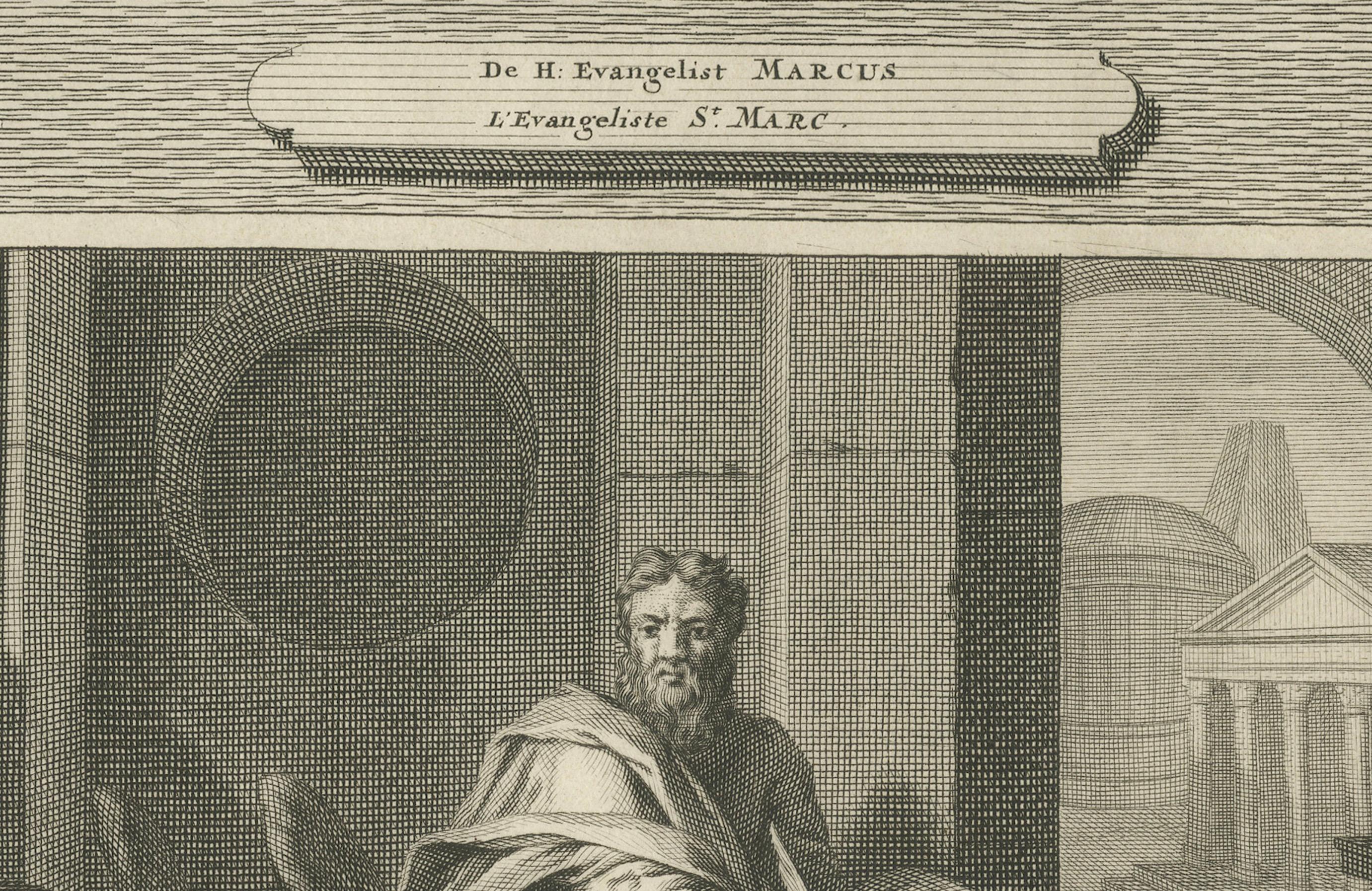
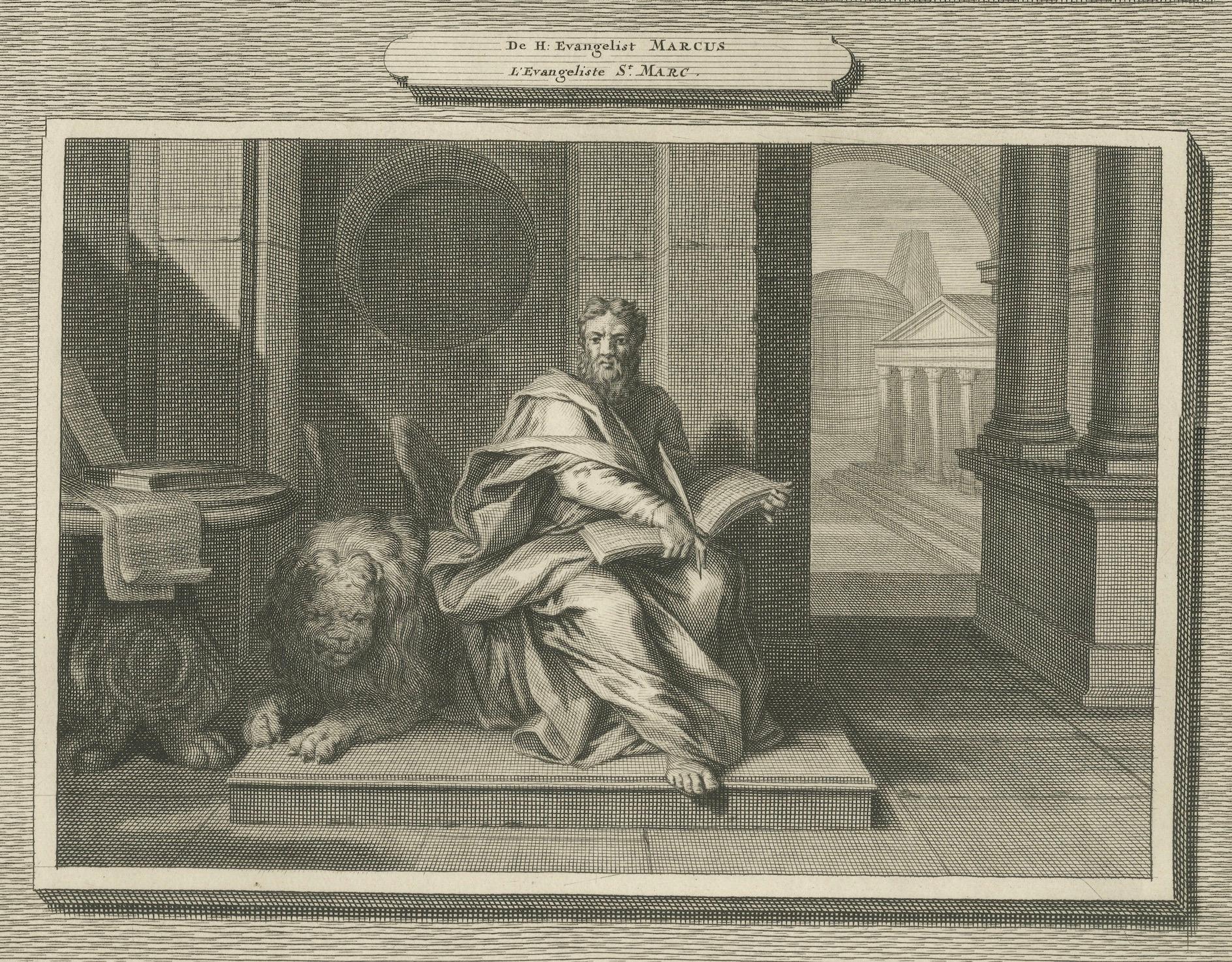
The lower scene depicts Saint Mark, seated before an open architectural background. At his feet lies a lion, his traditional symbol, signifying courage and the resurrection. Mark holds a quill and book, pausing in thought as he records his Gospel. The monumental architecture behind him situates his figure in a setting of authority and grandeur, reflecting the early spread of Christianity in the Mediterranean world.
These engravings reflect Pieter Mortier’s ambition to combine devotional clarity with artistic elegance. The Evangelists are presented with dignity, shown both as inspired writers and as figures of theological importance, providing readers with a vivid and contemplative introduction to the Gospels.
Condition report:
Good condition. Strong impression with wide margins. Minor toning and faint foxing at edges, light handling marks consistent with age. Images remain clean and sharply detailed.
Framing tips:
A cream or parchment-toned double-aperture mat will separate the portraits while keeping them unified. A walnut or black wooden frame provides strength, while a gilt frame enhances the sacred subject and the divine light conveyed in the scene of Matthew’s inspiration.
Technique: Copperplate engraving
Maker: Pieter Mortier, Amsterdam, ca. 1700