About this sheet
The Lance Bearer and Musicians: A Grand Swiss Procession in 19th-Century Bern
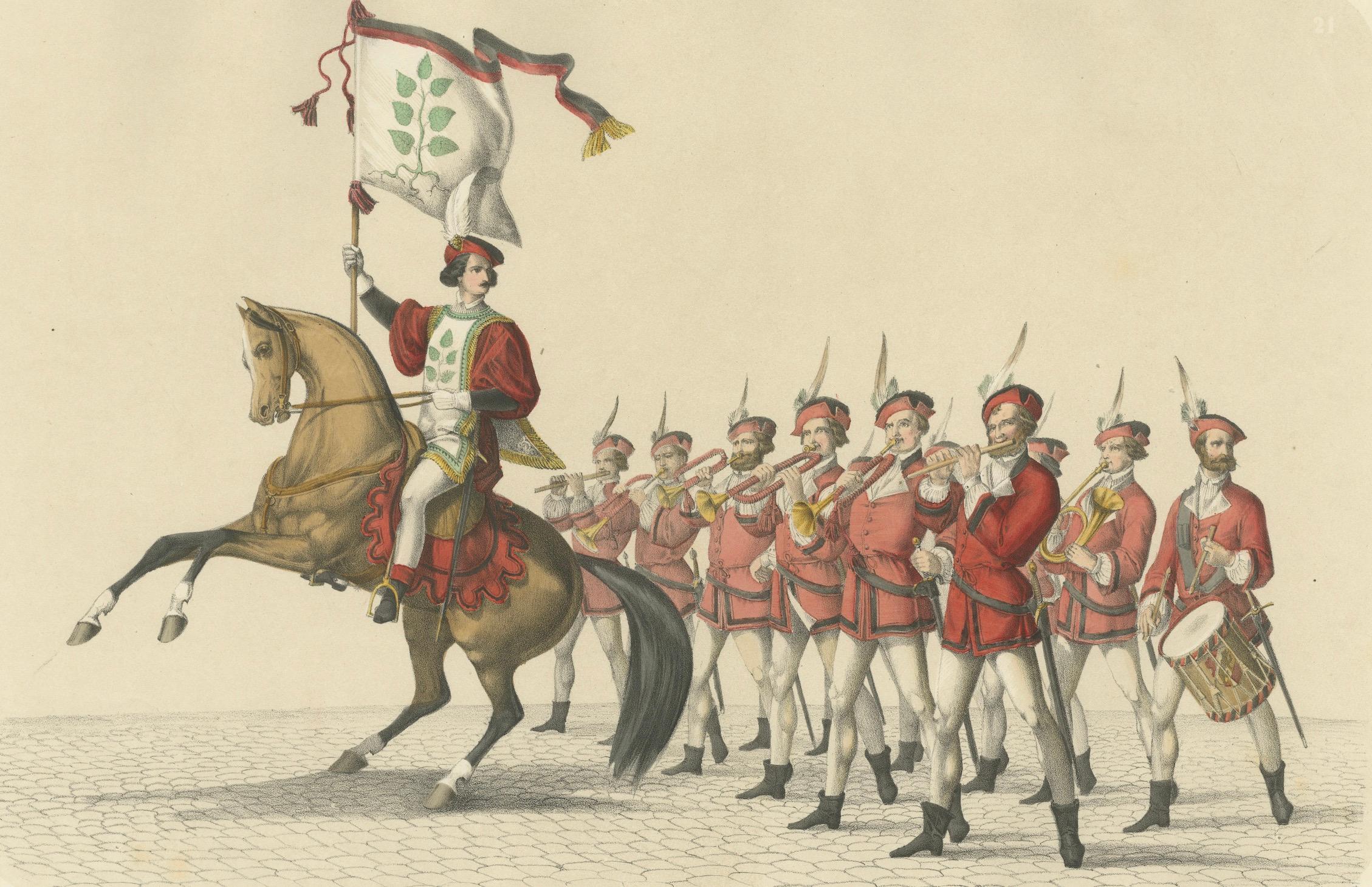
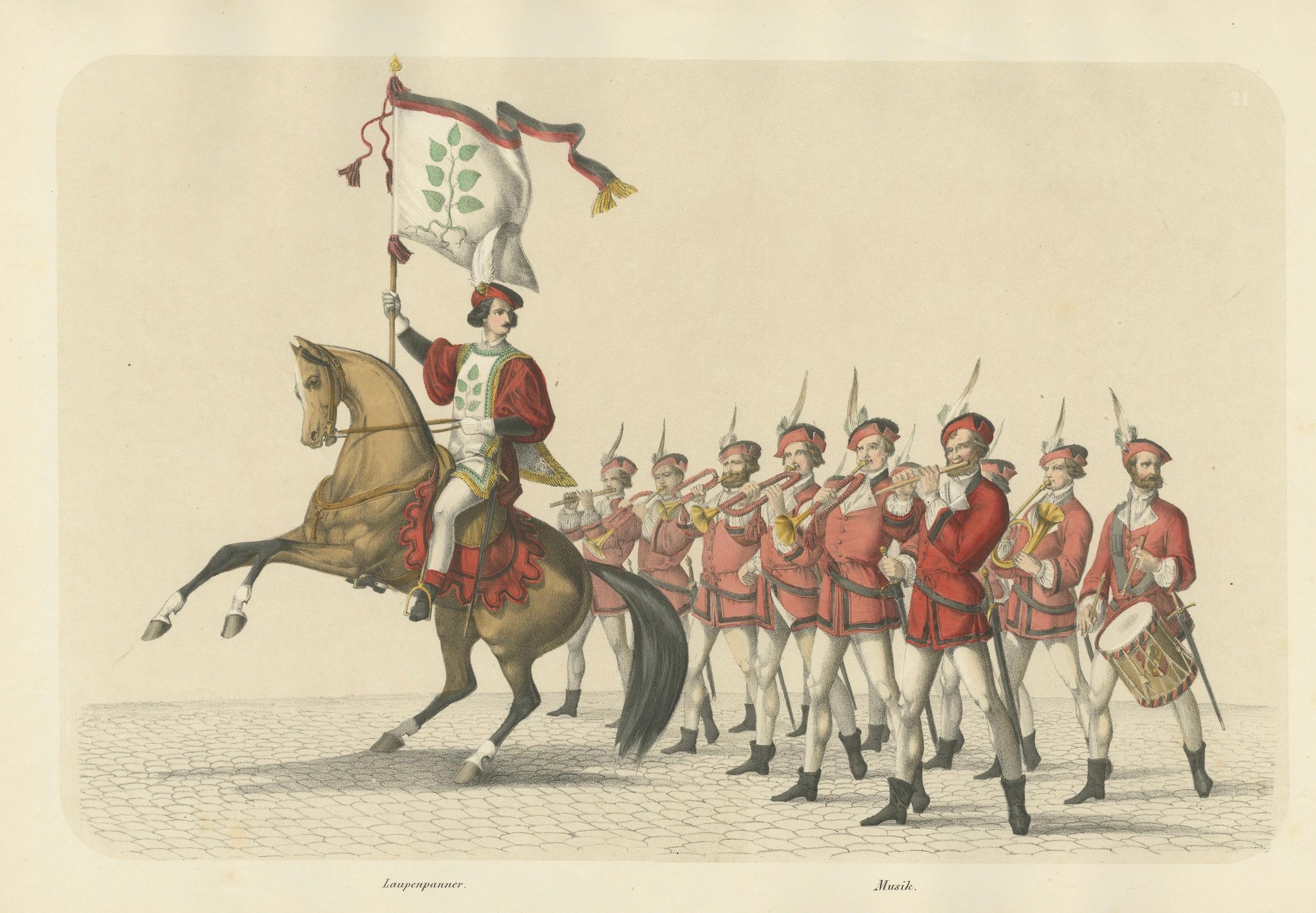
This print is part of the 'Fest Album Celebrating Bern’s Entry into the Swiss Confederation on March 6, 1353, Commemorated in 1853 on the Victory Days of Laupen and Murten.' Published in Bern and Zurich in 1855, the series of hand-colored lithographs by Heinrich Jenny and lithographed by Kümmerly and Wittmer captures the grandeur of a historical procession featuring Swiss guilds, civic groups, and military formations.
Depiction of the Procession
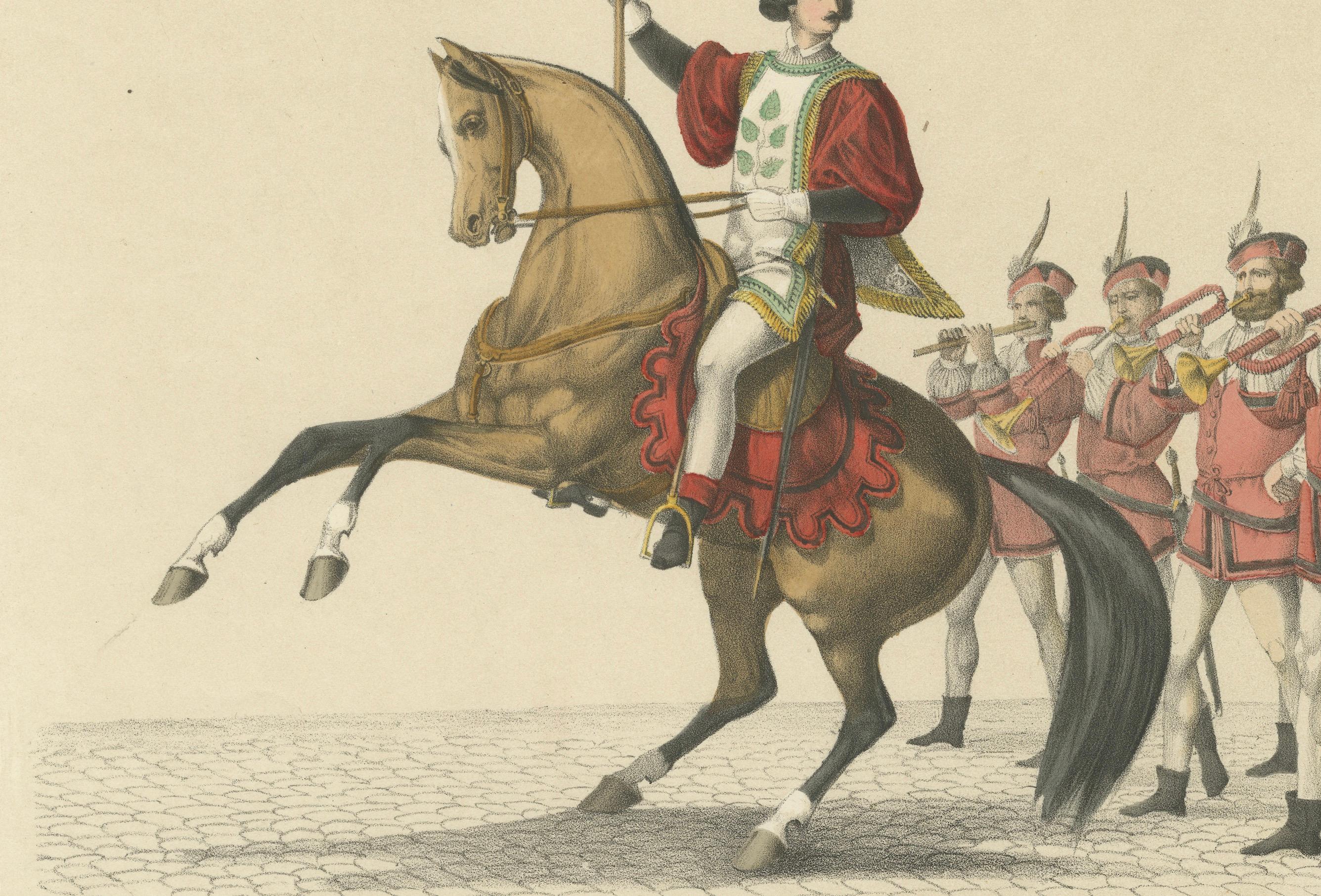
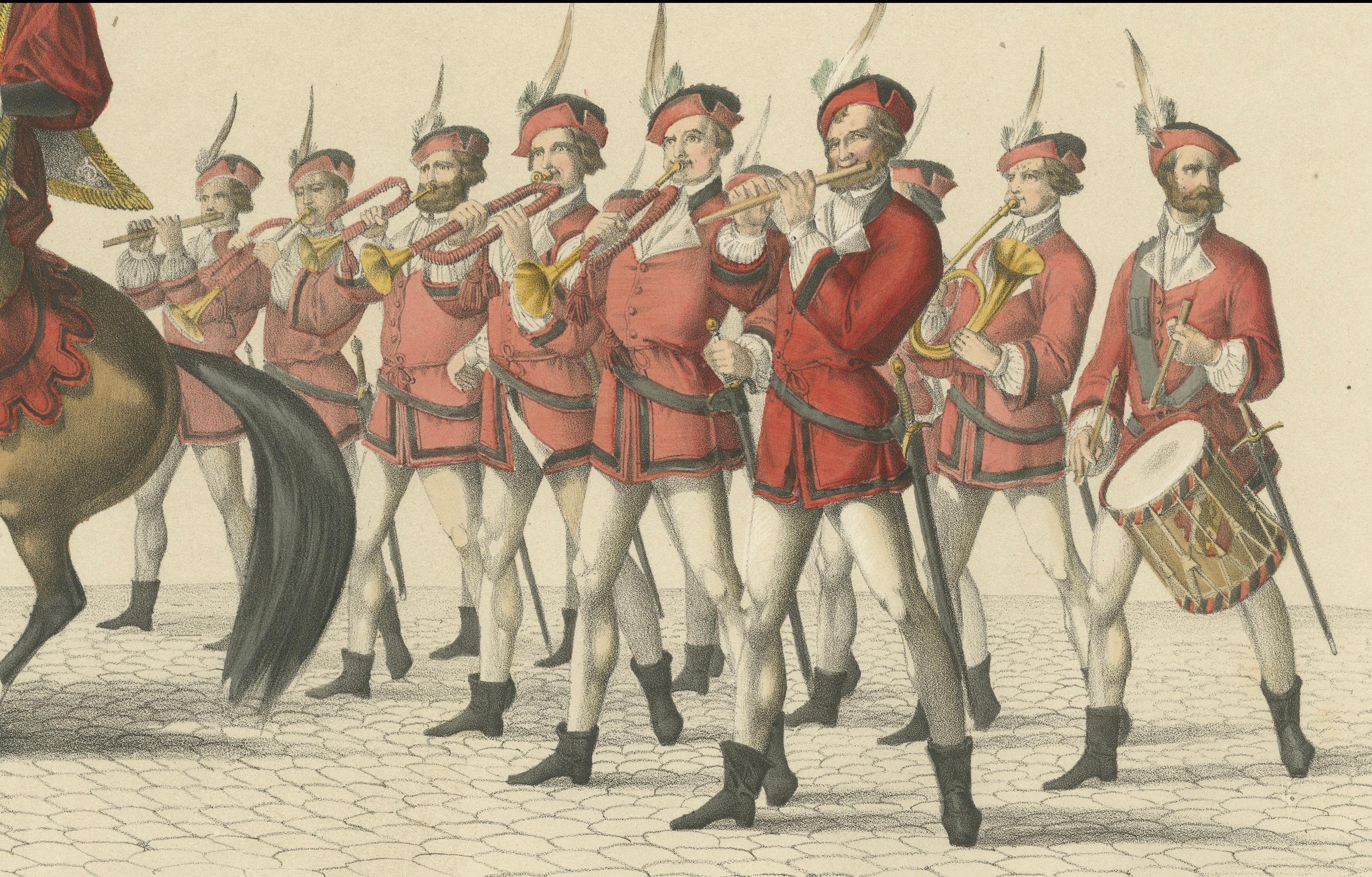
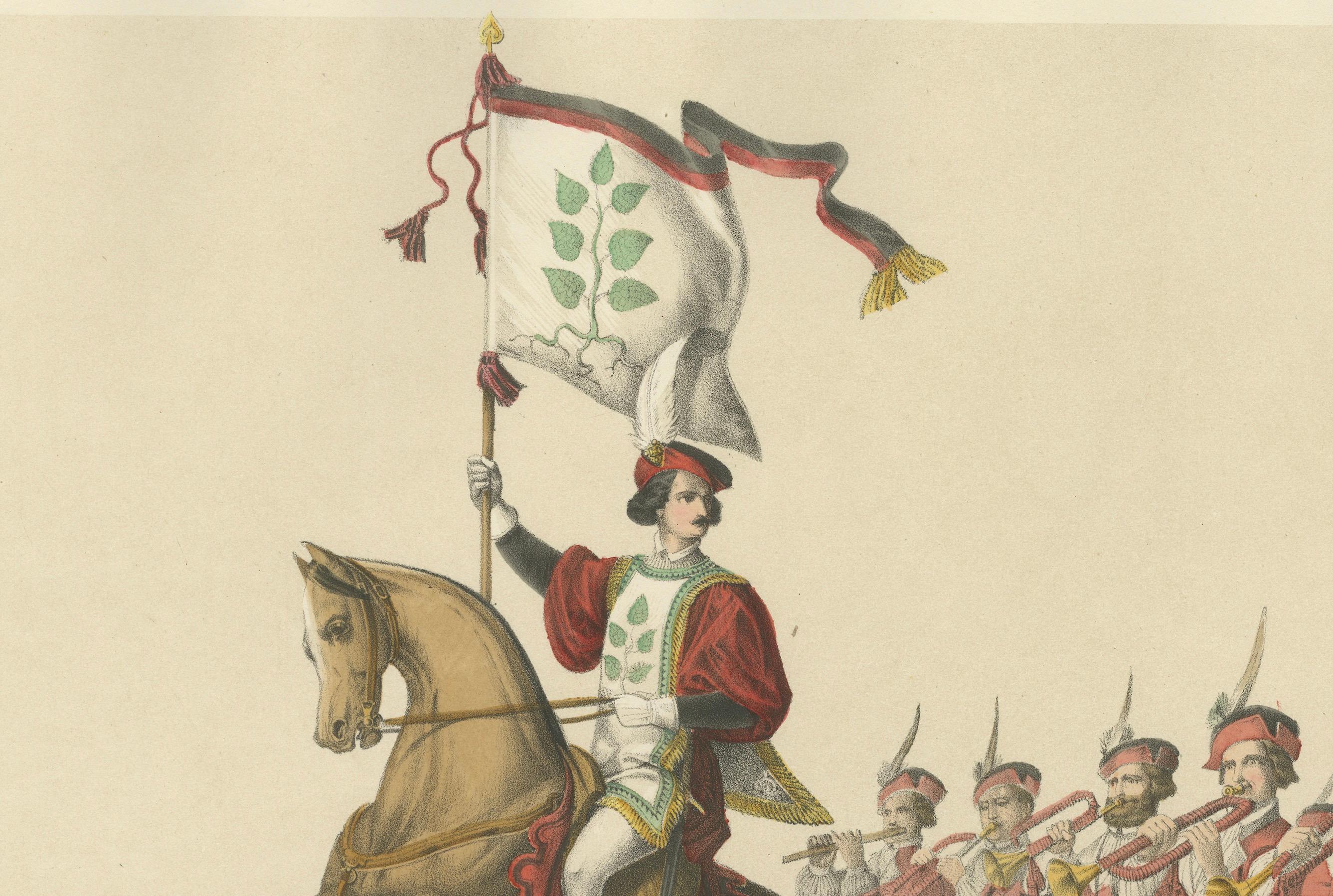
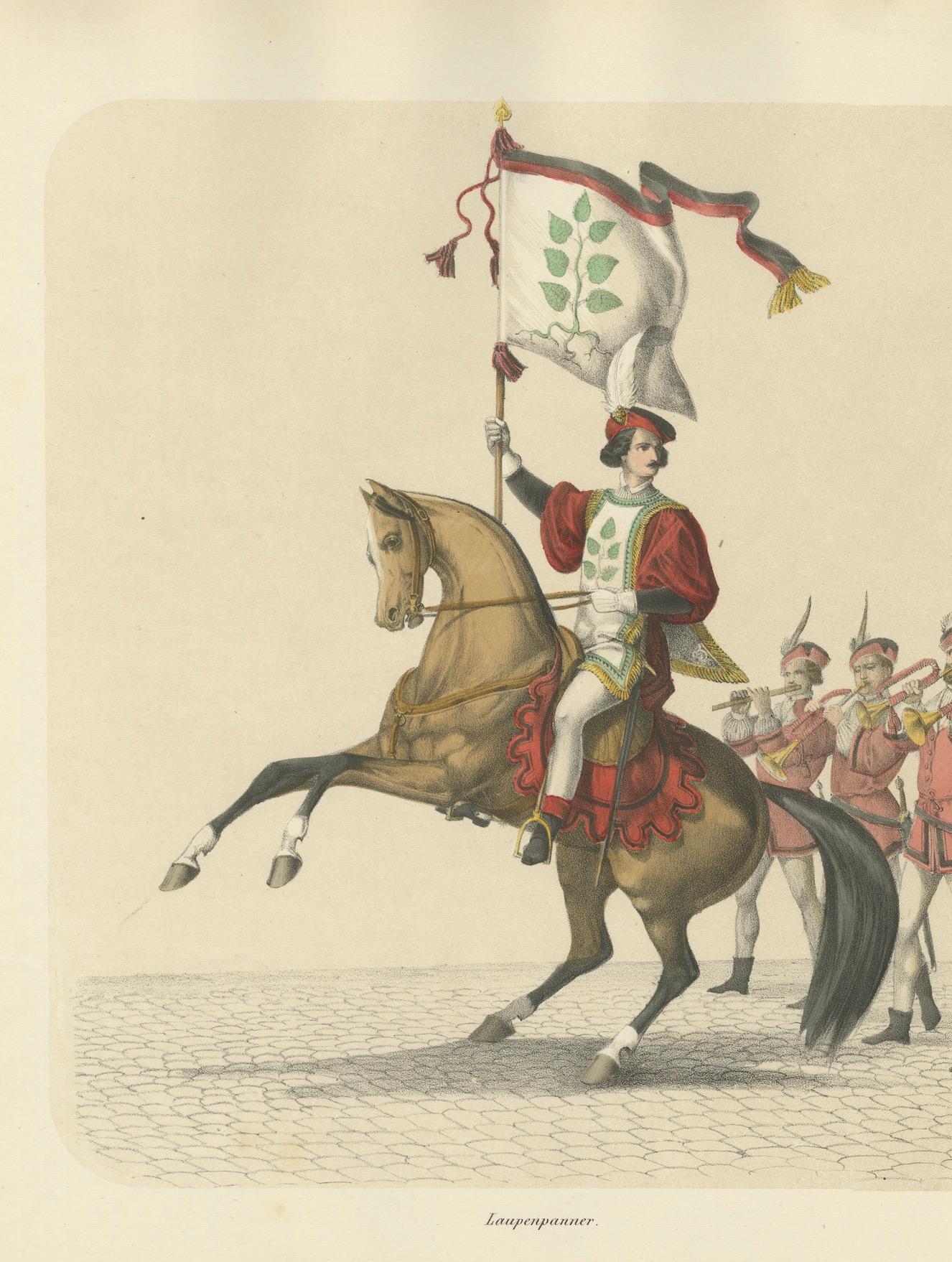
This particular lithograph showcases a ceremonial marching band, labeled 'Musik,' led by a 'Lanzenträger' or lance bearer on horseback. The composition exudes movement and rhythm, with the mounted figure at the forefront, holding a banner adorned with six green leaves arranged in two vertical columns on a white field, a possible reference to a local Bernese civic group or a guild emblem. The marching musicians, dressed in coordinated red uniforms with white accents and feathered caps, play an array of brass instruments and drums, reinforcing the celebratory atmosphere of the event.
The mounted banner carrier is dressed in an elegant red and white tunic with green accents, matching the banner’s color scheme. His pose, with one arm confidently holding the standard while guiding the horse forward, emphasizes the pageantry and order of the procession. The musicians follow in perfect formation, playing their instruments, their expressions conveying a sense of pride and discipline.
Historical Context
Music played a vital role in civic and military ceremonies in the 19th century, especially in commemorations such as this. Bands accompanied public celebrations, military parades, and religious festivals, reinforcing the collective spirit and unity of the participants. The inclusion of a lance bearer leading the musicians suggests a connection to Switzerland’s medieval military traditions, where heraldic banners and lances were used to signal movements on the battlefield and in civic processions.
The presence of this marching ensemble in the *Fest Album* highlights its significance in Swiss celebrations, honoring the historical unity of Bern with the Confederation. Events like these allowed different guilds and social groups to showcase their distinct identities while collectively paying tribute to their shared heritage.
Condition and Framing Suggestions
The print is in good overall condition, with some signs of aging, including minor foxing along the edges and slight discoloration in the margins. The colors remain well-preserved, with the reds and greens of the uniforms and banners still vivid. The detailing of the musicians' expressions, feathered hats, and instruments remains sharp, retaining the artistic finesse of the original lithograph.
For framing, a dark or warm wooden frame would provide an elegant contrast to the bright reds and whites of the composition. An off-white archival mat would highlight the intricate details without overwhelming the image, while UV-protective glass would ensure the longevity of the colors. A wider frame with a slight texture could enhance the historical feel, making it a refined addition to any collection of Swiss historical prints or 19th-century European lithographs.
This print is an exceptional representation of Swiss civic culture, illustrating the deep traditions of pageantry, music, and historical remembrance in Bernese society.