About this sheet
The Apocalypse of Saint John – Twelve Visionary Scenes, Pieter Mortier, c.1700
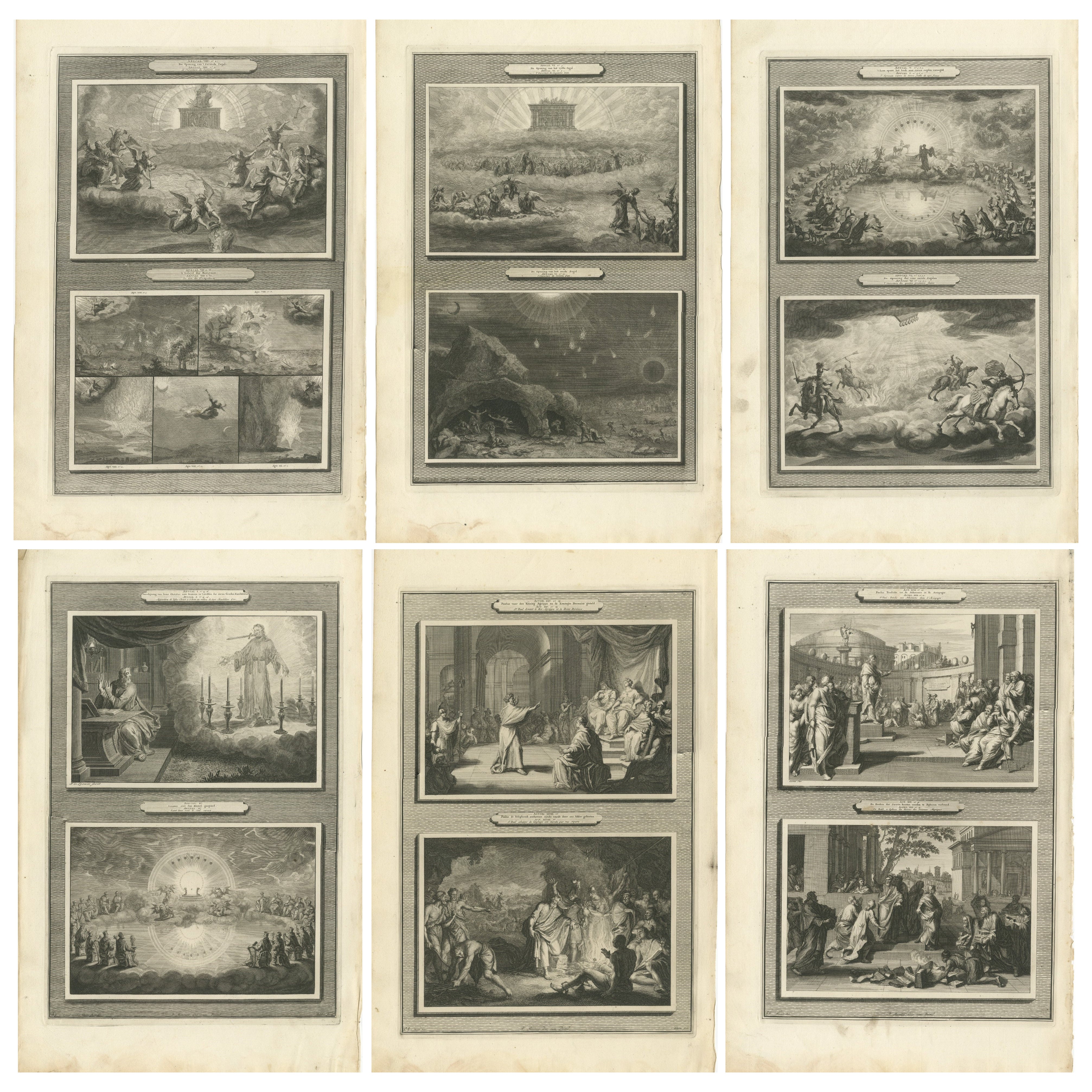
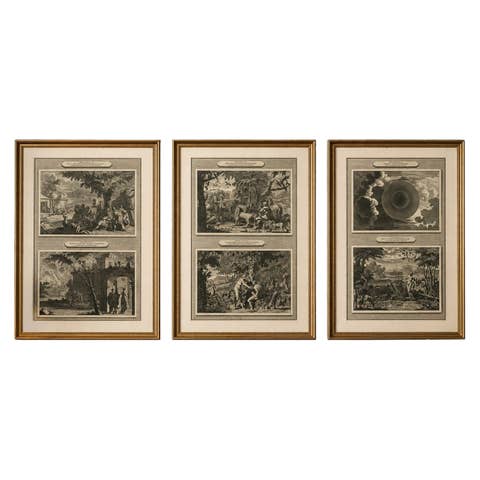
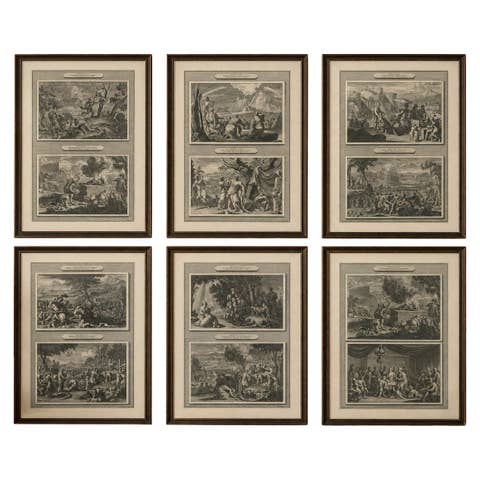
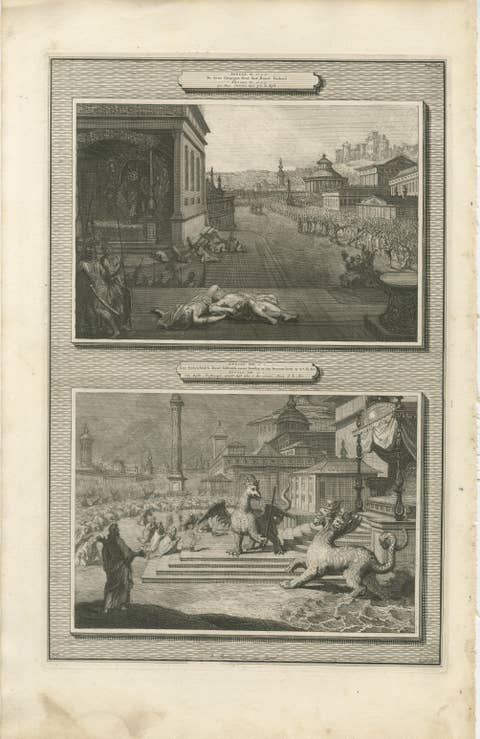
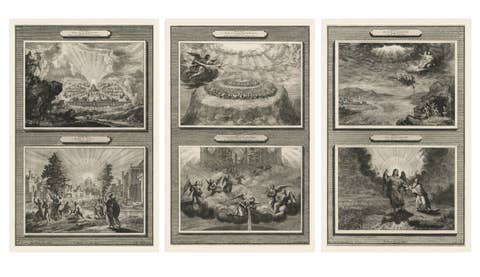
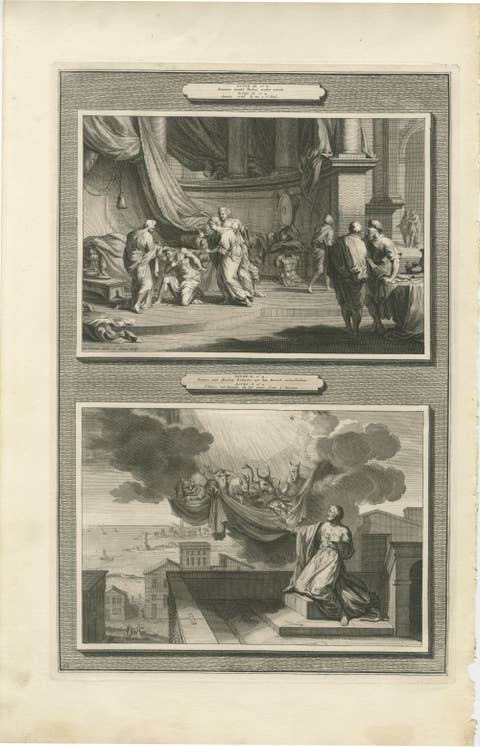
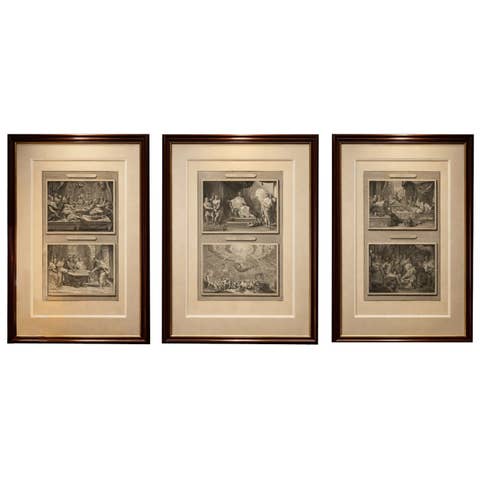
This striking cycle of six large copper engravings (each plate with two scenes) illustrates the visionary imagery of the Book of Revelation. Published in Amsterdam around 1700 by Pieter Mortier, the series translates Saint John’s apocalyptic visions into dramatic, highly symbolic compositions filled with angels, divine light, cosmic upheaval, and final judgment. The engravings combine theatrical Baroque imagery with intricate detail, intended for meditation, instruction, and visual impact.
These authentic antique engravings—never reproductions—are offered unframed, inviting custom framing that enhances their character and allows them to harmonise beautifully with individual interiors and design palettes.
Plate I – Upper scene
The Heavenly Throne
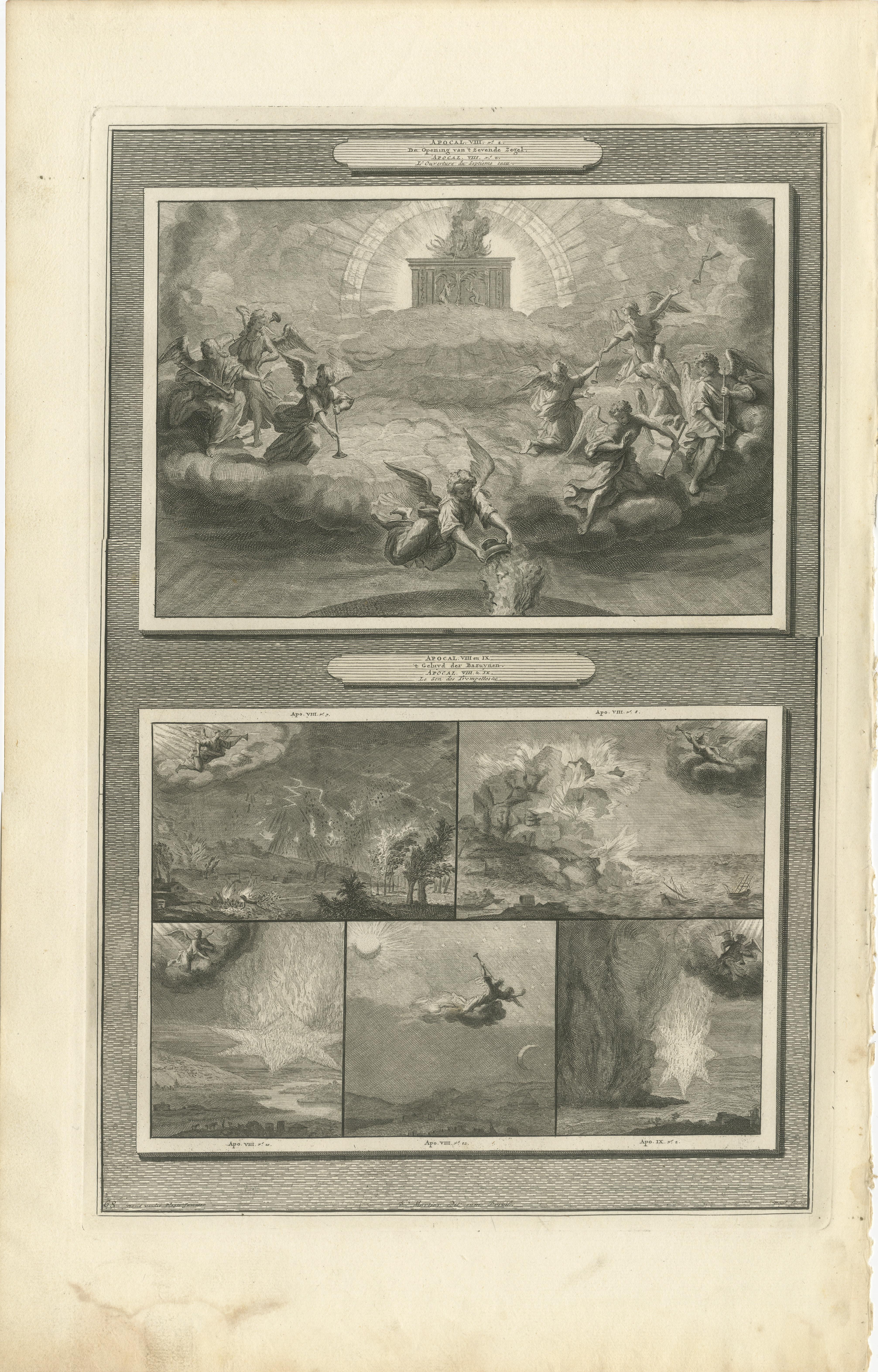
Saint John beholds the throne of God, radiant with divine light and surrounded by angels and heavenly beings. The swirling clouds and ascending figures convey awe, order, and celestial authority.
Plate I – Lower scenes
The Four Winds and Cosmic Signs
A sequence of smaller scenes showing angels restraining the winds and cataclysmic events in nature. Fire, storms, and falling stars signal the beginning of divine judgment upon the world.
Plate II – Upper scene
The Sealing of the Elect
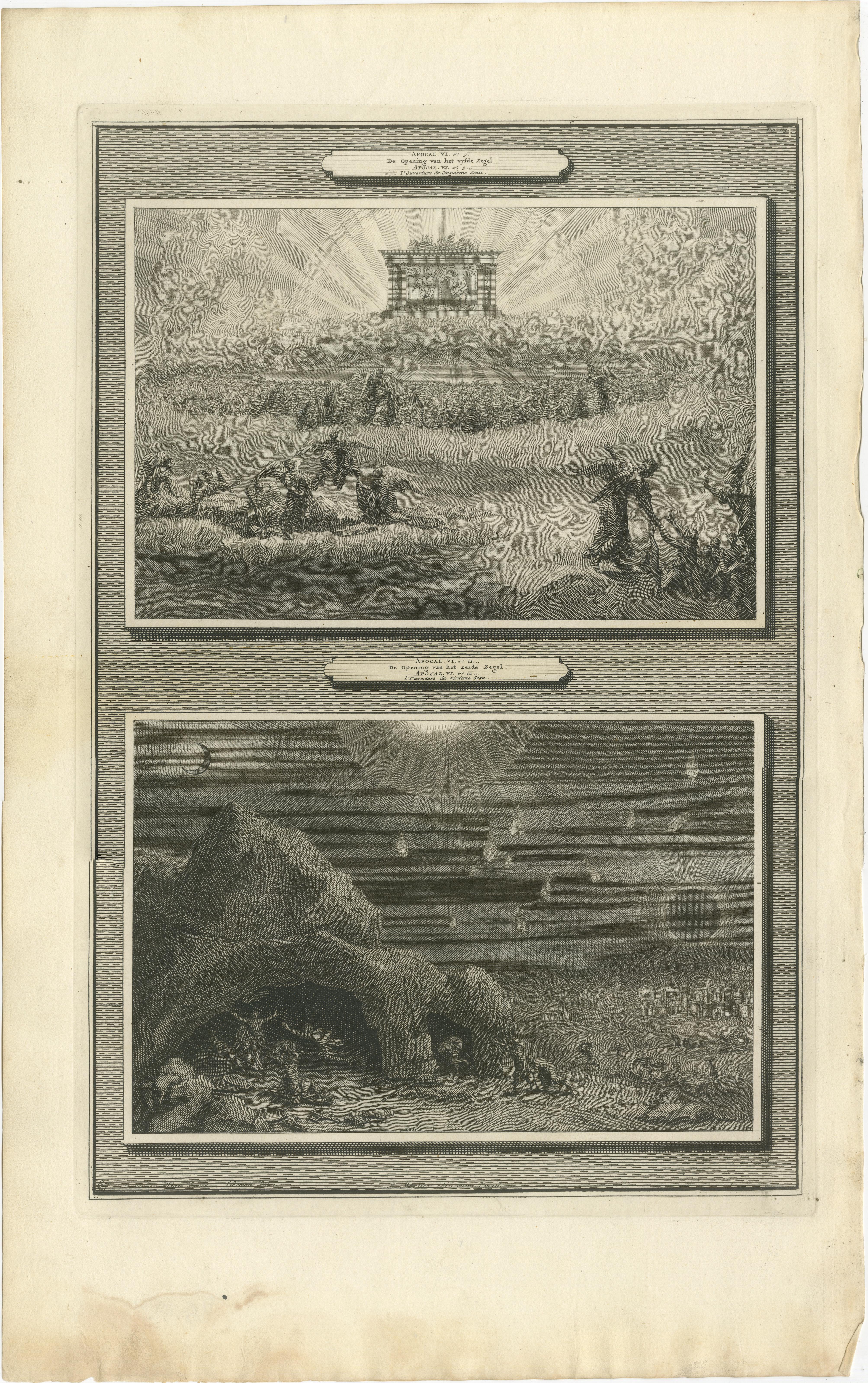
Angels mark the chosen before the coming tribulations. The calm, ordered gestures contrast with the turbulent landscape, emphasizing protection amid chaos.
Plate II – Lower scene
The Opening of the Abyss
Darkness spreads as the abyss is opened, releasing destruction upon the earth. The ominous landscape and falling elements evoke fear, disorder, and divine warning.
Plate III – Upper scene
The Lamb in Glory
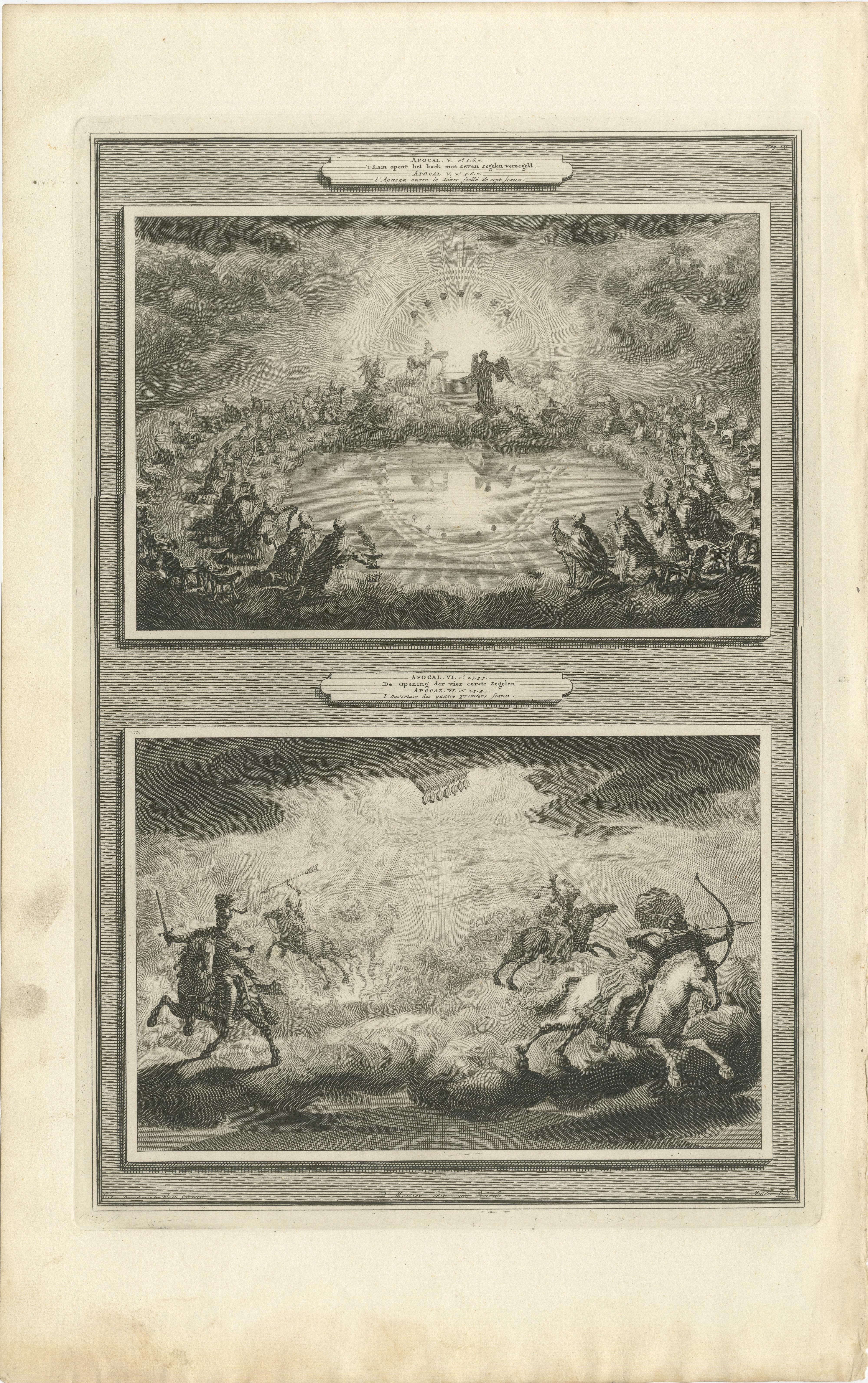
Christ appears in radiant splendor, enthroned and encircled by heavenly hosts. The symmetrical composition and intense light emphasize redemption and divine sovereignty.
Plate III – Lower scene
The Battle in the Clouds
Angels and forces of evil clash amid storm clouds. Flying figures, weapons, and dramatic diagonals create a sense of violent cosmic struggle.
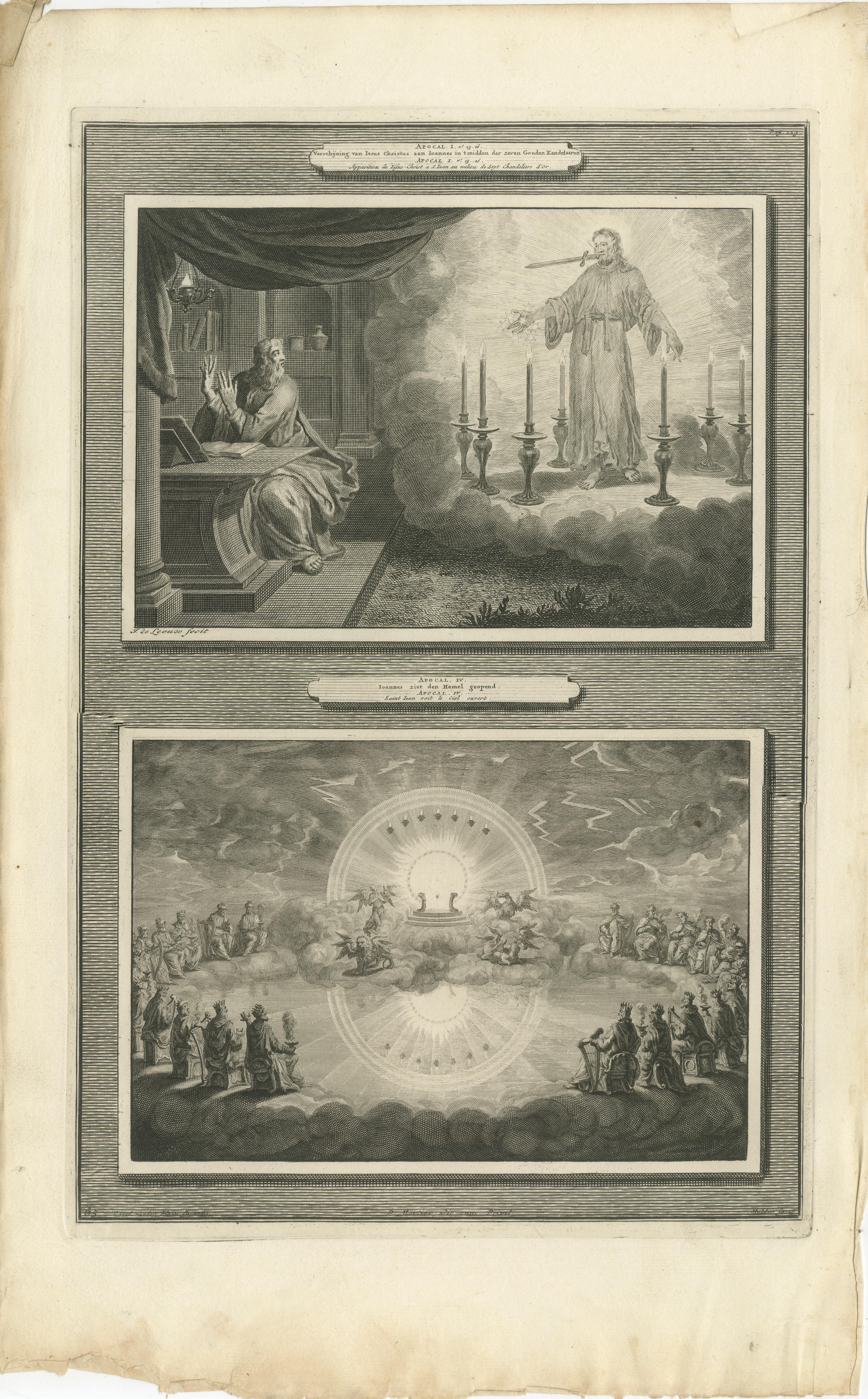
Plate IV – Upper scene
Christ Appearing to Saint John
Christ reveals himself to Saint John in a vision, standing among sacred objects and radiant light. The interior setting underscores revelation, prophecy, and divine instruction.
Plate IV – Lower scene
The Multitude of the Blessed
The redeemed gather around the heavenly light, arranged in a vast circular composition. The ordered assembly symbolizes salvation and eternal reward.
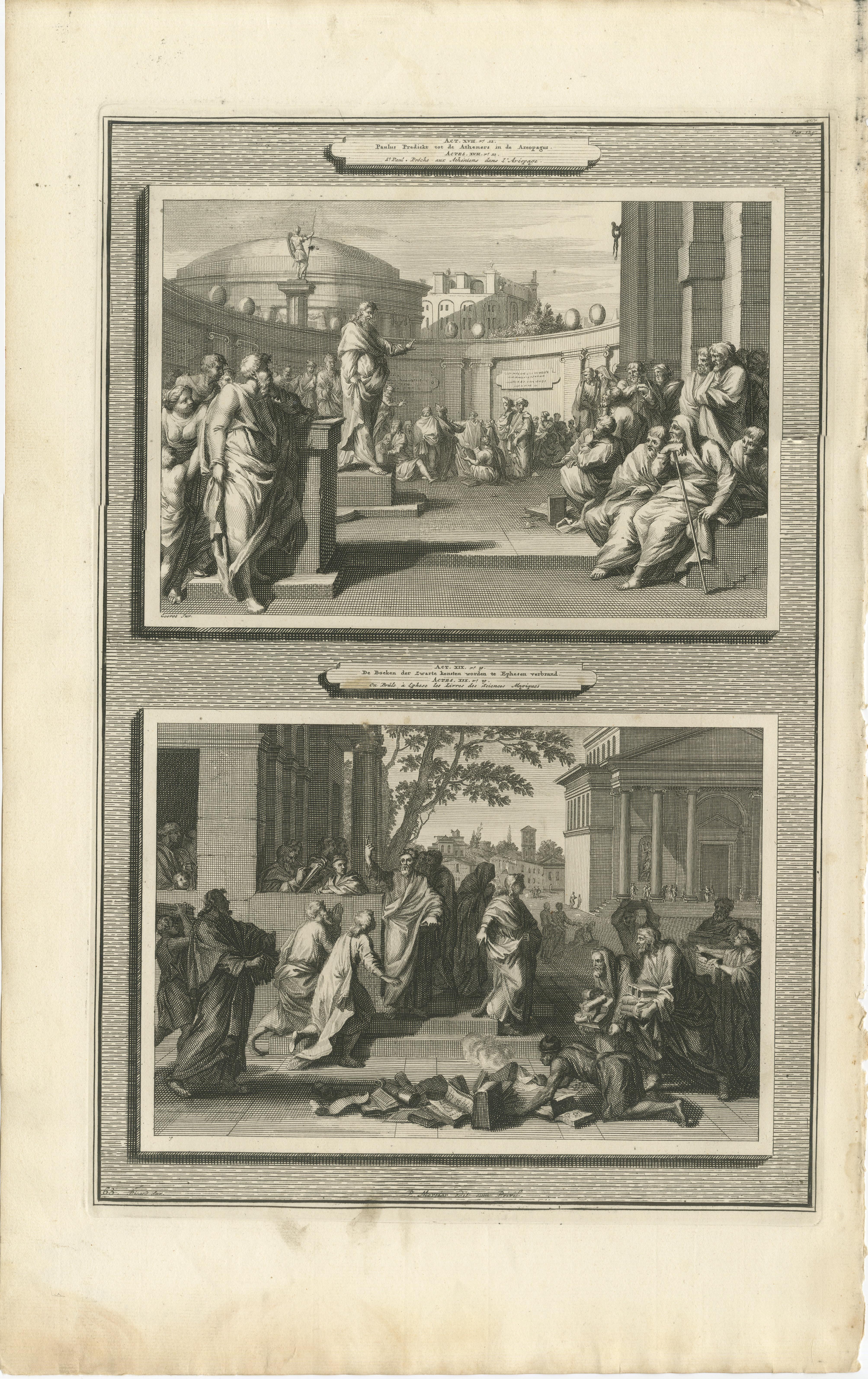
Plate V – Upper scene
Preaching and Warning of Judgment
A prophetic figure addresses a gathered crowd, warning of impending judgment. Architectural backdrops and attentive listeners highlight moral choice and accountability.
Plate V – Lower scene
The Destruction of the Wicked
Punishment descends upon the unrepentant. Figures fall, flee, and collapse as divine justice is enacted, emphasizing the consequences of sin.
Plate VI – Upper scene
Christ Condemned by the World
Christ stands before rulers and crowds who reject him. Elevated platforms and gesturing figures convey public judgment and human defiance.
Plate VI – Lower scene
The Final Casting Down
The forces of evil are overthrown in a violent, chaotic scene of defeat. Tumbling bodies and broken forms signify the ultimate triumph of divine order.
Together, these twelve scenes form a powerful and imaginative visual interpretation of the Apocalypse, uniting cosmic drama with moral narrative. As a complete series, the engravings are a compelling example of late seventeenth-century religious printmaking and Mortier’s ambition as a publisher of large-scale biblical cycles.
Technique: Copper engraving
Maker: Pieter Mortier, Amsterdam, circa 1700