About this sheet
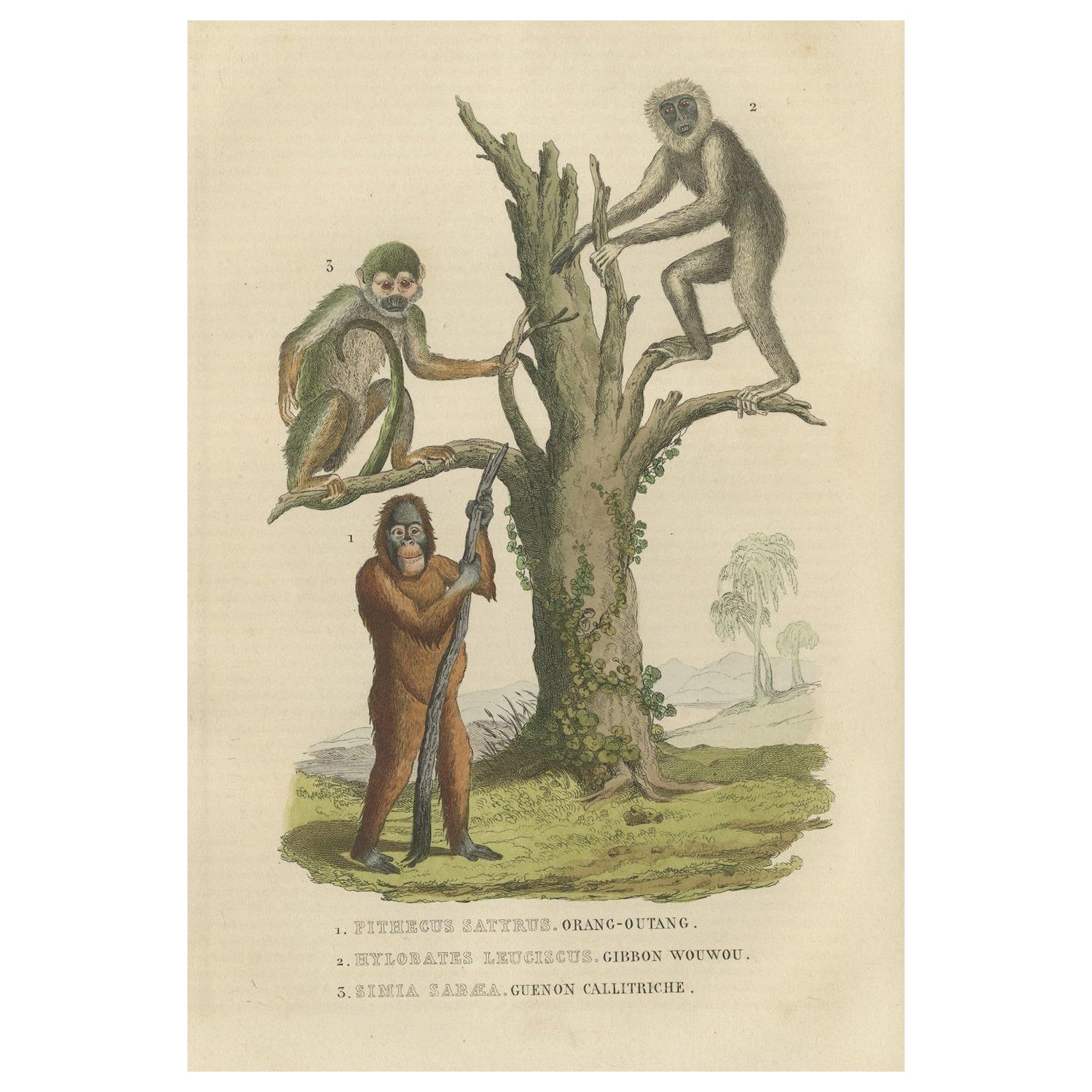
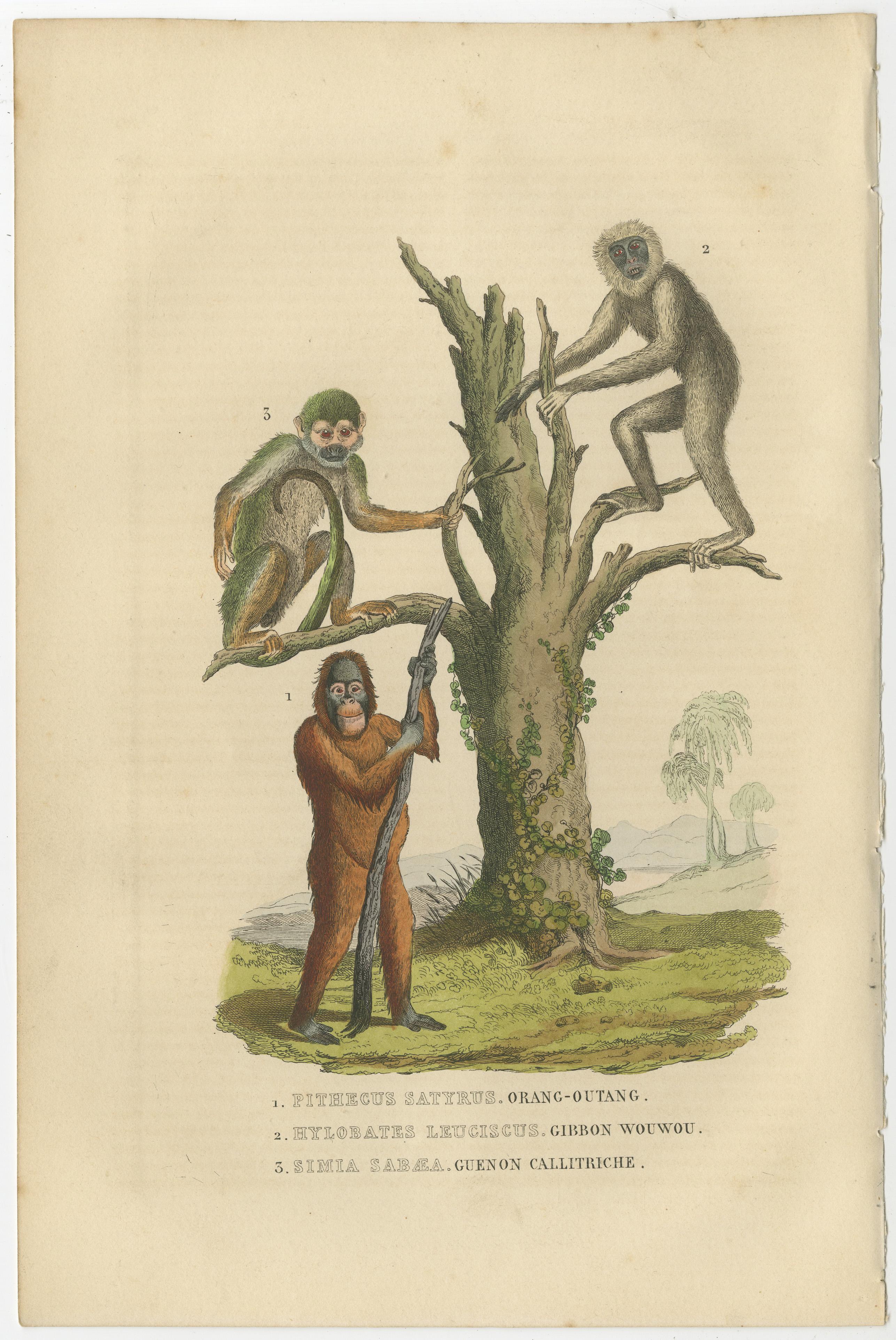
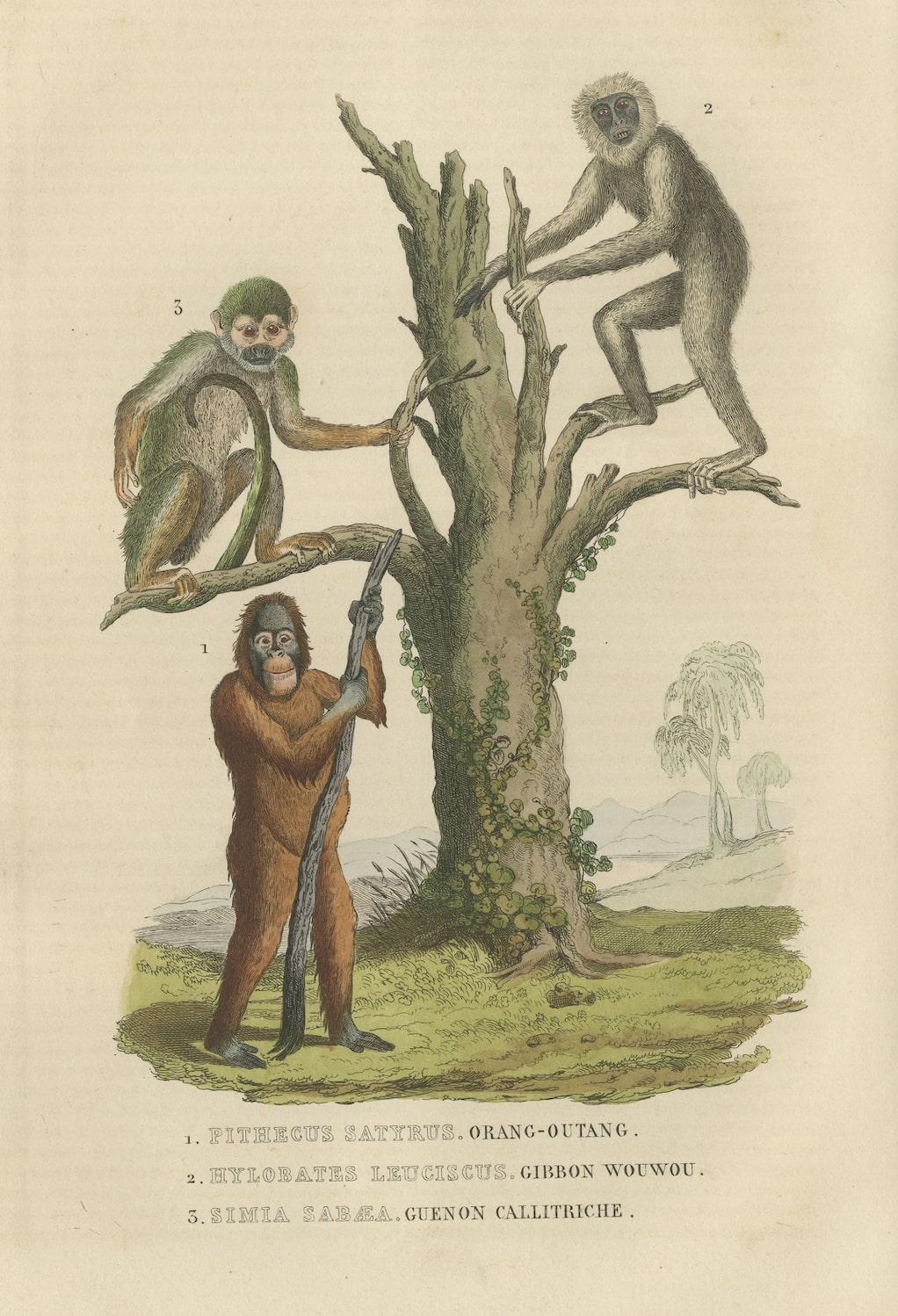
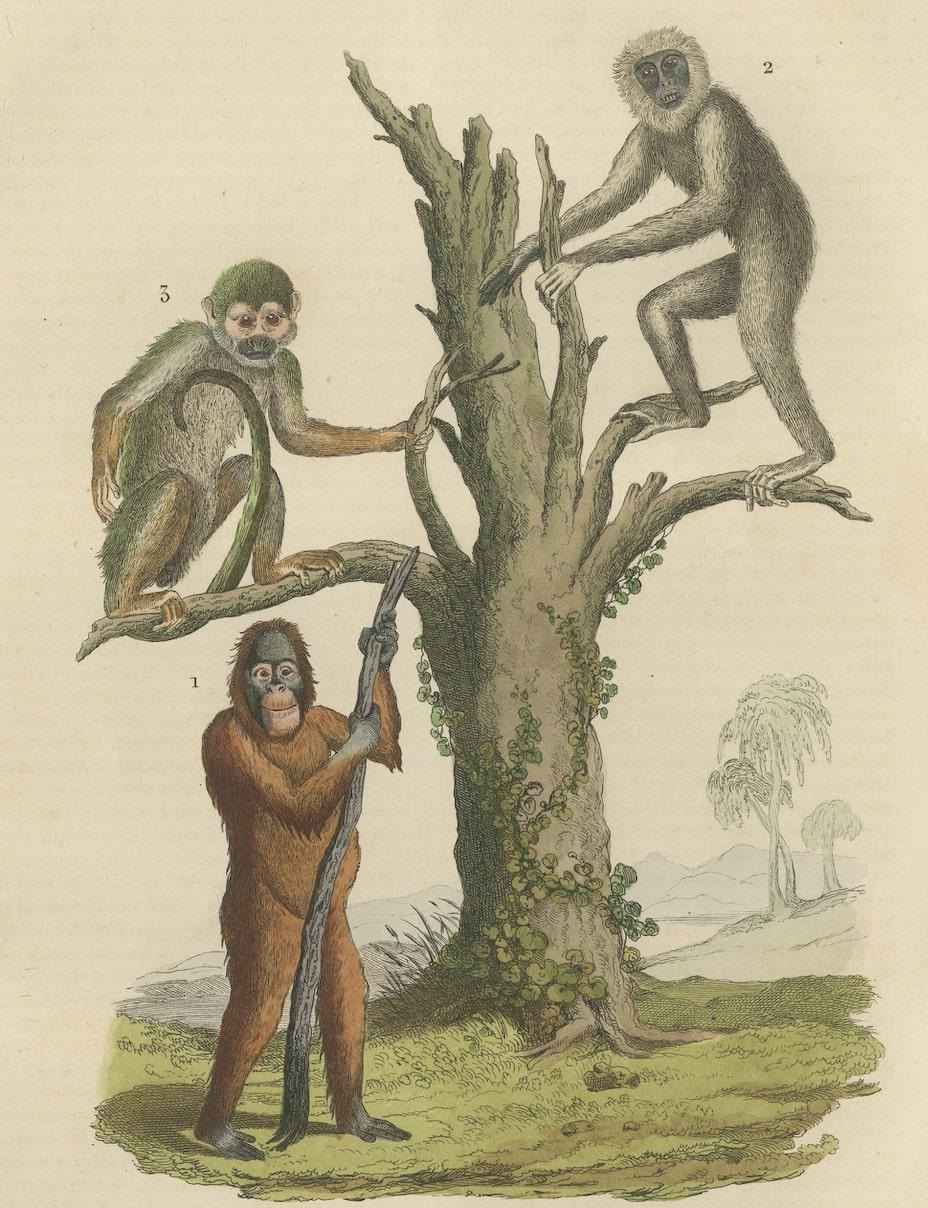
Original antique hand-colored print of three monkeys. Very decorative.
Encounter the intriguing world of primates through this collection featuring three remarkable species captured in detailed illustrations.
Firstly, the majestic 'PITHECUS SATYRUS – ORANG-OUTANG'—also known as the Red or Asiatic Orang-outang—presents a powerful presence with its distinctive reddish fur and impressive stature.
Next, the graceful 'HYLOBATES LEUCISCUS – GIBBON WOUWOU,' commonly referred to as the Javan Silvery Gibbon, showcases its agile and arboreal nature, characterized by its silvery coat and melodious calls echoing through the forest canopies.
Completing this trio is the charming 'SIMIA SABAEA – GUENON CALLITRICHE,' recognized as the Green Monkey, captivating with its vibrant greenish hues and lively, playful demeanor.
Each primate depicted in these illustrations offers a glimpse into the diversity and beauty of our closest relatives in the animal kingdom. These meticulously detailed renderings not only celebrate the uniqueness of each species but also serve as a testament to the wonder and complexity of nature's creations."
This description highlights the unique characteristics of each primate while emphasizing the intricate details captured in the illustrations, appealing to those interested in nature, wildlife, or scientific illustrations.
Made by F.J. Desmares after Pierre Auguste Joseph Drapiez (1778-1856).
Engraving with original hand colouring, heightened with arabic gum on wove (vellin) paper.
More info on the book in which it was published:
The 'Dictionnaire Classique des Sciences Naturelles' by Pierre Auguste Joseph Drapiez stands as a remarkable testament to 19th-century natural sciences. Published in Brussels in 1845, this work represents an expansive collation of knowledge, building upon the pioneering works of Buffon, Daubenton, Lacepede, Cuvier, de Jussieu, and other influential naturalists.
The prints within this compendium likely showcase a rich amalgamation of artistic precision and scientific accuracy. Drapiez, himself a Belgian naturalist, would have aimed for detailed representations of flora, fauna, and scientific phenomena, mirroring the illustrative styles prevalent during his time. Given the era's emphasis on illustration, these prints were likely engraved meticulously, possibly portraying intricate anatomical details or lifelike depictions of the natural world.
With Drapiez's background in natural history, the prints might bear testament to his commitment to scientific authenticity, aiming to educate and inspire scholars and enthusiasts alike. These engravings would have complemented the text, offering visual aids that elucidate the concepts and specimens discussed in the volume.
Overall, the prints of 'Dictionnaire Classique des Sciences Naturelles' likely serve as both artistic representations and invaluable scientific resources, encapsulating the essence of 19th-century natural history exploration and documentation.