About this sheet
Miracles of Christ – Wedding at Cana & Cleansing of the Temple, Pieter Mortier, ca. 1700
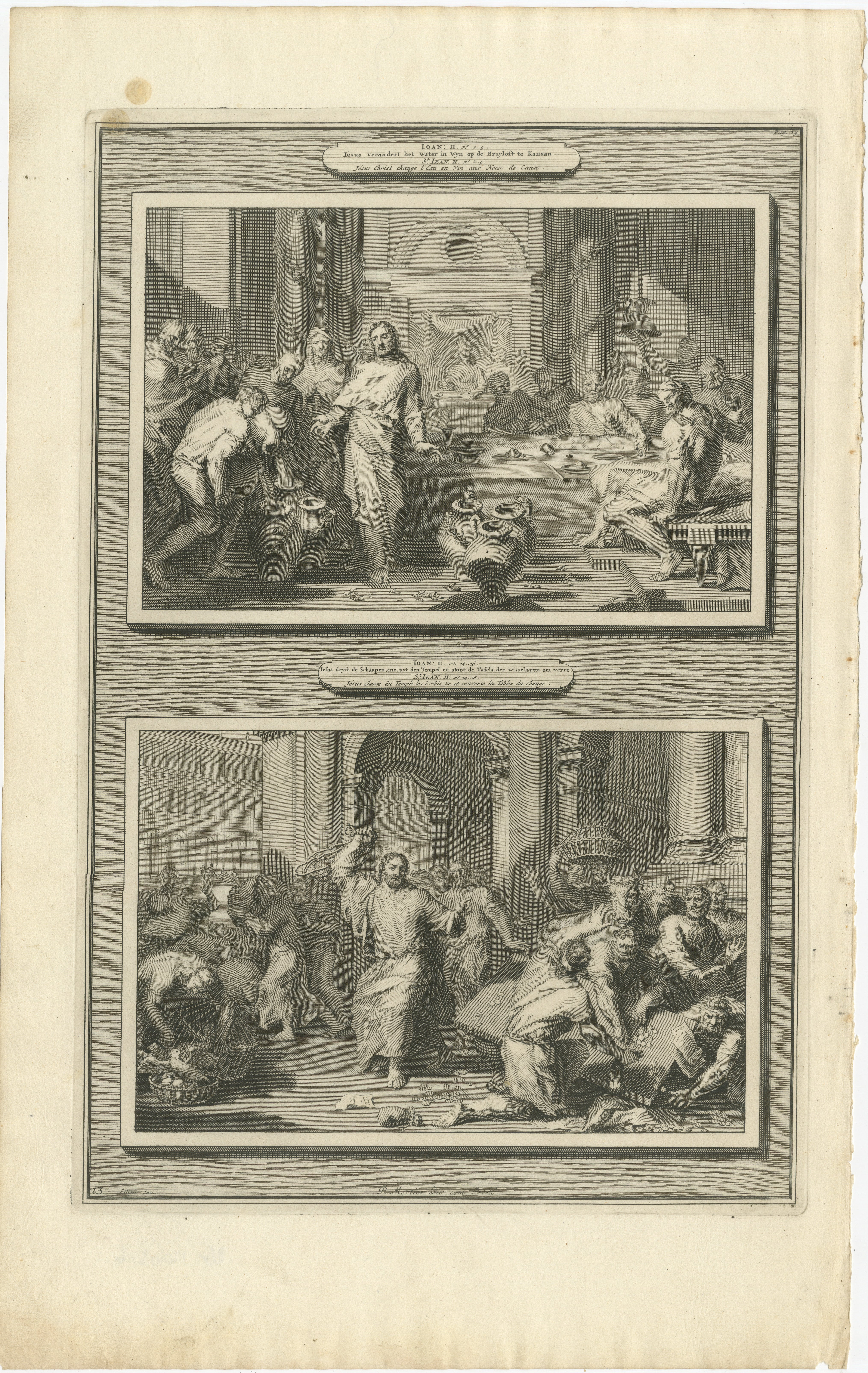
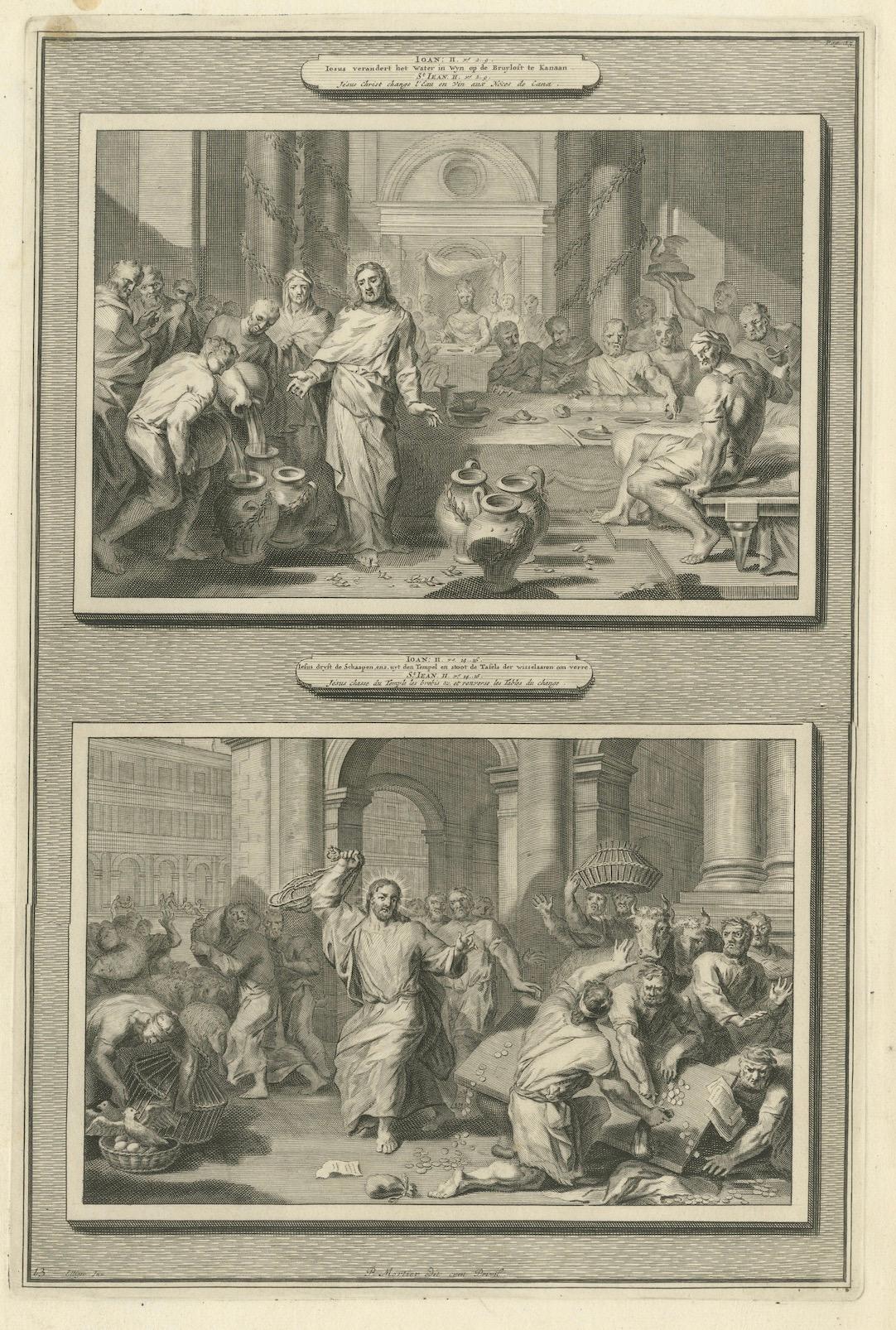
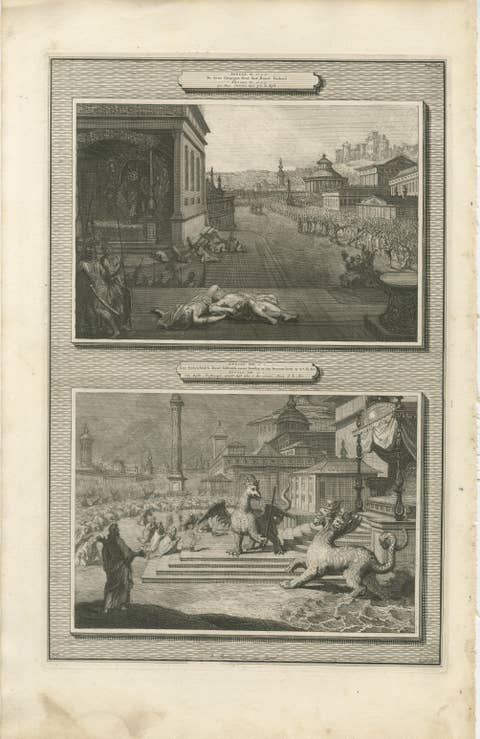
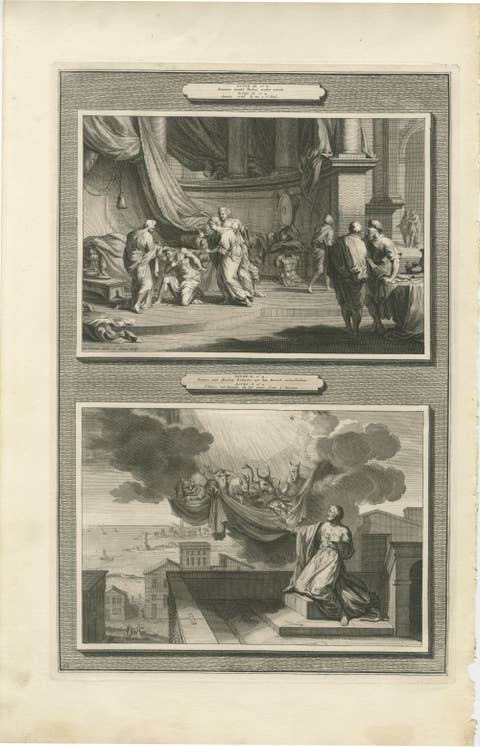
Original antique engraving from Histoire du Vieux et du Nouveau Testament, published in Amsterdam by Pieter Mortier around 1700. The plate presents two New Testament episodes, finely engraved in the baroque style typical of Mortier’s great illustrated Bible histories.
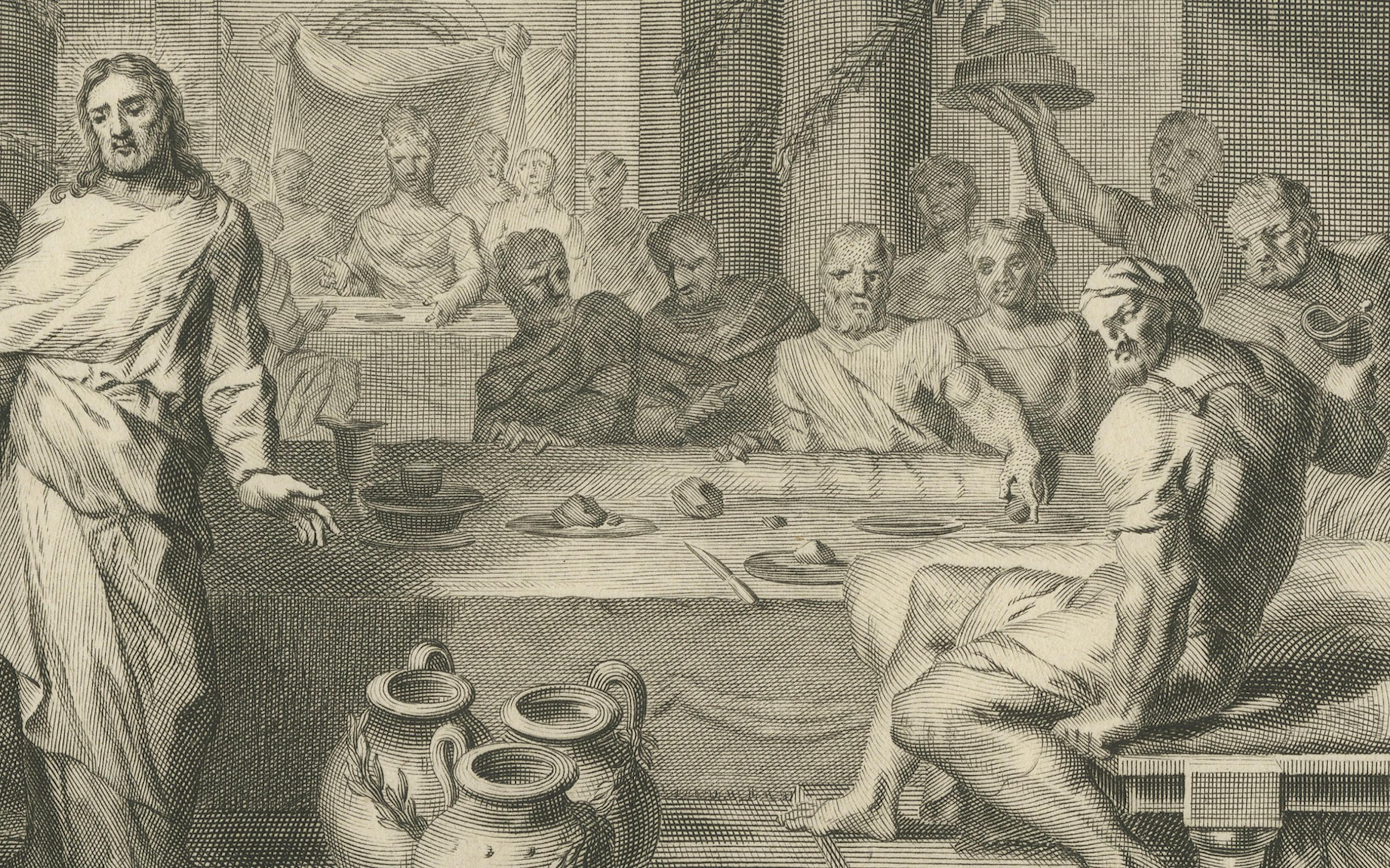
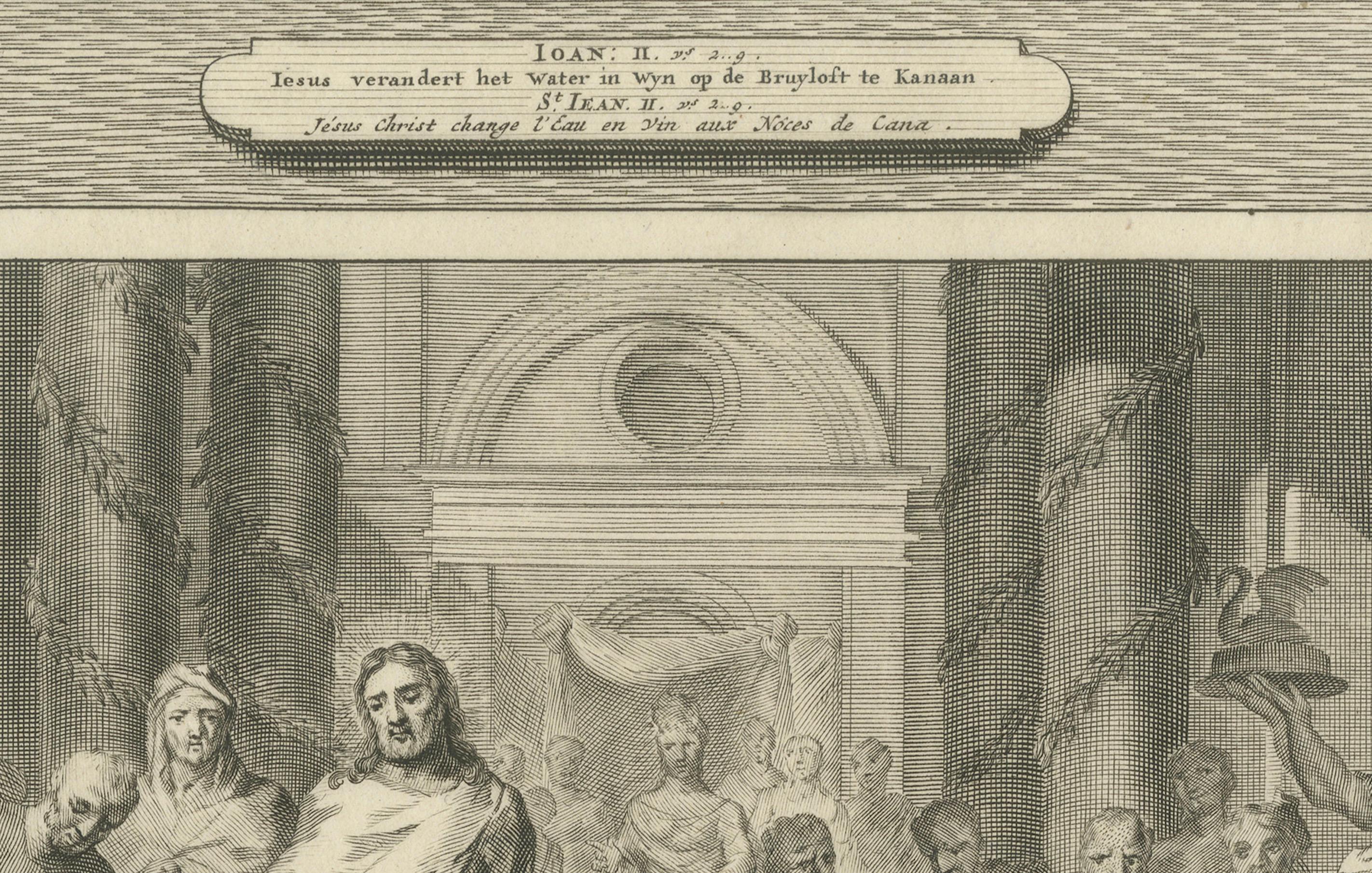
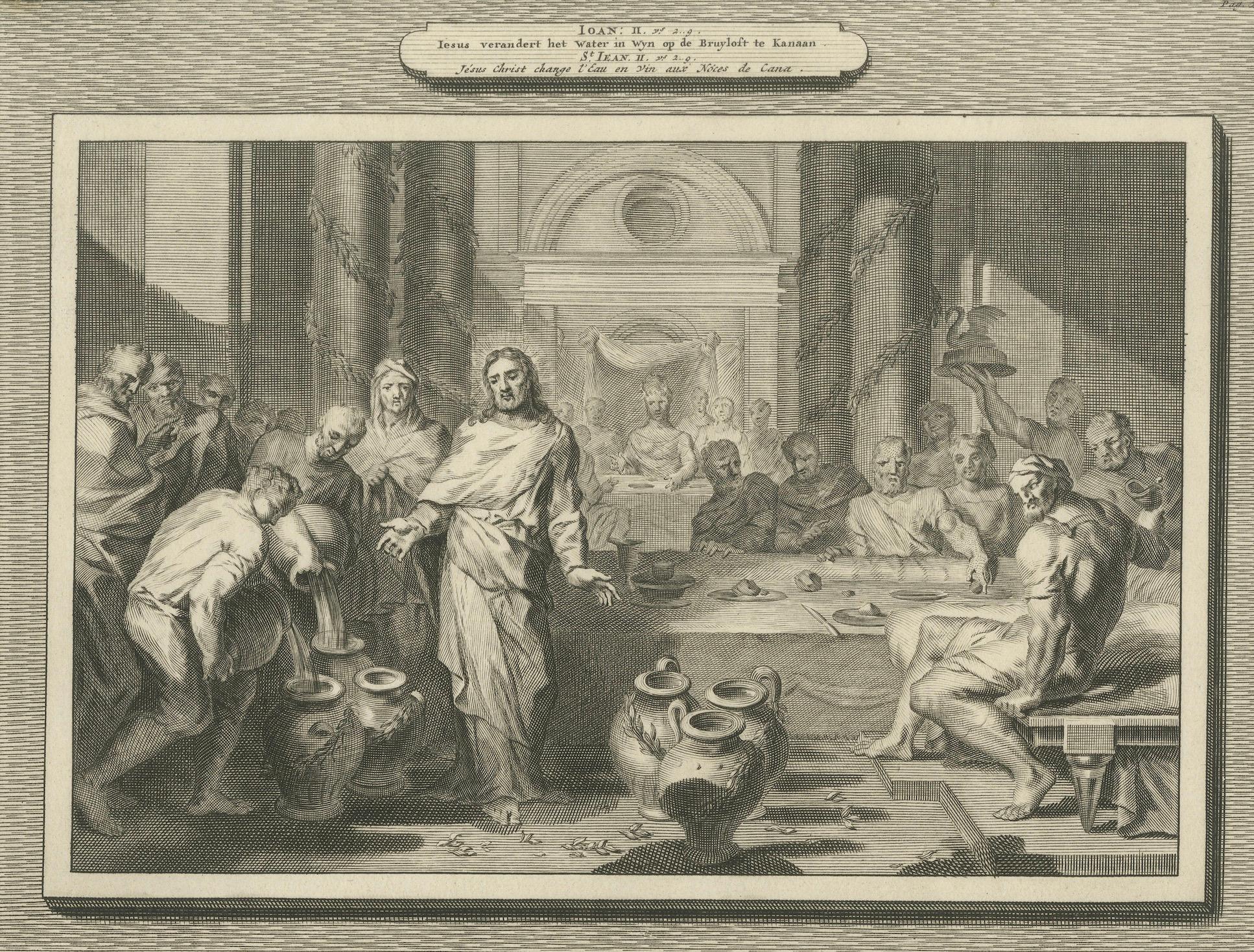
The upper scene illustrates the Wedding at Cana (John II, 1–11). Christ is shown at the moment of performing his first miracle, turning water into wine. Large stone jars dominate the foreground as servants pour water, while Christ gestures with authority. In the background, guests are seated at a banquet under a grand architectural canopy, emphasizing the solemnity of the occasion.
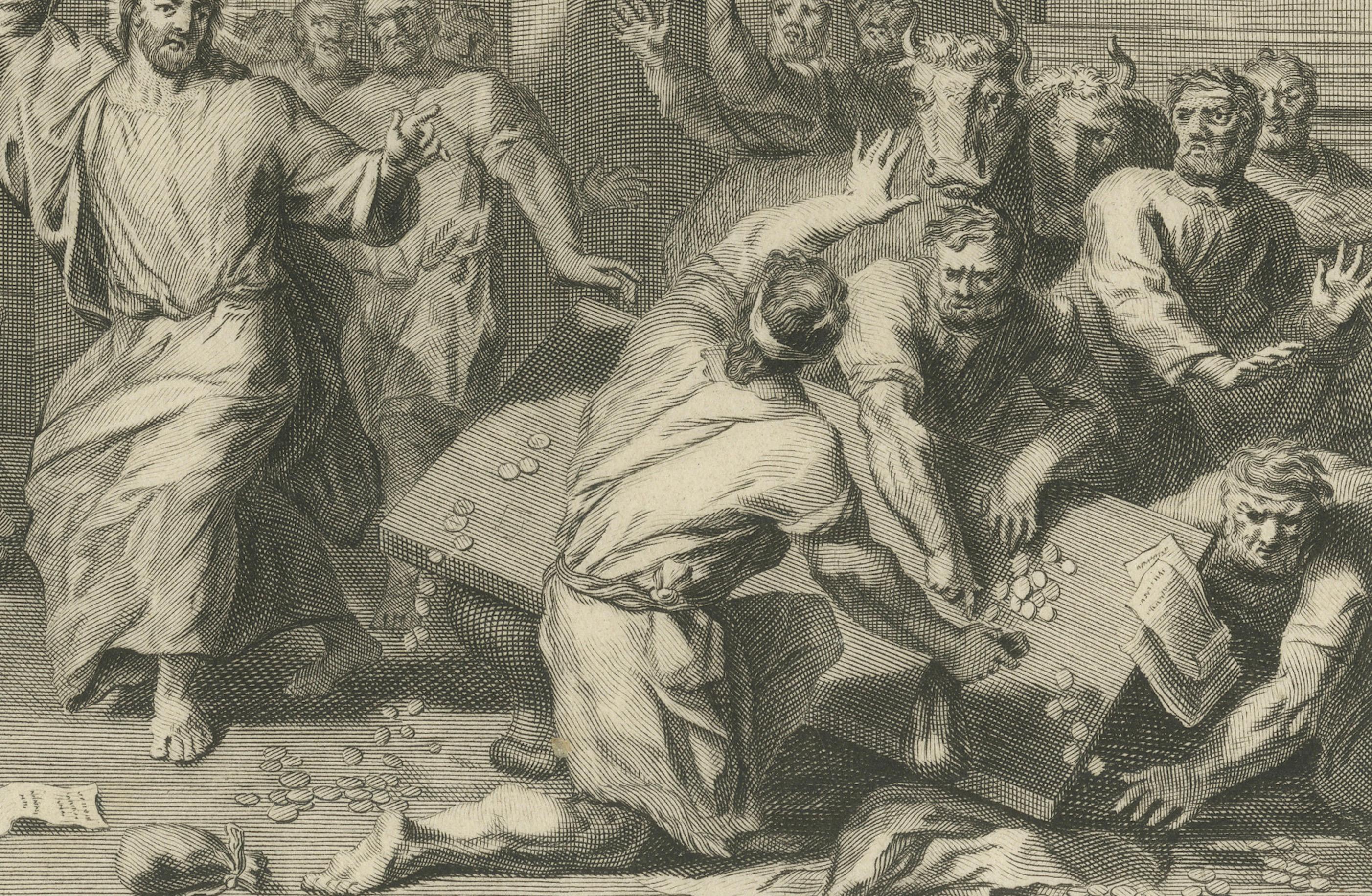
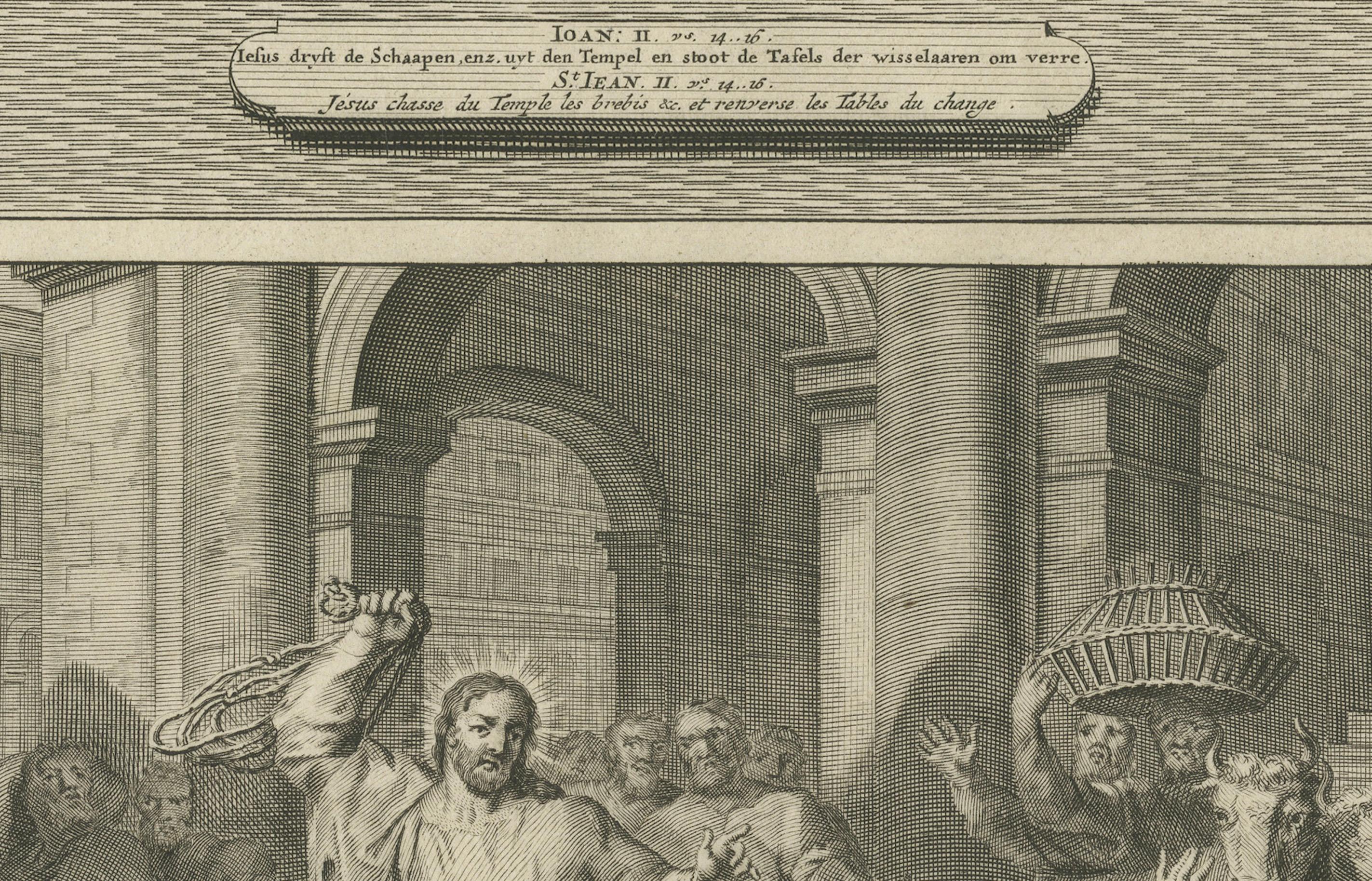
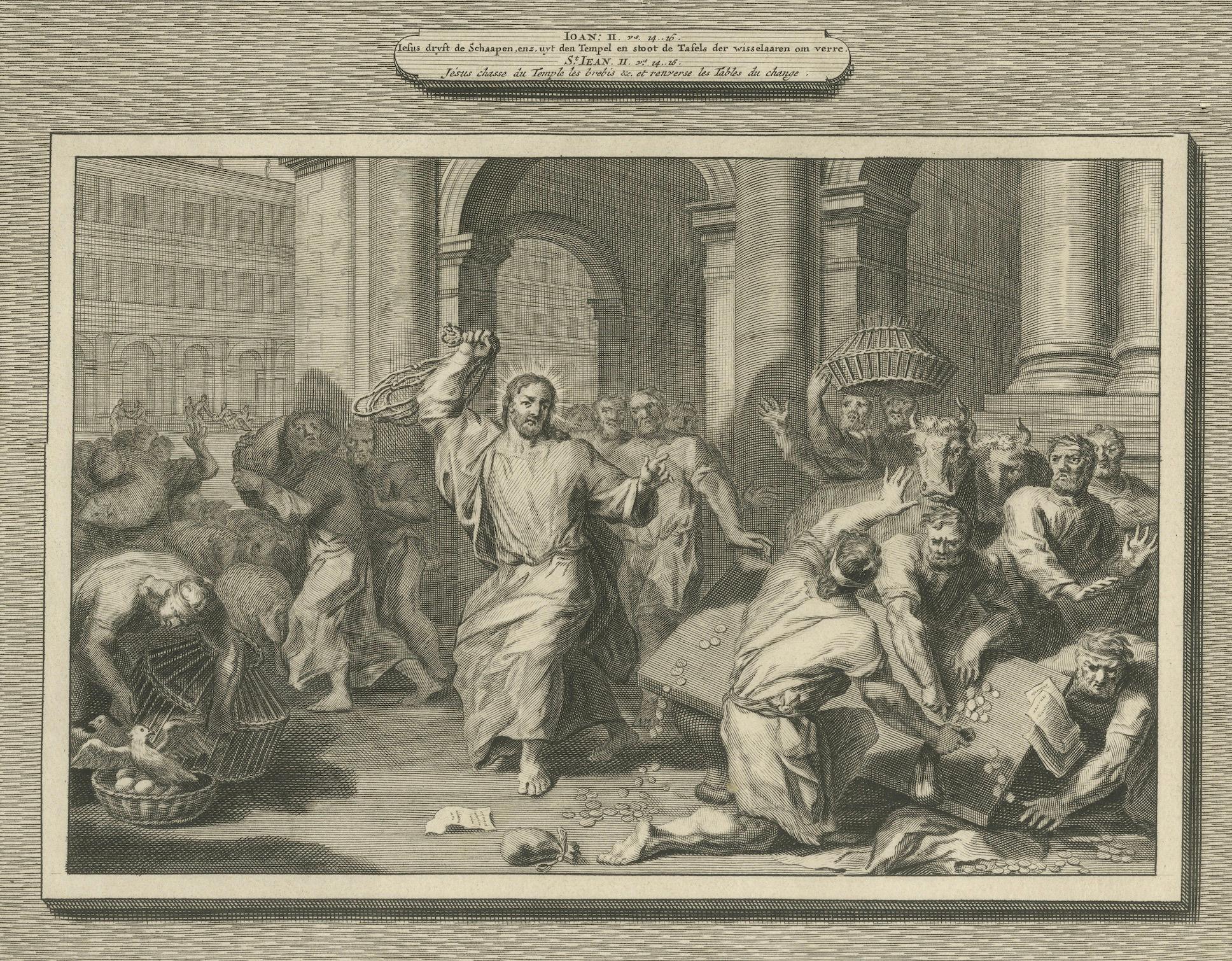
The lower scene depicts the Cleansing of the Temple (John II, 13–17). Here Christ drives the money changers and merchants from the temple courts, raising a scourge in his hand while tables are overturned, coins scatter across the ground, and animals escape from their cages. The engraving captures the energy and drama of the event, with figures recoiling in surprise and fear as Christ asserts his moral authority.
Both scenes reflect the skill of Pieter Mortier’s workshop, combining narrative clarity with richly detailed architectural settings and expressive figures. These plates belong to Mortier’s ambitious publishing program of large-scale biblical works, created for an audience that valued both devotional use and fine artistry.
Condition report:
Good condition. Strong impression with wide margins. Light toning and faint foxing to the edges, minor handling marks consistent with age. Central images remain sharp and clean.
Framing tips:
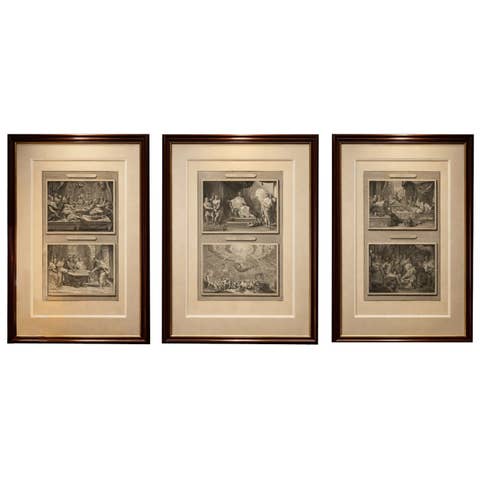
A double-aperture mount in cream or ivory will emphasize the two separate biblical episodes while keeping the plate unified. A dark wooden or ebonized frame adds strength to the composition, while a gilt frame would highlight the sacred subject matter and baroque elegance of Mortier’s engravings.
Technique: Copperplate engraving
Maker: Pieter Mortier, Amsterdam, ca. 1700