One of a kind: this is the sheet in the photographs. Ships from Langweer, the Netherlands.
Date
1806
Sheet size
28.5 × 21.5 cm (11.2 × 8.5 in)
Condition
Good
Reference
BG-13429-37
Condition
Condition Report: Good condition for its age, with minor foxing and light browning on edges. Slight creasing at corners and minimal wear on margins, but the central image remains clear and intact. No tears or significant damage observed.
About this sheet
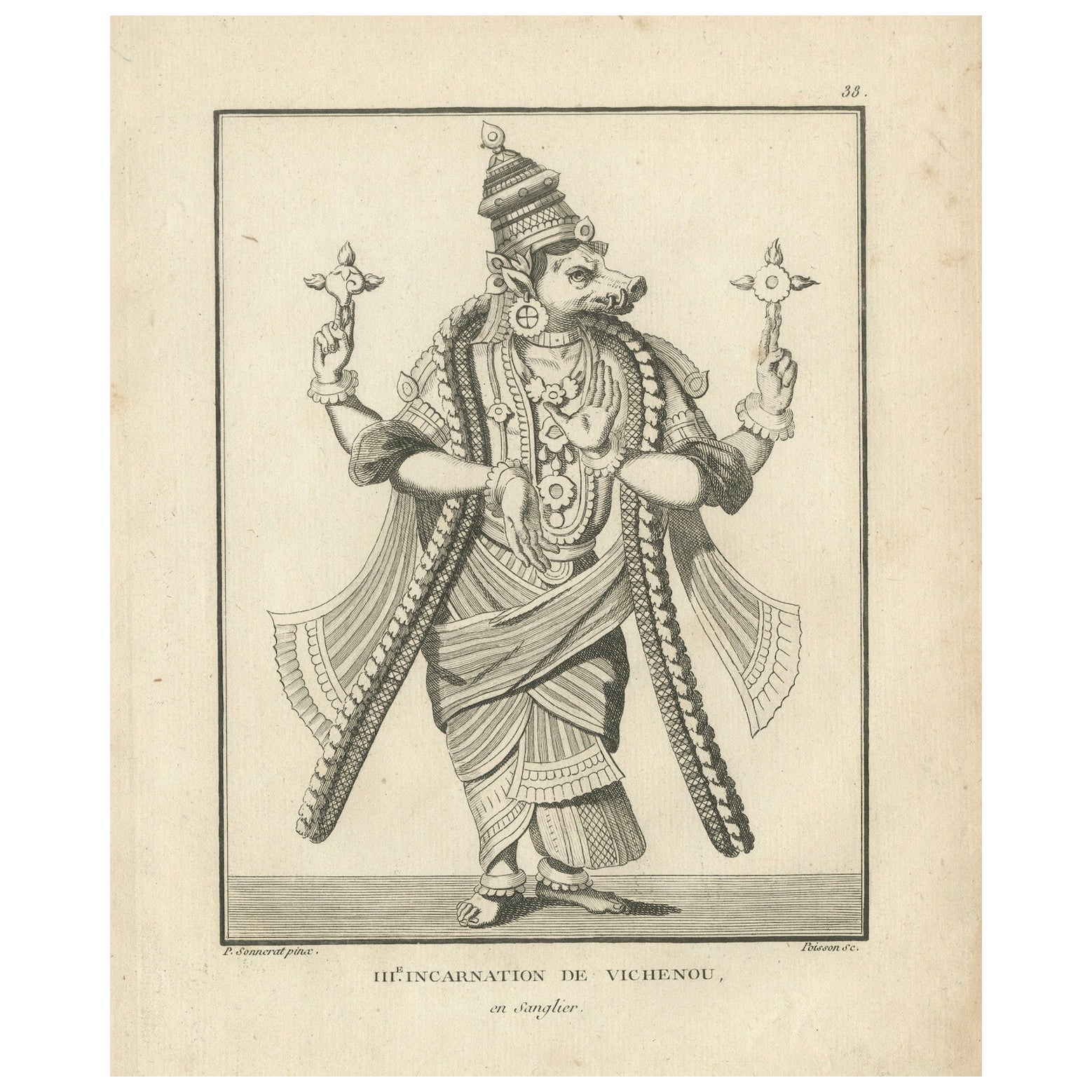
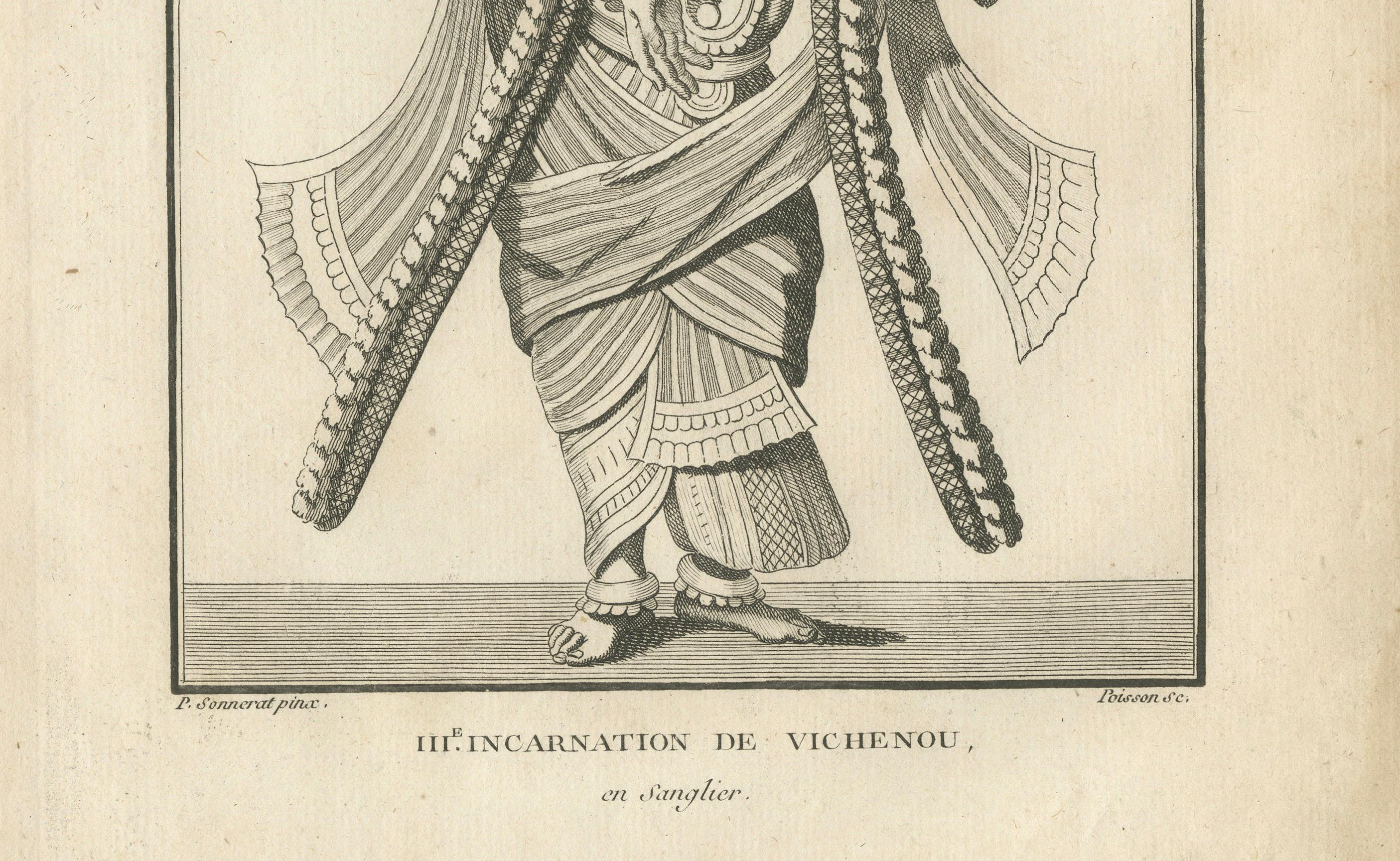
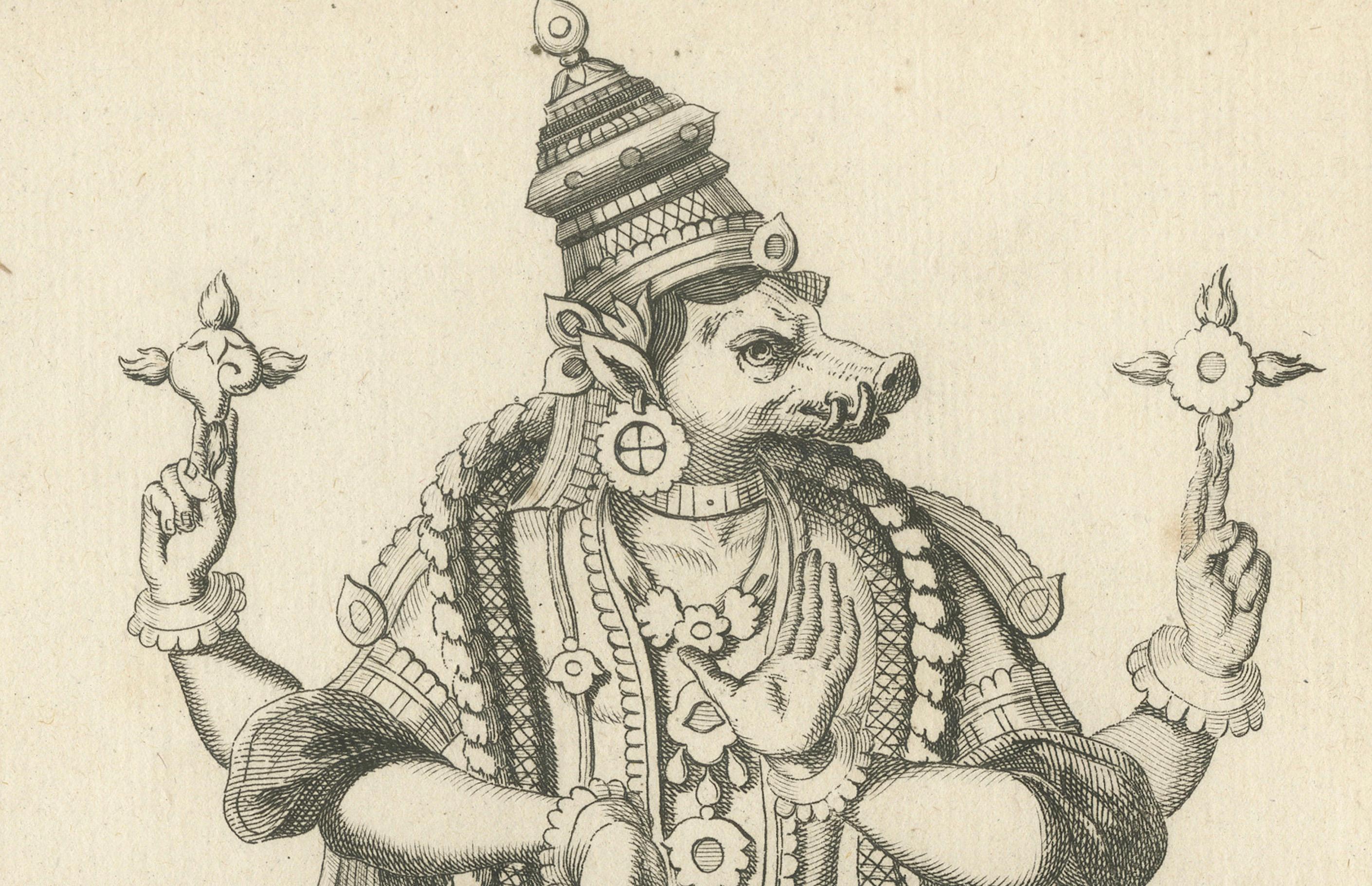
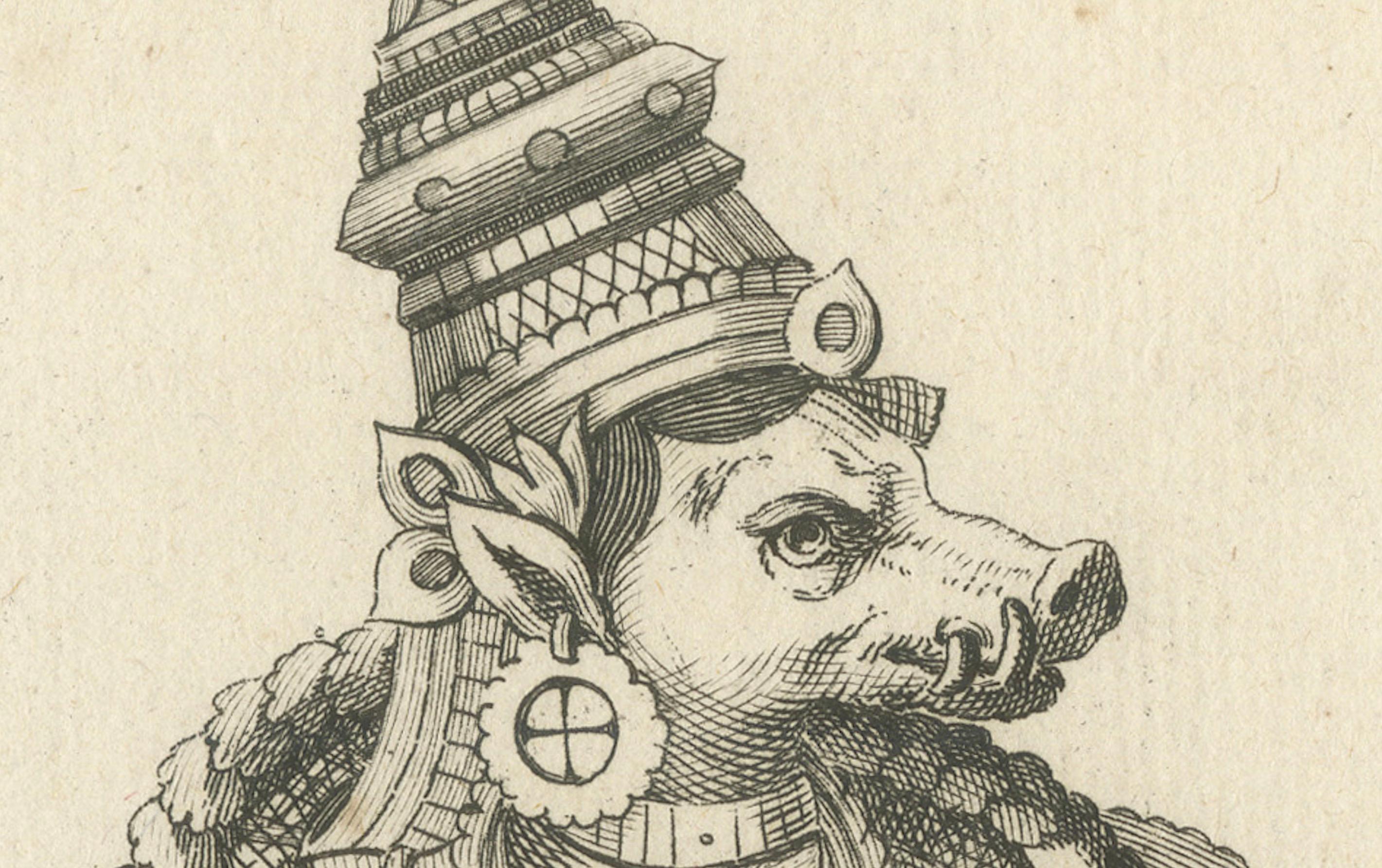
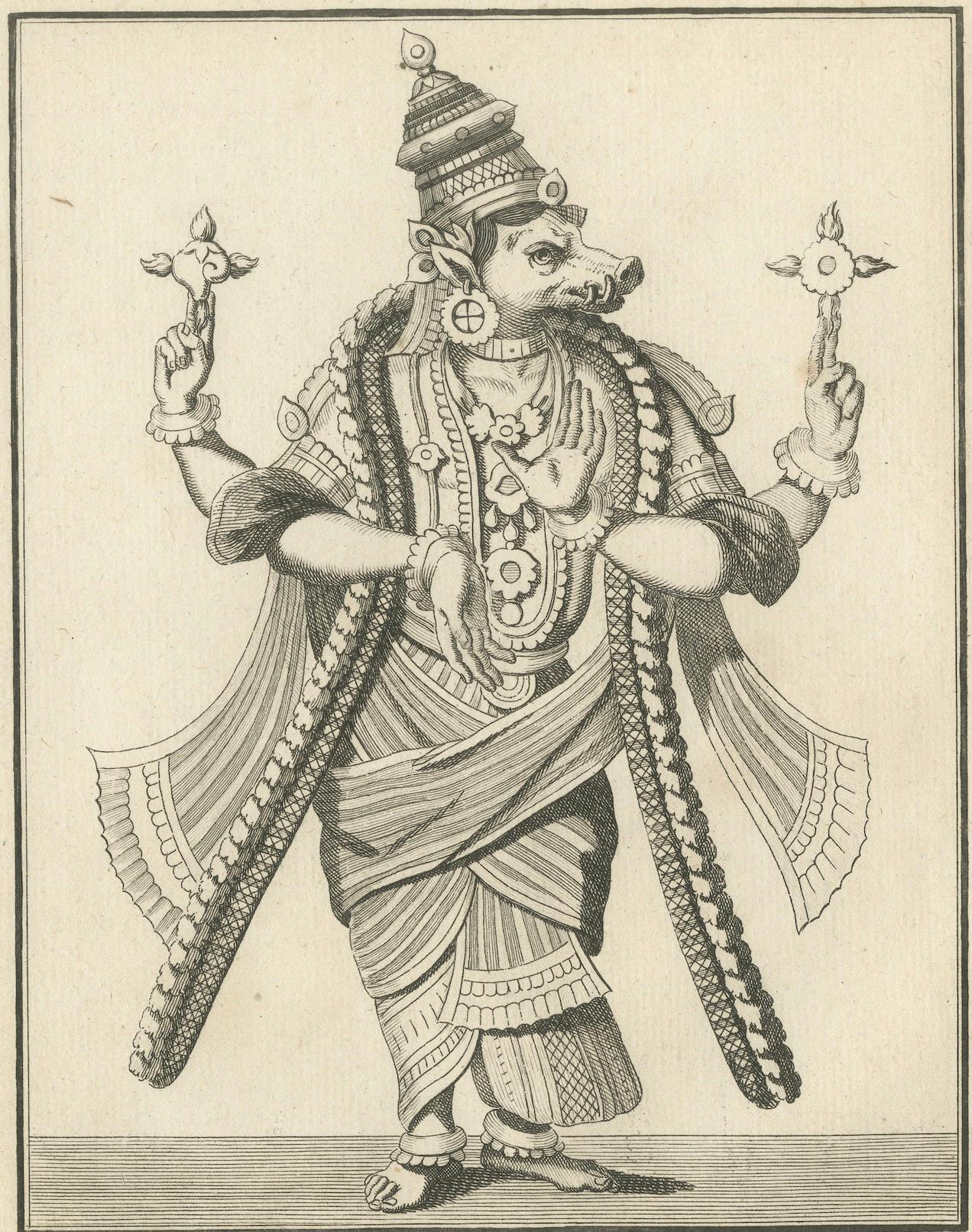
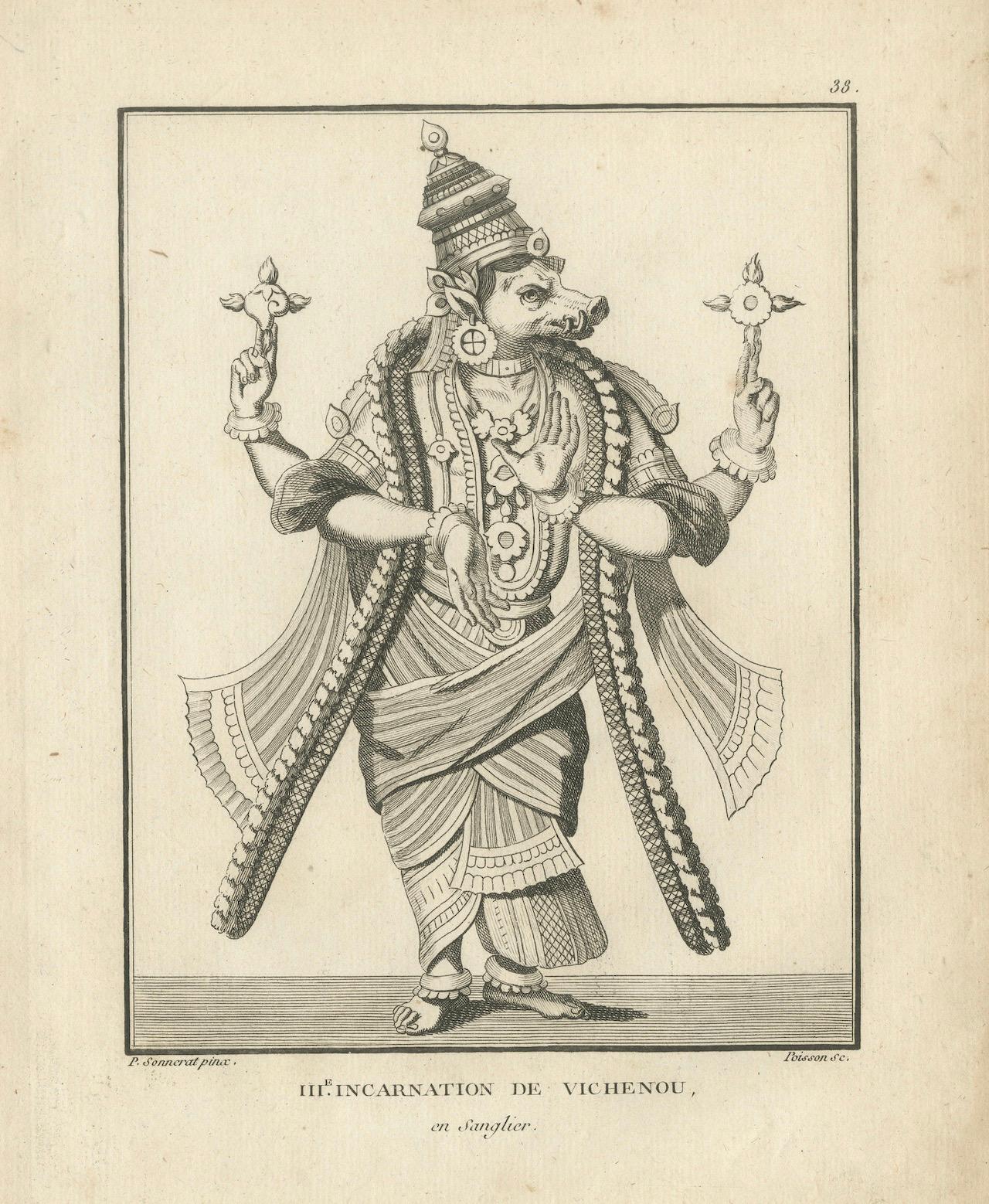
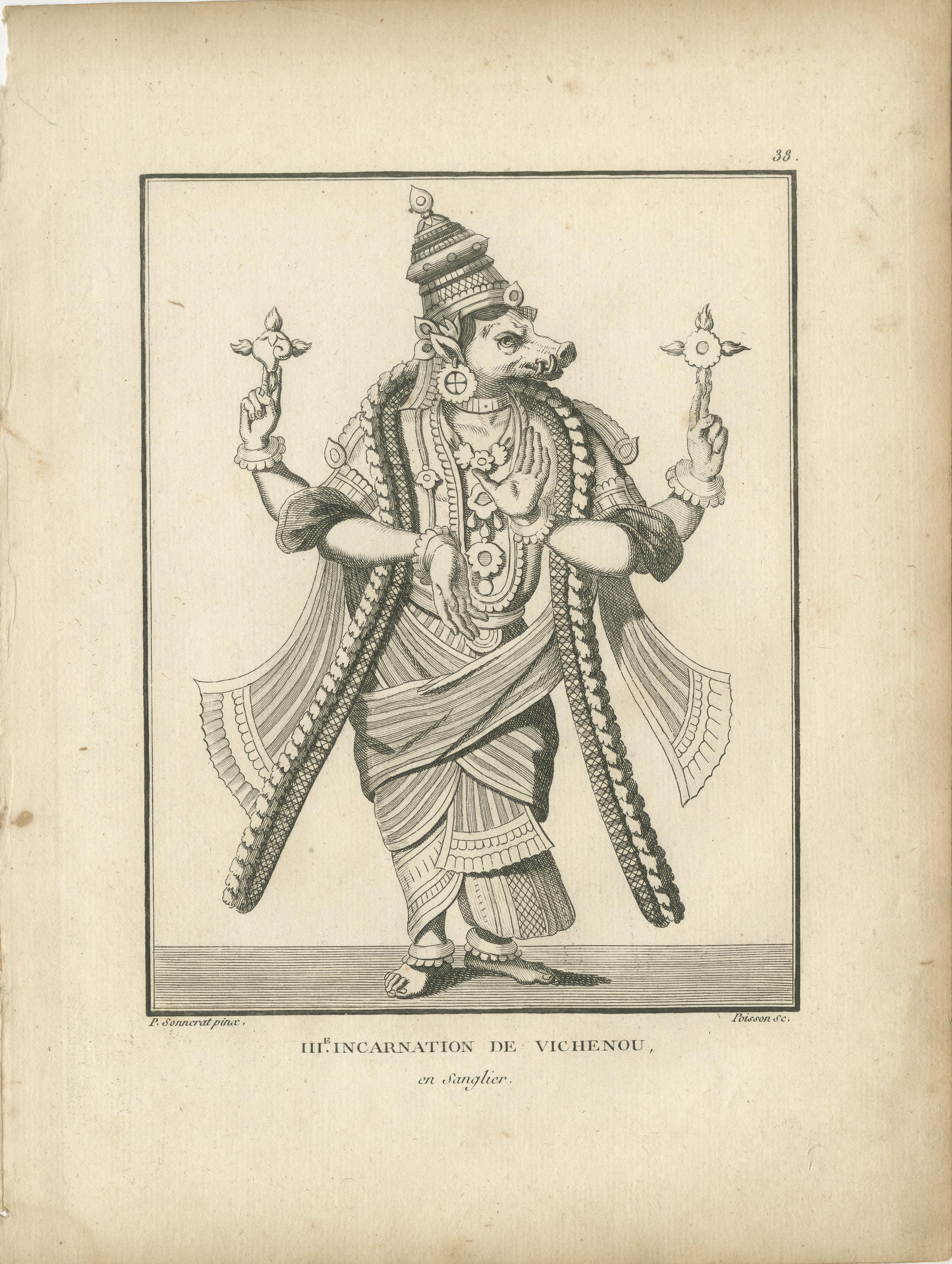
This striking antique print, titled "IIIme Incarnation de Vichenou, en Sanglier," portrays Varaha, the boar avatar of the Hindu god Vishnu, one of his ten principal incarnations (Dashavatara). The deity is depicted with a human upper body adorned with an ornate headdress and intricate jewelry, featuring a boar's head, symbolizing strength and protection.
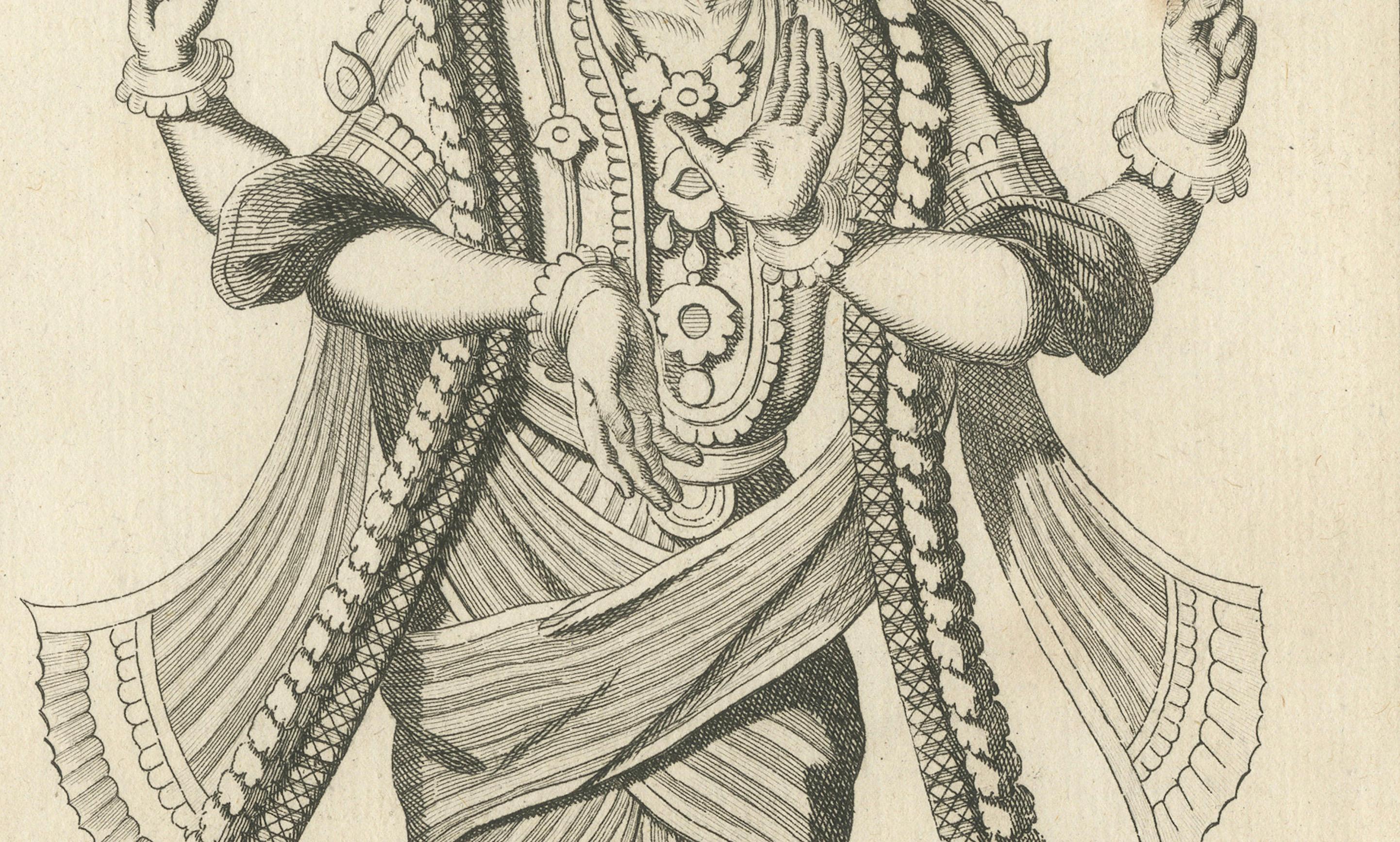
Vishnu holds symbolic items, including a conch, representing his divine role in preserving the universe. The detailed line work and intricate patterns capture the mythological significance of Varaha, who is believed to have rescued the Earth from the demon Hiranyaksha in Hindu scriptures.
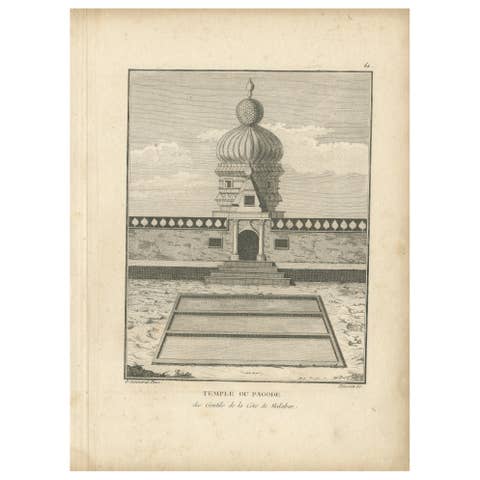
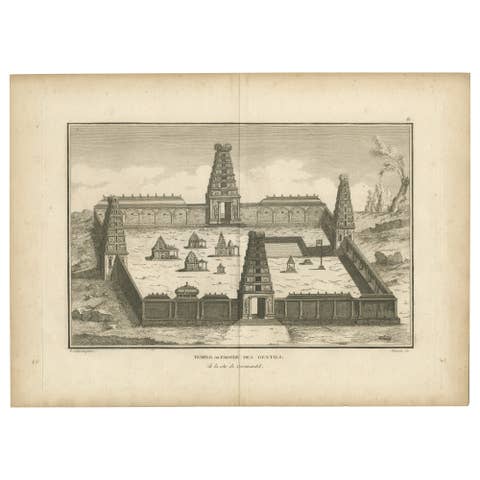
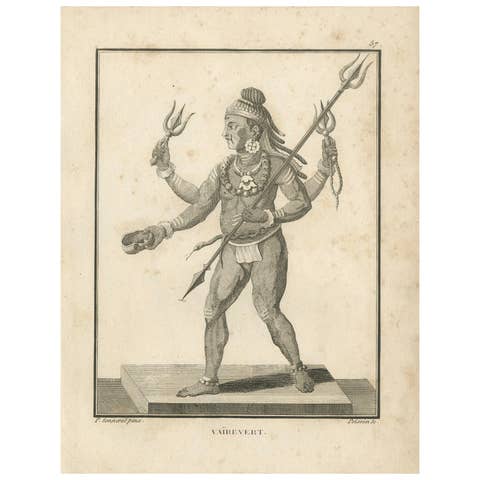
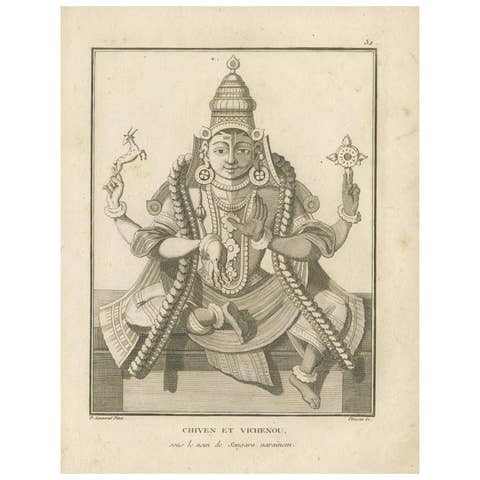
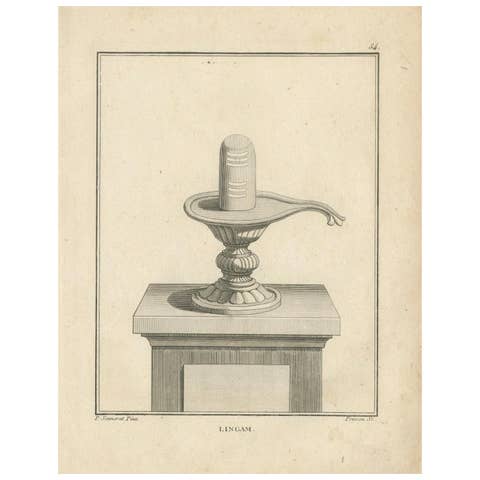
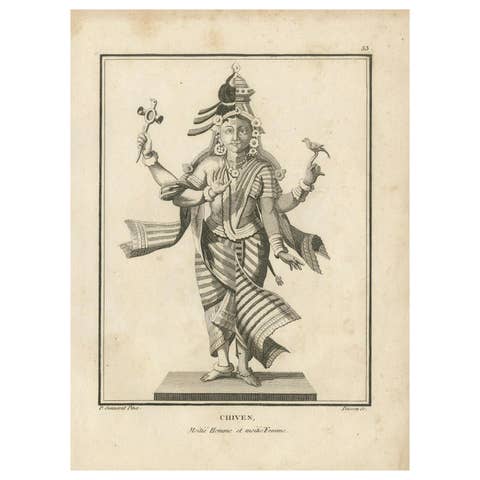
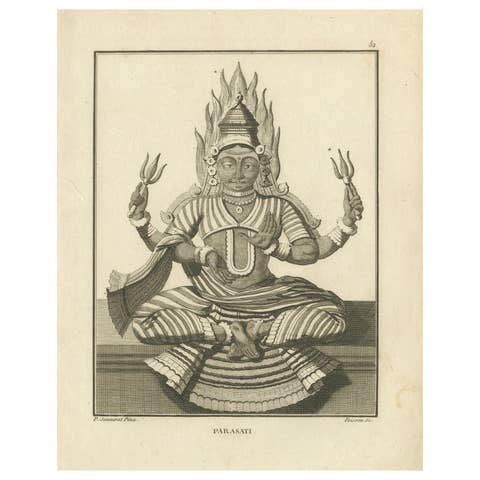
The copperplate engraving was created by Jean-Baptiste Marie Poisson after an illustration by Pierre Sonnerat, a renowned French naturalist and explorer. It was published in Sonnerat’s influential travelogue, Voyage aux Indes Orientales et à la Chine (Dentu, Paris, 1806), which documented his observations of Eastern cultures during his travels.
The copperplate engraving technique, prevalent in the early 19th century, allowed for the fine detailing seen in the deity’s elaborate attire and the textured features of the boar form.
This print offers a fascinating insight into early 19th-century European interpretations of Hindu mythology, reflecting the period’s growing curiosity about Eastern traditions. The aged paper and subtle patina enhance its historical charm, making it a valuable piece for collectors of mythological art, ethnographic studies, or early 19th-century engravings. Its connection to Sonnerat’s seminal work adds to its cultural and historical significance.
Condition Report: Good condition for its age, with minor foxing and light browning on edges. Slight creasing at corners and minimal wear on margins, but the central image remains clear and intact. No tears or significant damage observed.
Framing Tips: Use a double mat in a neutral shade to highlight the print's details. Select a dark wooden frame to complement its antique style. Choose UV-protective glass to prevent fading, and avoid direct sunlight exposure.