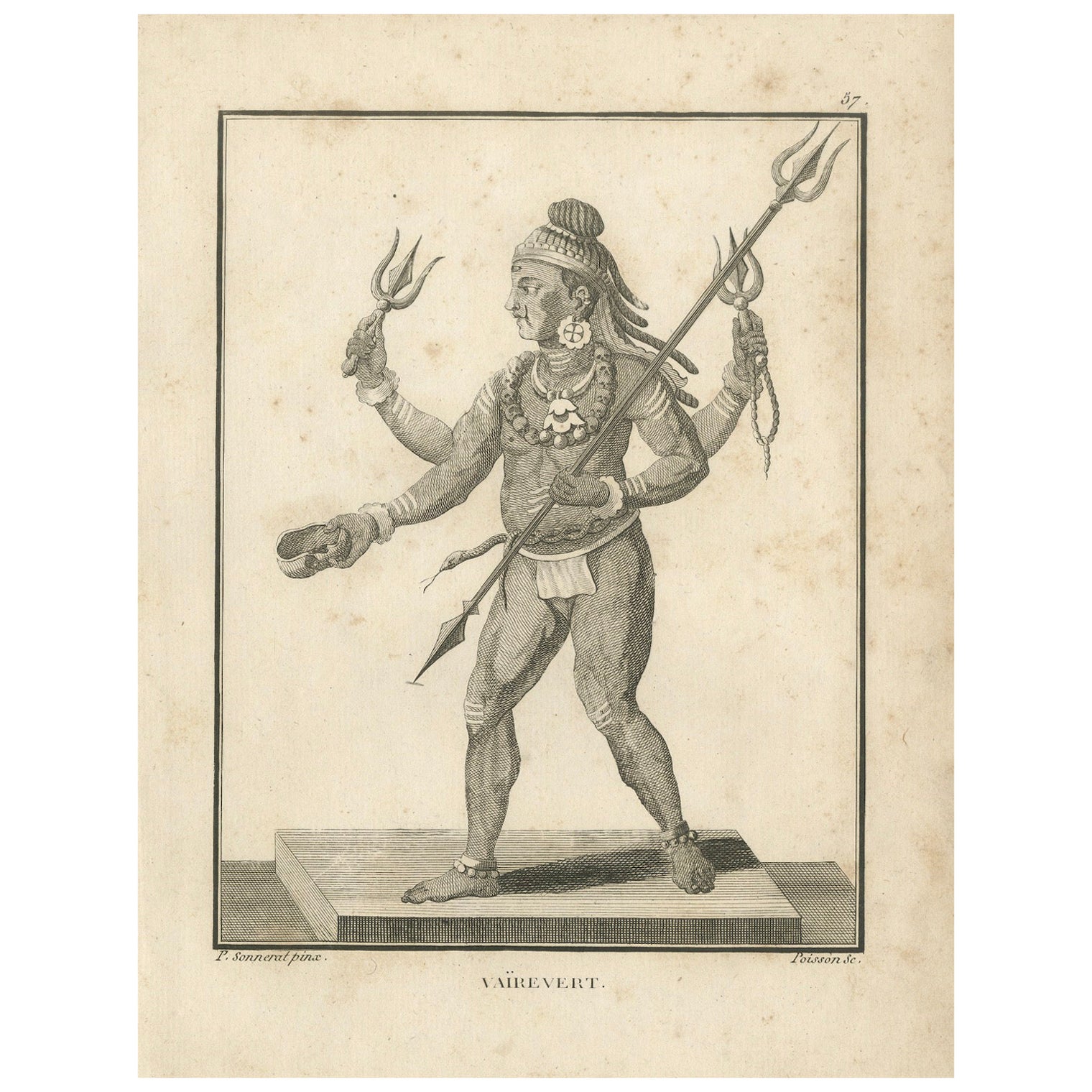
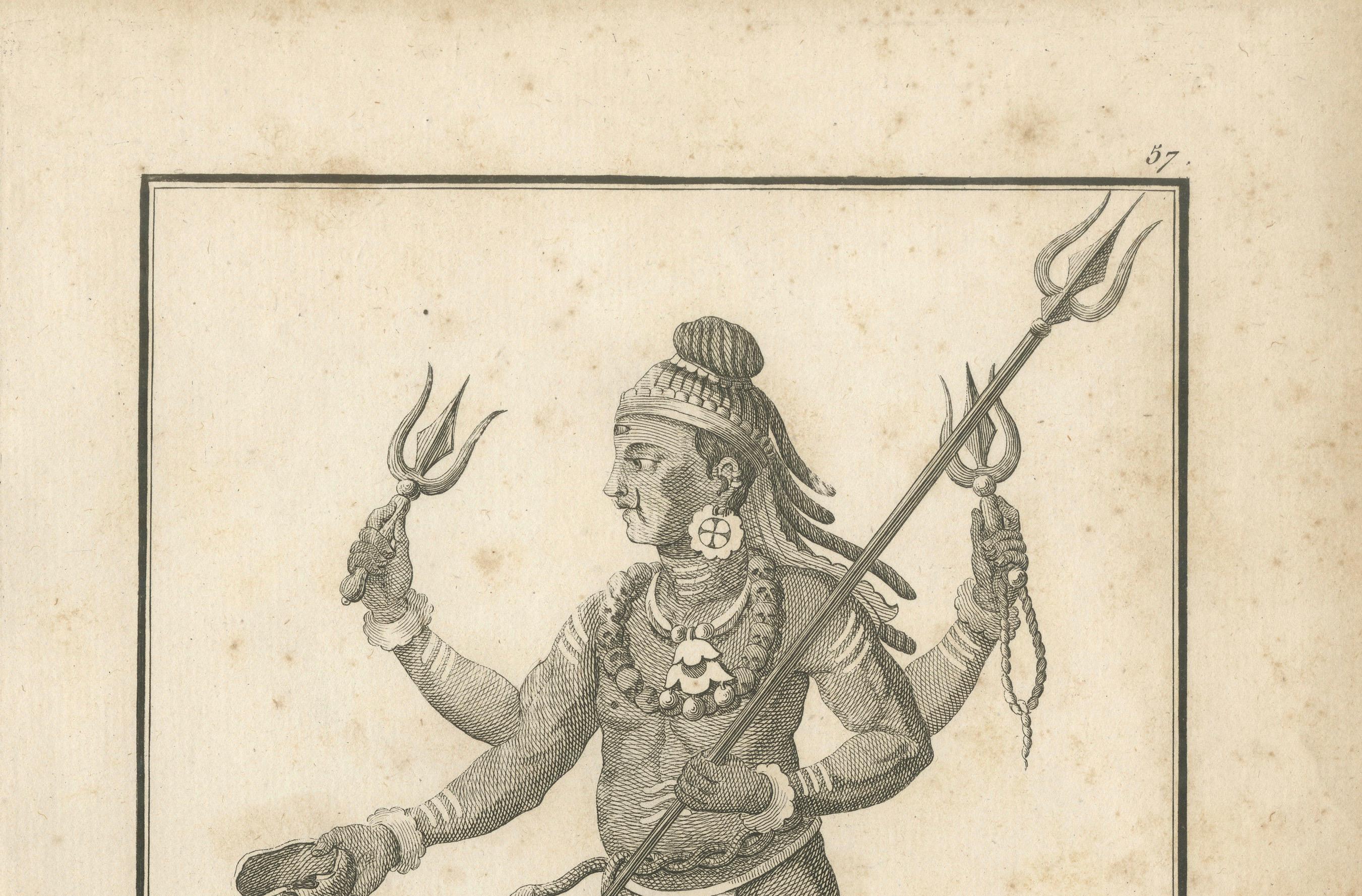
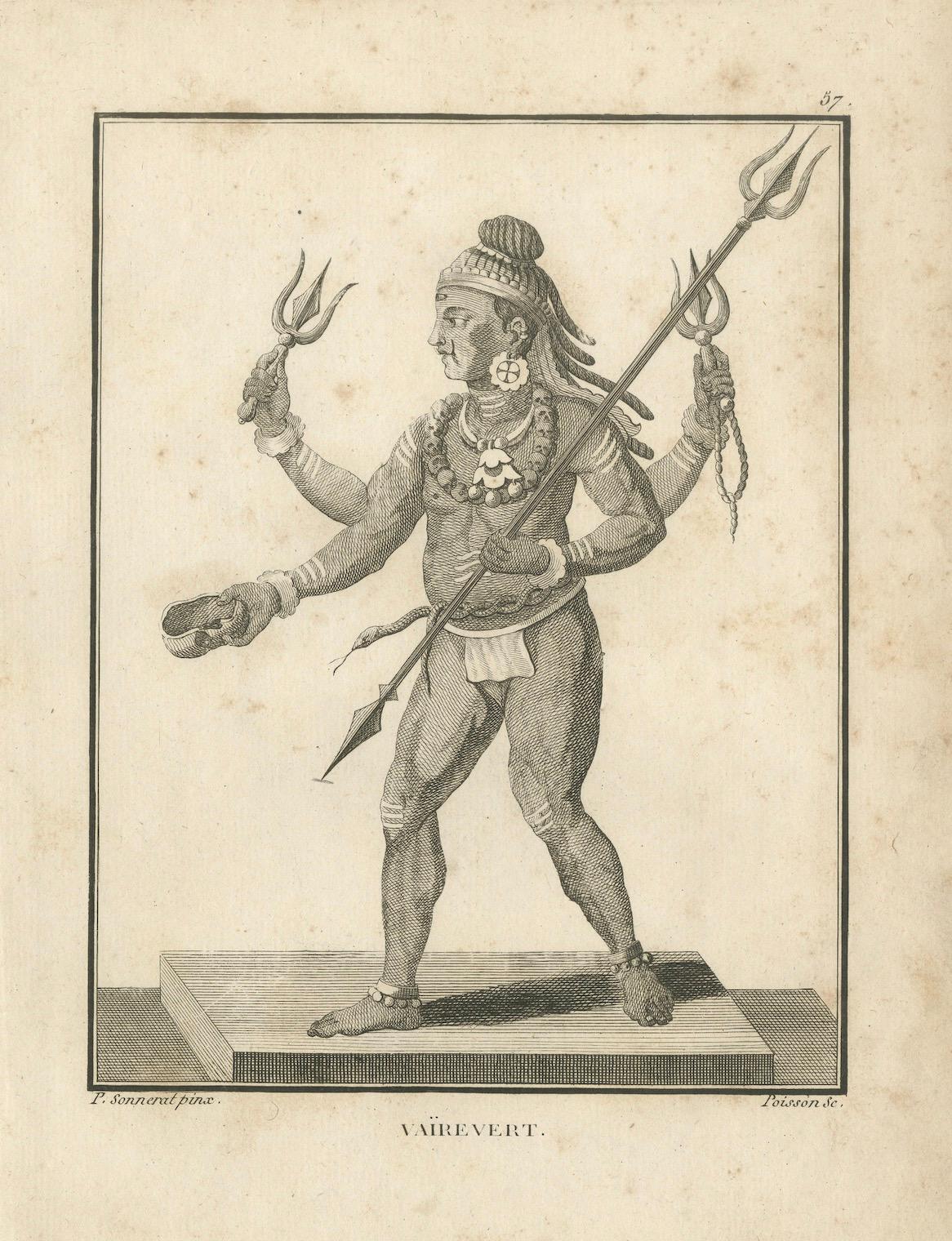
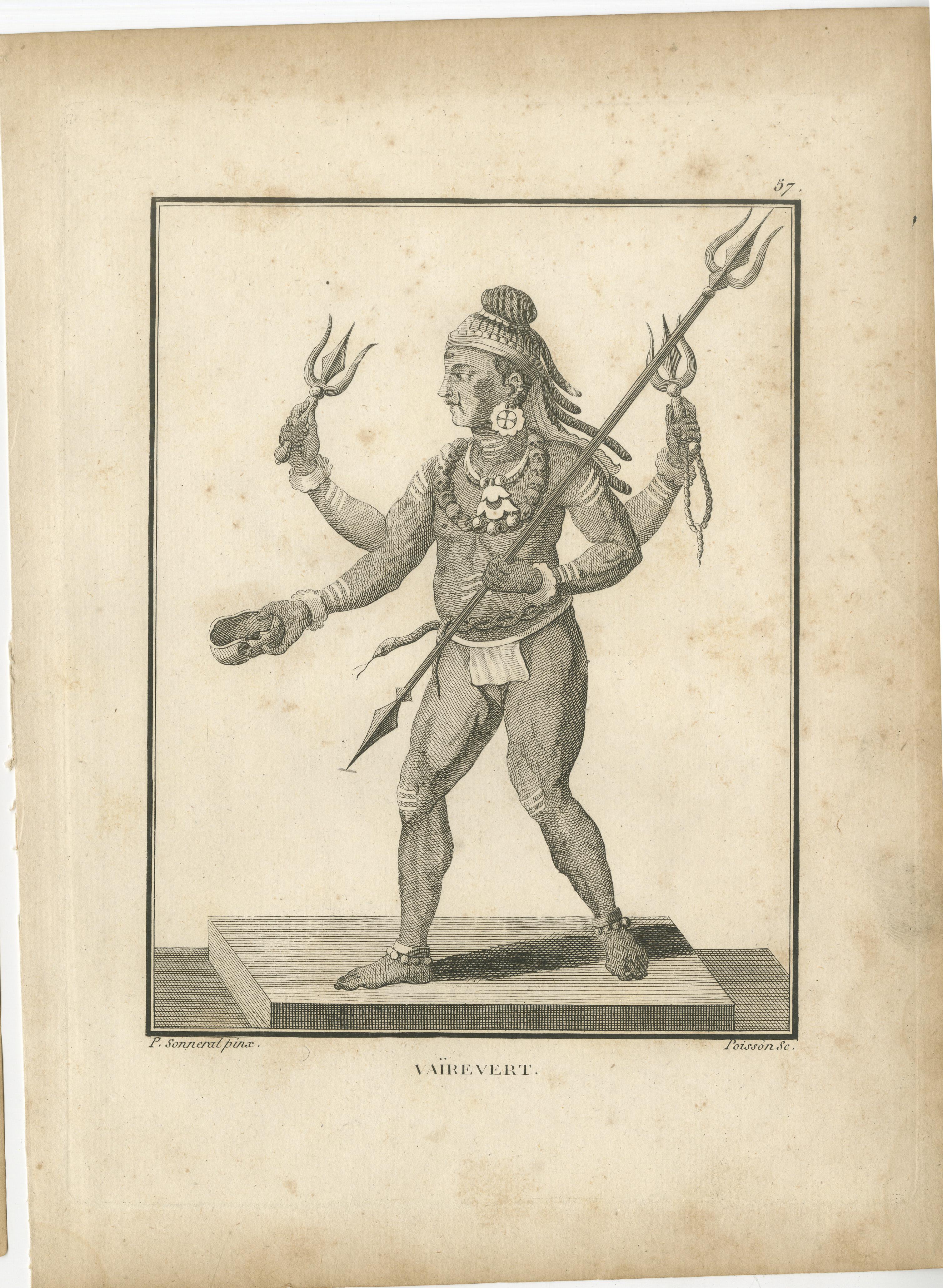
1806 Engraving: Vaivert, Fierce Form of Shiva in Hindu Mythology
€ 190
One of a kind: this is the sheet in the photographs. Ships from Langweer, the Netherlands.
Date
1806
Sheet size
28.5 × 21.5 cm (11.2 × 8.5 in)
Condition
Good
Reference
BG-13429-56
Condition
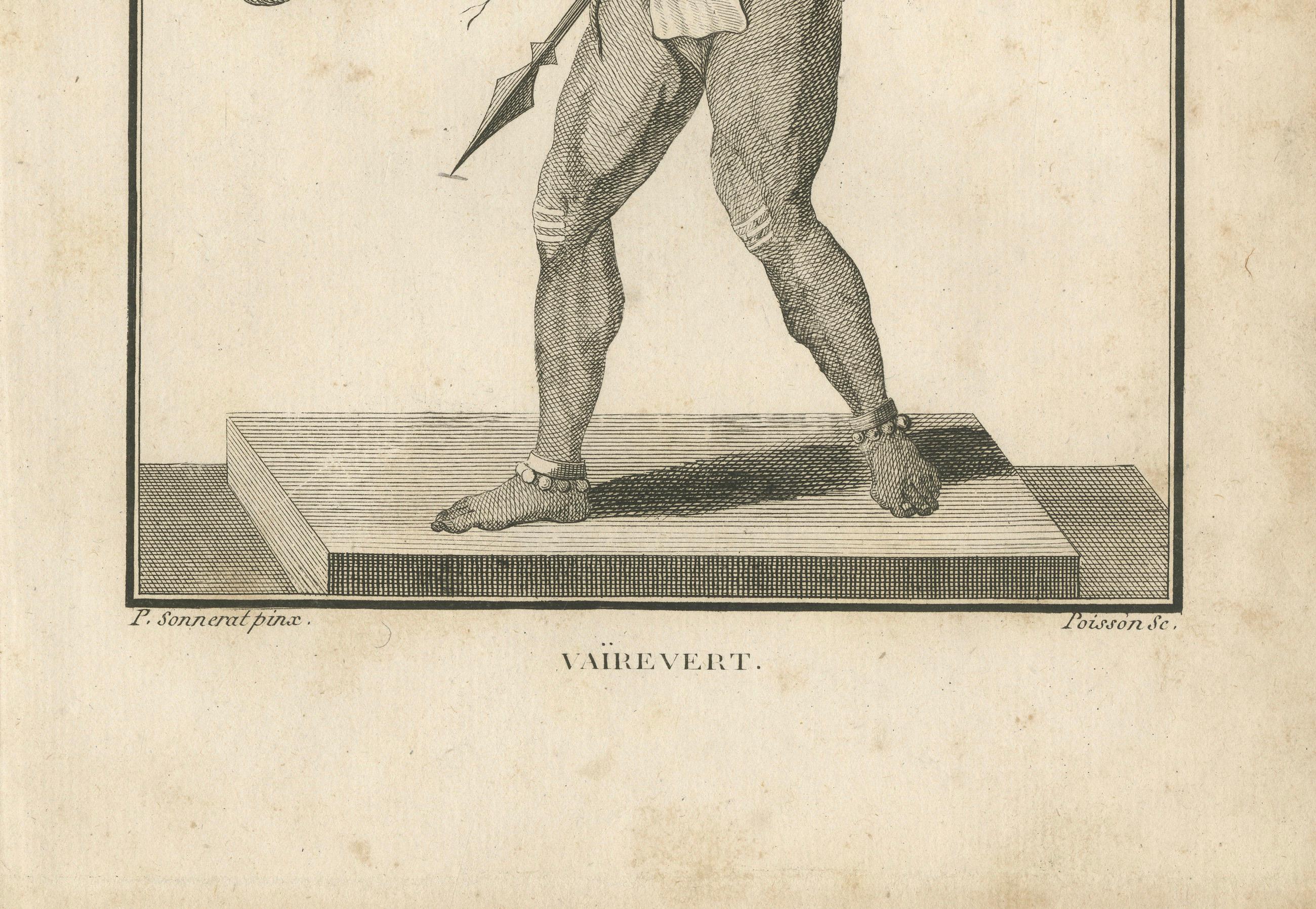
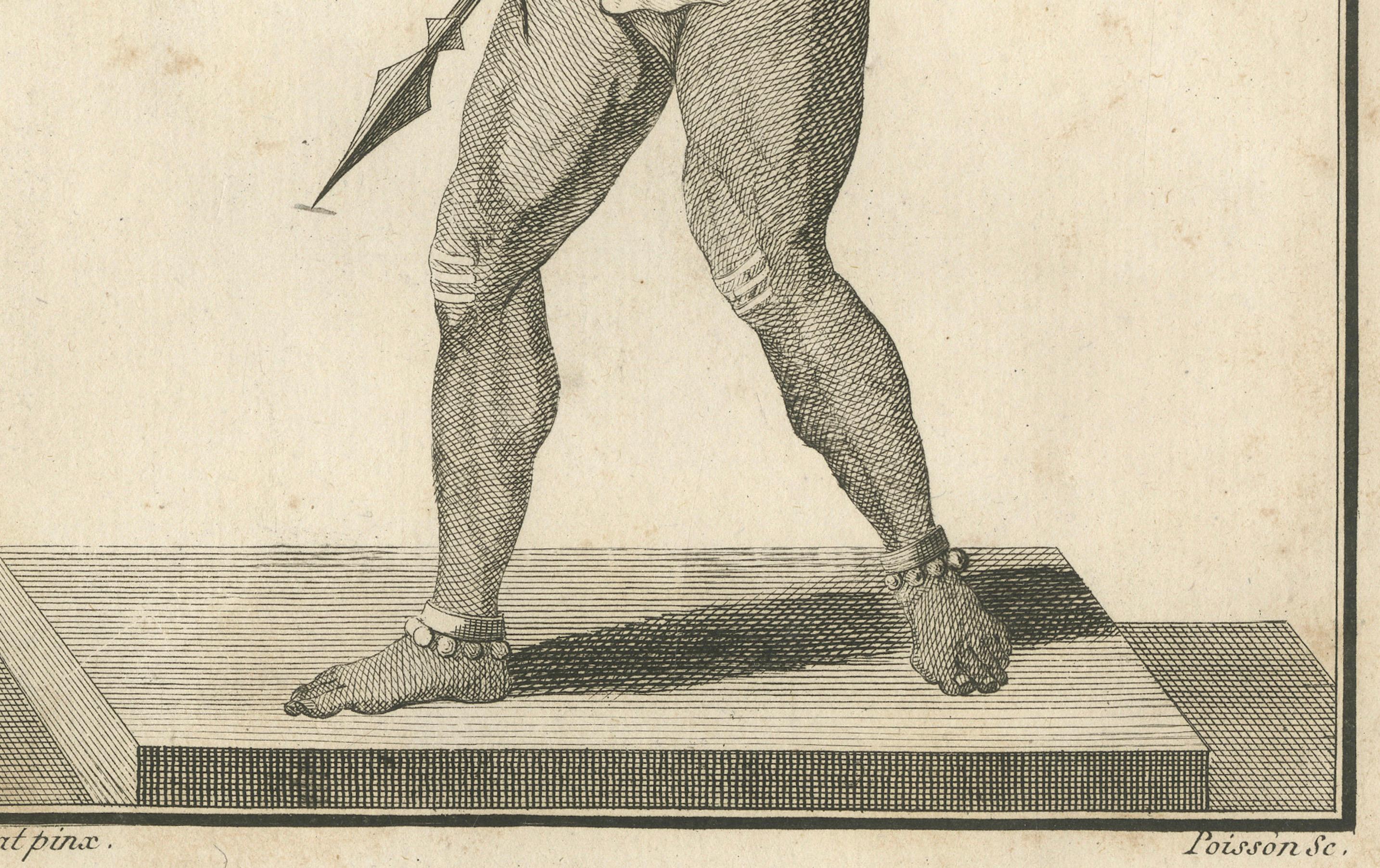
Condition Report: The print shows light foxing and yellowing or browning on the edges. Overall, it has a lot of patina and it remains in good condition for its age.
About this sheet
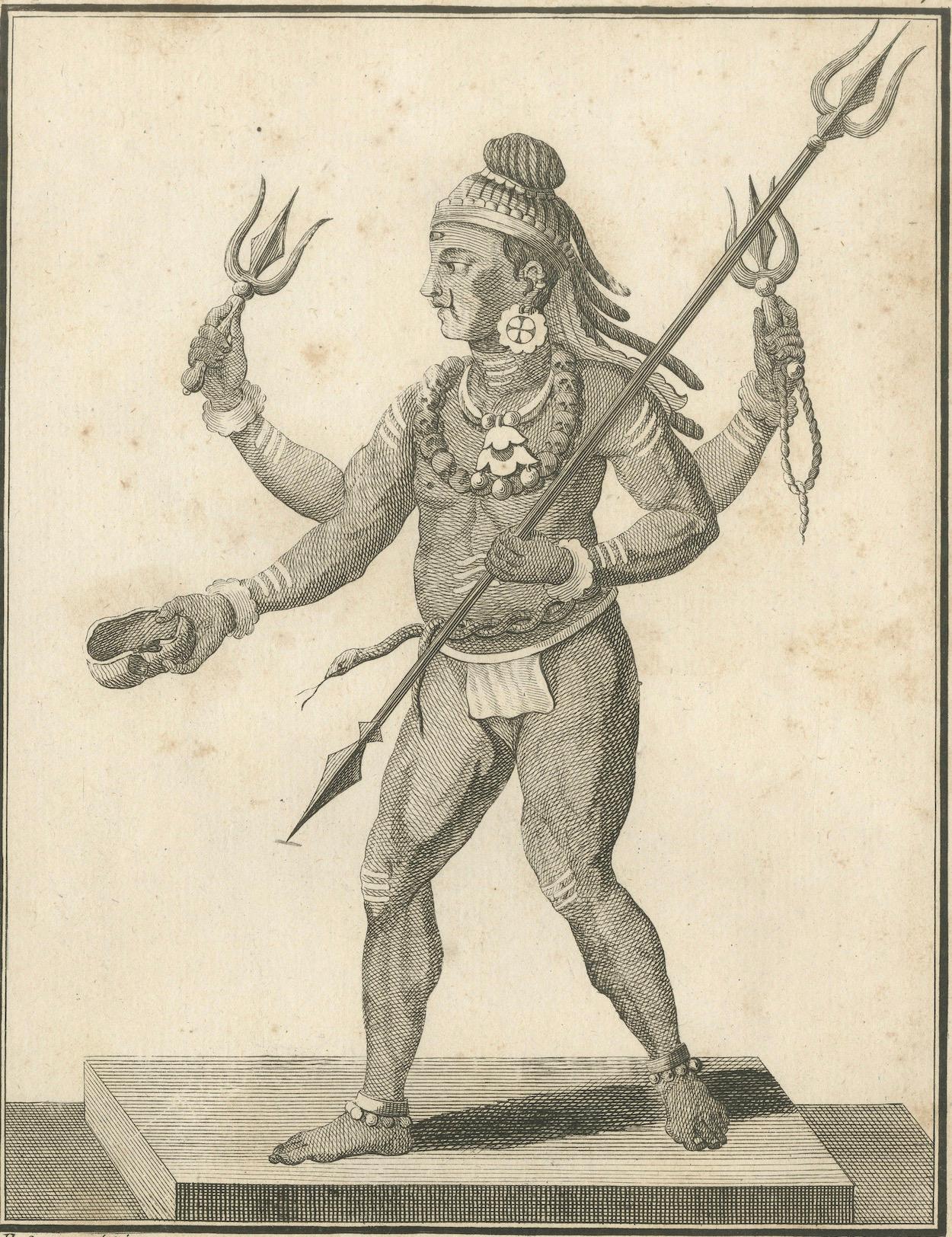
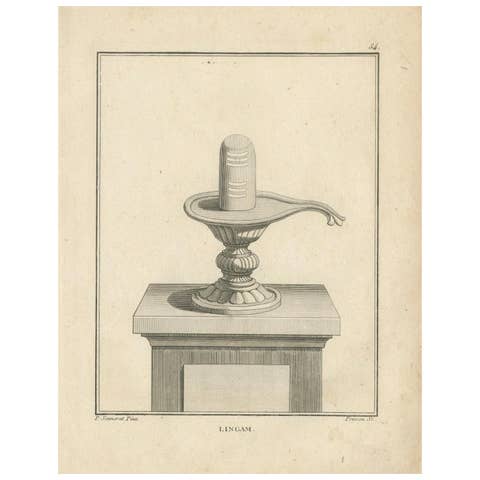
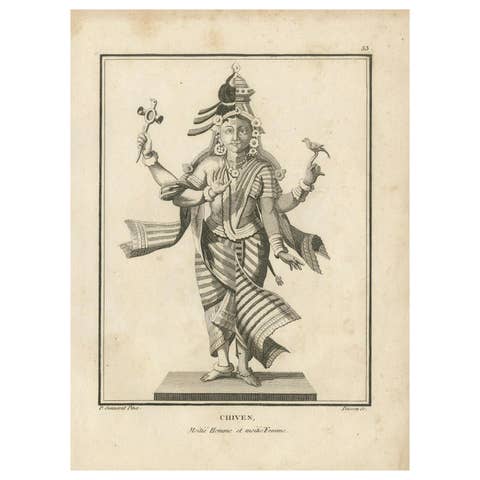
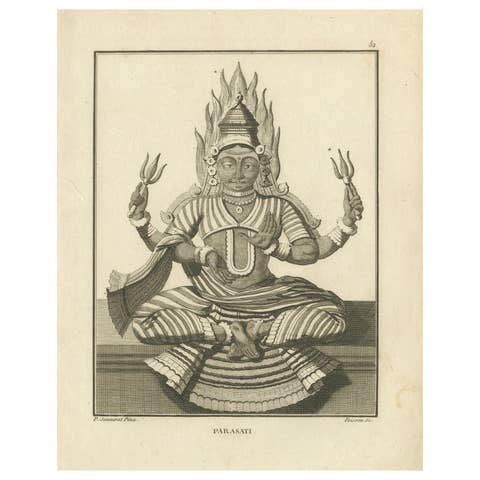
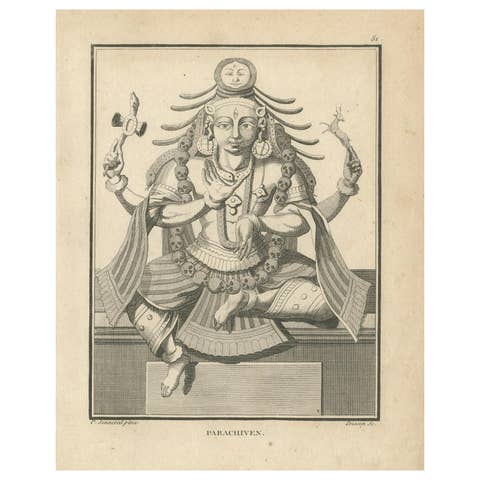
This striking antique print, titled "Vaïvert," depicts Vaivert, a fierce form of the Hindu deity Shiva, known as Bhairava, embodying destruction and protection in Hindu mythology. Published in 1806, this artwork is a significant piece from Pierre Sonnerat's influential travelogue, "Voyage aux Indes orientales et à la Chine," which documents his explorations and cultural observations in India.
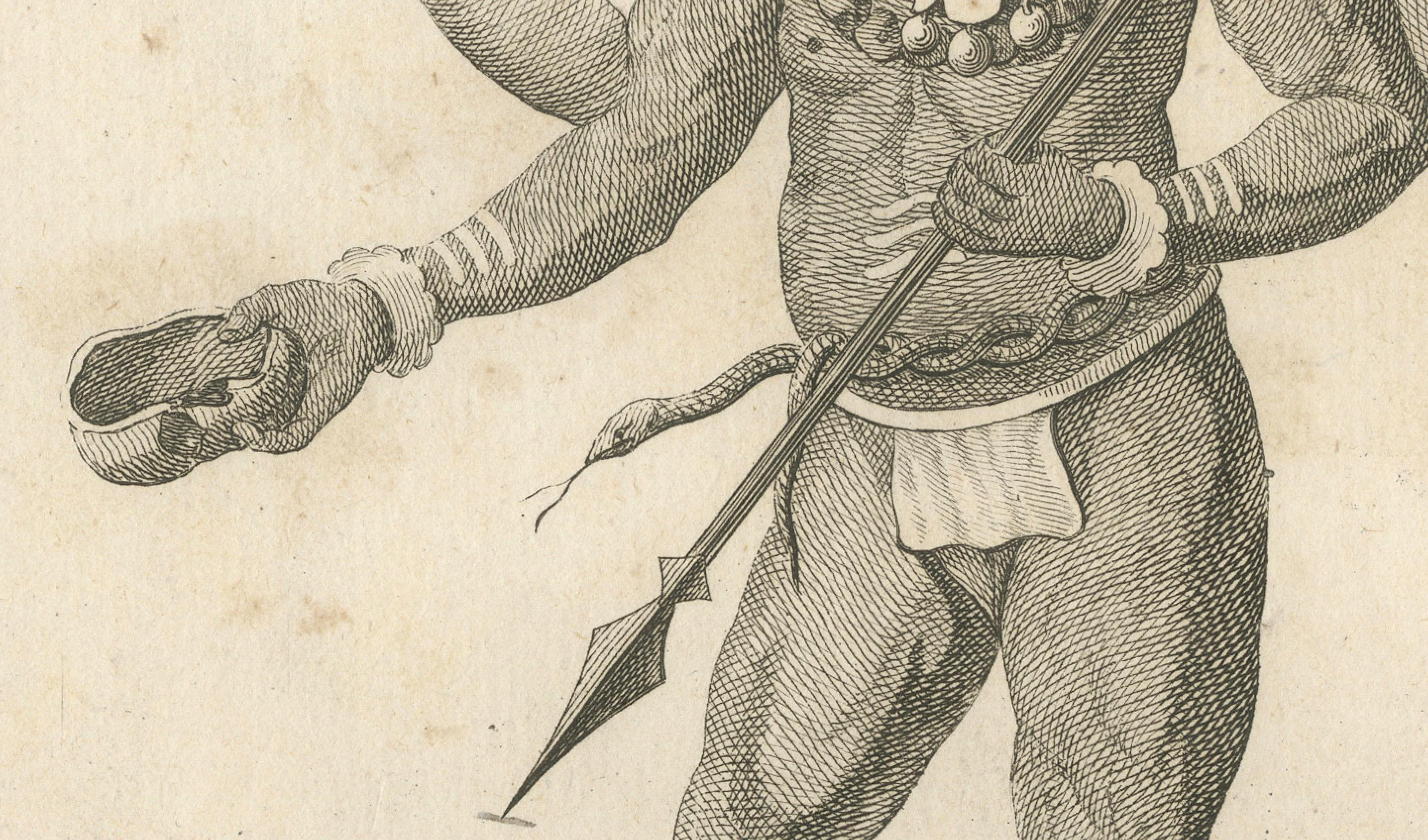
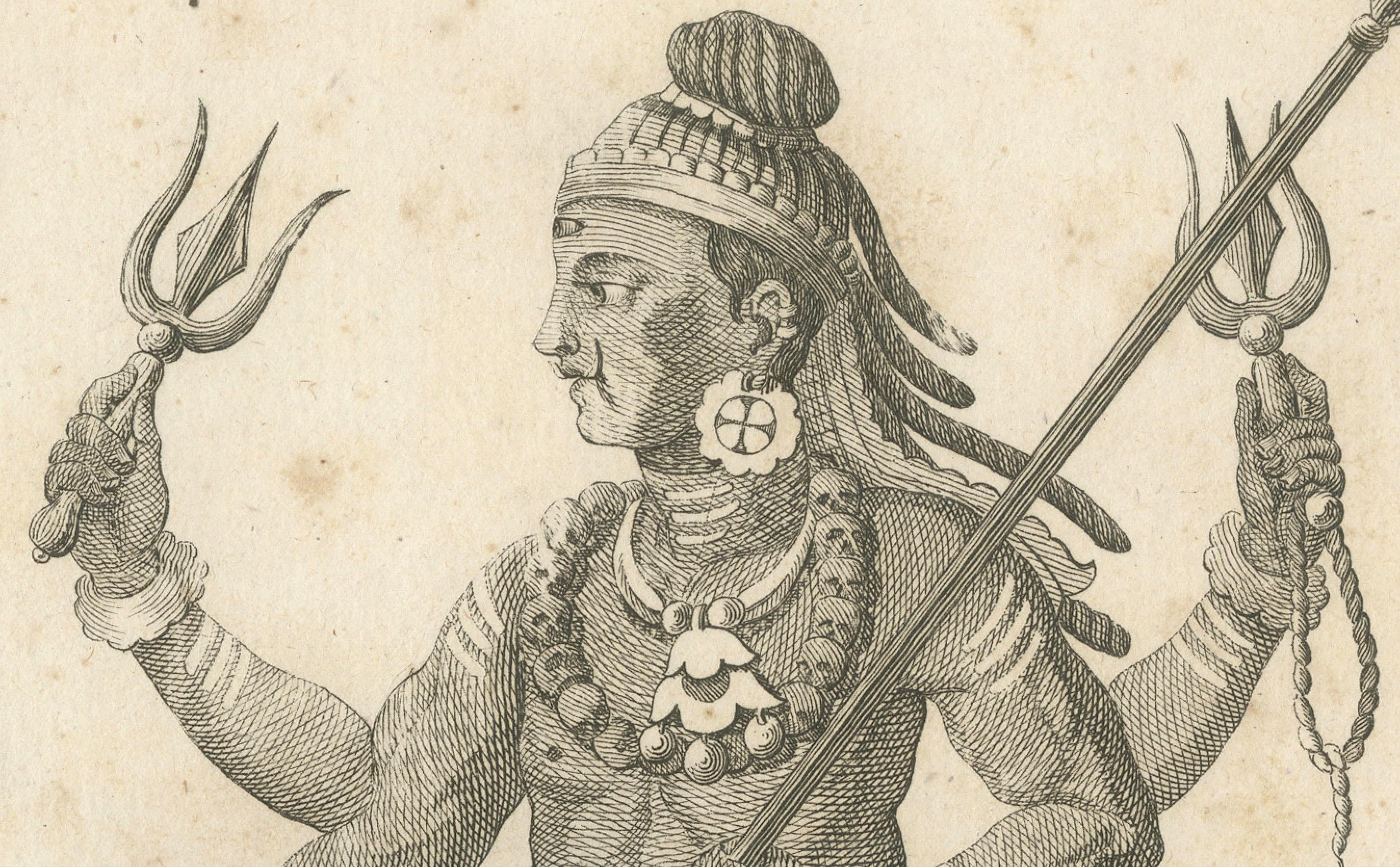
Sonnerat, a French naturalist, explorer, and ethnographer, collaborated with the skilled artist Poinson to create this detailed illustration, reflecting the European fascination with Indian spirituality, cosmology, and iconography during the early 19th century. The print portrays Bhairava standing on a pedestal, with four arms holding symbolic objects like a trident and a skull, representing his fearsome yet protective nature as a guardian deity.
The artwork was crafted using copperplate engraving, a meticulous technique renowned for its ability to capture fine details, such as the intricate patterns of Bhairava's jewelry, the flowing designs of his minimal attire, and the elaborate headdress that signifies his divine status. The trident and skull are iconic symbols of Shiva's destructive power, while the serpents around his waist emphasize his association with transformation and renewal. What makes this print particularly compelling is its portrayal of Hindu deity iconography through a European artistic lens, highlighting the cross-cultural exchange during a period of colonial exploration. The detailed rendering of Bhairava's fierce demeanor and symbolic attributes offers a profound glimpse into the symbolic richness of Hindu mythology, making this piece a valuable artifact of historical, cultural, and artistic significance from the early 19th century.
Condition Report: The print shows light foxing and yellowing or browning on the edges. Overall, it has a lot of patina and it remains in good condition for its age.
Framing Tips: Use an acid-free mat to protect against aging. Choose a dark wooden frame with a gold accent to enhance its elegance. Opt for UV-protective glass to prevent fading, and display in a low-humidity space away from direct sunlight.