About this sheet
Hindu Temple Musicians – Tadin and Chief of the Tadins, 1806
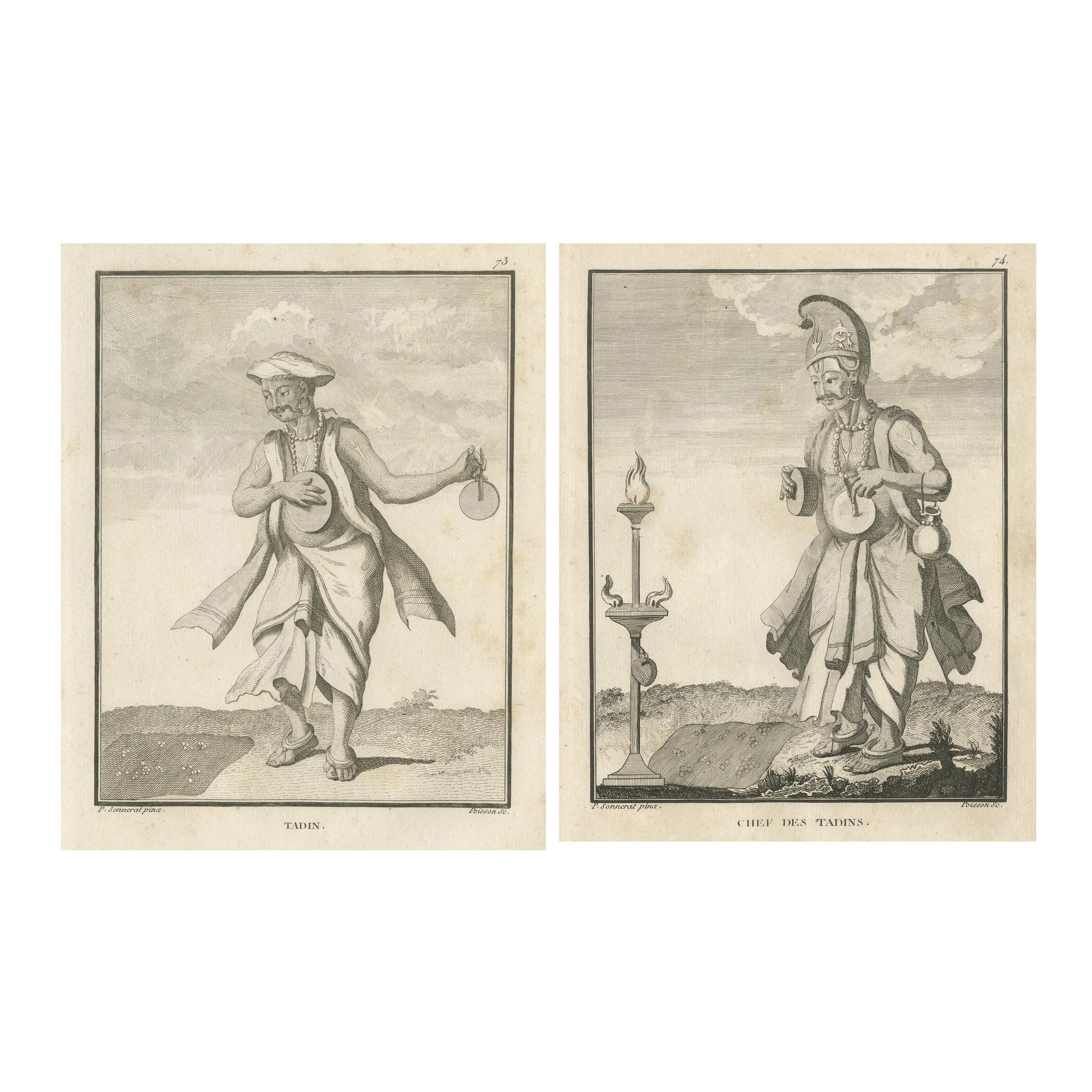
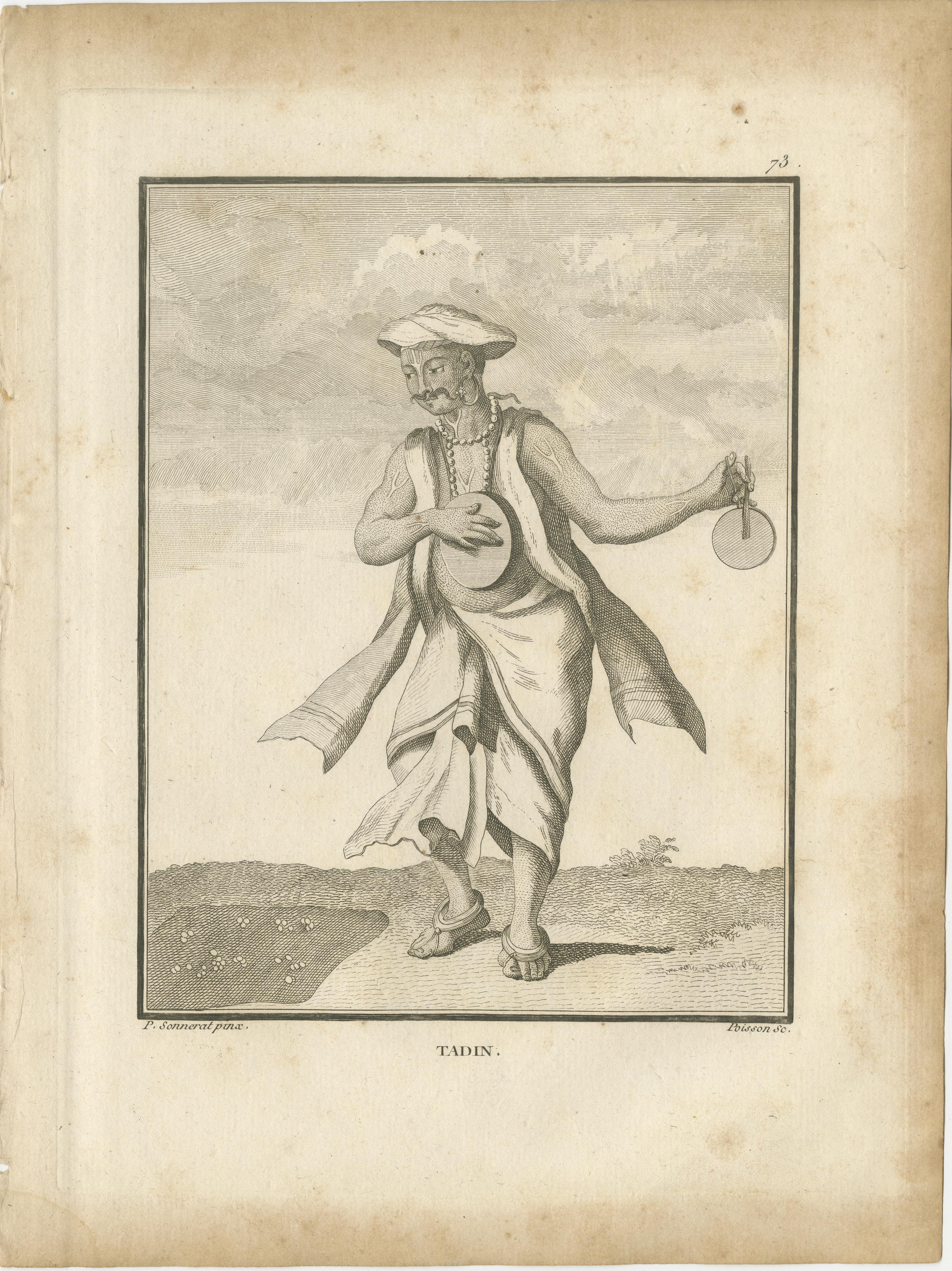
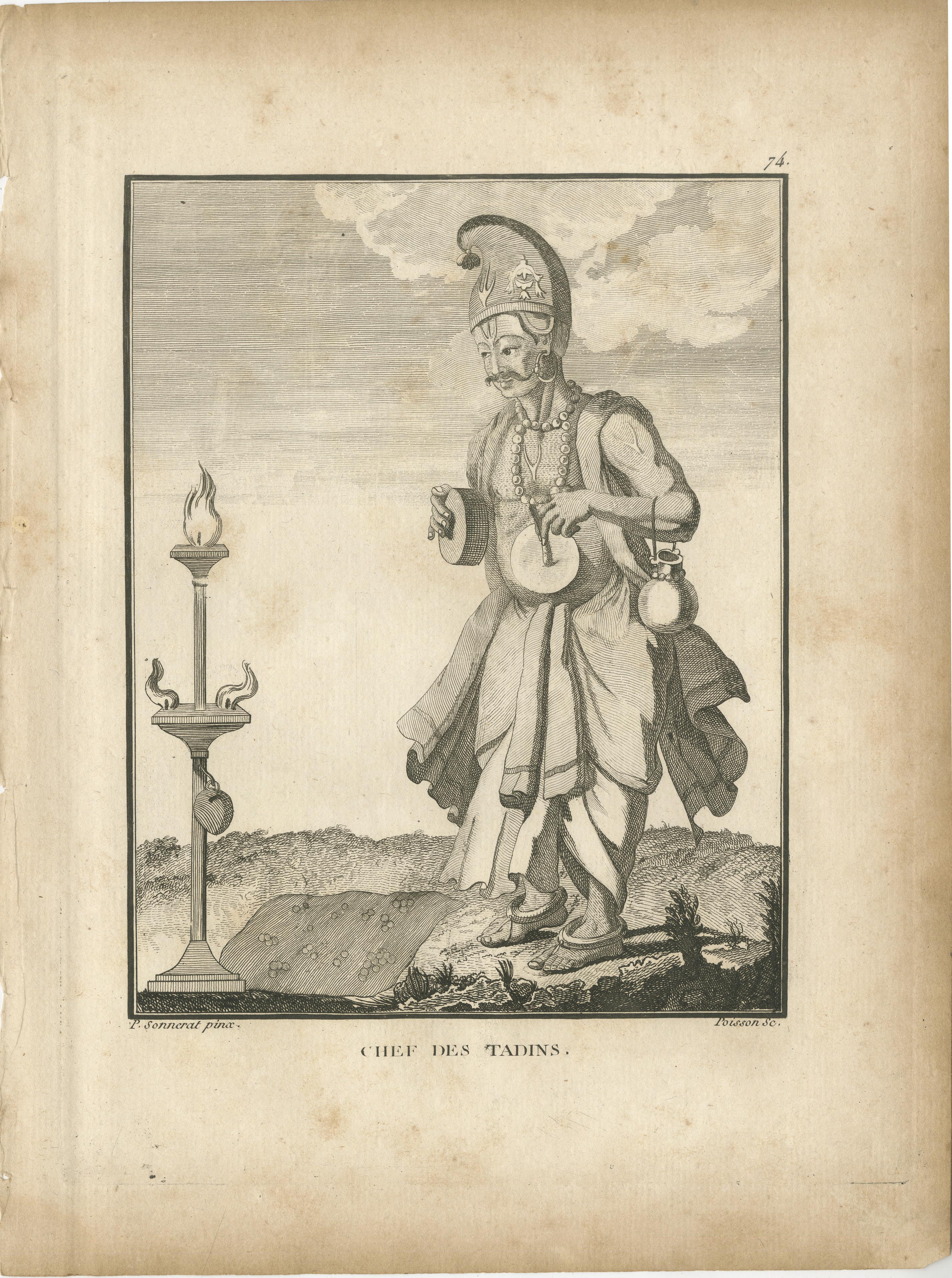
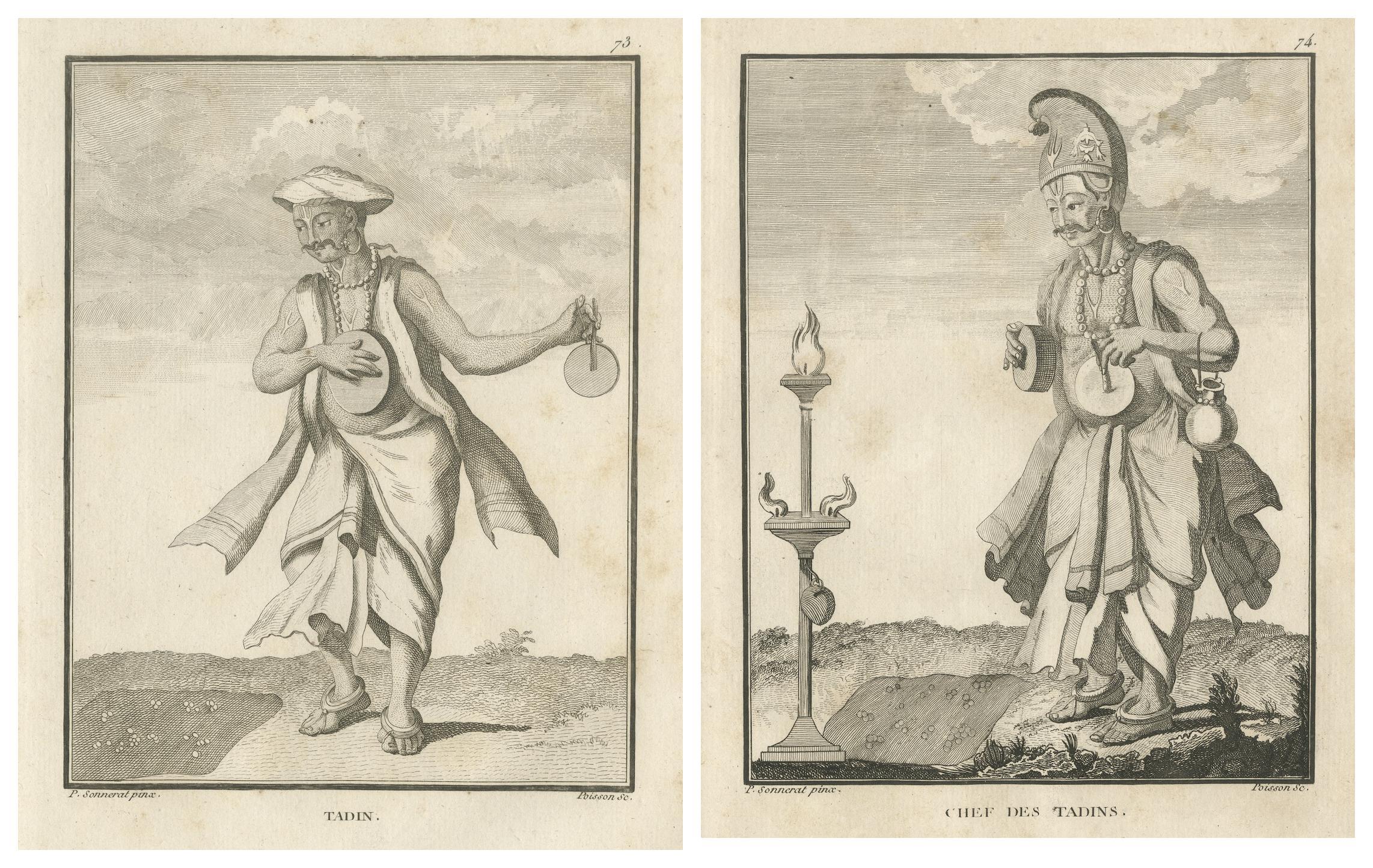
This paired engraving features two Indian temple musicians, identified as Tadin and Chef des Tadins (Chief of the Tadins), portrayed with their characteristic instruments and attire. These figures represent an important part of temple ceremonies in South India, where music is used to accompany rituals, offerings, and processions.
On the left, the Tadin is shown in motion, striking a pair of small cymbals, his body adorned with a simple wrap, jewelry, and a turban. The lightness of his step and the gesture of his hands suggest he is engaged in rhythmic performance, perhaps as part of a procession or devotional music offering.
On the right, the Chef des Tadins is depicted in a more elaborate outfit, with a distinctive plumed headpiece and layered necklaces. He also holds a pair of cymbals and carries a gourd-shaped vessel slung across his shoulder. A tall ceremonial oil lamp (vilakku) with stylized birds at the base is placed prominently beside him, reinforcing the setting as sacred or ritualistic. The mat at his feet may indicate his position of importance or a designated space for performance or prayer.
Both figures were drawn by Pierre Sonnerat (1745–1814) during his travels in southern India and engraved by Jean-Baptiste-Marie Poisson (1747–1820). These prints were published in the 1806 edition of *Voyage aux Indes Orientales et à la Chine*, a major French travel account documenting Indian life and customs from a European colonial perspective.
These prints offer a fascinating glimpse into the musical traditions and temple life of South India as observed in the 18th century, with distinct attention to costume, posture, and ritual paraphernalia. They are of interest to collectors of musical iconography, South Asian religious art, and early ethnographic prints.
Condition report:
Good condition overall. Light age-toning and scattered foxing, mainly in margins. Sharp impression with crisp detail in figures and instruments.
Framing tips:
Ideal for side-by-side display in a single frame or as a diptych in matching frames. A warm cream mat and dark wood or bronze-finished frame would enhance the ceremonial elegance of the compositions.
Technique: Engraving
Maker: J.-B.-M. Poisson after Pierre Sonnerat, Paris, 1806