About this sheet
Hindu Sacred Musicians – Satadéven and Vaïche Navin, 1806
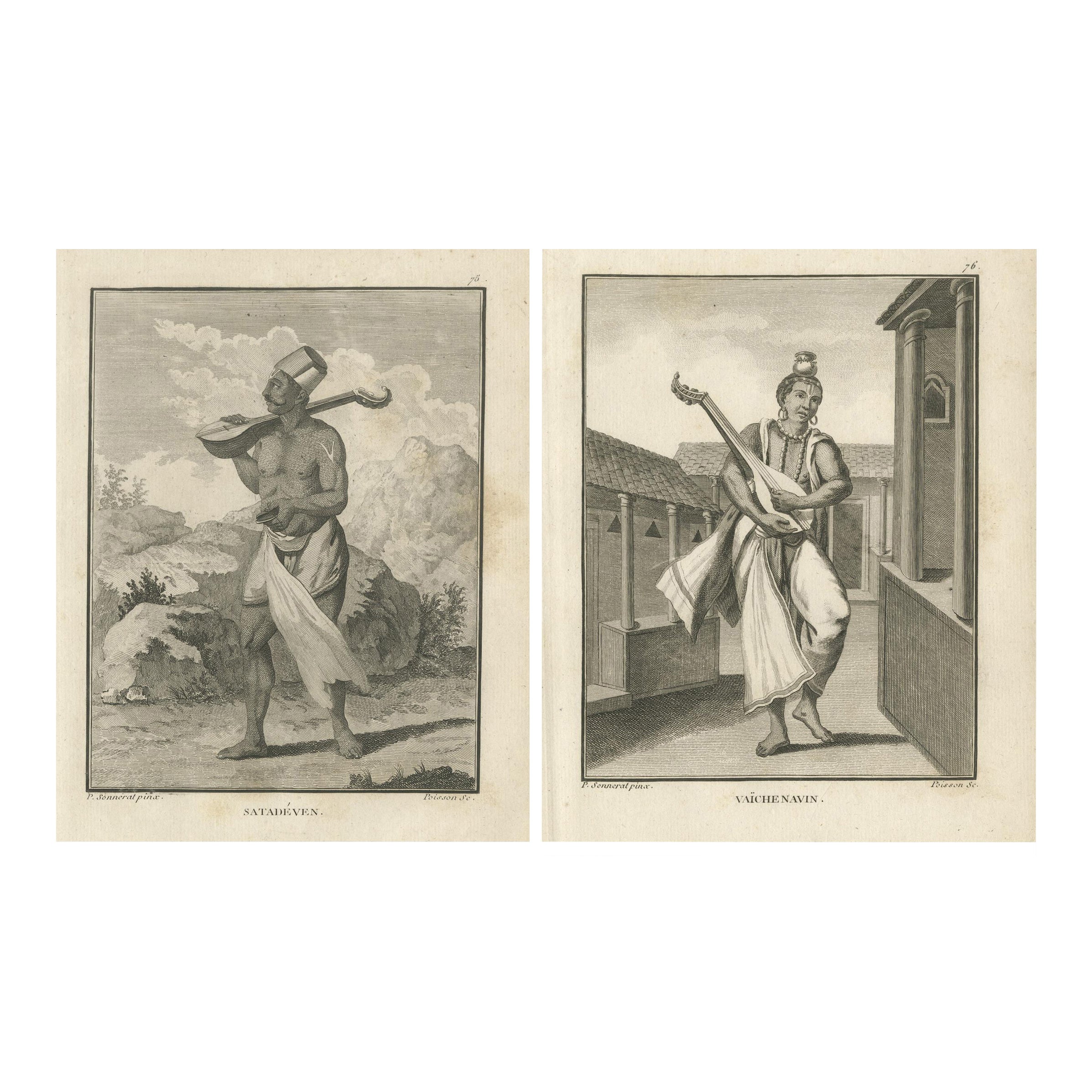
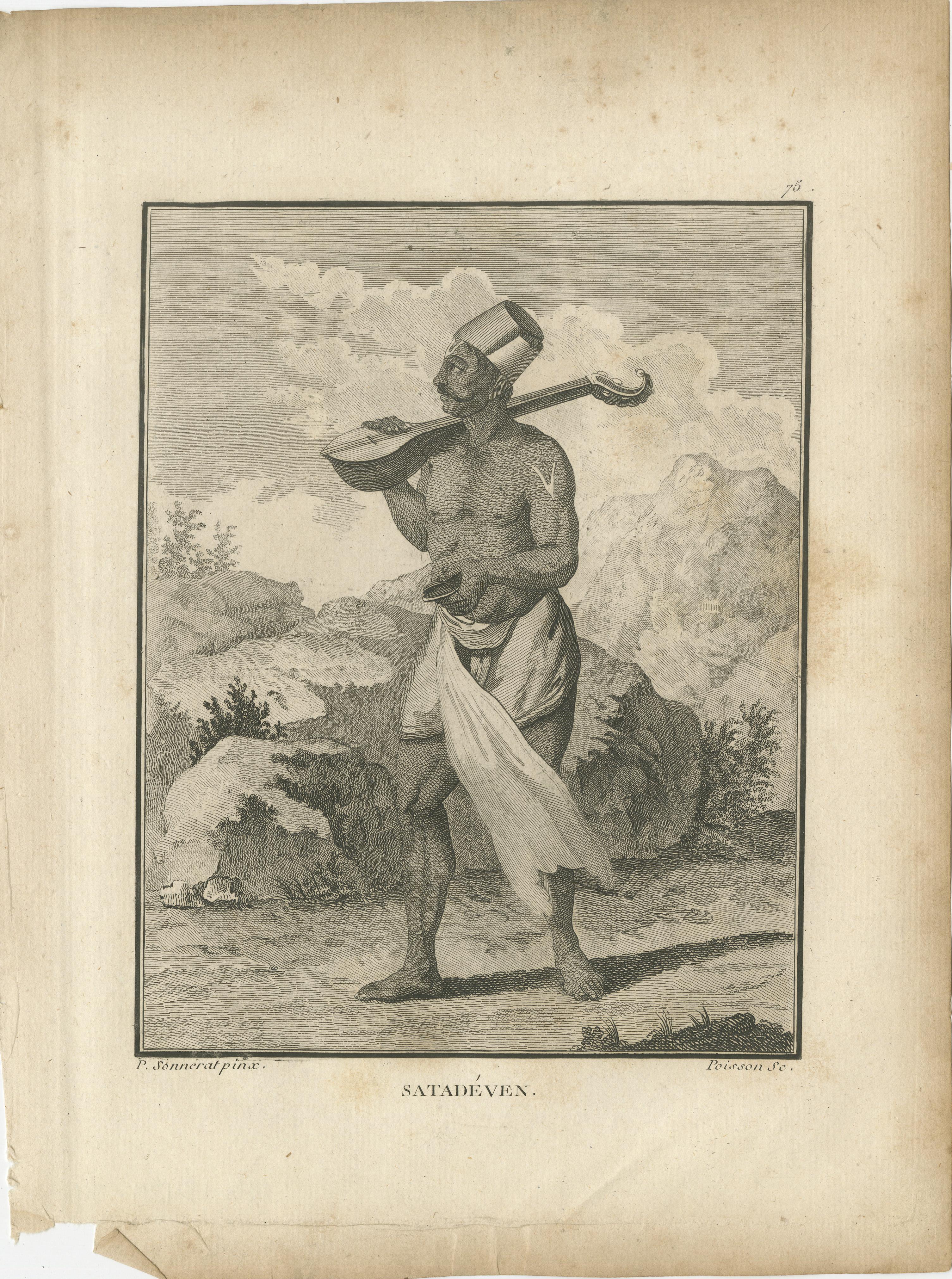
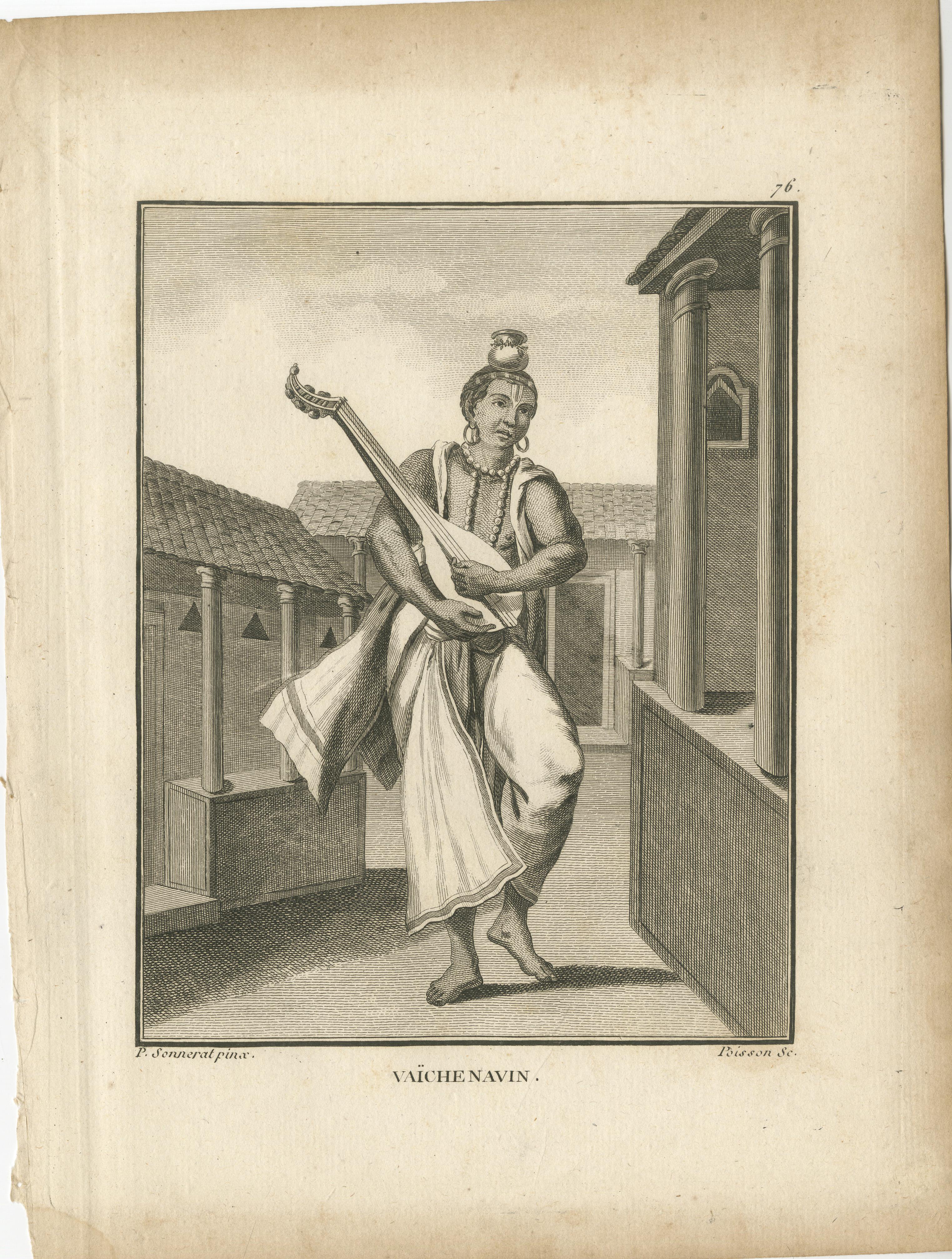
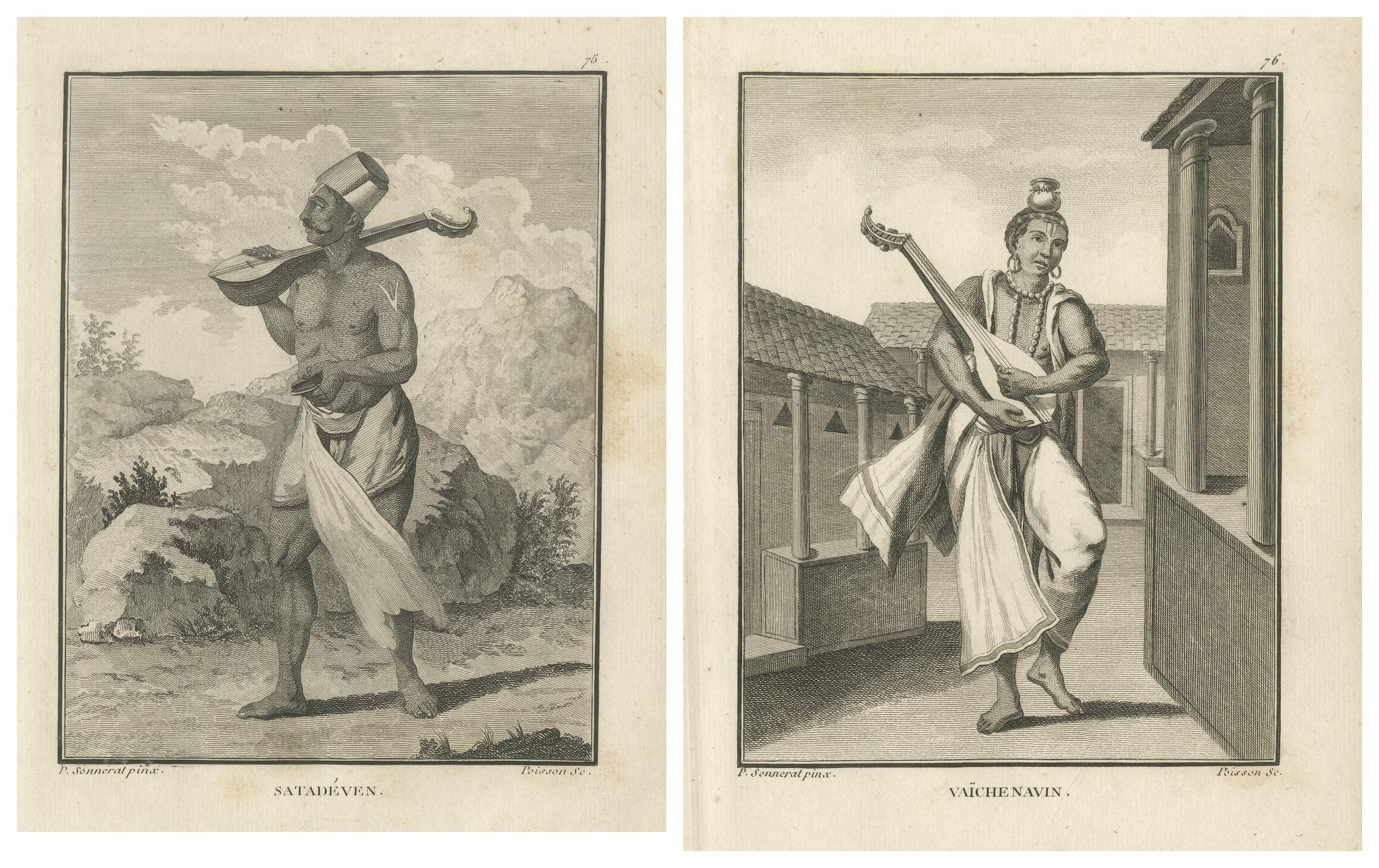
This finely executed engraving features two South Indian sacred musicians, titled Satadéven and Vaïche Navin, each holding a traditional string instrument and portrayed in the act of musical devotion. These figures reflect the integral role of music in temple worship and public religious life in 18th-century South India.
On the left, Satadéven is depicted standing barefoot against a mountainous backdrop, carrying a long-necked string instrument across his shoulders and holding a small bowl in one hand. His attire is minimal, and his upward gaze suggests he is either in a meditative state or on a devotional journey. His high cylindrical headpiece marks him as a distinct religious performer, perhaps linked to itinerant musical traditions.
On the right, Vaïche Navin is shown in a more architectural setting, possibly within a temple courtyard. He holds a similar instrument in playing position and appears mid-step, as if in movement. He wears jewelry, a wrapped cloth, and a small vessel balanced on his head, which may serve a ritual function. His dynamic posture and expressive face convey a sense of musical rhythm and spiritual intent.
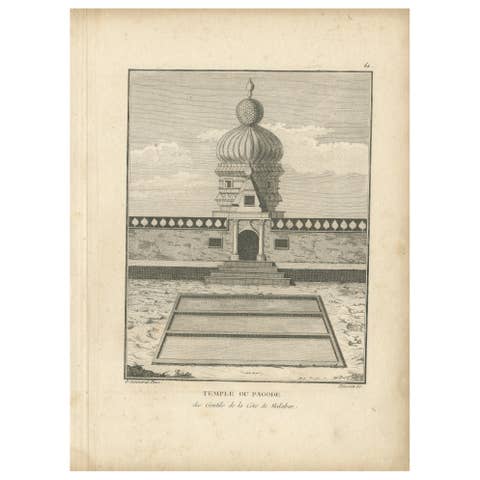
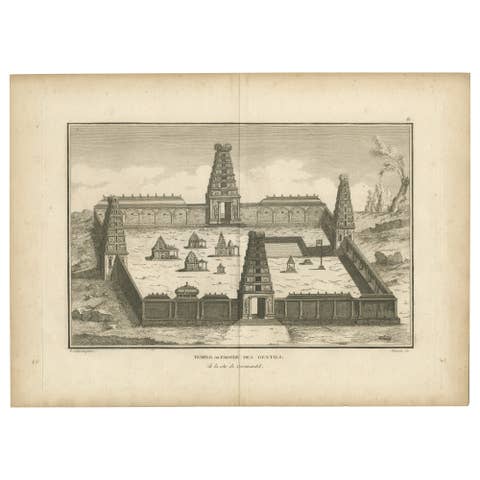
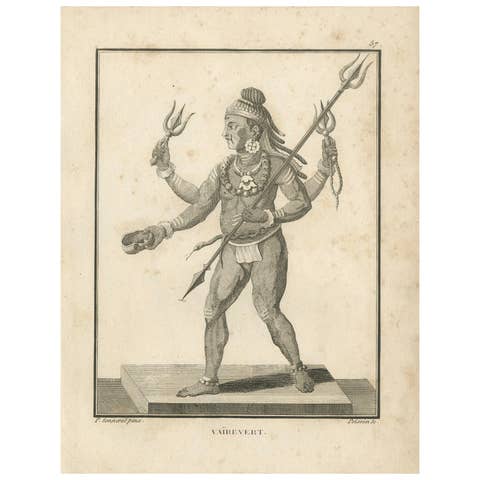
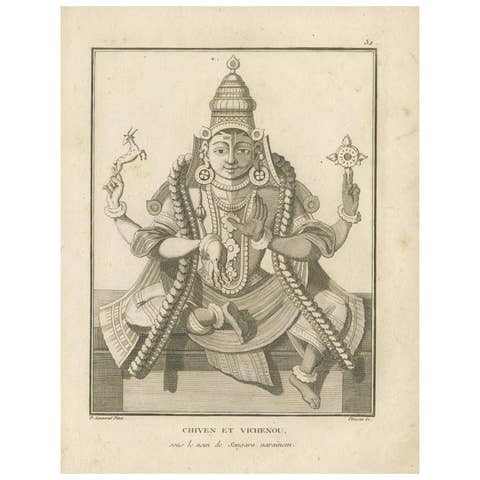
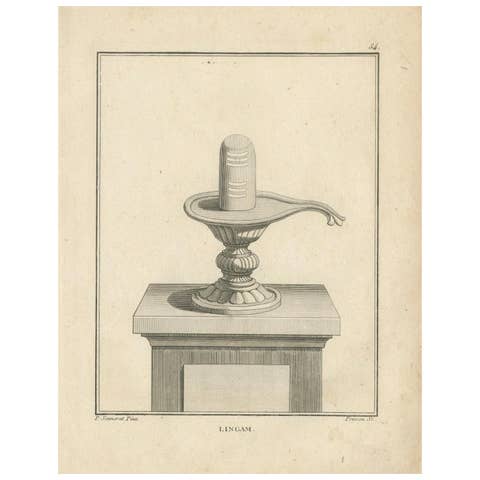
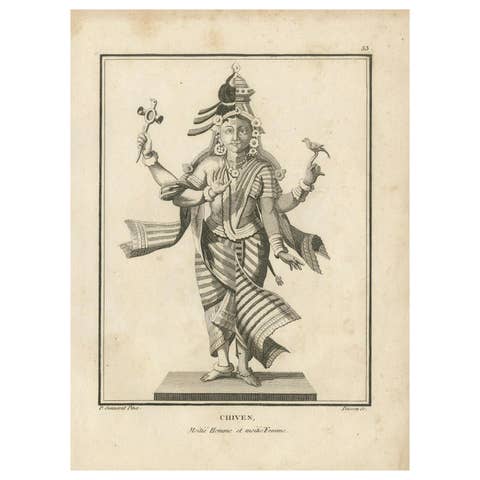
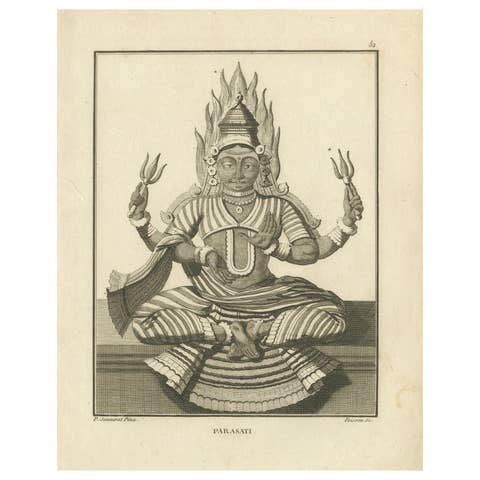
These images are drawn from the 1806 edition of Voyage aux Indes Orientales et à la Chine by French naturalist Pierre Sonnerat (1745–1814), and engraved by Jean-Baptiste-Marie Poisson (1747–1820). Sonnerat documented these figures during his extensive travels through southern India, aiming to present a visual ethnography of Indian religious life.
This engraving pair offers a rare early European interpretation of devotional musicians in India, capturing their instruments, dress, and demeanor with a blend of accuracy and exoticism. Ideal for collectors of early music history, South Asian studies, and 19th-century travel illustration.
Condition report:
Good condition with visible plate marks. Light age-toning and minor foxing, mostly in margins. Strong impression and fine line detail preserved.
Framing tips:
Display as a diptych in matching dark wood frames with a neutral mat to emphasize symmetry and draw attention to the instrument details and posture.
Technique: Engraving
Maker: J.-B.-M. Poisson after Pierre Sonnerat, Paris, 1806